Ending Up At The End

by Joe Moore
@JoeMoore_writer

One of the most popular features of TKZ is our First Page Critiques. We invite you to submit the first page of your WIP and we will critique the good, bad and ugly elements of the work. We offer this feature because of the importance of grabbing the reader right off the get-go. A list of all the previous submissions can be found at First Page Critiques along with an invitation to submit your first page.

So we all know how important the first-page grab is, how a writer has to set the “hook” as soon as possible. But what about endings? Are they as important as beginnings? After all, they occur after the big finale, the gripping climax, the roaring finish. In a way, we can think of endings as anticlimactic. And yet, they have an important function to perform in any story. So today let’s take a Writing 101 Series look at endings.

First, the ending should resolve anything that was not addressed during the climax. Once the conflict between the protagonist and antagonist is put to bed, what’s left must be brought together as a resolution in the ending. There must be closure to anything still hanging in the reader’s mind.

The ending also answers or clarifies the story question. Since the story question usually deals with character growth or change, the ending must make sure the story question is answered.

Let’s say that the main character had to stand by and watch his family perish in a terrible accident that he inadvertently caused. The story question might be: will he ever forgive himself and have the courage to find love again and perhaps start a new family? The actual plot might deal with something totally different, but along the way he finds a new love interest. Once the climax occurs and the plot is resolved, the reader must discover the answer to the story question. It has to be made clear in the ending. In most stories, the main character takes a journey, whether it’s physical, mental or emotional. How he completes the journey is the answer to the story question and must be resolved in the ending.

Another function of the ending is to bring some sense of normalcy back to the characters’ lives. It can be the restoring of how things were before the journey began or it can be the establishment of a new normal. Either way, it must be resolved in the ending. Our hero has found a new love and plans to start a new family. It’s his new normal and the reader must understand the changes that he went through to establish that new normal.

If the story contains a theme, message or moral, the ending is where it should be reinforced. Not every story has an underlying theme, but if it does, it must be clarified in the ending. This way the reader can close the book with the feeling that the theme or message was accomplished or confirmed. The main character(s) got it, and so did the reader. Even if the reader doesn’t agree with the message, it has to be confirmed in his or her mind what it was, and if it was completed.

The end resolution of the theme or message must be in sync with the story. For instance, if the theme is to accept a spiritual belief in the existence of a greater power in the universe, the plot and characters must touch upon or address the idea somewhere along the way so the end resolution confirms that they have changed their beliefs to support or at least admit to the theme.

The ending should also cause readers to feel the way the writer intended them to feel. Whatever the emotional response the reader should experience, the ending is where it’s confirmed. After all, the writer is the captain of the ship. He steers the story in a specific direction—a direction he wants the reader to go. The reader is a passenger along for the journey. It’s important that in the end, the ship dock at the right port. Worse case is that it doesn’t dock at all. That’s the result of a weak ending.

The ending is how you leave your reader. It’s the last impression. And it just might be the reason the reader wants to buy your next book. Or not.

When Death Becomes Real

I am busy with Edgar banquet duties this week, but I am confident you will enjoy this entry from my co-author and sister Kelly.– Kris.

JR Book

By PJ Parrish

We write about crime, death, torture, corpses, graveyards and cops and we do it, usually, via Skype from homes 1,600 miles apart.

Despite the distance, it’s pretty easy for us to use our purple Post-Its to move a murder from chapter forty to chapter thirty five, because when you write fiction, you can kill anyone you want whenever you want and then finish off your glass of pinot and go to bed. You might lay awake thinking about the book — whether the plot flows logically or if you’re characters act rationally.

But occasionally, usually after a particularly grueling writing day, or one glass of wine too many, we sometimes find ourselves wondering what kind of people we are to be able to write this stuff and simply move on to something as a casual as walking the dogs or sitting down to a meat loaf dinner.

The answer is that no matter how graphic we may get, no matter how monstrous our villain or how many bullets we shoot across the page, in the end we know none of it is real.  But once I had a chance to discover just what it’s like to write when it is real.

A couple years ago, I had both the pleasure and discomfort of assisting a new author on a true crime novel. He was a homicide detective who had a story he wanted to tell about a murdered officer but had no idea where to start. As a published author working on a new book set in his city, I was in need of technical information about his department and its history. Outside a bowling alley one night, we struck a deal. I would do a little editing for him. He would answer my police questions.

I thought it would be relatively easy. Like many authors, as PJ Parrish we have done light editing and critiquing for charity auctions and occasionally for friends, and I suspected this would be no different. But there were a few things I did not anticipate.

First was the officer’s passion for his story. His need to tell the story eliminated any of the usual author-ego issues, but it also made for the occasional dust-up between us. Usually, that involved his need for absolute realism and my desire to take literary license for dramatic effect. Second, I did not realize how different it would be writing about real events and the people who were even more real.

Over the next few months, as his narrative unfolded on my monitor, I found myself unable to let go of the story. I laid awake and thought about him. I started to think about the victim at the oddest times, seeing his face in every cruiser I saw on the city streets. All of this filled me with an increasing the sense of grief for an officer I never knew and a deepening respect for one I did.

I expected that at some point the repeated exchanges of the same chapters and scenes would work to dull the emotional impact. But it didn’t. It got to the point where I would postpone sitting down to edit until I knew I had a couple days to get over my depression afterwards.

Then I was given access to the crime scene photos. And I looked.

Everything became real. And I knew then that what I do with my stories, as passionately written and personally satisfying as they are, still makes for a pretty easy job. A beloved job, one I am lucky to have, but a job just the same.

As we neared the end, the officer’s passion never waned, and despite his heavy work schedule, he continued to revise and rewrite, always looking for ways to sand down the rough edges and splash some color on the players. I often imagined him working late into the night, hunched over a cluttered old desk, a half-can of beer nearby and a cigarette dangling off his lip as he pounded out a few more chapters.

Over the summer, he continued to send me pages and I continued to mark them with red ink. Slowly the book matured into something publishable. But as we entered the third act of the story could visualize this book on the shelves. Also I realized that as tough as it had been, I was going to miss it.

I was going to miss the author’s dedication and our strange, brief, and fragile friendship that survived only as long as we were writing. I was going to miss the people in the book because, in a way, telling the victim’s story allowed him to live once again, if only on pages and if only for a few months. And I would have liked to have known these people, many of them heroes in every sense of the word.

But as with all stories, once they’re told and ready to be sent into the world, we have to learn to let go. It’s never easy, even with fiction, but this was particularly hard. But we did it.

Over the years, I have thought a lot about what I took away from this experience that now seems a lifetime ago. It’s complicated, still. I know I will always reap a sense of satisfaction from helping a new author, and there is great reward in that process. And as someone who deeply respects law enforcement, there’s a large part of me that feels honored to have even penned even one single word of this book.

The book, Echoes of Shannon Street, never did find a traditional publisher, but I was okay with that because someone had told the story, and that counted for something. But about a year ago, I found myself wondering if the author had decided to join the growing ranks of the self-published. It took only one search to find it –- he had never changed the title -– and in one click, I was “looking inside.”

I was surprised to see he had changed the opening — yet again — adding new imagery, suspense, and edgy action that kept me turning the pages. I was not surprised to see that the author had kept rewriting and improving, long after we first typed “THE END” many years ago. But I was surprised to see something else.

My name. Not only as Editor, which is honor enough, but also written on the acknowledgement page was this:

“To Kelly Nichols, who taught me how to write.”

Postscript: Echoes of Shannon Street  has been made into a documentary, titled “Shannon Street: Under a Blood Red Moon, A Memphis Tragedy,” with proceeds going to the 100 Club, which aids families of officers killed in the line of duty. The movie adaptation begins filming in the Summer of 2016, with a release date of January 2017. You can also see a powerful trailer with actual crime scene images here.


Who’s Your Narrator?

Over Spring Break I had an opportunity to catch up on many books that had been on my TBR pile including two that raised some interesting questions about a writer’s choice of narrator. The first of these, Room by Emma Donoghue, has a child narrate the harrowing story of a mother and son held by a kidnapper in a one-room shed, their subsequent escape and their rocky road to adapting to the wide world beyond. For me, the choice of narrator made for a compelling read and I think it was both a wise and savvy move on behalf of the writer. It was difficult to pull off I’m sure, but the choice of a child to tell the story added an unexpected element and twist to what could have been a more typical abduction thriller.

The second book was a real summer read – Me Before You by JoJo Moyes – and it was not the kind of story I tend to read (i.e. romance). However, the choice of narrative viewpoints in this book too was the reason I think it was so compelling. As a reader we see into the mind of a slightly ditzy 20-something, her more mature sister, and the mother of the quadriplegic man who the 20-something year old has been tasked with being a companion for. The writer (wisely I think) only briefly give us the perspective of the male protagonist (the quadriplegic) before his injury. Other than that his character and motivations are clearly revealed in terms of his interaction with the other characters. Neither Room nor Me Before You are typical book choices for me (I did also read The Summer Before the War by Helen Simonson, which is much more my usual cup of tea:))  but they gave me some interesting perspectives on narrative choices.

I typically have a strong female narrative voice – though in a few of my WIPs I have adopted multiple perspectives, including male characters. I’ve never attempted a child’s voice, nor the perspective of someone much older than me. For me, the choice of narrator has always been guided by the story and, so far at least, that has meant I haven’t delved too far outside my comfort zone (though I’ve had some fun with darker and more amoral characters than myself!).

So, TKZers, what about you? What was the most challenging narrative voice you’ve ever used? Do you find yourself typically using a voice closely allied to your own, or have you gone far beyond this to perhaps channel someone of a different ethnicity, age or gender to you own? What challenges did this present?

All You Need To Know About Character Transformation

by James Scott Bell
@jamesscottbell

God was not pleased.Ocean-Storm-Waves_Free_Desktop_Backgrounds_chillcover.com_

The special creation he had lovingly shaped, and into which he breathed the breath of life, had gone off the rails. God saw that the wickedness of man was great in the earth, and that every imagination of the thoughts of his heart was only evil continually.

Things went south from the very start. He placed man and woman in this beautiful garden with plants and animals and a Starbucks, and said there was only one rule: Do not eat the fruit of this one tree, okay? Is there any part of Do not eat you don’t understand? No? Very good.

But then the first politician the serpent whispered a sweet lie, and Eve took a bite, then Adam chomped, and it was bye-bye Eden. In the outside world Adam and Eve scraped up enough to buy a little starter home, had kids. But tragedy ensued–Cain murdered his brother, Abel.

Things only got worse. After several generations God decided it was time to clear the table, wrap it all up. But there was this one man, Noah, who was perfect in his generations, and … walked with God.

You know the story. God tells Noah that judgment is coming, so he is to build a big boat according to certain specs. Then he must bring in pairs of animals for the repopulation project. Noah obeys, gets the animals and his family on board. The flood arrives.

And Noah becomes the greatest financial planner in the Bible. He floated his stock while everyone else liquidated.

Ba-dump-bump.

So there is Noah, inside a stinky animal pen for over a year (when you do the math), and what is he thinking? We have a clue. The ancient Hebrew style of writing is minimalist, and leaves a lot “between the lines.” At one point we read this: And God remembered Noah.

This tells me that sometime during his voyage Noah began to wonder if God had forgotten him. Was he a sap for listening? Was this all a cosmic joke? Was he going to die out here in this watery wasteland?

What Noah experienced was his “mirror moment.”

Yet he keeps the faith, does not curse God. The flood subsides. Noah and his family and the animals step out into the new world.

And Noah builded an altar unto the LORD; and took of every clean beast, and of every clean fowl, and offered burnt offerings on the altar. And the LORD smelled a sweet savour… 

Noah is the same righteous man he was before the flood, but now his faith has been tested, and has become stronger.

This is Noah’s arc.

Discussions about character arcs can sometimes get overly complicated––complete with graphs that look like transcranial Doppler readings––or too simplistic (“Not every story needs a character arc!”)

But as I argue in my book, Write Your Novel From The Middle, it’s not really complicated at all once you nail that mirror moment.

And every story must have a character arc–or as I prefer, transformation–because, wait for it, you can’t have a story without one. You can have good writing. You can have distinct style. You can have quirky characters. But without transformation, friend, you will not have a story, and that’s what 99.9% of readers are looking for, consciously or not.

Your character’s mirror moment tells you what kind of transformation guides your story. It will be one of two types:

  1. The Lead character changes inside, becoming a different person at the end than at the beginning. In this type of mirror moment, the character is forced to look at himself and “ask” if this is who he really is, and wonder if he’s going to stay that way. The story question then is: will he actually transform into a different person at the end?
3641109-maxresdefault

Martin Riggs

This transformation is from one pole of existence to another. From one kind of being to another. It’s a fundamental change.

Examples of this type of transformation include: Rick Blaine in Casablanca; Scout Finch in To Kill A Mockingbird; Martin Riggs in Lethal Weapon.

Note: This transformation does not have to travel from negative to positive (though most of the time it does). It can also be from positive to negative. A prime example of this is Michael Corleone in The Godfather. He transforms from good American soldier to soulless gangster.

There is even a type of transformation where the character is “offered grace” (as Flannery O’Connor put it) but turns it down. This is a tragedy. The character actually transforms backwards, becoming even worse off than before. Two of my favorite films of all time, both starring Paul Newman, are examples of this––Hud and The Hustler. 

  1. The Lead character realizes, right in the middle of the struggle, that there is no way he can win. The odds are too great. He is “probably going to die.”
Jodie-foster-clarice-starling

Clarice Starling

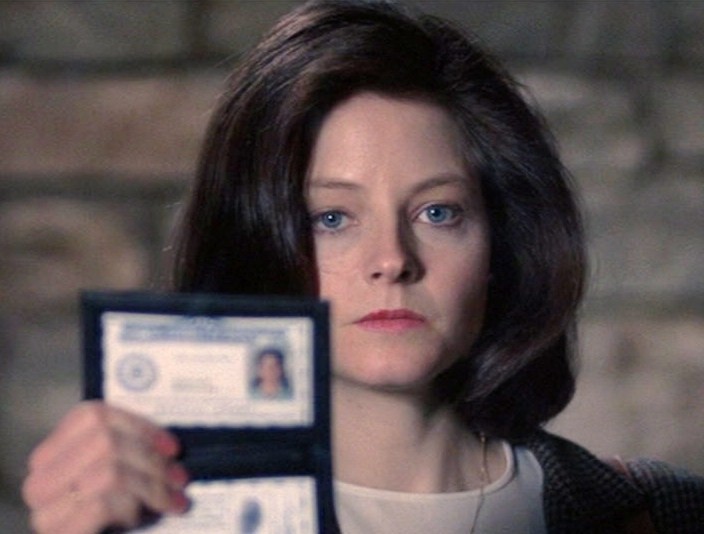
This transformation goes from stasis to strength. The character remains the same person fundamentally, but grows stronger in order to survive the “death stakes” of the conflict.

Examples of this type are: Clarice Starling in The Silence of the Lambs; Katniss Everdeen in The Hunger Games; Dr. Richard Kimble in The Fugitive. 

Are there any examples of characters without any type of transformation? What about James Bond? Jack Reacher? They’re always the same, aren’t they?

They are the same fundamentally, but in those stories the transformation is of the second type, because the case or intrigue they are involved in challenges their powers and threatens them with physical, professional or psychological death.  

If the story doesn’t have death on the line, it’s going to feel flat.

The easiest way to find the transformation that is right for your story is to brainstorm your mirror moment.

Pantsers, you can brainstorm that anytime you like. If you’re lost in the middle of a draft (and I know you will be), the mirror moment will become the beacon that lights your way out of the thicket.

Plotters, you can determine your transformation at the beginning of things and know precisely how to outline from there (in my book I describe the “Golden Triangle” as the basis of a solid outline). Or you can put a moment in provisionally and change it later on as the story grows.

The point is that once you have it, it will illuminate the rest of your novel, from beginning to end. It will guide you in the formulation of plot, scenes and the ultimate meaning (theme) of the story trying to get out.

I’ll be in travel mode today, but will try to drop by if I can. Please continue the discussion!

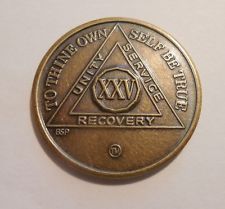
25

aa 25 year chip

A little over a year ago — March 28, 2015, to be exactamundo about it — I posted a blog here entitled Through the Glass, Darkly, about attaining my twenty-fourth year of sobriety. April 1, 2016 marked twenty-five years, and as I write this I’m eight days in what I hope will be the twenty-sixth year. I don’t want to repeat everything I said last year — not when you can get it from the handy-dandy menu on the right side of this page — but I’ll mention again a couple of things that are important to us as writers and primarily as people.

The big one is that an addiction problem — substance, gambling, sex, or pick your poison — is insidious. It is the vampire that is tapping on the window of that wonderful domicile you call “me”. It can only get in if you let it in. Once you do so, it takes over your life without your even knowing it. If you think you have an addiction which has taken up residence in you there is a test developed by a brain trust at John Hopkins Hospital that will give you an idea. Go ahead and take it. The first time I took it I answered fifteen out of the twenty questions affirmatively (that’s not good). I laughed, put the test aside and kept drinking. I neglected getting a physical for years because I was afraid that my drinking would show up in some blood results. I didn’t have a problem, however. Nope, not me. I was ultimately fortunate enough to have a road-to-Damascus moment that knocked me off of my high horse and onto my brains. I was fortunate. But I should have paid attention to that test, a few days before. Take a look at it, and believe what you see.

The big problem leads to a large one. Writers like everyone else have deadlines and responsibilities. I assure you that the punch list you make for your day/week/month becomes a lot less important after that first beer or joint or trip past the casino of the day. There is a reason why there are no clocks in casinos or windows in taverns. We lose our concepts of time and of what needs to be done and yes, of what has to be done. Writing does not lend itself to multitasking. It is a harsh mistress, demanding full attention. You can’t do it while you’re feeding the vampire.

If you decide that you have a drinking problem, try an Alcoholics Anonymous meeting. You would not believe how many meetings are going on around you every day; take a look at the AA website. There may be one within walking distance of you. Try it out, keeping in mind that each meeting tends to develop its own personality. Disclaimer: I never used AA. Why? It’s not important for purposes of our discussion here. I recommend AA, however, because of all of the people I know who have stayed sober using The Program. Go for it. As far as AA is concerned, look at it as calling AAA, but for you, and not your car. If your problems lay elsewhere, from gambling to drugs, there is a program for you modelled after AA, such as Narcotics Anonymous or Gamblers Anonymous. If you think that you might need something a bit stronger than a meeting —and those meetings can get pretty strong — go to your physician for a referral to a rehabilitation program. So, regardless of whether you choose a sober living program like the one by Ascension House – Structured Sober Living, or you regularly attend AA, you need to get help to support you in your transition from alcoholism.

The families of alcoholics and addicts in general are often forgotten. While those suffering from alcoholism are always urged to go to places such as Pacific Ridge for their recovery, many people forget just how traumatic it can be to be the loved one of an alcoholic. If you’re living with someone with an addiction, then run, don’t walk, to Al-Anon. Al-Anon is for families and friends of alcoholics. Meetings are easy to find. You will be amazed at all of the people you will meet who are going through the same things that you are. A practicing alcoholic is the prince of lies. I have seen an alcoholic go into a loving, happy family and have everyone at each other’s throats within a week. If that is happening to you, it is not something that you have to deal with alone.

I am not trying to bring your weekend down. I want to elevate it. If you think you have a problem, you probably do. This can be fixed. I did it. I do it. So can you. You will still hear that vampire tapping on the window every night, but you’ll know not to let it in.

2016 Publishing Trends

Jordan Dane
@JordanDane

stack-of-books

I recently received an email from a reader fan who complained about not having access to my Amazon Kindle Worlds (KW) digital books in Australia. I’ve heard this complaint before regarding the difficulty of obtaining US books in other countries. You’d think that in this digital world, it would be easier to satisfy markets all over the globe (especially with digital books), but not so. In the case of Kindle Worlds, the division is separate from Amazon and has to build upon its infrastructure and distribution resources. KW will be in Australia eventually—things are changing—but online retailers restrict certain markets because of their selling platform limitations. Yet the world is becoming borderless and more universal, so it got me thinking about trends in the publishing industry that have changed how books are created, marketed, and distributed.

1.) Publishers Optimizing Licensing Prospects – Publishers over the globe are recognizing the value of licensing and holding tightly to the rights they have under contract. Licensing, traditionally a subsidiary rights value, could become a larger contributor to a publisher’s cash flow if the house can expand its reach into the global marketplace. International borders would become less important (not an obstacle) and publishers could expand their reach in creative ways by enhancing the book experience for the reader. Plus, larger houses could continue to acquire struggling mid-sized houses to acquire these rights that they could exploit across the globe.

How can indie authors exploit their sub-rights (ie foreign language translations, audio, film rights, serial rights, and merchandising)? They can either sell those rights themselves, or have an agent do it for them, or exploit these rights on their own, such as audio rights for independent artists and authors through ACX, Spoken Word Inc, and Open Book Audio. If the author controls the artwork for their covers or develops a series logo as a brand, they can control merchandising through service providers like Café Press, Zazzle, and DeviantArt. For foreign language rights, some independent authors have worked directly with translators, offering them nothing up front but with 20% of proceeds on the back end. If you’re not daring enough to go directly to the translators, there are ways for author right holders to be matched with publishers willing to acquire such rights through a site called PubMatch. (Pubmatch is free to join but when I input my profile, they asked for money to be paid annually since I was submitting books for consideration. I paid a nominal fee of 19.99 for a year and will see how things go.) The author would create a profile and either wait to be contacted on their offerings or be more proactive by searching the profiles of publishers listed on the site, similar to the way ACX (for audio) is set up.

2.) The Importance of Local POD Providers – There have been some out-of-the-box thinkers who see the value in “local” print on demand (POD) options as a means to get around the international obstacles of limited selling platforms. My reader in Australia could wait for Amazon KW to expand its reach into the country, or some entrepreneurial company (like a more nimble micro-publisher) could simply place an order at any local POD service providers in various countries to create a bigger marketplace. Could this lead to niche POD companies springing up to support a strengthening print sales demand across the world? Only time will tell.

3.) Print Book Resurgence – It wasn’t long ago that people were predicting the death of the print book, but quite the opposite has happened with stronger print sales being reported in 2015. Perhaps this is because publishers now have more control over pricing after the reintroduction of agency pricing through online retailers like Amazon. And with demand strong and the boutique model dominating digitals, larger publishers are optimizing their marketing strategies by attempting to manipulate their print prices up.

How? By offering fewer books for predominantly well-known authors with large readerships—books that are in demand—publishing houses can control how books are launched, pricing-wise. With ebooks priced nearly on parallel with print sales, publishers can create a value-related decision point for readers to evaluate whether they would rather own a print book versus a digital copy. At certain prices, readers will make the choice to own a print copy, even if they are paying slightly more. Would you pay an extra $2.00 to own a hard copy print book?

But it’s not all rosy for large houses, even with the glimmer of print sales being up. Overall, traditional publishers are offering fewer books to the reading public—focusing on big name authors—so they must squeeze profitability out where they can. They won the right to control their pricing through online retail giant Amazon, but Amazon is quietly expanding their reach as a service provider and/or a publisher, working with indie authors and micro-publishers with revenue from all sources. We live in interesting times.

4.) The Rise of Alternatives to Traditional PublishersAuthorEarnings.Com reports that in 2015, nearly half of all ebooks sold on Amazon (the most influential digital retailer) are either self-published, published by micro-publishers, or are generated through an Amazon Imprint. Here’s their ebook breakdown by publisher type:

Big Five Published 33%
• Indie Published 34%
• Micro-Publishers 19%
• Amazon Imprint 10%
• Misc 4%

So this is what I mean about Amazon making money off the competition of traditional houses. As a service provider, and an imprint, Amazon doesn’t have to be in direct competition with traditional houses as their only source of revenue.

5.) The Retail Gorilla – According to AuthorEarnings.Com – the overall market share of US ebook unit sales is dominated by Amazon at 74% with the balance held by other online retailers: GooglePlay, Kobo, Nook, Apple, and miscellaneous others. So if you’re an indie author with a limited budget, where would you spend your ad dollars?

For Discussion:

1.) Have you noticed any interesting trends in the publishing industry that has affected how you do business as an author?

2.) Whether you’re a traditionally published author, independent author, or a hybrid author with feet in both camps, have you been rethinking the value of sub-rights?

Indie vs. Trad (Yes, I’m Going There)

Anyone who reads my Facebook posts knows I have very strong feelings about the way the traditional publishing industry treats authors when it comes to the reversion of rights and the distribution of wealth. But the decision to publish on your own or submit your work through an agent to the Big 5 is an individual one.

If you want to know the good and the bad of either world, there are plenty of resources on the web, but remember, opinions vary based on experience, and no one else’s experience will be the same as yours.

For the record, my time in traditional publishing was great. I liked the people I worked with and they treated me with a lot of respect.

When I sold my first four books, traditional publishing was considered the only legitimate path toward publication. Then the Kindle was invented and Amazon opened its doors to authors, and indie pioneers like Joe Konrath and Amanda Hocking started making money hand over fist. And suddenly the idea of self-publishing had great appeal to many authors. Especially those who had been unceremoniously dumped by their publisher when their sales didn’t meet some corporate number cruncher’s expectations.

When my friend Brett Battles left his publishing house and decided to go indie, I thought he was a little crazy. I was in the middle of finishing up a big, bold, traditionally published “blockbuster” for Dutton that was supposed to set the world on fire.

But then something amazing happened.

Over the course of the next year, Brett started selling a ton of books on Amazon. And as I watched this phenomenon, I couldn’t quite believe what I was seeing.

When my Dutton book failed to fly—even after rave national reviews—I wondered if maybe the trad pubs didn’t know as much about selling books as they thought they did, and indie was the way to go. The book in question (The Paradise Prophecy) was one I would not have chosen to write on my own, but the publisher had come to me, and the advance money had been good, and I’m always a sucker for good advances…

But after its failure to make much of a splash, I wanted to write something for myself. Not for an editor or publisher, but for me. Just me. No restrictions, no dictates from on high, no agent interference, nothing. So I sat down and wrote a book I’d been itching to write for some time. A book that nobody in the industry seemed much interested in. But I wrote it anyway, thinking that I might self-publish it, while still holding onto the idea that maybe I could get a traditional deal instead.

When it was done, however, I looked at all the successful indie authors I knew, saw how well they were doing—and more importantly, how much control over their work they enjoyed—and decided that I definitely needed to give it a shot.

So Trial Junkies was published as an indie in May of 2012, and by the middle of June, I was selling nearly a thousand books a day.

I haven’t looked back since.

In the years that followed, Trial Junkies, has gone on to sell more copies than I ever would have imagined, and the book has received a lot of terrific reviews. It was also picked up by Amazon Crossing for translations to German and French.

So, you see, if you ask me about indie vs. traditional, the answer I’ll give you is obvious.

But, as I said, my experience may not be yours.

My experience may, in fact, be an anomaly.

So I urge you to do your research and figure out what path is best for you and only you.

And I also urge you to tell me I’m crazy in the comments. That’s what blogs like these are for. 🙂

The Uncomfortable American (Updated)

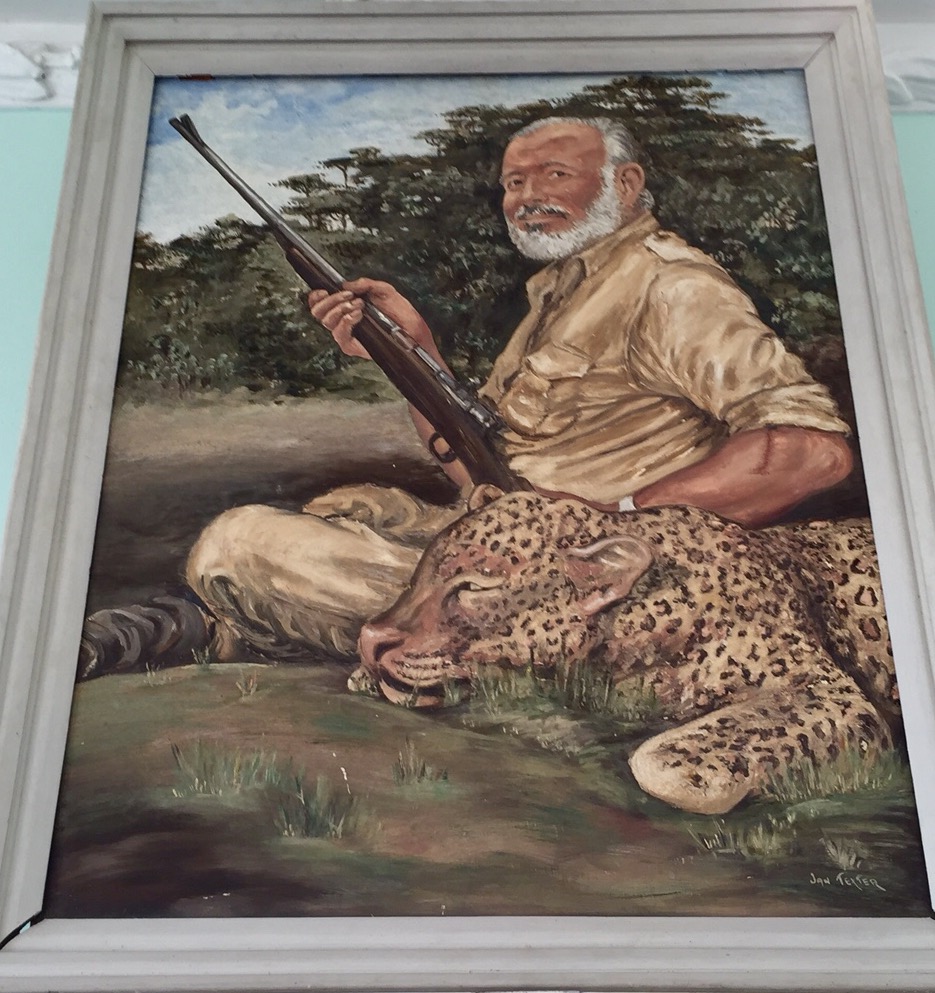
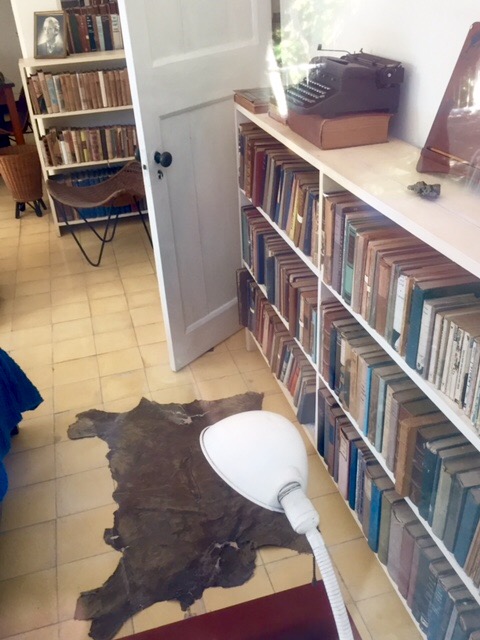
imageUpdate: Now that I’m back home  from Cuba with better Internet access, I’ve added  pix of Hemingway’s house.

  ***

I’m writing today’s post from the Hotel Nacional in Havana, Cuba, fervently hoping that the revolutionary Internet watch dogs (perros de la seguridad) will allow my words to be successfully uploaded to WordPress and displayed beyond there to you, Dear Reader, on Tuesday. We’re on the third day of an eight-day excursion to this island nation. (In terms of encountering Internet censoring, so far I haven’t in fact  encountered too many problems. The only sites that have been completely blocked so far are the Huffington Post and Gawker. Amazon did seem a tad confused when I tried to order a Kindle book online from my Cuban hotel room–first it displayed a message saying that Kindle books aren’t available in the United States; then it asked whether I’d recently changed my country of residence. I ultimately gave up my quest to purchase the e-book).

It’s interesting visiting Cuba immediately in the wake of the lifting of the decades-long trade embargo and Obama’s recent presidential visit.

I think many Americans are assuming, as I did, that once the embargo is finally lifted in practice, Cuba will be quickly transformed into a more-or-less Westernized economy. I no longer think that’s the case. Cuba is…well, it’s different. As one of my fellow American travelers said with a sigh, over a highly restricted menu at a government-owned restaurant, “Cuba has a long way to go.” First, there’s the abysmal infrastructure (Example: all human waste is dumped directly into the harbor because there are no treatment plants).  Then, there’s the highly centralized economy. (This morning we learned from a speaker that there’s no such thing as a wholesale business in Cuba. Everyone pays the same exact price  everywhere. Try to make a profit running a business that way).

On the plus side, the country of Cuba is charming in many ways. Being here is literally like stepping into a time warp. Taxis are mostly 50-era Chevys (we even saw one Edsel taxi); many streets are cobblestone; architectural styles are similarly retro. The adult literacy rate is nearly 100%.

Overall as an American, though, I feel slightly uncomfortable in Cuba. It started in the airport when our group waited two hours for our baggage to be offloaded from our American Airlines charter flight. (It was Saturday night; it turns out that people don’t like working on Saturday nights). Being in Cuba makes me aware that Americans are impatient. Pushy, even. We tend to look at something and try to figure out a way to make it work faster, better.  I think that once Cuba is overrun with Americans telling them how to make things work faster and better, they may want to pack us all off on the next one-way barco to Miami. And I wouldn’t blame them a bit.

See you back in the States–and viva Cuba Libre!

image

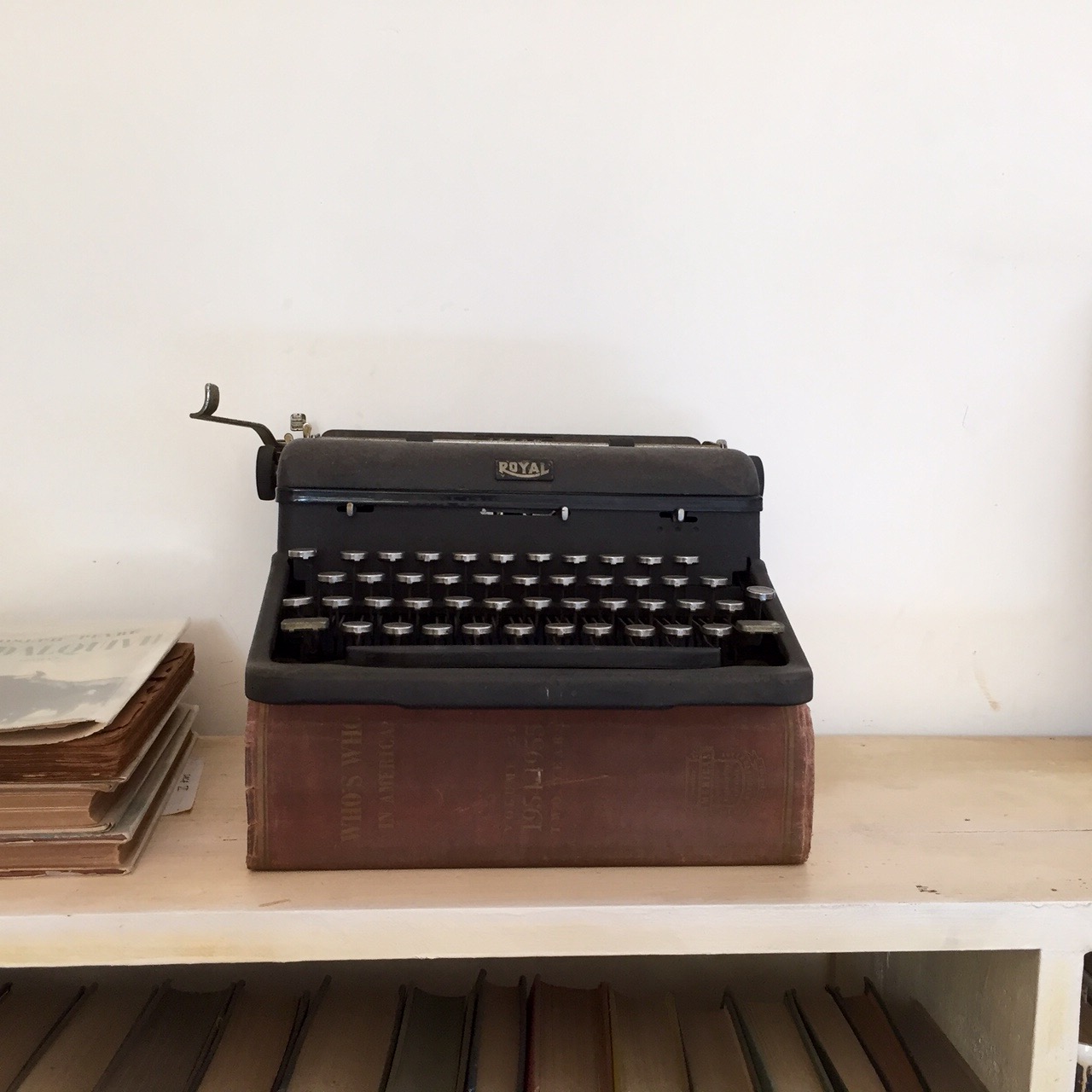
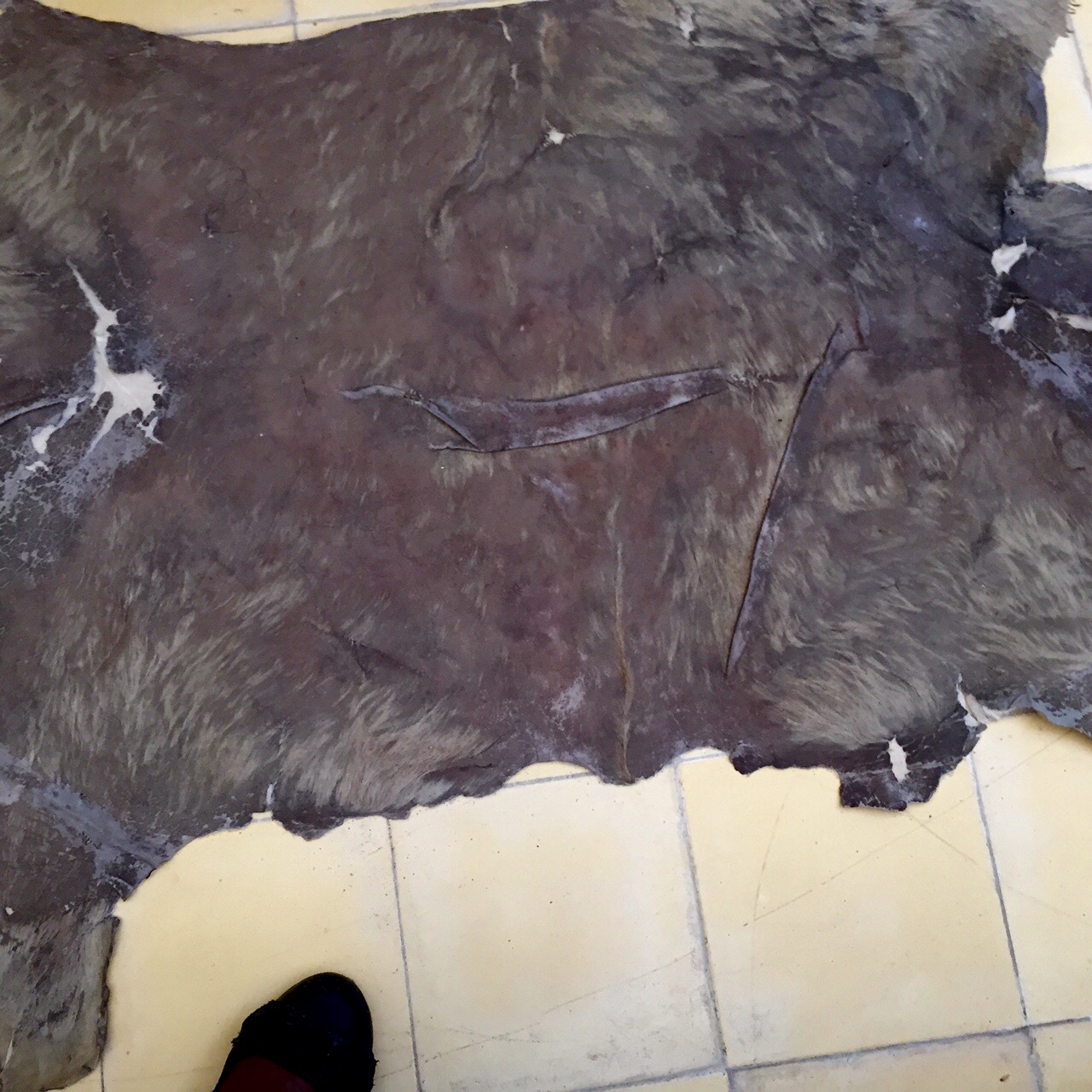
Lesser Kudu skin and typewriter

Update: Now that I’m back home with better Internet access, I’ll post pix of Hemingway’s house in Cuba. I was happy to be able to see the famous typewriter where, standing on top of a Lesser Kudu gazelle skin, he every morning. I had to shoot through a window because visitors aren’t allowed inside, but I successfully bribed a docent to take the closeups of the typewriter and the gazelle hide. (There’s an upstairs office that one of Hemingway’s wives commissioned as a writing office, but our guide said Hemingway used it mostly for rendezvous with one of his lovers. He did his actual writing at the typewriter by his bed).image


image image imageimageimage

Part 2: 10 Myths That Sabotage Unsuspecting Novelists

Two weeks ago I posted the first part of this 2-parter, exploring five of the myths promised in the title. Feel free to check them out first, or last, doesn’t really matter because these aren’t presented as a hierarchy of potential disaster.

Any one of them can sink you.

Here, then, are the other five.  

Fair warning, some of these will challenge your belief systems about how stories are developed and what makes them work… which is the point.  Not everyone likes to be challenged, and not every writer will make a shift when called out on something that isn’t working, defending with this: “This is my process, I can’t do it any other way,” or, “Well, that’s not what Stephen King says.”

Fair enough. Very little about the writing process is precise. And not everything we hear from famous writers is valid for you, or for most, for that matter. That said, the criteria and benchmarks of what makes a story work are usually very precise.

That, too, is the point.

*****

Coincidentally (because this was written before I saw what I am about to point out), and happily, PJ Parrish posted on this next myth last Tuesday (March 29). We aren’t conspiring, but we are retrospectively agreeing. That dream that awakened you a few nights ago, leaving you certain the universe had just rewarded you with the Next Big Novel idea… we recommend you park it for a while and see how it survives the shelf time, not to mention, in the meantime, boning up on the criteria for what makes an idea viable, or not.

Myth #6: You can make a good novel out of just about any idea.

Too often the most important element of a story gets the least airtime within the writing conversation.  And that is our Big Idea for a story. The seed from which your story must spring forth.

The Big Idea can arrive in several forms. It can be a character, suddenly so vivid in your mind you can smell their morning coffee. But that’s not enough. Because if a character is all you have, it’s not a story yet.

It can arrive as a speculative notion, a compelling what if? proposition. What if the Devil came to you in the form of your divorce attorney after your wife cheated on you? But that’s not enough, either. It’s not a story yet.

It can be a theme that you believe to be important. A novel about making love last. A novel about prejudice in the justice system or racial bias in a certain Southern town in the sixties. A historical novel with revisionist intentions. But that, again, is not enough. It’s not a story yet.

A storyline can unfold in an instant in your mind’s eye. You know how it opens, what happens, and how it ends. But that’s may not be enough, either. Because a story is more than beginning-middle-and-end, so it may not be a viable story… yet.

So what is a story?

Answer: A story is the narrative fulfillment of a complete and compelling premise. Which is the sum of all these things. Which means, to get it right, you need to understand what a premise actually is, and what it isn’t, the latter often in one of the forms just mentioned.

Incomplete, less-than-compelling premises trump great writing every time (unless you are a famous author already, then the bar actually lowers when it comes to premise; which is not to say famous authors actually reach lower, most don’t… but some do). If the idea is tame, vanilla, less than compelling and/or too familiar, you’re toast before the agent or editor reads a word of it.

Of course, who is to say what is and isn’t compelling where your premise is concerned? Great question. The answer depends on who is talking, and how familiar they are with the criteria for a functioning premise in the first place.

A compelling premise is not just about something, it is about something happening.

Emphasis on the italics there.

It all boils down to the degree of compelling energy, and if/how the premise hits all of the requisite component parts. Those parts are what cause a story to work, because they are all conjoined with the context of an unfolding narrative.

Ultimately, after the agent and the editor have had their say – which makes this myth critical for self-published authors – it is the marketplace that decides what is compelling. But at first it is only you. The whole ballgame hinges on how aligned your idea aligns with what the market feels is compelling.

Nobody will tell you to not write your novel because your idea isn’t good enough. That’s just not done out there. But perhaps it should be. Meanwhile, you are alone with this judgment. Is your idea worth a year of your life writing the initial drafts of your novel, after which someone else likely will tell you if the Big Idea was good enough, or not, after all?

We all roll that dice. But don’t kid yourself… not all ideas are worthy of a novel, because the very nature of it may minimize the things that make a novel work: dramatic tension leading to reader empathy in the form of emotional involvement.

That’s the formula, if you will, right there. And you get to decide.

There’s a reason the story of what you did on your summer vacation may not be the raw grist of the great American novel.

Unless you got kidnapped or were seduced by a mysterious billionaire prince. Then you might just have a shot.

Myth #7: Concept and Premise are the same thing.

So, after all that, what does constitute a good idea? There is an answer to that. An answer that builds on the supposition – the truth – that concept and premise are not the same thing.

All novels that work end up building upon a premise (see #6 above). But it is entirely possible to serve up a premise that is flat as the paper it will be printed on, and yet still checks off all the elemental boxes.

That’s because at the end of the day is a crap shoot, a matter of personal preference.

Concept is the central framework for the elements of the story. It is what causes someone to say, “Wow, now that sounds intriguing…” even before they actually read the novel itself.

Or better, even before you actually write it. If your concept has people begging to the see the story, pre-premise, then you’re on to something.

A love story set on the loading dock of a grocery store… hmmm. Chances are you need more.

But a love story set on the loading dock of a nuclear storage facility – a place we’ve never been, a place with inherent curiosity and potential for drama – that’s conceptual.

That’s all concept is: something that is conceptual about your premise. A target of intrigue or curiosity or rewarding vicarious experience. A notion or a setting or something specific about a character that is fresh and compelling and rich with dramatic appeal (think Superman or James Bond or even Stephanie Plum), even before you actually turn it into an unfolding, dramatically-vibrant story thread.

Myth #8: A first draft will always suck.

Everybody says this. They scream it out. To an extent that nobody challenges it.

But what if it’s not completely or always true?

If you’re someone who seeks to discover and flesh out their story using a series of drafts, then sure, your first draft will likely need a lot of work. Which is fine, that’s how you work. Those drafts are no different than the story planner who goes through a crate of three-by-five cards, it’s all just a means of searching for the story.

But if you’re someone that can visualize a story fully without needing to write a draft – and if you’re thinking “that can’t be done,” you need to amend that thought; it can’t be done by you, perhaps, but there are plenty of writers who absolutely can envision the bones of a story, front to back, totally in their head), and with some pondering and a pile of yellow sticky notes can construct a narrative front to back, then your first draft will live or die by the depth and sensibility of that vision.

Get that right, and your first draft can materialize as something that is a polish away from submittable. It happens all the time.

A first draft will always require further work. True enough. To fix typos, if nothing else. But the depth and nature of that work is a function of two things: your process, and your story sensibilities.

Here’s a non-myth you can count on: a draft won’t work until you have an ending in mind for it. Which, when you do have an ending in mind, is not to say you won’t or should alter that ending mid-stream. That works, too.

But if your draft starts with no ending in mind… then yes, your first draft won’t work.

Because you can’t foreshadow and optimize pace and build toward an ending that isn’t on your radar. And a novel won’t work until and unless those things happen on the page.

Myth #9: Your writing process is better than those of other writers.

This is just flat-out wrong. It may be better or worse for you, but there are infinite variations and gradations of the writing process, and rarely are any two exactly alike.

Here is where famous writers like to take a stand. In interviews and in keynotes they talk about what works for them, with the assumptive implication that this is the best process. Or perhaps more toxic, the only process.

Or you’ll hear writers with no more claim to effectiveness than you making statements like this: I can’t outline, it robs the process of joy and creativity… I can’t make up my story as I go along, that never works… when I outline I fall out of love with my story… and other variations on this theme.

The veracity of such comments, no matter who says them, begins and ends with them.

Once again, this is a case of writers stating what works in their own experience. When they position it as anything other than their truth, as if it is the truth about process… run.

The best process is what works for you.

Not based on what you’ve heard, but based on what you know. Not just about your story, but about the craft-defining elements and essences that go into any and all stories that work.

Sometimes your process actually doesn’t work, which seems to render the above sub-head inaccurate. But if it brings you closer to the truth about stories, if not storytelling, then for better or worse it’s actually working.

The key will be to recognize what you’ve learned, not only relative to your story, but to why something works, or not.

Myth #10: The bar is lower for self-published novels than it is for traditionally-published novels.

If getting your novel out there is the primary and even solitary goal, then this may be true. If for no other reason than no initial vetting process stands in your way.

But if earning a readership and building a career is the goal, then this is a destructive myth that will sabotage your dream. Certainly some worthy novels are rejected by traditional publishers, and just as certainly some worthy writers skip traditional publishing altogether in quest of shorter to-market timelines, rights issues and larger royalty percentages.

So what’s the harm of lowering the bar?

Because it will prioritize getting it out there over getting it right. It will seduce you into believing that craft is less important that completion, and that completion isn’t driven by how your novel stacks up to a very powerful and proven roster of criteria and benchmarks.

Too often self-publishing is settling. Trouble is, there is no way to be certain… was I rejected because it’s not good enough, or because of timing or other factors? Will the marketplace respond to my story in a way that agents and editors didn’t?

Therein resides the crazy-making paradox of self-publishing. There’s no way to know, until you try. The risk is that your very worth self-published novel may only sell 200 copies, regardless of how well you followed the script for making Amazon love you.

Either way, when you choose, you’ll always have the nagging question of what could have been. Either way, though, the highest possible rendering of craft will serve you, every time.

And that’s a choice, too.