Keeping Your Story Real…
Even When You Are Lying

download (1)

“Fiction is the truth inside the lie.” — Stephen King

By PJ Parrish

We all tell lies. Some of us, like politicians, make it into an art form. But most of us just bump along through life moving along the lie spectrum from the little-white variety (“Of course you’re not too old to wear leopard leggings!”) to the whopper (“I’m a natural athlete.” – Lance Armstrong.)

We all lie. To prove it, I’ll start with a little Truth or Dare. Here are five statements about me. Which ones are lies? (Answers in a little bit.)

  1. When I was 47, I was in the Miami City Ballet’s production of “The Nutcracker” directed by the acclaimed dancer Edward Villella.
  2. I once stood on my head at Les Invalides, the place in Paris where Napoleon is entombed.
  3. I interviewed Michael Jordan in the Bulls locker room for a story about “hang time.”
  4. I was invited to a party on the royal yacht Britannia where Queen Elizabeth asked me what I did for a living.
  5. Telly Savalas let me lick his lollipop.

Now, we writers are born liars. We have to be to create fiction. And the better we are at lying, the better our books tend to be. Okay, let’s elevate the conversation and call it “suspension of disbelief” instead of lying. We hear that phrase all the time, here at The Kill Zone, in reviews, and on panels at writers conferences. But what does “suspension of disbelief” really mean?

All fiction requires some suspension of disbelief, right from the get-go. We crack open a novel knowing what we are about to read is not really true. We strike a bargain of sorts with the author — we are willing to believe his story’s premise before we read even the first word. But that is a mere promise. The hard part for us, the writers, comes in maintaining that suspension of disbelief over the course of an entire story.

If you’re writing fantasy, horror, or science fiction, “suspension of disbelief” is a basic ingredient of the craft stew. In these unreal worlds, vampires fall in love, Harry Potter breaks the laws of physics and Virgin Air has daily flights through wormholes to Vega. That’s cool because these worlds are meant to be very different from our own.  But what about the “real worlds” of crime fiction? What lies can we get away with in our quest for dramatic impact?

Time out for the answers to my true lies:
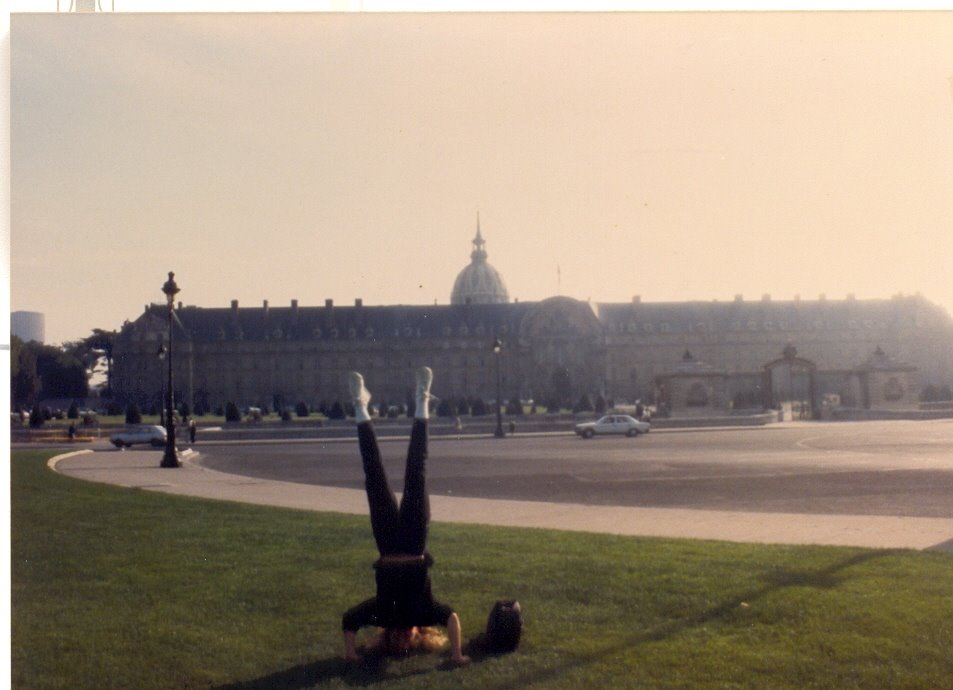
invalides

  1. True, I was in The Nutcracker at age 47. I was only in Act I but when it was over, I wanted to do it all over again. The experience gave me a taste of the narcotic all performers feel.
  2. True. Here’s the picture at left to prove it.
  3. True, I interviewed Michael Jordan. It was on the occasion of Jordan’s comeback (first or second one, I can’t recall). Most the Bulls were nekkid or almost so. Mike was resplendent in a white suit. He was holding court surrounded by sycophantic sportswriters who all tried to elbow me aside. I was the ballet critic and talked to Jordan about the similarities between hang time and ballone (how dancers seem to float in the air). Jordan was fascinated by this but wasn’t happy when I told him Spud Webb was recorded by a physics professor as having the longest hang time in the NBA.
  4. True. I was sent by my newspaper to cover the opening of the Bahamian parliament in 1977 and got to meet Her Majesty on the yacht. Liz did, indeed, ask me what I did for a living. I don’t remember what I said because I was absolutely impaled by her icy blue eyes. For the record, Liz is even shorter than I am. But her husband Phil was very tall, very gregarious, and had a little too much to drink.
  5. Not true. I did get to interview Savalas. He gave me a big hug but did not let me lick his lolly.

Back to the issue at hand. Now, I can’t talk too authoritatively about fantasy, sci-fi or horror because I am not well-read in those genres. But I’ve read hundreds of crime books (and written a few), and I think some writers of crime fiction think “suspension of disbelief” gives them license to write whatever they want — damn reality or fact.

Which is a lie.

Crime fiction, in its way, is harder to write than sci-fi or fantasy when it comes to how much we can lie. That’s because while we crime writers are tethered to the realities of police protocol, forensics, legal procedures, we have to bend these truths in service of good plotting and dramatic tension.

I once heard a famous crime writer guy on a panel say that all crime fiction had to have verisimilitude. I used to think that was just a ten-dollar word for truth. But then I realized what he was talking about was not truth, but a conjured version of it.

DefinitionVerisimilitude /ˌvɛrɪsɪˈmɪlɪtjuːd/ is the “life-likeness” or believability of a work of fiction. The word comes from Latin: verum meaning truth and similis meaning similar.

Verisimilitude is not truth. Verisimilitude is the “similar” to “truth.”  So the our goal as crime writers should be creating a credibility that reflects the realism of human life. It’s as if, when we create our fictional crime worlds, we are asking our readers to view them through a mirror…not directly on, but by a reflection, slightly altered for dramatic effect.

So why do some crime books feel so wrong? Why do some characters feel so false? When does good suspension of disbelief slide into the muck of lazy writing? Here are some ways I think this happens. (You guys please add your own!)

Characters do outrageous things. Yes, a character can go rogue or surprise. But their actions must arise from the realities of their nature as you have laid them out. Have you ever read a scene and you find yourself shaking your head and saying, “I just don’t believe the hero would do this.” That’s the writer not laying down the psychological foundation for the character to act a certain way.

Characters do stupid things. Yes, it’s good to have your hero go mano-a-mano with the bad guy in the climax, but you have to set it up. I read a thriller a while back where the female detective, fresh off a hot date, goes up into a creepy old house after a serial killer — in her heels and without a gun. This is a variation of the dumb-blonde-goes-into-the basement thing.

But…but…Clarice Starling went down into the basement after Jame Gumm! Yeah, but Thomas Harris set it up brilliantly by having her show up at the wrong house and then, when she realizes the killer is there, she goes into the basement after him because she knows Kathryn is still alive and the clock is ticking. (Harris establishes this by telling us Buffalo Bill keeps his victims alive so he can starve them and loosen their skin).

Don’t put your protag in peril by making them stupid or inept. Do it by creating a crafty set-up. Shape the action leading up to your end-game situations so your confrontation is believable enough for reader to buy into.

Dumb police procedure, legal things, and forensics. You have to be in the ballpark with this stuff. In real life, cases drag on forever, test results take weeks to come back from the lab, court cases drone on without Perry Mason moments. But that is boring in books. So we writers have to condense time, inflate authority, cross boundaries, and yes, even make some stuff up — yet still make it feel true. This is not easy. It helps if you have some experts to fall back on.  I’ve called on attorney friends for legal questions, on Dr. Doug Lyle to help me fudge forensics, and I have a retired state police captain on speed dial who keeps me honest but appreciates the fact I have to bend the truth for drama.

One of my favorite crime novelists, Val McDermid, has written two terrific non-fiction books on forensics. She has this to say on the subject: “By and large, I try to be pretty accurate in how I write about the science. But sometimes you do need to make changes for dramatic necessity – for instance, squeezing a test that would take three weeks into two days. That’s the area where we mostly fall down – compressing time frames.”  Click here to read more.

Getting the police stuff right is really important to me. My favorite crime movie is Zodiac, the fictionalized story of the real Zodiac killer who terrorized northern California for a decade. The movie shows the drudgery, time-dragging reality, and soul-destroying futility of police work, yet remains dramatically riveting. And the case never got solved.

I can get anal about cop details. I’m writing a chapter this week where Louis is tracing the steps of a suspect that leads him to an apartment where he sees — surprise! — a crime scene premises seal on the door. Louis learns from the owner that a woman was murdered inside a week ago. The local cops have cleared the scene. Can Louis go inside? Can he seize evidence that he thinks is relevant to the OTHER case he is pursuing?  I emailed my police captain, laying out this scenario. He wrote back (in part!):

“The Fourth Amendment only protects the “person’s” right from governmental action – the illegal search and seizure. Louis is “government” but the person whose rights might be violated is no longer a person — she is dead — so Louis could go in and seize her property and because she is not around to be prosecuted for the “evidence” he may seize then it is not a Fourth Amendment issue.  Second, the owner has permission and the right to enter the apartment so if Louis asks and the owner gives permission for Louis to enter with him then he has the right to be there. Once there anything that he sees in plain sight that he thinks is evidence he could seize.” 

Problem solved. Louis gets in, finds what he needs, plot moves forward. In reality, things would play out differently, my police captain said. But with this, I am in the ballpark of suspended disbelief.

Lost and Befuddled Amateurs. So what if your protagonist is not a cop or detective? What if they have no logical reason to get involved with the crime? This is a tough one, and one reason we get so many protags who are lawyers and journalists, as these jobs can dovetail with the crime world.  Now, if you wrote cozies, your readers allow for a suspension of disbelief by default, buying into the idea of the civilian-savior. But you still have to set things up so the protag isn’t just an idle observer (yawn) but an active participant (Yay!).

I have been working with a writer through Mystery Writers of America’s mentoring program. Her book features an engaging protag who works in a florist shop. While delivering flowers to a rich matron, the protag finds her dead body in the foyer. Cops are called, of course, but the writer had a problem: She couldn’t justify a flower shop employee having access to the case — or even a reason to solve it. The scenes weren’t believable because the cops would never let a civilian on scene let alone into the case. But through tough rewriting and hard rethinking of her protag’s motivations, the writer solved the problem by making the protag a disgraced journalist who is desperate to clear her reputation.

She’s learned the lesson. Yes, you can lie. But it better ring true.

 

Reading Aloud

by Clare Langley-Hawthorne

imagesThere’s something very therapeutic about reading aloud and, as it’s still part of my boys’ bedtime routine (sadly I’m not allowed to sing Twinkle Twinkle Little Star anymore…), there’s something very nurturing about it too. I love hearing the cadence and flow of another author’s writing and it’s great fun to practice character voices and hear your own voice speaking some of the most familiar lines from your favorite books from childhood. Now that my boys are voracious readers themselves it’s getting increasingly difficult to choose the right books to read aloud (versus ones they’d prefer to read on their own). Each night we only have limited time for me to read aloud (otherwise we’d all end up asleep at midnight!) and it can be a hard slog to tackle a huge tome of a novel (we gave up on Lord of the Rings after the second book simply because it took so long to plow through it reading aloud).

I’m close to finishing our current book (one of Jonathan Stroud’s great Bartimaeus series) and have to decide on what to read next. Given it’s summer I’m thinking of something a little shorter and more concise, but at the same time, something that my boys are unlikely to tackle reading on their own right now. I’m tossing up classics like George Orwell’s 1984 or William Golding’s Lord of the Flies and even considering something a little different like Paulo Coelho’s The Alchemist or a classic crime novel (Jasper’s already devoured a few Agatha Christie novels)…but I need  more suggestions to add to the list (and to give the boys some choice).

So I’m turning to you, TKZers for some recommendations for ‘summer’ read aloud options. Preferably not too long and something that’s appropriate for 11 year old boys to hear (although, hey, we survived dealing with To Kill A Mockingbird!). I’d love to have a nice long list for them to choose from – and they might even opt to read some for themselves too!

All and any recommendations greatly appreciated!


Going Deep With a Series Character

by James Scott Bell
@jamesscottbell

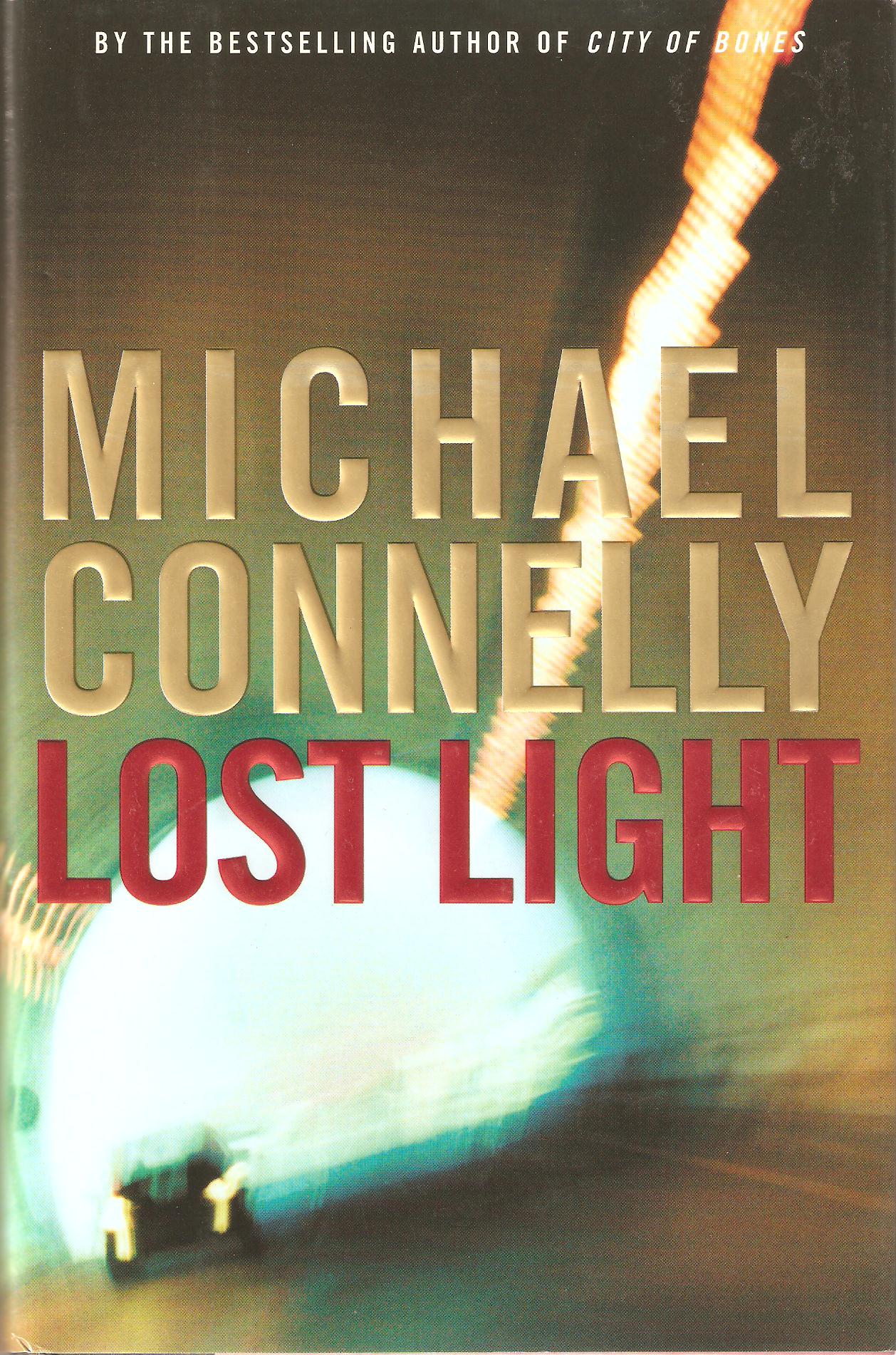
A post and an announcement today. First the post.lost-light

A few years ago I was at the Men of Mystery conference in SoCal, a one-day gathering of mystery writers and readers. The keynoter was Michael Connelly, and something he said hit home.

He was talking about advice he got early on from Joseph Wambaugh. Wambaugh, the L.A. cop turned bestselling author, told Connelly that the really interesting thing is not how the cop works on the case; it’s how the case works on the cop.

Connelly took that to heart as he began his Harry Bosch series, and the development of Bosch over the last nearly quarter century is nothing short of astonishing. We are seeing, right before our eyes, the production of greatest detective series ever written. I love me some Raymond Chandler and Dashiell Hammett. William Goldman once opined in the New York Times that the books by Ross Macdonald were “the finest series of detective novels ever written by an American.”

But in my view Michael Connelly has taken over that distinction.

First off, his plots are always gripping. The complex mysteries come together slowly, piece by piece, as Harry does his detective work. The procedural aspects are highly detailed yet never dull.

But it’s how the cases work on Harry that takes us deeper. In each book there is something that gets to Harry Bosch and grips his soul. For example, in Lost Light, Harry (retired and working privately) sets out to solve a cold case he worked years earlier. He recalls the position of the victim’s body:

But it was her hands that I would remember the most. Somehow when her lifeless body was dropped to the tile, her hands fell together. Off to the left side of her body, they were directed upward from her head, as if she were reaching out to someone, almost beseechingly, begging for something. They look like hands from a Renaissance painting, like the hands of the damned reaching heavenward for forgiveness. In my life I have worked almost a thousand homicides and no positioning of a fallen body ever gave me such pause.

Perhaps I saw too much in the vagaries of how she had fallen. But every case is a battle in a war that never ends. Believe me, you need something to carry with you every time you go into the fight. Something to hold on to, an edge that drives you or pulls you. And it was her hands that did it for me. I could not forget her hands. I believe they were reaching to me. I still do.

So the lesson for today is this: Don’t make your novel just about how a lead character works on the plot, but how the plot works on the lead character. For where does originality come from? Not just in the twists and turns of plot. It also comes from the twists and turns inside a human being navigating a life-and-death struggle.

If you want to see how a master does it, I commend to you the novels of Michael Connelly.

And now my announcement. I have just released my second Mike Romeo thriller, Romeo’s Way. It begins this way:

IT WAS THE first Tuesday in March, the sun taking its sweet time fighting off the cloud cover and recent rains, when I saw the kid who wanted to die.

RomeosWay_med

It can be ordered here:

AMAZON

KOBO

NOOK.

It’s also available in a PRINT VERSION.

To sum up: There are popular series where the character stays basically the same. Some of these are highly entertaining. I enjoy reading them. But when they’re done, I pretty much forget them.

Harry Bosch is unforgettable.

That’s a high bar indeed. But as Brother Brooks put it recently, “The higher the bar, the sweeter the leap.”

So what about you? For those of you who are working on a series, do you give equal thought to the inner journey as well as the outer plot line?

Sometimes, the Story Is You…

Text message received on a mobile phone

I have this very handy app on my phone called MightyText. You put it on your phone, link it to your computer, and you can answer texts directly from your laptop without having to pick up your phone which of course also displays the messages. Texts people send you show up on your computer screen and you can read scan them while you are doing what are (usually) more important tasks or answer them right away. I can also use the keyboard instead of  swype typing. I am not good at Swyping, which on occasion has caused me to text “why don’t you stick it where the sun doesn’t shine” instead of “sure! I would be happy to help you with that.” Or something like that. We’ve all done it. Anyway…

…what follows is still unfolding, since it just started this morning. I got my first cup of coffee, went into my home office, and brought the screen up on my laptop. While I was waiting for my emails to load I looked at the text messages I had received overnight, including the following, which nestled among the others like a brown recluse spider hiding in a closet full of Christmas sweaters:


                                     Stop playing with my grandchild.


Now…I am what might generally be described as a hermit. I avoid talking to anyone if I am able and can stay comfortably in my house and yard for days at a time without leaving the premises. I don’t do things like coach the local grade school wrestling team, play a clown at parties, offer to take the neighborhood kids up to Dairy Queen, or hang around the city parks offering to push children on swings. So…my initial thought was…“Why me?” I waited a minute to see if a SWAT team would come busting in through the front door, confiscate my computer (all of the above notwithstanding, I really don’t want my computer confiscated) and frog march me into a van where I would be driven downtown and thrown into the bowels of what has been mislabeled as the “Franklin County Hall of Justice.” Which is my I am writing this from my ce…just kidding. Nothing happened. After a minute or two I calmed down. Usually when I hear hoofbeats I don’t think that it’s herd of zebras; the thinking part of my brain kicked in and I came to the conclusions that 1) the message was sent to me in error and 2) the person who sent it was in any event concerned about a potentially devastating situation involving a child. I decided to contact them. I did not recognize the originating text number; I have learned that people who initially contact you are more comfortable if you respond via the same medium, so I replied by texting the following:


                         Either 1) you texted your message to the wrong number (mine) or 2) there is a grievous misunderstanding here, but I have absolutely no idea who you are or what you are talking about. In any event, your text has been misdirected. If you have texted to the wrong number, you might want to send it to the intended party. If you think I have anything to do with your grandchild, you are wrong. Contact me directly and out in the open. I am more than willing to assuage any concerns you might have. I am a grandparent myself and can sympathize. Kind regards.


As I write this (Friday evening, EDT) I have not received a response. While waiting, however, I got to thinking…what would have happened if my door had gotten knocked in by the local gendarme, and I had been arrested, and the police found all sorts of reprehensible crap on my computer that I had not downloaded to it, but, by gum it was there, and the complaining person was someone who, as it turned out, I knew very well indeed? From the “who” and the ‘what” I got to the “why” and the “how” in fairly short order (the “when” is kind of irrelevant at this point). I started streaming a first page, then a second, and then a third, then realized that I had better start an outline, given that there are so many different ways to go with this (which is why I don’t mind sharing this little gem of an idea with you). I don’t know where this story will go, whether it will wind up with its feet propped up on a railed balcony in New Orleans’ French Quarter or end up with a broken axle by the side of road in Cut Off, Louisiana, but it’s going somewhere.

What I would like from you is five dollars to crowdsource this effort. Not really. I would like for you to share the oddest text you have ever received, either in error or by design. Please. And thank you.


First Page Critique of MOONSTONE

Jordan Dane
@JordanDane

Cry baby Truss ZF-9327-85193-1-001


Another courageous author has submitted the first 400 words of a work-in-progress anonymously for critique. Read and enjoy. See you on the flip side with my comments, then join me with yours.

PROLOGUE

Waterford, MN
June 4, 1994

By the light of the moon you can catch fireflies, or sit by a campfire watching the embers drift upward toward the stars. By the light of the moon you can stroll down a dirt road, or just sit on a back porch with a tall glass of iced tea. By the light of the moon you can propose marriage, or just leave your lover.

And by the light of the moon, if you have a shovel, you can try to bury your past.

That’s exactly what Jack Cicero had in mind, on this night in early June. The sun had already dipped below the horizon, and the full moon was threatening to make an early appearance. As he ducked under the oak trees, darkness shrouded him, causing him to have to use his flashlight which lit up the area like a beacon. All of his senses went into high alert. He pushed his thick eye glasses tighter on his nose. He strained his ears to listen for the sounds of approaching cars. The night was silent except for sounds of the Snake River choking itself on the rocks in its path; and the pounding of his own blood in his head.

He pushed on not willing to test his luck. He spied a large rock under the trees, and set the flashlight down in such a way as to shield its light from the road. If he heard anything, he could grab it in an instant and kill it.

He picked up his shovel, and cursed and groaned as he stabbed the soft earth at the base of the rock. He had to hurry, because this moon was a reluctant, silent witness rising higher in the sky, threatening to expose him. Although she tried, the full moon failed to penetrate the thick oaks overhead. But that didn’t make Jack feel any better. Despite the cool night air, he was breaking a sweat. He swore and picked up the pace. He was in a race to put everything behind him, closing one chapter so that he could open another.

With a groan, he hefted one final shovelful. Then he patted the dirt down and scraped some of last fall’s dead leaves over his handiwork. For a moment he thought that he might actually vomit. He dropped to his knees, leaning against the large rock and bent his head. A single tear rolled down his cheek, soaking into the sandy soil below. A final act of contrition. He wiped his face with his sleeve, pushed off of the rock and stood up. It was done. But Jack knew that no matter how much he could try to hide the past, it could come back to haunt him. He’d always be looking over his shoulder for someone to figure out his secret and expose him. Considering he knew just about everyone in Waterford, the list of possibilities was longer than the river itself.

FEEDBACK

OVERVIEW: At first reading, I liked this introduction because it stuck to the action (for the most part) and did not slow the pace with back story or explanation. That takes discipline for an author to do this. The narrative is simple and pulls the reader into the story with its mystery. Well done. But as I got into this on a 2nd and 3rd read, I found things I would edit if this were mine. This author shows promise and if the following items are addressed, I would keep reading.

THE START: I understand what the author intended with the first paragraph – to set the stage with a light and breezy beginning of harmless imagery before the reader is shocked once they realize the story will take a dark turn. Who’s POV is this? No one’s. It’s omniscient before the POV becomes that of Jack. This tactic–and the use of YOU–pulled me out. If the story is set up properly, where we see Jack in the dark with a shovel, he could be doing ANYTHING until we learn what’s happening and the mystery begins. The shock factor would be presented in another way, without the need for the faux lead-in.

THE ACTION: What is Jack doing? He’s got a shovel and a flashlight, but it doesn’t appear as if he’s burying a body because he’s not carrying anything else. Is he digging something up? He starts by digging into the ground with his shovel but ends by patting down a mound of dirt and pushing leaves over the pile to hide what he did. The transition from start to finish didn’t describe enough for me to understand what he’s actually doing. With the vagueness, the reader might make an assumption that would prove false later on, and the author takes a chance of alienating the reader if this is not made clearer. I also wondered why Jack would pick a spot by a road where he can be seen with his flashlight. If he’s got a choice and wants to be secretive, why risk a location where he can potentially be seen? I know the risk of getting caught adds to the tension, but maybe there would be a way for the author to explain why Jack picked the spot (even if it meant risk of discovery) and still leave an element of mystery.

WORD CHOICES: In 3rd paragraph, “The night was silent, except for the sounds of….” If there are sounds, the night can’t be silent. The night might be “still” or “quiet,” but not silent if noise is heard.

In 5th paragraph, calling the moon “she” pulled me out and made me wonder if another character had stepped into the scene.

In 5th paragraph, the moon can’t be a “reluctant” witness to anything, but in one line the moon is shining on him, threatening to expose him, then in the next sentence, that description is contradicted by this – “the moon failed to penetrate the thick oaks overhead.” (Oaks are usually ‘overhead’ too. Directional words like up, down, overhead should be scrutinized during the edit process. They can usually be deleted.)

I’m not a fan of the word THAT. It’s often unnecessary and can be eliminated.

DESCRIPTIONS: This might be nit picky, but this phrase pulled me out of the narrative and made me wonder if there would be a better way of describing what is happening. This comes across as TELLING to me and could be more effective.

As he ducked under the oak trees, darkness shrouded him, causing him to have to use his flashlight which lit up the area like a beacon. 

“The area” is actually the ground but what’s on the ground? How does the light play across it? it might be a more effective line if the author could get the reader to actually see the effect of the light, rather than merely saying it “lit the area.” Do the shadows of spindly grasses elongate and move as the light passes over it? The effect could add a creep factor. What sound do they make in the wind…for a guy who is already nervous?

PASSIVE VOICE: One of my favorite TKZ posts of all time came from Joe Moore in Jan 2012 – Writing is Rewriting. A great overview of the draft and edit process. Below are some examples of passive writing. My first pass at editing is to delete and tighten my sentences into succinct and clearer writing. Many readers might not pick up on the passive voice, but authors should strive to hone their craft and challenge themselves with each new project.

3rd paragraph: “was threatening” should be ‘threatened.’

5th paragraph: “was breaking” should be ‘broke.’

Last paragraph: “could try” should be ‘tried.’

PARAGRAPH LENGTH: I prefer to give the reader some white space so the paragraphs don’t appear laden and heavy as they look ahead. A heavy paragraph could encourage a reader to skim. As Elmore Leonard (RIP) once said – “Try to leave out the part readers tend to skip.” I often break up longer paragraphs into 3-4 sentences and change the length of those sentences to create a natural cadence if the words were spoken aloud.

FOR DISCUSSION:

What about you TKZers? What constructive criticism would you give this author?


HotTarget (3)

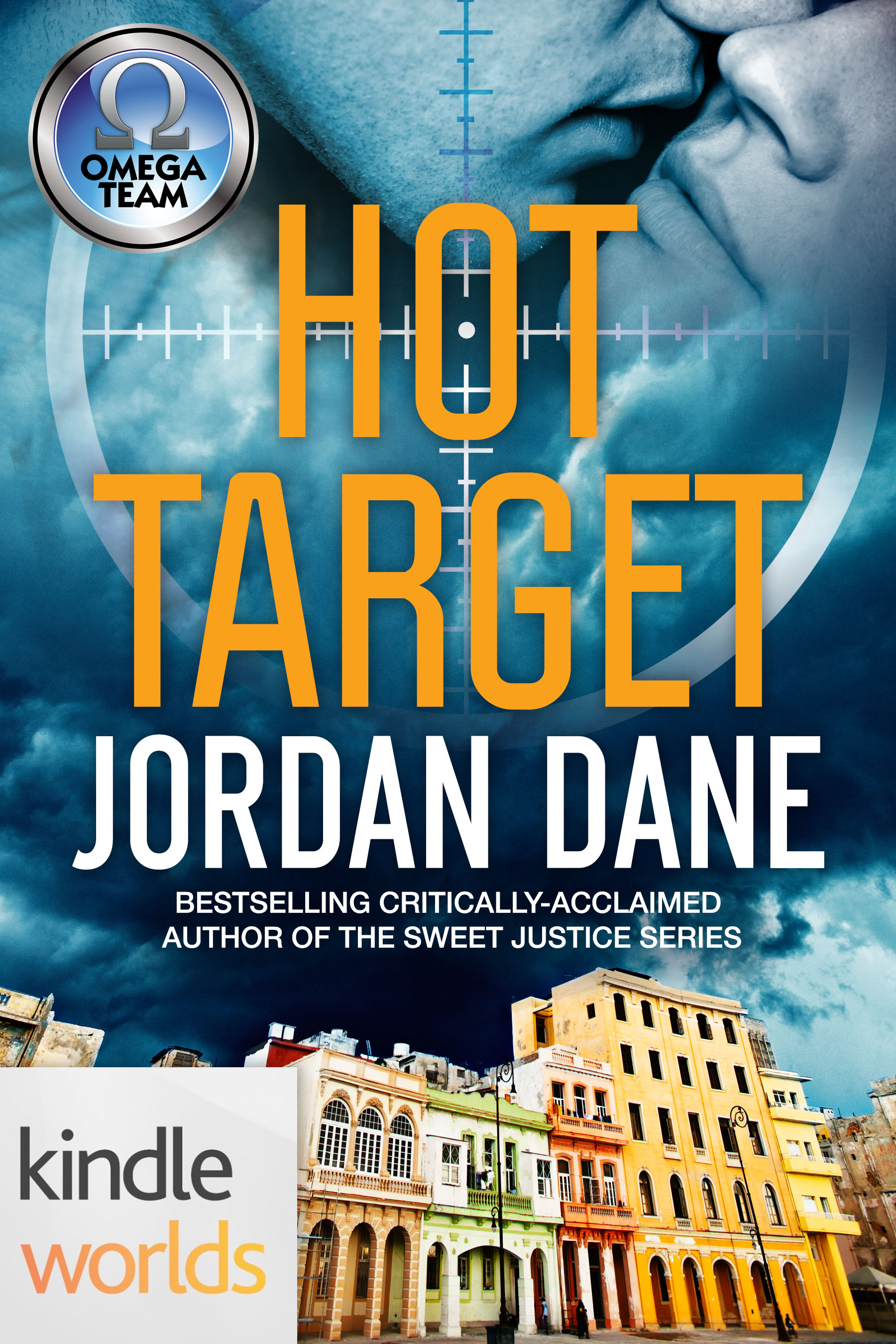
HOT TARGET – AMAZON Kindle World $0.99 – DISCOUNTED (Book 1 of 2)

Rafael Matero stands in the crosshairs of a vicious Cuban drug cartel—powerless to stop his fate—and his secret could put his sister Athena and her Omega Team in the middle of a drug war.

Croco Designs

Croco Designs

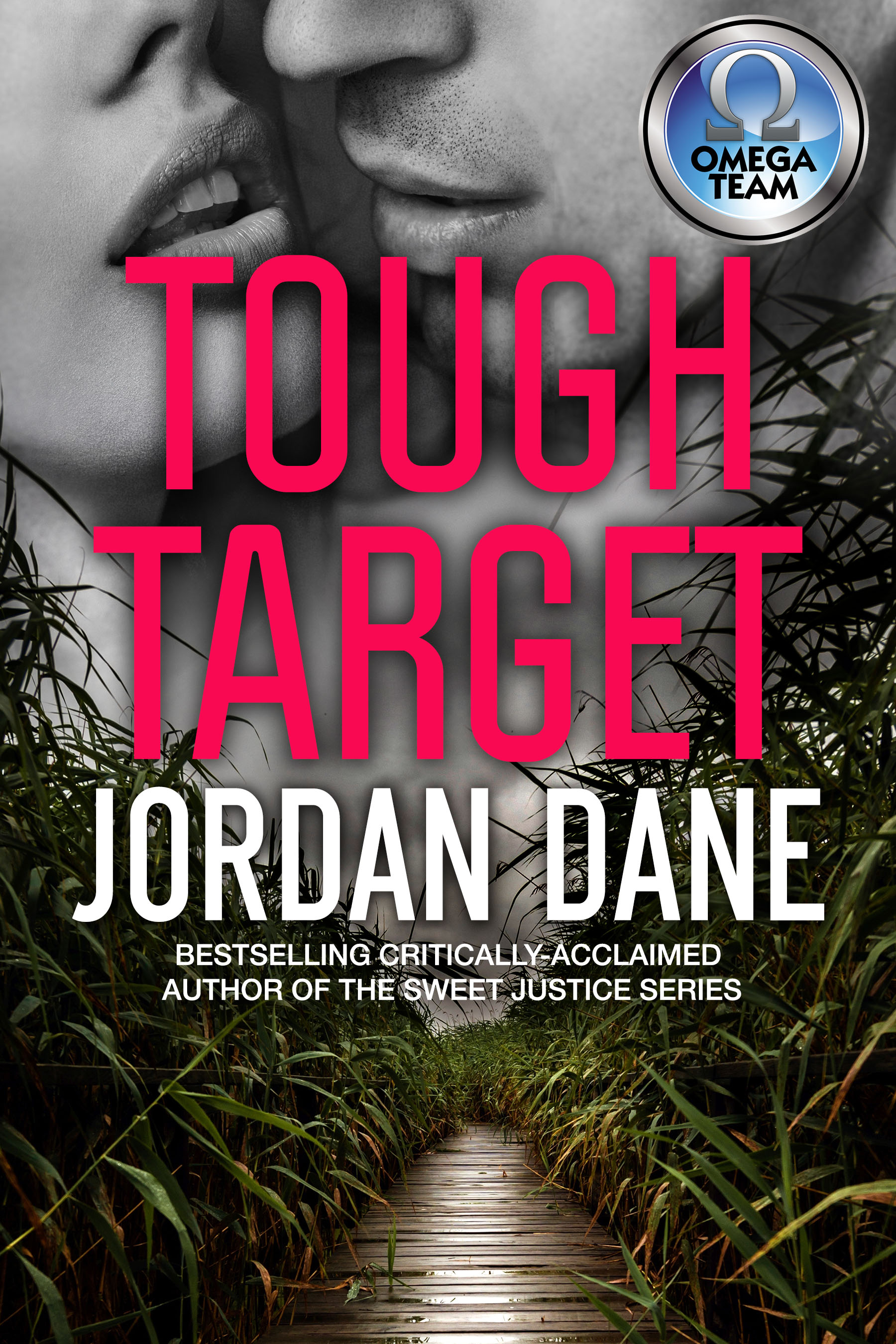
TOUGH TARGET – AMAZON Kindle World $1.99 – (Sequel Book 2 of 2)

When a massive hurricane hits land, SEAL Sam Rafferty is trapped in the everglades with a cartel hit squad in hot pursuit—forcing him to take a terrible risk that could jeopardize the lives of his wounded mother and Kate, a woman who branded him with her love.

Le ving O t the P rts Pe ple Sk p

Elmore Leonard, one of our best American writers, famously said that he tried to “leave out the parts people skip” when he was writing. Anyone who has read a Leonard novel knows that they are lean, move quickly, and certainly don’t require any skimming.

But what exactly does that mean?

People start skimming when they lose interest. When they want you to get on with things. When they’re not as engaged by the story as they should be.

So how do you keep them engaged?

What follows are a few ideas.

KEEP YOUR PROSE STYLE
SIMPLE, ECONOMIC, AND CLEAR

You can certainly be clever and artistic, but never sacrifice economy and clarity for the sake of “art.” Much of that art, in fact, is writing sentences and paragraphs and pages that flow from one to the next, giving the reader no choice but to hang onto every word.

And clarity is always important. If a reader is confused about what is going on, she may well give up on you.

Don’t bog your story down with too much description.

Descriptive passages can be quite beautiful, but your job is to weigh whether or not they’re necessary. Poetic writing is often wonderful, but those who can pull it off are rare.

Gregory MacDonald, the author of the Fletch books, among others, once said that because we live in a “post-television” world, it is no longer necessary to use the amount of description needed in the past. We all know what the Statue of Liberty looks like because we’ve seen it on TV. We’ve seen just about everything on TV, and probably even more on the Internet.

So, I think it’s best to limit your descriptions to only what is absolutely necessary to make the story work. Meaning: enough to set the scene, set up a character, or to clarify an action.

Let’s face it. Saying something as simple as, The place was a dump. Several used syringes lay on the floor next to a ratty mattress with half its stuffing gone is often more than enough to get the message across.

If you can, describe a setting through the eyes of whatever character controls the scene (meaning point of view). If you include the description as part of that character’s thought process, colored by his or her mood or personality, the description then becomes much more dynamic and also reveals a lot about that character.

One man’s dump, after all, may be another man’s paradise. And showing how a character reacts to a place is much more interesting than a static description.

TEASE YOUR READERS

One of the biggest mistakes I see aspiring writers make is that they try to reveal too much about character motivation and story too soon. Your job—as crass as it might sound—is to manipulate your reader. To keep her reading. Turning those pages.

Imagine meeting someone for the first time and they tell you everything there is to know about them. Where they were born, where they went to school, how many affairs they’ve had, how many brothers and sisters, their favorite color, their favorite food—you get the point.

What makes people interesting to us is that all of these things are revealed over a long period of time. We get to know them gradually, rather than all at once. They are a mystery that we have to unravel.

The same holds true with storytelling. You manipulate your readers by constantly creating questions in their minds. Why is she doing that? Where is she going? What happened to her in the past that makes her afraid of confronting him?

If we know it all up front, we’ll lose interest fast.

Actor and comedian Keegan Michael Key recently described improvisation as walking backwards. I think the same applies to writing fiction. You start with a character and as you walk the reader backwards, more and more gets revealed. The chair he’s sitting in, part of the room surrounding him—there’s a bed over there, a sofa to his right—then you keep walking backwards and you discover that one of the walls has crumbled and you begin to hear the sounds of traffic and you realize the man is sitting in a chair in a house with only two walls and no roof that has been partially destroyed by a tornado ,and he’s more or less sitting outside…

You start close and pull back and reveal, reveal, reveal.

GIVE YOUR CHARACTERS
A SERIES OF GOALS

Most stories will involve a central character who wants something. In a thriller, for instance, that may be something very big. The hero wants to stop the bad guy from, say, blowing up the federal building.

But if that’s all the story is about, then I’m yawning already.

If you give the hero a series of goals, smaller points he or she must reach—both internally and externally—before finally reaching that ultimate goal, then your reader will never lose interest.

A great example is the third Die Hard movie, Die Hard with a Vengeance.

The bad guy has something nefarious up his sleeve. But in order to distract the police from that ultimate goal, he sends them on a series of wild goose chases involving high explosives. And because our heroes are moving from one goal to the next, we’re never bored. In fact, we spend much of our time on the edge of our seat.

In the meantime, the main hero suspects that something is up, and as he tries to puzzle it out, we’re right there with him. We have only as much information as he has, so we’re not about to abandon ship until he (and we) knows the truth.

But more importantly, we also have a dynamic relationship playing out on screen between two characters played by Bruce Willis and Samuel L. Jackson. These two men must work together reluctantly, and because we find them engaging, our stake in the outcome of the story is even higher.

Which brings me to my final point:

CREATE COMPELLING CHARACTERS

If you don’t create characters who are interesting in themselves, who have internal struggles we can relate to, who have fears we understand, who have a goal that makes sense to us on a personal level, then it doesn’t matter how cleverly you plot your novel. We won’t care.

Hopefully all of the above will help you “leave out the parts people skip.” And if you want to find out how the master himself does it, go pick up an Elmore Leonard novel today.

But be warned. He does it so well, it’s seamless. So you’ll have to pay close attention…

First Page Critique: The Challenge Of Telepathy

imageToday we’re reviewing a first page submission titled CHECKS AND BALANCES. I’ll add my comments at the end. Then, I invite you to add your constructive feedback in the Comments.

CHECKS AND BALANCES

The Peak District, Year Eight of the First Lord and Eternal Blessed First Lady’s Glorious Regime. June.

I pushed through the ranks of stern-faced men and women dressed in combat trousers and canvas jackets until I reached David.

“Good of you to finally join us, Melanie.” Without another word, he set out hacked CCTV feed to show Somerset House from the Strand.

The elegant arches and columns of the Regime’s headquarters formed a stark contrast to this utilitarian network of abandoned mines. I dutifully studied the armed soldiers guarding the archway and the helicopters hovering above the courtyard, but the larger-than-life portraits that dominated the façade demanded my attention.

Honour the First Lord demanded the painting on the left, above an image of a striking man in replica nineteenth-century military uniform. Remember the Eternal Blessed First Lady mourned its companion on the right-hand side. Its subject appeared as fragile and innocent as a rococo shepherdess, but my co-conspirators considered her a she-devil in life and their most high-profile victim in death.

“There’ve been too many deaths, too many prisoners. We need to stop the Regime once and for all,” David intoned. Years of outdoor living had given him the muscles and hearty glow he could only have dreamt of in his old life as an academic. When he spoke, people listened.

I ignored him.

My eyes lingered on the second portrait until its features blurred. Until I was content that the so-called Eternal Bless First Lady’s curves, red lips and Dior gown bore no resemblance to my soldier’s body and weather-beaten face. The Treaty camp didn’t possess a mirror, but I could well imagine the changes wrought by five years of camping in the peaks and hiding in mines, wracked by cold, hunger, and the constant fear of discovery. Besides, Marianne Helmsley’s defining feature had always been her Rapunzel curls, and I’d cropped my hair to the skull the night I fled to the Treaty.

No one had recognized me before. No one would recognize me now. If there was one thing both sides agreed on, it was that the dictator’s wife was dead.

My Comments

No doubt the writer has a strong mental image of everything that’s happening in this first page, but that image wasn’t conveyed cLeary enough for me as a reader to get oriented within the scene. I needed more of a sense of the physical context in which the scene is taking place. For example, the early reference to “hacked CCTV feed” made me assume that the characters are viewing everything else that is being described that described on a monitor or screen of some sort, but I wasn’t certain.

Grounding and Context

The second paragraph refers to “Somerset House On The Strand,” followed immediately by a reference to “the Regime’s headquarters.” By those places are contrasted with “this utilitarian network of abandoned mines,” I was floundering at sea.

Eccentric Language Creates Confusion

I kept stumbling over some unusual language and word choices.

For example, in the following line

Honour the First Lord demanded the painting on the left

I wasn’t sure if the writer intended to use the verb “demanded” as written here, or simply made a mistake. The next line only exacerbated my confusion by injecting a convoluted character name (“Remember the Eternal Blessed First Lady”), along with another eccentric verb choice.

Remember the Eternal Blessed First Lady mourned its companion on the right-hand side.

As a general rule, it’s best to avoid the over-use of confusing, idiosyncratic language. For example, the following introductory framing line struck me as unintentionally humorous:

Eternal Blessed First Lady’s Glorious Regime. June.image

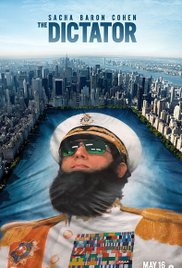
It reminded me of the mockumentary film “Borat: Cultural Learnings of America for Make Benefit Glorious Nation of Kazakhstan”. (Which is probably not the tone that the writer had in mind!)

A Part Well Done: A Snappy KIck-off

I did like the deft way the author kicked out of the scene at the end of the page.

If there was one thing both sides agreed on, it was that the dictator’s wife was dead.

That line gave me the first strong clue about the situation being presented in this story: a military dictator’s wife forced to go incognito within a hostile environment. That’s an intriguing setup for a story. (Update: See Sheryl’s suggestion in the Comments to use this line as the first line of the story–it’s a great idea!)

Writing as Telepathy 

Writing is telepathy, Stephen King once said. The writer of CHECKS AND BALANCES needs to make sure that the reader can “see” the images  that are playing inside the story creator’s mind. It’s not an easy task, to be sure–but that’s the challenge of writing effectively.

A big thank you to today’s brave writer for submitting this first page! Please add your feedback in the Comments.

The Higher the Bar, the Sweeter the Leap

by Larry Brooks

We’ve all read a novel that changes our lives.  That makes us either want to become a writer, or glad we are already chasing the dream.

And a little sad, because in our heart we know we will never be quite that good.

Most of us have several of those, stories that are personal to us because it feels like we discovered them.  We remember them like love affairs that have left us different, enriched, even a little broken-hearted, if nothing else than because there can never be another first time.

And yet, every time we come back, it just gets better and better.

When such a novel resurfaces as a movie  — in this case 20 years later — we approach with caution.  And yet, with itchy excitement, because we get to immerse in that world again, live it through the eyes of a director with the same response to the novel that we had… this is a story that deserves to live on.

Just maybe it will live up to the book.

Last week I caught a trailer for a new film release that got my attention.  

Not because I recognized it as an adaptation of a novel that blew me away, but because the story being teased touched those old nerves in the same way.

And then it hit me.

The film is called Manhattan NightManhattan Night Poster

The novel that blew my mind in 1996, written by Colin Harrison, was/is entitled Manhattan Nocturne.

Perfect.  Hollywood dumbs down the title, taking the je ne sais quoi right out of it, but keeps the tonality and plot intrigue of its core… this could not be a coincidence.

Some dreams do come true.

That novel, the one that set the bar high, is about to be released as a movie that promises to do the same thing.

What you need to know about that novel, and the movie they’ve finally made from it, is delivered in two short blurbs… one about the story, the other about the author:

When a seductive stranger asks tabloid writer Porter Wren to dig into the unsolved murder of her filmmaker husband, he is drawn into a very nasty case of sexual obsession and blackmail – one that threatens his job, his marriage, and his life.

Sexy old school noir thriller with brains, anyone?

Colin Harrison was the emerging pulp literati superstar of new millennium.  He Image result for manhattan nocturnewas referred to by a reviewer as the poet laureate of American thriller authors, and has a resume that reads as if it were the wet dream of a newly minted MFA graduate with commercial sensibilities (which he was, in 1986, from the University of Iowa Writer’s Workshop).

Manhattan Nocturne was his second novel.  His third novel, Afterburn, became a highly touted New York Times Bestseller, and the second best book of 2000, right after Zadie Smith’s White Teeth.

Even his wife was/is a bestselling novelist (Kathryn Harrison, with an intimidating Wiki of her own).

What could go wrong?  Well, a 20-year wait to get the film made, that’s what.

The guy’s prose is… stunning.

Not in a lit prof you’ll-never-see-me-holding-a-paperback-on-the-train sort of way, but in a Dashiel Hammett meets Mickey Spillane channeling Raymond Chandler sort of way, but with the swagger of a White House speechwriter.  Often in workshops, when I get to the part where we talk about — and try to understand how to craft — stellar writing voice, I simply read the first page of Harrison’s Manhattan Nocturne aloud, which contains all of three adjectives yet reads like the breathless musing of a mad genius reporter teetering on the abyss of The Best Scoop Ever, searching for killer lead.

Universally, the writing audience silently mouths a chorus of “oh my…”

He writes our kind of prose.  The poetry of thrillers and mysteries set on fire with passion and tension and the promise of shocking betrayals.  Narrative that kills.

So there you go.  A great read and a movie ticket for you, to light your writer’s brain on fire.

Read the Wikipedia on the novel HERE.

Then click on the movie poster above (not the book cover) to see the trailer.

That bar… it just keeps getting higher and higher.


Lest We Forget

by James Scott Bell
@jamesscottbell

SullivanBallou

Maj. Sullivan Ballou

Tomorrow is Memorial Day. For years now that day has become more associated with hot dogs, beer, and picnics than for what it was intended to commemorate. It is one day in our year when, as a country, we remember the men and women who paid the ultimate price so that we could have … hot dogs, beer, and picnics, wherever we please. And the freedom to move around, say whatever is on our minds, write whatever we choose to write –– without the fear that we’ll get thrown in a gulag or “disappeared” in some North Korean valley.

We dare not treat these freedoms lightly.

In 2000, Congress passed The National Moment of Remembrance Act. It “encourages all Americans to pause wherever they are at 3:00 local time on Memorial Day for a minute of silence to remember and honor those who have died in service to the nation.”

Set your alarm. We owe our honored dead at least one moment of reflection.

Perhaps we might gather some family around and read the following, an excerpt from a letter written by Maj. Sullivan Ballou to his wife at the start of the Civil War. The entire letter may be found here.

Ballou was a Rhode Island attorney who volunteered for the Union Army after the attack on Fort Sumter. I offer it here because, as writers, we can appreciate the beautiful turn of phrase in a personal letter of that era. Thank goodness email and Twitter did not exist in the nineteenth century.

It also gives us the heart and mind of a soldier about to go into battle on behalf of a higher cause –– to “pay that debt” owed “to those who went before us through the blood and suffering of the Revolution.”

Headquarters, Camp Clark
Washington, D.C., July 14, 1861

My Very Dear Wife:

Indications are very strong that we shall move in a few days, perhaps to-morrow. Lest I should not be able to write you again, I feel impelled to write a few lines, that may fall under your eye when I shall be no more.

Our movement may be one of a few days duration and full of pleasure and it may be one of severe conflict and death to me. Not my will, but thine, O God be done. If it is necessary that I should fall on the battle-field for any country, I am ready. I have no misgivings about, or lack of confidence in, the cause in which I am engaged, and my courage does not halt or falter. I know how strongly American civilization now leans upon the triumph of government, and how great a debt we owe to those who went before us through the blood and suffering of the Revolution, and I am willing, perfectly willing to lay down all my joys in this life to help maintain this government, and to pay that debt.

But, my dear wife, when I know, that with my own joys, I lay down nearly all of yours, and replace them in this life with care and sorrows, when, after having eaten for long years the bitter fruit of orphanage myself, I must offer it, as their only sustenance, to my dear little children, is it weak or dishonorable, while the banner of my purpose floats calmly and proudly in the breeze, that my unbounded love for you, my darling wife and children, should struggle in fierce, though useless, contest with my love of country…

I know I have but few claims upon Divine Providence, but something whispers to me, perhaps it is the wafted prayer of my little Edgar, that I shall return to my loved ones unharmed. If I do not, my dear Sarah, never forget how much I love you, nor that, when my last breath escapes me on the battle-field, it will whisper your name.

Forgive my many faults, and the many pains I have caused you. How thoughtless, how foolish I have oftentimes been! How gladly would I wash out with my tears, every little spot upon your happiness, and struggle with all the misfortune of this world, to shield you and my children from harm. But I cannot, I must watch you from the spirit land and hover near you, while you buffet the storms with your precious little freight, and wait with sad patience till we meet to part no more.

But, O Sarah, if the dead can come back to this earth, and flit unseen around those they loved, I shall always be near you in the garish day, and the darkest night amidst your happiest scenes and gloomiest hours always, always, and, if the soft breeze fans your cheek, it shall be my breath; or the cool air cools your throbbing temples, it shall be my spirit passing by.

Sarah, do not mourn me dear; think I am gone, and wait for me, for we shall meet again.

Sullivan Ballou died one week later at The Battle of Bull Run.

For all who surrendered their lives so we might enjoy the blessings of liberty, requiescat in pace. Rest in peace.