Coming Sunday, June 21, Paul Kemprecos tells us what it’s like to collaborate with Clive Cussler. And future Sunday guest bloggers include Robert Liparulo, Linda Fairstein, Julie Kramer, Grant Blackwood, and more.

Our guest today is New York Times bestselling author, Steve Berry. Steve’s books have been sold in 49 countries and 39 languages with over 8 million copies in print. His novels include The Amber Room, The Romanov Prophecy, The Third Secret, The Templar Legacy, The Alexandria Link, The Venetian Betrayal, and his latest, The Charlemagne Pursuit. His next thriller, The Paris Vendetta, will be available December 2009. In addition to writing novels, Steve serves on the International Thriller Writers board of directors as co-president.
By Steve Berry
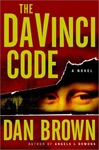
Over the past six years I’ve been asked countless times by the press, fans, and friends about The Da Vinci Code. It’s a natural question since my stories are constantly compared to it. Dan Brown even provided a wonderful blurb for my first novel, The Amber Room, (calling it “sexy, illuminating, and confident . . . my kind of thriller”). I still like reading that comment from time to time.
Dan achieved what every writer dreams about. He wrote a story that utterly captured the imagination. One of those tales that rang with a sense of originality. Remember all the press. The hype. The talk. The buzz. It was amazing. People flocked into stores and bought The Da Vinci Code by the millions. The result? A guy who barely existed after his first three novels, was catapulted into a worldwide household name. Eventually, non-fiction books, more fiction, television shows, games, memorabilia, a movie, you name it, and that book spawned it.
But that will not be Dan’s legacy.
Nope.
What he did is bigger than all that.
Dan will be remembered for bringing a genre back to life.
Here’s reality: When the Cold War ended in 1990, the traditional, tried-and-true-good-old-fashioned-spy-thriller died. By 1995 the genre was virtually gone. By 2002 editors simply weren’t buying, and people weren’t reading, spy thrillers. Sure, if you were Cussler, Follett, Ludlum, and Forsyth you were okay. Those long standing audiences were fully developed and totally assured. But if you were anyone else, especially a rookie trying to break in, times were tough. During the 1990s my agent submitted 5 separate thrillers to New York houses. They were rejected a total of 85 times.
Then, in March 2003, the world changed.
That was when The Da Vinci Code was released.
For the next 36 months The Da Vinci Code was either #1, 2, or 3 on The New York Times bestseller list, mostly in the #1 slot. On every other American bestseller list the story was the same, as was the case from around the world. Few books can claim such a feat. A genre that what was once called ‘spy thriller,’ re-emerged as the international suspense thriller, a blend of history, secrets, conspiracy, action, and adventure.
Just exactly what I, and many others, happen to be writing.
Many of us received our chance to find an audience thanks to what Dan Brown and Doubleday did in releasing The Da Vinci Code. Thrillers were hot once again. Hundreds of new books appeared. The resurrection led, in no small measure, in 2004, to the creation of International Thriller Writers, an organization now of over 1000 working thriller writers.
Happy days were here again.
Every few years a book comes along that literally changes things. Stephen King’s Carrie. David Morrell’s First Blood. Scott Turow’s Presumed Innocent. John Grisham’s The Firm. Those books fundamentally altered their genres. They also opened up opportunities that, before them, did not exist for others.
The Da Vinci Code is such a book too.
I tell the story that every time I pass a copy I stop and bow. Perhaps that’s an over-dramatization but, in my mind, I always utter a silent thanks. Maybe I would have made it to print one day. Maybe not. All I know is that I did make it in 2003 thanks to Dan Brown, Doubleday, and The DaVinci Code.
In September, The Lost Symbol will be released. This time Dan and Doubleday will not just resurrect a genre, they could well revive an industry. Book sales have been decreasing over the past two years. Print runs are down. Re-orders are slow. Backstock is disappearing. Already, bookstores and booksellers are salivating at the prospects this fall offers. People will, without question, return to the stores. Books will be sold, and not just Dan’s. The ripple affect will be huge. Everyone’s bottom line will be positively affected. This is precisely what the publishing industry needs. The Lost Symbol will certainly debut at #1 and remain there for many months, if not years. Already it is the single largest first printing in Random House history (5,000,000), but my guess is that number will increase before the fall.
Welcome back, Dan.
For the past six years, many a prince has fought over your throne. Several have laid claim, but none emerged to take your place.
Now they all must move aside.
The king is back.
May his reign be long and prosperous.
So what do you think? What effect will Dan Brown’s new thriller have on the publishing industry? Will it surpass The Da Vinci Code?
~~~~~~~~~~~~~~~~~~~~
Coming Sunday, June 21, Paul Kemprecos tells us what it’s like to collaborate with Clive Cussler. And future Sunday guest bloggers include Robert Liparulo, Linda Fairstein, Julie Kramer, Grant Blackwood, and more.
John Ramsey Miller
My wife’s bank was purchased by this other huge bank with offices in San Francisco and she was in that fine city all week, while I was at home with the chickens and dogs. Monday she went to Alcatraz Island and took the tour. She called me to say that she couldn’t believe how bleak the place was and how small the cells were. I knew that already since I’ve been in prisons before. And I reminded her that she had been there too, albeit only in the visitors area.
When I was photographing country music artists for album covers and magazine features I went to “The Walls” in Nashville with Tammy Wynette and Mel Tillis to photograph their concert for CBS Records. I got pictures of Tammy walking around in a huge room filled with a few hundred inmates armed only with a microphone, and she was a safe as she would have been sitting at home, where she actually died some years later. One of the inmates was also taking pictures and I talked with him about photography. The walls was a gothic prison where Burt Reynolds filmed the Longest Yard. Tony M., the inmate with a camera, was there doing 54 years for armed robbery.
A week later, I was approached by the warden at the prison (who later lost his job and, if memory serves, went to prison himself for borrowing money from inmates) who said Tony had asked him if I could help him set up a photographic darkroom for use by the inmates who put out the prison newspaper and I agreed. I looked at the space, which was across the main yard where the inmates spent their days. I designed a well-equipped darkroom, which Tony was to run. Tony was a very nice guy for an armed robber. In fact he was a nice guy period. The inmates liked him because he furnished them with pictures for their loved ones. In exchange they traded him things for the pictures, which is how prisons work.
For a period of a few weeks I would present myself at the gate and the guards would open the gates and let me in and I would wander to the designated darkroom space. I had nothing to fear because the inmates knew I was helping Tony, and I walked around unaccompanied by guards as safe as a newborn puppy. I went everywhere with Tony and being under his protection and I spent a lot of time talking with inmates. I taught Tony how to use the equipment I selected, and he was a natural. After Tony was moved to a newly built facility two years later I would take my wife and two-year-old son to visit him on Sundays and my son would sit in his lap.
Later I went to Leavenworth, Kansas to photograph Johnny Paycheck in concert in that federal facility, and it turned out that the warden was a nephew of Bill Monroe, the Bluegrass Icon. Bill Monroe was a casual friend of mine, and I had done a couple of his album covers. I was invited to go coon hunting with him. The warden gave me the celebrity tour, and I visited the rooms where the Birdman of Alcatraz had done his bird thing. The bird man was a cold-blooded sexual predator and murderer who had a soft spot for birds. The warden told me that the birdman killed several inmates after he’d raped them and that was the reason he was never released on parole. Hard to imagine Burt Lancaster filming a scene like that for the movie. I met well-known mobsters, a Brinks truck robber, killers of people with Federal implications, and other famous criminals. It was the kind of tour normal people didn’t get. That day I was with the warden, who walked around without an escort. I was amazed.
In 1981 I was living in New Orleans, and one night at a dinner for a mutual friend (Tony Dunbar, a lawyer who worked for Amnesty International). I was seated beside Sister Helen Prejean who lived in the projects and ran a ministry from her apartment. She worked with death row inmates. This was before she wrote DEAD MAN WALKING and I found her brilliant and totally delightful. She asked me how I felt about the death penalty and I said I was all for it. Long story short she said if I knew the inmates she worked with I couldn’t hold that belief. Two years later I found myself on Death Row setting up a formal portrait studio in the main hallway and loaded film in a cell on death row at Angola. During those two years I had spent untold hours negotiating with attorneys, inmates, and prison officials in order to do portraits of the men under sentence of death. In 1981 executions had been halted for a few years, and the big burn was in the works as cases wound through the courts. I met and photographed Elmo Sonier (Son-yay) one of the two men turned into one for the movie. The other was Robert Lee Willie, I didn’t photograph him. Elmo was one of an impromptu two-man team who raped a teen-age girl and murdered her and her boyfriend. The pictures ended up running in John Grisham’s The Oxford American in the largest selling issue in its history. The pictures, formal large-format portraits of smiling men dressed in street clothes ran years after the men in the pictures were executed. The handcuffs and leg shackles didn’t show in the portraits. If you saw MONSTER BALL, you saw Death Row and depictions of the guards. None of the guards were pro death penalty (at least they told me they were against executions) because they spend their days with the men they would have to help kill.
I have never written about prisons in my books, even though I am familiar with them and got to know more than a few inmates. After that series, I lost interest in photography, and began writing. When those men were executed it depressed me. I was depressed because I felt deep compassion and empathy for the victims, and I felt a sense of wasted lives of the inmates. I look at the pictures of smiling death row inmates and I try to imagine how their victims saw them in their last moments alive. It was impossible to imagine these men as cold-blooded murderers, but they were, and had done horrific things I won’t go into here. They did the crime and they each paid the price society exacted. As long as people harm others, prisons will be necessary. A lot of prisoners shouldn’t be there, but a lot should and have to be. The death penalty has the purpose of making certain that people who are executed never kill again. But the truth is that killers don’t think they’ll ever be caught, much less convicted and executed. It isn’t a deterrent. And it is certainly barbaric. Not much I can do about the people in there, but I can live my life hoping I can help someone make better choices, and know they are valuable.
Here I go wandering again and not blogging about writing, but talking about my life. (It’s all about me). Everything is about writing because our sum totals go into everything we write. The fact is that people flat amaze and astound me. That’s a huge part of why I write, and the people I’ve been fortunate enough to know furnish parts of the characters I put on paper. It seems to me that we all have an amazing capacity for doing good things and being positive influences on people in our lives. At the same time we all have the capacity (hopefully unrealized) for channeling evil and destroying lives. Although most of write about evil, it rarely if ever wins in the end, and good triumphs in the end. I like to think life is like that and good will always shine through and prevail.
By John Gilstrap
http://www.johngilstrap.com
It’s June, so another graduation season is drawing to a close. In high schools and colleges all over the United States, proud students are donning caps and gowns, and posing for pictures with even prouder parents and grandparents. Late spring is the time of unbridled opportunity. Those young men and women literally own the future—their own, to be sure, but also mine, by extension. Given the inherent joy of the season, I wonder why so many adults seem to take pleasure in screwing it all up.
When the announcement is made at the family dinner that young William or Wilhelmina has a computer science degree or a business degree, or that they’ve been accepted to the law school of their choice, the sense of approval is palpable. Everybody knows that those kids are set for life. Their future will be filled with money and material gain.
Have you noticed that music majors or creative writing majors or acting majors don’t receive the same universal acceptance? Is it because the presumed path to wealth isn’t quite so linear? Is it because liberal arts and social sciences aren’t as important to society as harvesting a new crop of lawyers? This bothers me.
I find it difficult to believe that at the doddering age of 21, every law school inductee is truly pursuing his or her passion. I could be wrong—I’ve spent a lifetime being wrong many, many times—but whenever I see a newly minted lawyer or accountant, I get the sense that in more than a few cases, their beaming smiles are reflections of just their own ambitions, but those of Mom and Dad as well.
Maybe I don’t want to see so young a person with so pedestrian a dream as being a lawyer or accountant. Age forty-one is the time for 12-hour work days and heavy responsibility, not twenty-one. Is this really their dream? For some, yes. For many, I suspect no.
You want to see lofty dreams? You want to be inspired by a youthful spirit? Sit down and talk to those creative writing students and the musicians. They know that the odds of success are stacked against them, but they don’t care. They’ve got a passion, and they’re going to pursue it to the end, until they either succeed or are forced by finances or a broken spirit to declare defeat.
If they beat the odds—and let’s face it, they are long odds—naysayers will pronounce them to be “lucky.” But that’s only if the success is huge. Like George Clooney or John Grisham huge.
Otherwise, in my experience, people will find a way to diminish true success and turn it into something less than it is. It’s only a TV movie, not a real movie. It’s only being published by a small press, not a major house. It’s only the Washington Opera company, not the Met. It’s only the touring company, not Broadway. Sure, he made it to the Chicago Bears, but he never made it above second string.
It’s a shame about William. He never really made it. Never mind that William is doing what he loves.
I feel sorry for the kids who have been career tracked by their parents. It’s foolish to think about becoming an artist, they are told, because it’s impossible to make any money at it. They’ll prove their point by reciting a litany of one hit wonders and abject failures from among their own childhoods. Give up now, son; you’ll never make it. This from the same mother or father who said never give up on the soccer field or in Math class. Those are important. Without the connections and the A-plus report card, Harvard is off the table, don’t you know.
I know that I am painting with a very broad brush here, but I’ve known these parents. I’ve had to justify why I was ruining my own son’s chances at success by not shipping him off to boarding school where he could start networking at age fourteen. (I’m not making that up. I turned the debate around, though, when I asked the overachievers why they were willing to surrender custody of their adolescent children at the moment in their lives when they most needed the steady hand and constant love of their parents.)
So listen up, graduates: It’s your life now. You have the God-given right to live it as you please. If acting like you’re forty when you’re 20 years younger is your thing, then go for it. But if you want to start a rock band or become a poet or set a new standard for sculpture, this is the time. If it doesn’t work, how much harm can you do to an accounting career that hasn’t started yet?
How do you even know that you want to be an accountant if you haven’t tried a dozen other things? I’ve got nothing against accountants, don’t get me wrong, but this is an important life choice. Suppose you hate being an accountant? Changing your mind becomes a lot harder after you’ve got kids and a mortgage, and I think that the seeds of doubt over what might have been if only you’d tried could be crippling.
I say if you’ve got talent and a dream, pursue the hell out of it. This is the time. Success only comes to those to endeavor to achieve it. Failure only comes to those who surrender.
And to surrender without trying, well, that’s just cowardice.
So here’s something I didn’t find out about until after my first book was published: Nielsen, the same company that ranks TV shows, is responsible for maintaining records of book sales. And, as with the TV ratings, there’s a vast disparity between what those numbers say and what the reality might be (does anyone honestly believe that many people are watching the “Ghost Whisperer?”) Among all the industry people I’ve spoken with, it’s generally acknowledged that Bookscan tends to be wildly inaccurate.
Case in point: I know for a fact that, when compared with my royalty statements, Bookscan only counts about a third of my sales (and that’s a year after the fact). Despite their claim to “provide weekly point-of-sales data with the highest possible degree of accuracy,” there are a number of sales venues they simply don’t factor in. Amazon, for example. Or Walmart. Or airports, drugstores, supermarkets; in other words, pretty much anywhere paperbacks are sold. I’ve heard that the numbers come closer with hardcovers, but with mass market paperbacks they’re way off the mark.
So why, then, do these numbers matter? For the sad truth is that they do. During my agent search, one agent looked up my Bookscan numbers right in front of me. And few people seem to know exactly how far off they are. From various editors I’ve heard that they double, triple, or even quadruple the Bookscan numbers to approximate actual sales.
In this day and age, why isn’t a better system in place? My publisher produces “velocity reports” the first six weeks of a book’s release–they know by the end of each week exactly how many copies have sold. So where do those numbers come from, and why aren’t those reported to Bookscan?
Big box stores like Barnes and Noble and Borders also know exactly how many books they’ve sold, almost on a minute to minute basis. If they stock eight copies of a book and sell five, they’ll only buy five copies of that author’s next release (or even fewer; sad but true. Which is why, as Joe noted yesterday, so many authors adopt pseudonyms these days in an effort to beat the system). So now that all of this information is computerized, why is the one “central clearinghouse” so wrong? A friend who works as an editor in Germany claims that they can get an accurate tally at the end of each and every day. Granted, Germany is a much smaller market than the U.S., but still. There has to be a better way.
Mind you, most authors don’t have access to their Bookscan numbers- publishers and distributors pay a fee for that information. I’m a big believer in transparency, and one of the most maddening aspects of being a writer is that getting a sense of where you stand is a constant uphill battle. This is why some authors become compulsive about checking their Amazon ranking, or trying to get feedback from their publisher regarding how sales are progressing. I’m not sure why that information is in short supply, but the Bookscan monopoly can’t be helping.
Coming up on Sunday, June 14, our guest blogger will be New York Times bestselling author and ITW co-president Steve Berry discussing the impact of Dan Brown’s new thriller THE LOST SYMBOL on the publishing industry.
And watch for future Sunday guest blogs from Robert Liparulo, Paul Kemprecos, Linda Fairstein, Julie Kramer, Grant Blackwood, and more.
I’m visiting my family in North Carolina this week, and was pleased to run across an article in a local paper that described the enduring value of regional dialects.
However, I don’t love it when authors use too much dialect in fiction. I think the over-use of dialect in dialogue is a huge story drag.
I once belonged to a writing group where a writer insisted on loading down his eighteenth-century naval adventure story each week with enough historically “accurate” dialect to sink a clipper ship. And what’s worse, he’d write phonetically accented dialect, so that it became taxing simply to wade through a few paragraphs. By the time his characters had been at sea for five minutes, I felt like I’d been reading for five hours.
But every time I suggested to him that there was too much dialect, he’d come back with, “But that’s the way people really spoke.“
And my thought-response to that was, so what? Reading it was hell.
With all due respect to Mark Twain, I think writers today need to convey dialect through techniques that don’t involve making the reader slog through irritating, hard-to-decipher dialect. We must try to give the rhythm of natural and regional speech without making readers suffer through a surfeit of “sanging,” “you’uns,” and “Oh, Law’s.”
These tools include:
But maybe it’s just me. In my writing group, I seemed to be the only reader who was highly allergic to dialect. What about you? Do you mind reading dialect in books? As a writer, what are some of the do’s and don’ts that you employ to portray a sense of dialect without turning off a reader?
~~~~~~~~~~~~~~~~~~~~
Coming up Sunday, June 14, our guest blogger will be New York Times bestselling author Steve Berry. And watch for future Sunday guest blogs from Robert Liparulo, Paul Kemprecos, Linda Fairstein, Julie Kramer, Grant Blackwood, and more.
I have to thank Jacqueline Winspear whose post on Naked Authors inspired this post. She was writing about the exponential increase in writing classes and MFA programs and exploring the question of whether creative writing can actually be taught. I want to tackle the thorny issue that accompanies this – what do creative writing classes really teach you and (hmmm…) are they worth doing at all?
My own experience has been decidedly mixed and I have to confess I’ve taken more painting classes than I have creative writing classes so it’s not like I’ve had a wealth of experience (though I do hope my novels are better than my paintings!).
I took a hilarious course in Australia on how to write a romance but soon realized that unless you LOVE Harlequin romances then it’s bloody difficult to write them (no matter how easy it looks to many people!). This class took a lighthearted approach to the genre and all its requirements and foibles, so I actually felt like I did learn something…though not, I’m afraid, how to write well.
In California, I took a class on how to write a novel well before I even attempted Consequences of Sin…now I’m not going to name any names in this blog but my experience in that class was less than inspiring. The teacher found it almost impossible to teach how to actually write a novel and the class had the unfortunately all too common cluster of writers: the bloody awful ones; the arrogant ones who wrote the most boring crap imaginable; the ones who were only there to rip other people’s work to shreds; and the genuine sensitive souls who spent most of the time utterly disheartened by the class. I hope you can tell I was in the last category:)
In this class we each had to present a piece about a novel we had read and most people did bugger all for this (though I did a rather nifty plot chart for Jane Eyre and that helped me far more than the class ever did!); we then critiqued one person’s work for the rest of the time. When it came to my turn the range of feedback was so bizarre as to be completely unusable (from “this is so exquisite I had no comments to make” to “have you ever been in jail? Because I have…” to “This is juvenile, adolescent trash (or was it puerile, I’ve blocked it from memory)”. My teacher was less interested in providing a critique than explaining that there were similarities with her own work (I guess she wanted to make sure I didn’t sue)… After this class I swore off taking another…but then I did a week intensive course only to find it was just as frustrating. By then, I was well and truly turned off writing classes!
I’m not saying that many classes are not genuinely worthwhile or that creative writing isn’t something than can (at least to some extent) be taught – although that is certainly fodder for a whole other blog post! Here’s my take on writing classes:
A successful writing class for me would have emphasized perseverance, editing, rewriting and more editing as key tools of the trade.
To be honest, I found the most valuable writing techniques I learned were not in a class but arose out of practice – writing a novel myself, editing it, rewriting it, editing further…then doing it all over again (and again). I don’t think any class can ever teach the skills you really need in this respect, because they have to come from within and have to include a determination to write no matter what and a determination to write the very best you can while constantly honing your craft.
So what have your experiences been with writing classes? Worth every penny or not worth a dime (or somewhere in between:))?
~~~~~~~~~~~~~~~~~~~~
Coming up Sunday, June 14, our guest blogger will be New York Times bestselling author Steve Berry. And watch for future Sunday guest blogs from Robert Liparulo, Paul Kemprecos, Linda Fairstein, Julie Kramer, Grant Blackwood, and more.
TKZ welcomes our guest blogger, Sandra Brown. Sandra is the author of over seventy novels including fifty-six New York Times bestsellers. Her latest is SMOKE SCREEN (August, 2008), and her new book, SMASH CUT, is scheduled for release in August, 2009.
By Sandra Brown
I can imagine the quizzical expression on the faces of most readers when they hear the title of my next book, SMASH CUT.

What the heck? Is that a noun or a verb? Neither? A little of both? A noun plus an adjective or a verb plus an adverb? Unless you work in the film industry or have a more than pedestrian knowledge of script writing, you probably aren’t familiar with the term. I’ve been a movie fan all my life, but I’d never come across that phrase until I started writing this novel and had to do some research into screen writing jargon, looking for a term that would apply to my story. Ergo – SMASH CUT. More on that later.
Most frequently asked question: Where do you get your ideas?
Most difficult question to answer: See above.
It’s tough for me to explain how an idea originated, because typically I don’t have a clue. Colleagues often cite personal experiences on which they base stories. Either they’re bald-faced liars (and I strongly suspect this of most of them) or, by comparison, I lead a much more boring life, because nothing ever happens to me that’s exciting enough to write about.
Not that I’m complaining. I’m a card carrying coward, so I don’t go looking for adventure. I avoid encounters with mean people, and certainly with wildlife, toxic plants, biting insects, and white water. I enjoy the great outdoors, but only if I’m appreciating it from behind tempered glass. My idea of camping out is staying in a hotel that doesn’t have room service after midnight. I have acute acrophobia, and I’ll go into the ocean only if the beach catches fire. I know, I know, I’m a barrel of laughs.
Where was I? Oh, right. I don’t have anything interesting to write about unless I make it up. And only sometimes can I say definitively how an idea came to me.
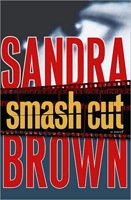
To an extent, SMASH CUT is an exception. Because I can tell you that at least part of this idea came from my family’s habit of dropping movie quotes into our conversations.
We’re all movie buffs. We have family standards, movies we never tire of watching, movies we’ve seen so many times we can practically recite the entire script but enjoy re-watching anyway. I think the familiarity makes these classics even more delectable, although the diehards who will watch a movie only once, vehemently disagree. These are also the people who will read a book only once. They are to be pitied. Probably a foundation should be started for them.
Anyhow, we in my family love movies of all kinds — funny, sad, scary, historical, contemporary, futuristic. Movies about war, cowboys, gangsters, love. Doesn’t matter. Our taste in films is as diverse as our taste in books. We like anything so long as it’s entertaining.

In 2006, the Academy of Motion Picture Arts and Sciences (Surely you’ve heard of the Academy Awards. . .) put together a list of seventy-five famous quotes and made a great looking poster out of it. Against a black background are a big gold Oscar and all these quotes written in different fonts. We had one framed for our media room, and it draws the attention of guests who get a kick out of testing their memories. Some of the quotes are easy to identify: “Frankly, my dear, I don’t give a damn.” Some only film historians would be able to identify with alacrity. Many are from recent pictures. Others date back decades.
The point is, among my family members, we were able to identify all seventy-five films by title and the actor who spoke the line.
So our stockpile of movie quotes is extensive. We have a suitable quip for nearly every occasion and conversation. “Napoleon Dynamite” alone was a treasure trove. Whenever one of us drops in a line (and sometimes it’s said by several of us in unison), the rest of us “get it,” while an “outsider” is left perplexed, wondering what the heck we’re all talking/laughing about. We’ve tried to ameliorate this rudeness by describing the movie scene and the context in which the line of dialogue was spoken, but it frequently loses it’s punch in the retelling.
I guess you had to be there.
You may think this sounds like a real drag, something that only people with very little else to do would engage in, but in our defense, I can think of worse things families can do together. It’s a harmless pastime. But you’re probably asking what relevance it has to plotting a novel. I’m getting to that, I promise.
I suppose this family tradition was in the back of my mind when I asked myself, “What if?”
Now on this, my colleagues and I are in complete accordance. Every novelist asks, “What if. . .?” It’s a derivative of the childhood “Play like. . .”
So I asked myself, “What if quoting lines of movie dialogue wasn’t quite so harmless? Play like one’s preoccupation with movies was detrimental or, say, deadly?”
Hmm. Interesting. Follow that and see where it goes.
About the time I began doing that, I revisited an idea which had occurred to me several years ago but had remained on the back burner: Passengers in an elevator become the targets of a vicious crime.
Hmm. Interesting. Again, follow that and see where it goes.
Are the elevator passengers acquainted or perfect strangers? Is the elevator in an office building, city hall, hospital, military post? Who commits the crime? Who’s the unlucky casualty?
What I didn’t realize until later is that a crime committed in an elevator poses all sorts of terrible problems, not only for the hapless fictional passengers, but for the idiotic writer who put them there!
And how would said writer tie in that scene – which was vivid in my mind and demanding to be used after languishing in my head for several years — with the movie buff? What’s the connection? And maybe the movie buff’s preoccupation with the movies isn’t a bad thing, after all. Maybe it just appears to be a negative fixation, when actually. . .
You see how this works? I keep asking, “What if?” until the plot reveals itself to me. I think of a story that way. It’s an entity that is there all along, but one day decides to shoulder its way into my consciousness. I can’t really take credit for doing anything except writing it down and passing it along to you, although more frequently than not, that shouldering thing takes months. It can be a painful process, involving a lot of hard work, self-doubt, cursing, and gnashing of teeth.
Once I had the plot for this book, I began “collecting” movie quotes and memorable scenes to incorporate into the story. I commissioned every movie fan I know to submit suggestions, particularly favorite murder scenes. What I learned was that I’ve got some really sick friends and family members. But I must admit, I came up with most of the film lines and images that wound up in the book.
Now, about that title. Having done my due diligence on script writing terms, I learned that “smash cut” refers to an abrupt edit that’s specifically designed to shock, jar, or scare the living daylights out of the audience.
I hope you’ll experience a few in SMASH CUT.
~~~~~~~~~~~~~~~~~~~~
Coming up Sunday, June 14, our guest blogger will be New York Times bestselling author Steve Berry. And watch for future Sunday guest blogs from Robert Liparulo, Paul Kemprecos, Linda Fairstein, Julie Kramer, Grant Blackwood, and more.
John Ramsey Miller
As if authors weren’t insecure enough… the sky is falling …again.
“Holy shades of the terror, Danton.” For as long as I’ve been in this game, the publishers, agents and editors have said things have never been worse in publishing, and everybody was always looking back at the “good old days.” Maybe this time they are right. If not worse, certainly our world has changed forever. And it could get worse than it is. The shakeout is not over, but there seems to be a lull in reorganizing and reshuffling at the major houses. At least it appears the wholesale bloodletting has slowed for the moment. The publishing behemoths seem to have reshuffled their cards and, leaning the fat, have resettled on their foundations. Some are acquiring books again in increasing numbers.
I’m not a businessman, but this is what I’ve managed to figure out:
More than usual even, booksellers don’t want to tie up capital in excess inventory. Most bookstores have lots and lots of books on their shelves, and the object is to roll inventory as often as possible. Thousands of books come out. If the author is new to them, and unless the buzz is enormous, they order as few copies as possible. If those sell, they might buy more, but normally they wait to see what the demand is before doing so––ordering as people ask them to. They order their stock based on the past sales of a book by a previously published author. On a clever or lucky buy, they will sell the books before they have to pay for them. Even though they can return books to the publisher for a refund, it’s a pain to lift them up and place them in boxes for shipping them back where they came from. With paperbacks they can just tear off the covers and ship them in envelopes to get credit, or a refund. I’m not sure exactly how the flow of funds between entities works because it’s irrelevant to me. Probably they send each other checks in the mail.
This is how it seems to go. If your book sells five copies, next time the store will order up to five, but probably less than five. If you are lucky, the people who bought the last book liked it enough to buy another book you wrote. But they might order it from Amazon, so the book the seller bought in anticipation of another sale to the same [hopefully loyal as if there were such a thing] customer, gets his feelings hurt and his computer places a black ball by your name.
The good old sink or swim move. A publisher pre-sells your book to the tune of 5,000 copies. They print 10,000 copies, ship the five they’ve sold, and put the other five in a warehouse in Soprano, New Jersey just off the turnpike near a group of storage tanks filled with things like food-grade motor oil. In the good old days the IRS allowed publishers and record companies to write off the (unsold inventory) boxes of books while the pages yellowed and the glue got stiff and lost its ability to hold things together. They do not tell anybody your new book is coming out, or brag about it when it does, (which is the sink-or-swim or natural selection). If it starts selling they will promote it because that makes sense. But the IRS decided this writing off inventory for years was a bad thing (on the order of writing off three-martini lunches) and put a stop to it. Martinis are great business greasers, and I believe that the captains of industry made better decisions while under the influence thanks to the 3ML. The loss of the three-martini lunch write-off did more to kill liquor sales than prohibition, but that is another story.
The way publishing works is the sort of thing you tell a room full of potential authors at your local high school if you want to nip future competitors in the bud. But seriously, authors need to know that no matter how good their books are, there’s slim chance they’ll rise to Dan Brown’s status.
The really dedicated upcoming talent will do as we authors have done and ignore the incoming rounds, forging ahead with laptops open and take our places on the shelves. The truth is, the odds are always stacked against us, and it’s the bean counters who make the decisions about our careers, not the editors and salesmen who actually like us and love our books. Always remember the words of Michael Corleone; “It’s just business.”
What I’m actually saying is that we authors are not selling dreams, which is what we think we are doing when we get into this life, we’re actually supplying a widget for the buying public and our careers depend on how many of them want to dream with us by purchasing our gizmos.
When I spoke to my local high school’s writing class the other day, I asked how many intended to become writers. I told them that when I was their age I didn’t think I’d make my living writing. I told them that life would lead them where it wanted them, and like me, although I didn’t set out to become a storyteller, the stories just began to pile up in my head and I just decided to put them down. I might not have done so had I known the probability of ever being published, but luckily I was ignorant of the astounding odds against me. I told the young people that once they discovered what they loved doing, they might be lucky enough to make a living at it as some of us have. I know the writing side pretty well, but the business side of the industry is impossibly murky. Sure there’s no security, and the work is really hard …if you do it right.
By John Gilstrap
http://www.johngilstrap.com
As an author, I believe that I make a silent contract with my readers to provide them with a complete entertainment experience. The suspense is a given (I hope) but there are also the light moments, the warm moments, and even the occasional tear-jerking moment. If I do my job right, I’ll hook ’em with the first line, run them through a roller coaster through all the middle chapters, and then, at the end, leave them feeling . . .
Well, it depends. More times than not, I want that last moment we have together to be one of those where you gently close the book, maybe squeezer it a little, and then say, “Jeeze, I wish it wasn’t over already.”
Think about all the ink we’ve spilled here in the Killzone talking about kick-ass beginnings. I think that endings are even more important. It’s not just about tying up loose ends, either, although obviously that’s important. I’m talking about that final note in the literary symphony. Is it a cymbal crash or a sweet pianissimo? Maybe we want them to have trouble reading through their tears.
Whatever our plan, it’s up to us and us alone to make it happen. That last scene—the last moment my readers and I have together—mean a lot to me. I agonize over it. I look at those last sentences as the final clause in the contract that I make with the people who choose to read my work.
I’m a student of last lines. Here are some of my favorites:
“And in the middle of them, with filthy body, matted hair, and unwiped nose, Ralph wept for the end of innocence, the darkness of man’s heart, and the fall through the air of the true, wise friend called Piggy.” — William Golding, Lord of the Flies
“He would be there all night, and he would be there when Jem waked up in the morning.” – Harper Lee, To Kill A Mockingbird
“But I reckon I got to light out for the Territory ahead of the rest, because Aunt Sally she’s going to adopt me and sivilize me and I can’t stand it. I been there before.” –Mark Twain, The Adventures of Huckleberry Finn
“It is a far, far better thing that I do, than I have ever done; it is a far, far better rest that I go to than I have ever known.” –Charles Dickens, A Tale of Two Cities
“Tomorrow, I’ll think of some way to get him back. After all, tomorrow is another day.” –Margaret Mitchell, Gone with the Wind
“But wherever they go, and whatever happens to them on the way, in that enchanted place on the top of the Forest, a little boy and his Bear will always be playing.” –A. A. Milne, The House at Pooh Corner
“. . . together they cried like babies on national television.” – John Gilstrap, Nathan’s Run
Come on, you must have a favorite finale to share. Let’s have it.