Bacon-wrapped Innovation

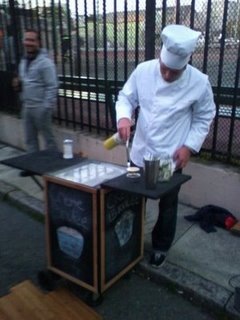
by Michelle Gagnoncreme brulee guy

Bear with me, in this post there are going to be some metaphorical leaps and truly questionable analogies. I partly blame an excellent roundtable discussion by the JungleRed crew on “weeding someone else’s garden,” both literally and figuratively.

That post was on my mind when I went to my monthly book club meeting last night. Now, I love my book club for many reasons- it forces me out of my reading comfort zone (especially when it comes to non-fiction, which research aside I rarely read willingly), and also because I usually return home with some fascinating new bit of information. Last night was no exception.

One woman was complaining about a strange-let’s call it a compulsion- that her husband has developed. At 10:30 at night, he’ll suddenly get a message on his Blackberry and will run for the door, yelling, “I’ve got to go. He’s on 24th and Mission.”

Sounds suspicious, right?

Well, it turns out that her husband is a religious follower of the bacon-wrapped hot dog guy. That’s right, there’s a guy in San Francisco who operates a guerilla (read: unlicensed) food cart, selling bacon wrapped hot dogs. He moves constantly, staying one step ahead of the authorities (hopefully)–and people find him thanks to frequent Twitter updates.

This story struck me on many levels. First, how on earth is it possible that I’ve lived in a city for over a decade and had no idea that we even had street food vendors, never mind ones who sold bacon wrapped hot dogs? After further investigation, I discovered that the bacon wrapped hot dog guy is not alone. There’s a muffin man, a creme brulee guy, and a “magic curry cart.” Even one of my favorite restaurants, Chez Spencer, has a cart. This is critical, potentially life changing information.
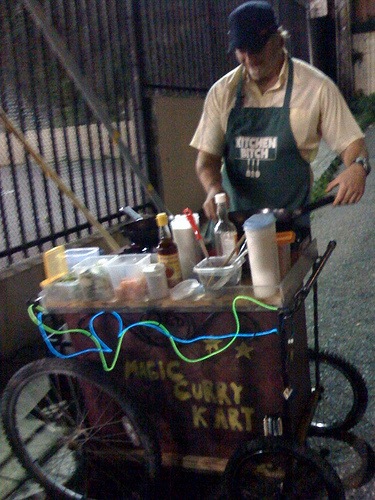
magic curry cart This discovery also marks the first time I fully understood the point of Twitter (please don’t jump all over me, tweeters- I just hadn’t grasped any practical applications until now). The vendors post where they’ll be appearing, and followers flock to that intersection for $1 chai and amuses bouches. Genius.

When interviewed, a few of the vendors explained that thanks to the recession they lost their high end restaurant jobs, or couldn’t get one in the first place. So, rather than give up on their passion, taking jobs in telemarketing or retail, they decided to branch out on their own. It’s a lot of work, the margins are slim, but they’ve each managed to build up a steady and devout following (my friend’s husband apparently has many cohorts who share his obsession for the food carts- a tweet goes out, and they all flock to the nearest one. It’s become an impromptu party for them).

I found their commitment and creativity inspirational.

Okay, brace yourselves for the leap.

I spoke with my agent yesterday. He returned from BEA somewhat disheartened- apparently all anyone was talking about was the downturn of the industry, the plummeting sales. And when sales are down, acquisitions are down, which creates a self-fulfilling death spiral. Editors are even more overburdened than usual; if they still have a job, chances are they’ve picked up numerous projects that were initially acquired by laid-off colleagues. There were fewer vendors at fewer booths, and as opposed to previous years the air was heavy with doom and gloom (although whether or not that is a deviation from the norm is largely a matter of opinion).

Which is exactly what the restaurant industry is experiencing. Fewer customers, smaller margins, a sharp downturn. Maybe the publishing industry should take a lesson from the street vendors- when times are tough, it’s time to innovate. Maybe that means authors take advantage of something like the new Scribd publishing program we’ve discussed in earlier posts. Maybe it means eliminating remaindering and starting with smaller print runs, or figuring out a way to build support for new authors by tapping into the popularity of more established ones. Heck, maybe we should start wrapping our books in bacon. Adapt or die, as they say. And while you’re doing it, you might as well eat well.

Now, if you’ll excuse me, I just got a tweet. The Korean Taco guy is a few blocks away, gotta run…

And special thanks to Cym Lowell for providing a link to this article on food cart vendors nationwide. I’m trying to convince my husband to visit DC so we can try the mango lassi popsicles.
Success is a 4-letter word

By Joe Moore

Okay, it’s really a 7-letter word. But I know a lot of successful authors that would use a 4-letter word when asked what it’s like to be successful. Why? For a couple of reasons. First, success is impossible to obtain. You can obtain “better”. You can achieve “improved”. But you’re always working to be successful. Success can be nothing more than a carrot on a stick just beyond your nose.

Second, success means something different to everyone. It’s a lot like describing an object as being green. Are we talking forest green, lime green, Irish green, puck green, or foam green? How about that green on the Beatles Apple logo or Kermit the Frog green?

I’ll bet if you asked any author who just sold a million copies of his last book, did it make him feel good? The answer will probably be, “Absolutely!” Does he consider himself a success? 4-letter-word no! Why? Because now his publisher expects him to sell 2 million copies of that next book he hasn’t finished writing yet. No pressure there. That’s not success. That’s a problem, albeit one we would all like to have. Now his sales are a bold number on the publisher’s ledger sheet. Now employees’ jobs rely on his success. It’s not just good enough to write another great book that sells lots of copies, he has to worry about the folks that are counting on him for their salary, their jobs, and their future.

So what is success in the publishing industry? Is it when you sell 25,000 copies, 50,000 copies, a million, become a New York Times bestseller? When can a writer kick up his or her heels and declare, “Mission Accomplished”?

Here’s a tip. Success is what you predetermine it will be. It’s what you decide before it comes. If you don’t approach success in that way, you are destined for disappointment. For some, being successful is walking into a bookstore and seeing their novel on the shelf. For other’s it’s the rush of holding a book signing and seeing the line of fans snaking out the door. And for many, it’s money.

But even if it is money, try to remember that it’s more important to predetermine what you’ll do with it, rather than wanting to be “rich”. For instance, determine the amount you’ll need to quite your day job. Or to pay off your mortgage. Or to move to Cape Cod or Palm Beach, or just a bigger house.

The point is, you determine what will make you successful. Be specific, not vague. And if you achieve it, relish it, celebrate it. Because everything after that is the sauce on the steak. And if you do achieve your predetermined success, always say the two most powerful words in the English language: Thank You.

When do you consider a writer to be a success? Have you predetermined your Mission Accomplished criteria? Have you already achieved it?

~~~~~~~~~~~~~~~~~~~~

Coming up Sunday, June 7, our guest blogger will be New York Times bestselling author Sandra Brown. And watch for Sunday guest blogs from Steve Berry, Robert Liparulo, Paul Kemprecos, Linda Fairstein, Julie Kramer, Grant Blackwood, and more.

The Jedi-writers Strike Back

I was happy to read that JA Konrath’s novella, SERIAL, has been the #1-Kindle Bestseller for the past nine days. (See his post yesterday).

Many of us have been speculating here about the potential impact of the Kindle on the publishing biz — now Konrath has leaped ahead and run his own home-grown publishing experiment over at Amazon. SERIAL (written under the name Jack Kilborn, penned with co-author Jack Crouch), is a free download. IMHO, the decision to make the download free was a stroke of marketing genius. The download brings with it branding and name recognition. And it’s a neat way to bump yourself ahead of the bestselling mega-authors, too.

Konrath announced the results of another Kindle experiment on his blog yesterday. Evidently in the month of May he made some of his smaller writings available for sale on Kindle. These were works he’d previously allowed readers to download for free from his web site. By selling those same works through Kindle, evidently he netted more than a thousand dollars in one month.

I was particularly interested to read about Konrath’s Kindle experiments in the wake of the recent news that scribd is now letting authors sell ebooks from the scribd site at an 80/20% revenue split. In a recent blog post, I mentioned that an established author (Kemble Scott) decided publish his latest book on scribd instead of going the traditional print publishing route. I just checked back over at scribd, and saw that Scott’s book, THE SOWER, has had 1933 “reads” at a list price of $2.00 each. And it’s only been posted a short time.

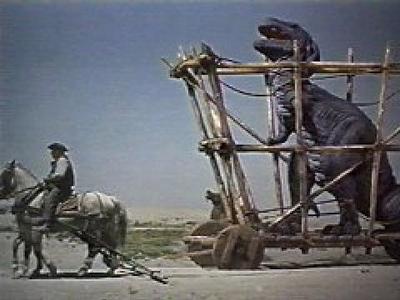
The way my fellow author friends are testing the ebook waters reminds me of that scene from Jurassic Park, where the guide tells the visitors that the dinos are testing the fences for weak links.

They remember…” he says.

A few more good pushes, and some writers might actually figure out a way to do real business in the Kindle/scribd universe. It hasn’t happened yet, but that day might be coming.

I know that in terms of relative scale in today’s publishing landscape, most writers are more like scurrying mammals than T-Rex’s. But hey, we’ve got time and evolution on our side. Give us a few years, and the whole Terra unfirma could change completely.

But that’s just what I think.

What about you?

~~~~~~~~~~~~~~~~~~~~

Coming up on our Kill Zone Guest Sundays, watch for blogs from Sandra Brown, Steve Berry, Robert Liparulo, Paul Kemprecos, Linda Fairstein, Julie Kramer, Grant Blackwood, and more.

Book Bloat or Why Less is Sometimes More

by Clare Langley-Hawthorne
http://www.clarelangleyhawthorne.com/

I’m trying to ignore the pervasive sense of doom and gloom drifting westward after the BEA in New York but I have to confess it doesn’t help when I’m in that ‘this is utter crap’ stage in my own writing. So instead of wrestling with the page my husband and I decided to watch Australia on DVD – an event we faced with some degree of trepidation – given what critics (including my own mum) have warned us about – that the film suffers from a serious case of ‘bloat’.

My own books have been accused by some of being too short (actually people have said ‘I loved it but write a longer book next time!’) – but when a story is done, it’s done and it’s extremely irritating to read books that have been puffed up and bloated by all sorts of unnecessary techniques that make you experience (usually about three-quarters of the way through) the sinking feeling that the book should, by now, be over. I call it the ‘Titanic’ effect because quite frankly three-quarters of the way through that movie, I was like ‘just sink already!’ (followed shortly thereafter by ‘just die already!’)

Some of the pernicious ‘bloat’ techniques for me are:
  1. Unnecessary description – I love gorgeous, evocative prose that creates atmosphere and sense of place. What I don’t appreciate is pages and pages of description that quite frankly as a reader I end up skipping. I subscribe to the Raymond Chandler approach where less, skillfully done, is best.
  2. Convoluted sub-plots and twists- the ones that don’t really add to the overall plot but seem to be merely a device to prolong the inevitable. If they involve secondary characters that I am not invested in (or care about) then it’s all the more yawn-inducing. Which brings me to…
  3. An unnecessary large cast of characters – the ones that sprawl endlessly and which serve only to pad out the book till it’s bursting at the seams. As far as I’m concerned unless you’re Dickens this is too hard to pull off; and
  4. Too many ‘themes’ and ‘issues’ that make you feel as though you suddenly stumbled onto a lecture series…or a non-fiction book.

So what are in your mind the worst offenders in ‘bloat-dom’?…what makes you think ‘enough already’ and realize that the books could have been done in say, 200 less pages…or in the case of Australia 2 hours less….

~~~~~~~~~~~~~~~~~~~~

Coming up on our Kill Zone Guest Sundays, watch for blogs from Sandra Brown, Steve Berry, Robert Liparulo, Paul Kemprecos, Linda Fairstein, Julie Kramer, Grant Blackwood, and more.

Dialogue Attribution in Prose – An Opinion or Two…

The Kill Zone is pleased to welcome novelist, screenwriter, and playwright Thomas B. Sawyer. Thomas was Head Writer/Show runner of the hit CBS series, Murder, She Wrote, for which he wrote 24 episodes. Tom has written 9 network TV pilots (100 episodes), and was Head Writer/Show runner or Story Editor on 15 network TV series. The best-selling thriller, The Sixteenth Man, was his first novel. Both his book, Fiction Writing Demystified, and Storybase are Writer’s Digest Book Club Selections. His latest thriller is No Place to Run. He has taught writing at UCLA and other colleges and universities. He has been nominated for an Edgar and an Emmy.

The fact that I came to narrative fiction in reverse from most writers – in that I began as a screenwriter – afforded me more than a few attitudes. And definitely not least was/is on the topic of dialogue attribution.
In novels and short stories I had long been struck by what I regard as the rampant, mindless use of “he said,” “she said,” “said he” and the like. I know that many highly regarded and/or successful writers and teachers regard such usage as a kind of pinnacle of simplicity. I agree, but not in the affirmative sense of “simple.”

As I began to contemplate my first venture into the form, I began to think about such things more seriously. Why, I wondered, would experienced, quality writers who otherwise (rightly) bust their humps to avoid using clichés, surrender to these without guilt? Or, viewed another way, when does a particular phrase cease being “economical,” and morph into a cliché?
And how many millions of trees, I asked myself, have given their lives for such conceits?
To me, even worse – no, make that dumber – is “she asked.” It’s dumber because, since it so often follows a question mark, the reader knows it’s a question, right? So why repeat it?
And then there are “he blurted,” “she exclaimed,” “he queried,” etc. If you must attribute, rather than committing those atrocities, I guess “he said” begins to look attractive.
Almost.
Did I have a solution? Yeah. When I set out to write my first novel, THE SIXTEENTH MAN, I set as a goal/challenge for myself – a little secret bar-raising, if you will – that I would never use any of those phrases. Ever. Nor, actually, any direct attribution – and yet maintain clarity for the reader. The result? While hardly revolutionary – I’ve since learned that numerous novelists do it – I’m convinced that it has made my writing better, more readable, and certainly more visual.
Here’s my approach, and the way I teach it.
Work on attribution the way you work on the rest of your writing, with the care you give to your dialogue and your descriptions. Will it make a dramatic difference to your readers? Not likely. Will they even be aware of it? Probably not. Especially on a conscious level. But – will it make a difference to you as a writer? Emphatically, yes. It’ll force you to think. To challenge yourself about stuff from which most narrative writers take the day off. So that all of your writing will become fresher.
And, in the process, I found that it contributed to finding my “voice.”
It also contributed to some criticism from certain literary types who warned me that as a novelist I could not “write for the camera.” I submit that they are mistaken. The reader is the camera. The reader is seeing the pictures. Imagining the scene.
Think about conventional, by-the-numbers dialogue attribution for a moment. “She said,” does almost nothing to help the reader envision the scene. It says nothing about the body-language of the speaker, or her inflection. Where were her hands? Was her head cocked to one side? Did she, during the speech, touch her face, or the person to whom she spoke? For me, settling for “said” implies that the speaker is delivering lines with arms hanging at his/her side. Again, for me as a reader, a brief description of body-language counts for a helluvva lot more than knowing what the person is wearing, or hair-color, or the texture of sofa-upholstery.
Admittedly, noting such detail isn’t always important, but when it helps the reader “see” the action, it seems to follow that it will also help the reader “hear” the words. In my own case, as with most-but-not-all writers, when it’s obviously clear for the reader which character is speaking, I omit attribution. But when the speaker is gesturing to emphasize a point, or is revealing, say, insecurity or anger or even an emotion that contradicts his or her words, that is worth communicating to the reader. Further, when a character’s response to another’s words isn’t spoken, but is rather a gesture, a look, that can be good storytelling.
I think of it as directing my actors – just as in my scriptwriting, describing when necessary those actions that augment their speeches – or – as in non-verbal responses – replace them entirely.

I urge any writer to try it. I think you’ll be pleasantly surprised.

~~~~~~~~~~~~~~~~~~~~

Coming up on our Kill Zone Guest Sundays, watch for blogs from Sandra Brown, Steve Berry, Robert Liparulo, Paul Kemprecos, Linda Fairstein, Julie Kramer, Grant Blackwood, and more.

All That Clutters, Isn’t Just A Family Name

By John Ramsey Miller

Once a year I get a call from a local high school English teacher inviting me to come and speak to her students for 90 minutes or so, to allow them to hear an actual author talk about the life of his kind, and answer their questions. The first year I told the students that I would answer honestly any question they wanted to ask, and truthfully at the end of the session I fully expected never to be asked back, but maybe it’s the fact that I’m their only choice of a local fiction author with books in print. I am the end of the year cap on a class that includes Stephen King’s ON WRITING, and studying a few great books. This year the teacher told me her students read IN COLD BLOOD.

Some things you never forget. The book that actually made me want to become a writer was Capote’s IN COLD BLOOD. I was a sophomore in High School and I went to a bookstore in 1965 and bought the book and I paid like $6.95 for it, plus tax. The cover is frayed from being carried around for decades and being stored here and there. I know it is a first edition, but a second or third printing, I think. Presently I have it in one of my crates in the shed, but haven’t seen it in two years.

I remember, not just reading it, but reading it straight through. I didn’t put it aside for more than a few minutes at a time to go to the bathroom or eat a few bites. In those days sleep was sometimes secondary to entertainment, and that book was astounding. The first True Crime written as a novel. Who wasn’t fascinated by the author, Truman Capote, and how this odd little man could go to a small community in rural Kansas and ingratiate himself to the community in order to gather the necessary information. A tiny, lisping squeak toy of a man––a Chihuahua running between the legs of wolves.

It’s two great stories, the crime and the authoring, and how Capote finished the book, but waited for the execution so he’d have the ending he (perhaps not prayed for) needed to give the book a knockout punch. I think the two films of that era that were true to the books were IN COLD BLOOD, and TO KILL A MOCKINGBIRD. Harper Lee and Truman Capote. Close friends and brilliant writers, both. Mrs. Lee never published another novel, and vanished from publishing in the way of JD Salinger. Truman, on the other hand, was everywhere. Truman Capote was reduced from serious novelist to social butterfly gossip spreader––a court jester of the rich and bored. Truman stopped drinking long enough to write a few stories over the years, and he kept talking about his great work to come, ANSWERED PRAYERS, but what was published (in my opinion) lacked the Capote flair, energy or purpose.

I suppose Harper Lee said everything she needed to say, and had nothing else to write that she hadn’t already put on paper. Truman Capote made a millions with COLD BLOOD, became a lazy fop, in the company of shallow people, drowning in booze and prescription medications. He’s tragic cautionary tale on many levels, but you can’t take IN COLD BLOOD away from him, or diminish its impact the reading public or on thousands of aspiring authors. Capote’s career after ICB is why I have such admiration for Dan Brown, JK Rolling, John Grisham, and the other authors who have a wildly successful book and keep writing despite their success and the additional attractive distractions flooding in around them. I have been lucky and have made a good living writing since 1995, and I always figured that if I couldn’t sell books any longer, I’d open myself a nice Chrysler dealership. Now I’m having to look at new alternatives…

I bet most of us can remember what book flipped our “Man, I bet I could do that!” switch?

Write What You Know

By John Gilstrap
http://www.johngilstrap.com

Of all the instructional clichés, I think that “Write What You Know” discourages more new writers than any other. It’s a particularly pernicious thing to say to students, who tend to take such things more literally, but it’s also misleading for adults.

So here’s the Gilstrap version of that advice: Unless you live one hell of a life, stay away from what you know.

Who wants to read about commuting to and from a job, working hard and loving a family who loves you back? I can’t imagine a more boring story. (Actually, I can. The daily diary of a novelist: Got up this morning. Made stuff up. Went to bed.)

Looking at my own fiction, I’ve never: killed anyone; escaped from prison; blown up a chemical weapons facility (came close, though); survived a plane crash; or rescued a hostage. I like to think that I make my characters’ experience real enough for readers, but there’s no way I can say that I wrote those stories as something I “know.”

I have a hunch that the person who first launched the cliché actually meant something closer to, “Write From Your Heart.” Or maybe, “Write So It Feels Real.” I can live with those. To me, it’s about extrapolating emotion.

It’s about imagination. It’s about doing what most of us started doing as children, and then never grew out of: role playing. If you’ve loved people, how hard is it to imagine what it would be like to lose them?

I’ve never been in a knife fight, but I’ve been frightened and I’ve cut my hand slicing a bagel. If I’m writing from the point of view of the attackee, I’ve got everything I need for a convincing scene. (If I’m portraying the attacker, on the other hand, I have some research to do regarding fighting technique.)

I’ve taught writing seminars at the high school and college level where “Write What You Know” has actually stymied creativity. “Does that mean we can only write about school?” students ask. “I want to write about a serial killer.”

Then write the story, I tell them. If there’s a story in your soul pounding to come out, then write the damn thing down. Get it off your chest and out of your brain. Just do enough research to make it convincing. And make me love your protagonist from within. Imagine the character fully enough that I can see what he sees and feel what he feels.

It’s about the—forgive me—Human Condition. As a writer, your job is to pull me in.

I got it! The instructional cliché should be: “Write What You Understand.”

Show and Tell

by Michelle Gagnonpot stove

Last week Joe had a great post about figuring out where your story actually begins. I’m in a group that posts online excerpts, mainly of first chapters, and today I thought I’d discuss something that seems to crop up again and again in those posts.

The old nugget, “Show, don’t tell” relates to exposition; ideally, you want to limit spoon-feeding your reader, watching out for adverbs that drive home what a character is thinking and feeling. But what should also be taken into account is that you don’t need to “show” your reader everything either.

Here’s an example:

“I went into the kitchen and grabbed a pan. I put water into the pan and placed it on the stove. Then I added the seasoning to the water. After the water boiled I placed the noodles into the water.”

Now, I think what the writer was attempting to do was build suspense; the problem with this passage is that unless you’re writing a cookbook entry on how to prepare pasta, this is way too much information. By the time I got to the third sentence, my eyes glazed over. It’s a common error. Where it tends to crop up most frequently, I’ve found, is with entering and leaving a room: “I turned the knob, opened the door, and stepped inside,” rather than just, “I went inside,” for example.

There are other ways to build suspense with a passage like this. For example, “She put water on the stove to boil. The doorbell rang. When she answered it, she found the UPS man standing there with a package. Could this be what she was waiting for?”

So…the water is still on the stove, set to boil. The heroine has apparently forgotten about it- but the reader hasn’t. If you consider how you go about your day, many of your actions are automatic. You don’t think through every step of putting on a pair of pants, walking across a room, or turning on your car; neither should you walk a reader through those steps (unless it’s critical to illustrate a character struggling to accomplish those tasks).

I prefer to start a story by dropping the reader into the middle of an action or conversation, forcing them to do a little work to catch up. After all, when it comes to eavesdropping (not that I ever do that, of course), the point when your ears perk up is not at the initial hello, but when something really juicy comes out. That’s what you want to begin with. Assume that the reader will figure out the parts you’re not telling them outright- engaging with a book should require a little effort, after all. You want them to wonder what the character is thinking, and what they’re going to do next. I want to know what’s going to happen with that boiling water- but assume that the rest of it, whatever isn’t critical, is a given and not something I need to know. For that, I’ll buy a cookbook.

Coming up on our Kill Zone Guest Sundays, watch for blogs from Sandra Brown, Steve Berry, Robert Liparulo, Thomas B. Sawyer, Paul Kemprecos, Linda Fairstein, and more.

A little less action, a lot more thrills

Back in 1993, Country singer Toby Keith had a hit with the song “A Little Less Talk and a Lot More Action”. That was a great hook for a song, but the concept doesn’t always work for thrillers. I’ve found that one of the mistakes beginning writers often make is confusing action with suspense; they assume a thriller must be filled with it to create suspense. They load up their stories with endless gun battles, car chases, and daredevil stunts as the heroes are being chased across continents with a relentless batch of baddies hot in pursuit. The result can begin to look like the Perils of Pauline; jumping from one fire to another. What many beginning thriller writers don’t realize is that heavy-handed action usually produces boredom, not thrills.

When there’s too much action, you can wind up with a story that lacks tension and suspense. The reader becomes bored and never really cares about who lives or who wins. If they actually finish the book, it’s probably because they’re trapped on a coast-to-coast flight or inside a vacation hotel room because it’s pouring down rain outside. See John Gilstrap’s I’m Not As Flexible As I Thought.

Too much action becomes even more apparent in the movies. The recent Bond film “Quantum Of Solace” struck me that action1way. The story was so buried in action that by the end, I simply didn’t care. All I wanted to happen was for it to be over. Don’t get me wrong, the  action sequences were amazing, but special effects and outlandish stunts can only thrill for a short time. They can’t take the place of strong character development, crisp dialogue and clever plotting.

As far as thrillers are concerned, I’ve found that most action scenes just get in the way of the story. What I enjoy is the anticipation of action and danger, and the threat of something that has not happened yet. When it does happen, the action scene becomes the release valve.

I believe that writing an action scene can be fairly easy. What’s difficult is writing a suspenseful story without having to rely on tons of action. Doing so takes skill. Anyone can write a chase sequence or describe a shoot-out. The trick is to not confuse action with suspense. Guns, fast cars and rollercoaster-like chase scenes are fun, but do they really get the reader’s heart pumping. Or is it the lead-up to the chase, the anticipation of the kill, the breathless suspense of knowing that danger is waiting just around the corner?

What do you think? Is your favorite thriller filled with car chases or is it built on an undercurrent of suspense that’s just waiting to sweep you away? What about your own writing? Do you use a lot of action or is it all cerebral?

~~~~~~~~~~~~~~~~~~~~

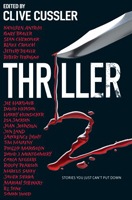
thriller2 Available today: THRILLER 2, Stories You Just Can’t Put Down.

~~~~~~~~~~~~~~~~~~~~

Coming up on our Kill Zone Guest Sundays, watch for blogs from Sandra Brown, Steve Berry, Robert Liparulo, Thomas B. Sawyer, Paul Kemprecos, Linda Fairstein, Julie Kramer, Grant Blackwood, and more.

Have you asked your writing a question today?

Every once in a while I read a story where all the requisite elements for success seem to be in place. Such stories typically contain the following elements:

  • A competent hook
  • Serviceable characters
  • A well-executed plot

And yet sometimes as I’m reading along, I find that my interest wanes (and then dies) after just a few pages. So what exactly has gone wrong?

Here’s one answer: After just a few paragraphs, I cease to give a flying squirrel about the hook, the characters, or the plot. Which means that I don’t care about the story. Which means that the Writer in question is dead as a doornail.

In a past blog post that was circulated by Esquire, writer Darin Strauss said that it helps to apply a “So What?” test to each sentence in a story. To apply such a test, according to Strauss, we can measure each of our sentences against the following criteria: Why should I care about this sentence? How does it reveal character? What difference does it make to the plot? To the story?

When I first heard about Strauss’s sentence test (which he attributed to Lee K. Abbott), it was like an epiphany to me, because when we ask every sentence in our novel “So What?” or “Who cares?”, it helps us to avoid the following writing hazards:

  • Boilerplate character description
  • Rote, unnecessary movements by all characters, especially the main character
  • Go-nowhere dialogue
  • Boring scene description

So here’s my question to you: When you’re writing, do you apply such a test to each and every sentence? Do you go back and root out “filler” sentences during rewrite?

And to take on the challenge, if you don’t mind sharing: What’s the last sentence that you wrote today? Is it important to your story? Why will your reader care about that sentence?

~~~~~~~~~~~~~~~~~

Coming up on our Kill Zone Guest Sundays, watch for blogs from Sandra Brown, Steve Berry, Robert Liparulo, Thomas B. Sawyer, Paul Kemprecos, Linda Fairstein, and more.