By John Gilstrap
http://www.johngilstrap.com/
http://www.johngilstrap.com/
All right, this is it. Next week, anticipation becomes reality as No Mercy hits bookstores everywhere. I submitted the manuscript last August and finished the final revision in November. Since then, there have been copy edits and galley proofs, but I haven’t touched a word of the story since February.
Next week, everybody gets to decide for themselves if the characters are interesting and the story exciting. I certainly think they are, as do my editor and agent, but we’ve had our vote. Now it’s all in readers’ hands; which is why, for me, this is the scariest time in a book’s life cycle—the point where potential and reality finally intersect. On any given day, a writer has precious little control over his own career; but at this stage, the powerlessness feels to be in higher relief.
I thought I’d dedicate my blog this week to a behind-the-scenes peek at our marketing/publicity preparations.
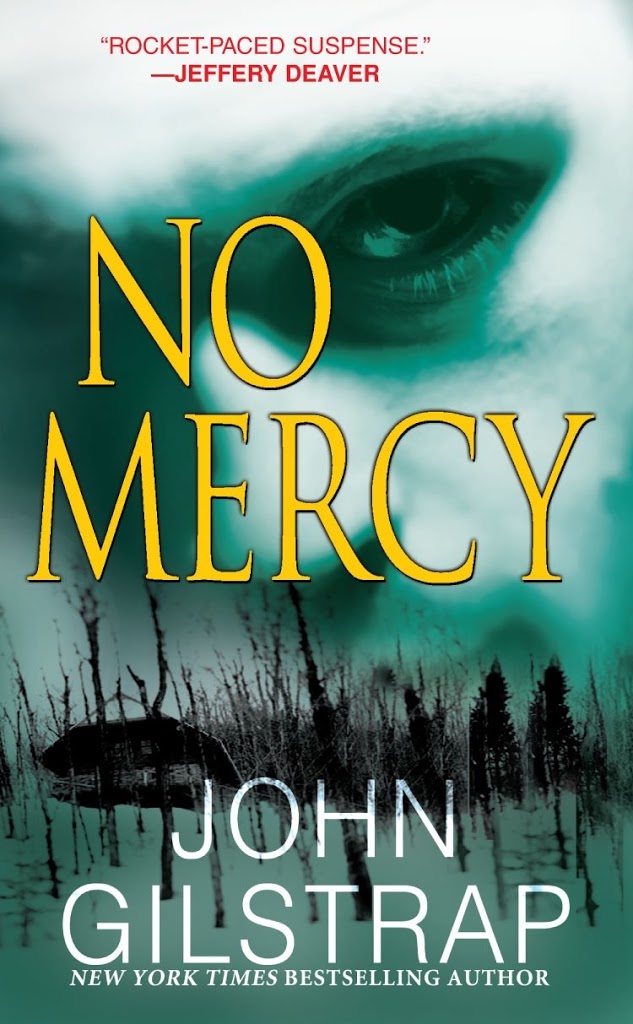
Here’s what No Mercy’s publisher (Pinnacle) has done for me: they designed a kick-ass cover; they printed and distributed a couple hundred gorgeous advance reader’s copies (ARCs); they negotiated really strong sell-ins at the major big-box stores, as well as with distributors for the likes of Wal-Mart and your local grocery store. The book should have a big presence in airports, too. At ThrillerFest next month in New York City, No Mercy will be featured as a bag stuffer for a couple hundred attendees.
Here’s what I’ve done on my own nickel to market the book: I’ve bought advertising on well-visited blog sites that will bring 4 million views over two weeks; I’ve updated my website to be something worth visiting (http://www.johngilstrap.com/); I’ve hired a publicist who will get me on lots of local radio and television shows, plus she’s snagged me a few bookstore signings. (For details, please check the “Events” page on the aforementioned website.)
In July, I’ll be on the faculty of the Midwest Writers Conference at Ball State University. As the writers conference schedule heats up again in the fall, I’ll be making appearances everywhere—all of it to sell a book that I haven’t touched in months. All of it as I put the (not-so) finishing touches on my next book, which I’m supposed to deliver to my publisher in August so I can begin the cycle all over again.
On the one hand, it’s all very exciting; but as one who’s walked this walk a few times already, I know that none of it matters unless all of the promotion and marketing combine with the X-Factor that creates “buzz” about a book.
Buzz is what happens when book lovers start talking about a title among themselves. I’ve published to Big Buzz in the past, and I’ve published to silence. I could guess at what makes the difference, but I’d probably be wrong. Buzz hides in the cracks between the cushions of all the things over which I have no control.
Another factor of nervousness to throw into the mix is the fact that No Mercy is my first paperback original (PBO). The rules are all different for PBOs, or so I’m told. At $6.99 a pop, they’re considered to be an impulse buy, as opposed to a hardcover, which is a more targeted buy. The theory in my case is that people will be far more apt to try out a new series character for 7 bucks than they would be for $25. We’ll see.
Lord yes, we’ll see.
Now, just this once, in light of the Big Event, please forgive me for . . .
****SHAMELESS SELF PROMOTION ALERT****
No Mercy is the first book in a new series starring freelance hostage rescue specialist Jonathan Grave.
When a loved one is taken, you just want them back safely. You don’t care about gathering evidence for a future trial, or about Miranda warnings or search warrants. You just want them brought home. That’s why you call Jonathan Grave.
In No Mercy, when Jonathan’s meticulous plan to rescue an Indiana college student explodes into a deadly shooting spree, the local authorities are out for blood—and they’re not alone. Someone wants to control a devastating secret . . . someone willing to capture, torture and kill anyone to keep it. Even the people Jonathan loves most.
****END OF SHAMELESS SELF-PROMOTION****
Wish me luck! We now return you to your regularly scheduled Kill Zone.