It’s Gonna Be A Thriller!

 thrillerfest-logo09

Tomorrow I head off to the Grand Hyatt in NYC for ThrillerFest, a gathering of fans, friends, and some of the best writers on the planet. Fellow Kill Zone blogmates Kathryn Lilley and John Gilstrap will be there along with soon-to-be-permanent Sunday Kill Zone blogger, James Scott Bell. There will be discussion panels, workshops, demonstrations (Amazon Kindle, ATF), parties, interviews, the Clive Cussler Roast, the debut authors’ breakfast, and the Thriller Awards Banquet among the events. A good time will be had by all.

If you’ve been to a writer’s conference such as Bouchercon, Left Coast Crime, Sleuthfest, ThrillerFest, and others, you know that it can be great fun and offers a ton of opportunities for authors at all stages of their careers. And if you haven’t attended one yet, move it to the top of your to-do list. You won’t regret it.

Here are some important reasons to attend conferences like ThrillerFest.

Inspiration. You’re sure to be inspired by the time you leave. Being surrounded by hundreds of writers creates electricity and excitement. And the inspiration is contagious. You’ll get support and encouragement from agents, editors, and other writers. And you’ll feel emboldened to go home and write with renewed enthusiasm.

Knowledge. Most conferences like ThrillerFest are built around panel discussions. You’ll find workshops and author panels covering topics from writing young adult novels to creating believable heroes and villains. No matter where you are in your writing career, you’ll always come away learning something valuable.

Networking. Publishing is about people. Meeting fellow writing professionals is invaluable in getting your name out into the marketplace.

Friendship. The potential for forming long-lasting friendships with your fellow authors is perhaps the best benefit you’ll receive from a conference. And those friendships come in handy when you need advice, a blurb, someone to brainstorm with, or just a word of encouragement later.

Fans. If you’re a published author, chances are you’re going to meet a fan or two at a conference. And trust me on this, there’s nothing more rewarding than to have a total stranger tell you that they enjoyed your book and ask you to sign a copy. The part of this experience that affects me the most is to hear a fan speak of my characters as if they were real. You can’t buy that feeling of fulfillment at any price.

Pitching. At ThrillerFest and other conferences, you get the opportunity to meet agents and editors. If your goal is to acquire a new agent or find a publisher, there’s no better place.

There are many great reasons to attend conferences like ThrillerFest, not the least of which is you’ll have a blast. For those that have attended, what memorable experiences can you share with us? Was it worth your while to travel to a distance city for a conference? Any other reasons to attend or tips to remember?

Self-Googling, and other writer’s compulsions

When writers get published, we tend to pick up a few bad habits (actually, we usually pick up bad habits before we get published). These habits worsen over time, sometimes rising to the level of Writer’s Obsessive-compulsive Disorders (Wods).

Here are a few of the most common writing Wods:

Self-Googling

That just sounds dirty, doesn’t it? Self-Googling is when you set up a Google alert associated with your name. You’ll then get an email alert every time your name gets mentioned on the Worldwide Web. I’ve been Googling my name ever since my series hit the bookstores in ’07.

There’s nothing more gratifying than getting a Google alert that takes you to a positive review you’d known nothing about. Of course, there’s also a downside to Google alerts. Sometimes you get alerted about snarky reviews, the kind you could have gone all year without reading. Google alerts aren’t very “smart” as technology goes, so you can also get deluged by alerts about peoples’ names that are sort of like yours, but not really.

For example, my Google alert goes off every time Kathy Griffin (“My Life on the D-List”) is in the news.

How annoying is that? Let me put it this way–she may be on the D list, but Kathy Griffin gets mentioned on the Web a lot. Every time I get an alert nowadays, my first reaction is to sigh and say, “Dang. What’s that K-G-D woman up to now?”

You can also turn up downright weird stuff that’s posted about you on the Web.

Yesterday, for example, I got an alert about a blog that mentioned me. The blog’s content appeared to be a machine-translation of an interview I gave months ago. Swear to God, the following paragraph is a paste from the blog:

“Kathryn Lilley is a archaic receiver paragraphist who has written pressure disadvantage mystery novels. Her importune in advancement is a paranormal thriller and she blogs at The Kill Zone…I was born a pudgy indulge (9 pounds, 11.5 ounces!). When I was a teen-ager, my parents sent me to a residential eats clinic (read: bulky farm) in Durham, North Carolina.”

I spent some time puzzling over 1) who publishes that blog, 2) how I ended up on it, and 3) What the the heck is a “pudgy indulge”?

This is one mystery that may never be solved.

Checking Amazon numbers

Some writers won’t cop to it, but most of us check our Amazon rankings regularly. Often compulsively.

The problem with Amazon numbers (where the lower your number is, the better), is that they’re incredibly volatile. Amazon rankings bounce around faster than a Wham-O Super Ball.

So instead of compulsively checking my Amazon numbers on the Amazon site, I’ve started compulsively checking them at TitleZ.

TitleZ lets you track your Amazon numbers over time. You can even (pause for dramatic effect) get lifetime averages for your book’s rankings. Best of all, you can compare your book’s rankings to other books. So even when your lifetime numbers are looking bleak, you can always find an acquaintance’s book that is doing worse. Preferably an author you don’t like.

There are other writer’s compulsions. I recently added Blogpulse and Google Trends to my list of must-check daily sites. I won’t even pretend that Google Trends has anything to do with my writing. I simply have to know which search trends are Volcanic!, Spicy!, or Mild, on an hourly basis. Or else I die.

What about you? Do you have any writer’s compulsions/Wods that you can share? I have a book coming out on September 1st, so I’m in the market for a few more.

Citizenship and Identity

by Clare Langley-Hawthorne

After the Fourth of July weekend and having just passed my American citizenship test, I thought it fitting to address an issue close to my heart and my writing – the concept of cultural identity. As the daughter of a Lancastrian and a Londoner, born in Canada and raised in Australia, I think I am a veritable nomadic ‘mutt’ of no fixed cultural identity.

Growing up in Australia there was little in the way of patriotic feeling. On Australia Day (January 26th) it was rare to see an Australian flag fly and most people treated the day as little more than a public holiday. Few of my friends could even sing the Australian national anthem (Advance Australia Fair) beyond the first few lines. I think that times have changed and now the concept of being an ‘Australian’ has started to take greater shape – moulded by generations of emigrants as well as the plight of the indigenous peoples of Australia but in my mind, however, the concept of cultural ‘Australian-ness’ is still hard to pin down. A sharp contrast (to me at least) to the concept of being an American.

My first Fourth of July party I was literally stunned when friends toasted the Constitution and declared they were proud to be Americans. As an outsider it was fascinating to watch – for everyone had such a strong sense of what being an American meant. Australians would have laughed that kind of patriotism off. When I was growing up if you asked what it meant to be an ‘Australian’ people would have looked at you funny – here in America people can answer this without equivocation. Enshrined within the Constitution and the Declaration of Independence Americans know what it means to be an ‘American’. Australians can’t even pass a referendum to become a republic so we still have (nominally) the Queen of England as head of state…kind of shows you our own cultural indecision!
I have just passed the final hurdle to becoming an American citizen and I was amazed that I was expected to pass a civics test to show that I understood what it meant to ‘be American’. Being a natural worrier I studied hard for the test, fearful lest I be asked about the 13 original colonies or the founding fathers. It was pretty pathetic really as I have studied US law, first for my LLM and second for the New York Bar (which I passed – horrific though it was). I confess to having retained no knowledge of US law whatsoever – so it was a good thing I studied for the citizenship test! As it turned out the questions I was asked were very straightforward, but the questions and material they expected you to cover was illuminating in and of itself. For example, one of the question I was asked was ‘what was the US concerned about during the cold war’- (answer the spread of communism)…

I like creating characters who are, as my family were in Australia, outsiders. My parents are still ‘British’ through and through – no matter the years spent in Australia or in America. Their cultural identity is set in stone. It’s through them that I have an affinity for all the quaintness of Britain – the BBC period piece version of history and identity. People often ask me if I will ever write about Australia and I answer that I’m still not sure I can do that -I’m worried I’m not able to capture the culture properly yet. If I did set a novel there I think my character would have to be an outsider. I would face a similar dilemma writing about America – for though I have a strong affinity with the culture I still remain (despite my civics prowess) a cultural ‘mutt’.

So how does your background and sense of cultural identity shape what you write? How do you think a writer’s sense of citizenship – be it inclusion or exclusion – affects their work?

As writers are we, perhaps, always ‘outsiders’ and ‘cultural mutts’?

IN CONGRESS, JULY 4, 1776

The unanimous Declaration of the thirteen united States of America

by guest bloggers: Thomas Jefferson & John Adams

When in the Course of human events it becomes necessary for one people to dissolve the political bands which have connected them with another and to assume among the powers of the earth, the separate and equal station to which the Laws of Nature and of Nature’s God entitle them, a decent respect to the opinions of mankind requires that they should declare the causes which impel them to the separation.

We hold these truths to be self-evident, that all men are created equal, that they are endowed by their Creator with certain unalienable Rights, that among these are Life, Liberty and the pursuit of Happiness. — That to secure these rights, Governments are instituted among Men, deriving their just powers from the consent of the governed, — That whenever any Form of Government becomes destructive of these ends, it is the Right of the People to alter or to abolish it, and to institute new Government, laying its foundation on such principles and organizing its powers in such form, as to them shall seem most likely to effect their Safety and Happiness. Prudence, indeed, will dictate that Governments long established should not be changed for light and transient causes; and accordingly all experience hath shewn that mankind are more disposed to suffer, while evils are sufferable than to right themselves by abolishing the forms to which they are accustomed. But when a long train of abuses and usurpations, pursuing invariably the same Object evinces a design to reduce them under absolute Despotism, it is their right, it is their duty, to throw off such Government, and to provide new Guards for their future security. — Such has been the patient sufferance of these Colonies; and such is now the necessity which constrains them to alter their former Systems of Government. The history of the present King of Great Britain is a history of repeated injuries and usurpations, all having in direct object the establishment of an absolute Tyranny over these States. To prove this, let Facts be submitted to a candid world.

He has refused his Assent to Laws, the most wholesome and necessary for the public good.

He has forbidden his Governors to pass Laws of immediate and pressing importance, unless suspended in their operation till his Assent should be obtained; and when so suspended, he has utterly neglected to attend to them.

He has refused to pass other Laws for the accommodation of large districts of people, unless those people would relinquish the right of Representation in the Legislature, a right inestimable to them and formidable to tyrants only.

He has called together legislative bodies at places unusual, uncomfortable, and distant from the depository of their Public Records, for the sole purpose of fatiguing them into compliance with his measures.

He has dissolved Representative Houses repeatedly, for opposing with manly firmness his invasions on the rights of the people.

He has refused for a long time, after such dissolutions, to cause others to be elected, whereby the Legislative Powers, incapable of Annihilation, have returned to the People at large for their exercise; the State remaining in the mean time exposed to all the dangers of invasion from without, and convulsions within.

He has endeavoured to prevent the population of these States; for that purpose obstructing the Laws for Naturalization of Foreigners; refusing to pass others to encourage their migrations hither, and raising the conditions of new Appropriations of Lands.

He has obstructed the Administration of Justice by refusing his Assent to Laws for establishing Judiciary Powers.

He has made Judges dependent on his Will alone for the tenure of their offices, and the amount and payment of their salaries.

He has erected a multitude of New Offices, and sent hither swarms of Officers to harass our people and eat out their substance.

He has kept among us, in times of peace, Standing Armies without the Consent of our legislatures.

He has affected to render the Military independent of and superior to the Civil Power.

He has combined with others to subject us to a jurisdiction foreign to our constitution, and unacknowledged by our laws; giving his Assent to their Acts of pretended Legislation:

For quartering large bodies of armed troops among us:

For protecting them, by a mock Trial from punishment for any Murders which they should commit on the Inhabitants of these States:

For cutting off our Trade with all parts of the world:

For imposing Taxes on us without our Consent:

For depriving us in many cases, of the benefit of Trial by Jury:

For transporting us beyond Seas to be tried for pretended offences:

For abolishing the free System of English Laws in a neighbouring Province, establishing therein an Arbitrary government, and enlarging its Boundaries so as to render it at once an example and fit instrument for introducing the same absolute rule into these Colonies

For taking away our Charters, abolishing our most valuable Laws and altering fundamentally the Forms of our Governments:

For suspending our own Legislatures, and declaring themselves invested with power to legislate for us in all cases whatsoever.

He has abdicated Government here, by declaring us out of his Protection and waging War against us.

He has plundered our seas, ravaged our coasts, burnt our towns, and destroyed the lives of our people.

He is at this time transporting large Armies of foreign Mercenaries to compleat the works of death, desolation, and tyranny, already begun with circumstances of Cruelty & Perfidy scarcely paralleled in the most barbarous ages, and totally unworthy the Head of a civilized nation.

He has constrained our fellow Citizens taken Captive on the high Seas to bear Arms against their Country, to become the executioners of their friends and Brethren, or to fall themselves by their Hands.

He has excited domestic insurrections amongst us, and has endeavoured to bring on the inhabitants of our frontiers, the merciless Indian Savages whose known rule of warfare, is an undistinguished destruction of all ages, sexes and conditions.

In every stage of these Oppressions We have Petitioned for Redress in the most humble terms: Our repeated Petitions have been answered only by repeated injury. A Prince, whose character is thus marked by every act which may define a Tyrant, is unfit to be the ruler of a free people.

Nor have We been wanting in attentions to our British brethren. We have warned them from time to time of attempts by their legislature to extend an unwarrantable jurisdiction over us. We have reminded them of the circumstances of our emigration and settlement here. We have appealed to their native justice and magnanimity, and we have conjured them by the ties of our common kindred to disavow these usurpations, which would inevitably interrupt our connections and correspondence. They too have been deaf to the voice of justice and of consanguinity. We must, therefore, acquiesce in the necessity, which denounces our Separation, and hold them, as we hold the rest of mankind, Enemies in War, in Peace Friends.

We, therefore, the Representatives of the united States of America, in General Congress, Assembled, appealing to the Supreme Judge of the world for the rectitude of our intentions, do, in the Name, and by Authority of the good People of these Colonies, solemnly publish and declare, That these united Colonies are, and of Right ought to be Free and Independent States, that they are Absolved from all Allegiance to the British Crown, and that all political connection between them and the State of Great Britain, is and ought to be totally dissolved; and that as Free and Independent States, they have full Power to levy War, conclude Peace, contract Alliances, establish Commerce, and to do all other Acts and Things which Independent States may of right do. — And for the support of this Declaration, with a firm reliance on the protection of Divine Providence, we mutually pledge to each other our Lives, our Fortunes, and our sacred Honor.

(Note)
I wrote several blogs for the 4th of July that turned into political diatribes, and, as I read this document for inspiration, I realized that it was more important simply to allow people to read and consider the most important document penned in modern history. Life, liberty, and the right to pursue happiness without undue interference. Heavy stuff, freedom, and it comes at a great cost. Being free is something we all have to work hard to maintain.
Happy 4th & God bless America.
John Ramsey Miller

“What’s Your Book About?” and Other Impossible Questions

By John Gilstrap
http://www.johngilstrap.com

No Mercy is now arriving in stores, and the publicity push has begun. This morning, I awoke at zero-dark-early to be bright eyed and clear-voiced for my 7:15 live radio interview for the New York market. According to the notes from my publicist, the interview was to last between 10 and 12 minutes. It in fact lasted two. Was it something I said? Something I didn’t say?

Perhaps it was because guest host Rob was sitting in for regular host Frank. Or, maybe I’m just not as fleet of tongue on the radio as I thought I was.

But I do good crowd. Two days ago, I killed at the library event I did in Oakton, Virginia, near my home—and no, the audience wasn’t stacked with friends and relatives. I was really on. They laughed when they were supposed to, they asked engaging questions, and then they applauded enthusiastically at the end. I enjoy public speaking, and at the risk of sounding immodest, I’m pretty good at it.

I’m thinking, though, that maybe I’m not so good with radio. In fact, the more I ruminate, the more I’m convinced that my discomfort has a lot to do with the cold start. You sit on the phone, listening to the end of the lead-in commercial, and then you hear something like, “We have thriller author John Gilstrap on the phone with us now . . .” In a live speech, this is the moment when you check your fly one last time, square your shoulders and wait for the applause to bring you on. On the radio, all you get to do is take a last breath.

“. . . Good morning, John. Thanks for coming on the show.”

“Good morning to you Tom. Thanks for having me.”

“So tell us about No Mercy.”

Cue the stammer. A year ago, I worked my ass off to get the manuscript in at fewer than 500 pages. Now, on live radio, I’ve got just a few seconds to introduce a character and a plot and a theme, all without the thoughtful pauses that work so well on stage. Ideally, you mention the title a couple of times, and if you can make it happen, you mention your website. All this without sounding like the Sham-Wow guy: “No Mercy is the best gol-durned book you’ll ever read, Tom. That’s 1-800-NO MERCY. Operators are standing by.” [Note to self: I should have gotten an 800 number. Damn.]

In my version of a perfect media world, all interviews would be more about the author and the story behind the story than about the book itself. Think about it: the host can sum up the plot in his introduction just by reading the jacket notes. Then, how cool would it be to get a question like, “No Mercy sounds like an exciting read. Does this sort of freelance hostage rescue contractor actually exist?” That opens all kinds of avenues to be explored. In my world, an interview would really be a conversation in front of a few thousand eavesdroppers.

In my perfect media world, no one would ever say to a guest, “So, tell me about yourself.” It’s a great question if the point of an interview is to get a job, but outside of that milieu, I think it’s lazy hosting. Again, they need only take a glance at the jacket notes. It sounds stupid for me to mention that I’m a safety engineer and a former firefighter because it’s a non-sequitur in the middle of a discussion about books. But if the host mentions it and then asks, “How does someone with that background come to writing books about hostage rescuers?” then we’ve again got fodder for a good conversation.

But we don’t live in a perfect world, and I’ve got a bunch more of this coming—in some cases complete with television cameras.

Give me a hand, folks. How do you handle this? How do you handle the impossible questions? How do you manage a bad interview? What are the elements of the very best interviews you’ve done?

The life and death of Teresa Castillo

By Joe Moore

My co-writer Lynn Sholes and I had to kill one of our children. Her name was Teresa Castillo and she was born about a year ago. Now before you get concerned and call the police, Teresa was a supporting character for the antagonist in our newest thriller, THE PHOENIX APOSTLES. We developed her right from the start as his personal assistant. Not only did she know almost all his secrets, but as she developed in the story, she became jealous of the secrets he didn’t share with her, the ones that would have elevated her to a higher level of importance.

kill1Teresa also had some competition. His name is Carlos, and he does the dirty work for the antag. Carlos is strong-willed and wants to advance in the story as well. He and Teresa worked closely with the antag and with each other. And they both did things that rubbed our heroine the wrong way. But Carlos did some really bad things. And in the eyes of the reader, he definitely had to get his just rewards in the end. Not so much for Teresa. And therein was the problem.

Lynn and I write thrillers with complex plots, and THE PHOENIX APOSTLES is turning out to be the most complex of all. Because of the complexity, we have some really intense brainstorming sessions, especially as we approach the end of the book and must tie all the loose ends together so they are resolved for the reader. Our conference calls go on for hours as we play “what if”, argue, plot, and strategize. Since we live over 300 miles apart and only meet once or twice a year, we rely on unlimited long distance calling to work out the details.

Recently, we were discussing how each of our characters would resolve at the climax of the book. We both like big Hollywood endings, and this one is shaping up to be a whopper. We were going down the list of ever character, either signing their death warrants or letting them live another day. We knew what should happen to Carlos, but when we got to Teresa, we came up short. As a matter of fact, we couldn’t even justify placing her in the final scene. Normally, we assign all our characters “jobs” in each scene, and she was pretty much unemployed by the time the shit hit the fan.

There was a long silence on the phone. Then Lynn asked that dreaded question no self-respecting fictional character ever wants to hear. “Do we really need her?”

“You mean in the climax?”

“No, in the book?”

After another long pause, I had to admit she was right. If Teresa vanished from the pages of our novel, would it make any difference? The reluctant but honest answer was, no.

We came to the conclusion that we could convert all of Teresa’s “jobs” into the Carlos character and the result would be a tighter, crisper story with fewer heads to hop between.

And so the killing began.

Within a few hours, I had gone through the entire manuscript, found every instance of Teresa’s character, rewrote each one and shifting her responsibilities, motivations, and character development to Carlos. By sundown, Teresa was pronounced dead. Worse than dead; like some former Soviet government official who fell out of favor, she simply ceased to exist.

I had lived with Teresa for over a year. I knew her wants and needs. I liked her. But I had to sacrifice her to make for a better story. I mourned her passing, drank some whisky, and moved on.

R.I.P Teresa Castillo.

Have you ever had to kill any of your children? What forced you to do it? Were they main characters in your book or part of the supporting cast? Did it hurt or did you take pleasure in reducing them to the recycle bin?

~~~~~~~~~~~~~~

ThrillerFest is coming.


~~~~~~~~~~~~~

Watch for Sunday guest blogs from Julie Kramer, Anne Hawkins, and Grant Blackwood. And coming July 26. James Scott Bell joins the Kill Zone as our new fulltime Sunday blogger.

The best (worst) rejection letters

All writers experience rejection. Most published authors get turned down by numerous agents and editors on the road to publication. Learning to deal with “No” is part of the writing process—I’d even say it’s an important part. You have to be able to handle rejection to stick with writing long enough to get anywhere.

But no matter how you rationalize it, being rejected feels like crap. So whenever we get the dreaded “Not for us” email or letter in the mailbox, it can be comforting to recall the rejection-war stories of other writers:

In his book On Writing, Stephen King describes the wad of rejection notes he had stuck on a spike in his bedroom, and the encouragement he felt when he finally got one that said something along the lines of, “Not for us, kid, but try again—you’ve got talent.”

NPR’s Liane Hansen did a story that told the story of how soon-to-be famous writers, including Jack Kerouac and George Orwell, were rejected by the publisher Alfred A. Knopf. Possibly the best of the lot was the one that rejected Kerouac’s On the Road, in which an editor reportedly stated, “I don’t dig this one at all.”

My most memorable rejection came from an agent who had requested to read my manuscript on an exclusive basis. (My advice? Never give an agent an exclusive. It’s a better deal for the agent than the writer.) After keeping me in suspense for a long while, she eventually sent me an email along the lines of, “Dear Kathryn: I really wanted to like this story. But I just didn’t like the character; I didn’t like the story; I didn’t like the voice. In fact, I just didn’t like anything at all about it.” Ouch. Fortunately, the next agent who read the manuscript loved the story, agreed to represent me, and quickly got me a series contract.

What about you? What’s been your best/worst rejection letter thus far?

How many books can you write in one year?

By Clare Langley-Hawthorne

I just read an article about Nora Roberts in The New Yorker (a couple of weeks back I fear – I can never keep up!) and my jaw dropped when I read that she publishes five novels in a typical year: two installments of a PBO trilogy; two J.D. Robb books; and, each summer, a hardcover stand-alone romance novel (otherwise known as a “Big Nora”). She estimates that it takes, on average, 45 days to write a novel. When I read that I thought – what they hell have I been doing with my time?! I’ve just finished my draft of Unlikely Traitors (which we can only hope in this publishing climate will get to see the light of day!) which brings my tally, after Lady Coppers was finished a few weeks ago, to two books. Yep, just two in on year. So I thought hey, it’s only June so how many more books can I write before December??

I haven’t got a cat in hell’s chance of meeting Nora Roberts’ book tally but I am hoping to write another book this year as well as a few proposals. Why? Because I feel in this economic climate I have to write, write and write – just because things are so uncertain. I think it’s very necessary (for me at least) to spread my genre-wings and fly. My plan at this stage is to write a young adult book and start a historical novel set in the mid 19th century – I also want to write a proposal (or two) for a romance novel. Panic is a wonderful motivator…

I think that Nora Roberts is phenomenal – she treats her job as a profession – one in which she respects her readers and fulfils her obligations. I am also in awe of her productivity. Not every writer can meet her level of output – nor should they. Writing is a solitary art and producing a novel is something that can take months to years to accomplish. When I finished the article, however, it made me think about expectations – my own as well as the expectations of readers and publishers. I think a fine balance has to be struck between quality and quantity but I also think that in the current publishing climate publishers aren’t often willing to invest or maintain their authors (just look at how many great mystery writers have had their series dropped) so many writers have to churn out a considerable chunk of work just to keep in the game (even if it means that many manuscripts go unpublished). For me I am seriously evaluating both my productivity as well as the breadth of my work – it’s a survival mechanism necessary if I’m going to succeed in maintaining a writing career.

But I wonder- do popular writers necessarily sacrifice quality for quantity? Is there really ever ‘over exposure’ for a bestselling writer? And for those of us who aren’t quite at Nora Roberts’ level yet, what’s the best strategy for dealing with the current climate (apart, of course from writing the best damn books we can?!)

For me it’s all about one word – perseverance.

If Nora Roberts can do it, so can I.

The Soundtrack of Suspense: How Music Influences My Words

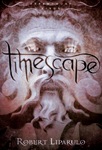
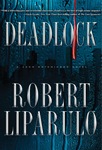
Our guest today is best-selling author Robert Liparulo, a former journalist with over a thousand articles and multiple writing awards to his name. His novels include COMES A HORSEMAN, GERM, DEADFALL, and this year’s DEADLOCK, as well as the young adult series, DREAMHOUSE KINGS (the latest of which is TIMESCAPE, releases July 7). He is currently writing, simultaneously, an original screenplay and novel, with the director Andrew Davis (THE FUGITIVE, THE GUARDIAN).

By Robert Liparulo

Liparulo Pace. Rhythm. Tension. It’s no coincidence these terms describe both stories and music. In fact, for me, music has always helped me create stories. When someone mentions a favorite scene from one of my novels, more often than not, I immediately remember the music that was playing in my headphones when I wrote it: Olaf’s attack on Brady and his son in Comes a Horseman (“Elk Hunt” from Last of the Mohicans); Stephen’s confrontation with the killer Atropos in Germ (“The Battle” from Gladiator); Hutch’s apprehensive readiness to rise from charred ground and fight at the end of Deadfall (“Death is the Road to Awe” from The Fountain). Music gets me in the mind-set to write specific scenes—its rhythm reminds me of the pace I’m looking for as I work to find just the right words; its mood holds me in a sort of suspended animation within the scene, regardless of outside distractions or the time it takes to write it.

Years ago, as movie critic, I’d sometimes see films before they were finished, without a musical score. At one screening, the director stood in the aisle humming the music that would accompany each scene. That was more distracting than the film’s symphonic nakedness, but I understood the poor man’s panic over having his film seen that way: music can make or break a movie. It not only adds a rich layer of enjoyment to the viewing experience, it cues the audience to the filmmaker’s intentions—“OK, time to get scared” or “In case this guy’s mask made out of human skin isn’t enough to let you know, he’s the bad guy!” That’s why the tracks of musical score are called “cues.”

Timescape (I’ve dreamed of including a playlist—even the actual music in digital form—with my novels. Readers could then start a soundtrack with each chapter, heightening their experience of the story. Of course, individual reading speeds make that impractical; few things are worse than out-of-synch audio tracks. And, yes, I realize it’s part of the author’s job to create the same emotional response in readers that music does, using only words. Still, I sometimes imagine myself acting like that director: leaning over a reader’s shoulder, and at the right moment going, “Da-da-da!”)

It’s hard for me to experience a story, in any medium, without musical accompaniment—whether in my ears or my head.

For as long as I can remember, I’ve listened to music as I wrote—through years of writing magazine articles and intermittent screenplays. It started as a way of deadening the sounds of screaming kids, vacuum cleaners, and when I rented an outside office, the shouts coming from the divorce attorney’s office next door. Then I started writing novels, and the type of music I played suddenly mattered.

Faster tempos do help keep the pace up—if not within the story, then at least with how fast my fingers move over a keyboard; but then, volume helps with that as well. The louder, the better. More important than tempo is how a piece of music makes me feel. A cue that starts off slow and builds to a triumphant crescendo can carry me through a fast-paced action sequence as well as any nonstop, staccato rhythm. “Chevaliers de Sangreal” from The Da Vinci Code, for example: a hero’s theme if ever there was one.

Over time, I’ve built a library of music categorized by the mood it puts me in when I write. Take, for instance, Clint Mansell’s haunting music for Requiem for a Dream. Its cues seem to be teetering on the edge of something, without relief or execution. No wonder several of the titles have the word “Tense” in them. When I launch into a suspenseful scene, I’ll often queue up my Requiem playlist.

Here’s a specific example of a partial scene and the music I was listening to when I wrote it:

“With the speed and fluidity he had practiced a thousand times, Hutch drew back on the bowstring and released it, all in one, smooth two-second motion. He held still for another beat to make sure the arrow cleared the bow. Then he dropped his right arm to a second arrow rising from the ground beside him. His bow arm never moved. His head never moved. His eyes never came off of Bad. As the arrow sliced a groove through Bad’s skin at the temple, Hutch was already nocking the next arrow.”

Most likely, Quentin Tarantino would go with something fast and exotic, like NEU!’s “Super 16” from Kill Bill. Because the scene is a mix of suspense and action, I powered up “Betrayal” from Enemy at the Gates—from the scene in which they discover a young boy murdered and hanging from a crane. It’s emotive and heart-wrenching, and prior to the “discovery” almost painful in its anticipation.

My writing-music of choice is almost always film scores. It seems to me that movie moguls are the benefactors of today’s great composers, Hollywood the new Vienna. I also like that the structure of a good story—with its cycle of tension and relief, despair and triumph—forces a wide variation in music within one recording. I used to think the strong bond between a movie’s images and its music would cause me to think only of those images while listening to the score—Russell Crowe plucking his violin in Master and Commander. However, I’ve found that the spirit of the music takes over and I can claim it for my own. That’s why filmmakers often listen to other movies’ scores while on set. They’re not trying to imitate another movie’s scene; they’re letting the music help them get in the mood for their own scene. The director Ridley Scott is known for doing this.

Thankfully, most movie scores don’t have lyrics. I’m too much of a word geek to write with lyrics pounding into my eardrums: I’m always trying to listen to them. Every now and then, however, a song with lyrics is perfect for getting me into the groove of a scene (though usually it’s something in its rhythm, tempo or melody, rarely its words that attracts me to it). When that happens, I play it over and over until my mind stops Deadlock trying to catch every word and hears the vocals as it does any other instrument. Felix da Housecat’s remix of Nina Simone’s “Sinnerman” comes to mind; I listened to it while writing the scene that introduced Brendan Page, my latest novel Deadlock’s villain, a true sinnerman with a penchant for “cool,” which the song captures.

It’s all about what works for the individual writer. When writing action scenes, Meg Gardiner (The Memory Collector) says Gladiator, The Day After Tomorrow, Jarhead and 300 “get me in a fightin’ mood.” David Dun says he listened to “the womb-like sounds of a whirlpool hot tub with all the jets running” while writing The Black Silent. Whatever works.

When I write to music, it does more than nudged me into a specific pace or help me with atmosphere. It reminds me of quality, that musical notes, played on varied instruments in a specific order and speed can touch people in ways that are mysterious and wonderful. It can lift heavy spirits and wring tears from long-dry eyes. It can unsettle sad memories and tickle a laugh out of you when you need it most. It stirs the listener and paints unimaginably vivid pictures—exactly the things I want my words to do, as well.

Do you listen to music while you write? What are your favorite tunes?

~~~~~~~~~~~~~

Watch for Sunday guest blogs from Julie Kramer, Anne Hawkins, and Grant Blackwood. And coming July 26. James Scott Bell joins the Kill Zone as our new fulltime Sunday blogger.

54% of the People Who Read This Have Nothing Better To Do. 42% Percent Will Be Sorry They Took Time To Read It. 4% Percent Can’t Read.


By John Ramsey Miller

Statisticians are working overtime to furnish us with statistics. The world runs on numbers and those numbers types are never going to slow down. As long as things happen, they will continue to crunch and spout. Long after we tire of listening to the results of their crunchings, they will be sitting in cubicles around the world comforted by their calculations. Even if they have to re-crunch old numbers and regurgitate them. And the numbers are always changing even as society changes.

In my world, Yahoo is the largest publisher of insipid crunchings. The top ten anything you want to know about will appear there on the home page along with the most frightening news available, the cutest animals, or just plain boring celebrity news they can accumulate. Want to know the top ten worst-smelling cities on earth? The top ten friendliest hell holes, The cutest kitten’s top ten favorite planets? How many dogs just like Obama’s people will be sell to people who want to be just like the President, but without the ears. The top ten best smelling decaying objects? It’s all there because somebody thinks we want to read the lists in order to improve our lives. They’ll never give you the names of the stat-crunchers until they want to list the top-ten-most-beaten-up statisticians in the United States. I’ve had way too much of this endless top tenning. It’s time for about 90% of statisticians to be in the unemployment lines.

Here’s another one that has stuck in my mind for eight point three percent of my adult life. A few years ago some scientists somewhere announced that fully ten percent of the matter in the Universe was unaccounted for. I still can’t wrap my mind around that one. How many scientists did it take to go out and weigh the mass of the Universe, to count the atoms and decide that a full ten percent was simply gone? Maybe it’s in the pants pockets of God, like so much dryer lint. Or maybe he made Paris Hilton’s ego with it. I don’t know a lot about science, but I have a God-given bullshit meter that goes off several times a day. I guess the scientists who made that statement will eventually sober up, or they will discover which Black Holes have sucked up the missing matter. I didn’t take it and I don’t really care who did.

I guess everybody has a calling in life, but list compilers are called from the ranks of accountants and actuaries who want more excitement, some way to introduce creativity, into their dull, number-generating careers.

Okay, I’m being unfair to statisticians. Some people need the comfort of numbers to make decisions. Me, I just run blindly from one situation to another, flying by the seat of my pants. I’m an emotional creature and I don’t generally make sound decisions based in reality, or on numbers. My wife will attest to this seventy percent of the time.

My business partner and I once hired a full-time statistician for our ad agency. I can’t remember why. It was doomed from the start. Perhaps it is like the time we got loaded and bought a quarter dozen pythons for our reception area. Seemed like a good idea at the time. We often did things like that. I guess we hired him because we were trying to kill the party reputation created by the festive snakes our clients were greeted by. That boy flat bubbled over and lit up like white phosphorous when he had new numbers to present to us or to a client. Clients love numbers that show growth. They hate numbers that point to stagnation or a reversal in sales. A good statistician can make the numbers sing his tune. Instead of ninety-nine-point nine percent of the readers of the newspaper didn’t act on our ad. Our guy explained that one-point-one percent of the people who read the newspaper acted on our ad, so it was amazingly effective. Stats were made to be spun like a drunk square-dance girl. Okay spinning stats could explain why one day coffee drinking is good for you, and the next it will shorten your life.

The truth is that I have no pressing use for that missing matter, so I vote we stop funding scientists to look for it and ask them to do something more constructive with the 90% of matter we have. One thing’s for certain, if it was my matter, I’d never be able to find anything close to ninety percent of it at any given time. Right now, the top ten things I can’t find [to save my life] would include my cell phone, phone book, car keys, and my electric razor.