The Power of Secrets and Lies #Writetip

For the last two weeks, I’ve watched The Pact on Prime TV in the evenings. The first season of this welch thriller series revolves around four women who work in a brewery.

One night, a prank-gone-wrong spirals into a murder investigation. “The Pact” is to keep quiet about the prank.

In Season 2, a long lost son/brother disrupts a family’s life. The mother swears he’s not her son. The children can’t get past his resemblance to their dead brother. “The Pact” is to keep quiet and let Mom handle it, but things go horribly wrong.

Both seasons revolve around secrets. Secrets lead to lies, which adds tension, conflict, unexpected twists, and revelations that blew my mind. The show strangleheld me. Some nights I wanted a lighter flick, like a romcom, but I couldn’t bring myself to turn the channel. I had to know where all the secrets and lies would lead.

That’s great fiction.

If you can’t put down the book or change the channel, the writer owns you. They can drag you down dead ends and back alleys, or tease you with hints of the truth.

The best secrets in fiction occur when all the characters don’t know the full truth, only a select few. Or, in some cases, just one individual knows the truth. The others have puzzle pieces of what that character allows them to know.

Benjamin Franklin’s quote “Three may keep a secret, if two of them are dead” from Poor Richard’s Almanack was later reworded to “Two can keep a secret, if one of them is dead” in Pretty Little Liars.

Either way, the sentiment holds true. One must lie to keep a secret. One lie snowballs into more lies, until the weak link can’t stand it anymore. They must confess to rid themselves of guilt.

Lies

Internal Lies

Much like a writer’s harmful inner voice, the lies a character tells themselves can be brutal. They’re often heard in 2nd POV, as though someone else had filled their heads with lies that scarred them for life.

Examples:

  • “You’ll never amount to anything.”
  • “Why try? You’ll only screw it up.”
  • “You’re ugly.”
  • “You’re stupid.”
  • “You’re fat.”
  • “You bring everybody down.”

Self-loathing can manifest in many ways. This character type distrusts anyone who’s helpful or complimentary toward them. Because of the self-loathing, this character views human kindness as suspicious. They could become people-pleasers or swing in the opposite direction and isolate themselves. Some mask self-loathing with work, becoming workaholics and over-achievers.

White Lies

The sympathetic character might lie to spare a friend’s feelings. A husband may (and probably should) lie when his wife asks, “Do these jeans make my butt look big?” Or is that a good thing these days, with the twerk revolution? Hmm. Not sure. Perhaps I should expound for the younger TKZers. Back in the day, when a woman asked this question, smart men knew to say, “Not at all, honey. You look great.”

Self-Deception

A character might distort the past to protect their ego or sanity. Or they genuinely misremember a past event.

Starter Lie

This lie kicks off the quest. A character might misrepresent themselves to be something they’re not or misrepresent facts to lead others astray.

Planned Lies

As I mentioned earlier, in Season 1 of The Pact, four friends “get their stories straight” to cover-up their involvement in the prank. Of course, planned lies evolve into bigger and more elaborate lies when the pressure mounts.

The Big Lie

These lies would involve a corporation or government cover-up.

Misdirection

An unreliable character might hide clues or misdirect the investigation. Or they might lie about spotting another character’s car in the wrong place at the right time. Any lie that takes the attention off them by misdirecting the detective, lover, friend, or foe.

Lie by Omission

If you know something about a crime or a character’s fidelity but withhold the information, is it still considered a lie? Depends on the character. 😉 Lies by omission can be great fun to write.

Secrets

Guilt Secrets are actions or lies that cross moral or ethical lines, like infidelity, theft, or deceit, and are driven by a fear of punishment or damaged reputation.

Shameful Secrets stem from a character’s personal failures, past victimization or humiliation. The character fears someone discovering the truth, which leads to lies.

Family Secrets. The plot of Season 2 of The Pact revolved around a family secret. The adult children weren’t told the truth. The mother refused to answer questions. And the long lost son/brother wouldn’t stop digging.

Dark Secrets are those that revolve around a crime. Mostly used in mysteries and thrillers, dark secrets could arise in many genres. Perhaps a former romantic love interest died under mysterious circumstances, which the new spouse only learns after the wedding. Or maybe, the innocent bookstore sleuth inherited the business after the previous owner went missing. Darks secrets will eventually unravel in the cold light of day.

Necessary Secrets are kept to protect fragile individuals. Often, the secret-keeper is not the person the secret is about, i.e., rape victims, therapists, priests. Some are bound by law, others are bound by love or empathy.

Who Knows the Truth Behind Secrets & Lies?

Readers Only

This means the characters don’t know the truth. They must unravel the secrets and lies while the reader watches things play out. Since the reader knows the truth, they’ll be rooting for the characters. Or not. Maybe the reader doesn’t want their favorite character to find out because it’ll devastate them. Either way, they’ll be flipping pages late into the night.

Lone Character Secret

If only one character knows the truth, the reader will try to unravel the clues alongside the cast.

Shared Secret

In Season 1 of The Pact, the four friends know about the prank, and they keep this shared secret from everyone, including the authorities. However, no one knows who murdered the victim after they left. This, of course, leads to suspicion among the group. And lies that distort the truth even more.

When To Reveal the Big Secret

If you’ve built a plot around one major secret, you must include lies, misdirection, and suspicion. Even if the reader knows the truth from the beginning — or thinks they do, which I prefer — you cannot reveal the secret until the final, unexpected twist. Because once you reveal the big secret, all the tension and conflict dissipate. You can show the characters’ lives afterward, but don’t dilly-dally. The quest has ended. Therefore, your story should, too.

Over to you, TKZers. What’s your favorite book, movie, or series built around secrets and lies?
The Results Are In…

by Michelle Gagnon

Thanks so much to everyone for helping The Kill Zone celebrate our one year anniversary with such enthusiasm! We’re looking forward to many more…

…And I won’t keep you waiting any longer. Here are the answers to last week’s “Liar’s Club” quiz:

1: What’s the most “outrageous truth” about yourself, one few people would ever guess?

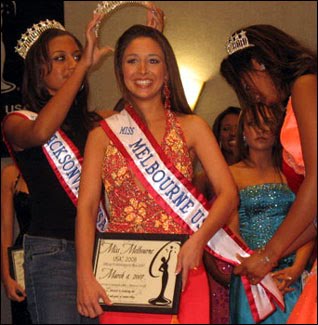
Clare was lying. Although she was clearly a shoe-in for Miss Melbourne, she refused to take part in such a competition, mainly because of her extreme aversion to self-tanner.

2: What’s the most “outrageous truth” about yourself, one few people would ever guess?

John Ramsey Miller. Yes, this question was a bit flubbed with an erroneous date stamp. For the record, John does have a stalker, but she only pursued him to four cities out of eleven.

3: What’s the craziest/most dangerous thing you’ve ever done in the name of research?

I was lying. I mean, really, people- have you so little faith in me? Volunteering to be tasered? That requires a neglect for self-preservation that is truly rare to behold. Unless, of course, you happen to be Rick Sanchez.

4: What’s the worst line you’ve ever read in a review or rejection of your work?

James was lying. I recommend going back and reading all of those other brutal reviews if you ever receive a bad one yourself. We’ve all been there, clearly. There were even more that I didn’t use…

AND the winner is…drum roll puh-lease….

J.J.COOPER!!!!!

J.J. was the only reader to guess three out of four correctly, so bravo! Send me your mailing address off list, and I’ll make sure all of our latest releases make their way to your mailbox.

Because the truths piqued some interest, we’ve decided to elaborate a bit on the things that really have happened to us…

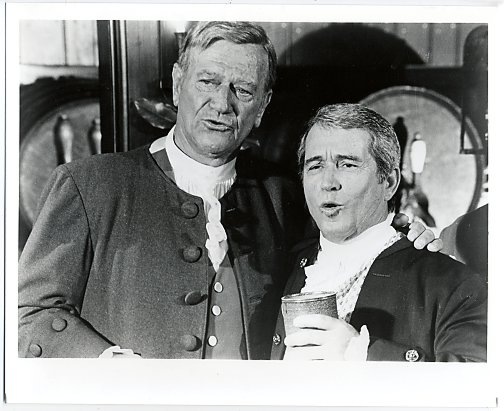
John Gilstrap and John Wayne: “Contrary to what you might read on IMDB, John Wayne’s last recorded performance was as guest star on como Perry Como’s 1978 Christmas special, “An Early American Christmas,” which was shot in Williamsburg, Virginia. I was a junior at the College of William and Mary at the time, and a member of the William and Mary Choir as well as the Botetourt Chamber Singers. To my knowledge, it’s one of only two performances in which Duke sings (part of a verse of “We Wish You A Merry Christmas”). Anyway, the William and Mary Choir is featured throughout the show, but there’s one scene in particular, shot in Chowning’s Tavern, where I’m on screen a lot. I’m the fit, good-looking guy with the luxurious long hair and beard (I haven’t changed a bit) wearing the white poofy shirt and red vest. For what it’s worth, Perry Como insisted that all the flagons be filled with real ale, so by the end of 8 or 10 takes, starting at six in the morning, we were all pretty looped.”

James, our very own nobleman: “My grandfather did a big family tree for us that takes us back through the first Duke of Wellington. I therefore have never suffered from a Napoleonic complex.”

Me and Maury: “I was invited to participate in a Maury Pauvich show focusing on the best bartenders in Manhattan. I didn’t realize until I arrived on set that they wanted me to lie down and have someone from the audience do jello shots off my stomach. I politely declined, and was promptly replaced. My fifteen minutes, therefore, turned out to be more like two.”

Kathryn stalks Ted Kennedy: “When I was a senior at Wellesley College, I worked as an intern for a very demanding Political Editor of a Boston TV station. My job was to maintain his schedule, attend meetings, and keep track of politicians. At one point he sent me off to Ted Kennedy’s house to see if he was there. The editor told me to make sure he was there, and so of course, I started creeping up the driveway, trying to see something. I think I heard a dog bark at one point, or maybe a cop car came by, so I dove into the bushes.”

Clare and the piranha-infested waters: “My husband and I traveled down the Orinoco River a few years ago – and our experiences there formed at least part of the idea for my first book, Consequences of Sin. After hours in a tiny boat in lashing rain we came to our ‘hotel’ perched on the banks of the Orinoco opposite the mission San Francisco. It was close to the delta and all around were hundreds of tributaries canoesnaking their way through the dense jungle. One day we went out in the dugout canoes the local Indians (called Warao) use. At one point our lunatic guide grabbed a piranha from the water and opened its jaws with a pocket knife just to impress us. He then warned us not to trail our hands in the water or (for the guys I assume) pee in the river as there were also electric eels whose charge can apparently traveled quickly back up a stream of urine…(who knew?!)…When we visited shore we also managed to disturb some horrible waspy insect nest which caused even the local Warao guide to go running and when we returned to the canoes we were warned to watch out for jaguars…Not a bad adventure in the name of ‘research’ for a wuss like me. It inspired me to wonder about the early British explorers to the region who (undoubtedly) would have gone mad…”

John Gilstrap and the Big House: “When I was writing NATHAN’S RUN, I lived only a few miles from the now-defunct Lorton Reformatory in Lorton, Virginia. During the author photo shoot, the photographer thought it would be a good idea to use the prison as a backdrop. The place was surrounded by multiple ranks of razor wire-topped chain link fence. Just for grins, I thought I’d pose as if climbing the outermost fence, telling the photographer that it will be interesting to see how long it takes for guards to respond. Answer: Not long at all, and when they arrive, they’re not happy.”nazi youth

John Ramsey Miller and the KKK: If you missed John’s excellent post last week on his hate group photo exhibit, “What Evil Lurks,” check it out here.

James and Chuck pump iron: “A couple years ago I was hired to write a script for Chuck Norris’s company and worked on it at his California home, where he has a room of Total Gyms. I have one, so I asked him to show me his workout. He did. The man uses what he sells and is in absolutely amazing shape. Don’t ever doubt that. You would be wise to remember that there is no theory of evolution–only a list of creatures Chuck Norris has allowed to live.”

Kathryn and the best revenge: “That patronizing rejection came from an agent who’d insisted on an exclusive. I quickly got a much better agent, plus a publishing contract. Success is the best revenge!”