Put Away Your Passport

by Michelle Gagnon

A fellow writer asked during a recent Sisters in Crime meeting if we felt it necessary to visit every location where our books are set. A debate ensued between the people who said it was absolutely critical to see a place in order to convey an accurate sense of it, and those who thought that having to visit a place in order to describe it might end up limiting the scope of your story.

Here’s an anecdote that came to mind: I attended one of Martin Cruz Smith’s readings a few years back. Someone asked how long he’d lived in Russia prior to writing Gorky Park, since he had done such an amazing job of nailing the feel of the place, from the muddied politics to the bathhouses. His response? A week.

How on earth did he manage to develop a sense of the place in a week? The person asked.
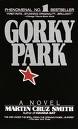
Smith shrugged, and said, “Actually, I barely saw anything when I was there. Most of it I just made up.”

That story always stuck with me, since as a writer the travel question is something I constantly grapple with. I would love to spend half the year jetting around to exotic locations (wouldn’t we all?), but pragmatically speaking there’s no way that will ever happen (and frankly, I would prefer to steer clear of some of the places where my books are set. For God’s sake, CRIME happens there).

Of course, I could make my life easier by setting stories in the Bay Area – I can’t explain why I developed such an unfortunate tendency to set my books on the east coast, or pretty much anywhere that I’m not currently living.

THE TUNNELS took place at my alma mater. I would have loved to have made a trip back while I was writing the book, but financially there was just no way (and my reunions always seem to conflict with Bouchercon).

Same with BONEYARD: I spent a summer living in the Berkshires, but that was nearly two decades ago. I still remember what the place felt like, but in terms of landmarks, much has probably changed.

For THE GATEKEEPER, which jumps from location to location across the southwest, this became particularly problematic. I’ve never been to Houston, yet a considerable portion of the book takes place there.

And the book I just started takes place almost entirely in Mexico City. While I’d love to justify a visit south of the border, it probably won’t happen this year.

So how do I handle this? I improvise. I read guidebooks. I spend hours scouting places with Google maps (special thanks to them for their satellite view option- that feature has been life changing for me). Boneyard revolved around a particular section of the Appalachian Trail, and I read online journals and blog posts by people who had hiked that section. With each book I probably end up doing as much location research as investigating how to build a dirty bomb, or neo-paganism, or whatever else gets incorporated into the story.

Of course, there are times when I wish I was Cara Black, able to write off a month-long Parisian vacation by setting my books there. But I believe that your story finds you. I’ve never once sat back and thought, “I’d really like to set the next book in the Berkshires.” Whatever germ of an idea I have, it always seems to be one that could only take place somewhere specific. And that somewhere has yet to be a place that I live (Freud would probably have a field day with that).

So my question is, do you think that passport has to get stamped in the interest of verisimilitude? Or will Google maps suffice?

A book is born!

Hooray! Today is the official release date of my new book, MAKEOVERS CAN BE MURDER. I think Kate (my protag) looks kinda cute on the cover, don’t you? But don’t be fooled–she packs a mean stun gun.

To kick off the book promotion, I had a fun interview today with Cheryl Nason, aka Dallas Book Diva. Tomorrow morning I’ll be chatting with Baron Ron Herron at KZSB Radio. Then more stops later this month.

In a few days (it always takes a few days for bookstores to unpack the books from the boxes and put them on the shelves), I’ll start surreptitiously casing out local bookstores. I’ll eye the book’s placement, and probably try to get away with turning the books cover-out. I have friends who do the same thing–a friend of mine in Wellesley, Mass. haunts her local library. She keeps putting my books on the front table so that they have prime real estate. She thinks the librarian is wise to her, but hasn’t caught her in the act yet.

Am I the only person who does this when a new book comes out? How do you all interact with your local bookstores around release-date time?

Old Fashioned Bum Glue

by Clare Langley-Hawthorne

I’ve been feeling like a bit of a loser of late – perhaps it’s the summer (or the week off from preschool which placed me in writing limbo) – but my writing mojo feels a little dented so I’ve had to claw my way back from depression-dom to start the week off. The only way I know how to beat the writing blues – not a writing block mind you – but that plague of self-doubt that hits you at midnight and which follows you through the day – is to resort to an old-fashioned tried and true method. Bum Glue.

This means that I sit down and, no matter how crappy or disillusioned I feel, I write. What gets typed may be absolute drivel (and it often is at first) but I persevere. I sit down, keep my bum glued to the seat, and write.

Tonight, as I compose this blog, I am preparing myself for the challenge of a week of bum glue ahead of me. I am trying to shaking off the panic and the angst, trying to shove back the “I’m a loser” thoughts and getting ready to face my fears. As Jim so aptly wrote in his post yesterday, I just have to move up the pyramid and the only way to do that is to keep writing.

So does anyone have any pearls of wisdom for me as I take a deep breath, wriggle my behind, and prepare? How do you restore your spirits or reclaim your writing mojo? Or am I the only one who suddenly finds themselves in that deep pit looking up and wondering how to escape?

Any tips on getting the bum glue to stick?

Writer, This is Your Job

by James Scott Bell

Some years ago I was teaching at a writers conference in New Mexico. After lunch I noticed one of the conferees sitting at a back table, looking distressed. I went over and asked her what was up.

“I don’t know,” she said. “Am I ever going to get anywhere? I see all these people, they all want it just as much as I do. How do I know if I’ll ever make it? ” Tears started down her cheeks.

I handed her a napkin for the tears, then took another and drew a pyramid on it. I divided the pyramid into six sections. Inside the pyramid are writers, I explained, with each section representing a different level of achievement.

The bottom, where most of the people are, is the realm of the “want to.” Or “I think I have a book inside me.” But outside of some scribblings, maybe a short story or two, perhaps an unfinished novel, these people never move on to the next level…

…which is where people like you are (I told her). Those who actually try to learn something about writing. Who buy writing books, go to conferences, take classes…and write.

Above that is the level for those who actually finish a full length novel. This is a great place to be. This is where real writers come from.

The next level holds those who write another novel, because the first one is probably going to be rejected. They do this because they are novelists, not just someone who happened to write a novel.

Next are those who get published. Above that those who are published multiple times.

Sitting on top of the pyramid is a Wheel of Fortune. This is where the breakout hits come from. The wheel goes around and lands on a book like Cold Mountain. Or The Da Vinci Code. Or Harry Potter.

No one can control this. No one know how to guarantee a hit, or it would be done every time out.

Your job, I told the young writer, is to keep moving up the pyramid. Each level presents its own challenges, so concentrate on those. As you move up, you’ll notice there are fewer people, not more. People drop out of the pyramid all the time. But if you work hard, you might get a novel on the wheel, and that’s as far as you can go on your own. After that it’s not up to you anymore.

The conference went on and I forgot all about this incident.

A couple of years later I bumped into her at another conference. She told me that this conversation and the diagram had a profound effect on her, and that she was going to keep going, and was finishing her first novel.

Two years after that she wrote to tell me she had landed a book deal. She is now a published author.

Writer, if you want to be published, if you want a hit book, don’t worry about things you cannot control. Don’t grasp at phantoms. Focus on the page right in front of you. Make it the best it can be, and build these pages into a book. And then another.

Keep climbing the pyramid.

That’s your job.

P.S. Adapted from the forthcoming The Art of War for Writers.

Title Tales

By John Gilstrap
http://www.johngilstrap.com/

My next book—the second installment of the Jonathan Grave thriller series, to be published next July—finally has a title: Hostage Zero. It’s got heft, I think. It sounds intriguing. And it provides lots of opportunities for the art director to design a terrific cover. At the end of the day, that’s what a title is all about, right?

Good title + great artwork = interested consumer.

For me, a title and a cover have done their job when they compel a potential customer to pick up the book and crack the spine. After that, the prose of the book takes over as sales agent. A book is a consumer product, after all, and packaging matters.

I just wish that the journey to nail down a title was less arduous. I’m coming to grips with the fact that I’m just not very good with titles. They rarely stick. Here’s my publishing history to date (my original titles are in parentheses):

Nathan’s Run (Nathan!)
At All Costs (Most Wanted)
Even Steven (Even Steven)
Scott Free (Scott Free)
Six Minutes to Freedom (Six Minutes to Freedom)
No Mercy (Grave Secrets)

I know it looks like a three-three split, but no one in the entire publishing pantheon liked Six Minutes to Freedom as a title, but it stuck because no one could think of anything else.

A week or so ago, I floated a title trial balloon via Twitter and Facebook to see what people thought of Hard Target as a title for the new book. The response was swift and overwhelmingly negative. Who knew that a bad Jean-Claude Van Damme movie could sully a two-word phrase forever? And who knew how many people are titillated by the word “hard.” I mean really, people. . .

Over the weekend, I got what I thought was a great inspiration for a title, and I floated it to my colleagues here on The Killzone: The Cost of Betrayal. The response was supportive (although not particularly enthusiastic), but it was received warmly enough for me to proffer it to my publisher. The return email read, “er . . . keep thinking.” It was too specific, I was told. We need to think more “atmospheric.”

I have no idea what an atmospheric title is, but on Monday, I floated the possibility of either Mortal Wounds, Mortally Wounded or Precious Cargo. Yeah, I know they all suck, but I wanted a damn title. I’m tired of calling a year-long project Grave 2.

Then I got this email from my editor: “Here’s a title I like a lot: Exit Strategy. This won a ‘great’ from [our sales manager].” I liked it. Done deal, right? I mean, if the author, the editor and the sales manager like a title, what could go wrong?

The publisher hated it. Yep, even used the H-word. I don’t know why she reacted so negatively, but she’s really good at what she does, so I concede to her tastes.

Finally, someone came up with Hostage Zero. It feels right and it tastes right. I have a title!

So what about you folks? How much do you stew over your titles? Do your working titles typically last through to publication, or do they change? As avid readers, do titles matter beyond that first impulse to look at a book? Are titles more than just marketing devices?

Sony introduces potential Kindle killer

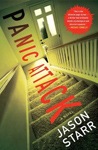
Jason Starr joins us today, filling in for Michelle Gagnon. Jason’s latest thriller, PANIC ATTACK, is on-sale now from St. Martin’s Press. Michael Connelly calls PANIC ATTACK "the ultimate page-turner" and Jerry Stahl says PANIC ATTACK is "the perfect thriller." It’s a terrific beach read, so be sure to pick up a copy today.

Für Berlin live / Jason Starr/ Foto: Promo Hey, great to be back here, and thanks to Michelle for letting me fill in and blog for her while she is, no doubt, lounging on some exotic beach somewhere, sipping drinks that have little umbrellas in them. Ah, the life of an international best-selling thriller author… Meanwhile, I’m here in dank, sweltering Manhattan, pounding away on my keyboard, like a bad parody of Mickey Spillane. But who said life is fair?

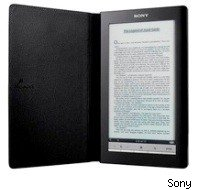
panic-attackWith a new book, PANIC ATTACK, out I’ve had marketing on my mind lately, and I think this week may turn out to be a key moment in book publishing history. Okay, maybe I’m exaggerating…a lot…but I think the announcement of Sony’s new Daily Edition reader is really going to shake up the electronic publishing landscape, and maybe the entire publishing landscape.

The Daily Edition is a far cry from Sony’s old reader, which wasn’t as sleek at the Kindle and couldn’t download content wirelessly. Early reviews say the Daily Edition is a potential Kindle killer as it does one big thing the Kindle can’t (and won’t) do–it lets readers download books for free. That’s right, via their local libraries, customers will be able to take e-books out on loan for two or three weeks for no charge.

With so much free content available, how will publishers and Amazon be able to charge full price for books? For example, if Michelle, on her exotic beach vacation, wants to read a copy of James Patterson’s latest, where is her incentive to buy the e-edition of the book when she can download it (and as many other books as she wants) for free? Will publishers have to change the way they sell books to libraries, and alter the prices of their e-books? It’s hard to imagine that if readers have a free option for e-books that they will continue to shell out the 10 dollars or more that Amazon is currently charging for new hardcover titles.

image Daily Edition also allows for other booksellers to distribute their content onto the device. This could be a great chance for Indy booksellers to get into the e-books game, but it could also create even more price competition.

But the main question about e-readers remains–are these devices here to stay and are books as we know them on life support? A little disclosure here. Late last year, I received a Kindle 2 as a gift. When I’m traveling and commuting it’s amazing. The ability to send Word files to my Kindle is a God’s send for reading manuscripts on the go. Lately, though, I find when I’m home and want something to read I go for an old fashioned book. I guess I feel like I look at a computer screen all day long, and when I want to relax I don’t want to hold a gadget, no matter how easy the screen is on the eyes. So, while a few months ago, I was telling people e-books are the wave of the future, I’m not so sure anymore. I see e-books becoming mainly for travel and commuting, and the regular book sticking around for every other use.

As an author, though, I’m excited about the potential proliferation of e-readers because they create the possibility of infinite book sales and could potentially make "book distribution" obsolete. For example, if The Today Show calls tomorrow and wants me on to discuss PANIC ATTACK, my publisher would have to reprint to satisfy the sudden demand. By the time the books arrived in stores, the demand would no longer exist. But in a world where everyone on the planet has an e-reader, a big national media appearance could generate tens of thousands of sales instantly.

So what do y’all think about all this? How are publishers going to price their books in a landscape where Sony is going to effectively start giving away many titles for free? Are you authors out there embracing e-books or would you rather they disappeared?

Tonight, August 27, at 9pm Eastern Time you can "see" me–well my well-endowed Avatar anyway–on the Second Life Talk Show "Virtually Speaking" I’ll discuss PANIC ATTACK and lots of other stuff. You also can listen to the broadcast live at 9 pm Eastern Time on Blog Talk Radio.

Find out more about Jason Starr and PANIC ATTACK at www.jasonstarr.com

Are You Motivated?

By Joe Moore

For most novelists, one of the easiest things to come up with is an idea for a story. It seems that intriguing ideas swirl around us like cell phone conversations—we just use our writer’s instinct to pull them out of the air and act upon them.

The next step is to develop our characters and stitch together the quilt of a plot that will sustain our story for 100k words. And right up front, we must consider what plot motivation will drive the story and subsequently the characters. Fortunately, there are many to choose from.

So what is a plot motivator? It’s the key ingredient that provides drama to a story as it helps move the plot along. Without it, the story becomes static. And without forward motion, there’s little reason to read on.

Here is a list of what’s considered the most common plot motivators.

Ambition: Can you say Rocky Balboa.

Vengeance: Usually an all-encompassing obsession for revenge such as in The Man In The Iron Mask.

The Quest: Lord Of The Rings is a great example as is Journey To The Center Of The Earth.

Catastrophe: A disaster or series of events that proves disastrous like in The Towering Inferno.

Rivalry: Often powered by jealousy. Remember Camelot?

Love/Hate: Probably the most powerful motivator in any story.

Survival: The alternative is not desirable. Think Alien.

The Chase: A key element in numerous thrillers including The Fugitive.

Grief: Usually starts with a death and goes downhill from there.

Persecution: This one has started wars and created new nations.

Rebellion: There’s talk of mutiny among the HMS Bounty crew.

Betrayal: Basic Instinct. Is that boiled rabbit I smell?

You can easily find a combination of these in most books especially with a protagonist and antagonist being empowered for totally different reasons. But the global plot motivator is usually the one that kick starts the book and moves it forward. Which ones have you used in your books? Which are your favorites? Are there any you avoid and why?

Coming Wednesday, September 9: Forensic specialist and thriller author Lisa Black will be our guest.

A glare of cats: Researching animal plurals, and other great ways to waste time

Maybe it’s because we’re in the dog days of August, but I’ve been spending a ridiculous number of hours doing research on the web this month. Which is to say I’ve been wasting a ridiculous number of hours this month. For example, I love the rhythm and sound of certain phrases, so today I went through the entire alphabet of collective nouns for animals over at askOxford.com . An ostentation of peacocks, a host of angel fish, a leap of leopards–I now know exactly the right way to refer to a group of any number of creeping, crawling critters.

Then there are other wonderful time-sinks, such as http://www.forensic-evidence.com/, which has an impressive amount of information related to forensic science. Another good site is the San Francisco Public Library Historical Photograph Collection. I actually don’t need any pictures relating to California’s history for my WIP, but at this point it doesn’t matter. Discipline-wise, I’m like the hungry gal who has rebelled against her diet and swan-dived into the hot fudge sundae.

I’ll settle back down to a strict writing routine in September, along with my diet. Really I will.
Meanwhile, do you have any good suggestions of places I can goof off on the web?

Regrets, I have but few…

by Clare Langley-Hawthorne

My husband and I went and saw the inimitable Jackson Browne last week and it’s put me in a reflective frame of mind. Of course, the fact that Tim and I were some of the youngest fans in the audience didn’t help – but Jackson Browne has provided a very strange soundtrack to our lives. When I first met my husband he had one of those early cool portable CD players (hey, it was only 1987!) but to say I was aghast at his CD collection would be an understatement – I mean who else had The Eagles, Fleetwood Mac and Jackson Browne alongside Madonna? My tastes ran to New Order, the Violent Femmes and The Smiths so I was literally gobsmacked. I grew, however, to love Jackson Browne (The Eagles I’m afraid had to go…) and my husband’s love of his music provided new insight into him – who knew the preppy guy had an angst ridden 1970’s soul?
The concert has made me think about the nature of regret. I have to admit, even as I face down the dreaded four-zero in a few months, I don’t really have many regrets at all – and the ones I do seem pretty trivial in the context of my life. I certainly wish I had pursued my dream of being a writer earlier – but then I wouldn’t be the writer that I am now. I’m a strong believer that you stumble upon your own path – and I’m supremely grateful of the path I managed to find.
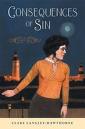
That being said, I do wish I’d been more savvy about the publishing industry when my first book came out. I would have definitely fought harder to change the cover for the hardback of Consequences of Sin (see exhibit A, on right). Although the paperback cover is fabulous (see exhibit B, on left) I still think the cover for the hardback irrevocably hurt sales and may have doomed me to Barnes & Noble (not to mention publishing) purgatory…

But it’s hard to have a clue when you’re first starting out – right??

I’m sure in a few years I’ll no doubt wish I had known now what I will know then, but I’m not going to lose any sleep over regrets (it is pretty pointless, after all), but regret, as Jackson Browne so often writes and sings about, is an important emotion. It is one that defines and shapes us, and when creating characters I think it’s important to explore not only their loves, hopes, and fears but also their regrets. In many ways our behavior is guided by regret in subtle but crucial ways – and I love getting under the skin of my characters in this way.

So what (if any) regrets do you have regarding your writing? Do your characters carry some of those same regrets? Do they have an angst ridden soundtrack to their lives or are they at peace with the path they (or rather you, as a writer) have chosen for them…?