Dog Boy. Wolf Man.


by John Ramsey Miller

I have something like two million books in print, not counting what has been pulped. Not a huge number compared to lots of other authors, but not too shabby for a country boy without a college diploma. It’s been a struggle here and there, and I was out of print for eight years between my first book, THE LAST FAMILY, and INSIDE OUT, my second. LF was a Literary Guild Main Selection, was printed in 12 languages, and some more stuff that’s bragable, but I’ve lost track of it. Hallmark bought the film rights but never made the film. Imagine a Hallmark film that opens with the murder of a Cub Scout and ends with people being exploded and shot to shit. After two years they made THE ODDESY instead with Armande Asante parading about in a toga.

My first book, The Last Family, was a disappointment to my publisher because it only sold 45,000 copies in hard cover, and like 450,000 in paperback. When I didn’t deliver a second book (they liked) on schedule I lost my seven figure contract. After five years and the insistence of an editor who believed in me, they gave me a new contract, and I wrote six more books for them. Don’t get me wrong, they paid me a lot of money, and I had two, three book contracts, but even though I got great reviews, my books failed to perform to expectations. I had the best editors, the best sales team, the best promotion, the best house, and now it’s back to square one.

The truth is that I might never have another book published, and not because I don’t write good books, but because I haven’t sold in numbers that impress publishers and faith in a break out book are not there.

If I had it all to do over again, I’d not let the publisher think I agreed with everything they were doing if I was uneasy about it. Looking back I can clearly see the mistakes I made, or allowed to be made by others. I think if the publisher had introduced my books differently and looked at building my career differently, it might have worked better fo all concerned, but that’s hindsight. I could be wrong, but I think I just went along for the ride and that didn’t do my career amy good. I can’t blame the publisher, I can only blame myself. So my advice is to go with your gut and make waves if you think you’ll suffer if you don’t.

Ours is a hard life and is getting harder all the time. But every occupation has its difficulties and there’s no security in any of them. So far in my career I wish I’d been less a dog, and more a wolf.

Things I Would Have Done Differently

By John Gilstrap
www.johngilstrap.com

Before I begin, allow me a moment of Shameless Self Promotion: The Copper Bracelet—the serial novel created by International Thriller Writers (and to which I contributed a chapter) is the #1 Bestseller at www.audible.com. Hooray!

The Killzone posts have been extraordinary this week, I think. Had I not been up to my eyeballs in day-job meetings and crises, I would have been commenting like crazy. Alas, I was unable to do so. On the positive side, I happen to have my very own posting day, and I thought I’d continue the theme (sort of) by discussing lessons I’ve learned from the perspective of what I would change about my own journey if granted the opportunity.

I’ve been way more fortunate than most in my writing career. My first published novel, Nathan’s Run, was anointed a Big Book by the publishing industry. The book was reviewed everywhere—mostly positively (starred reviews in PW, Kirkus and Library Journal)—and the sale itself generated the kind of buzz that brought a swarm of movie producers to fight over the film rights. It was very heady stuff at the time, yet because it was my first book, I had no idea how unique my experience was.

It was a little like showing up to the World Series as a spectator and leaving as MVP. Nothing—nothing—prepares you for that overnight success. I don’t regret a moment of it, but looking back on that experience versus where I am now in the pantheon of writers, there are a few things I would do differently if I could climb into my Way-Back machine and fine-tune the past.

In no particular order . . .

I would insist on a multi-book deal. I was in the driver’s seat in those days, and my agent at the time pressed hard for a one-book deal (hardcover only) with HarperCollins, and we auctioned off the paperback rights separately to Warner Books. I agreed, of course, because I didn’t know any better, but in retrospect, that was a mistake. It’s a strategy that is designed to squeeze the most money out of a publisher, but at the expense of any sense of loyalty. Everybody worked hard for my book to make money, but only I had a vested interest in my career.

Worse than that, I effectively had no editorial feedback as I wrote At All Costs as a spec project. It was like writing a first novel all over again, albeit with a pocketful of affirmation. Ultimately, the book sold to Warner Books and did reasonably well, but that was another one-book deal. After a dispute arose by no fault of my own regarding the movie rights for that book (and I beg those few who know the details not to share them in this forum), Warner chose not to publish me anymore.

So there I was, writing my third book on spec, without editorial help. Folks, that’s an exhausting way to advance a career. I pushed back against my agent, insisting on a multibook deal. (By way of full disclosure, I was orphaned midway through Even Steven and had two editors during Scott Free, so the multibook scenario is not without its own set of problems and risks.) When all was said and done, that agent and I parted company on good terms, in favor of my current agent, our own occasional contributor Anne Hawkins.

I would not trust the marketing and publicity departments. After the rock-star treatment I enjoyed during Nathan’s Run’s publishing cycle, I foolishly assumed that such was the rule for all books. I would write the novels, and the publisher would promote them. Wow, was that not true. By the time I caught on, way too many horses had already fled the barn.

I would network more and make myself shamelessly visible. Hey, I’m a party animal. I like people. I knew nothing about the writers conference circuit until after Nathan’s Run had been on the shelves for months. Thank you Harlan Coben to cluing me in. Long-timer Internet surfers will likely remember the heyday of AOL, back when you paid by the hour for access. During those days, AOL hosted the Writer’s Club, where hundreds of writers of all levels of success would gather and chat. (That’s where I first met John Ramsey Miller, in fact.) During one of those chats, Harlan told me about this thing called Bouchercon, and of all the other themed conferences. Who knew?

I hit the circuit pretty hard for At All Costs, but not so much for the succeeding two. By the time Six Minutes to Freedom came out—my nonfiction book—I figured that with the real star of the book still alive and on the speaker’s circuit, no one would be all that interested in hearing from the author. That was a mistake. I allowed myself to disappear from my fan base, and to lose touch with far too many friends. Never again.

As I write this blog entry, I realize that this is a topic that could ramble for thousands of words, so I’ll let it go here. What about you folks? Any hard-learned lessons that haven’t already been shared this week?

The Book Price Wars

by Michelle Gagnon

I stumbled across this article yesterday:

“The cost of John Grisham’s “Ford County,” officially released Tuesday, moved up and down like stock market shares as rivals Amazon.com and Walmart.com extended, then rescinded, their high discounts for top-selling pre-orders. Early in the day, Amazon was selling Grisham’s book of short stories for $9, the same price it had offered for “Ford County” before publication and a sign that Amazon was ready to continue the cost competition beyond the release date. Walmart.com was selling “Ford County” for $12 early Tuesday, then cut the price to the pre-order discount of $8.98.”

The larger booksellers like Amazon did something similar for Dan Brown’s last release. While most hardcovers retail for $24.95, chances were you could find The Lost Symbol on Amazon for $16, or even less.

But cheap books are a good thing, right?
Wrong, and here’s why.

BYE BYE INDIES:
This type of price fixing devastates independent booksellers, who can’t possibly compete with those discounts. Already under pressure from the big box stores, this trend of offering the most popular releases at huge discounts almost guarantees their demise. I spoke with one independent bookseller the other day who confessed that for some books, she sends her staff to Costco or Wal-mart, because the discount there is far greater than what they receive from their regular distributors. Wal-mart and Amazon are slowly but surely tightening their grip around the throats of the indies with this practice. Although there will always be some consumers who are willing to spend a bit more to support their local bookstore, in a tight economy, it’s unrealistic to expect people to spend two or three times as much for the same product they can order from the comfort of their home.

THE AUTHORS
Right now, the publishing industry has quite literally put all their eggs in one proverbial basket. Fewer than fifty authors are currently propping the industry up. Their books already receive the lion’s share of the marketing budget, and now those books are being offered at previously unheard of discounts. So a typical consumer wanders into a bookstore. What’s the likelihood that they’ll purchase a hardcover by an author they’ve never heard of, when the latest James Patterson opus at the front of the store is selling for half the price? The top of the pyramid will continue to shrink, as the publishers place all their bets on a few proven writers. The likelihood of breaking out, or building an audience, in the face of that is daunting to say the least.

In addition to that, here’s another excerpt from the article, “Authors, publishers and rival booksellers worry that cutting the price so low will harm competition and force down the cost of books overall, leading to a reduction in author advances.” Advances have already shrunk by up to a third this year for many authors. While the writers who are considered “bankable” will still receive six and seven figure advances, most authors will end up working for less than minimum wage. Which means that fewer people will be able to afford pursuing a publishing career, shrinking the talent pool even further.

THE PUBLISHERS
I’ll confess to not knowing exactly how much it costs to produce a hardcover once editing, marketing, typesetting, printing, and distribution costs are factored into the equation. However, now that Amazon, Walmart, and Target are conditioning consumers to expect lower prices, the margins for publishers will shrink. They simply won’t be able to afford to publish as many books each year. Titles that might be viewed as riskier will be avoided entirely. So there will be fewer options out there for readers. Grisham himself acknowledged as much in a recent interview with Matt Lauer, in which he criticized predatory pricing and said it was going to make it much more difficult for aspiring writers to be published, and for publishers and booksellers to survive.

Last week, the ABA sent a letter to the Justice Department requesting that they investigate the predatory pricing practices of vendors like Amazon, Wal-mart, and Target.
Price fixing is never a good thing. The bookselling industry is facing an impending monopoly, with a few retailers gradually eliminating the competition. And if they succeed, it’s bad news for everyone.

Have you been branded?

By Joe Moore

Yesterday, my blog mate, Kathryn Lilley, discussed market research and why consumers choose one product over another. To continue Kathryn’s theme, I propose the question: Why are people motivated to purchase one book over another? Is it the author? How about the cover art? The cover blurbs from other writers? The title? The synopsis on the back or inside liner?

All of the above are important, that’s for sure. But I believe one of the biggest factors in motivating a purchase of a book is “brand”, or lack of it in the case of not making the purchase.

Why brand? Readers want consistency. Think of food. Everyone knows exactly what a Burger King Whopper tastes like. The Burger King brand is known worldwide because whooperthey found something that people like and they keep repeating it. I can walk into a Burger King anywhere on the planet and I know what to expect. The same goes for McDonalds, Pizza Hut, Starbucks, KFC, Taco Bell, and hundreds of other well established brands. If I crave a Big Mac, there’s only one place to get it.

I think that the same holds true for books. I can pick up the latest James Paterson, Nora Roberts or Clive Cussler novel and I know what to expect. They have established a consistency in their product that has become their brand. As a matter of fact, their names ARE their brands. All you have to do is mention Patterson, Roberts or Cussler, and anyone who has experienced those brands knows what you’re talking about. Just like the Whopper. You don’t have to explain it to someone who’s already had one.

What is brand? For starters, I think of it as a consistent level of expectancy. By that I mean that the customer/reader expects something to happen each time they make a purchase based upon the brand, and it does—every time. If there ever comes a time when it doesn’t, the customer/reader will abandon the product for a replacement—maybe not the first time, but eventually they will move on.

Now I know what you’re thinking. I’m a debut author. I have no brand. Or I only have a couple of books out. Not enough time to establish a brand yet. Ask yourself this: how strong was James Patterson’s brand when he published Along Came A Spider in 1993? Probably not as strong as it is today. He started with a good story, quality writing and a compelling package, and built it into the James Patterson brand combining it with other vital branding items. Branding goes way beyond story content, style, voice, and other writing elements. It involves your book covers, your website, your blog, your marketing collateral, how you dress in public at signings and conferences, how your email signature is worded—in other words, your brand is your message working in tandem with your personal “packaging”. The good news is that today we have even more avenues for building our brand than Mr. Patterson did 16 years ago.

So, how do you create a brand from your message and personal packaging?

Your message is primarily the words that are contained in your books and the words used to describe your books. The packaging is the “framing” of those words. If the message and the packaging are not synchronized, you will create confusion in the marketplace. You control your message by the content of your stories. And it’s important that you work closely with the publicist and marketing department at your publisher to make sure your message matches the message they produce for promoting your books. If it doesn’t, keep working with them until everyone feels that it does.

What about the packaging decisions you can do yourself?

Start with your website. It’s one of the most important parts of your personal packaging. You’re in control of all aspects of its content and construction. Make sure it looks like your books. I know that sounds pretty basic, but you’d be surprised that the only similarity between some author’s websites and their books is that they show a picture of the book cover. For best packaging results, the entire site should have the same visual feel as your cover(s). If you can’t create or capture that yourself, find a professional to do it. Remember, it’s the TOTAL packaging that helps establish your brand.

Now think about the rest of your collateral material such as business cards, post cards, posters, bookmarks, newsletters, bulletins, etc. Do they project your brand? Are they an extension of your book covers and website? Again, if you can’t achieve a totally consistent personal package, find a professional designer that understands branding and packaging. The investment will pay for itself in the long run.
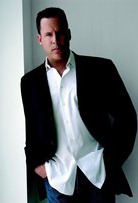
flynn2 Make sure you know and understand what you want your brand to be. Understand who you are in relation to your brand. What kind of image do you want to portray? I’m not suggesting you come up with some fake persona and act like someone you’re not. But guess what? Being an author is acting. It’s acting out your brand. It’s your personal packaging.

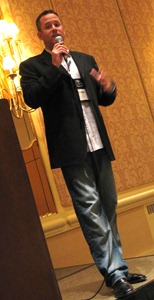
A great example of this is Vince Flynn. He not only delivers a consistent level of quality in his writing and stories, but when flynn1he appears in public as “Vince Flynn the author” for a signing or conference, he acts out the part. His physical brand is obvious: jeans, shirttail out under a sports jacket. In person, he looks like his cover photo. Remember that the first physical connection a reader has with an author is the photo on the back of a book. That portion of the personal packaging had been set in the readers mind. One day that reader/fan will be at a book signing and in walks the author. The reader has a consistent level of expectancy in all things concerning the author’s brand. If the author understands that, it should all come together. They immediately relate.
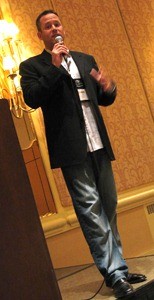
In building your brand, you must consider all of these items working together. The consumer will come to expect it and it’s to your advantage to deliver.

As a writer, do you feel like you have a brand? If you do, is it the one you want? Are you aware of it? Can you think of some other examples of writers who have a consistent, strong brand?

Buy my soap–it’s rounder

By Kathryn Lilley

Publishers could learn a lot about market research by studying soap makers.

Consumer brand-makers have long studied every nuance of customers‘ shopping habits; they understand what makes a shopper reach for a particular product–why they reach for Dove soap, for example, as opposed to a nearly identical brand. Size, shelf placement, branding, color combinations, labels, price points–it’s all been studied, calibrated, and expertly wielded to part you from your money the next time you’re in the grocery store.

But in the publishing world, consumer marketing research seems to be woefully lacking. What makes a book-shopper shell out $25 for a hardcover book by an unknown author? Does anyone really know? Damned if most people in the publishing business seem to.

Authors don’t know, either. We’re always told, “Just write a good book, and readers will come.” I have visions of writers building ball parks in Iowa corn fields, waiting for Shoeless Joe to arrive for a book signing.

I’ve decided to run an unscientific poll to learn exactly why people bought their most recently purchased book. Is the conventional “superstar” theory correct, and did you buy a book by a major author? Or did you hear about a book or author from a review? From a blog? Did you wander the shelves and get drawn like a moth to a compelling cover and jacket copy? Or were a couple of factors involved?

Visit my poll, vote, and let me know how you made the decision to purchase your most recent book. Let me know how the poll can be refined or tweaked, and if there are any other polls you think would be worthwhile.

I’d also be interested to hear if anyone is aware of any hard core data about reader buying habits. Right now I get the sense that writers and publishers are simply wandering the corn fields. And we’re going to be stuck out there for a long, long time.

We the Jury…

by Clare Langley-Hawthorne

Well, it’s gone midnight and I’ve just finished up my final proofing edits (why does this always seem to take so long?!) – I would have had them completed much earlier (yeah, right…) if I hadn’t been called up for jury duty last week. Now before you all roll your eyes in sympathy, I was actually excited about the prospect of serving on a jury. In Australia, you see, lawyers (at least when I was practising) are not allowed to serve on juries.

The thought that I was never going to get a glimpse of what it was like to be on the other side – hearing the arguments rather than making them, weighing up the evidence and actually getting to decide whether a person was guilty or not – always bugged me until I realized that now, as a US citizen, I may actually get to be on a jury (I know, it’s sad just how cool I thought this would be).
Last Wednesday was my first ever experience of the American criminal justice system (really…) and my first ever jury duty summons as a US citizen, and I have to say it was anticlimactic to say the least.

First off, I had no idea how boring it would be – or how bizarre it was to sit in court listening to people on the first ‘randomly chosen’ jury panel go over their backgrounds, while the rest of us schmucks had to wait…and wait…just in case. I found that I couldn’t turn the lawyer in me off – after each potential juror finished answering their background questionnaire, I found myself mentally deliberating on whether, and on what grounds, I would have tried to excuse them. Every time the judge (who was, I have to say, exceptionally nice as well as funny) issued instructions I also found myself saying ‘yeah, yeah…blah, blah,blah..beyond a reasonable doubt…’ before an inner voice shouted “Just get on with it!!”

As it turned out the case (should I have even ended up on the panel) was due to run through this week and since I’m heading off to London later today (yay!) on a research trip I had to be excused anyway.

So, since my first jury experience turned out to be a bit of a fizzer, I was wondering if anyone had any juicy jury stories to tell me instead. Go on, let me live vicariously…or at least provide me with some truly excruciating, bored to the eyeballs stories so I can feel vindicated.

My Town

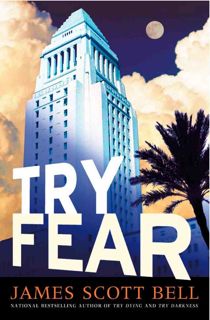
by James Scott Bell

I love L.A.

I’m third generation Angeleno. My grandparents built a house on Nichols Canyon Road in Hollywood back in the early 20’s (it’s still standing). My dad went to Hollywood High and UCLA (where he played baseball with Jackie Robinson).

I grew up at Dodger Stadium, Grauman’s Chinese Theatre, Zuma Beach and the San Fernando Valley, just up the street from the Harry Warner (of Warner Bros. fame) ranch. I still live here because, quite simply, it’s my home. It’s in my bones, the same way Hannibal, MO was for Mark Twain.

Sure, there’s some love/hate going on, as in any other town. The infamous traffic, for example. It’s bad, yes, but you adjust. You learn how to pick your spots, take your side streets, even utilize the bus and subway. (I know, it’s difficult to use Los Angeles and subway in the same sentence, but it’s really a pretty cool system).

It’s also the greatest noir city ever. The possibilities for suspense, intrigue, mystery and thrills are endless. You can find any kind of character you want here. You can, in fact, create the craziest of characters and set them in L.A. and they’ll seem perfectly at home.

From time to time I’ll share some favorite locations in my town. For now, here’s a short visit to some L.A. locales—starting with the house they used in the 1944 film Double Indemnity. Enjoy.

Trudging Through The Snow Carrying Two Sacks of Groceries…

John Ramsey Miller

You know how “old” guys are always giving advice, usually unasked for and often as not unwanted. I find myself doing that these days. In the fifteen years since I began writing fiction, I’ve picked up a lot of knowledge, mostly by stumping my toe on obstacles that I didn’t know were in my path until I tripped over them. I wish I had known then what I know now. You get published and you learn this one way or the other, or you don’t…

Here goes…

The first advice I would give soon-to-be, or newly published authors would be:

1) No matter how much your publisher loves your first book, they won’t tell you that they’d better love your second book even more, and then your third, and so on and so forth.

2) No matter how many critics love your first book or rave about how amazingly talented you are, don’t let it go to your head. Next week they’ll use pretty much the same words to describe another author. So, take a bow and go right back to work. More often that not, the worst thing that can happen to a new author is to have a first book really do well, or to get an award on their first book. Chasing an initial success is a lot harder for most people than building success one book at a time over time.

3) You are responsible for your career. Don’t depend on the publisher’s promotions department unless your book is looking like it will be a big seller. Publishers tend to put their promotion and advertising money where the return is most promising. This is true with most businesses, so don’t take it personally.

4) Don’t lose sight of the fact that your publisher is a corporation and as such is pretty much only interested in the bottom line. Corporations hate to lose money because their bankers and shareholders don’t like it.

5) Keep things in perspective. Remember that your book is one in thousands that are printed every year and every author is competing for the limited space in bookstores.

6) You are seldom as well known as you imagine you are. It becomes your job to reverse this by getting your name and the name of your book out there. Remember that memories are short and growing shorter all the time.

7) Listen to your editor and remember that he or she probably knows more than you do about the shape your book ought to be in and how you can best get it there. When you think you know more than your editor, you are more than likely wrong, or you should set about finding one you think knows more than you do. The first thing authors with bloated egos usually do is ignore their editor’s advice because they know their work and audience better than anybody. It’s possible, but unlikely. Maybe most editors can’t write a book, but they are usually in their position because they know when your piano is out of tune and how to get it in pitch.

8) Always assume an advance is all the money you’ll get from the publisher until you sell another book. And you should pay the taxman as you go.

9) Get to work on the next one immediately.

10) Don’t take your positive or negative reviews too seriously, especially Amazon reviews. It’s all very subjective, and negative people, wing-nuts, and haters (especially failed writers) seem to love slapping published writers around. On balance, it’s also a place where an author’s family, friends and supporters post their applause.

Okay, authors, any advice for new authors you wish you’d had the benefit of, or paid attention to?

How I Bungled Bouchercon

By John Gilstrap
www.johngilstrap.com

This year’s Bouchercon in Indianapolis was a terrific event. It was extremely well organized, and I had the opportunity to participate on a terrific panel. Then I blew it. I missed my own book signing. How humiliating is that?

For as long as there have been conferences, signings have always followed panel appearances. I know this–I’m not a rookie, after all–but at Bouchercon, I forgot. In my own defense, my panel was in the last slot of the day, just hours after I had arrived in town. Apparently I had a lot on my mind. I dunno, maybe I’m just grasping at straws to make the simple reality of a brain fart more complicated than it really was. In any case, I forgot.

It wasn’t till much later that evening, well after dinner, that a colleague approached me in the bar and asked why I had blown off my signing. “What signing?” I asked. Then, as soon as the words left my mouth, I got it. The signing that always follows a panel at Bouchercon. Damn.

I did my best to make amends the next day by visiting each of the booksellers the next morning and offering my apologies. I signed their stock, and begged them to spread the word to anyone who asked that I was terribly sorry for any inconvenience or disappointment I caused. I truly am sorry. Beyond that, I’m more than a little embarrassed.

A couple of days ago, I got a blistering email from a (former) fan who tore into me for having so little regard for my readers–the people who make or break my success. God love her, she had waited for me in the signing room, and when I didn’t show, she was naturally put out. I get that, and I have reached out to her to make amends.

That email, though, raises an interesting point, I think: The fragility and intensity of the relationship an author creates with his or her readers. By offering our imaginations for scrutiny, we touch people, whether for good or ill. We invite them into our brains, if not a little bit into our lives. It’s important to take that seriously.

And I bet you a hundred bucks that I’ll never again forget that there’s always a signing after a panel at Bouchercon.

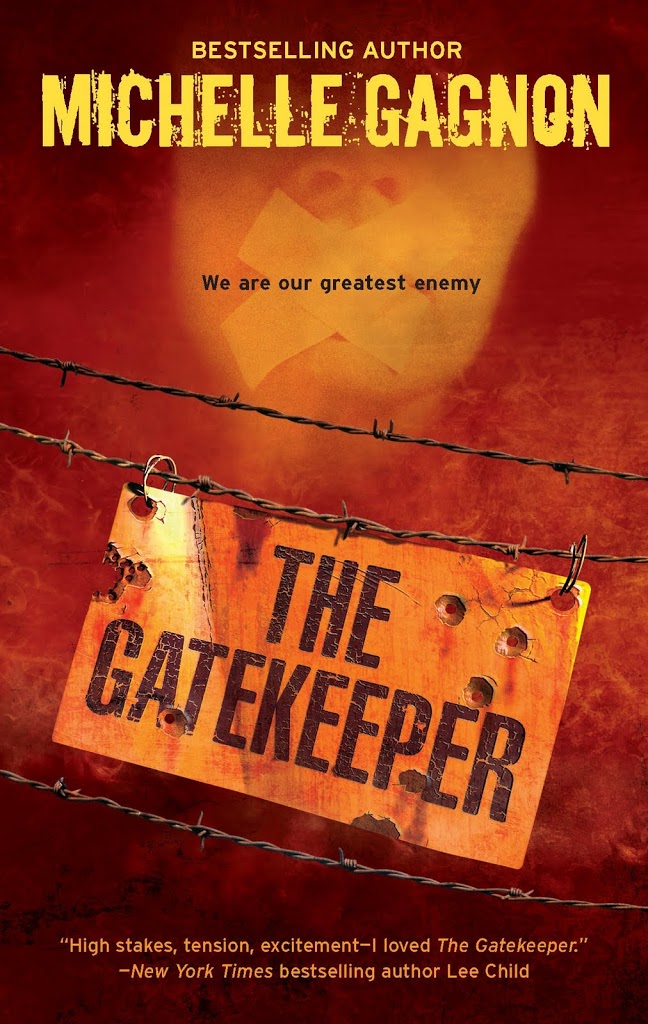
The Truth Behind THE GATEKEEPER


by Michelle Gagnon

This week marked the release of the third book in my series, THE GATEKEEPER. I thought that today I’d share the genesis of the idea for the book along with some fun facts I found out during my research. Brace yourselves- what you’re about to read is even more frightening than a special edition of “Wife Swap” featuring the balloon people.

So a little over a year ago, I was having dinner with a friend who is a veteran FBI agent. We were discussing how his job has changed in the aftermath of 9/11. Somehow the conversation turned to domestic terror groups, like the one that spawned Timothy McVeigh.

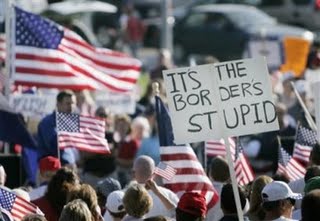
Through mouthfuls of pasta, he said, “You know what’s scary? Those groups have doubled in size in the past decade, but after 9-11 all the resources allocated to monitoring them were diverted to foreign terrorism. So there are twice as many of these guys out there, and no one is watching them. And now all these groups share the same agenda: they’re all anti-immigration. My biggest fear is that someone will manage to galvanize them.”

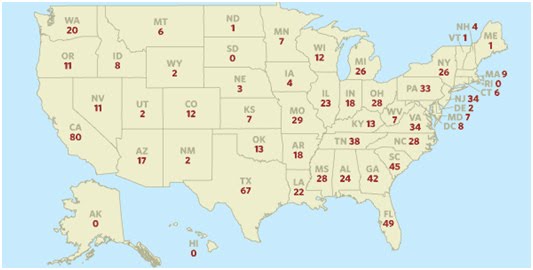
Boom- that was the seed of the idea for THE GATEKEEPER. (I’ve posted a “hate group map” detailing how many of these groups are currently active in America).

So my plot revolves around someone galvanizing them, kind of an American version of Osama bin Laden, who intends to commit the worst terrorist attack on American soil to serve his own ends.

And what would constitute the worst sort of attack? A nuclear one, obviously. But when I started researching, I discovered that in the United States, we’re actually quite adept at managing high level nuclear waste. Spent fuel rods and their ilk are carefully monitored within the country, consolidated at sites like Yucca mountain. And according to ICE, every single shipping container that enters this country undergoes a radiation check, which eliminated the possibility of having uranium smuggled in (although that has become a terrorist mainstay in films and TV series).

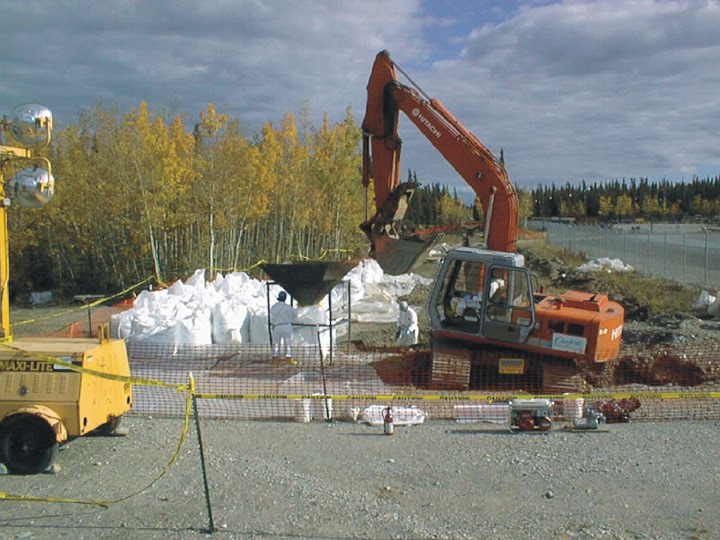
However, I also stumbled across this fun fact. While the high level radioactive waste is carefully monitored, the low level stuff that might be used in a dirty bomb is actually loosely tracked. In fact, much of it isn’t monitored at all. Here’s a picture of one such storage site; note how drastically it differs from Yucca Mountain.

In fact, several sources of radiation, mainly from defunct medical and oil drilling equipment, are lost or stolen every year. As of 2008, U.S. companies reported losing track of almost 1,700 radioactive sources, an average of 430 a year. In Texas alone, between 1995 and 2001 more than one hundred and twenty-three items fell off the grid. Most were never recovered.

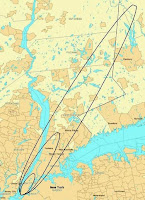
That’s an average of eight sources a week that no one can account for. And if just one of those fell into the wrong hands, it could be used to create a pretty nasty dirty bomb. Here’s a chart of how many cancer deaths would be caused by one such bomb, if it were set off in Manhattan.

The one fallacy in the book (as far as I know- hey, no book is perfect) is the job that one of my characters holds. He works as a DOD contractor, working on a project to consolidate those types of low level waste. And according to my research, no such safeguards actually exist. Scary, and worth sending a letter to your Congressperson.

I live in California, where border issues are in the paper almost daily, even here in liberal San Francisco. It’s a complex issue, which I tried to show as many sides of as possible in the book. There are no easy answers, so I didn’t try to pitch one side or the other. What I tried to show was how effective hate can be at uniting people, and that’s never a good thing.

As part of my book release, I’m holding a drawing for a MacBook laptop computer. Entry is free, all you have to do is sign up for my newsletter (which comes out rarely, maybe a half-dozen times a year). For ten more entries, answer this question: “Which two characters (aside from Kelly Jones and Jake Riley) appear in both THE TUNNELS and THE GATEKEEPER?”