Trashed my post, and hangin’ out on the web…


Sheesh.

I was planning to comment today on the SinC/PW top ten book list brouhaha, but I think we raked those leaves pretty thoroughly with Clare’s post yesterday and John’s post on Saturday.

So this afternoon I abandoned my half-finished post and spent the rest of my free time trolling the ‘Net for any other controversial literary topics that could get folks hot and bothered. A bit of juicy publishing gossip. Something.

I came up blank. I got nothin‘.

About the only thing my web surfing did for me today is leave me stunned and slightly disoriented by the sheer abundance of information that’s out there. Twitter, Blogpulse, Google Trends, Wonder Wheel, Wikio…yikes!! Our global attention span is being chopped to 140-character bits.

Eventually I lost the energy even for reading on the web, and wound up…where else? YouTube.

I was going to entertain you with some videos of funny cats (some of them really are gosh-darned cute), but then I started gravitating to book videos and author interviews. And I remembered that Stephen King has a big release this week, UNDER THE DOME. It clocks in at 1088 pages. That’s got to be 1.5 pages for every character in your average small town in Maine. The story has an interesting premise: A small town gets cut off from the rest of the world and finds itself, literally, under a dome. It reminds me a bit of a short story I read recently by King called THE MIST. I liked that story (even though I wasn’t sold on the monster in it), so I’ll probably give UNDER THE DOME a try.

Here’s Stephen King talking about story, followed by a reading:

What do you think? Will you run out and buy the book? If you’re a writer, have you ever gone back an resurrected a story you abandoned in previous years, as Stephen did?

Where Angels Fear to Tread…The PW Top 10 List

by Clare Langley-Hawthorne

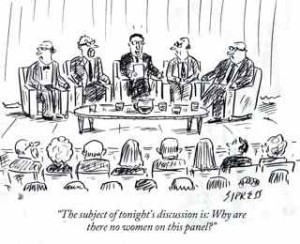
I seriously considered entitling this post ‘Gender Blind My Arse’ but was worried it might be too…ambiguous…and I wisely held off from commenting on John’s Saturday post for fear that I might come across as some half crazed loony, or worse…a feminist…that’s right, that terrible eight letter word (I know, it’s amazing, I can count!)

But before I start pissing everyone off already, let me say that the PW top 10 list doesn’t bother me all that much. Why not? Because it’s not surprising. Because all lists are subjective. Because at least on the extended list women are (sort of) represented. So why, do you ask, am I pissed off? I’m angered by the reaction it has garnered – because it feels like we’ve been down this road so many times before and it’s always a dead-end. Reviewers will always say they were gender-blind, that they tried their very best not to be influenced by anything other than the writing itself (what lies beneath the covers, not what lies between the legs to paraphrase from John’s post). To this, groups like Sister-In-Crime will always counter by saying that gender bias is systemic in the publishing industry – from the books selected for review, the level of critical ‘gravitas’ bestowed, and in the awards handed out. As far as I’m concerned it’s a no-win situation and this is what drives me nuts – I mean, after all that we have fought for, I can’t believe we’re still having this debate.

What I don’t get is how women, who buy the overwhelming majority of novels and dominate the publishing industry (at least in terms of editors), don’t just proudly denounce all the nonsensical crap that comes up around the gender issue:

  1. Women do not write ‘small’ ‘domesticated’ books. So what if the traditional cozy doesn’t have zombie dismemberment, it can still be well-written and it can still deal with important ‘universal’ issues surrounding the human condition. Just because there’s a picture of a cat with a ball of yarn on the front does not mean the book has to be marginalized as ‘chick-mystery-lit’.
  2. Romance does not equal brainlessness or crappy writing.
  3. There are no inherent gender traits in writing. Just because I’m a woman doesn’t mean I write emotions well and action scenes badly. I may write a traditional historical mystery but that doesn’t mean that (as a woman) I couldn’t write a gruesome, psychologically disturbing book (Val McDermid, anyone?) .
  4. White men don’t write better books…

The final point seems spurious to me…but in light of PW’s list…I guess I had to say it.

First Person Boring

by James Scott Bell

I love a good First Person POV novel. I love writing FP myself. But there are perils, and if you’re thinking of trying your hand at it you’re going to need be aware of them.

One of these is the “I’m so interesting” opening that is anything but.

Recently I read a couple of novels in FP that had this problem. They began with the narrator telling us his name and giving us a chapter of backstory. By the time I finished the opening chapter I was thinking, Why am I even listening to you?

Let me illustrate. You go to a party and see a guy standing off to the side, you nod and introduce yourself, and he says, “Hi. My name is Chaddington Flesch. Most people call me Cutty, because my grandfather, Bill Flesch, refused to call me anything else. He liked Cutty Sark, you see, and thought this name would make a man out of me. All through school I had to explain why I was called Cutty. Growing up in Brooklyn, that wasn’t always easy. Even today, at my job, which happens to be as an accountant, I . . .”

Yadda yadda yadda. And you’re standing there at this party thinking, Dude, I’m sorry, but I don’t especially care about your history. I have a history, everybody at this party has a history. Nice meeting you, but . . .

But what if you introduce yourself to the guy and he says, “Did you avoid the cops outside?”

You look confused.

“Because I got stopped by a cop right out there on the street. He tells me to hit the sidewalk, face down, and then proceeds to kick me in the ribs. I say, ‘There’s been a mistake.’ He gets down in my face and says, ‘You’re the mistake. I’m the correction.'”

What are you thinking then? Either: Am I talking to a criminal? Or, What happened to this poor guy?

What your reaction isn’t is bored.

You are hooked on what happened to him. And that’s the key to opening with FP. Open with the narrator describing action and not dumping a pile of backstory.

Save that stuff for later.

Open with movement, with action.

I got off the plane at Maguire, and sent a telegram to my dad from the terminal before they loaded us into buses. Two days later, the Air Force made me a civilian, and I walked toward the gate in my own clothes, a suitcase in each hand.

I was a mess.

[361 by Donald Westlake]

The girl’s name was Jean Dahl. That was all the information Miss Dennison had been able to pry out of her. Miss Dennison had finally come back to my office and advised me to talk to her. “She’s very determined,” my secretary said. “I just can’t seem to get rid of her.”

Then Miss Dennison winked. It was a dry, spinsterish, somewhat evil wink.

[Blackmailer by George Axelrod]

The nun hit me in the mouth and said, “Get out of my house.”

[Try Darkness by James Scott Bell]

Now I realize I’ve used hardboiled examples here, and some of you favor more literary writing. There’s a lot of debate on just how you define “literary,” but let me suggest that literary does not have to mean leisurely. You can still open with a character in motion in a literary novel, and I guarantee you your chances of hooking an agent or editor, not to mention a reader, will go way up without any other effort at all.

One of my biggest tips to new writers is the “Chapter 2 Switcheroo.” I can’t tell you how many times I’ve looked at a manuscript and suggested that Chapter 1 be thrown out and Chapter 2 take over as the new opening. I would say, conservatively, that 90% of the time it makes all the difference, because the characters are moving. There’s action. Something is happening. And truly important backstory can be dribbled in later. Readers will always wait patiently for backstory if your frontstory is moving.

Try it and see.

Evidently Men Write Better Books Than Women…

John Ramsey Miller

Hold your ire, girls, I was just trying to get your attention. We can talk, now that the men have by now nodded and gone on to read something else. Here’s the thing, I don’t know why so few women win EDGAR and THRILLER Awards for mysteries and thrillers. I know Sisters In Crime are up at arms over the new PW list of top Ten Books or some such crap. When was the last time Sisters In Crime gave an award to a male-written novel? I used to belong to Sisters In Crime, and I paid dues faithfully, and was totally ignored by them. But I’m not upset. If PW had posted a top ten list with no male authors I would not have thought twice about it. But I get that I’m not part of the minority of authors.

Recently I helped judge the EDGARS, and when there were no females on the top five a woman judge (who has since passed away) told me, “I tried to find a book that was written by a female that I thought belonged in the top five and it just wasn’t in my stack.” She paused and added, “Well, we’ll catch hell from the usual suspects––none of whom have ever written a book worth seeing in the top 200––but remember, it’s not what’s between the legs that makes a great book, only what’s between the covers.” I stand behind our choices, and two of five of us were women authors, and we all agreed that the top five were indeed the top of our choices.

Some of my very favorite authors are women. I recently read Carla Buckley’s THE THINGS THAT KEEP US HERE, and it is one of my all time favorite books and it’s out in February. I could name twenty female authors who are every bit as talented as the top twenty male authors.

Do I think female authors are discriminated against by list judges? I hope we’re beyond that. I suggested that judges should be given novels in text format (I suggested downloaded to a reader like Kindle) with no cover art nor the name of the author so all submissions (once they were deemed to be valid entries ) to make it a fairer process. Invariably some judges would recognize some authors’ continuing characters. I do believe it’s hard not to give high grades to authors you are more familiar with, and have enjoyed reading more than others. Plus, if you dislike an author personally, it’s got to be hard to enjoy their work. Judges are merely human, after all.

I thought it was unfair (with the Edgars) to judge Cozies, Mysteries, and Thrillers side by side. This will never change because––as I was told––Cozy authors would take offense at being judged separately. Well, it isn’t politically correct to point out obvious differences in anything these days, but I think if there was a prize for Best Cozy as opposed to Best Non-Cozy, the cozy authors who won an Edgar would not complain. I was told that Cozy authors had their own awards (The Agatha) and I felt my concerns were dismissed. How can the same judge enjoy MC Beaton on the same level as Sandra Brown or Patricia Cornwell? How does having a kitten batting yarn on the cover compete with a bloody knife piercing a purse or one with a hard-boiled detective leaned against a street lamp? That’s just judging apples and marbles. Some of this is never discussed where it would count because everybody is so afraid of being seen as bigoted or discriminating or maybe honest. Try having any opinion that is not in the PC mainstream. I thought twice about writing on this subject, but then I decided, “what the hell do I have lo lose?”

So at the risk of being attacked, I will say that I believe some women have “genetic” or “gender roles imposed by society and therefore learned” strengths in writing that men lack, and that the reverse is also true where men are concerned. I see a deeper understanding of both male and female characters in novels written by female authors. I think in general that men write action and especially violence more convincingly than females for obvious reasons, but that said, some women can write both head-to-head with any male author.

So do I believe female authors being conspired against by the good-old-boy network? I won’t say it isn’t the case, but I’ve not seen it first hand. In fact I’ve seen just the opposite from the judges I’ve dealt with. I think judges go out of their way to be fair to every author. Can I explain why so many of the nomination lists are dominated by male authors? No, I can’t. Is it that the action/thriller/hard-boiled genre has been dominated historically by male authors due to life interest or our societal pressures and influences? Maybe that makes some kind of sense.

Do you think that until there are categories for “Best Novel Written By A Man,” and “Best Novel Written By A Woman,” there will never be a level playing field? But if “they” did so categorize authors’ works would there be a storm of protesters saying that the judges, in recognizing the separation, were saying that one group was superior, since pointing out any difference might bring forth the evils of comparison? Either we are all equal or we aren’t, right? Seems to me the playing field being level is in the eye of the beholder, and the winning team rarely complains about it.

This is quite the mine field, isn’t it? So does anybody else want to touch this one with a ten-foot pole?

Bookstore Shtick

By John Gilstrap
www.johngilstrap.com

I consider myself to be an extrovert, yet I confess that bookstore appearances are a source of stress for me. Don’t get me wrong—I love meeting booksellers and fans (and future fans), and the signings themselves are great fun; but the rest of the show concerns me. I worry that I’m going to bore people.

Let’s be honest: not all author appearances are created equal. Nonfiction authors have the advantage of being able to lecture about their topic, but those of us who write about made-up stuff don’t really have that luxury. Somehow, we need to make ourselves interesting to people who know us more for the figments of our imagination than for ourselves. Along those lines, I had occasion to share an afternoon with Thomas Harris (Silence of the Lambs, Red Dragon), a famous recluse. When I asked him why he never gives interviews and why he never does bookstore appearances, he told me that as a thriller writer, his reclusiveness made him more mysterious and helped to sell books.

Could this be true? I hope the answer is no, but who am I to judge? Maybe it’s not even relevant, because one way or another, I want to meet people. But what’s the best way to do that when you’re also trying to sell books?

The most obvious option would be to read from my book, but I rarely do. Why would people want to hear me read what they’re later going to read for themselves? I’d rather tell them the stories behind the stories. If pressed, of course, I’ll be happy to read, but rather than reading directly from the book, I’ll probably read a section of a special edited-down version of my novel, created specifically to be performed to an audience. Any and all Big-7 cuss words will be eliminated from the read-aloud version, and the scene will be one that really rocks. There won’t be a lot of dialogue because I’m not a very good actor, and I suck at characterizing the voices. Out of respect for everyone’s time, I keep the readings to a maximum of five minutes.

In addition to content, I worry about the length of the show. Since bookstores rarely put out comfortable chairs at these things, I’m concerned that the audience’s butts will go numb even more quickly than their minds. I shoot for twenty minutes total shtick, followed by maybe ten minutes of questions and then the signing. Left to my own devices, I’d go on and on and on; but out of respect for the audience, I think they should be able to hear me say my piece, say a few one-on-one words with me at the signing table and be on their way home within an hour.

What about you? What do you expect of authors at book signings? Are readings important? Is there a perfect format that I and my colleagues should be shooting for? For you writers out there, what has worked for you and what has bombed?

THE BIG WAKE-UP and the “Afterlife” of Eva Peron

by Mark Coggins

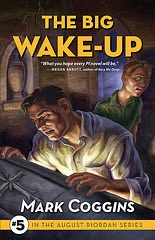
Today TKZ welcomes guest blogger Mark Coggins to discuss the back story of his latest novel, The Big Wake-Up, which was released at the beginning of November in trade paperback and hardcover by Bleak House Books. I’m currently touring with Mark, and his presentation of Eva Peron’s “afterlife” is truly something to behold (and not an act you want to follow, trust me!)

The genesis of The Big Wake-Up came from a tour I took of Buenos Aires’ famous La Recoleta Cemetery on Christmas morning in December 2007. My wife and I decided to spend the holidays in Argentina, and we had arrived the evening before. That morning I was eager to get out the door and into the capital city to do things, but I had been warned that there was in fact very little to do on a Christmas day in Buenos Aires.

All government offices, museums, and most restaurants were closed. The one tourist attraction that remained open was La Recoleta. And quite an attraction it is–assuming you can get past the fact that it’s populated with dead people. An immense place covering more than 13 acres, the cemetery is laid out like a city with paved walks subdividing blocks and blocks of house-like mausoleums, statues, and monuments, some of which date from the 1800s. If the architecture isn’t enough of a draw by itself, there are the residents. La Recoleta is the final resting place for innumerable Argentine presidents, scientists, military leaders, and captains of industry. It is also home to Maria Eva Duarte de Perón: Evita, to those of you who’ve seen the play or the movie. (Left: The Duarte tomb.)

My guide that morning was Robert Wright. He’s a tour guide, guidebook researcher, and writer in Europe for travel authority Rick Steves, and at that time was making his home in Buenos Aires. Wright has a special interest in La Recoleta and has spent considerable time and energy documenting it for his blog and the comprehensive map he has made of the burial grounds.

I wasn’t sure what to expect from his tour, but I found it an intriguing mix of Argentine history, politics, art, and architecture. It was from Wright that I first heard the story of Evita Perón’s incredible “afterlife” following an early death from cervical cancer in 1952. I learned how her body was specially preserved like those of Vladimir Lenin or Mao Zedong; how it fell into the hands of the military dictatorship that overthrew her husband, Juan Perón; and how the military leaders decided to bury her under a false name in Milan, Italy, to avoid having her grave become a shrine and a rallying point for government opposition.

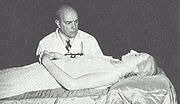
I also visited the last resting place of one of those leaders: Pedro Eugenio Aramburu. In 1970, he was kidnapped and executed by a Peronist guerrilla group seeking the return of Perón to power–and the return of Evita’s body (right) to Argentina. Aramburu was buried in La Recoleta, but the same Peronist group pried open his crypt and seized his corpse, holding it hostage until Evita’s body came home to a secured underground vault in Recoleta, just a couple hundred yards from his desecrated grave. When Aramburu’s remains were finally released, authorities thought it prudent to pour concrete over his coffin before closing the lid to the crypt to ensure that he was never disturbed again. I saw the hardened concrete oozing from the seams.

Returning to the United States in the new year, I decided that the story of Evita’s afterlife would provide an excellent foundation for my next novel, so I abandoned plans to write about the (fictional) discovery and theft of an unknown Jack Kerouac manuscript (The Dead Beat Scroll). I found a book called Santa Evita, by Tomás Eloy Martínez, that provided more bizarre details about the efforts of the military to hide her body, such as the fact that there were duplicates made of it to mislead the Peronist groups searching for it, that strange misfortunes seemed to befall the men guarding her before she was buried in Italy, and that some of her guards may have engaged in necrophilia.

In spite of all the research into the specifics of Evita’s afterlife in the 1950s, ’60s, and ’70s, I set The Big Wake-Up in present-day San Francisco. I didn’t attempt a fictional dramatization of historical events. What I did attempt to do was answer the following question: What if Evita was actually buried in the Bay Area (and the body in La Recoleta is a duplicate)?

That scenario–and the implications of it for groups in modern Argentina–is what my private eye protagonist, August Riordan, and his sidekick, Chris Duckworth, struggle to come to grips with. And although I’ve eschewed re-creation of past events, as you can see from the excellent cover artist Owen Smith did for The Big Wake-Up, I’m not above duplicating a little old-fashioned grave robbery.

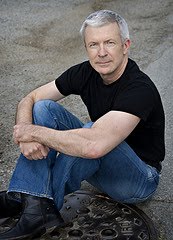
Mark Coggins (above) is the award-winning author of the August Riordan series. He lives in the Bay Area with his wife Linda and their cat Taki. Publishers Weekly called The Big Wake-Up “Outstanding” in a starred review and Booklist labeled it a “First-class yarn.” This material originally appeared in a post for The Rap Sheet.

I’d rather have a root canal

By Joe Moore

The dreaded synopsis. It’s the nasty part of writing fiction that everyone hates. After all, if someone wants to know what your book is about, just read it. Right? The synopsis is right up there with getting a root canal. It’s painful and taxing. But it’s also a fact of life that you’re going to have to produce one sooner or later. Especially if you’re a first-time author. Most writers feel that creating a synopsis is harder than actually writing the book. I agree.

Clare touched on it with her July post. Here’s another look at the task we love to hate.

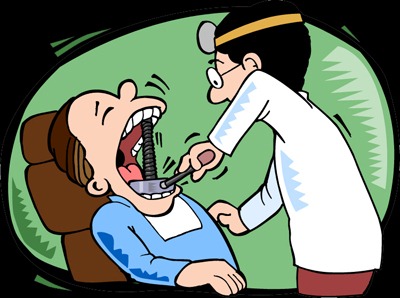
dentist So what is a synopsis?

It’s taking your book’s 80,000 to 120,000 words and condensing them down to a few pages—a brief description of what your book is about. Imagine draining 99.9% of a human body away and still convey the person’s looks, thoughts and personality. A daunting task at best.

How do you get the job done? First, start by accepting the fact that you have to do it. In order to successfully market your new book, you must be able to tell the story in just a few paragraphs or pages. Barring any unusual submission requirements for a particular agent or publisher, a formal synopsis usually runs a page or two. A great time to write your synopsis is as you do your final read-through before declaring mission accomplished—that the book is done. As you finish reading each chapter, write a paragraph or two describing what happened in that chapter—what was the essence of the chapter as it relates to character, motivation and plot. Keep it short such as: Bob and Mary met for the first time. She thought he was a bore. He thought she was self-centered. They had no choice but to work together.

Also be aware of any emotional threads running through the chapter; love, hate, revenge, etc. and make note of them. But always keep it short.

Once you’ve finished the read-through of your manuscript and making subsequent notes for your synopsis, you will have created a chapter-by-chapter outline. (Don’t you wish you had had it before you began writing your book?) So what you’ve done is condense your manuscript into a manageable overview that hits on all the important points dealing with character development and plot. And it contains the emotional threads that make up the human aspect of your story.

Next step: read your chapter-by-chapter outline and determine the most important elements in your story. If you’ve correctly noted what each chapter contains regarding character, plot, and emotions (motivations), it shouldn’t take too many reads to determine the items that were critical in moving the story forward. Again, keep this new set of notes short and simple.

Even after you’ve completed this task, your fledgling synopsis is probably too long and a bit disjointed. So what you have to do next is blend all the key points together into a short narrative. Here’s one way to do it. Imagine that it’s your job to write the cover blurb that goes on the back of your book. You need it to contain enough information that anyone reading it will become interested in reading the whole book. Begin with your main character and the crisis that she faces. Explain why your character behaves as she does. Touch on the main elements that moved the story forward by referring to your chapter-by-chapter list of events. Always make clear what’s at stake—reveal the “story question”. Remember that you have to tell the whole story in the synopsis. Unlike a real cover blurb where there are no spoilers, the synopsis is going to an agent or editor. You must tell them how the story ends. This is no time to be coy. Tell it all.

A synopsis is a selling tool. It must tell your story in a very short amount of words and still get across the essence of the tale. But even more important, it must show that you can write—it is an example of your skill and craftsmanship. It confirms that you know what your story is about and can express emotion. That you understand plot and character development and human motivation.

What a synopsis is not is the classic elevator pitch or the TV Guide one-sentence description. Instead, it’s the distilled, condensed soul of your book in a few paragraphs.

So, you writers out there—do you enjoy writing a synopsis? Any additional tips on getting through the task without slitting your wrists? Once you’ve been published, does your publisher still require a synopsis before they issue a contract on your next book? If so, do you stick to the synopsis or does the end product differ from the original?

Poll results: Why you bought your last book, and where you bought it

By Kathryn Lilley

So last week I ran a (very unscientific) poll about book-buying habits, and here are the results:

Poll #1: When you purchased a book recently, what was the MOST important criteria for you?

More than 50% of the voters said they’d most recently purchased a book by an author they’d previously read, and liked.

“Tried and true” seems to be the guideline for people buying hardcover books. They don’t want to spend $26 dollars on someone they’ve never read before, and who can blame them?

This result would suggest good news for established writers, not so good for debut authors. In the comments, however, people indicated that they sampled new authors from libraries and second-hand vendors, opening the door to future sales of books by those writers.

Poll #2: “The last time I purchased a book, I bought it from…”

A majority of people (30%) purchased their last book from Amazon. Not a promising result for bricks-and-mortar bookstores, or for authors’ or publishers’ profit margins.

I’m going to leave the polls up there, add new ones, and report back from time to time with updated results. I’m undertaking this polling because I’m frustrated by the dearth of hard data about consumers’ book buying habits. (And if that data exists, someone please point me to it!) I’m tired of the standard answer of “nobody knows anything.”

This week’s conclusions

Debut authors can’t count on robust hard cover sales. If a publisher wants to get a debut author’s career rolling, I suggest they include free e-books of debut authors with books by similar, established bestselling authors, to get the reading public familiar with the new writer. After a limited free e-book distribution, the publisher can charge for the next book and future versions of the debut novel. This approach would mean that publishers would have to look for writers to support over the long haul, not just a one-book wonder.

Don’t feel too envious of “established” writers, though. If you think that life is easy once you hit the NYT list, check out this post by bestselling author Lynn Viehl. She actually posts her royalty statements and gives a good insight into the tough career that is known as authordom. It’s an exhausting climb, even for those standing (at least momentarily) on the peak.

My other conclusion of the week is that Amazon is eating everyone’s lunch.

But then, we all already knew that. Didn’t we?

Lest We Forget

By Clare Langley-Hawthorne

We’ve had some terrific blog posts this last week and, if I hadn’t been in London, I would have commented more because there has been some great advice. Yesterday James made the observation that it takes a great deal of courage to be a writer and I think it’s a particularly difficult brand of (non-lethal…) bravery that is required – because in the world of writing the public and the personal overlap. Publishing means that your work is out for all to see (for better and for worse) and, if criticism of you work feels personal, praise feeds your dreams and ego in a way that no other job ever could.

Being in London the week before Remembrance Day has meant, however, that my own writing has been informed by the courage of those who have served and died in the service of their country. I came to London to celebrate my birthday as well as undertake some research at the Imperial War Museum. As it turned out, I have been surrounded by references and material relating to the First World War that has (serendipitously) fed into almost all my books: from my current WIP which is set against the backdrop of the outbreak of war in 1914; to the sequel to Lady Coppers and the fourth Ursula book which are both set in the midst of ‘the Great War’.
The excitement of undertaking research never fails to inspire me. At the Imperial War Museum, I was reading the diary of a female policewoman stationed at a munitions factory during the First World War and was delighted to find a special pass for her dog ‘Rip’ in the files (along with an official studio portrait of the dog!). Only this kind of hands-on research can reveal the eccentricities of the real people who help me create my characters. It seems strangely appropriate that everywhere I turn at the moment there is a reminder of Edwardian Britain. Indeed, sometimes I have to wonder – did I pick the historical period for my books or did it pick me?

Unlike my fellow bloggers I don’t have any pearls of wisdom to share, but rather a couple of questions: Have you ever felt a period, place or person resonate so acutely that you were drawn to write about it? What real people or real events inform your writing?

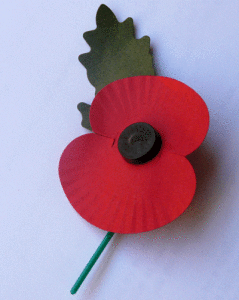
For me, it would seem that it is the Great War that is calling me and, especially as Remembrance Day approaches, the ghosts of the past insist that I heed the call…Lest we forget.

Write On

by James Scott Bell

It takes courage to write.

Not the kind of courage that a soldier displays going into battle, or a firefighter reveals charging into a burning building. That’s elevated courage, the kind that deserves to be honored in our culture. I’m not getting anywhere near to describing that kind of guts.

I’m talking about the non-lethal world, where it takes a degree of courage to do almost anything worth doing. Because for every enterprise of note there are critics and doubters, scoffers and jeerers, ready to pour acid rain on your parade.

It takes courage to write because obstacles and doubts come in many forms and build big brick walls to try to stop your progress.

Dick Simon (of Simon & Schuster) once said, “All writers are scared to death. Some simply hide it better than others.”

And what a couple of weeks it’s been for writers here on TKZ. We’ve had talks about the e-book tsunami and book price wars. We’ve chatted about branding and tried to figure out what makes readers buy books. We’ve had veteran writers sharing openly about their mistakes and the ramifications thereof.

And we all know the publishing business is in major shakeup mode right now. Trying to predict the future of the industry is sort of like trying to judge the family prospects of guests on Jerry Springer—can any relationship survive?

With all this going on, any writer – new or established – can start to wonder: Is the dream worth it? Do I have any chance of getting published? Staying published? Am I good enough? Am I a fraud? Are the odds too great?

Every true writer faces questions like this. And every true writer finds a way to dig down and write on.

Over a fifteen year writing career (twenty if you toss in the uncompensated beginnings) I’ve faced all the same doubts. Through trial and error I worked out a few ways to keep on keeping on. Maybe one of these will help next time you feel like throwing in the towel.

1. Think in terms of one more page. Don’t ponder the future or replay the past. Don’t stew about the industry or the myriad things you can’t control. Think about the work in front of you. Get that page done, then move on to the next. Establish a quota system and stick to it. The writing itself becomes the best way out of the bog of doubt.

2. Get some visual motivation. When I decided I was going to be a writer no matter what, I went out and bought a black coffee mug with Writer written in gold across it. A little corny, sure, but I didn’t care. I wanted to earn the right to be called a writer, and seeing the cup daily reminded me of the commitment I’d made.

In my office now I have pictures of three writers I admire.

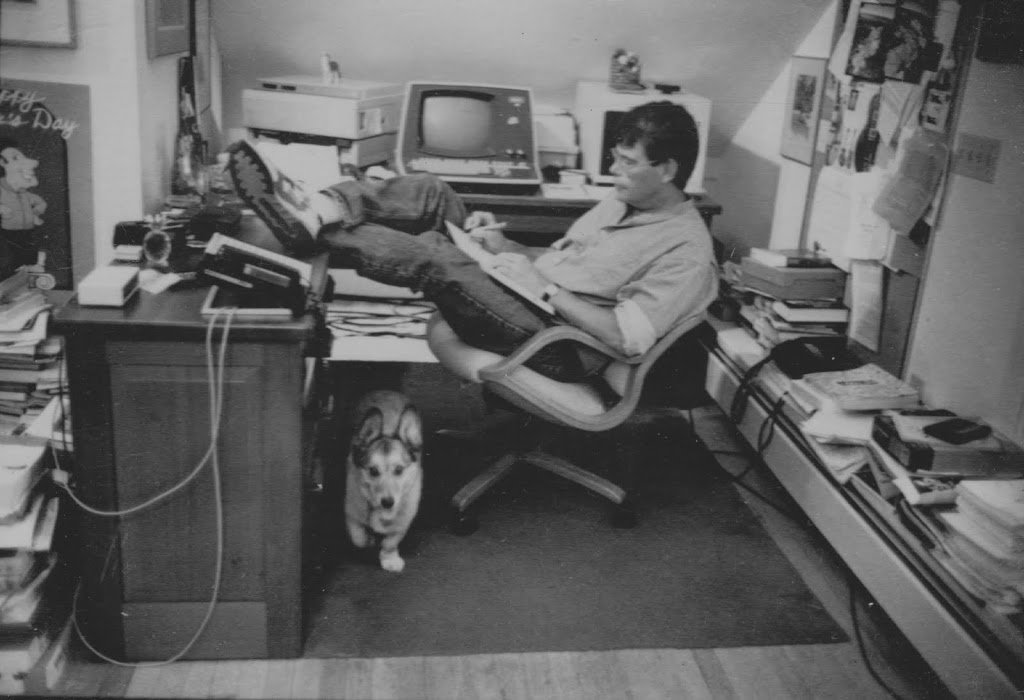
The first is of Stephen King, in his home office, feet up on the desk, looking over a manuscript. He’s dressed casually. His dog is under his legs, looking at the camera.

This is my idea of the good life.

Then there’s a picture of John D. MacDonald, tapping away at his typewriter, pipe in mouth. He was prolific (his biography is entitled Red Hot Typewriter) and a master of story and style.

The photo reminds me to keep producing words.

Finally, I have a picture of Evan Hunter/Ed McBain, from the back of one of his novels, arms folded, staring out as if in challenge. He was even more prolific than MacDonald, writing both literary and genre novels.

If I’m not working hard enough, his glare reminds me to get going again.

3. Go to a bookstore and browse. Look at author photos and dust jackets. See what’s come out lately. If you can, make it an independent bookstore, and buy a book from them. They are folks who love books and are struggling mightily right now. Show a little support, then go back to your keyboard and write.

4. Re-read some favorites. I have a shelf of novels I especially love. Sometimes I’ll take one down at random and start reading. I get inspired again with the pure joy of what writing can be. Then I try to make some magic happen on my own page.

5. Remember what Satchel Paige once said: “Don’t look back. Something may be gaining on you.”

What about you? What are your favorite ways to keep going? Or are you a writer who has no doubts at all?