The E-reader Tsunami Is Coming

By Joe Moore

We’ve had a few previous discussions about e-books and the electronic devices on which you can read them. Why another post on the subject? Because unlike in the past, things are about to get really serious. So if you’re thinking about investing in a reader such as the Amazon Kindle 2, you might want to hold off for a short while because there’s a whole new generation of  readers about to hit the shelves.

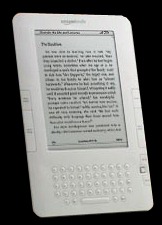
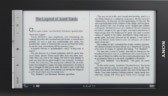
A number of companies such as Asus, Plastic Logic, and the sony-readerBritish company Interead are ready to launch new devices that will get you reading digitized books and newspapers at prices that are finally becoming reasonable, some starting as low as $165. Sony is already shipping their e-reader starting at $199 (pictured). On October 20, Barnes & Noble introduced their e-reader called the Nook ($259).

Major publishers are jumping into the e-book pool on sites like SCRIBD while thousands of books are being converted into Kindle format and made available on Amazon every day. If nothing else, the term “out of print” will soon disappear from our vocabulary.

There is a downside to the plethora of new e-readers: format compatibility. An example is the books and periodical subscriptions your purchase through Amazon may not be readable on a different brand other than Kindle.

kindle2 Also, keep an eye on Google in all this. They want to scan millions of out-of-print books and make them available through the Google Book Search for e-book readers. Amazon is fighting this because Google’s deal makes it hard for other e-book sellers (such as Amazon) to scan and distribute these same books. I bet this battle gets dirty before the dust settles.

But the tsunami of new e-readers should mean that we’ll see the end of Amazon’s only-game-in-town Kindle dominance as the prices go down and the features go up. Remember the Apple iPhone a few years ago and what happened next?

Do you have an e-book reader yet? Or are you resisting even the thought that this is the future?

Feet that “whisper,” and other interesting word usages

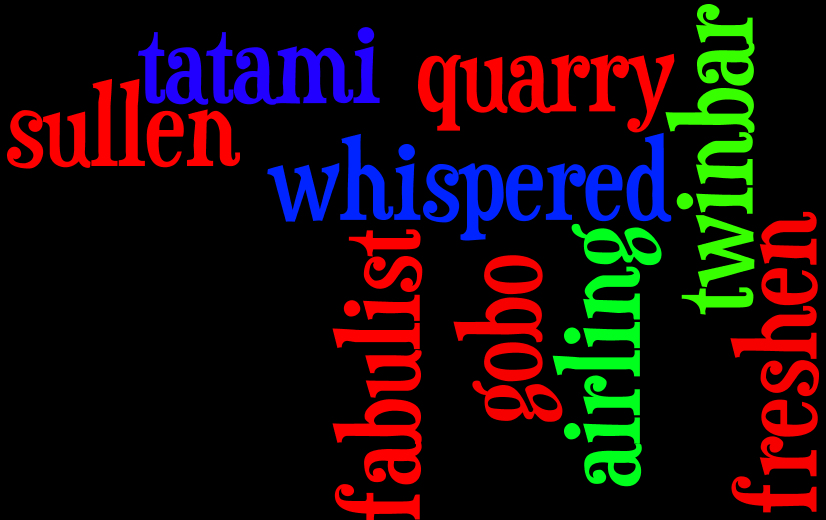
Like all writers, I love discovering slightly fresh uses for words. Recently I ran across the following passage in The Boys from Brazil by Ira Levin, which describes a waitress in traditional dress:

“Her white-mittened feet whispered over the tatami.”

I think “white-mittened” and the verb “whispered” in this sentence perfectly convey the woman’s movements, creating an effect.

In my own writing I always have to root out what I call “garden variety” words, including –gasp–cliches. Whenever a particularly interesting word strikes my fancy, I jot it down in a writing file, and keep the file updated. Sometimes the word itself isn’t that unusual, but can seem fresh when used in a slightly different way.

When I hit upon a goodish-sounding word that suits my purpose, unfortunately I have a tendency to overuse it. For example, in one manuscript I discovered that I kept using the verb “freshened.” It became my verb du jour–a breeze would freshen a flag, stuff was freshening all over the place. I had to go back and rework them all. I also repeat certain words in my everyday speech. My sister recently pointed out that I’d started using the word “draconian” a lot. Things weren’t simply bad anymore–suddenly, everything had become draconian.

Are you the type of writer who systematically collects words that you find interesting, or do you rely on brainstorming and free flow? Do you have any interesting new sources for words?

A Smashing Good Read – An Interview with Keith Raffel

by Clare Langley-Hawthorne

I’m excited to welcome thriller writer (and fellow Norcal’er) Keith Raffel to the Kill Zone – and to my very own ‘hot seat’ to answer some questions about his newest thriller, Smasher.
So Keith, what can readers of your first book, Dot Dead, expect from Smasher? What’s in store this time for Ian and Rowena?

Ian’s facing a “smash and grab” for his company engineered by a Silicon Valley billionaire. Rowena, a deputy district attorney, is trying her first homicide. Ian’s mom is insisting that he get credit for her dead aunt who made a major discovery in particle physics. And then while the couple is on an early-morning run, a car comes out of the darkness and smashes Ian’s leg and leaves Rowena in a coma.

I’m intrigued (and let’s face it an ignoramus) when it comes to physics – what research did you have to do (or how sexy is the Stanford Linear Accelerator really?)

The
accelerator at Stanford is a two-mile long rifle barrel that shoots electrons at its targets at over 99% of the speed of light. Back in the 1960s it was the center of world particle physics research, the place where the building blocks of the universe were discovered. I took a tour of the building at SLAC where those revolutionary discoveries were made four decades ago. And you know what? It’s filled with dusty boxes. Now, Edison’s lab is a national monument. Where the Wright Brothers first flew at Kitty Hawk is a national memorial. But in the midst of Silicon Valley, the very place where scientists first identified the particles that make up everything in the universe is a warehouse. (Not too sexy, is it?)

I’m a history major, so I had experts like Professor Martin Breidenbach who is at SLAC vet my physics. I figured if a person was zapped by countless electrons traveling at well over 99% of the speed of light, it would mean death-by-raygun. Nope. Marty told me the electron beam would pass right through a person. Unless, of course, the person was wearing a piece of lead that would diffuse the beam and cook him alive! (Is that sexy enough?)

Writing is a solitary profession – how and where do you write? Do you have a writing routine?

Writing may be a solitary profession, but I write surrounded by people at a café that’s a seven-minute walk from my house. To the consternation of my wife, I don’t use my beautiful office for writing at all. When I tried writing there, I’d stop to think about what came next. Then I’d just take a little peek at my email. About ten minutes later, I’d be reading a Wikipedia article about the generalship of
Gustavus Adolphus during the Thirty Years War.

At the café, I have no Internet connection. When working on a manuscript, I walk over every day for about a five-hour stint. The staff is great. When I come in, they turn down the music. I put on my noise-canceling headphones. They keep me supplied with fresh pots of a special green tea which is the gasoline for my writing engine. I finished the first draft of Smasher there in about four months.

Are you an outliner or a ‘fly by the seat of your pants’ kind of guy?

I do not outline. Here’s why. I write in the first person and try to get in the skin of that person, be that person. I experience what he experiences, hear what he hears. I can’t know what’s going to happen. I need to be surprised. What I’m saying is that I try to inhabit an alternative reality while I’m writing. It’s exhilarating and addictive. Who wouldn’t want to be someone who’s better-looking, smarter, braver, and more attractive to women? (Yes,
Walter Mitty is definitely a kindred spirit.) On days when I don’t fly off to Fictionland, I miss it. I get grouchy. Sounds a little aberrant, doesn’t it? I thought so, too, until I read what E.L. Doctorow said: “Writing is a socially acceptable form of schizophrenia.” I am so glad to know what I do is socially acceptable.

People are always intrigued by a writer’s path to publication – tell us a bit about yours (I mean Silicon Valley techie and CEO to writer – not that common!)

I was a little bored at the office so I signed up for a mystery-writing class at the
University of California Extension with Margaret Lucke. I wrote about the first third of Dot Dead, but in the end, I was still a little bored at work and decided to leave and start a company called UpShot. That was over six years of obsession. Then in 2003 we sold UpShot to Siebel Systems, and I came back to that manuscript. The story of finding an agent follows a more familiar path. I queried over 30 of them before finding Randi Murray (who’s left the business). She in turn found several interested publishers and we went with Midnight Ink. In February 2007 I left Oracle, which had swallowed Siebel, and went to work writing full-time.

Which writers have been most influential for you?

My answer here is a little embarrassing. It’s not a writer who’s the biggest influence, it’s a movie director – Alfred Hitchcock. In a prototypical Hitchcock film, some regular American or Briton is leading a comfortable life when he or she gets caught up in some murderous conspiracy. Think North by Northwest, The 39 Steps, The Man Who Knew Too Much, or Shadow of a Doubt. As I said above, I love getting in the skin of the hero-narrator of the books I write and testing how he fares when confronted with a life-and-death challenge.

What is the most challenging aspect of the writing process?

Characters and setting are not easy, but they don’t drive me crazy. It’s that damned plot. In Smasher, well, the protagonists were carried over from Dot Dead and the setting is Silicon Valley, my stomping ground. But what about the plot, what was the twist? That’s always the toughest challenge for me. I tried several drafts that went nowhere. Then one Saturday night my wife and I went out to dinner with Brian Rosenthal and his wife Cindy on Castro Street in downtown Mountain View, California. We took a postprandial stroll. Our wives were up ahead window-shopping. Brian and I were talking about this and that when he made a comment and a supernova went off in my head. Ten seconds after that almost-literal brainstorm, I had the plot for Smasher. What’s funny to me is that Brian has read the book and still doesn’t remember what he said that inspired the plot.

If you were to give an aspiring thriller writer one bit of advice, what would it be?

After you’ve finished your manuscript and made it the best it can be, find an agent. In the old days, unpublished writers would send manuscripts into publishers who would have hired bright grads from the Ivy League or Seven Sisters to sift through the slush pile. Now that’s been outsourced. Most publishers won’t accept unagented manuscripts. And you want to get a publisher to have credibility and to obtain distribution for your book. Self-publishing is not the answer. Sure we hear about self-publishing leading to success as with the remarkable
MJ Rose. But that’s a one in a thousand chance. She’s a marketing genius, too, and not that many of us are. It’s not easy to find one, I know, but your odds are a heckuva lot better with an agent.

Is there anything you don’t like about being a crime fiction novelist? What’s the downside of life as a writer?”

Just thinking about the answer to this one gets me pissed off. I’m writing full-time now. So people ask me if I’m enjoying life since I “stopped working.” Stopped working? What the hell? There’s the research, the writing, the editing, the finding an agent, signing with a publisher, the touring. I just sent off the manuscript of my next book to my agent. The launch of Smasher was last Tuesday and I have thirty more events by Thanksgiving.
Dr. Johnson wrote, “No man but a blockhead ever wrote, except for money.” So how is writing not working?

Does this happen to anyone else? Do your friends and family treat your writing career as though it’s recreation, a hobby? Go ahead and kvetch in the comments. I want some moral support.

I have to confess I get this all the time, Keith, so I say go ahead everyone kvetch while you can!!

***********************************************************************************

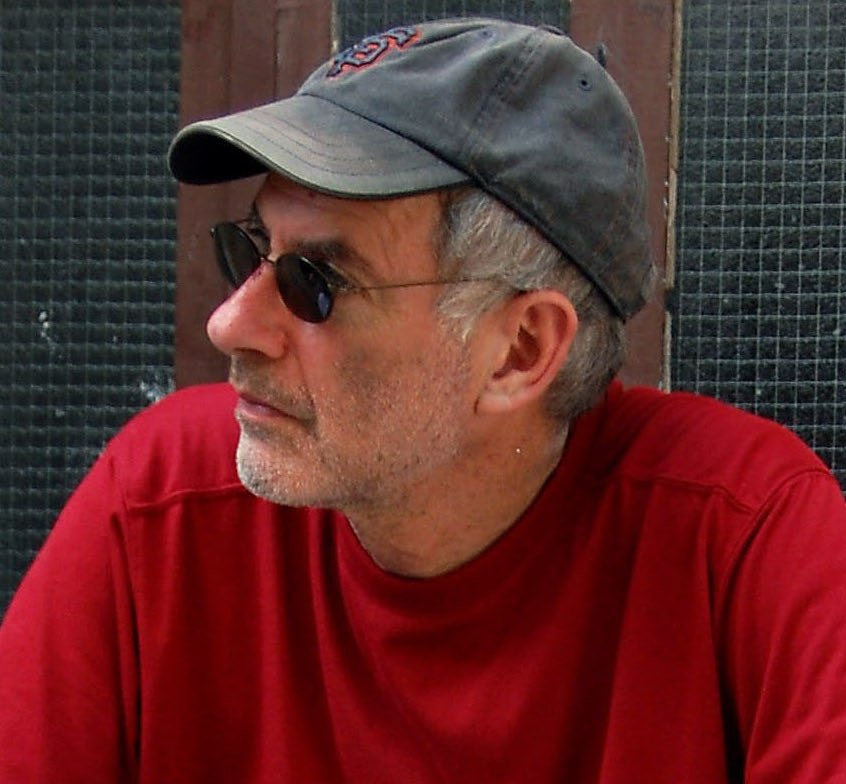
As counsel to the Senate Intelligence Committee, Keith Raffel held a top secret clearance to watch over CIA activities. As a Silicon Valley entrepreneur, he founded UpShot Corporation, the award-winning Internet software company. These days he stays busy writing his mysteries and thrillers in his hometown of Palo Alto, California. His latest novel, Smasher, is out this month. Check out his website and book trailer at www.keithraffel.com.

Cool Papa Writing

by James Scott Bell

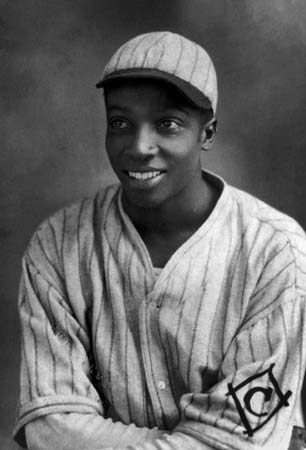
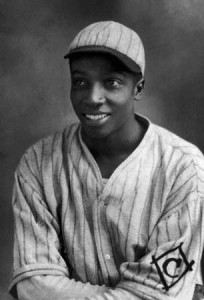
I find it wonderfully ironic that I share the name of the man who many say was the fastest to ever play baseball.

Ironic, because speed afoot was never my gift, as it was for James “Cool Papa” Bell.

Another legend from the old Negro Leagues, Satchel Paige, was once asked just how fast Cool Papa was. Satch replied, “He can turn the light out and be in bed before the room gets dark.”

Paige also asserted that Bell once hit a line drive off him, and the ball whistled past Paige’s head and hit Bell in the buttocks as he slid into second base.

Now that’s fast.

Bell was elected to the Baseball Hall of Fame in 1974.

So what does raw speed have to do with writing? Just this. When you write your first drafts, write as fast as you comfortably can. Even force yourself past the comfort zone on occasion. Whether you’re an outliner, a seat-of-the-pantser, or anything in between, when you’re getting those first pages down, burn rubber.

Why? Because there is so much good stuff in your writer’s brain that needs to climb out of the basement and sniff the fresh air. You have to put your head down and butt the inner editor who stands at the basement door, telling you to be careful, slow down, don’t make a fool of yourself.

It’s also a way to just plain old get started when the “mountain” of the full novel looms ahead.

Write fast.

Since next month is NaNoWriMo, writing fast is on the agenda. And lest someone sniff about how that only produces junk, consider:

— William Faulkner wrote As I Lay Dying in six weeks, writing from midnight to 4 a.m., then sending it off to the publisher without changing a word.

— Ernest Hemingway wrote what some consider his best novel, The Sun Also Rises, also in six weeks, part of it in Madrid, and the last of it in Paris, in 1925.

— John D. MacDonald is now hailed as one of the best writers of the 1950’s. Within one stunning stretch (1953-1954) he brought out seven novels, at least two of them – The Neon Jungle and Cancel All Our Vows –masterpieces. The others were merely splendid. Over the course of the decade he wrote many more superb novels, including the classic The End of the Night, which some mention in the same breath as Truman Capote’s In Cold Blood.

So prolific was MacDonald that he was needled by a fellow writer who, over martinis, sniffed that John should slow down, ignore “paperback drivel,” and get to “a real novel.” John sniffed back that in 30 days he could write a novel that would be published in hardback, serialized in the magazines, selected by a book club and turned into a movie. The other writer laughed and bet him $50 that he couldn’t.

John went home and, in a month, wrote The Executioners. It was published in hardback by Simon & Schuster, serialized in a magazine, selected by a book club, and turned into the movie Cape Fear. Twice.

–Ray Bradbury famously wrote his classic Fahrenheit 451 in nine days, on a rented typewriter. “I had a newborn child at home,” he recalls, “and the house was loud with her cries of exaltation at being alive. I had no money for an office, and while wandering around UCLA I heard typing from the basement of Powell Library. I went to investigate and found a room with 12 typewriters that could be rented for 10 cents a half hour. So, exhilarated, I got a bag of dimes and settled into the room, and in nine days I spent $9.80 and wrote my story; in other words, it was a dime novel.”

–Jack London was anything but promising as a young writer. He could hardly string sentences together in a rudimentary fashion. About all he had was desire. A burning desire. So he shut himself up in a room and wrote. Daily. Sometimes 18 hours a day. He sent stories off that got returned. He filled up a trunk with rejections. But all the time he was learning, learning. When he died at the age of 40 he was one of the most prolific and successful writers of all time.

It is in re-writing and editing that you slow down, cool off and shape what you’ve written. First drafts invariably need a lot of work. In re-write you deepen the prose and establish your style, sharpen your scenes and flesh out your characters. You can take your time here (with deadlines in mind, of course).

My own approach is to do my day’s quota fast then spend time the next morning editing the pages before moving on. And once I do those edits, that’s it till the end of the draft. As Satchel Paige said, “Don’t look back, something may be gaining on you.”

So when you first commit words to page, write fast. It helps you discover hidden “story stuff.” This is especially important for newer writers. You learn most about writing a full length novel by actually writing a full length novel, and the sooner the better.

Write your first drafts like James “Cool Papa” Bell stealing second, then edit them like Satchel Paige, who took things slow and easy.

So how do you approach your first drafts? Do you like to type fast? Or do you agonize over sentences and paragraphs before moving on? Is Cool Papa writing something you’d like to try?

Larger Than Life.

John Ramsey Miller

Recently I listened to, “Breaking Through The Wall Of Sound,” an audiobook about Phil Spector, and it was a very sad listen. I’m sure most people are familiar with Spector, if not for his unprecedented unbroken string of number one hits in the fifties that lasted through the eighties, then because he was convicted of murdering actress Lana Clarkson.

Spector produced 25 top 40 hits: “To Know Him Is To Love Him, The Beatles White Album, Lennon, George Harrison’s “All Things Must Pass” album, A Concert for Bangladesh, The Ramones, the number one played song in history – “You’ve Lost That Loving feeling” and “Unchained Melody” by the Righteous Brothers, and many, many more. There is no doubt that Spector was brilliant at what he did with recordings and sound, but he was, as best I can tell, a miserable human being. Now he’s in prison for between nineteen years and life, and since he’ll be 88 at his earliest parole date, he’s likely to die in there. Once the small man who wore four-inch heels and wigs was much larger than life, but by the end he was just lonely, pathetic, an alcoholic and a convicted murderer.

The book is a cautionary tale about success, fame, insecurity, and behaving badly because you have money and influence. But it’s more than that. No matter how good you are at what you do, you have a window in which to operate and when it closes, you move aside, or you are moved aside by talented comers. In his later years Spector did practically nothing because he was professionally frozen by the fear of producing a flop. He made a record with Celine Dion that he wouldn’t release to her label, Sony, and that he couldn’t release independently because she owns her vocals. He didn’t care. He was rich and had never failed, and by not trying he couldn’t fail.

There’s nothing like being at the top of your game in the eyes of the world, but the world is always changing and looking for the next thing. Nobody gets to stick the world in place. It’s true in music and just as true in any profession. The up and comers produce the new work that the world turns to next. The young lions wait for the old lions teeth to dull and for them to grow lazy and then they move in. It’s the way of the world, and the way it should be.

In writing, success is all about the work, not so much the author. A lot of authors believe it’s about them, but I suspect most readers aren’t all that impressed with the lives of any of today’s authors the way they once were. I remember when authors were larger than their books. Once it was Hemmingway being a man’s man with deep-sea fishing, big-game hunting, bull fighting, hanging out around wars. There was the suave F. Scott Fitzgerald being a woman’s man and social butterfly whose exploits were legend, and Bill Faulkner who won the Nobel Prize for Literature and was hanging out with the Snopes in Mississippi and the Bennett Serfs in New York and drinking to excess in whatever place he found himself in. I’m talking about men who were bigger than their books. I’ve been sitting around trying to think of today’s equivalent examples. I draw a blank after Mailer and I know there are some of us worth a mention. Any ideas on authors who are larger than life in the world of literature?

Page One, Chapter One. Again.

By John Gilstrap
www.johngilstrap.com

You’d think I’d get used to it, sooner or later. With Hostage Zero in the can and due to arrive in stores in July, 2010, it’s time to push the elation and sense of accomplishment aside and get back to the business of writing another book. This will be Number Eight in my personal bibliography and Number Three in the Jonathan Grave series. I don’t have a title yet (regular readers of this blog know how titles do not come easily for me), but I know what the story will be.

This idea came to me out of nowhere—as they usually do—at a time when I was looking for one, and when it arrived, it came fast, in the form of a terrific opening set piece that ties into a very cool larger story. I even have the new characters well formed in my head. All of this after just a couple of days of development. We’re talking Writer Nirvanna here.

Given the above, you’d think that it would be a snap to sit down and start writing, wouldn’t you? Having done it so many times in the past and with relative success, you’d think that I’d be ready to start the coming journey at a dead run.

Not so. It’s the damn cursor. It mocks me.

I’m staring down the pipe at something like 120,000 words, and none of them are written yet. It’s all looking good in the outline, but I know that there are tough times coming–as they always do around page 200. I know that there will be some huge plot holes to be backfilled, and character motivations to be reconsidered. I know that I will, somewhere in the process, throw out several days’ or several weeks’ work because I will have surrendered to temptation and pursued a new angle on the story that proved to be a waste of time. It always happens, so I’ve come to accept it as part of my process.

I know that I am going to become obsessive, and that as my new deadline approaches, I will become a pain in the ass to live with. There’s a lot of frustration on the way, and I’m bringing all of it onto myself. At present, I’m out of contract, so it is within my power to simply fold up my laptop and not write a word.

Except I couldn’t do that.

You see, I’ve got this story in my head now. I see characters and conflict and compelling action sequences, and such images cannot be ignored. In nine months or a year, I will hold a stack of pages in which all of it will have come to life.

I know that about the time when Hostage Zero is hitting the stores, I will be more or less at the end of the new book, and, God willing, I’ll again experience the thrill of writing that favorite of all phrases, “The End”, only then to face the challenge of discovering my next idea.

It’s frightening to face all of that work, but I suppose that any new adventure should be a little unsettling. I think I know where I’m going, but I can never be sure. It’s damned exciting, when you think about it.

All I have to do is stuff some letters behind that incessantly blinking cursor.

What about you? Every writer, published or unpublished, faces this same challenge at the beginning of a new project. Any secrets to share? Any coping strategies to make it easier? Does the daunting nature of the task ahead keep any of you from starting your journey?

Come on and share. We’re all friends here.

Big Ticket Giveaways

by Michelle Gagnon

I promoted my last book release by holding a drawing for a Kindle reader. People called me a fool. Even my agent expressed concern that I was overdoing it, that there was no guarantee that a big ticket giveaway would translate into sales.

Perhaps. After all, the old marketing adage is that fifty percent of what you’re doing will work. The trouble is, chances are you’ll never know which fifty percent.

So where in the scheme of things did my Kindle promotion fall?

It definitely helped. All someone had to do to enter the drawing was sign up for my free newsletter. My newsletter mailing list grew exponentially during the months that I was promoting the giveaway. Granted, there’s no guarantee that subscribers even read the newsletter, never mind bought the book. But having thousands of people receive updates on my next release was far better than hundreds.

A large chunk of the marketing budget of major corporations is devoted to establishing brand recognition. Similarly, my goal was to get my name and the title BONEYARD out there, to build familiarity so that when people saw the book in stores, they would be more inclined to purchase it.

And in terms of actual sales, my second thriller outsold the first by nearly ten-to-one. Not that all of that was necessarily attributable to the Kindle giveaway, but I don’t think it hurt.

Additionally, I promoted the contest through other marketing avenues. I featured it on Facebook and MySpace ads. I pitched it at signings and conferences. I mentioned it on every stop of my twenty-four blog tour.

Now, there was one criticism, and it came mainly from booksellers who were understandably loathe to support the Kindle. Personally, I think that ereaders such as the Kindle have the potential to increase readership across all formats. After receiving one as a gift, I’ve ended up buying more books each month than I did in the past. And I wanted the giveaway to be linked to reading and writing in some way, shape, or form.

However, I understood the complaint. For that reason, this time around I chose something that hopefully everyone could get on board with: a MacBook laptop computer (well, okay, maybe not Bill Gates. But nearly everyone else).

Again, I received a flood of emails from people telling me that I’m nuts. I respectfully disagree (although I concede the point is debatable, but for other reasons). For one thing, I did come up with a way to (hopefully) link the drawing to sales: anyone who answers a question that relates directly to two of my books receives ten additional entries in the contest.

Also, when I look back on the marketing budget for my first book, I spent far more and gained less. All things considered, pooling your resources into one big ticket item that draws some attention, and which you can cross-promote for free on blogs and social networking sites, is far less expensive than hiring a publicist. There are nearly 15,000 books published EACH MONTH in the United States alone. It’s hard to stand out among all that noise.

Recently someone told me that Joseph Finder gave away televisions at bookstore appearances on his 2006 tour. Televisions! I have no idea if this is true (or, if it is, how the heck he afforded it) but apparently that spurred his book on to the bestseller lists (and I’m sure his events were packed, which always makes the booksellers happy).

Hmmm, televisions. Maybe next year.

Is email dead?

by Joe Moore

A recent article in The Wall Street Journal talked about the topic while discussing alternative forms of communication such as Twitter, Facebook messaging and similar services, and how social networking and instant messaging are surpassing old faithful: email.

Before you say “no way”, think back to those distant dark ages when one of the main forms of business communication was the fax. How many faxes did you send last month?

And if you really want to get into the “way-back” machine and visit historical communication methods, let’s consider letter writing. Anyone remember that. While some used a gadget called a typewriter to compose letters, the shocking truth is that others actually wrote letters longhand using an analog marking device commonly known as a pen (or pencil). I know, it’s crazy but true.

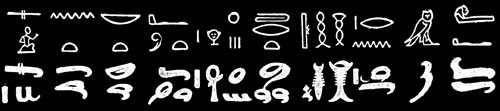
Many of us are still using email everyday and are perfectly happy with it. But technology is constantly moving forward, with or without us. It’s well documented that Egyptian Pharaoh King Tut once proclaimed, “I’m still using hieroglyphics everyday and am perfectly happy with it.” But as the article points out, email is a function left over from the bad old days of logging off and on and checking stuff in globs. Today, everyone is “always on” with the latest generation of mobile communication devices and smart phones.

As an example, my son travels a lot. We both have Google Talk installed on our PCs so we can chat. Rather than emailing me a question, comment or a simple hello, he sends me an instant message. I hear a ping and within seconds I’m chatting with him anytime in real time. Last week, he sent me an IM from 30k feet over the Midwest on his way to Washington, DC now that airlines are installing in-flight wideband WiFi.

With services like Twitter and Facebook, you can answer a question before anyone even asks it. Rather than sending me an email wanting to know how my latest thriller is selling, I can update my status to declare that it’s selling somewhere under a million copies—way under.

But like the WSJ article asks, does the new generation of hieroglyphicscommunication services save you time? Or are they eating up your day? Now that we have so many methods to instantly communicate, are we going to spend more time doing so? Or are we already wasting more time in the process? What do you think? Is email dead at your house or are you still using hieroglyphics and staying perfectly happy with it? Send me an IM and let me know.

“Grading” your author’s web site?


By Kathryn Lilley

My latest book, Makeovers Can Be Murder, has entered its early trials–a 12-week, Darwinian period during which the books are cast upon the shelves of bookstores across the country. Newly published books are typically given 12 weeks–3 months–to live or die. If they “live,” this means that all the books sell out, and then customers order more. If the books “die,” well…we call that Remaindered Hell. Remaindered books are sent back to the publisher, where they languish in warehouses, or are simply destroyed.

During this 12-week period, most authors make frantic efforts to promote their books–a process that typically includes sprucing up their author’s web sites.

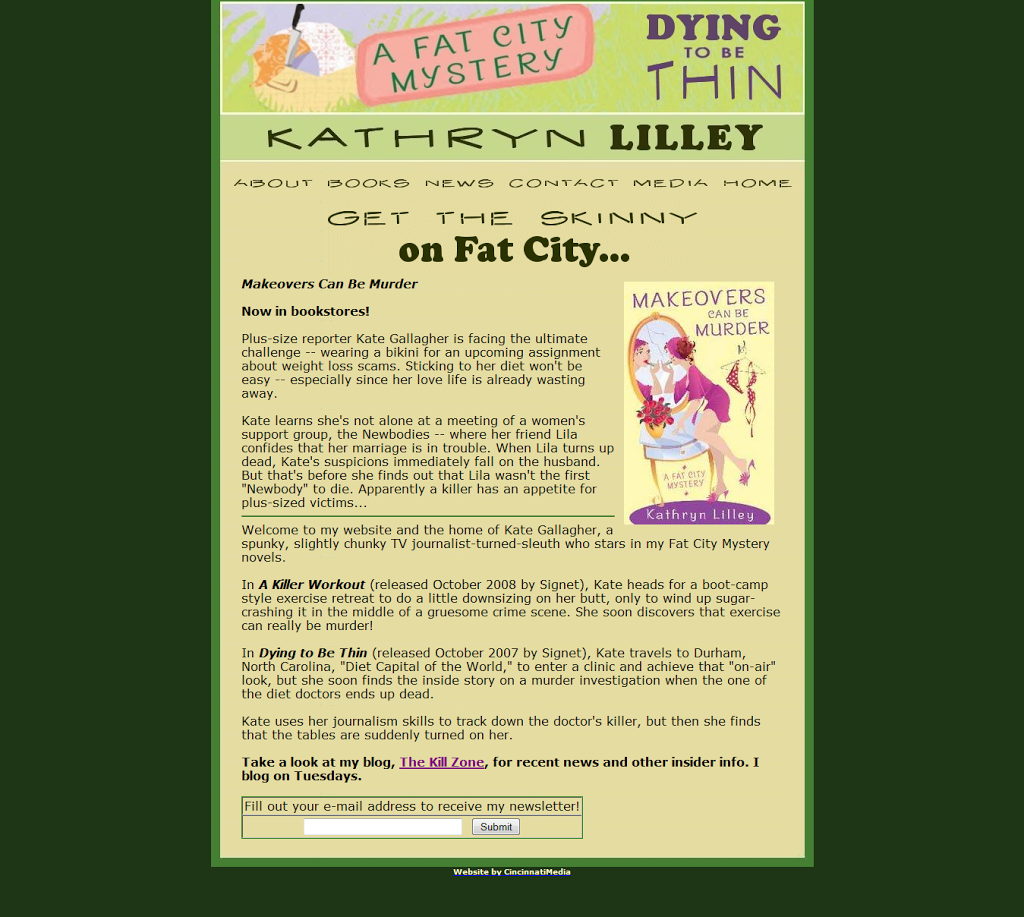
For most of the year, I tend to ignore my web site, www.kathrynlilley.com; I lag behind in making updates (except for the Twitter app that automatically displays updates). Recently I noticed that I’d even let my newsletter account expire. (This may be due to the fact that, because I don’t like getting newsletters, I assume other people don’t like getting them–even the ones who sign up for my newsletter. Or it might be just laziness on my part–I hate writing ’em).

But from time to time I make solemn vows to improve the site. Recently I ran my URL through Website Grader, an SEO service that grades web sites according to various criteria, including meta data, inbound links, and a bunch of other things that I barely understand. It also compares a given site to similar sites. My web site had a score of 47. Now, when I went to school, a 47 was a big, fat “F”. The site also had a Google page rank of 3. That’s probably not good either, although I have no idea what is considered a “good” Google page rank.

The Website Grader issued a report that suggested various ways that I can improve my statistics: Adding a page title, metadata, and listing the site on web directories, among others. I’ve since heard that those suggestions for revisions are based on “old” technology, and no longer valid. But honestly, I have no idea. I’ll take a stab at making the improvements, just to feel like I’ve done something useful.

As an author, how much attention do you pay to your web site? Do you let it languish like an unwanted stepchild, or do you nurture yours? If you’ve done a major overhaul, have you been pleased with the result?

Surprise!

by Clare Langley-Hawthorne

How much do I love surprises? Let me count the ways…

I’m sitting in a hotel on Maui typing this blog all because my husband has a great knack for surprises – this one is an early birthday present and it’s also the first time in five years we’re having a vacation together…alone…(well if you don’t count my laptop and current WIP which I carry with me like surrogate twins…) so you can imagine how much I love this surprise!

I also love books that surprise me. I love it when an author can genuinely deliver not just the shocks but also the delightful out-of-left-field moments which cause me to smile. I remember the first time I read Jasper Fforde’s Thursday Next series and how surprised I was that his brand of lunacy actually worked. I also remember reading the first Harry Potter book and catching hold of the same sense of magic I felt as a child reading. The element of surprise is one that I relish in a book. I love how Carlos Ruiz Zafron’s Shadow of the Wind captures the essence of Gothic surprise that imbues the glorious Victorian novels that I adore and how Neil Gaimon’s books (and quirky imagination) continue to delight and amuse me.

Surprises can be powerful things – they can draw a reader into a book in a way that is (I think) often more powerful than a mere plot twist or a shocking ending. They can take the form of an unsuspected insight into a character, a happy coincidence, or just the details of a world created that transports the reader’s imagination. The element of surprise is however much harder to achieve than suspense or the power to shock and I think (in terms of craft) it requires:
  • An appreciation of language – the beauty of a turn of phrase that can delight as well as surprise should never be underestimated.
  • An understanding of the nuances of the human condition – many of the best surprises occur only because an author has a grasp of the full idiosyncrasies of characters (both real and imagined).
  • An ability to create parallel worlds full of quirks and charms that allow a reader to suspend disbelief.
  • And, finally, the bravery required to take a book into rough uncharted waters…
I certainly don’t believe I have mastered any of the above but when a book truly takes me by surprise, the effect is magical.

So when did a book last surprise you?