
No Title Comes To Mind
Let’s be honest here. At this point I have served up everything I know about writing that came to mind in some form since I began writing this blog. Here’s what I have to write about:
A) Writing process, technique, style, character, story, plot, re-writing, setting mood, place as character, dialog, promotion, working with editors, etc…
B) Growing older. I just turned 60 last week, but I feel a robust fifty-seven. My hair is turning gray, I’m more easily winded than I used to be, and my eyesight is no longer eagleish. I am also more cynical, have a lower threshold for annoying things and boorish people, am more interested in making my time and effort count, spending more time with my grandchildren, and my animals, whom very likely could all care less.
(C) For more blog subjects, I have my wife, my three children, their spouses and six grandchildren, three dogs, 75 chickens, close friends & casual acquaintances, problems we all have, and problems only I could have, and hunting and stalking game a few times a year to get wild organic meat for our table so we can stay healthy and trim.
Life is filled with great moments. Sunday our youngest grand baby kept spitting out her pacifier, and her four-year-old cousin kept putting it back in the baby’s mouth. After repeating this five or six times, the four-year old looked at me exasperated and said, “It won’t stay in her mouth because she doesn’t have any teeth. I don’t know why she didn’t get any.” Life is filled with moments like that if you just slow down and take the time to open your eyes and ears.
After so many years on the planet, I have learned a few things, and it has never been more apparent that I have a lot more to learn. I know that things you don’t need, but merely want because they call to your ego, are not important and you will probably be happier without the added complication. I’ve also discovered that nobody with an ego wants to hear it. I never did when people told me the same thing.
I am a far better writer now than I ever have been before because I’ve learned as I have written along over the years, and as I have read more good (and bad) books. I have experienced more, and I’ve figured out more of what makes people tick and know better how to get that on paper.
The only thing I’ll say, is that getting older is great experience if you just pay attention as you do it. So, are any of you getting older too?
Politics and Dinner: Necessary Bedfellows?
By John Gilstrap
www.johngilstrap.com
This post is a little late because it is not the one I had intended to put up today. That one was already written, but then I experienced something yesterday that I thought would make a way better topic: Political Discourse. You know, something light and nonconfrontational.
I’m at Bouchercon this weekend, one of my favorite events. I like the conference environment. Lots of smart, talented people hanging out with each other, discussing smart topics in intelligent ways. Writing is by definition about ideas, right? It’s about expressing ideas and tolerating the opposing views of others. Until, it turns out, the topic wanders toward politics.
I dined last night with a new group of friends. There were ten of us, and the evening was a lot of fun. Toward the end, one member of the party (I swear it was not I) started saying, a propos of nothing, ugly things about people who occupy the right end of the political spectrum. The presumption was that every thinking person would agree. As one whose politics run maybe ten degrees to the right of center, which put me at least ninety degrees to the right of the group, I saw trouble on the horizon, so I found an excuse to announce that I was more conservative than liberal, and the I thought the current administration could be in real trouble if some important things didn’t start turning in their favor.
Two things happened instantly. One, the sense of disgust that someone of my ilk would be breaking bread with them was palpable (not from all, but from more than one); and two, it was announced that it’s time to stop talking about politics. I tried to point out that my intent was not to shut conversation down, but rather to talk about the strategies that will be necessary for the Democrats not to take a significant shelacking in the mid-term elections. Voices were never raised, and no one got ugly. I was trying to trigger the kind of discussion I frequently have with my colleagues in Washington, where politics is every bit the spectator sport that football is (and given the performance of the Redskins this year, a way more enjoyable one).
Nope, no politics.
Okay, fine. I was good with that. We moved on to other stuff, the check came and we went off on our own. No harm, no foul.
But then I started thinking. Is it possible that the current polarized, scorched-earth nature of politics these days is directly attributable to non-discussions like the one last night? The overarching message there was that political discussion is only unacceptable if there’s an opposing point of view. Firing broadsides against an ideology or against a large group of people is fine so long as the other group is not present to defend their point of view. It’s the Rush Limbaugh theory of discourse, and I think it’s doing great harm in this country.
As mentioned above, Washington is an epicenter of intelligent political discussion. I explore issues all the time with colleagues who are on the other side of what I believe, and through rational (sometimes passionate) discussion, opinions really can be influenced. Certainly, stereotypes can be dismantled.
It’s no secret that the current administration’s politics don’t agree with mine, but the fact that people I admire are huge fans gives me solace, born of the knowledge that the opinions on the other side are well-reasoned; something I wouldn’t understand if we hadn’t discussed the issues. If groups of us don’t start having these discussions, if we don’t start discussing issues intelligently, and airing differences, how will we ever undo the polarization?
If we don’t invite opinions from the other side–or worse yet, if we reduce the other side to ugly stereotypes–how can we ever grow, either as individuals or as a nation?
Still Better than Google
Today TKZ is thrilled to welcome author Mark Arsenault, a Shamus nominee and former newsman. Booklist gave his latest release LOOT THE M OON a starred review, describing it as, “a top-notch crime novel.”
We all remember the newspaper, right? That once ubiquitous part of daily life, now on a fast slide toward an exhibit at the Museum of Obsolescence, where it’ll join the butter churn, the buggy whip, and customer service? (For binary-only types who can’t remember the newspaper, it was like a daily printout of the on-line news. Pretty handy!)
Well, the newspaper still whups the laptop as a fireplace starter and a birdcage liner, and here’s one more—the old fashioned newspaper is the best tool I’ve found for researching historical fiction. For time periods dating as far back as 150 years or so, old newspapers preserved on microfilm beat the Internet as a research tool, and that includes the digitized archives some large newspapers offer on-line. And, no, I have not been hanging around at the polyurethane convention.
When I’m researching a time period for a fictional setting, I might scan old newspaper headlines for factoids, but what I’m really looking for is the advertisements. You can learn a lot about life in another era by what people were buying and selling.
I’ve been researching life on the East coast around 1917 to set a novel. It was a fascinating time period, just 36 years after the gunfight at the O.K. Corral, yet people talked on telephones and drove sporty little cars. How can I be sure? Because I found a great advertisement for the Davis Light Six Roadster, a bargain at $1,095, featuring adjustable seats for “the utmost comfort in motor travel.” For an additional $700, the Hudson Super-Six could top 100 miles-per-hour.
A picture in a bike advertisement shows me that bicycles have barely changed in more than 90 years. I can infer from a dentist’s ad that “pain-free” was a still a selling point in 1917, something we take for granted now.
 I would have guessed that men carried only pocket watches in 1917, but there are also ads for wristwatches with glow-in-the dark “Radiolite” dials. On one old page I recognized a character I’ve known all my life: Mr. Peanut, the tuxedoed nut who peddles for Planters. I had no idea Mr. Peanut was WWI vintage.
Old newspaper ads reveal the attitudes of a culture. Americans in 1917 were modern and naïve at the same time: People played phonograph records back then, went to the movies and drove big Cadillacs. They also paid good money for miracle pills and powders that claimed to cure everything.
Gender roles are obvious in this text from a chewing gum ad: “The high salaried secretary of the big business man knows how important it is to keep her high-strung employer well supplied with Adams Pepsin, the original chicle gum. So she keeps it where he can get it at once without having to ask.”
That pitch probably wouldn’t sell much gum today.
Many libraries keep old newspapers on microfilm. You have to use the microfilm viewer machine, which I call The Vominator because it can make me seasick. But that’s a small price for such a rich resource.
Microfilm may seem too primitive when you can literally download photos from Mars to your phone, but just imagine all those newspages as one big, searchable database. You just search through them one page at a time.
This November’s edition of Ellery Queen’s Mystery Magazine will have a short story of mine set in 1973, a very groovy year. The 70s are my favorite time period for fiction. I love the clothes, the slang, the hair, the cars, the crazy politics. With the Watergate coverage, the 1970s may have been the high-water mark for American newspapers.
Does anyone else have a favorite time period for stories? What makes it your favorite?
Mark Arsenault is a Shamus-nominated mystery writer, journalist, runner, hiker, political junkie and eBay fanatic who collects memorabilia from the 1939 New York World’s Fair. His new novel is LOOT THE MOON, the second book in the Billy Povich series that began with GRAVEWRITER, a noir thriller praised for a fusion of suspense, humor and human tenderness. With 20 years of experience as a print reporter, Arsenault is one of those weird cranks who still prefers to read the news on paper.
In the beginning . . .
By Joe Moore
They say that the most important part of any novel is the beginning. Arguably, it’s the most re-worked portion. I know it seems like I rewrite the first chapter a hundred times before I’m done. But no matter what the story is about, I believe there are a few critical elements that should be present to create a strong beginning. Here they are.
You should always start by showing your hero as a central focal point. Don’t worry too much about detailed descriptions on the surroundings, the weather, and the setting. That can come a page or so later. Just zero in on the protagonist’s state of being.
Firmly establish the situation the protagonist is in. Is she relaxed, nervous, happy, or angry? Consider making the first scene a mirror of what’s to come so that the reader knows right from the get-go what type of person the protagonist is. For instance, if the hero will have to deal with killing someone later in the story, have her see a report of a murder on the news or in the paper and react to it. Is she repulsed by the taking of another’s life or does she think the person on the news got what he had coming? It should be like watching a preview of a coming attraction at the movies. You know what to expect from the character when you get to the meat of the story. So let the opening scene in some way reflect the overall conflict in the book and perhaps specifically predict or foreshadow events to come. Allow the first scene to set the tone for the rest of the story.
Next, give the protagonist something to do that is a primary “tag” to identifying their make-up, their inner core beliefs. You only need one, but it should be a mark of their character that will play a role later. As an example, if the protagonist is able to step in and calm an argument between two co-workers, and do it in a logical manner, it’s a tag that they can solve bigger conflicts later and that their mind works well at problem-solving.
Now comes a vital element in the beginning sequence of any story. You must establish that the protagonist has something important to lose. Conflict must be established from the very first scene. It doesn’t matter what kind of conflict or what’s at stake, but it must be something important to the protagonist. Something the hero cares about has to be threatened. Although some books start with a big scene, perhaps with violence or personal danger, the thing that’s at stake for the protagonist can be as small and personal as forgetting to send a birthday card or neglecting to tell her daughter that she loves her. This shows she has feelings and emotions that are on a basic human level and can be related to by the reader. Even if the big opening scene is a threat on the protagonist’s life, the real thing that’s at stake must be a loss from within her heart, her soul.
Starting with something as big as a threat on her life usually doesn’t work as well because the reader hasn’t had time to get to know the hero and there’s no reason at this early stage to care. Action by itself does nothing to increase the concern the reader has for the protagonist. But regretting that last, missed goodbye sure does. It sets up a relationship between the hero and the reader—a connection of human understanding and emotion that helps the reader care about the character later.
If your book is science fiction or fantasy, it’s a good idea to establish the rules of the road as soon as possible. If the rules say that people can become invisible, go ahead and establish that real quick. The reader must know the rules. Don’t wait until halfway through the book to decide the antagonist can read minds. We need to know about the mind reading thing right away.
Another element that should be present in or near the beginning of your book is the story question. You might think that the story question deals with the protagonist defeating the antagonist. That’s really a plot issue. The story question is much deeper than that and usually deals with an inner want and need of the main character. For instance, in SILENCE OF THE LAMBS Agent Clarice Starling has to find the killer known as Buffalo Bill. But what’s the story question? Can Clarice overcome the childhood trauma she experienced when her policeman father was murdered, then having to deal with living on her uncle’s farm and listening to the terrible screams of the sheep being slaughtered. The story question is answered at the end of the book when Dr. Lecter writes Starling a letter asking her if the lambs have stopped screaming. In the final scene Starling is sleeping quietly and peacefully at a friend’s vacation house at the Maryland seashore. The story question has been resolved.
You should also establish during the beginning of the book your character’s wants and needs. Asking the story question can reflect on what the protagonist wants and what she needs. Clarice wants to catch the killer but she needs to find internal peace from her childhood demons.
Lastly, you should begin your book by establishing your voice and setting the tone and pace of the story. The mood must be nailed down from page one. Your opening scene sets up all of these elements and lets the reader know what to expect from there on out. At this point, you are establishing a contract with your reader to deliver a story that maintains a tone, fulfills their preliminary expectations, and resolves all questions amicably.
What other elements do you think must be present in the beginning to keep your reader turning the pages? Do you always know the story question before you write the beginning of your book? Have you ever bought a book only to find that the author didn’t live up to the contract established in the beginning?
Puzzling over paragraphs, and other story woes

By Kathryn Lilley
I set a personal record for myself last weekend: I spent the entire weekend–the entire weekend–working on one paragraph. I must have constructed and deconstructed that paragraph a thousand times. By Sunday night I’d whittled and rewritten that sucker until all that remained of it was a grand total of one sentence. One!
At this glacial pace of one sentence every two days, I will not cross the finish line of my manuscript anytime soon. Not good. But I feel like I’m stuck in the mud: I keep developing different ways into the story, then getting unhappy with it, then tearing it up. Hence the endlessly-reworked, bottomless paragraphs. And chapters.
My wheel-spinning is not a total waste–I have tons of pages that will work their way into the story eventually, but right now I feel like I’m playing with a Rubik’s Story-Cube. And I haven’t solved the puzzle yet.
When I described my problem to another writer, her suggestion was to keep going forward with the story without rewriting, and then go back and fix things later.
It’s a good idea, but here’s my problem with that approach: When I’m not happy with my writing, it’s because the elements in the story are wrong. If I write a chapter composed of the wrong elements, it’s like cooking with the wrong ingredients. I would end up with a spoiled dish–a dish that has to be thrown out, not merely reworked.
Maybe it’s time for me to do what I hate the most–write a comprehensive, detailed outline of the entire story. Then all I’d have to worry about is writing the prose itself, not the basic story components.
I heard some sage on the radio the other day–he described a “genius” as someone who persistently examines and reworks a problem until a creative solution is found. If that guy’s correct, I should be getting my Mensa card in the mail any day now.
Have you ever run into this problem, that finding the best path into the story has been unusually difficult? Other than outlining, do you have any good ideas for breaking through this kind of logjam?
The Book Group Experience
by Clare Langley-Hawthorne
I’ve had many terrific experiences speaking to book groups and, as a member of a book group, I’ve spent many hours debating and (let’s face it) dissecting other people’s novels. While my mother-in-law is visiting, she and I have been talking about the role of book groups and how difficult it is to please many book group attendees. In my mother-in-law’s group it’s rare that any book passes muster – and this got me thinking about the power of book groups and their evolving dynamics.
been talking about the role of book groups and how difficult it is to please many book group attendees. In my mother-in-law’s group it’s rare that any book passes muster – and this got me thinking about the power of book groups and their evolving dynamics.There’s no denying the power of book groups today – they are the fuel that can propel a literary book to bestsellerdom (think of books like The Kite Runner or The Memory Keeper’s Daughter). I think many publishers are eager to please the ‘book group’ demographic (women aged 35-65) because without the book group ‘word of mouth’ few literary books would probably achieve commercial success.

As an author I love speaking with book groups but there is always the fear that someone will hate the book or tear it to pieces in front of me. Before I was published I never thought twice about ripping into a book I felt was unworthy – now, I confess, my criticism of novels is more tempered (as I know just how bloody difficult it can be to write the darn things!). Still, I cannot help but be impressed by the influence book groups can wield – and I’ve been mulling over just how certain books end up being the perfect ‘book group’ read.
So here are my questions:
- Are you in a book group, and if so, how do you select the books you read? Are the bestseller lists influential or is it mainly word-of-mouth (in my groups it’s all word-of-mouth)
- How critical are you and other members of the group – are fewer and fewer books these days meeting your standards?
- Do you have authors visit – and if so, how do you deal with the thorny problem of members not liking the book? What do you like authors to cover or discuss with the group?
- How much notice do you take of the reading group guides publishers provide (either on-line or in the back of the book)?
- For all you authors out there – what have your experiences been like with book groups? (…any horror stories you’d like to share?)
- And – for God’s sake – tell me, are there any men in book groups these days????
Now I’d better get to reading my next book group read, and sharpening my claws for the inevitable discussion:) on our next read – Night Train to Lisbon by Pascal Mercier.
Will Arrogance Get You Published?

Let’s talk about arrogance. Because I say so.
We’ve all noticed an uptick in the arrogance factor in society. New York Times opinion writer David Brooks made it the subject of a recent column, stating in part:
When you look from today back to 1945, you are looking into a different cultural epoch, across a sort of narcissism line. Humility, the sense that nobody is that different from anybody else, was a large part of the culture then. But that humility came under attack in the ensuing decades. Self-effacement became identified with conformity and self-repression. A different ethos came to the fore, which the sociologists call “expressive individualism.”
Now, in one sense, “expressive individualism” is what we do as writers. We are boldly sharing part of ourselves, and should do so confidently. But here’s the thing: this confidence should be evident in our pages alone. When it’s off the page and in people’s faces, “expressive individualism” can too easily become slap-deserving arrogance.
There are so many examples of arrogance in culture today. Perhaps the most notable in the last few weeks was Kanye West deciding he could interrupt Taylor Swift’s acceptance speech at the MTV VMA awards. Taking Swift’s microphone, and moment, West extolled the merits of another nominee in front of a national television audience. Why? Because of “expressive individualism” gone awry.
So the idea that it’s all about me and I will make you admit it is part of the zeitgeist, just another move you make to get what you want.
And it’s filtering down like an acid drip into the world of aspiring writers. When I speak at writers conferences I am gratified that most people seem eager to learn and determined to grow. But there has been an increase in those who think that having a chip on their shoulders is an essential part of their campaign to get published.
It’s isn’t.
True, there are some people who are arrogant and who do get published. But they get published in spite of arrogance, not because of it. They get published because they can actually write.
But for the large majority of the new arroganti, such behavior is not going to get them closer to a contract. It will, in fact, hinder their chances.
Confidence, on the other hand, is good. And necessary. But there is a fine line between confidence and arrogance. That line is something called professionalism.
A professional doesn’t waste another person’s time by overstaying his welcome.
A professional knows what someone – i.e., an agent or editor – is looking for, and delivers it in a precise manner.
A professional doesn’t follow up frustrations with nasty notes, diatribes, or slanderous blog posts. Nor tear down other writers who get published.
In other words, a true professional knows when to put a cork in it and get back to the business of learning to write better.
A professional will, over time, gain respect. That leaves doors open for future submissions.
The arrogant burn bridges and find doors slamming.
Arrogance talks smack. Confidence does its talking on the page.
So be bold, be confident, be “expressively individualistic,” but use that energy for the writing itself. Because even if you succeed while being arrogant, even if you land on the bestseller list, it will be a Pyrrhic victory. As writer Michael Bishop puts it, “One may achieve remarkable writerly success while flunking all the major criteria for success as a human being. Try not to do that.”
Locked Down For Lying… And That’s The Truth
John Ramsey Miller
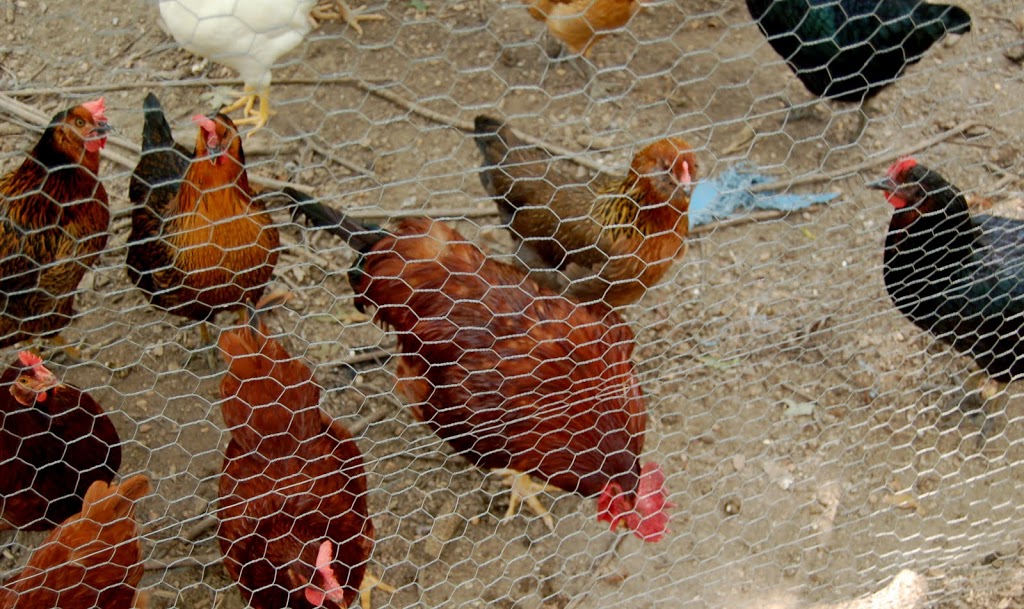
I really hated to do it, but I was forced to put my chickens on lock down for several days last week. That might not seem like a big thing, but if you sell eggs as “Free-Range” and presently, after a major poultry insurrection, they are in fact “lock-down” eggs… Until they get that we moved their coop two hundred yards into the field so we could have grass over the dirt in our yard… See where I’m going? They keep returning to their old coop and it’s occupied with new baby chickens so we had to gather them up two and three at a time and drive them to the new place on the four-wheeler.
So our printed cartons read, “Susie’s Free-Range eggs” so I had to take one of those fat Sharpies and make truth-in-advertising alterations.
I have this thing about lying. I mean I do it, but I’m not happy about it and I’d like to quit doing it. But the truth is people expect you to do it. If you ever answer truthfully a question like: “Does this hat make my ass look wide?” and it actually does, you are so screwed.
I think about the truth a lot, and I am always working to evade it. I practice denial, often with almost professional results. Sixty is the new forty, I am in the best shape of my life, my mind is a steel trap… There’s nothing wrong with self-delusion if you know how to practice it correctly and with the proper diligence.
Fiction isn’t about lying, it’s about telling a story that originates in your mind, and hopefully could happen, but just hasn’t yet as far as we know, but sure as hell might.
This is not a political statement, but yesterday President Obama won the Nobel Peace Prize, but he hasn’t earned it yet. I don’t blame him for accepting it, but next year, don’t be surprised if Michael Moore gets the Nobel Prize for Economics, and Nicholas Sparks gets it for literature.
Adverbally Yours
Book #2 of my Jonathan Grave series, Hostage Zero, (July, 2010) is done at last. The bad news is, I blew my deadline by a few weeks; the good news is, I like the story, and it think it advances the characters well. I hope that means it was worth the wait. (Knocking wood and all that.)
I’ve spent many hourse this week revising and trimming in preparation for final submission (trimmed 20,000 words with half my keyboard tied behind my back). I’m sure there’s more trimming to come as we put the final coats of polish on. In doing the rewrites, though, I was shocked by my use of adverbs. My key offenders were, actually, really, nearly, clearly, apparently, exactly and quickly. Not that there weren’s a bunch more, but many, did I hammer the hell out of those. I cut every one that I encountered, though I’m sure a few sneaked by.
Another word that invaded my writing like kudzu is “just”. (Just about, just lazy,just wondering . . .) It’s a word that accomplishes nothing. The adverbs accomplish nothing. Their like parasites on prose, and what I found most stunning is the fact that I know better. I teach creative writing classes from time to time; I consider myself to be a journeyman writer. How come I’m still making rookie mistakes?
I hope it’s because we all make rookie mistakes in the initial drafts, and that professionalism is defined by a writer’s ability to recognize the weaknesses and errors before it’s too late, and the book is inflicted upon the world. It’s not a definition of professionalism that would work for, say, brain surgeons, but for us scribes I’ll take it.
My editor noted in her notes for No Mercy that I was obsessed with arching eyebrows. All the characters did it, and I was oblivious. Taking her remarks to heart, I tamed most of the eyebrows in that book, and pretty much kept them at bay in Hostage Zero. It seems, however, that you can’t tame one writing reflex without tickling another. It’s frustrating.
Am I alone here? Do you find yourself locking onto a repetitive writing gremlin from time to time? Are you likewise plagued by adverb invasions? Come on and share your own prose parasites.