Scene Scouting: On Location or Wikipedia?

From the ITW Debut Author class of 2012-2013, TKZ welcomes Brian Andrews as our guest blogger, here to discuss one of my favorite topics, researching location. Enjoy.
By Brian Andrews

brian andrews square headshotEveryone has heard the old real estate adage, "What are the three most important factors to consider when buying property? LOCATION, LOCATION, LOCATION.  As a thriller writer, I spend a great deal of time mulling over location… scene location to be precise. Why? Because selecting a scene location is like deciding whether to bake brownies using oil, or substituting applesauce instead. Sure, the applesauce brownies are low fat, but they lose that authenticity that makes a brownie taste like a brownie. Wikipedia is applesauce. The queasy, weak in the knees sensation I felt leaning against the metal railing on the Key Bridge, as I imagined what it would be like to jump into the grey-green water of the Potomac River flowing eighty feet below… that’s baking brownies with oil. 
catacombs melange

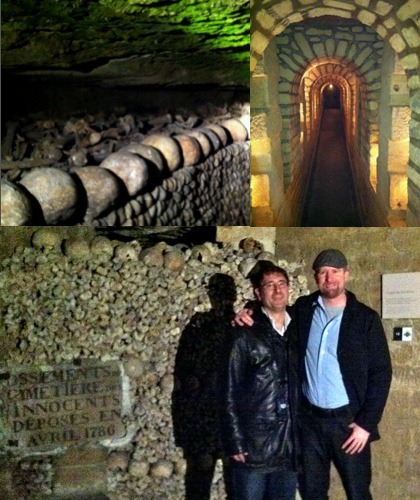
When I travel for my "day job", I’m always scoping out locations for future scenes in future novels. My motto has become: Don’t force a location into the story, take the story to the location. Recently, I had a business meeting in Paris, which afforded me one free morning to play tourist. When my Parisian host asked me what I would like to do, I replied, "Take me to the creepiest place imaginable." And so he did. The Catacombs beneath Paris hold the remains of over six million Parisians. The walkways are lined with bones. Femurs and skulls are stacked 2 meters high and used to decorate this dank and disturbing underground labyrinth. It was described to me as "romantic macabre." No arguments there. When I finally stepped out of the Catacombs and back into the warm Parisian sun, I knew with certainty that characters of mine will someday find themselves in this location.

What is your favorite scene location in a novel, or in real life?
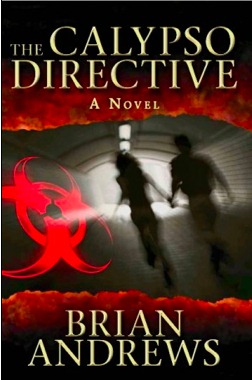
small coverMidwest born and raised, Brian is a US Navy Veteran who served as an officer aboard a 688 class nuclear submarine in the Pacific. Brian lives in Tornado Alley with is wife and daughter. His debut thriller, THE CALYPSO DIRECTIVE, was recently released. Brian is a member of the ITW debut author class of 2012/2013 and lifelong fan of the thriller genre. 

Say hello to Brian on Facebook at: www.brianandrewsauthor.com/facebook
A collective Primal Scream

I have a close relative whom I’ve loved dearly for nearly half a century. It was only after we became social media friends, however, that I discovered she is an avid partisan. Make that rabid partisan. Whenever I open Facebook, my Notification globe bleeds red with urgent missives–it’s her daily in-flow of videos, cartoons, and other headlines designed to enlighten me about the hanky-panky of political evil-doers.

Other friends and family proselytize across a spectrum of political thought, and beat the drum for pet causes. One matriarch frequently emails me jokes making sport of one candidate in particular. (She knows I like the guy, so I have to assume she’s being passive aggressive–a common, if somewhat unlovable, trait in my family.)

I used to get irked by the chatter. Sometimes, especially when someone forwarded me a particularly outlandish bit of Internet lore, I’d retort with articles of rebuttal, or a link to Snopes.


Now I’ve changed my thinking. It’s been a rough week for America, and we’re heading into a hotly contested political season. People are cranky.We’re not just cranky at the other guy’s candidates. We’re pretty much ticked at our own candidates, too. Everyone’s upset about different things, and no one is coming up with great solutions. Or any solutions.


When I was at Wellesley years ago, we had a biannual tradition known as Primal Scream. On the eve of final exams, we’d run through the hallways collecting haggard, haunted-looking freshmen. We’d gather them on the roof of McAfee Hall and tell them to scream. Just scream as loud as you can, we said. Get it all out. There we’d stand, 40 or so young women strong, screaming from the roof at the top of our lungs. God knows what the campus police must have thought about Primal Scream. And then, slowly, we’d begin to laugh. Huge gales of giddy, exhausted, exam-demon purging laughter. Somehow cleansed, we’d return to the books.


I’m beginning to see the outcries on social media as our society’s Primal Scream. Instead of standing on a rooftop, we’re tweeting and venting from Facebook and Twitter.


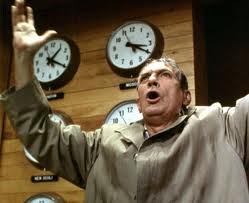
Thirty-plus years ago in Paddy Chayefsky’s “Network”, an anchorman loses his cool on the air. He exhorts his viewers to get mad, throw open a window, and scream.  Back in the day the idea of a raving anchorman was an absurd, darkly funny notion. Now it’s SOP. This will give you an idea: Yesterday when I was playing Howard Beale’s “Network” speech on my laptop, my husband padded through the room.


“It’s just the same old news over and over again,” he complained, mistaking Chayefsky’s Academy Award-winning speech for a cable news opinionator.


As an author, I try to curb my instincts on social media. For example, I’ll reread this post three times to make sure I’ve purged it of any identifiable sectarian tilt. But I no longer resent speechifying by family and friends. I have reframed it in my mind. I see us all standing at our windows and on the rooftops, unleashing our malaise into the dark. It might be a cleansing thing for the collective soul.


In your author role, do you steer clear of politics, religion et al online? Have you ever stepped unwittingly into a hornet’s nest by expressing a particular view?

Villains in Fiction

by Clare Langley-Hawthorne

In the aftermath of any tragedy it is human nature to seek out a rationale – a reason or some kind of motivation – for what has unfolded. It is a basic part of a psyche, I think to try and understand human behaviour, even when it seems bewildering, horrendous and evil. Real life events, such as what happened on the weekend, are incomprehensible on so many levels and as writers we face many issues and concerns when creating fictionalized evil. We often tread a fine line between entertainment and horror as well as believability and imagination.


As writers we also have to delve into the minds of all our characters to try and understand what makes them tick, and we have to move beyond mere stereotypes, particularly when forming our antagonists. 


It can often be all too easy to fall for the ‘psychotic’ serial killer or other sort of evil cliche without trying to provide for the reader a solid grasp of what lies behind this. Villains rarely consider themselves villains. Sometimes they feel justified (in their own perverted way) or compelled by something to do what they do. Unlike in real life, in fiction, we can often provide the reader with a rationale for someone’s behaviour.


So how do you create a believable villain? How do you ensure that, when it comes to the battle between good and evil, neither side slides into caricature? I’ve been thinking about this a lot in my current WIP and I have some to a few conclusions (or observations, at least) as I go through this process:


1. Characters don’t think they are dumb so don’t make them do ‘dumb’ things just because they are (cue manic Dr. Evil laughter) the bad guy. 
2. Don’t fall into the trap of making evil generic. For every character there needs to be a specific reason, cause or motivation for his or her behaviour. The more specific and believable this is, the more believable a character will be.
3. Give you villain a clear objective. I’m not a big fan of the psycho who just seems to do stuff because he is, well, ‘psycho’ – this always seems to the to dilute the power of having an antagonist. 
4. Think as much about the back story for your villain as you do for the protagonist of the story – this will ensure the character behaves consistently and with clear purpose. It also helps you avoid falling into a cliche if you have a fully realized back story.


So how do you approach the process of creating villains? Are there any ‘evil doers’ in novels that strike you as the ‘dumb and dumber’ of their kind? What about the most chilling, compelling and believable villains in fiction? 

It’s No Longer an Either/Or Publishing World and Other Notes from ThrillerFest


Last week I had the honor of being the first author to final for an International Thriller Writers Award for a self-published work, One More Lie. ITW has been forward thinking in this new era, recognizing that the future is now and a thrilling story works no matter what the delivery system.
Although I didn’t take home the top prize, it was cool to be there (along with former blogmate John Gilstrap and others) and to be confirmed in this: it’s no longer an either/or publishing world, but a both/and and why-the-heck not?

Mrs. B and I had our usual wonderful time in New York, where I used to pound the boards as an actor. We had dinner with my agent, Donald Maass, at a nice bistro in the Meatpacking District (really hopping these days). We talked about the craft, natch, and something Don said in passing I had to write down (this happens a lot when you listen to The Man): “Backstory is not just for plot motivation, but deep character need.”
Chew on that one for awhile.
Dear wife and I saw a hysterical Broadway show, One Man, Two Guvnors.It’s hard to describe, but suffice to say the Tony Award winning lead, James Corden, is a comedic genius.
Also saw about two hours of the amazing 24-hour film on time called The Clock.
And I got to teach at CraftFest. The room was packed! Then I realized Lee Child was teaching right after me….still, a good time was had by all.
The most interesting talk at the Fest, for me at least, came from Jamie Raab, senior vice president and publisher at Grand Central Publishing. Some notes:
Ms. Raab stated that, of course, the industry is in flux. Mass market paperbacks, for instance, are in steep decline as a category. Ms. Raab did not see any way for that format to come back to what it once was. Just what this means to the industry is not known at this time (like so many other things!)
Hardcovers, too, are heading south, simply because they have to be priced too high to cover costs of production. But, as we all know, prices are trending downward as more and more ebooks become available at consumer-friendly price points. Consumers are getting used to certain levels, and there’s no way to fight that. Consumers are co-regents with content in the marketplace.
Ms. Raab spoke about the thrillers she’s read over the years that were “game changers.” Not merely good books or great reads, but books that did something so amazingly original or compelling they actually changed the way the books after them were done.
The titles she mentioned:
Marathon Man by William Goldman
Presumed Innocent by Scott Turow
The Firm by John Grisham
Rosemary’s Baby by Ira Levin
Absolute Power by David Baldacci
The Silence of the Lambs by Thomas Harris
Each of these titles did something “more.” Marathon Man, for example, had one utterly unforgettable scene. You all know what it is. If you’ve ever been to the dentist, that is.
Absolute Power begins with another unforgettable moment, a burglar hiding himself in a swanky house, witnesses the murder of a young woman by the President of the United States. That scene, and book, changed the course of political thrillers.
So here is what you ought to consider as you write: what are you doing that is “more” than what you’ve read before? What is it about the idea, the scenes, the characters, the plot itself that comes from the deepest part of you?
Here’s the nice thing, as Leonard Bishop once put it. “If you boldly risk writing a novel that might be acclaimed as great, and fail, you could succeed in writing a book that is splendid.”
Splendid isn’t a bad place to be.
Are you reaching for “more” in your writing? 

We Will Read No Book Before Its Time

Have you heard about El Libro que No Puede Esperar? That title is translated to English as “The Book That Cannot Wait.” Y’know that pile of books next to your bed, or desk, or couch, that seems to get larger instead of smaller?  How about all of those books you bought for your e-reader that you’ll never live to read (but you keep buying more of )? El Libro que No Puede Esperar  is an innovation that is supposed to break you of the habit through behavior modification.
El Libro que No Puede Esperar is an anthology of original short stories which has been published in Argentina. It is printed in…disappearing ink. You buy it shrink-wrapped, but once the buyer (and prospective reader) tears the plastic off the ink will fade and disappear after two months. And if you actually open the book and start reading,  each page that you read is further exposed to air, so that the disappearance process accelerates. Read a page today, and the print on that page will disappear in two weeks. The owner of the book is ultimately left with a bunch of hardbound blank pages to use as a journal, or to doodle on, or for perhaps another use or two which I can think of but won’t mention. Yes, you could buy the thing and leave it shrink-wrapped for eternity, but then you’d have one of those Schrodinger’s Cat situations going on, so what would be the point? That might be a bad question to ask a guy with 20,000 comic books in his house, but that’s another topic for another time.   

The idea behind this whole thing is to encourage people who buy El Libro que No Puede Esperar to actually read it. It is apparently doing very well in Argentina and the previously unpublished authors who were con…er, I mean, whose stories were selected for inclusion in this collection are also enjoying a certain notoriety. 

I am not making this up. Am I missing something here? Does this appeal to you? Or does it leave you as cold as it does me? If you would buy a book like this, what would you be willing to pay for it? And authors…would you want a story in a collection in this format? For myself, I want to read a book when I want to read a book, and if I buy it, I’m not going to be forced into reading it under threat of disappearing ink. But that’s just me. What do you think? Does this format, or whatever you want to call it, have legs? Or has its time gone before it has arrived?
You can get more information here:
http://latimesblogs.latimes.com/jacketcopy/2012/06/books-written-in-disappearing-ink.html

Reader Friday: Questions for TKZ?

Hey guys, it’s Reader Friday, and we want to know what’s on your mind. Do you have any burning writing questions you’d like to ask the TKZ’ers? Post ’em in the comments. We’ll be monitoring the blog today, and will update it with answers. (Of course, you can ask non-writing questions too, but your results may vary!)


Meanwhile, let’s play a game we haven’t played in a while. Grab the closest book to you right now. Not the best selling book, or the most impressive, but the closest one. Now turn to page 67. What is the third sentence on that page? Post it in the Comments, and we’ll try to guess what book it’s from. Or if we can’t, we can make up a title! Whoever posts should come back later in the day and reveal what the title is.


Here’s one to start:


“I will never forget that moment.”

5 TIPS on World Building from Scratch

By Jordan Dane
@JordanDane

World building is a huge topic. I will only cover a fraction of it, but it’s a topic that’s been on my mind lately. Writing crime fiction thrillers, I mainly thought of world building as creating a setting that readers can relate to using all their senses. It can also be a world that can be its own obstacle for the characters I turn loose in it.

My brand slogan is “Take a front row seat to suspense,” which is a saying I felt related to the style of my “up close and personal” writing. But writing for the young adult thriller market has broadened my thoughts on world building. It’s stretched me. I’m working on a new YA proposal for a thriller series that will be set in the future, something I never thought I would do. Sci-Fi? Really? I’m faced with creating a world that doesn’t exist and I would imagine fantasy writers do this all the time. It truly amazes me, but now I’m testing myself too. I thrive on a challenge and this new idea has my juices flowing. I wanted to share my thoughts.

When developing a world that exists only in the future or in a paranormal fantasy realm, this is not the time to shy away from “over the top” thinking. The best tool in your author arsenal is actually a question – “What if…?”

Five Tips on World Building

1.) Take the familiar and give it a twist. A reader can more easily imagine the world you are trying to convey if you make them believe they have seen elements of this world before. Take known calamities, myths, or fairy tales and give them a new spin. Or use real hazards in our world and time—project them into the future with dire outcomes—and see how they might turn out. A dark Alice and Wonderland twist (Splintered by Anita Grace Howard, Jan 2013), for example. What if the world has taken a downward spiral from global warming or what if money is no longer a physical commodity? What replaces the power of money?

2.) Add a Heavy Dose of Human Nature. Basic human nature can transcend time and reality. Determine what matters most in the world you are trying to reinvent or create—and apply a human story at the crux of it all. That is good drama and readers will relate to a well told story with good solid conflict. A great example of a near future world is the ASHES trilogy by Ilsa Bick. A teenaged girl, dealing with a fatal brain tumor, must survive a post-apocalyptic nightmare alone.

3.) Take a look back to see ahead. If your world is in the near future, say in 2025, you might take a look back at the same span of years (13 years) to see how much has changed and in what areas. (Compare 1999 to now. What’s changed most?) Or if you are creating a fantasy world, man’s history or mythologies can give you ideas on what to bring into that world. What if there is civil unrest in your world? Who are the players and why? What if a magical mythical creature exists in your world? What would it be and what are its powers?

4.) Paint a world by highlighting the elements that enhance your story most. As an author you might know every aspect of the world you want to portray, but are these details important to your story? It can be tedious to demonstrate your world building skills at the expense of pace. Make your key elements conflict with your protagonist’s goals or become an obstacle to challenge them. Think of your setting and world as a character and place as much importance on setting up a solid framework where your characters can thrive. Your world may have to survive a series.

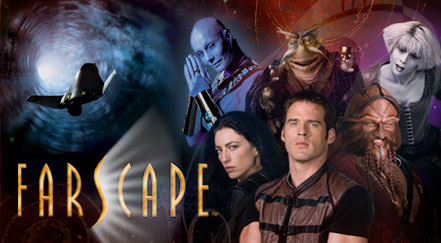
5.) Color Your World. Every world has its own dialect, slang, food, clothes, and customs. “Borrowing” from fables, myths, and history can be a starting point, but don’t be afraid to develop something on your own. Invent a few words that will play a prominent role in your new world or perhaps take a risk by combining a known world with a fantasy/paranormal one. A reader will feel grounded in the world you are creating, yet feel you are bringing something new to the table. A good example of this is the old Sci-Fi TV show FARSCAPE. A present day astronaut gets caught in a wormhole and transported to another universe where he is the only human. Remember the word, “Frak!” Yep, another four-letter word starting with F.

For the sake of discussion—by the year 2025—what do you think would change most? What would be cool to have? What bad things do you think are looming if we don’t change our ways? Will we still use real money? Are we headed for a global society, rather than individual countries? Exercise your writer brain and throw out anything that comes to mind. In brainstorming a new world, you need to cut loose, think over the top, and have fun.

6 Tips for File Management

This weekend, we helped our daughter move into our condo. She put her furniture in storage and transferred the rest of her belongings to our place. If the condo wasn’t crowded before, it is now. I hope our closet rods don’t fall down under the heavy loads. She filled up every inch of closet space in our three bedrooms. Naturally, she gave us bags of stuff to take home for donation. This is the only benefit of moving as I see it: cleaning out unwanted or outgrown items.

Periodically, we should do the same sweep of our files. Not counting paper files, take a look at your online folders and consider paring them down. Here’s what to do:

  • Convert older file formats to current versions. For example, I still have my earlier book files in Word Perfect. Now I exclusively use Word. I need to convert these files before this conversion is no longer possible or the upgrade to the next Microsoft Office edition isn’t compatible. Fortunately, I’d moved over all of  my floppy disk files into Dropbox so those were preserved. You could also convert all of your files to PDF if they need to be moved across computers whilst you clear through your files, for example. To edit these PDF documents at a later date, you could always use software such as the one from FilecenterDMS.
     
  • Pick one of your folders, and click on each file to see if you want to keep it or delete it. Here we go. Let’s choose your first published title. Do you really need that notice of your first booksigning? The list of book blurbs that are no longer catchy? Three versions of your synopsis? An email announcement to booksellers that are probably no longer in existence? A copy of the query letter you sent out to reviewers to see if they wanted an ARC? Sure, you might want to keep some of these for sentimental value, but which ones can you use today if you revise and republish this backlist title?
     
  • Update any files that are relevant to your backlist titles available in print or ebook format. Which ones, if any, can you use to promote this book?
     
  • On files that you decide to save, even if you convert to the current version of word processor you are using, make sure your formatting is the same as what you’re doing now. For example, I used to put two spaces between sentences. Now I use only one space. So do a Find and Replace to correct these formatting problems. Get rid of tabs and replace them with 0.5 first line indent. Reformat your headers. Change the font. Make sure the files you are keeping are up to speed. It’ll less hard to access them later that way should you need them again.
     
  • Rename your files if necessary to be more indicative of what they are. I’ve changed a lot of file names as I go through this review process. For Hair Raiser, as an example, chapter one went from chapter1.hair.wpd to chapter 1.doc (or docx, depending on which form of Word I’m saving them in).
     
  • Condense similar files into one file. Let’s say you have three different files, all named something different, with review quotes. Copy the material from two of them into one file and delete the extras. Pruning your files this way will eliminate repetitions.

This cleansing process can be very time consuming but it’ll save you anxiety later when you need to use a particular file, and you don’t have to go hunting for it. Nor will you lose the data when upgrades make conversions of earlier files impossible. So maybe pick one day per week or one particular folder to work on and clean it up. You’ll feel good about your accomplishment.

What advice on file cleansing/updating would you add?

The Great Summer Mystery: How to Open a Clam

by: Kathleen Pickering  http://www.kathleenpickering.com

It’s my turn to blog today. Unfortunately, I’m away on vacation this week (and last week) and have been ensconced on a boat along the Fire Island seashore.

sailors haven

Hence, my writing only has been to keep on deadline. Otherwise, I’ve had my feet in the sand, been body surfing and learning one of the great mysteries of the Great South Bay: How to open a clam.

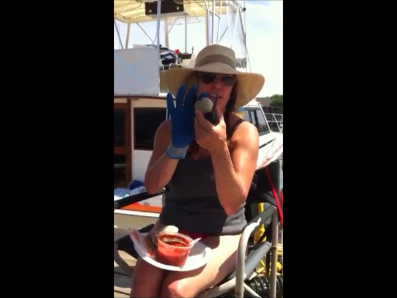
Snapshot 1 (7-16-2012 2-33 PM)

Click here to view the video:

How To Open A Great South Bay Clam

Afterwards, I’ve been sitting back and enjoying glorious summer sunsets like these:

photo

sunset-sailors haven

In my writing vocabulary, times away like these are called Percolating—or giving the mind time to rest and let new ideas work their way to the surface.

See? Even when on vacation, the writer is always working. I guess somebody has to do it!

Hope you enjoy the clam shucking video. Feel free to post any questions pertaining to this particular quahog—or how to find this free lunch!

Write on, my friends.

xox, Piks

(Next post will be relevant. I promise!)

Do we Really Want to Know the Alternate Endings?

by Clare Langley-Hawthorne

News that we will finally get to see all of Ernest Hemingway’s 47 alternate endings for A Farewell to Arms in print has me conflicted. At some level I am intrigued, as it would provide a unique insight into all the options Hemingway went through until he was (apparently) satisfied. 


On the other hand, though, I don’t really want to see those behind the scenes machinations (it seems a little too much like the Great Oz being exposed). At one level, I like the satisfaction that comes from accepting a story for what is (not for what it could have been). 


Although I am sure I would have loved a happier ending to many of my favourite books, it dilutes the power somehow of the ending that was finally chosen, if I know all the other options the author weighed up (especially if some of these options turn out to be really lame!). So all in all, I’m not sure I want to trudge through all of Hemingway’s alternate endings just as I wouldn’t want to know if Emily Bronte considered a sappy ending to Wuthering Heights that involved Heathcliff and Catherine living happily ever after…


Or would I?


One of the most well-known examples of alternate ending controversies is with Charles Dickens’ Great Expectations. Dickens changed his original ending (one in which Pip returns to hear that Estella has remarried) to the one that exists in most editions (they meet in the grounds of Satis House and in the final line “I saw no shadow of another parting from her” there is the implication that Pip and Estella might end up together). The original ending was much more downbeat and apparently Dickens’ friend, Edward Bulwer-Lytton (who read the original draft), urged him to change it to be more positive. Now I  probably would not have enjoyed the original, more pessimistic ending so in one sense I am relieved that he changed it – but do I really want to know that this was how Dickens’ originally wanted it to end? 


Knowing the alternate endings that famous authors such as Hemingway or Dickens considered provides insight into both the mind of an author as well as the writing process – but I’m still not sure I want to find when I finish a book,  a list of all the other possible endings that had been discarded (which is how I assume Scribner is going to present Hemingway’s alternate endings for A Farewell to Arms). It would seem to cloud the enjoyment of the reading experience and make me question the ending that was ultimately decided upon.


But what about you?

  • Would you like to know the alternative endings some of your favourite writers considered and ultimately discarded?
  • Have you ever wanted to go back and change the ending to your own book, after it was published?