Which Book to Read — or Write — Next?
I’m like a cat when it comes to books or music: whatever I have immediately at hand is never quite what I want. It’s a ridiculous predicament to be in, particularly when you have a collection/accumulation of either/or which exceeds five hundred or so, but it is what it is. There is Pandora for music so that if, for but one example, you like Guided by Voices but aren’t necessarily in the mood for it you can find something close to it. For books, there is now a website that will get you close to what you want to read next. It’s called Whichbook —  http://www.whichbook.net/ — and it’s not perfect, at least not yet, but it’s pretty cool.
Okay, most of you have stopped reading this and clicked on the link, and that’s fine, I understand. For both of you who are still with me, however, let me give you a brief one and back on how the site works. You will find a menu running down the left side of the home page consisting of a series of fields, each of which contains two antonyms (those would be opposite words, for those of you who started school after 1978), such as “Happy/ Sad,”  “Safe/Disturbing,” “Expected/Unpredictable,” and “Optimistic/Bleak.” Click on one and John Gilstrap will come out to your house and mow your lawn for a month. Oops. Wrong website. Let’s try again. Ahem. Click on a field and a red cursor pops up which you can set closer to one word or another. You can do that for up to four word pairs; then click on “Go” field and you get a list of books that match the qualities you input. Using the fields I mentioned above, I chose “Sad,” “Disturbing,” “Unpredictable,” and “Bleak,” pressed “Go,” looked up, and Courtney Love was in my office, pointing a shotgun at me. Just kidding. I got a list of about fifteen books which were recommended to me, with reviews, summaries, excerpts, and links to Amazon to buy them. I had never heard of many of them, which is fine. That might be just what you want with a site like this. I found it passing strange, however, that something like The Road by Cormac McCarthy wasn’t listed. But Whichbook has that covered too. There is a suggestion page — more on that in a minute — and a page which lists the authors featured on Whichbook .  You can also go to another page where you can make selections based on character, plot and setting, which is nicely done (though not perfect) as well.
This looks to be a great tool for readers. However, it has the potential to be a great tool for writers and already-published authors as well. For authors…I see no problem with suggesting your own books for inclusion, or having your spouse, significant other, or even both of them doing that for you. For writers, Whichbook is a quick tool for framing the underpinnings of your basic plot. Go to the character, plot and setting page. After due deliberation, you have decided that your  next potential bestseller is about a mixed race, bi-sexual female between the ages of 26 and 50 who succeeds against the odds in a tale set in Ohio, who becomes involved in a violent, disturbing, and unpredictable series of situations with lots of sex. Okay. Maybe using Whichbook’s search engine to begin your next project is  a little like using a hammer for a screwdriver.  At the very least, however, Whichbook will get you thinking about what you want to read next. And for authors? Whichbook has the potential to be yet another tool to get your book in front of that ever-elusive reading public. 
Words we love way too much

I have a bad habit of overusing pet words in conversation. Every once in a while I’ll seize on an appealing new word and insert it at every opportunity.

Often I’m unaware of this repetition until someone points it out to me. Usually that someone is my youngest sister. 


“Is ‘draconian’ the new word of the day?” she’ll ask helpfully.  “That’s the third time you’ve used it today.” (I figure her obsessive need to point out my verbal flaws is a youngest sister thing.)


I’ll think back and realize that yes, I have been overdoing draconian. I’m on a draconian diet. The city council passed draconian new trash-day parking fines. And so on.


“Epiphany” is another word I’ve pounded into the dust. If I ever have another epiphany in my lifetime I’ll have to keep it to myself, because that word has been banned in my circle of close friends and relatives. I call them my Beta Chatters.

I’m always looking for signs of Word Repeatus Syndrome in my writing. And I usually find it. I’ve learned to do a global edit for any suspicious words. Suspect words include any that I particularly like. For example, “halcyon” would be a word I’d check, just because I like how it sounds. I’m probably a recidivist repeater of that term.  I’d also check  ‘recidivist’. If the word appears more than two times in the manuscript, or once in a chapter, I rewrite it.

I always check for repetition when a beta reader asks  about the meaning of a word. You can get away with using an unfamiliar word once, but do it twice and you look like you’re trying to be a pretentious know-it-all. (See last Friday’s post).


What about you? Do you have a tendency to overuse favorite words? Do you make a special effort to root them out during edit?

Watchers: Heroes in Fiction (Guest Post Donna Galanti)

Hosted by Jordan Dane

I’m pleased to have a guest for TKZ today. Donna Galanti is the author of the paranormal suspense novel A Human Element (Echelon Press). She is an ITW debut author of the class of 2011/2012 and a member of SCBWI and Horror Writers Association. She lives with her family in an old farmhouse in PA with lots of nooks, fireplaces, and stinkbugs but sadly no ghosts.

Welcome, Donna!

Watchers. My favorite fictional figures that hover on the sidelines weaving in and out of the story. They change lives.

You may know them as guardians, guides, mentors, or allies. They help the hero on his journey by blocking them, guiding them, or even saving them. They can be a mysterious and dark overseer or a jolly and light eccentric. They ultimately save the hero or motivate him to save himself.

In my suspense novel, A Human Element, I created The Man in Black (Felix) as a watcher. He is a guardian, a guide, and a hero. He connects to both the earthly and the other-worldliness in my characters. Sometimes Felix is there, like a lifeguard, and sometimes he’s watching and you simply sense his presence, more like a god. In the end he suffers and is a martyr for the greater good so his people can go on.

How did Felix evolve and how do I perceive his function? He evolved as an instrument of light to help others survive so his own world would survive. His presence allows me to push the protagonist truly beyond the brink and eventually be saved. He also represents hope and acts as a catalyst to keep hope alive. He is like a god because he changes the destiny of others for a greater good (an entire people). And, like a god, he chooses not to always interfere unless it’s for the greater good. In a way he is a mythical figure.

My favorite mythical watcher in fiction is Merlin from the Arthurian legend. He’s a man of mystery and magic with roles as a sorcerer, prophet, bard, adviser, and teacher. In Mary Stewart’s Merlin Trilogy, Merlin is an ordinary mortal but one with intuitive intelligence and clairvoyance. He has foreseen that Arthur will become a great king who will unite all of Britain.

Just as Felix’s mission in A Human Element drove him to facilitate a child’s creation to carry on the line of his dying people, Merlin’s vision led him to facilitate Arthur’s creation as well. I like the idea of connecting medieval to modern times knowing that Merlin and Felix share the same mission. They both originate as earthly and mystical watchers who change destinies so their people may conquer. And don’t we, as authors, often look to the past to create something new in the present?

It appeals to me that often the watcher figure is a hero too, willing to sacrifice his life for the one he oversees. He gives the protagonist what he needs to finish his journey and outwit death, and in doing so may need saving himself.

Literature is full of such heroes whose actions require that they, too, be saved. Like Arthur “Boo” Radley in Harper Lee’s To Kill a Mockingbird. He’s a mysterious character we slowly get to know. At first, perceived as a dark, ghostly figure he ends up saving the children, Scout and Jem. He’s a self-exiled loner who appears as needed to save the children from evil. In the end Scout and Jem save him back, providing justice for Boo.   

One of my favorite authors, Dean Koontz, is known for his watchers. In his book, Lightning, Stefan Krieger is a watcher hero who needs saving himself. He’s a time traveler and a guardian of Laura since she was born. He interferes when necessary to save her life many times. In doing so he changes the course of her destiny for good–and bad. His fate eventually interweaves with hers until they are caught in a life or death situation. He saves Laura, but in the end she saves him too.

I can’t forget my beloved animal watchers in fiction. In Watchers (great name!) by Dean Koontz, Einstein is a genetically altered golden retriever with human intelligence. He’s also saved by the couple he watches too. Escaped and on the run, Einstein acts as a guide to bring these two lonely people together and transform them. He becomes their guardian inspiring them to save him from his nemesis, who in turn watches him. Check out other fictional dogs in literature HERE, including my favorites, Buck and White Fang.

I didn’t realize I had an obsession with watcher figures until pulling book after book out from my shelves. And then I knew why. I adore tormented characters and that’s often what watchers are. And that’s why I write them. They are wounded heroes that travel with us to the dark side and help draw us back. They may not always save the hero by their own hand, but at that critical moment they drive the hero to take control of his own destiny. And sometimes the watcher needs saving right back.

Do you have favorite watchers from other books or movies? What “saves” you, as author, when you’ve spent too long on your dark side? Do you have a “watcher” to help pull you back from the dark side and save you?

Donna Galanti Contact Info:
Facebook & Website & Twitter: @donnagalanti

Crime and Punishment

Do you consider whether the punishment fits the crime? In the old days, the accused might choose a champion who fought for him. Nowadays, we hire lawyers to defend us in court. Truly, the pen is mightier than the sword. Other cultures are more brutal. If you’re caught stealing, they cut off your hand. They don’t make allowances for your troubled childhood or twisted mind. If you do a bad deed, you pay for it.

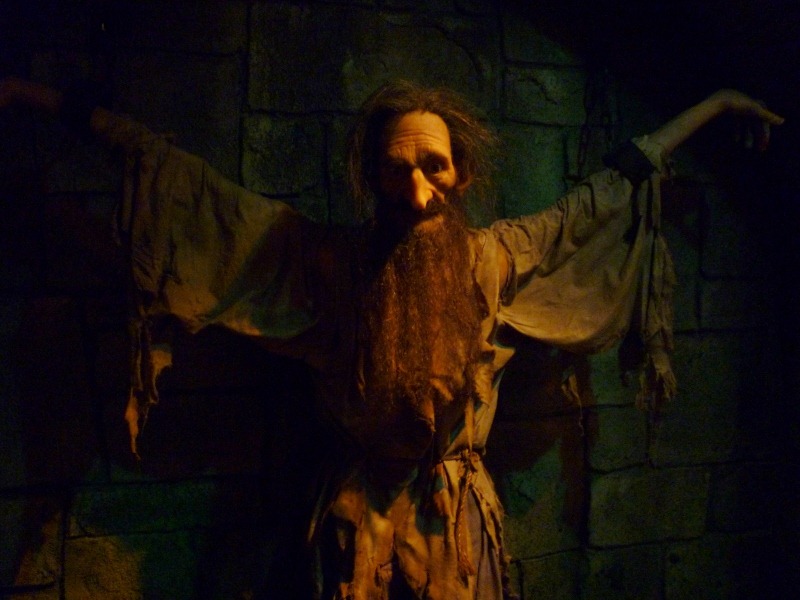
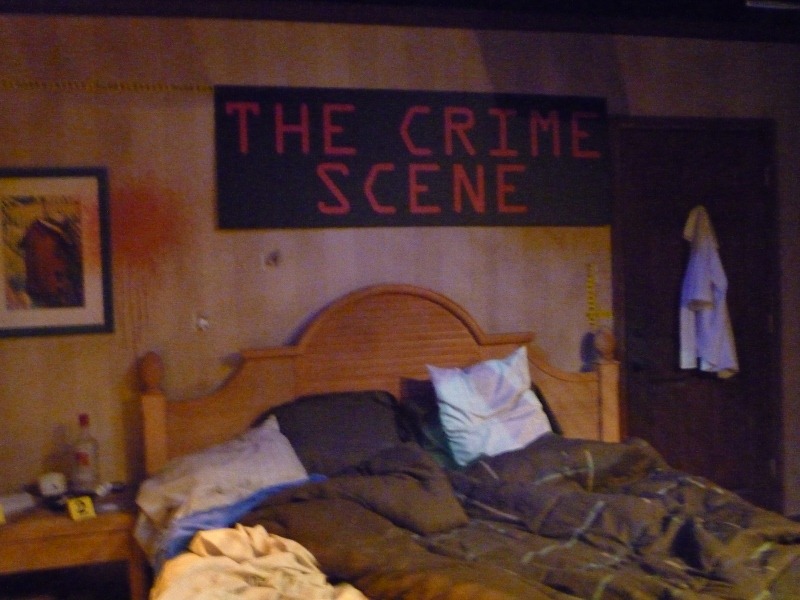
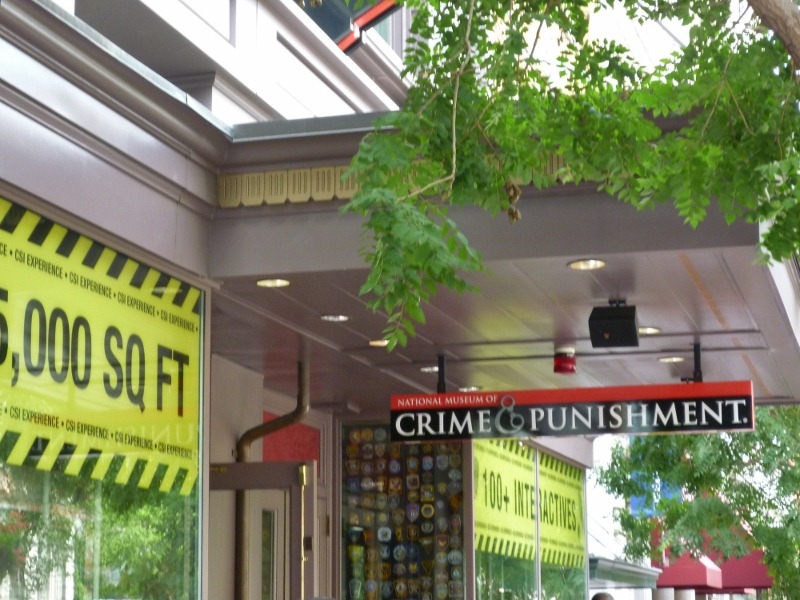
Some of these punishments are well illustrated at the Crime Museum downtown in Washington D.C. I’m doing a detailed walk-through of this experience on my personal blog along with photos, but suffice it to say that methods of crime detection and types of punishment have changed greatly through the ages.

Victim (800x600)

Nan Stocks (800x600)

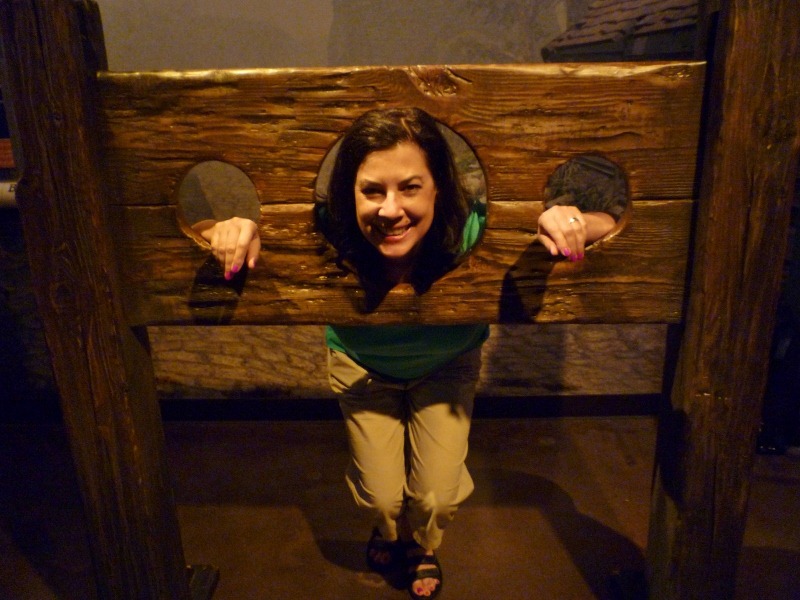
Basically, the top floor of this fascinating museum gives a historical look at what counted as a crime beginning in medieval days and working its way through history toward modern CSI techniques. Did you know that you could be punished for kissing on the Sabbath during Colonial times? That was considered lewd and unseemly behavior, and you might even get your ears nailed to the pillory while you’re sitting in the stocks.

Interactive kiosks challenge you to participate. You can do fun things like shoot a Glock 17 at a police simulation, see how quick you can defuse a bomb, learn how to crack a safe, and match a bullet in the crime lab.

Electric Chair (600x800)

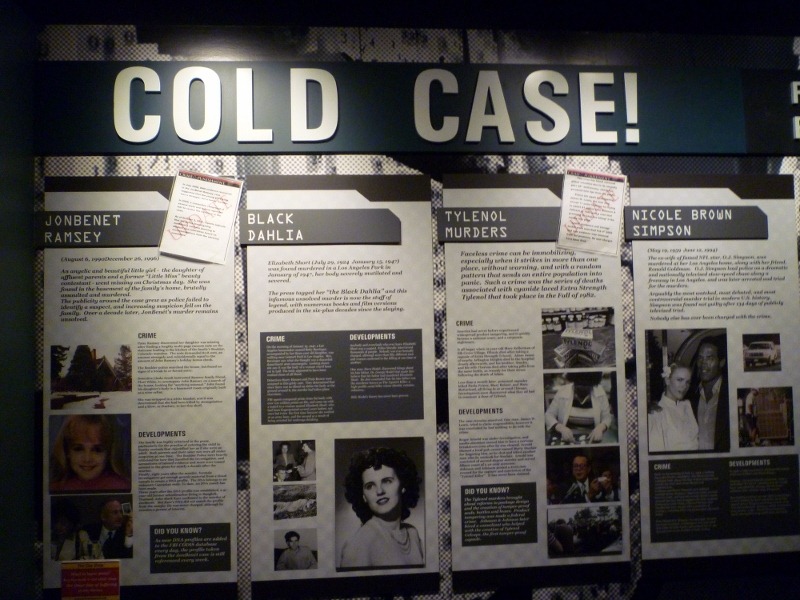
Today’s crime scene investigation involves science and observation. The public’s fascination is shown in multiple versions of Sherlock Holmes and CSI shows on television. More abhorrent are how criminals become celebrities. They’re certainly going to be satisfied if they commit their crimes for fame and recognition. Turn on the evening news, and watch the reporters talk about local murders ad nauseum.

Cold Case (800x600)

Do today’s punishments fit the crimes? Or have we become too lenient, too civilized? Do punishments even work? Are they truly the deterrent they’re meant to be, other than keeping the bad guys off the streets? What about so-called “white collar” crimes? Rather than sitting in prison, should those criminals be put to work to compensate their victims or to educate others?

Crime Scene (800x600)

While highly entertaining, the displays in the Crime Museum make you think about the nature of crime, how the definition depends upon the culture, and whether the punishment is suitable and effective.

Crime Museum (800x600)

Kirkus Indie: When a Review is Good for You

By: Kathleen Pickering  www.kathleenpickering.com

Great news for the self-published author looking for a marketing boost above the pile: Kirkus Indie reviews self-published works.

Believe it or not, word of mouth is still one of the strongest motivators for sales. Book sellers, librarians, book clubs, reviewers—your best friend—will all have an answer if ask, “Have you read anything good lately?”

Here’s where Kirkus Indie comes in. To quote them directly, “The Kirkus Indie program gives independent authors a chance to obtain an unbiased, professional review of their work, written in the same format as a traditional Kirkus review with the same chance of earning the coveted Kirkus Star.

Our Indie program curates the self-published segment of the industry to help consumers and industry influencers (such as publishers, agents, film producers, librarians and booksellers) discover books they may otherwise never find.”

The beauty of a Kirkus review is that you, the author, can chose whether or not the review goes public. If you don’t like the results, use the 250-300 word critique to improve your work and move on. However, should you be tickled to the tailbone about how your book was received, not only is the review yours to publish as you see fit, Kirkus will  post the review on their website at no extra charge. (The fee, I’ll discuss later. I want you to see the good stuff first.)

In addition to the website review, your review also gets distributed to their licensees, including Google, BN.com, Ingram, Baker & Taylor and more.

And if that’s not enough, the editors will consider your  review for publication in Kirkus Reviews magazine, which is read by librarians, booksellers, publishers, agents, journalists and entertainment executives. Plus, the review may be selected as a feature in the Kirkus email newsletter which distributes to more than 50,000 industry professionals and consumers.

Now, you ask, who does the reviewing? Meg LaBorde Keuhn, COO of Kirkus Media recently told Author Cheryl O’Donovan in a RWR article that editorial integrity is sacred to Kirkus. Only professional reviewers who are genre experts, independent and totally unbiased are hired.

O’Donovan cited author Darcie Chan who said a Kirkus Indie review played an important role in helping her make self-publishing history by selling over 500,000 e-books and counting. The Kirkus Indie review encouraged readers to take a chance on her as an unknown author.

Nice. Smile

Kirkus Indie is the fastest rising segment in the Kirkus organization, being followed closely by its new editorial service. (Visit Kirkus Editorial for more info.)

What’s the catch? You pay for your review.

Standard service with a 7-9 week response time costs $425. Express services for $575 returns your review within 4-6 weeks. Kirkus Indie requires two copies of the published book or completed manuscript. For e-book only format a manuscript PDF is sent directly to the editor.

Now, we all know that the self-publishing industry is booming. This author believes that obtaining a favorable review from an established reviewer branded with an 80 year reputation for being the toughest book critic in the world makes good business sense.

What do you think?

Write on, my friends!

xox, Piks

Fan Fiction

by Clare Langley-Hawthorne

If another person asks me whether I have read Fifty Shade of Grey I will scream (I haven’t by the way) – though far worse are the well-meaning acquaintances who eagerly ask whether my current book is anything like it (because, of course, a historical mystery writer would be writing erotic fiction wouldn’t she?!)


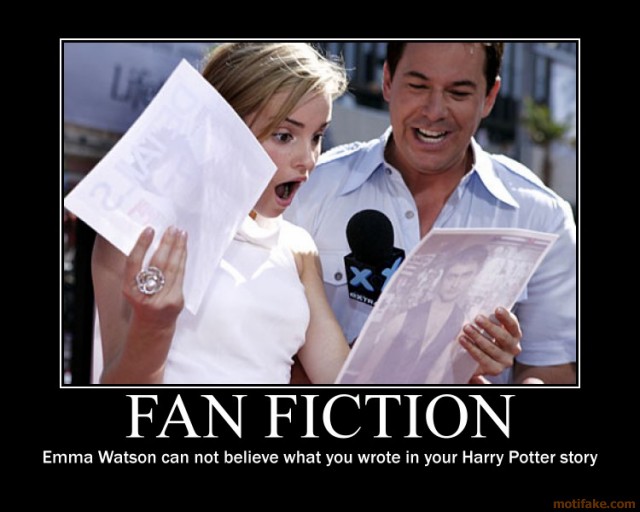
My answer is always the same – no…no, I’m not particularly interested in reading about sadomasochistic sex and no, I’m not particularly interested in writing about it either. I’m also not all that interested in reading or writing fan fiction though most of the women I know who have read Fifty Shades of Grey are surprised when I tell them this is how the trilogy initially began – as a homage to Twilight’s Edward and Bella. 


I don’t know a great deal about fan fiction but it would I guess Fifty Shades of Grey is the most successful of its kind (even though, obviously, it has moved beyond this now and has it’s own characters etc.)  and seeing its success it got me thinking about why people write fan fiction and how the original writers/creators feel about this. 

Obviously the likes of Jane Austen aren’t with us to provide pithy bon-mots on the whole “Pride & Prejudice with Zombies” phenomenon but I am sure many authors have mixed feelings about their fans writing works derived from their own. It must be a strange feeling reading someone else’s take on the characters and worlds you have created, and I wonder how I would feel if this happened to me. To be honest I would just be amazed that any of my books had inspired fan fiction:) but, after that, my true feelings would probably be pretty mixed about the whole thing. Would I feel flattered? Dismayed? I’m not really sure (and it would depend, of course, on the nature of the fan fiction involved).


So what about you? As a reader have you ever been inspired to write fan fiction? As a writer, what would be your take on it? 

Is “Show, Don’t Tell” Overrated?

James Scott Bell


There’s a meme developing regarding one of the oldest of fiction writing commandments: Show, don’t tell. Specifically, that this may be an overrated bit of advice. What’s wrong with telling (straight narration) a great deal of a story in the author’s voice? 
It’s worth talking about. 
Here is an excerpt from a thriller which begins in the trenches of WWI. After a descriptive opening paragraph that introduces us to the “cordite-clouded sky” and the lead character, Dr. William T. Majors, Jr., we get this:
A brilliant mathematician, Majors was a scholar and a gentlemen completely out of his affluent Long Island element. Against reasonable odds or definable logic, he was also a private in the U.S. Army and at present trapped in a gash of dangerous dirt between France and Germany known as the Western Front.
That is narrative telling, and set-up. Well, why not? It gets the job done, doesn’t it? 
But wouldn’t we rather be in the head of the character, and let the details become known naturally as we go along? Is there a need to explain all this up front? Does it deepen our involvement, distance it, or matter not at all?
I have a little guideline I call Act first, explain later. I have never read the opening of a published book yet that did not benefit from this guideline, or suffer from its non-use.
Side note: I was talking to a friend recently who is a voracious reader (and was a history major in college). I brought up a particularly popular series of historical novels and he went, “Ugh! It takes SO LONG to get going!” Then he mentioned the James Clavell classic, Shogun. “He gives a lot of background,” my friend said, “but he does it with action. I like that much better.” I try to listen to readers.
Back to the thriller. We are now introduced to a second character, Majors’ childhood friend, John Taylor. They enlisted together. They are in the trench, talking as the sky explodes. “Tell me again,” Taylor says, “what the hell we are doing here?”
Then this:
Both men were scared, though they tried not to show it.
They winced, recoiling again from the thundering bombardment now under way to destroy fortifications and trench systems along a twenty-mile front from Bois d’Avoncourt to Étan.
Okay, that is a pull back from a scene (when there’s dialogue, you’ve got a scene by default) to narrative description. The author is telling us what both men felt, so it’s author voice (and therefore Omniscient POV) by default.
Are we okay with that? Or would it not be better to stay within the POV of Majors, his hands shaking, the bile of fear rising in his throat? (Note: Omniscient POV is out of favor these days.)
A novel works best (even, I am tempted to add, only) when it creates emotion in the reader. One of the reasons for show, don’t tell is to do that very thing. And it ought to start happening on page one.
A few lines down (we’re on page 2 now), Majors has a tender moment:
Majors touched his heart, then pulled a photo of Jane from his tunic’s breast pocket. He could make out her features in the sudden glare of a bomb’s blast. He loved her deeply and felt this was probably his last chance to look upon her face.
More telling. But does He loved her deeply capture the feeling? Or would it have been better to showhis finger gently tracing her features as his heart pounds something that sounds like a dirge? Telling us what an emotion is, rather than creating it in us, wastes valuable front-end real estate in a book.
Now a page of backstory follows. It begins:
Even more than Taylor, Majors had been born and raised in privilege, with every advantage of wealth and sophistication his parents could give him. Majors’ father, the man he’d been named after, was a successful ship line attorney and investment banker. Majors’ French mother had always been a tender caregiver to her son. She was a consummate homemaker and devoted wife . . .
We have left the immediacy of the action and exploding sky for a discursive on background. Now, I believe some backstory is all right in an opening chapter. But I like to keep it brief and firmly grounded in a character’s head and emotions, e.g., He longed to be back in his father’s study, helping him research another brief for the shipping lines he represented, waiting for mother to bring the afternoon tea.
Is there ever a time to just “tell” part of the story? Yes, when you want to get from point A to point B in the least amount of time, e.g., from one location to another.
Otherwise, choose the more intimate way, one character’s immediate POV, and create emotions rather than telling us about them.
There’s even a book that will help you in this regard, Ann Hood’s Creating Character Emotions.
So what do you think? Is “show, don’t tell” overrated? Or is it the mark of the author who knows exactly how to pull readers in? 

Selling Those Used e-books

Have you heard of a company named ReDigi? It’s not exactly been in the headlines outside of music circles, but it has an interesting concept, and if you are the author of a book which is current in an e-book format you should be aware of what is going on now, and what may be going on later.
ReDigi functions as a used mp3 store. It will buy your used mp3s from you so long as you purchased them legally from e-Music or iTunes or Amazon or whoever (there is a way to determine whether each track was purchased legally, but since I am not fifteen years old I cannot explain it) and re-sell them to someone else. It does not need the permission of the artist or the artist’s label (if there is one) to do this. ReDigi, however, will pay royalties to the recording artist whose tracks are re-sold in this manner, so long as the artist belongs to ReDigi’s Artist Syndication Program (whatever that is). The person who sells the mp3 tracks to ReDigi supposedly no longer has the tracks on their iPod or computer or mp3 player afterward, (though I don’t know how ReDigi stops them from making and keeping a backup copy before they sell it), and ReDigi only sells the track once; in other words, it does not replicate it for sale among multiple buyers). And it’s entirely legal under what is called the “first sale doctrine,” which is how used book stores are able to open their doors for business, and how people can sell used books and CDs and CDs on Amazon and eBay, to name but two.
Fine. But you write books, as opposed to forming G chords. How does this affect you? ReDigi has stated outright that it is going to start selling used e-books —ones that were legally purchased by the original owner, of course — at some point in the future. Let’s assume that ReDigi is going to give authors the same deal that it is giving recording artists, and will pay each author a royalty on the resale of their book so long as said author participates in what I’ll call an “Author’s Syndication Program.”  Mind you, it isn’t going to be anywhere near what you would be getting under your agreement with your publisher, or your vendor, or whoever, but at least it would be something. Or if you are already selling your books for less than a dollar, and getting cents on the dollar for each sale, do you really want your books going for less than retail on the “used” market, with a drop in your royalty? There are both pros and cons here. How does this prospective scenario — it’s down the road, but it’s coming — look to you?

Drop that polysyllable!

Source: The Onion

Last year The Onion referenced a new “feature” in Microsoft Word: a squiggly blue line which alerts the writer when a word is “too advanced for a mainstream audience.”

Okay, so the squiggly-line thing was just an Onion joke. But I think writers actually do feel pressure to choose simple words to avoid alienating readers.

Here’s an example: A few months ago, after reading my manuscript to my writer’s group, I got a quizzical reaction to the word “fortnight.”  No one knew what it meant (a unit of time equal to 14 days.)

Our group is made up of well-educated, professional people, so I was stunned that no one had heard of the word. Granted, fortnight is primarily used in Britain and the Commonwealth countries, rarely in the US. But still.

Grudgingly, I rewrote the line to use “two weeks” instead of fortnight. But the new version seemed flat. So I changed it back. (And anyway, my character has a British boyfriend, so there!)


I don’t intentionally reach for “big” words to impress people. I select words for precision and rhythm. The best backhanded compliment I ever got was when a manager said, “You use big words, but unlike most people, you sound like you know what they mean.” Uh, yes.

The first external pressure I got about vocabulary took place when I was writing Nancy Drews. The writers were discouraged from using words that might lose the young readers. I think that’s a mistake. When I was reading Nancy Drews at age ten, one of my biggest joys was to discover new words. To check the kinds of words I looked up back then, I went back to my ancient copies of ND; I found the word “portend” on the jacket copy of one book. Portend! What are the odds that portend would make it into contemporary versions? Nada much.

Gradually over the years, vocabulary-stretching seems to have become less popular. If the “mainstream audience” doesn’t know a term, the thinking goes, it must be a reader turnoff. Some writers self-police by avoiding the unfamiliar.


Maybe this trend will go away with the advent of ereaders with built-in dictionaries. Or maybe there’s no trend, and I’m off base. So tell me: Do you feel pressure to rein in your vocabulary in your writing? Do you shy away from using a perfect word because you fear you might lose a reader?

Tag Line Haiku

by Michelle Gagnon

Ah, the tagline…how I love it. For those of you who don’t know, a tagline is that little nugget on a book cover (or movie poster) that serves as a branding slogan, that memorable phrase that persuades you to buy the book (or purchase a ticket to the movie). The following are a few of the most  famous cinematic taglines:

  • “In space, no one can hear you scream.” -Alien
  • “Just when you thought it was safe to go back in the water.” Jaws 2
  • “There can be only be one. -Highlander
  • “One ring to rule them all.” -The Lord of the Rings 
  • “The truth is out there.” – The X-Files 

One thing most people don’t know is that authors rarely get to choose their own taglines. So far, my books have been graced with the taglines, “Anyone can end up in the…BONEYARD,” and “We are our greatest enemy.” (THE GATEKEEPER). My latest release, DON’T TURN AROUND, actually had the tagline changed once some of the top buyers weighed in on it; we ended up with, “Off the grid/On the run” (which I love).


It struck me, as I recently perused the vast array of titles at my favorite independent bookstore, that there’s a game in here somewhere. A way, if you will, to combine two of my favorite things: taglines and haikus. And you’re all invited to participate.


Just so we all understand the rules: a haiku is, according to the standard definition, “A Japanese poem of seventeen syllables, in three lines of five, seven, and five.”


For the sake of simplicity, feel free to combine book tag lines with film tag lines, if they seem to belong together. But make sure to attribute the tags to the appropriate sources.


I’ll be composing my haiku with a nod to some of my favorite titles (I excerpted the first part of the tagline when necessary; feel free to do the same).
Have fun, I can’t wait to see what you all come up with!

Past evil still lives.  
Beauty is only sin deep. 
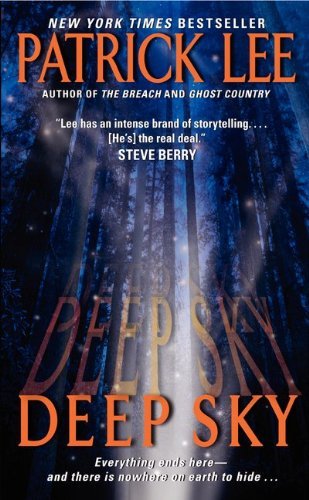
Everything ends here.  

(Respectively, Heather Graham, THE UNHOLY; Ken Bruen and Jason Starr, SLIDE; and Patrick Lee, DEEP SKY.)

On a side note, if you’ll permit a digression: my publisher is currently giving away galleys of my upcoming release, DON’T TURN AROUND. There are a few different ways to enter, and each only takes a few minutes. 


On Twitter, just retweet this:
@EpicReads Off the grid. On the run. DON’T TURN AROUND by @michelle_gagnon http://vsb.li/zJ3A8c RT for a chance to win!

On Facebook, Like this page.

And/or on Goodreads, Click here to enter.

Feel free to forward to anyone who might want a free book!