Reader Friday: Health Insurance and the Self-Employed Writer
[NOTE: This is not a political forum, so let’s keep partisan politics out of it. This is about what to do right now with options currently available.]
Is Cutting More Important than Adding?
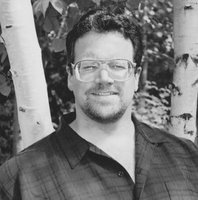
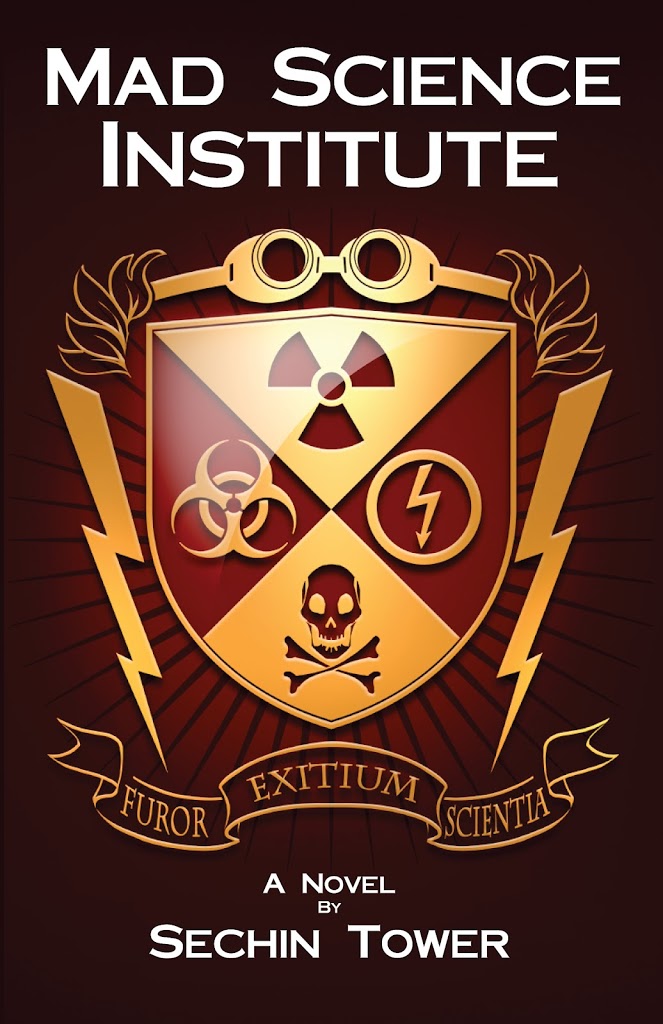
Today I have a guest post from Sechin Tower, author of Mad Science Institute (MSI), a highly unusual yet thoroughly entertaining young adult suspense novel. I met Sechin on Twitter. Once I saw that he was a game developer, I asked for his help on my next proposal, a near future YA techno thriller that involves gaming and he helped me fine tune my game world. I also downloaded his book and found a real gem. Since he’s a teacher, he incorporates science into the plot to make learning fun for young readers. I absolutely fell in love with his YA voice, his characters and his humor. I’m looking forward to his next book. Below is a summary of Mad Science Institute.
Sophia “Soap” Lazarcheck is a girl genius with a knack for making robots-and for making robots explode. After her talents earn her admission into a secretive university institute, she is swiftly drawn into a conspiracy more than a century in the making. Soap is pitted against murderous thugs, experimental weaponry, lizard monsters, and a nefarious doomsday device that can bring civilization to a sudden and very messy end.
Welcome, Sechin!
I had a professor who insisted that the best way to write a two-page paper was to write a 10 page paper, throw it all away, and then hand in pages 11 and 12. When I tell the same thing to my students, they don’t buy it. I can’t blame them: I didn’t really buy it either, not until I started writing novels.
My professor’s point was that not all pages are created equal. Of course it takes more effort to write 10 or 12 bad pages than two bad pages, and maybe even more than two mediocre pages. But good pages require time and effort, as well as research, experimentation, structuring, restructuring, and a nearly endless amount of general fussing. At the very least, good pages require two steps: adding and cutting.
I teach two discrete groups of students and I’ve found that each needs this advice for different reasons. One of my student groups consists of the crème-de-la-crème of our school’s scholars, students who take the most challenging courses, maintain the highest GPAs, and participate in every extracurricular activity that might sparkle on their college applications. My other group consists of at-risk kids in an alternative school program. Many of these students are extremely intelligent, but for a dizzying array of reasons none of them has had much success in school.
The advanced students always want to build up their writing until it overflows. They do the research, they know the issues, they have the facts, and they want to pile it all in without any thought to purpose or readability. The bigger the better: if the assignment calls for two pages, then they assume 10 ought to get a better grade. If they run out of things to say, they resort to inflated words and ponderous sentences. Their writing often becomes a cluttered, colorless hallway that never leads anywhere.
My alternative high-schoolers, on the other hand, bring a great deal of passion about anything they see as relevant to their lives. They are lively, colorful, and outspoken, but even on their favorite topics their writing is terse. For them, it’s about getting to the point. Why wade through the muck of evidence and logic when you can gallop right to the exciting conclusion? Why bother explaining anything if you feel like you already understand it?
Although I didn’t know it at the time, I built a composite of these two groups when I wrote Mad Science Institute. I started by combining all the drive and technical know-how of the advanced students with the vitality and quirkiness of the alternative school kids. I crammed a lot into each character and just as much into the plot and setting, but in the cutting phase I eliminated everything that failed to accelerate the story or develop the characters. It meant cutting some perfectly good ideas, but that was okay: true to the mad science theme, I knew I could stitch them together and give them a new life whenever I was ready. Right then, all that mattered was pruning back and boiling down until the book became balanced and lean.
Being a teacher helped me write a better novel, and writing a novel helped me become a better teacher. I’m not trying to teach my students to become novelists—I wouldn’t push it on them any more than a P.E. teacher would urge all of his students to aim for NFL careers—but what works for crafting a novel applies to essays, letters, and other forms of writing as well. By the end of each year, I’m gratified to see that those students who tended to add too much have learned to accomplish more with fewer words, and the ones who want to start too small learn that they need to build up before they can trim down.
Despite what some students claim, the art of writing is nothing that can be mastered with a mere 16 or 17 years of practice. If I’m any better at it than a student, it isn’t because of what I’ve written but because of what I’ve un-written. Deleting the thousands of pages of rough drafts and practice novels was the only way I could learn what should stay and what just gets in the way, and by the time my students delete that many pages they’ll be better writers than I am.
It seems to me that what you cut is as important as what you add, but maybe that’s just my process. I’d love to hear your opinions on the matter.
How about it, TKZers? Are you more of a cutter or adder?
Sechin’s website & Twitter
Joining the Revolution
I’ve joined the electronic revolution and purchased an iPhone. Having been resistant for some time, I could no longer avoid the temptation of having the social networks at my fingertips, cool apps to explore, email at the tap of a button, and a personal calendar on hand. Now I can relieve my purse of my pocket-sized appointment book and my emergency Sudoku pad. No longer will I have to fumble for someone’s phone number or wish I could send a photo directly to Facebook. I can do all of these things and more.
And therein rests the problem. The iPhone, like its larger cousin the iPad, is in itself a complete source of entertainment. Miss a favorite TV show? Watch it on your device. Need to look up the nearest pizza palace? Ask Siri. Need to kill time at the doctor’s office? Read a book on iBooks. Or better yet, play a game of Solitaire.
No wonder people’s attention spans are decreasing. It makes me worry for the future of reading. Who will be able to concentrate on finishing an entire novel when so many other activities require less effort?
Thank goodness for teen fiction that captures the interest of our youth and perhaps spurs them on to develop a lifelong reading habit. Because once the older generation who gobbles up our stories in print form dies off, who will be left? Consumers who expect their reading material to arrive in the form of daily excerpts? Will the art of storytelling devolve into single page entries? How can we make reading more attractive to the younger set to compete with iTunes?
Storytelling will always be part of our psyche even if the means of delivery evolves. But as a novelist, I am concerned for the future of our art. Can those of us trained to write lengthy works adapt to the changing marketplace? What if we have no choice? Do we want to write shorter, compelling, quicker prose? Can we compete with smartphones and tablets, or must we join the revolution and change our techniques to suit them?
“Heed this advice now!” she warned desperately
Note from Kris: I am in France this week so am handing over the reins to my co-author and sister. Take it away, Kelly!
Writers’ Conference Tips
How Writers Should Die
1984, the Thriller
by Mark Alpert
During our summer vacations in northern Michigan we spend a fair amount of time in the car, so my wife likes to read to the kids while we’re driving. This past summer she chose George Orwell’s Animal Farm for our automotive reading, and the kids loved it. They especially liked pointing out the hypocrisy of Animal Farm’s porcine leaders: “Hey, the pigs are breaking the rules again! They’re not supposed to sleep in beds!” And I loved it, too. From behind the steering wheel I kept interrupting my wife to shout comments such as “That pig is Stalin!” and “The battle against the farmers is really World War II!” until everyone yelled at me to shut up.
When school started last month I decided to continue the George Orwell theme by reading 1984 to my 13-year-old son. My feelings about this book were more ambivalent; I didn’t enjoy it very much when I read it for high-school English, and thirty years later I could remember only two things from the novel: the scene where Winston Smith is arrested and the infamous rats in Room 101. I recalled almost nothing about Smith as a character. In contrast to the memorable beasts of Animal Farm (especially Boxer the horse: “I will work harder!”), the hero of 1984 didn’t stick in my mind. I thought it would be interesting to read the book again and see if I liked it any better now. Is 1984 — the great-granddaddy of The Hunger Games and other dystopian novels — an entertaining book? Can it be considered a thriller?
Well, the book definitely doesn’t start like a thriller. No murder or mayhem in the first ten pages. The novel’s opening reads more like science fiction, because the author spends so much time sketching the outlines of the horrible future he’s imagined. But the extreme creepiness draws you in. While Smith hides in a corner of his apartment, writing “Down with Big Brother!” in his black-market notebook, I’m definitely there with him, anxiously wondering if the Thought Police are also watching the scene. And the plot gains some momentum after Winston starts conspiring with Julia, the Junior Anti-Sex League crusader who turns out to be a hottie.
Smith, though, isn’t much of a hero. He’s unattractive, both physically and spiritually. He has a disgusting sore on his ankle. (Orwell never explains how it got there, but it fits in with the general squalor of totalitarian London.) Winston is also irritable, peevish, self-absorbed. When he was a child, he stole food from his dying sister. His rebellion against Big Brother isn’t triggered by sympathy for his fellow sufferers. He seems most outraged by the Party’s constant revision of history. And his rebellion is thoroughly passive; everything falls into his lap. Julia is the one who initiates their affair by slipping the “I love you” note into his hand, and O’Brien lures him into “the Brotherhood” in such an obvious way that if Winston had any sense at all he would’ve immediately realized it was a trap.
For a thriller writer, these are cardinal sins. We all know that our heroes must be heroic. They must be active, clever, resourceful. But Orwell deliberately made Winston Smith a pathetic figure. He wanted to emphasize the powerlessness of the individual against the state. “If you want a picture of the future,” Orwell wrote, “imagine a boot stamping on a human face — forever.”
The other sin Orwell commits (from a thriller writer’s point of view) is clogging the narrative with the thirty-page tract supposedly written by Big Brother’s nemesis, Emmanuel Goldstein. When I read this section to my son, he asked, “Can we just skip this part?” and I said, “Sure.” And later on, Orwell takes some of the suspense out of the torture scenes by padding them with too many lectures from O’Brien. This criticism, I admit, is a little unfair; Orwell never meant the book to be a thriller. He was trying to make a point as well as tell a story, and sometimes those two aims don’t mesh.
Still, there are some powerful action scenes in 1984. I’m thinking in particular of the scene in the crowded jail cell shortly after Smith is arrested, when the anxiety and terror of the political prisoners is interrupted by the entrance of a man whom the Party is starving to death. One of the other prisoners — another pathetic figure, chinless and chipmunk-faced, with the ridiculous name of Bumstead — offers the starving man a grimy piece of bread, and the guards punish him for this crime of compassion by bashing his face in. “His body was flung across the cell and fetched up against the base of the lavatory seat…Amid a stream of blood and saliva, the two halves of a dental plate fell out of his mouth…His gray eyes still flitted from face to face, more guiltily than ever, as though he were trying to discover how much the others despised him for his humiliation.”
Thriller or not, this is great writing. And best of all, my son liked it, too.
Reader Friday: Getting Ready for NaNoWriMo?
National Novel Writing Month (http://www.nanowrimo.org/) begins November first–are you planning to do it this year?
What are some of your favorite writing exercises that you use to get your writing brain (and fingers) in shape? And while you’re at it, tell us how you’ve done in the past with NaNoWriMo!
Apologies for the System Failure…
I arrived in Cleveland for Bouchercon last night around 11:30pm after an insufferable series of layovers and general travel woes, and was up until 2 am trying to post a fascinating, insightful blog about marketing with a traditional publisher. Of course, the internet in my room doesn’t work (inexplicably, neither does HBO).
So instead, now that I’ve finally managed to log on, I’ll leave a much more abbreviated post on Bcon Cleveland so far…
Firstly, I sold a house today! Yes, in between panels and wireless struggles, I managed to close a deal. It’s bittersweet, really- the first house I ever owned, and the one where my daughter spent the first three years of her life. Lots of good memories there, but some more recent, bad ones too. So all in all, I’m pleased to be moving on.
Great Young Adult panel today with our own Jordan Dane, Joelle Charbonneau, and Bev Irwin. We laughed, we cried, we discussed sex and violence (and the lack thereof) and John Gilstrap threw peanuts from the back row (not really, but I could tell he was considering it).
Sadly, the bookroom did not manage to stock my books. It’s kind of a post-apocalyptic bookroom, there’s a mere scattering of books at every table. I’ve never seen anything like it.
On the plus side, I scored an ARC of TWELVE by Justin Cronin in my book bag. So apparently I’ll be up all night reading instead of logging time on a bar stool.
Ate lunch with Alyson Gaylin, Martyn Waites, Deborah Crombie, and Wallace Stroby. Great food here so far, although I’m not entirely convinced that my lamb burger was made of lamb.
Side note: there’s a casino next to the hotel. Every window is branded with the following: SMOKING PROHIBITED. WEAPONS NOT ALLOWED. Who knew they were so strict here?
Tonight is the opening ceremony at the Rock n Roll Hall of Fame, and of course I forgot to pack my Led Zeppelin T-shirt.
Did I mention that I sold my house? Still slightly giddy over it.