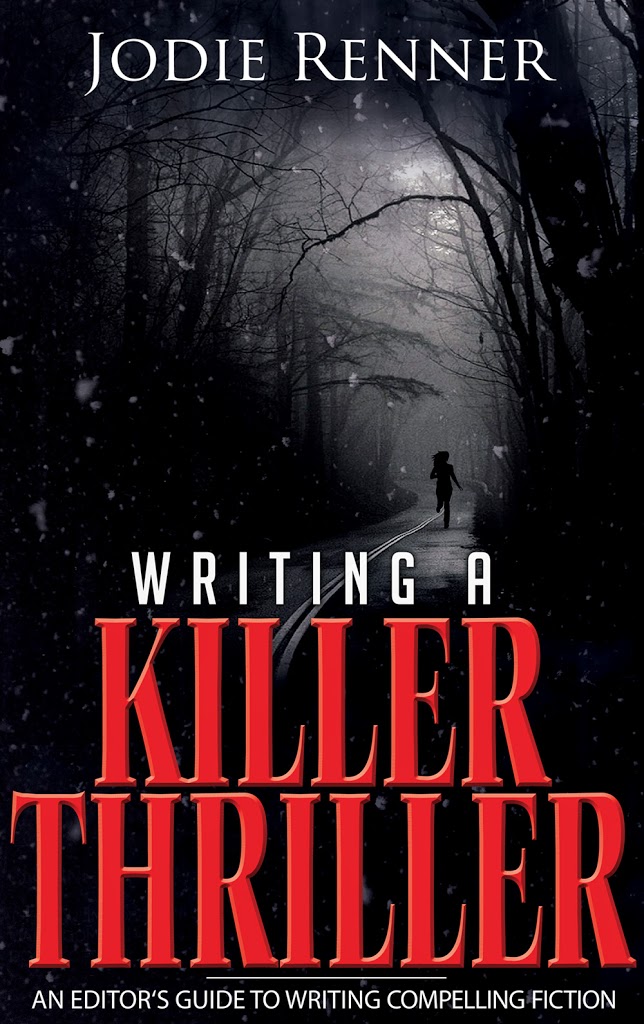
 I’m pleased to welcome back to TKZ my guest, Jodie Renner, freelance fiction editor and craft writer. I was fortunate to have Jodie edit my upcoming thriller, THE BLADE (co-written with Lynn Sholes), scheduled for release February 20. Enjoy Jodie’s terrific advice on creating the essential thriller hero.
————————-
 The hero or heroine of a suspense-thriller, like the protagonist of any popular bestseller, has to be impassioned, unique, and likeable enough for the reader to want to latch on and follow them through their journey, worrying about them and cheering them on through their challenges. So it’s important to take the time to create a charismatic, passionate, complex, sympathetic main character, so readers connect with him or her immediately.
Heroes in novels and movies haven’t really changed a lot over the centuries since the days of Robin Hood and Maid Marion, but they continue to have universal appeal because through them, readers can vicariously participate in exciting adventures and confront and defeat evil to win the day and restore justice. Makes for a very entertaining, satisfying read. Get the adrenaline flowing with worry and fear, then triumph over adversity together, just in the nick of time!
Like the heroes of tales of long ago and, more recently, western and action-adventure stories and movies, the hero of a thriller is usually larger than life, and because of his cleverness, determination and special skills, can accomplish feats most of us cannot, including finding and crushing the bad guys before they get him! But unless you’re writing a James Bond-type story, don’t make your hero perfect or too cocky! Give them some inner conflict, weak spots or insecurities to keep readers worrying about them.
What’s the basic recipe for a suspense hero or heroine that sells books? I’d say the ideal hero is clever, resourceful, charismatic, likeable, tenacious, and courageous. What else? The classic hero may be (and often is) a rebel who defies society’s rules, but he has inner integrity and a personal code of honor, and will risk his life for a worthy cause. Readers want to cheer him on to defeat evil, so they can get a sense of satisfaction and empowerment that maybe they, too, could stop the bad guys, survive and help innocent victims, and restore harmony to their scary world.
From my various reading of craft-of-fiction books and bestselling thrillers and my own editing of thrillers and other suspense fiction, I’ve come up with this list of desired qualities for the hero or heroine of a page-turning suspenseful mystery, romantic suspense, or thriller novel.
Heroes and heroines of bestselling thrillers need most of these attributes:
~ Clever. They need to be smart enough to figure out the clues and outsmart the villain. Readers don’t want to feel they’re smarter than the lead character. They don’t want to say, “Oh, come on! Figure it out!”
~ Resourceful. Think MacGyver, Katniss of The Hunger Games, Harry Potter, Indiana Jones, Jason Bourne, or Dr. Richard Kimble of The Fugitive. The hero needs to be able to use ingenuity and whatever’s at his disposal to get out of any jams he finds himself in and also to find and defeat the bad guy(s).
~ Experienced. They’ve done things and been places. They’ve had a variety of tough life experiences that have helped them grow. They’ve “lived” and are stronger and more resilient for it. They’re definitely not naïve.
~ Determined. Your hero or heroine needs to be tenacious and resilient. They keep going. They don’t cave under pressure or adversity. They have a goal and stick to it, despite personal discomforts like fatigue, hunger, injuries, and threats.
~ Courageous. Bravery is essential, as readers want to look up to him/her. Any heroes who are tentative or fearful early on should soon find courage they didn’t know they had. The challenges and dangers they face force them to be stronger, creating growth and an interesting character arc for them.
~ Physically fit. Your heroine or hero needs to be up to the physical challenges facing her/him. It’s more believable if they jog or work out regularly, like Joe Pike running uphill carrying a 40-pound backpack. Don’t lose reader credibility by making your character perform feats you haven’t built into their makeup, abilities you can’t justify by what we know about them so far.
~ Skilled. To defeat those clever, skilled villains, they almost always have some special skills and talents to draw on when the going gets rough. For example, Katniss in Hunger Games is a master archer and knows how to track and survive in the woods, Jack Reacher has his army police training and size to draw on, and Joe Pike has multiple talents, including stealth.
~ Charismatic. Attractive in some way. Fascinating, appealing, and enigmatic. Maybe even sexy. People are drawn to him or her.
~ Confident but not overly cocky. Stay away from arrogant, unless you’re going for less-than-realistic caricatures like James Bond.
~ Passionate, but not overly emotional. Often calm under fire, steadfast. Usually don’t break under pressure. Often intense about what they feel is right and wrong, but “the strong, silent type” is common among current popular thrillers – “a man of few words,” like Joe Pike or Jack Reacher or Harry Bosch.
~ Unique, unpredictable. They have a special world view, and a distinctive background and attitude that sets them apart from others. They’ll often act in surprising ways, which keeps their adversaries off-balance and the readers on edge.
~ Complex. Imperfect, with some inner conflict. Guard against having a perfect or invincible hero or heroine. Make them human, with some self-doubt and fear, so readers worry more about the nasty villains defeating them and get more emotionally invested in their story.
~ Wounded. Had a tough background that toughened them up somewhat. But they’re still vulnerable because of it. Lucy Kincaid, from Allison Brennan’s romantic thriller series, was brutally attacked and nearly killed by a rapist, but she’s determined to overcome the emotional scars and become an FBI agent; Joe Pike was repeatedly beaten by an abusive father; Elvis Cole was abandoned by his mother; Jack Reacher was an army brat who was constantly in fights and lost his parents and brother. How these characters deal with their emotional and physical wounds touches the reader’s heart and draws us in.
~ Idealistic, Honorable, Self-sacrificing. The thriller hero or heroine may lie, cheat, steal, even kill, but they do it for the greater good, to stop threats and defeat evil. While never a pious goody-goody, the thriller hero is prepared to do whatever it takes to help innocent people who are threatened, protect an individual or family being terrorized, or rescue a child who’s been kidnapped. Having a sense of honor or being self-sacrificing is often what separates a flawed hero from a villain. For example, Rick in Casablanca is a cad-type antihero who ultimately sacrifices his own personal needs/wants/desires for the greater good and turns into a hero at the end. Similarly with Walt, the gruff, racist Clint Eastwood character in Gran Torino.
~ Independent. Often a loner. Might even be an outlaw. Your hero works well – even best –alone, especially if an undercover agent or on a mission or assignment. Heroes often find themselves in situations where they can’t really depend on others – they need to solve the problems through their own resourcefulness, physical effort, and courage. As a result, and because of their inner makeup, heroes often make their own rules. Some examples of this are Robin Hood, Jesse James, Butch Cassidy and the Sundance Kid, Jack Reacher, and Joe Pike.
~ Usually likeable. But not always. Exceptions are those really rough, gruff antiheroes who redeem themselves somehow at the end, like Rick in Casablanca, Harry Callahan in the movie Dirty Harry, or Walt Kowalsky, the crotchety old Clint Eastwood character in the movie Gran Torino.
Also, it’s a good idea to give your hero or heroine:
~ An Achilles heel. A weakness or phobia. Maybe they’re afraid of heights or are claustrophobic. Maybe they’re afraid of snakes, like Indiana Jones. And Superman had to stay away from kryptonite. Give your hero a phobia or weakness, then of course put them in a scene where they’ll have to face their fears and overcome them!
~ A soft spot. Show a softer, more caring side to your tough hero now and then, to make him more human and appealing. Maybe he cares about the underdog, a minor character, an animal, or a child or baby.
Who are some of your favorite thriller heroes and heroines of novels, films or TV? What makes them so likeable? What special talents or attributes do they possess? Any you really don’t like? Why not?
 Besides publishing numerous blog posts, her popular Editor’s Guides to Writing Compelling Fiction, the award-winning Fire up Your Fiction and Writing a Killer Thriller and her handy, clickable e-resources, Quick Clicks: Word Usage and Quick Clicks: Spelling List, Jodie Renner is a freelance fiction editor. Find Jodie on Facebook and Twitter, and sign up for her occasional newsletter here. Author website: JodieRenner.com.