When it comes to developing a story, are you a Plotter, Pantser or Tweener? Would you ever try walking on the other side?


We’re delighted to announce the launch of first-page critiques as a regular feature here at TKZ! You can send us the first page of your manuscript, and we’ll critique it.
Here’s how it works: Send us the first page (400 words max) of your manuscript in an email or as a Word attachment, along with the title, to the email address killzoneblog at gmail dot com. We’ll take the first 30 submissions we receive, then announce when we’re accepting submissions again. The pages will be divvied up among the Zoners for review. We’ll post the pages on recurrent Thursdays, along with a critique. Readers will be able to comment as well. Note: Critiques are done anonymously–writers‘ names will not be posted, and reviewers will not know who authored their assigned pages.
In years past we’ve had great fun doing this exercise! We’re looking forward to reading some of your pages!
What happens when you have more than one book to promote at the same time? Do you annoy readers with announcements about the new releases, blog tours, and contests? Which book do you choose to emphasize in your online blasts?
In this digital age, we can publish as fast as we can write. But at what point are we diluting our own sales? And how will our digital releases affect our print books with their higher price point?
I’ve reached this quandary in April through no planning of my own. Wild Rose Press gave me April 26 as the official release date for Warrior Rogue, #2 in my paranormal Drift Lords series. But then they decided to enter it into the Kindle Select program, meaning the ebook came out in December and my five free days were in February. I did a big push over Valentine’s Day weekend with announcements and contests.
I’d planned another promotional campaign for April 26 to celebrate the print release and the book’s availability for Nook and other formats. I set my newsletter to go out on that date, a Rafflecopter contest to start then, and a blog tour shortly thereafter. (If you want to sign up for my newsletter, visit http://nancyjcohen.com and fill in the form on the left sidebar).
But the best laid plans go awry. Two things happened to impact my campaign. Warrior Rogue showed up in print about two weeks early. And Shear Murder, Bad Hair Day Mystery #10, came out in ebook for $3.19!
I’d been panting with anticipation for the digital release of Shear Murder, but Five Star wouldn’t give me a specific date. This title had only been available as an expensive hardcover for over a year. And finally it shows up in the same month as my promoted new release. What to do?
Since I’d already set up my contest and newsletter and blog tour for Warrior Rogue, I’m going ahead with those plans for April 26. That date seems like a moot point now, since the title is already available in various formats. The irony is that Warrior Rogue, initially $2.99, price jumped to $5.99. So now that ebook costs more than Shear Murder at $3.19.
I don’t want to bombard my fans with notices and confuse them with my two different genres, but I really want to get word out about Shear Murder. It’s easier to keep new releases apart when they aren’t the same month!
And hereafter, I won’t treat release dates as absolute. There’s no point in planning a big hoopla around a certain date when the book shows up weeks earlier. Is this a result of the digital age?
Those of you who are hybrid authors, both traditionally and indie published, can at least space out your own uploads so as not to compete with your publisher’s plans. But if you’re writing two or more books per year for different publishers, how do you alternate your online promotions? And as a reader, how much news from an author is too much?
conference back in 2006 as a newbie without a publishing contract, I was expecting to be dismissed by the “real” authors there. Instead, I found myself surrounded by the most welcoming, supportive professional community I’d ever met.
I’m averse to making mistakes, which probably stems from my educational background. I’m an engineer by training. In that profession, errors can have devastating consequences. Miscalculate the thickness of concrete walls, and a billion-dollar oil rig sinks (Sleipner A platform). Change the design of a single bolt, and a crowded walkway collapses (Kansas City Hyatt). Underestimate the effect of cold weather on a simple rubber O-ring, and a space shuttle explodes (Challenger).
So I’ve been conditioned to avoid mistakes at all costs. The problem is that I’m no longer an engineer. I’m now in the creative fields of writing and acting. In my new professions, mistakes are just fine. No one dies. Nothing is destroyed. In fact, mistakes are encouraged. That’s how you improve.
In writing, trying to eliminate mistakes is the mistake. Yes, there are objective errors that you want to avoid in a novel. Don’t put a safety on a Glock pistol. Don’t make your continuity and timelines inconsistent. Don’t change the name of a character halfway through. These are indisputable mistakes, and yet I have seen them all in novels. Bestselling novels.
In one of my own books, THE ARK, I explained that the elevators of a slowing airplane lowered to maintain altitude. Of course, this is incorrect. The elevators should go up to pitch the aircraft up. I’ve flown planes myself. I have a degree in mechanical engineering during which I studied fluid dynamics. I know that it was wrong, and I still made the mistake. No one—including my brother, who is a former Air Force pilot—caught the error until the book was in stores. No one died, and only one reader has ever brought it up (in fact, it’s the only reason I know the mistake happened). However, the error still bugs me.
What’s more insidious for a writer is the avoidance of subjective mistakes. We want to get everything right in a story: characters, plot, twists, literary merit, creativity, emotional resonance. We want the story to be perfect, and impatient people like me want it to be perfect from the moment we start typing it.
But it never is. It can’t be. Ever. I bet you’d only be able to come up with a tiny list of stories that didn’t have a single thing you’d change. And even then, go look at the Amazon reviews for those books. You’ll find at least a few people (and sometimes hundreds of them) who don’t agree with your definition of perfection.
Voltaire is considered the originator of the phrase, “Perfect is the enemy of good.” We’re afraid that if our story isn’t perfect, it won’t be good enough. The idea for a novel that we have in our minds never comes out on the page like we imagine. Sometimes we can’t write at all because we’ll be disappointed that it won’t come out perfectly formed on the first try.
What we have to come to terms with is that making mistakes is part of the process. That’s how we learn. That’s how we make art. My wife, who is sometimes frustrated when I delay delivering pages to her to edit, gave me a T-shirt for Christmas that says, “Even if it’s crap, just get it on the page.” That notion can be freeing if you take it to heart. You can’t make it better if it doesn’t exist in the first place.
I’m getting more comfortable with making mistakes, but it’s a daily struggle. The lesson slowly worming its way into my head is that to fixate on creating the perfect novel results in creating nothing. So I’m learning to focus on the right thing: getting a story out that reflects my voice, where even the flaws and imperfections are unique to me.
James Scott Bell
@jamesscottbell
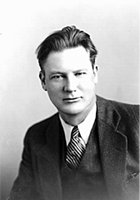

introduction of Perry Mason. There was no looking back. At one time Gardner was listed in the Guinness Book of World Records as the bestselling author who ever lived.
By Mark Alpert
It was a terrible week in the news — the bombs in Boston, the explosion in Texas, the failure of the background-check bill — so it was a great relief to plunge into fiction. And fiction-wise, it was a wonderful week for me, because I completed the first draft of my next novel. My daily word count always rises to extraordinary (at least for me) levels when I’m nearing the end, partly because I get caught up in the climax of the book and partly because I just want to finish the darn thing. I love writing 2,000 words a day, but it also makes me feel bad about how little I write at other times. I say to myself, “Why can’t you write this much all the time? Then you could knock off a novel in two months and spend the rest of the year on your tennis game.”
But it didn’t. At this point I have no idea whether the book is any good, but at least it hangs together. Now I have to wait to hear from my editor. He already read the beginning of the book, and he liked it, but I don’t know how he’ll feel about the end. I’m not even sure how I feel about it. I’m too close to the thing. But I’m cautiously optimistic. The reason for my optimism: bullet ants. The ending has a scene featuring bullet ants. You see, I just broke my rule about never revealing details of a novel-in-progress, but I couldn’t help it. Bullet ants are fascinating creatures.
Today I am presenting a workshop to the Creative Writing students at the University of Texas at San Antonio (UTSA). This is a free offering of like-minded authors getting together to share their thoughts on the publishing industry and the craft of writing. I plan on sharing my thoughts on the latest trends in publishing with a focus on the Young Adult and New Adult markets. I will also spend more time talking about author craft and the epiphanies I have learned through the books I’ve written. Each book teaches you something different, right? Writing is the best way to learn those things, mostly through trial and error when you learn best from your mistakes.
I also want to spend time talking about the writer’s life and the discipline to accomplish daily goals. Usually life, the day job, and other obligations can force you to set aside your passion to write, but if it’s important to you, I say make time for it, even if that’s only a page a day.
The hardest thing I will broach is the crazy things happening in the publishing industry with regard to the changing contractual terms and what it means to self-publish or navigate the ebook services being offered by large publishers and agents, etc. But I find it hard to stop the long list of warnings that I would want them to be aware of so they don’t sign their copyrights away for the life of their book, simply to get published. It’s a scary world out there in this interim phase while the industry is sorting things out. But I don’t want to scare them off either. So I am limiting my warnings to only the most treacherous ones that dangle like gems stones and look all polished and pretty, but have complications. Things like royalty value for digital books, the ala carte subrights menu, rights reversions, and what agents and publishers are offering that could be troublesome. When the goal is to get them to incorporate writing into their daily life, or to nurture something that could become a passion later in life, I don’t want to discourage them from the start.
When I talk to young writers, I want to simply encourage them to write and recognize that if they have the drive and passion for writing, they should write whether they get published or not. I remember how important reading and writing was for me in school and how it stayed with me for my whole life. But first comes the desire and getting hooked on it. It’s a quality of life thing. I usually encourage them to keep a journal of their thoughts or characters they want to develop, or keep a file of ideas for future books. I will share James Scott Bell’s wonderful TKZ post on how to write a short story or share one of my favorite Joe Moore posts on editing your work in Writing is Rewriting. There are so many posts that I’ve found useful at TKZ that I’m still pinching myself that I am a member here.
But my question to all of you is – what advice would you give to a young writer? Someone who is in college or high school and has the writing bug? Everyone here at TKZ would have something to offer young writers. What would you tell them?
I enjoy taking about the mechanics of writing, particularly the basics—Writing 101. The reason is that it’s where most new writers stumble and fall. It’s why so many manuscripts fail to get published or even get considered for publication. And a lack of appreciation for the basics is a huge source of frustration later on when things aren’t clicking. There are no magic beans or silver bullets in dealing with the basics. And despite some urban legends, you won’t be initiated into a secret society of published authors with a special handshake. The basics are just that: basic concepts on which to build your story without letting anything block the flow of your creativity.
It’s obvious that a strong ending is as important as a strong beginning. Your reader should never finish your book with a feeling that something was left hanging or unanswered that should have been completed. It doesn’t matter if the ending is expected or unpredictable, it shouldn’t leave the reader with unanswered questions. You don’t want to play the end game and lose.
Oftentimes, beginning writers don’t successfully bring all the elements of a story together in a satisfying conclusion. There’s no real feeling of accomplishment at the end. Your readers have taken part in a journey, and they should feel that they have arrived at a fulfilling destination. This is not to say that every conflict should be resolved. Sometimes an open-ended conflict can cause the reader to ponder a deeper concept, perhaps an internal one. Or a more obvious reason to have an unresolved conflict is to suggest a sequel or series. But something has to occur that will give your readers the feeling of satisfaction that the journey was worth the investment of their valuable time.
There are a number of methods you can use to make sure your ending works. Consider ending with a moment of insight. Your character has gone through an internal metamorphosis that causes her to learn an important life-lesson. Her growth throughout the story leads up to this emotional insight that makes her a better or at least changed individual.
Another technique is to set a series of goals for your protagonist to work toward and, in the end, they are achieved. Naturally, the harder the goals, the more satisfying the ending will be for the protag and the reader.
The opposite of this technique is to have the protagonist fail to overcome the main obstacle or goal in the story. The ending may not be a happy one for the character, but he can still experience an insight that is fulfilling for the reader. An example of this would be a character who truly believes that riches bring happiness only to find that true fulfillment comes with the loss of material wealth. In the end, the goals of becoming rich are never met, but he is a better person for it.
You might choose to end your story with irony. This usually occurs when the character sets out to accomplish a goal and expects a certain result only to find in the end the result is exactly the opposite. A con artist tries to pull off a big scam only to be conned and scammed by the victim. There’s an old saying that the easiest sell in the world is to a salesman. Watch The Sting.
How about a surprise ending? There’s probably never been a bigger surprise ending than the movie The Sixth Sense. A kid keeps telling a guy that he can “see dead people”. Well guess what? He sees the guy because the guy is dead. There were audible gasps in the theater at the ending of that one.
As you decide on an ending and begin to write it, think of the summation an attorney makes right before the jury goes into deliberation. The final verdict will be whether the reader loves or hates your book. Or worse, feels nothing. Present a convincing argument, review all your evidence, and walk away knowing you’ve done all you can to get the verdict you want.
So how are you guys at playing the End Game. Any additional tips? What about telling us your favorite ending to a movie or book?