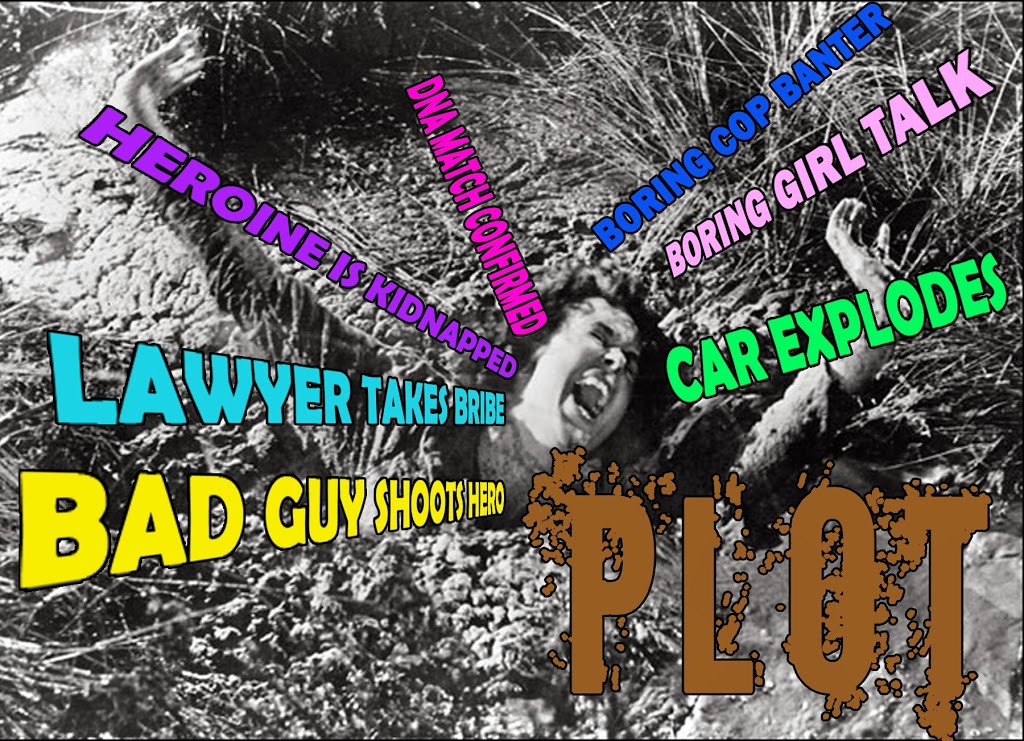
Do We REALLY Need This?
Reader Friday: Take Life by the Lapel
First page critique: QUEST FOR HONOR
by Joe Moore
Today’s first-page critique is from a story called QUEST FOR HONOR. My comments follow.
July 2011
Somalia
Every night, he saw the children. No matter how tired he was, no matter how preoccupied he was from the events of the day, no matter anything, he dreamed. And in his dreams, they came for him. Their eyes were filled with pain and supplication, and behind them was always a shadow, looming in the back, dark and menacing, and sometimes he could hear its wicked laughter, smell its fetid breath.
On this hot night, he woke up screaming. “No! Save them! Save them!” Bolting upright suddenly, the bedclothes fell away from him, drenched with his sweat. He was panting. The shadow had gotten close to him, as the children milled around, and he felt its cold tendrils snaking around him, drawing him closer…
There was a knock at the door, then a muffled voice.
“Yusuf! Are you all right?”
He didn’t answer, and the door edged open. The face that peered in was that of Amir, his most trusted lieutenant. Did the man never sleep? “Are you ill, Yusuf? May I get you anything?”
In his bed, the man shook his head, banishing the last wisps of the faces, knowing they would be back, perhaps as soon as he nodded off again. “Thank you, Amir, but I am fine. A bad dream, that is all.”
“Shall I prepare some hot tea? It often helps me sleep.”
Yusuf started to object, but said, “That would be good. Please, bring it to the library, and join me.”
He rose and pulled on a dry robe, switching on the light. The lone overhead bulb sputtered but stayed on. At least the electricity was running, he thought. Otherwise it would be candles and lanterns, as it was some nights. How could this truly be part of the land of Allah’s people if it could not consistently provide even the bare necessities? Ah, but what necessities are we thinking of, Yusuf reminded himself. The ones you enjoyed back in America, at university? Or the ones the true believers scraped and scavenged for every day, here in the barren countryside, the crowded cities, that made up the lands of the Prophet, blessings be upon him?
I’m not a big fan of opening a book with a dream, but this does set the stage for drama. The writer has a good command of storytelling. I have a suspicion that this is going to be an emotionally charged tale. There’s not much I find to critique here. Some unneeded use of adverbs and extra wording. A bit of cleanup can cure that. But overall, a good start. Here are a few suggested line edits.
Avoid passive voice. Change “Their eyes were filled with pain and supplication…” to “Pain and supplication filled their eyes…” Change “…and behind them was always a shadow, looming in the back, dark and menacing…” to “a shadow, dark and menacing, loomed behind them…”
Avoid run-on sentences. “Their eyes were filled with pain and supplication, and behind them was always a shadow, looming in the back, dark and menacing, and sometimes he could hear its wicked laughter, smell its fetid breath.” to “Pain and supplication filled their eyes, and a shadow, dark and menacing, loomed behind them. Sometimes he heard its wicked laughter, smelled its fetid breath.”
Avoid adverbs and unneeded words. For example: “Bolting upright suddenly, the his bedclothes fell away from him…”
Avoid confusion. “Did the man never sleep?” is Yusuf’s interior thought yet the reader might feel it is Amir who thinks it. Place it in italics. Then start a new paragraph with “Are you ill, Yusuf?”
Avoid unneeded words. Change “In his bed, the man shook his…” to “Yusuf shook his head…” We already know he is in bed.
Avoid simultaneous actions that are not simultaneous. Change “He rose and pulled on a dry robe, switching on the light.” to “He rose, pulled on a dry robe, and switched on the light.”
I think this is a good first draft. A little editing would make it tight and crisp. I would definitely keep reading. Thanks to the author for submitting this first-page sample. Good luck.
How about you guys? Would you turn to page 2 or move on?
Racing Toward the Finale
As you near the finish line for your Work in Progress, the tendency is to speed things up. You can’t wait to be done and take a break. You’re tired of the story and want to end it already. Or you’re approaching your deadline and have to finish in a hurry.
And yet this is when you need to slow down and let the finale unfold in exquisite detail. Haven’t you watched a TV show that ties up all the loose ends in the final two minutes? How annoyed does that make you feel? As for a book series, fans of Harry Potter felt frustrated by the brief epilogue. They wanted more explanations of what would happen to the characters in life beyond the book. So slow down when you approach completion.
The heroine’s confrontation with the villain should reveal every heartbeat, every pulse-pounding moment of fear. This is when you want time to slow so you can catch every nuance. Yes, the pacing must be quick, but you shouldn’t cheat the reader out of emotional reactions, either during the scene or afterward. And the fight sequence, if there is one, shouldn’t be rushed.
What about when the villain has been defeated? I always like to have a Wrap Scene where quiet reflections on lessons learned, a review of events, and/or a self-revelation occurs. This is where you tie up loose ends and perhaps frame the story with the same people or setting as the opening sequence. Make sure your readers go away with a sense of satisfaction.
Putting some distance between yourself and your work will help you gain perspective. Go back after two weeks, if you have that luxury, and read the ending again. Flesh out any spots that are sparse and be sure you’ve covered all the bases. Your finale will dictate what impression readers take away when they close the book.
Do you tend to race ahead when you’re approaching the finish line?
The Muddy Middle: Where good plots go to die
The classic dramatic plot
Recently, I re-read Gone with the Wind. It clocks in at 63 chapters. The first five are what I’d call the opening and the story essentially wraps up in one chapter. So what did Margaret Mitchell fill the 57 chapters in between with? Challenges, obstacles, reversals of fortune for her characters, especially for Scarlett O’Hara. This is the essence of plotting, what keeps the story from bogging down. And it has a definite trajectory. A good plot is like Woody Allen’s shark — if it’s not constantly moving forward — and upward — it dies. (Warning: more shark analogies ahead!)
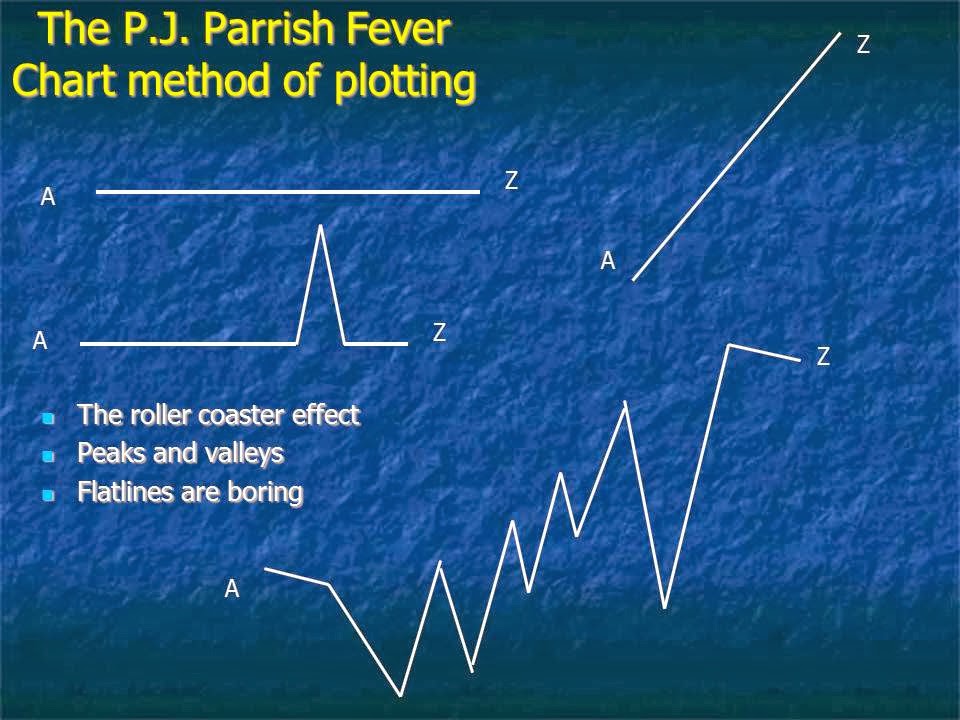
Let me give you a visual. Which of these plot lines is the best?
The one at top left is a flat line. If you’ve got one of these you’re in big trouble. (Or maybe writing bad literary fiction…sorry, cheap shot). That one below it is almost as bad, a plot that is a yawner until the writer gives you a paddle-jolt climax that comes out of nowhere. The one at top right looks like it would be a nifty thriller — nonstop action! — but it also doesn’t work because the pacing is too frenetic. Think about a roller coaster. Why do people love them? Because the heart-stopping plunges are balanced with quiet moments when we can catch our breath and anticipate the next thrill. And that leaves us with the jagged plot line at the bottom.
You give me fever!
I call it The Fever Chart Plot because it is graph that charts the protagonist’s fortunes. The trajectory of the story moves forward AND always upward toward the climax but between A and Z it and dips and rises. The beginning A represents an attention-grabbing opening scene. Then there’s a slight dip as we establish characters and setting and define the problem (in crime fiction, usually a murder to be solved). The line dips because as the problem is more clearly defined, it seems increasingly unlikely the hero will ever solve it.
But then the line goes up as the hero begins to cope, fighting his way through a thicket of complications. Sometimes, the plot hits an early high because it looks like the hero has things in hand but then there is a dip — something goes wrong, there is a reversal of fortune. The hero climbs out again only to be confronted with new obstacles along the way. We get another hard climb and more dips. Eventually, the hero achieves a summit of sorts (toward the end) when it looks like he will be triumph BUT…
He is plunged into a final abyss of despair (the last major setback before the climax). This is where your classic tragic plot usually ends. (Hamlet dies). But we’re talking heroic plots here, so just when it looks like all is lost, the hero, through bravery, smarts and fortitude, recovers and soars back, solving the problem once and for all. That little line at the end? That’s just the denouement where little threads are tied up.
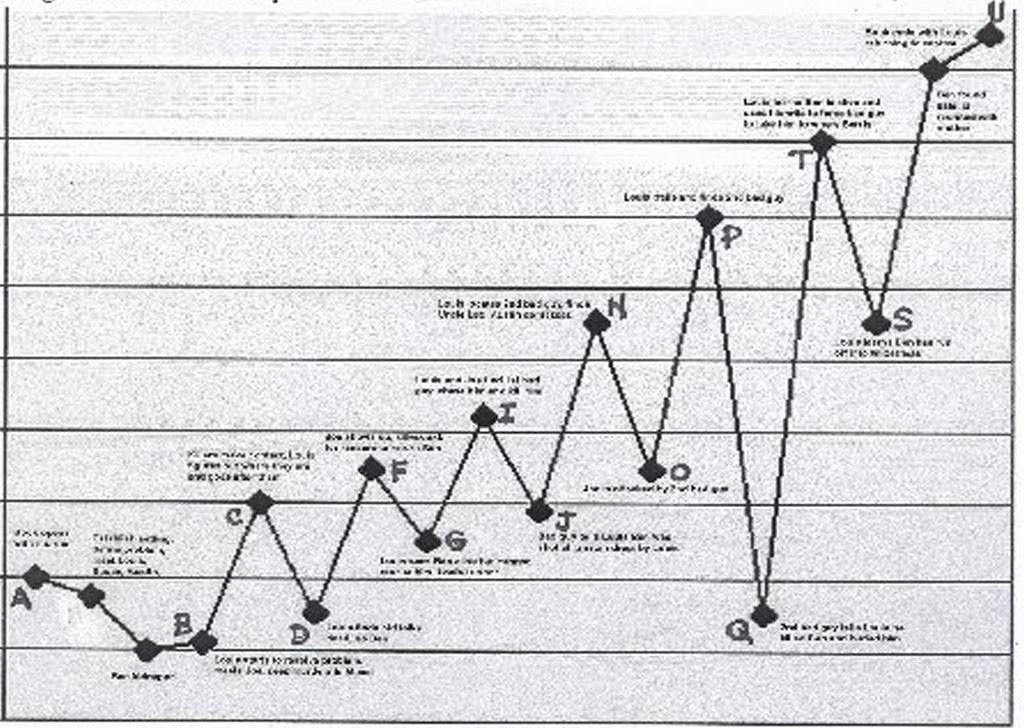
This might seem obvious almost to the point of simple-mindedness, but it is the sturdy scaffolding on which most mysteries and thrillers are built. Your book might have fewer or more dips and rises, depending on the complexity of your story. I once charted out all the plot points of our book A Killing Rain and this is what it looks like:
Tools to dig out of the Muddy Middle
- Setbacks
- Pendulum swings of emotion
- Raising the stakes
- Obstacles
- Rift in the team
- Isolation of the hero
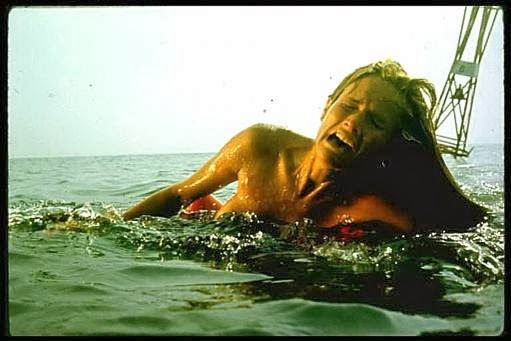
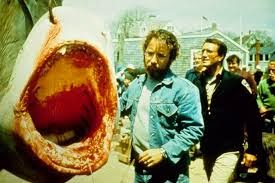
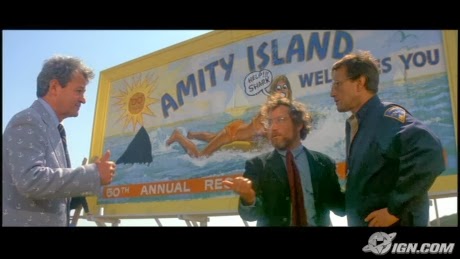
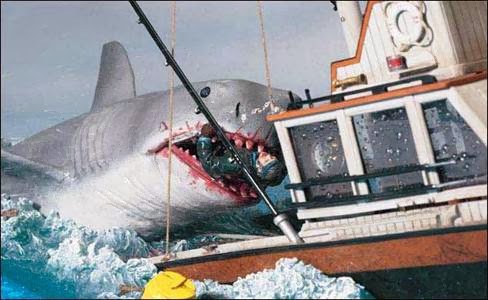
The Amity mayor who’s hellbent on saving the island’s lucrative July Fourth weekend. Brody’s overruled, the beaches stay open and all Brody can do is sit on the beach and sweat. We get a slight rise in the plot graph when Hooper and Brody go out on a night hunt (Hooper is a perfect foil character for Brody, there to give him hope and pull him out of the dips). But then they find that dead guy in the submerged boat and things look increasingly grim. Until we get a major up-thrust for Brody. He gets the money to hire a professional shark hunter — Quint.
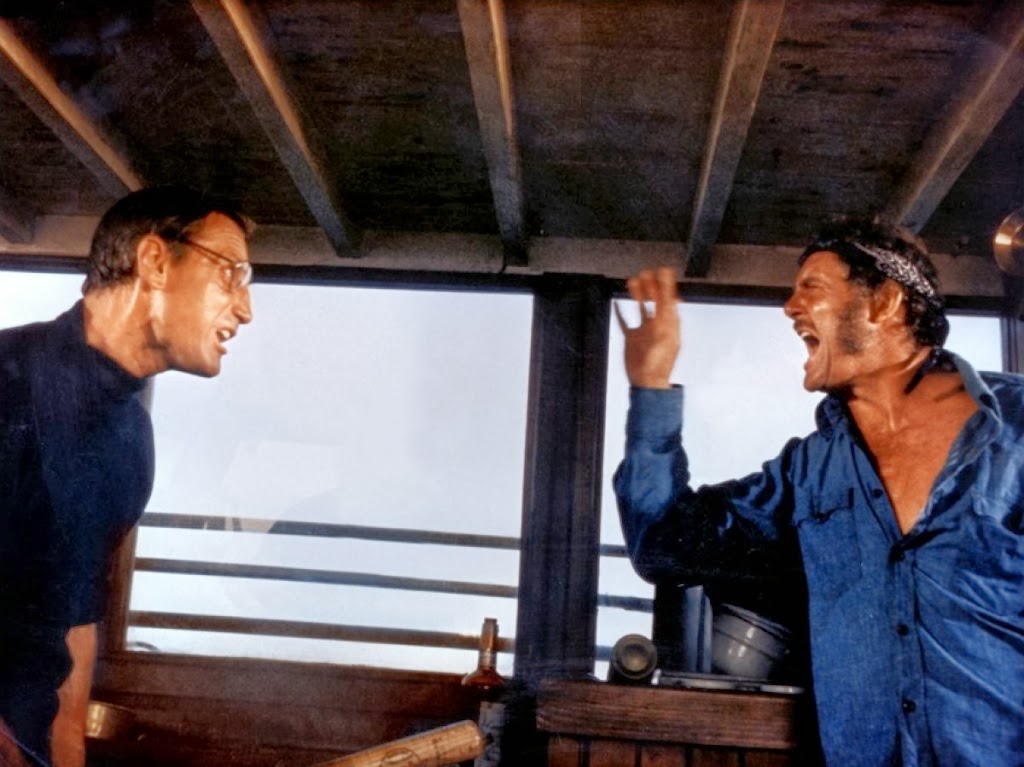
Our hero has things under control now, right? Not so fast. Quint is a great character, and he represents one of the most effective devices you can use to beef up your middle — THE RIFT IN THE TEAM. As the three men hunt the shark, the escalating tension between them threatens the quest. You see this device used a lot in cop novels — the errant hard-drinking guy bumping heads with his partner. Think of every partner Dirty Harry ever had. Or watch the sparring between Woody Harrelson and Matthew McConaughey in HBO’s True Detective. Rifts in the team. Brody is pulled down in another dip as he tries to cope with crazy Quint, who at one point even smashes the boat’s radio.
The plot goes into fever pitch after this, with dips and rises as they chase the shark. The STAKES ARE RAISED as their weapons prove futile, and the boat starts to fall apart and the shark even starts to gnaw on it.
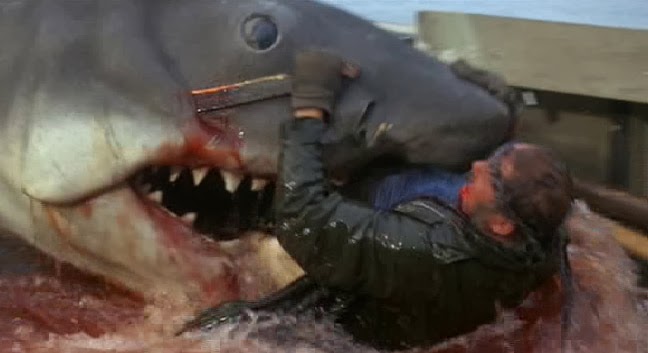
We’re entered the final big trough when Hooper decides the only option left is for him to go down in the shark cage. (STAKES ARE RAISED AGAIN). Hooper disappears, presumed dead. And then we begin the final plunge into the abyss for poor Brody. Quint goes out in a blaze of gory…
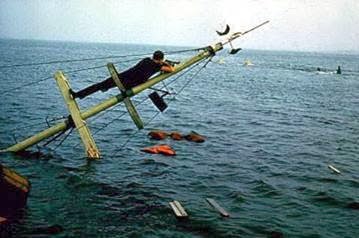
And there is our hero, alone on a sinking ship, staring into the maw of death. Which brings us to one of the most effective ways to beef up your plot — ISOLATION OF THE HERO. Think of Clarise Starling alone in that creepy basement. We’ve use this device often, putting our hero Louis in abandoned asylum tunnels, on frozen ice bridges on Lake Huron, gator-infested Everglades, and yes, on a sinking boat in the Gulf. It gives your hero that final chance to prove himself — through guts and brains — and triumph over evil. Remember how Brody did it?
Blasted the bad guy to bits. With his final bullet. And he couldn’t even swim. What a guy. What a climax. What a roller coaster ride.
One last note: In the book, Peter Benchley lets the shark just swim away never to be seen again. Which is a really really bad ending. But that is a blog for another day.
Fire up Your Fiction with Foreshadowing
by Jodie Renner, editor, author, speaker
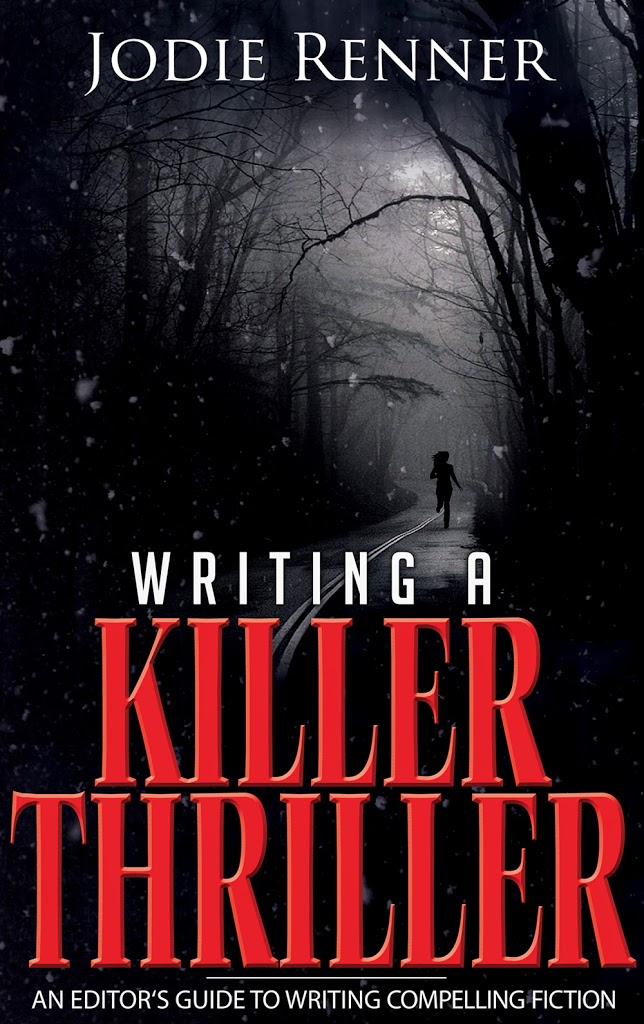
To create a page-turner that sells and gets great reviews, be sure to keep your readers curious and worried throughout your novel. That will keep them turning the pages. You can add tension, suspense, and intrigue to your story very effectively with techniques like foreshadowing, withholding or delaying information, stretching out the tension, and using epiphanies and revelations. (All discussed at length in my book Writing a Killer Thriller.)
Foreshadowing is about sprinkling in subtle little hints and clues as you go along about possible revelations, complications, and trouble to come. It incites curiosity, anticipation, and worry in the readers, which is exactly what you want. So to pique the readers’ interest and keep them absorbed, be sure to continually hint at dangers lurking ahead.
Use foreshadowing to lay the groundwork for future tension, to tantalize readers about upcoming critical scenes, confrontations or developments, major changes or reversals, character transformations, or secrets to be revealed.
Foreshadowing is great for revealing character traits, flaws, phobias, weaknesses, and secrets; building character motivations; and increasing reader engagement.
Foreshadowing also adds credibility and continuity to your plot. If events and changes are foreshadowed, then when they do occur, they seem more believable and natural, not just a random act or something you suddenly decided to stick in there. For example, if your forty-something, somewhat bumbling detective suddenly starts using Taekwondo to defeat his opponent, you’d better have mentioned at some point earlier that he has taken Taekwondo lessons, or else the readers are going to say, “Oh, come on! Give me a break. Suddenly he’s Jackie Chan?”
But for every hint you drop, make sure you follow through later in the novel. Be sure not to drop in what seems like a critical piece of info or object, but ends up not foreshadowing anything. Readers will feel deceived and cheated. (For more on this, Google “Chekhov’s gun” or see my book.)
Also, do be subtle about your little hints. If you make them too obvious, it takes away the suspense and intrigue, along with the reader’s satisfaction at trying to figure everything out.
Some ideas for foreshadowing:
Here are some ways you can foreshadow events or revelations in your story:
– Show a pre-scene or mini-example of what happens in a big way later, for example:
The roads are icy and the car starts to skid but the driver manages to get it under control and continues driving, a little shaken and nervous. This initial near-miss plants worry in the reader’s mind. Then later a truck comes barreling toward him and…
– The protagonist overhears snippets of conversation or gossip and tries to piece it all together, but it doesn’t all make sense until later.
– Hint at shameful secrets or painful memories your protagonist has been hiding, trying to forget about.
– Something on the news warns of possible danger – a storm brewing, a convict who’s escaped from prison, a killer on the loose, a series of bank robberies, etc.
– Your main character notices and wonders about other characters’ unusual or suspicious actions, reactions, tone of voice, facial expressions, or body language. Another character is acting evasive or looks preoccupied, nervous, apprehensive, or tense.
– Show us the protagonist’s inner fears or suspicions. Then the readers start worrying that what the character is anxious about may happen.
– Use setting details and word choices to create an ominous mood. A storm is brewing, or fog or a snowstorm makes it impossible to see any distance ahead, or…?
– The protagonist or a loved one has a disturbing dream or premonition.
– A fortune teller or horoscope foretells trouble ahead.
– Make the ordinary seem ominous, or plant something out of place in a scene. Zoom in on an otherwise benign object, like that bicycle lying in the sidewalk, the single child’s shoe in the alley, the half-eaten breakfast, etc., to create a sense of unease.
– Use objects: your character is looking for something in a drawer and pushes aside a loaded gun. Or a knife, scissors, or other dangerous object or poisonous substance is lying around within reach of children or an assailant.
– Use symbolism, like a broken mirror, a dead bird, a lost kitten, or…
~ A no-no about foreshadowing:
But don’t step in as the author giving an aside to the readers, like “When she woke up that morning, she had no idea it would turn out to be the worst day of her life.” We’re in the heroine’s head at that moment, and since she has no idea how the day is going to turn out, it’s breaking the spell, the fictive dream for us to pass out of her body and her time frame to jump ahead and read the future.
~ Don’t like to plan your story out first? Just go ahead and write your story, then work backward and foreshadow later.
If you hate to outline and just want to start writing and see where the characters and story take you, you can always go back through your manuscript later and plant clues and indications here and there to hint at major reversals and critical events. Doing this will not only increase the suspense and intrigue but will also improve the overall credibility and unity of your story.
And remember to sprinkle in the foreshadowing like a strong spice – not too much and not too little. If you give too many hints, you’ll erode your suspense. If you don’t give enough, readers might feel a bit cheated or manipulated when something unexpected happens, especially if it’s a huge twist or surprise.
And again, the operative word is subtle. Don’t hit readers over the head with it. Not all your readers will pick up on these little hints, and that’s okay. It makes the ones who do feel all the more clever.
For more techniques for adding conflict, tension, suspense, and intrigue to any genre of fiction, check out Jodie’s book, Writing a Killer Thriller.
Jodie Renner is a freelance fiction editor and the award-winning author of three craft-of-writing guides in her series An Editor’s Guide to Writing Compelling Fiction: Captivate Your Readers, Fire up Your Fiction, and Writing a Killer Thriller. She has also published two clickable time-saving e-resources to date: Quick Clicks: Spelling List and Quick Clicks: Word Usage. You can find Jodie at www.JodieRenner.com, www.JodieRennerEditing.com, her blog, http://jodierennerediting.blogspot.com/, and on Facebook, Twitter, and Google+.
A Short Course on Dialogue Attributions
If one character uses the name of the other character, for emphasis, you can break up the dialogue this way: