By PJ Parrish
Congratulations! You finished your novel! You typed those two sweet words THE END. Right there on the bottom of your Word doc is that magic line: Words: 96,788.
Okay, now the hard work begins. Now go back and write your book again – this time in 200 words.
Yes, I’m talking about back copy. I know. You don’t want to deal with it. It’s one of those tangential things like publicity, P&L statements, website algorhithms, or finding a good editor, that writers don’t want to think about but know they have to because that’s the way the book business is rolling these days. Writers have become one-man bands. We do it all or we die.
I can hear some of you out there saying, “I can skip this one today.” But you can’t really. Because being able to articulate what your book is about in 200 words or less is really valuable. Why? Here’s five reasons:
- If you are self-publishing with Amazon, you have to write your own back copy.
- If you are querying agents, you have to have compose a great hook for your book
- If you are going to a conference and meeting an agent, you have to be able to give a 30-second elevator pitch.
- If you’re doing a speech or a signing, you need to articulate what your book’s about in two or three sentences.
- And maybe most important: Being able to boil your story down to its very essence is a great exercise unto itself, one that will help you understand what, in your heart, you are really trying to communicate.
Both of my traditional publishers, Kensington and Pocket, let us edit our back copy and a couple times we even wrote it. And we write all the descriptions that appear with our self-published backlist titles on Amazon. I’ve written my share of query letters. I had an unnerving 10-minute pitch session with an editor from Harpers at a writer’s conference. And I’ve sat at card tables in malls trying to talk people into buying my books when all they really want is directions to the Piercing Pagoda.
I’m actually not bad at boiling down a story. I think it is because I made my living for years as a newspaper copy editor and once you get the hang of writing headlines that can be grasped by a guy driving by a newspaper box at 40 miles an hour, well, having 200 words to sum up a whole book doesn’t seem that hard.
But I know it actually is. One of the hardest things to do is to write with both brevity and verve. As a reporter, I was always way over in my word count and my editor never bought into the Mark Twain quote that I would have written shorter if I had more time. So whenever I see back copy done well, I appreciate the care that goes into. Here’s two off my bookshelf that I really like:
A father and his son walk alone through burned America. Nothing moves in the ravaged landscape save the ash on the wind. It is cold enough to crack stones and when the snow falls it is gray. Their destination is the coast, although they don’t know what, if anything, awaits them there. They have nothing; just a pistol to defend themselves, the clothes they are wearing, a cart of scavenged food – and each other.
* * *
More than a year ago, mild-mannered Jason Getty killed a man he wished he’d never met. Then he planted the problem a little too close to home. But just as he’s learning to live with the reality of what he’s done, police unearth two bodies on his property – neither of which is the one Jason buried.
The first is from Cormac McCarthy’s The Road. It’s good because it captures not just the plot but also mimics style and mood of the novel. The second is from Jamie Mason’s Three Graves Full. I like it because it is short and very seductive.
On the flip side, I see a lot of bad back copy out there these days. In the New York Times book review today, I saw an ad for a print-on-demand publisher touting its books with the headline: UNFORGETTABLE STORIES. Here are some sample descriptions:
In the summer of 1863, an eighteen-year-old Amish farm boy feels trapped between his religious heritage and his fascination with the world outside his small Pennsylvania town. His solution is to leave home. And so begins his unforgettable adventure that will change his life forever.
[Title redacted] is a highly engrossing work of fiction, set in the north of England, extrapolated from the realities of the world of front line regional newspaper reporters and the sort of situations they they on a daily basis.
Abused and mistreated, Jane grew up in the field of restraints which she calls a prison. And she hopes there is still an ounce of sanity left in her which leaves her with the choice of breaking away from the [title redacted].
[Title redacted] is author [redacted] new novel that looks into the lives of the people who survived the 1998 Nairobi bombings and how they struggle to cope with the pain and loss.
[Name redacted] returns from the war minus a a leg and discovers that his wife has left him and his engineering business has shut down. Forced to re-invent his life, he and his family battle to overcome war’s damage.
Now, these could be very good novels. But from the blurbs, there is no way to know. None of these entice readers or capture the tone or mood of the books. They are wordy (“feels trapped”), filled with cliches (“unforgettable adventure”) , vague on plot points, filled with generalities (“struggle to cope”), confusing, and devoid of any hint of conflict or suspense.
Writing great back copy is a fine art. It’s nearest kin might be advertising copy in that its form is short and specialized, and its purpose is to seduce, tease, and make us buy into something. It’s no accident that some pretty good novelists emerged from the advertising industry — Don DeLillo, Fay Weldon, Joseph Heller. F. Scott Fitzgerald wrote streetcar sign slogans for $35 a week. Dorothy Sayers made a name for herself writing a mustard slogan before she got hot with crime novels. Salman Rushdie, who wrote ad copy while trying to finish his first novel, recalls taking a test for the J. Walter Thompson agency where, “they asked you to imagine that you met a Martian who mysteriously spoke English and you had to explain to them in less than 100 words how to make toast.” And then there was that guy who started out as a junior copywriter at J. Walter Thompson, rose to CEO, and turned his ad experience into James Patterson Inc.
So what’s the secret? Our own Jodie Renner and James Bell laid out some great tips in a post here last year. CLICK HERE to read it. And if you want some really helpful tips from a real agent on how to write good query letter hooks, CLICK HERE to go to the Miss Snark archives. But I’d also like to offer up some of my own tips, if I may.
Don’t give a plot regurgitation. Give just enough story to hook the reader’s interest while you also hint at the larger picture behind the book. Here’s a great tease:
From a helicopter high above the California desert, a man is sent free-falling into the night . . . and Jack Reacher is plunged into the heart of a conspiracy that is killing old friends.
Reacher has no phone, no address, no ties. But a woman from his former military unit has found him using a signal only the eight members of their elite team would know. Then she tells him about the brutal death of one of their own. Soon they learn of the sudden disappearance of two other comrades. But Reacher won’t give up—because in a world of bad luck and trouble, when someone targets Jack Reacher and his team, they’d better be ready for what comes right back at them.
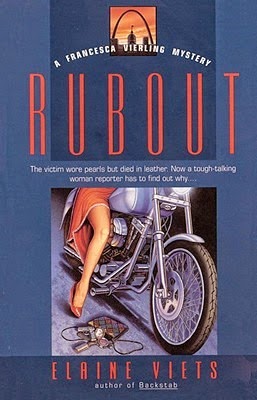
Know your audience. Make sure the tone is right. Hit the high notes of your genre or the genre’s tropes. Romance or romantic suspense tends to stress the characters and relationships over plot. Thrillers tend toward the opposite. Just like your cover, you have to convey the exact mood of your story. Use language that appeals to the reader’s emotions. You won’t mistake Elaine Viet’s Shop Til You Drop for Lee Child:
Once on the fast track to success, Helen Hawthorne is going nowhere fast. Forced to trade in her chic life for a shabby one, she’s now on the run trying to stay one step ahead of her past. After two weeks as a new clerk at Juliana’s, Fort Lauderdale’s exclusive boutique, Helen still feels out of fashion. But in a shop where the customer’s collagen lips are bigger than their hips, who wouldn’t…
Start with a great headline. If you’re having trouble coming up with the perfect headline, write the body copy first. Later, go back and read what you wrote as if you were a consumer seeing it for the first time. Somewhere, buried in all that copy, you will find your headline. Here’s a sample you can find in our special Kill Zone Zone 99-cent Amazon offering
Thrill Ride:
A KILLING SPREE. A MISSING BOY
A PLACE WHERE ONLY THE STRONGEST SURVIVE
A deep freeze is bearing down on the Florida Everglades, the kind of brutal storm the locals call a killing rain. For Detective Louis Kincaid, the coldest night of the year has brought a terrifying new chill — a grisly murder that tightens his every nerve in warning. This is no routine case. It’s the start of a nightmare.
Watch how it looks on the page. Is it too long? Are the sentences too long and hard to digest in one quick reading? Did you break it into paragraphs, if needed? Think about the best advertising copy you see. The block of copy must register in the eye as a fast read.
Tell us who your hero is and where we are. It’s a good idea to work in your protag’s name, profession, and the location(s) of your story. Readers want to be able to tell at a glance if the protag is male or female, what kind of person it is, and where you are going to take them. Geography is important to many readers. Here’s some effective copy from a Steve Hamilton book that does all this and gives us a little backstory:
Alex McKnight swore to serve and protect Detroit as a police officer, but a trip to Motown these days is a trip to a past he’d just as soon forget. The city will forever remind him of his partner’s death and of the bullet still lodged in his own chest. Then he gets a call from his old sergeant. A young man Alex helped put away—in the one big case that marked the high point of his career—will be getting out of prison. When the sergeant invites Alex to have a drink for old times’ sake, it’s an offer he would normally refuse. However, there’s a certain female FBI agent he can’t stop thinking about, so he gets in his truck and he goes back to Detroit.
Don’t give away too much. Good copy writing is a seduction. The back copy should make the reader want more. Think foreplay. One good tip is to pick a spot in the your plot, usually a quarter or a third of the way in, and don’t include anything that happens after that point.
TV reporter Candy Sloan has eyes the color of cornflowers and legs that stretch all the way to heaven. She also has somebody threatening to rearrange her lovely face if she keeps on snooping into charges of Hollywood racketeering. Spenser’s job is to keep Candy healthy until she breaks the biggest story of her career. But her star witness has just bowed out with three bullets in his chest, two tough guys have doubled up to test Spenser’s skill with his fists, and Candy is about to use her own sweet body as live bait in a deadly romantic game – a game that may cost Spenser his life.
Avoid passive voice and weasel words, clichés, twenty-dollar vocabulary. Don’t use big hard to grasp words. Again, back copy is like good advertising copy: It appeals to the senses and emotions. You can pile on the details and pretty writing inside the covers.
Hint at what’s at stake. Go back and read the bad examples I listed above. Each of them has the same core problem: There is no defining of the central conflict or what the stakes are. This is a complaint I hear often from agents about query letters. A successful hook in a good query letter works much the same way as back copy does — it makes the agent want to know more — NOT about plot points but what this all means for the protagonist.
End with a question. We see this device a lot in back copy but for good reason. It works. It creates suspense. (“What will John do when he discovers Jane’s deception?”) It hints at future complications (“When their investigation leads them to a city hall conspiracy, can their love stand the test?”) It sets up possible suspects, like in this back copy:
On a warm summer morning in North Carthage, Missouri, it is Nick and Amy Dunne’s fifth wedding anniversary. Presents are being wrapped and reservations are being made when Nick’s beautiful wife disappears. Husband-of-the-Year Nick isn’t doing himself any favors with cringe-worthy daydreams about the slope and shape of his wife’s head, but passages from Amy’s diary reveal the alpha-girl perfectionist could have put anyone dangerously on edge. Under mounting pressure from the police and the media—as well as Amy’s fiercely doting parents—the golden boy parades an endless series of lies, deceits, and inappropriate behavior. Nick is oddly evasive, and he’s definitely bitter—but is he really a killer?
Go for the Big But. This is a cliche construction in back copy writing, but hey, it works. First you set up a scenario of normality for your protagonist then you use a conjunction bridge to a new development in that person’s life (ie a crime) that has sent them on a new course. Go back and look for all the BUTS I have highlighted in blue and you’ll see how common this is. Here’s a sample from John Creasey’s Parson With a Punch:
The Reverend Ronald Kemp came to the East End of London with definite ideas of right and wrong, which was only fitting for a minister of God. But the people of the East End had a few ideas of their own and the Rev. Kemp quickly finds his world torn asunder…
From Michele Gagnon’s Bone Yard:
FBI agent Kelly Jones has worked on many disturbing cases in her career, but nothing like this. A mass grave site unearthed on the Appalachian Trail puts Kelly at the head of an investigation that crosses the line…Assisted by law enforcement from two states, Kelly searches for the killers. But as darkness falls, another victim is taken and Kelly must race to save him before he joins the rest…in the boneyard.
From Michael Connelly:
Mickey Haller gets the text, “Call me ASAP – 187,” and the California penal code for murder immediately gets his attention. Murder cases have the highest stakes and the biggest paydays, and they always mean Haller has to be at the top of his game. But when Mickey learns that the victim was his own former client, a prostitute he thought he had rescued and put on the straight and narrow path, he knows he is on the hook for this one.
Hyperbole? Heck, why not? It’s not uncommon for back copy prose to get a little purple, especially in crime fiction. We see a lot of this kind of stuff: “Time is running out…” “As the nightmare increases…” “Even as danger mounts…”the shocking truth is revealed.” You can use this — but in small doses, please. Readers will turn on you if they sense you’re just throwing a bunch of adjectives at them like “dazzling” or “breathtaking.” CLICK HERE to read a bookseller’s take on how hyperventilating blurbs turn readers off. And if you’re writing humor, please be careful tossing around stuff like “hilarious” and “side-splitting.”
Here’s back copy for Sherrilyn Kenyon that’s corny as all get out but hey, it works for me:
He is solitude. He is darkness. He is the ruler of the night. Yet Kyrian of Thrace has just woken up handcuffed to his worst nightmare: An accountant. Worse, she’s being hunted by one of the most lethal vampires out there. And if Amanda Devereaux goes down, then he does too. But it’s not just their lives that are hanging in the balance. Kyrian and Amanda are all that stands between humanity and oblivion. Let’s hope they win.
A few final things to consider as you put together your back copy:
- When you’re done, read your blurb out loud.
- Prune out all unnecessary words. See if you can cut out 30 percent.
- Go into Amazon and read some blurbs in your genre for good books. Read the backs of paperbacks. Mimic the ones that work.
- Run your blurbs by beta readers and see if they salute.
Whew. Long post today. Sorry about that. I would have written shorter if I had had more time.