Earn Your Writing Success The Old-Fashioned Way

Back in the 70s there was an effective ad campaign for the investment firm Smith Barney. It featured John Houseman in his Professor Kingsfield garb (if you don’t know who John Houseman is, or Professor Kingsfield, go watch The Paper Chase, a movie about Harvard Law School that won Houseman an Oscar). Here’s one of the ads:

That tag line became famous. They make money the old-fashioned way—they EARN it.

It was great alternative advertising, countering the young, fast, Maserati-driving, Rolex-wearing rah-rah hype of the day. The ads reminded people that you don’t make money for long with get-rich-quick schemes. The only lasting value comes from hard work. (Let’s put aside for our purposes here the fact that Smith Barney itself seems not to have listened to its own spokesman.)

I thought of that ad the other day as I read a post by Kristine Kathryn Rusch about writers trying to “game the system.” I recommend you read the whole thing, but here are a few reflections that track with my own thinking on the issue.

Kris’s post was prompted by an announced change in the Kindle Unlimited program on Amazon. Currently, writers in KU are paid from a common fund, triggered when 10% of a downloaded piece is read. Which means a payout happens when 500 words of a 5000 word short story are clicked through by a KU borrower. And the same amount when a 100,000 word novel gets to the 10,000 word mark.

Theoretically, then, a writer can put out a ton of short work, or serialize a full-length novel, and increase his or her payouts. Bloggers have been dispensing strategic ideas to get the most out of the program.

When that happens to their business, Amazon tends to shift things around.

As they have now. Starting next month Amazon brings a new formula to KU. Payout will be on a pages-read basis. So that 5000 word short story is only going to be making a fraction of what it once did. Not everyone is happy about this. See here for further details.

The new plan does reward full-length novels that people want to read all the way through.

Imagine that. Just like when writers had to earn money the old-fashioned way. They had to EARN it!

These changes are still going to bring out strategies to use digital output and SEO tricks and algorithmic ping pong to squeeze money out of readers and their discretionary income. Note, I’m not talking about wise marketing and the fundamentals of digital commerce. This is about trying to make bank from chicanery rather than superb storytelling.

Kris Rusch is having none of it:

In the beginning, I tolerated gaming the system. I used to think that writers would get by it. Some writers do get past that idea that they can game their way to success. Some writers do game their way to success. But I have learned that every writer who games his way to success has short-term success.

And then that writer gets caught or the system changes or the bottom falls out. Most writers quit at that point. Last summer’s Kindle Unlimited Apocalypse took out hundreds, maybe thousands, of writers who had some success. Many of them left writing altogether.

Some of them found a new way to game the system, still with Kindle Unlimited, figuring out the new algorithms and what those writers “should” be writing in order to win the big prize—which is, either, some imagined (unprovable) bonus to their bestseller rankings or part of the Prize Pool. Ooops. I mean the Select Global Fund. Or none of the above. Honestly, I haven’t made much of a study of it, because, as you can tell from my tone, I don’t think it important.

The remaining writers who were gaming the system and got nailed did the cliché thing and turned lemons into lemonade. They learned that they were approaching their business wrong, and they took the collapse as an opportunity to build a foundation underneath their writing career.

What “bugs” her about all this is “the contempt these writers show for the craft of writing.”

In other words, gaming a system, like Kindle Unlimited or the New York Times bestseller list is extremely disrespectful. It doesn’t require the writer to get better, to become a better storyteller or to build a fan base. It only means that the goal—whatever that goal is—means more to the writer than having readers does….

They disrespect readers. These writers want people to buy their books (or borrow them for a fee, as in KU), but these writers don’t care if the readers read the book.

They want a reader’s money and they want to give the reader very little in return for it.

I hope this sentiment reaches writers coming up who are tempted to concentrate more and more of their time and effort on gaming, and less and less on the hard work of learning the craft.

I’ll always maintain that the most satisfying writing career, and the one most likely to last, is the one that EARNS its place at the table.

Yes, the old-fashioned way.

Do you agree?

Have to vs. Get to

smoking car

(Photo by Stevan Sheets)

I don’t have any words of wisdom or otherwise for you today about writing. I’m sorry for that; as the deadline approaches I have for the last couple of days been ferrying my younger daughter to THE Ohio State University for orientation. She is in a unique position, given that she completed her high school credits in two years and has acquired enough college credits that she is midway through her sophomore year of higher learning. Because of her tender age (17), however, she must go through orientation, stay in a dorm for a year, etc. I have been thinking in terms of “Well, we have to do this” and “we have to do that” in association with jumping through the many hoops that college enrollment involves. And it is totally wrong. We don’t HAVE to do it; we GET to do it. If I might, please let me explain.

What I am about to relate to you occurred some two decades ago. “Cell phones” were known as car phones and while I had one not everyone did. I was driving into downtown Columbus on the freeway one morning and saw a disabled vehicle on the side of the road, smoking like a jazz musician. I slowed down and as I passed it I saw a younger Asian man standing in front of it, peering at the engine, which was all but on fire. I pulled over, backed up a bit, and walked back to the car. I looked at the engine, which appeared to be a total wreck, and asked him if I could call someone for him. He replied, “No…but could you please drive me to school?” I laughed and replied, “Sure! Why not?”

I learned that the young man, who introduced himself as “Jack,” was a student at Columbus State Community College, which offers two year associate degrees. Jack had quite a story to tell. His parents were from South Vietnam, part of the horde of the poor souls who watched from the rooftop of the U.S. embassy as the helicopters took off without them. When the new government took over, the punishment meted out to those who collaborated with the United States was swift and sure: their children were not permitted to go to school. That’s no education at all, my friends: no reading, no writing, no arithmetic. Jack’s parents taught their children in secret how to do these subversive things while waiting their turn to emigrate from Vietnam and legally immigrate to the United States. Newly landed in Columbus, Jack was working two jobs while pursuing a degree in engineering, and his brother was doing the same thing. Their parents worked at three jobs — each — to keep things together. They were all happy to be somewhere where they could work and make money and be allowed to go to school. In Jack’s mind, he didn’t have to go to school; he got to go school. And he got to work not just one but two jobs. His cup wasn’t half full; it was overflowing with good and wonderful things. I wound up not only taking Jack to school but also driving him to work later that day and then picking him up and driving him around for the next few days until his car somehow got fixed. I didn’t have to; I got to. It was a privilege to help him.

I haven’t seen Jack since then, but I have never forgotten him. I especially remember him when confronted with a task that is frustrating or tedious or time-consuming, such as mowing the lawn with someone similar to a Reel Rollers which I hear are high-quality from a friend or maintaining the car or shopping for groceries, or struggling to come up with new writing ideas or, yeah, writing a king size check for college tuition. It’s easy to forget that there are folks who don’t have a yard to mow, or a car to take care of, or a place where they can shop for ANYTHING, or were on the wrong side of a war and don’t get to learn. I don’t have to do anything; I’m lucky. I GET to do them.

Thank you for the life lesson, Jack. I hope you are well.

Plot vs Situation

Jordan Dane

@JordanDane

clip_image001.jpg


This week I’m moving and in the middle of a major renovation in my new home. Needless to say I’ve been distracted, but Stephen King got me thinking about plot. He suggests writers should forget about plot and give more importance to “situation.”

Wow, that knocked me into next week. Imagine contriving an amazing situation for your characters to react to. One that comes to mind is the plot of a horror movie where vampires invade a small coastal village near the Bering Sea on the nothern tip of Alaska, where in winter, the sun never comes up. Yikes. Or a Battlestar Gallactica premise where earth is destroyed and what’s left of the human race is forced into ships to launch into space with nowhere go. The “situation” has legs. It may take writerly experience to know how to focus the multiple stories that can spring from that incredible situation, but what a great problem to have if your story comes wrapped in a great situation package.

Doesn’t it make you want to take the time to develop a great “situation” or conflict, rather than focusing on the mainstays of plot?

What do you think of King’s assertion that plot is separate from “the situation” premise? Does it have to be separate? Can a great situation be enhanced by the structure of plot, ot would that inhibit the free flow of an author’s creativity to develop the situation organically, by feel using natural storytelling abilities?

King’s notion really inspired me to think out of the box on how I develop story ideas. How about you? Is there room for both plot and situation? Is one more effective than the other for you? Can an author get complacent in method if the focus is purely on plot?

Settings as Inspiration

Nancy J. Cohen

Settings can provide inspiration for a scene, a story, or even a character in a book. For example, I’ve used old Florida estates as models in at least three of my novels. Body Wave, book 4 in my Bad Hair Day Mysteries, launched yesterday as a newly revised Author’s Edition.

BODY WAVEeBook

Marla, my hairstylist sleuth, goes undercover as a nurse’s aide to care for elderly matriarch Miriam Pearl. As Publisher’s Weekly states, she “agrees to help her snake of an ex‑husband, Stan Kaufman, who’s been arrested for the murder of his third wife, Kimberly, find the real killer.” Stan believes one of Kim’s relatives might be guilty. Most of them reside at the Pearl estate. Marla, feeling a sense of obligation to Stan, agrees to his scheme. She dons a nurse’s uniform and accepts a part-time job assisting the wealthy head of the family.

So what stately mansion did I use as the model where Marla goes to snoop? A drive along our coast will show you many stately homes, any number of which could have served as the model for the one in Body Wave. Bonnet House (http://bonnethouse.org/) was the model for cousin Cynthia’s seaside Florida estate in Hair Raiser (book #2 in the series). It’s a historic site with lush tropical grounds abutting Fort Lauderdale Beach. There’s the Flagler Museum (http://www.flaglermuseum.us/) in Palm Beach, which I’ve used in an—as yet—unpublished mystery.

P1000847 (640x480)

And then there are the haunted sites that coalesced into Sugar Crest Plantation Resort on Florida’s west coast for Dead Roots. I enjoyed researching the Breakers (http://www.thebreakers.com/), the Don Cesar Beach Resort (http://www.historichotels.org/hotels-resorts/loews-don-cesar-hotel/), haunted sites like the Kingsley Plantation (http://floridafringetourism.com/listings/ghosts-kingsley-plantation/), and other locales for their ghost stories and spooky ambience. A stay at the haunted Cassadaga Hotel (http://www.cassadagahotel.net/) set among a town of certified mediums lent authenticity to Died Blonde.

These are mainly historic estates and grand resorts. I’ve used Florida theme parks as the model in several of my stories, not to mention numerous towns that Marla visits to interview characters or to investigate an angle in a mystery. Florida has a wealth of diverse settings that inspire writers in many ways.

How about you? Have old houses played a part in your stories?

Check out my Contest Page for a chance to win free books: http://nancyjcohen.com/fun-stuff/contest/

For more details on Body Wave, go here: http://nancyjcohen.wordpress.com

Brain Science Offers Solutions for Writer’s Block

shutterstock_179627549


Have you ever sat in front of your word processor, waiting in vain for words to flow? How can a writer reclaim her creative muse when her “boys in the basement” go radio silent?

This topic–breaking through writer’s block–is of particular interest to me. I’m one of those people who alternates between periods of intense, almost compulsive creative activity, and long stretches of floundering in a creative trough. So it was very heartening to read that  science offers strategies that can help people like me produce more consistently.

Rewiring the brain

In an article published in WD in 2012, Mike Bechtle argued that mere willpower is not the most effective solution for breaking through writer’s block. He suggests that we rewire our brains to get back into the “flow”.

Here were my major takeaways from Bechtle’s article:

  • Write first thing in the morning, when alertness and energy levels are typically at their highest. (My note: If you can’t write first thing in the morning, try to write at the same time of day every day. Your brain will “learn” to kick into gear at its regular writing time)
  • Fuel your brain with a nourishing breakfast (Think eggs and fruit, not an apple fritter)
  • Limit distractions (Don’t check email or messages before writing, and don’t read a newspaper, turn on the TV, or listen to radio, either)
  • Keep writing sessions short (The brain can focus intensely for only short periods of time, according to Bechtle)
  • Apply glue to butt (Stay seated while writing, that is!)
  • Don’t set your expectations too high

Other strategies

In my first foray as a fiction writer back in the 90’s, I was a contract writer for the Nancy Drew series. The schedule for those books gave me little leeway for writer’s block. As soon as the chapter outline was approved, writers were given six weeks to complete the novel. Six weeks! I had to write those stories so fast, I felt as if I was hurling words at the word processor. Every project was a race to the finish line. “Writer’s block” was a foreign concept.

Then my editor left, and the publishing landscape changed. I stopped writing NDs and began to vaguely contemplate writing something on my own. Inertia quickly set in. Months became years, and I hadn’t written anything new.shutterstock_156007538

15 minutes a day, that’s all we ask

I happened to read an article by Kate White, who is an author and former editor of Cosmopolitan Magazine. Her advice to getting started? Write 15 minutes per day, first thing in the morning. No. Matter. What.

To act on Kate’s suggestion, I had to set my alarm for five a.m. instead of six. That extra hour gave me enough time to down a cup of coffee and generate 15 minutes of quality writing time, before I headed off to my day job.

White’s advice worked for me. Fifteen minutes of writing daily eventually became an hour. Soon I was producing a minimum quota of a page a day.  (Yes, I know: a single page a day isn’t impressive as a quota. See the last bullet point of the previous list about lowering expectations.) A few months later, I had completed the first draft of my new novel.

Your strategies for breaking a creative logjam?

How have you broken through a creative dry spell in the past? Any tips you can share with the rest of us?

Seven Questions You Must Answer Before Your Thriller Will Work

The playing field upon which writers wrestle their stories to the ground is defined by genre, confined by boundaries, littered with principles disguised as rules and complicated by waves of conventional wisdom colliding in workshop conference halls like peals of ominous literary thunder.

Established pros regard these questions as pillars of the novel, internalizing them to the extent they become second nature. They know that until those questions have compelling answers, the writing process isn’t over.

How one pursues these answers is up for grabs.

Answers to these questions may come prior to a first draft, or somewhere along the drafting process itself. Both are simply different paths toward the same destination, one that doesn’t care how you get there but will shred your story if you stamp the word “FINAL” onto the cover page before you do.

Here, then, are those seven questions in an introductory context. I’ll dive deeper into each in future Kill Zone posts.

1. What is conceptual about my story?

Every novel has a premise, for better or worse. But every premise does not necessarily have something conceptual within it. They are separate essences, and both are essential.

The goal is to infuse your premise with a conceptual notion, a proposition or setting that fuels the premise and its narrative with compelling energy.

The hallmark of a concept is this: even before you add a premise (i.e., a hero and a plot), something about the setup makes one say, “Wow, now that sounds like a story I’d like to read!”

2. Do I have an effective hook?

A good hook puts the concept into play early, posing a question so intriguing that the reader must stick around for an answer. It provides a glimpse of the darkness and urgency to come. It makes us feel, even before we’ve met a hero or comprehend the impending darkness in full.

3. Do you fully understand the catalytic news, unexpected event or course change that launches the hero down the path of his/her core story quest?

Despite how a story is set up, there is always an inevitable something that shows up after the setup that shifts the story into a higher, more focused pace. In three-act structure this is the transition between Act 1 (setup) and Act II (response/confrontation), also known as the First Plot Point, which launches the dramatic spine of the story.

Once that point in the story is reached there is no turning back, either for the hero or the reader.

In any genre it is easily argued that this is the most important moment in a story, appearing at roughly the 20th to 25th percentile mark within the narrative.

4. What are the stakes of your story?

Thrillers especially are almost entirely stakes-driven. If the hero succeeds then lives are saved and villains with dire agendas are thwarted. Good triumphs over evil and disaster. If the hero fails people die, countries crumble and evil wins.

The more dire the impending darkness, the higher the stakes.

5. What is your reader rooting for, rather than simply observing?

In any good novel the hero needs something to do – a goal – which can be expressed as an outcome (stop the villain, save the world) and a game plan (what must be done to get to that outcome).

A novel is always about the game plan, the hero’s journey.  The outcome of the quest is context for the journey.

Great thrillers invest the reader in the path toward that outcome by infusing each and every step along the way with stakes, threat, danger and obstacles the hero must overcome.

It is the degree of reader empathy and gripping intrigue at any given moment in the story that explains a bestseller versus an also-ran.

6. How does your story shift into a higher gear at the Midpoint?

In a novel, pace is synonymous with change, unexpected twists that the hero must confront. I’ve mentioned the First Plot Point already, but nearly as critical is the Midpoint context shift, which as the name implies occurs squarely in the middle of your narrative.

Here the astute author pulls back the curtain of the hero’s awareness, or if not, then at least the reader’s comprehension of what is really going on. It is a reveal, a true twist, because now we know that things weren’t quite what they seemed.

From here the hero proceeds with more proactive intention, rather than the previous phase of stumbling through the weeds of not knowing.

7. Do you have an ending?

Many organic (pantser) writers claim to not know how their novels will end as they begin to write. Fair enough, that’s a process, one that works for many who use their drafts to discover and vet possible ideas and outcomes.

But before a draft will work at a publishable level, the author must know how the story will resolve, which leads to yet another draft once the best possible ending becomes clear.

If the writer does not do that next draft, and if they stamp FINAL onto the draft that finally nails an ending… well, this explains a great many of the rejections that befall otherwise excellent authors.

Because the ending becomes context for a draft that works, beginning at page one.  Foreshadowing, setup and pace become impossible to optimize without knowing how it all ends.

Story planners develop an ending before they start, allowing them to pepper the narrative with foreshadowing and on-point exposition that avoids side trips and pace-strangling narrative lulls, as well as fewer exploratory drafts. Drafters use their story sense to discover their end game, then go back in and cut out the fat, adding tasty bits of foreshadowing and necessary setup as required.

Seven questions… leading to a novel that works.

When you read about an author who went though 22 drafts to finish (sometimes bragging about it), know that, for 21 of those drafts, having less-than-stellar answers to one or more of these questions is the reason.

Just as amazing are authors who, armed with a keen understanding of these questions and an even keener sense of what works and what doesn’t, nail their novel in two or three drafts.

Your process is your process.  When these questions drive the criteria you apply, how you get to “final” no longer matters.

Now your process, whatever it is, has a checklist to work from in this regard.

__________

This is Larry Brooks’ first Kill Zone post.  He’ll be posting here every other Monday.  See the About TKZ page for some backstory on his writing books and his novels.

Should Fiction Writers Tell the Truth?

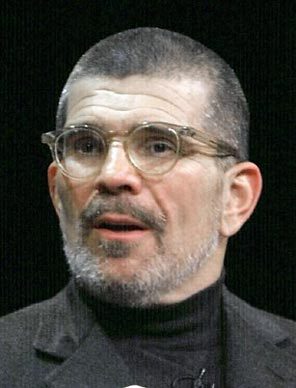
david-mamet1I read a quote this week from David Mamet (left), the noted playwright and essayist:

When you sit down to write, tell the truth from one moment to the next and see where it takes you.

Over the years I’ve heard this same sentiment expressed in various forms. Novelist Wendell Berry once wrote, “The first obligation of a writer is to tell the truth–or to come as near to telling it as is humanly possible.”

Sounds noble and good, but something about this bromide has always bothered me. Maybe because it is, as judges sometimes say about statutes, “void for vagueness.”

So I decided to devote this space to figuring out what the heck it’s supposed to mean, and whether it’s at all helpful to writers.

My first question is, what’s the definition of truth? What do these folks mean by it? Do they mean objective truth (that which is true no matter what anyone thinks about it)? Or subjective truth (that which comes out of the deepest part of ourselves)?

And if they mean the latter, is that really truth? I’m not down with the whole “that may be true for you, but it’s not true for me” vibe. In that case, Mein Kampf would be a classic of world literature.

No, I think what Mamet and Berry other writers mean by “tell the truth” is that the writer must, first and foremost, be honest with himself. Not be afraid to go wherever his inner heart and life are leading. Tell that story, from the gut.

I partially agree. Exploring deep––and sometimes dark––corners to render honest fiction is one aspect of this game. But there’s another, equally important part, and it’s this: you, the writer, are in charge of what is ultimately shown in your stories.

Which means you don’t have to spew everything onto the page in the name of some vague notion of truth. You’re not a slave to your material; you’re the shaper and molder of it.

Now, I’ll grant that a novel can seem less truthful and honest if certain punches are pulled. Readers sense that. But as the author you get to decide how you want to land those punches. You should land them artfully, with purpose. You think through the strategy for your novel. The truth-at-any-cost school doesn’t always produce better writing. In fact, it may make it worse.

Case in point, the obligatory sex scene (in other genres than erotica, where they are expected). There’s no rule that says graphic descriptions of body parts, and profligate use of synonyms for pulsate, make such a rendering necessary. Personally, I prefer the closed door, leaving the rest to the imagination. That’s the way they used to do it, and it’s actually more sensual. (Read the carriage ride scene in Madame Bovary sometime.)

Which brings me to Game of Thrones.

Game_of_thronesAt the outset, let me make clear that I’ve not read the books nor gotten hooked on the series. I know both have rabid followings. So what I’m about to discuss is simply a reaction to something I recently happened across.

It seems the author, George R. R. Martin, has come under considerable criticism for gratuitous depictions of rape. One blogger puts it bluntly: “Martin is content to use rape to develop male characters, to titillate the reader, and to paint rape victims seeking justice as villains. No other raped women have a voice. This calls into question his empathy as a human being and his imagination as a writer.”

In answer to this, Martin says:

I wanted my books to be strongly grounded in history and to show what medieval society was like, and I was also reacting to a lot of fantasy fiction. Most stories depict what I call the “Disneyland Middle Ages”––there are princes and princesses and knights in shining armor, but they didn’t want to show what those societies meant and how they functioned … [If] you don’t portray (sexual violence), then there’s something fundamentally dishonest about that. Rape, unfortunately, is still a part of war today. It’s not a strong testament to the human race, but I don’t think we should pretend it doesn’t exist.

A few points. George R. R. Martin is free to write what he wants to write. And I’ve heard his writing and world building are amazing. So what I’m about to say isn’t coming from a political or social agenda. It’s as a fellow writer who would simply ask Mr. Martin, “Is all this really necessary? How much of this material is carrying you, rather than the other way around? I get that you want to soak us in medieval darkness, but what about the equal value of artistic restraint? That’s not denying that something exists, but it’s also not letting it run rampant.”

Maybe for Martin that’s not a consideration or desire. And, again, he as the right to do it his way. But “telling the truth” isn’t the only fiction strategy.

I think the best writers make a case. Great fiction depicts a clash of values in which the writer will, ultimately, take a side. Yes, the side that prevails has to do so in a way that does not feel manipulative. That’s where craft comes in. The author’s job is to make the case through the characters behaving in surprising, clever, and ultimately justifiable ways.

That’s actually harder to do than just letting it all hang out.

I think this is what the novelist and writing teacher John Gardner was getting at when he said this to The Paris Review:

As I tried to make plain in On Moral Fiction, I think that the difference right now between good art and bad art is that the good artists are the people who are, in one way or another, creating, out of deep and honest concern, a vision of life … that is worth pursuing. And the bad artists, of whom there are many, are whining or moaning or staring, because it’s fashionable, into the dark abyss.

So by all means, tap into your heart and soul when you write. But include your head, too.

As I like to counsel new writers: Write like you’re in love. Edit like you’re in charge.

So what about you? Do you think “just tell the truth”––all by itself––is helpful writing advice? Is it possible to make an argument for artistic self-restraint anymore?

He Said, She Said

By Elaine Viets

215px-The_Perks_of_Being_a_Wallflower_Poster

“She’s awake,” announced Julia.

“It’s about time,” replied her husband.

“Why is she even here,” Susan inquired.

She sighed. He whispered. She volunteered. He requested. She laughed.

I lost track of the plot, but I was fascinated by the synonyms for said. The novel was truly gripping as the author performed verbal gymnastics to avoid this four-letter word.

Characters inquired, interjected, blurted, agreed, argued, insisted, demanded, relented, confirmed, continued, conceded, spewed and squealed – yes, squealed.

pigThat’s when I threw down the book and roared: “What happened to said?”

If I wanted to read a thesaurus, I’d get out my Roget’s.

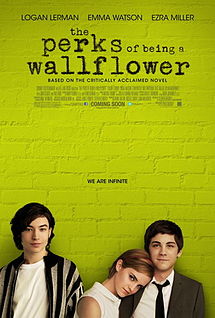
Said is the wallflower of the writing world. It’s nearly invisible. That’s why we love it. Said showcases your dialogue. Said doesn’t get in the way of your story.

Said doesn’t try to do what’s physically impossible: You cannot talk and laugh at the same time. You cannot squeal a sentence. And spewing is too disgusting to contemplate.

My editor chopped “she laughed” out of my first novel, though she did let me say, “She said with a laugh.”

Here’s what I’m trying to say: If you want snappy dialogue, don’t clutter up your story with ridiculous verbs and impossible acts. Let it be said and be done with it.

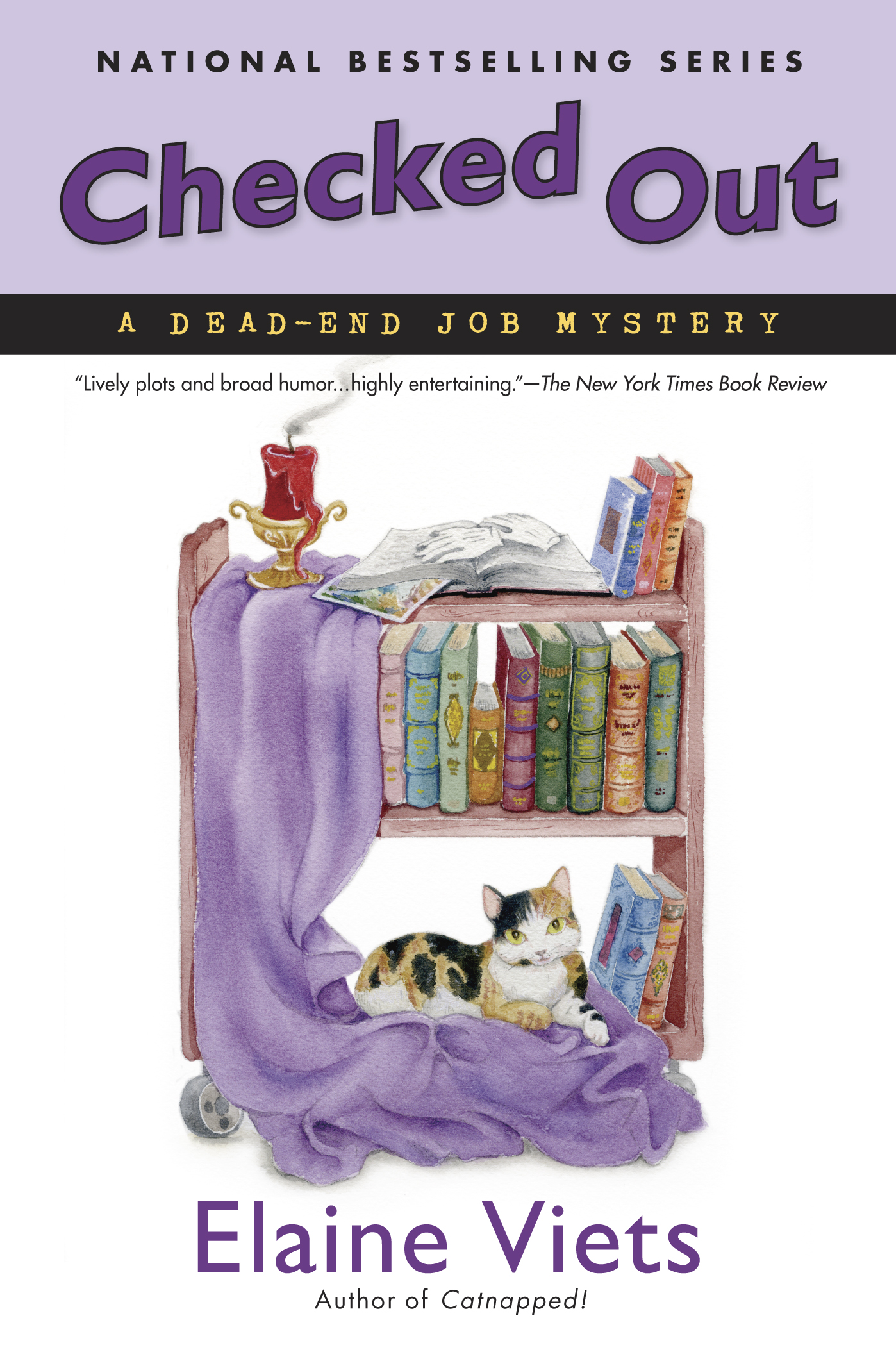
I used said to start “Checked Out,” my new Dead-End Job mystery. Here’s the first chapter. Said gets the novel off to a good start, if I do say so myself.

CheckedOut_FC

Checked Out Chapter 1

“I need your help,” Elizabeth Cateman Kingsley said. “My late father misplaced a million dollars in a library book. I want it back.”

Helen Hawthorne caught herself before she said, “You’re joking.” Private eyes were supposed to be cool. Helen and her husband, Phil Sagemont, were partners in Coronado Investigations, a Fort Lauderdale firm.

Elizabeth seemed unnaturally calm for someone with a misplaced million. Her sensational statement had grabbed the attention of Helen and Phil, but now Elizabeth sat quietly in the yellow client chair, her slender, well-shaped hands folded in her lap.

Helen studied the woman from her chrome-and-black partner’s chair. Somewhere in her fifties, Elizabeth Kingsley kept her gunmetal hair defiantly undyed and pulled into a knot. A thin, knife-blade nose gave her makeup-free face distinction. Helen thought she looked practical, confident and intelligent.

Elizabeth’s well-cut gray suit was slightly worn. Her turquoise-and-pink silk scarf gave it a bold splash of color. Elizabeth had money once, Helen decided, but she was on hard times now. But how the heck did you leave a million bucks in a library book?

Phil asked the question Helen had been thinking a little more tactfully: “How do you misplace millions in a library book?”

“I didn’t,” Elizabeth said. “My father, Davis Kingsley, did.”

“Was it a check? A bank book?”

“Oh, no,” she said. “It’s a watercolor.”