First Page Critique: The Fish Thieves

Must be the season for First Page Critiques here on KZ.  My last post was a FPC, several others followed, and here we are again.

As usual, here’s the call to chip in with your feedback. Which I will do after presenting today’s Brave Writer Submission.

It was always about the water.

Trina hacked through saw palms, ducked under spider webs, and climbed over fallen oaks and loblolly pines. She passed an overturned, rusted out SUV. It guts and doors removed, used for another purpose now. A mountain of garbage blocked her way—a baby stroller, plastic CD cases, kitchen utensils, plastic bottles everywhere. She picked her way around the mess—remnants from a previous life, a previous time. The brackish, sulfur-tainted saltwater tickled the hairs in her nose and she gagged, stifling a sneeze. She paused in the semi-darkness, aware to the dangers of walking through the forest, long enough to listen to her surroundings.

The lack of the natural sounds—birds chirping, frogs grunting—still offended. But she tightened her core, felt the weight of the automatic on her hip, brushed sweat from her forehead with the back of her hand and swallowed hard. Then she stomped on a No Trespassing sign. The tattered faded sign had been X’d out, another stark reminder that she wasn’t in Louisiana anymore. Or anywhere else familiar. A reminder that the laws that once governed the United States of America no longer applied. But she wasn’t deterred. Nor was she afraid.

Trina moved at a faster pace now, aware of the emerging predawn light, the guards and the Exiles—the unfortunate people who, once the tsunami hit the Gulf coast and changed the land they once knew, were neither afforded a place in academia, or could find work in Texicana. Those underprivileged, uneducated people who had it bad before The Big Rise, are now worse off. If that’s even possible. Recent rumor in the lab said Exiles are uniting and gathering strength.

The iridescent glow from the activity on and below the surface of the water illuminated the morning—thousands of tiny moon jellies and hopefully shrimp fry—made the risk of being caught worth the monthly trip. 

I lean into liking this, though it confused me a bit. Delivering a sense of confusion on a first page is not necessarily a bad thing, provided the confusion compels the reader toward forward movement toward clarity from a sense of intrigue. Which for me, this does… in spite of rather than because of the confusion I’ll describe below.

But I suspect that may not be true for all readers here. So the confusion that troubled me may end up being on the problematic side for others, as well.

But first, the nit-picky stuff. There are a couple of grammar things to clean up. These nits are like flies on frosting, they always deter more than they should, but deter nonetheless. Here they are:

Second paragraph, second and third sentences: …rusted out SUV. It guts and doors removed… should read – It’s guts and doors removed. Probably a typo, but if so, then consider better proofing before you submit, or in this case, hold this up in front of a few thousand readers. But before that, I’d recommend not using the period after “SUV” and, with a comma, conjoin those two sentences into one. The second sentence, as used, is a fragment anyway, so this solves that problem, as well.

Then, first sentence in the third paragraph: The lack of the natural sounds… This would read better if you lose the word “the” here, to read as – The lack of natural sounds…

Okay, now a few words about the aforementioned confusion.

Your first line… what is the object of this, the “it” of it? Really, if you pose this question – as you’ve done – then your next line should begin to address the explanation. As presented, the shift is kind of a jolt that leaves the opening question hanging and unattached to anything, and as such, renders the opening line… confusing rather than compelling.

After that you open in a forest. Trees and stumps and such. And “loblolly pines”… huh? As a guy who grew up in Oregon, where there are as many pine trees as anywhere else on the planet, and who didn’t major in botany, I have no idea what a loblolly pine. When an author summons obscurity with no real upside to it, it screams “look at me, I’m a smart writer who is trying too hard to demonstrate that fact!” You don’t want to elicit a WTF? moment from readers, and this one might.

Back to the forest. Now we have the gutted carcass of a car, some garbage, and assorted plastic stuff from a house, and then the smell of brackish salt water. In a forest? What, is the forest flooded? And how can this be salt water, unless there was a tidal wave that reached an inland forest? Maybe that’s precisely what you mean, but in one short paragraph you’ve got the reader on unsure footing at this point.

Is the forthcoming disaster natural, social, military, or something else that ends up with a forest deluged with salt water? Political or criminal mischief would not accomplish that, but that feels like where you might be going… so its confusing.

I just think you can clean this up a bit, and the read will be better for it.

The next paragraph is good stuff. A girl with a gun, always interesting. A sign on the forest floor… did it float here? Was it a camp? Not sure. Still somewhat confusing, but hopeful.

Here’s the whopper moment on the confusion scale: “…she wasn’t in Louisiana anymore. Or anywhere else familiar.” Unless she was brought to this place in a coma and then awakened, I think she’d know where she was. But to suggest she has no idea where she is… really, this makes too little sense. An easy fix, because surroundings feeling unfamiliar is perhaps clear, while literally not being in Louisiana but not being sure where you are… isn’t.

This feels like a speculative and/or futuristic thriller, and if so it’s a good start. It’ll be a better start, though, when the vagaries are given a little more resolution. It would be good, too, to have her stumble into something truly baffling (to her) and frightening on the next page, which would complete a pretty strong hook overall.

One more thought. Wherever this premise goes, it needs to circle back to actually being about the water (aka Chinatown) as the underlying McGuffin or ultimate prize. If it doesn’t – and because it’s salt water, which isn’t a commodity with either economic or political value, I’m fearful it won’t – then you probably need to rethink that opening line.

Okay KZers, share your thoughts on this one. In any case, congrats to this author on going out on an edge early.

Herd Your CATS

by James Scott Bell
@jamesscottbell

We all know that getting a reader inside a lead character’s head is one of the keys to compelling fiction. But it has to be done seamlessly so it doesn’t jerk us out of the narrative and put a crimp in the fictive dream.

Which means we have to learn to handle what I call “Character Alone Thinking Scenes” (CATS) in a deft manner.

The first issue is whether to begin the book with a CATS. As last Wednesday’s first-page critique demonstrated (in my view, at least) the answer should almost always be No.

Why? Because we have to have a little personal investment in someone before we can care deeply about their feelings.

Imagine going to a party and you’re introduced to a fellow with a drink in his hand. You say, “How are you?” and the guy says, “I’m really depressed, man, I wake up every day and the room looks dark and the sun never shines, even though it’s out there, and I don’t see it because of the dark dankness in my soul, and life has lost its meaning, its luster, whatever it was it once had for me when I was young and ready to take on the world. Ya know?”

AHHHH!!!!

Well, the beginning of a book is like walking into a party. The reader wants to meet interesting people. And interest is aroused by what people do. The way you catch readers from the start is through action and disturbance, not feeling and expounding.

I can’t tell you the number of manuscripts I’ve read over the years that did not begin with a real scene, but instead opted for the inside of a character’s head. What I usually do in such cases is flip the pages until I get to some dialogue, because that automatically means we’re in a scene. And 98% of the time that is the best place to start. (Sure, an argument can be made that a great style might be enough to carry the opening pages. But it better be truly great and truly brief.)

So, re: the opening—save your CATS for later.

Once you’re into the novel there are two types of CATS to herd—active and reactive.

In an active scene, the character is alone but with a major scene objective (something that materially relates to the plot), and thinks while trying to overcome whatever scene obstacles are in her way.

In a reactive scene, the character is alone with a chance to reflect. She may be thinking about what’s already happened in the story, or her current psychological state, or the other characters. When done well, reactive scenes strengthen our emotional bond with the character.

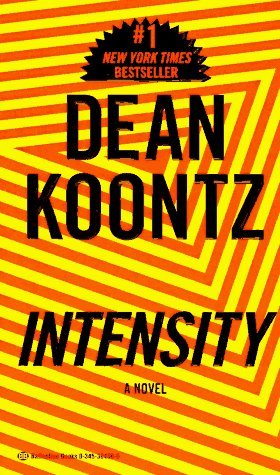
A couple of examples. The first is from Dean Koontz’s Intensity. A young woman named Chyna Shepherd is thrust into the dark world of serial killer Edgler Vess. After Vess murders a family (not knowing Chyna is in the house, too) Chyna sneaks into his motor home in the hopes of saving her best friend, whom Vess has dumped there. Alas, she’s dead. But it gets worse. Vess starts driving away and Chyna is trapped in the back of the motor home.

Her objective now is survival. She must keep her presence in the vehicle a secret, find an adequate weapon, and somehow kill or disable Vess. As she looks for a weapon she makes a grisly find—the body of a young man hanging in the small closet, his eyes and mouth sewn shut.

She pulled shut the pleated-vinyl panel. Though flimsy, it moved as ponderously as a vault door. The magnetic latch clicked into place with a sound like snapping bone.

In all the textbooks she had ever read no case study of sociopathic violence had ever contained a description of a crime sufficiently vivid to make her want to retreat to a corner and sit on the floor and pull her knees against her chest and hug herself. That was precisely what she did now – choosing the corner farthest from the closet.

She had to get control of herself, quickly, starting with her manic breathing. She was gasping, sucking in great lungfuls, yet she couldn’t seem to get enough air. The deeper and faster she inhaled the dizzier she became. Her peripheral vision surrendered to an encroaching darkness until she seemed to be peering down a long black tunnel toward the dingy motor-home bedroom at the far end.

She told herself that the young man in the closet had been dead when the killer had gone to work with the sewing kit. And if he’d not been dead, at least he’d been mercifully unconscious. Then she told herself not to think about it at all, because thinking about it only made the tunnel longer and narrower, made the bedroom more distant and the lights dimmer than ever.

She put her face in her hands, and her hands were cold but her face seemed colder. For no reason that Chyna could understand, she thought of her mother’s face, as clear as a photograph in her mind’s eye. And then she did understand.

To Chyna’s mother, the prospect of violence had been romantic, or even glamorous. For a while they had lived in a commune in Oakland, where everyone talked of making a better world and where, most nights than not, the adults gathered around the kitchen table, drinking wine and smoking pot, discussing how best to tear down the hated system, sometimes also playing pinochle or Trivial Pursuit as they discussed the strategies that might bring utopia at last, sometimes far too enraptured by revolution to be interested in any lesser games …

Koontz then gives us a page-and-a-half of backstory, filtered through Chyna’s perceptions and thus relevant to the present action. She’s alone, but moving toward her scene goal. Her thoughts—which in real time would flash through her mind but in fiction time are detailed—are part of the action.

Now let’s take a look at a reactive CATS. This is from John Fante’s classic Ask The Dust. Arturo Bandini is a young writer living a meager existence in L.A. He has just decided to he’s going to steal milk off a truck. In his dingy hotel room, he reacts to his decision:

The night came reluctantly. I sat at the window, rolling some cigarets with rough cut tobacco and squares of toilet paper. This tobacco had been a whim of mine in more prosperous times. I had bought a can of it, and the pipe for smoking it had been free, attached to the can by a rubber band. But I had lost the pipe. The tobacco was so course it made a poor smoke in regular cigaret papers, but wrapped twice in toilet tissue it was powerful and compact, sometimes bursting into flames. 

The night came slowly, first the cool odor of it, and then the darkness. Beyond my window spread the great city, the street lamps, the red and blue green neon tubes bursting to life like bright night flowers. I was not hungry, there were plenty of oranges under the bed, and that mysterious chortling in the pit of my stomach was nothing more than great clouds of tobacco smoke marooned there, trying frantically to find a way out. 

So it had happened at last: I was about to become a thief, a cheap milk-stealer. Here was your flash-in-the-pan genius, your one-story writer: a thief. I held my head in my hands and rocked back and forth. Mother of God. Headlines in the papers, promising writer caught stealing milk, famous protégé of J. C. Hackmuth haled into court on petty theft charge, reporters swarming around me, flashbulbs popping, give us a statement, Bandini, how did it happen?

The scene continues, with Bandini eating an orange, doing some typing, all the while thinking about his prospects as a writer. The chapter ends with Bandini making the milk snatch, giddily bringing the two bottles back to his room, opening one and taking a long drink. And immediately spitting it out. He’d stolen what he hated—buttermilk.

There should be activity in a reactive CATS. It is often innocuous (rolling cigarettes, eating oranges, typing) but it provides the space for emotion and analysis.

The big thing to know about CATS is that they are the best way to control pace. If you need to slow things down a bit, give us more thinking. If you need to pick up the pace, compress the thoughts.

In other words, learn to herd your CATS and the readers will lap up your fiction.

IT’S 10 PM—DO YOU KNOW WHERE YOUR VILLAIN IS?

By Debbie Burke

Given a choice between an MFA program and TKZ blog, I’ll show up here every morning, and not just cuz the tuition is cheaper!

Right here is where I experienced a slow but critical epiphany about villains, thanks to posts by P.J. Parrish, Jordan Dane, James Scott Bell, and former KZer Joe Moore (still miss ya, Joe!).

For years, my mystery novels won contests and attention from agents and editors…and rave rejections. Despite study, hard work, and persistence, my books remained unpublished. A key element was missing. But what?

Several years ago I started following TKZ about the same time I began a new novel titled Instrument of the Devil.

My previous books had been traditional whodunits told from first person or close third person points of view, completely inside the head of the main character. That meant a continuous struggle between what she could know (not much) vs. what was needed to solve the mystery. In addition, the plot required red herrings and false suspects thrown in, all without giving away the villain’s identity.

I wrote mysteries like I read mysteries, from a state of ignorance, constantly trying to figure out what was going on.

I had a general idea of the bad guy’s motive, but never paid much that attention to the schemes and machinations happening offstage. All action took place onstage because the first or close third POV required the sights, sounds, smells, and emotions be filtered through the protagonist only. My focus stayed stuck on the hero.

The bad guy hid in the shadows behind the curtain until the big reveal at the end. Unfortunately he’d been hiding from the writer too!

Finally, thanks to the wise folks at TKZ, I recognized the big fat blind spot in my books.

Here’s the epiphany:

In crime fiction, the antagonist drives the plot. Unless a crime has been committed, or is about to be committed, there’s nothing for the protagonist to do. The antagonist acts, the protagonist re-acts.

I’d been following the wrong character around all these years!

My realization probably seems like a big DUH to many crime authors. But I’m sharing it in hopes of helping others like myself who overlooked the obvious.

It’s fun to think like a villain! When I started writing from the bad guy’s POV, a whole new world opened up—a world without conscience, constraints, or inhibitions.

Jordan’s great post from last May says, “The best villains are the heroes of their own stories.”

Actor Tom Hiddleston says, “Every villain is a hero in his own mind.” Most actors would prefer to sink their fangs into the role of a great villain than play the good guy.

The baddies in my earlier books had been flat and dull because I’d never gotten inside their heads. Finally, the missing element became clear and…my book won a publishing contract!

Why is the villain willing to steal, cheat, and kill? What rationalizations justify the harm done to others?

A sociopath comes up with perfectly logical justifications and excuses for abhorrent actions.

Irresistible influences like greed, power, and lust can seduce an ordinary person over to the dark side.

Misguided righteousness can lead to horrendous consequences.

A law-abiding citizen may be forced into a corner where he commits acts he would never do under normal circumstances.

If an author roots around in the antagonist’s brain for a while, background, reasons, and rationalizations for antisocial behavior bubble up. Armed with such knowledge, it becomes impossible to write a two-dimensional character. Jim Bell offers a great technique—try to imagine the villain delivering the closing argument to the jury that will determine his fate.

Do you show the villain’s POV in the story or not? That choice is contingent on subgenre.

In a whodunit mystery, the identity of the villain is typically a surprise at the end. Therefore, that POV is generally not shown to the reader, although some authors include passages from the villain’s POV without revealing the identity.

Suspense and thriller novels often are written from multiple POVs, including the villain’s. When the reader knows early on who the bad guy is, the question is no longer whodunit, but rather will s/he get away with it?

The author can choose to show the antagonist’s POV or keep it hidden. But either way, you need to be aware of it because that’s what’s driving the story forward.

Even if you never show the villain’s POV, try writing scenes inside his/her head. You don’t need to include them in the book, but the act of writing them gives you a firmer grasp on that character’s deep desires and how those desires screw up other people’s lives. Once you really understand what the antagonist is striving for, that provides a solid framework from which the story hangs.

If you’re in a corner and your hero doesn’t know what to do next, check in with the villain. While the hero is slogging through steps A, B, and C to solve the crime, the bad guy is offstage setting up roadblocks D, E, and F to keep from being caught.

If you get lost down a rabbit hole, ask questions to get back on track:

Where is the villain?

What can he do to make the protagonist’s life miserable?

Does she need to commit another crime to cover the first?

How can she elude capture?

The best answers can be found inside the bad guy’s head.

How about you, TKZers?

What is your villain doing right now?

Do you prefer to show the antagonist’s POV or keep it hidden?

P.S. A BIG THANK YOU to everyone at TKZ for helping me to raise my writing from rave rejections to publication.

Debbie Burke’s thriller Instrument of the Devil is now available on Amazon for pre-order and goes on sale October 10.

First Page Critique: Skyler

By John Gilstrap

By now, we all know the drill.  A fearless writer has submitted a sample to the piranha tank.  First, the submission, and I’ll see you on the flip.

Title: Skyler

THEY SAID LOVE IS selfless. They said love is sacrifice. They said all that rubbish because they hadn’t been in love. They didn’t know that when he didn’t love you back, it felt like God created you and tossed you into an inferno—to burn and cease to exist the very moment you were born. Because you cared about him and along the way, he forgot to care about you in return. Maybe you were supposed to love him unconditionally without expecting anything of him. But in reality, it wasn’t the sappy, unrealistic feelings of seeing him smile that stuck with you. It was the doubt that maybe you weren’t enough—that maybe he didn’t think you were worth the love.

I looked at the closed window that overlooked the colorful leaves hanging from the tree outside. The leaves swayed so slowly, calmly. A stray leaf landed right on the puddle of rain on the ground. It floated, not giving into the power of the water yet. The leaf stared at me, its stem buried within the puddle. I watched for what felt like an eternity. Desperately, I hoped another leaf would tumble to keep the current one company. The wind would take this leaf to a faraway place soon, and how sad it would be for it to vanish from the Earth alone. After all, everyone needed a friend sometime.

Even a leaf.

I knew I sounded morbid, but I was confined here. The rules were clear: we weren’t allowed to open the windows. The facilitator, Teresa Castilla, said if I wanted to go outside, all I had to do was ask a rehab official. With a trusted authority, I could go anywhere. But the window rule was intact under all circumstances. Immediately, I’d thought this was a prison in disguise but the pretty receptionist with platinum blonde hair assured me people here weren’t terrible once I’d get to know them.

I’d arrived here at five in the evening two days earlier. The first thing I’d noticed was the medieval, timbered structure of the building. From the outside, the residence had seemed quite simplistic and bland, though I’d have to admit the timbered style carried an ornate energy. It was a two-story building and it was smack in the middle of a secluded neighborhood. There were several stores and other services two streets away, in case of emergencies.

Yo.  It’s Gilstrap again.  First off, I need to offer a bit of full-disclosure.  This is not a genre I read, nor is it one whose rules and expectations I’m familiar with.  From the first paragraph on, the tone is entirely too whiny for my taste.  That is not a criticism of the writer or the writing–it is merely a confession that I may not be the best judge for a book of this genre.

With that bit out of the way, I find a lot to like in the craftsmanship of this piece.  The voice is strong and the angst is clear.  In a different setting–if I were not expected to offer critique–I would have nothing to say.  I think the entire piece is of professional quality.

But let’s quibble anyway.  The leaf thing goes on way, way too long. The paragraph resonates to me like one of those darlings we’re required to kill.  It feels very . . . literary.  And by that I mean that while it takes up valuable first-page real estate, it does not advance the story.

The phrase, “I knew I sounded morbid” was a bit of a moment-breaker.  To “sound”, something must be heard, and I have the sense that this is all internal monologue.  Perhaps, “I knew these thoughts were morbid . . .” would work better.  I’m also not 100% sure that “morbid” is the word you want.  Morose, maybe?

Finally, I’m not sure what a “secluded neighborhood” is.  Secluded from what, especially given that there are stores and such nearby?

And that’s about all I’ve got.  Overall, this is one of the most satisfying, well-done submissions that I’ve had the pleasure of critiquing.  Well done.

First Page Critique:
Let’s Get Logical, Logical!

By PJ Parrish

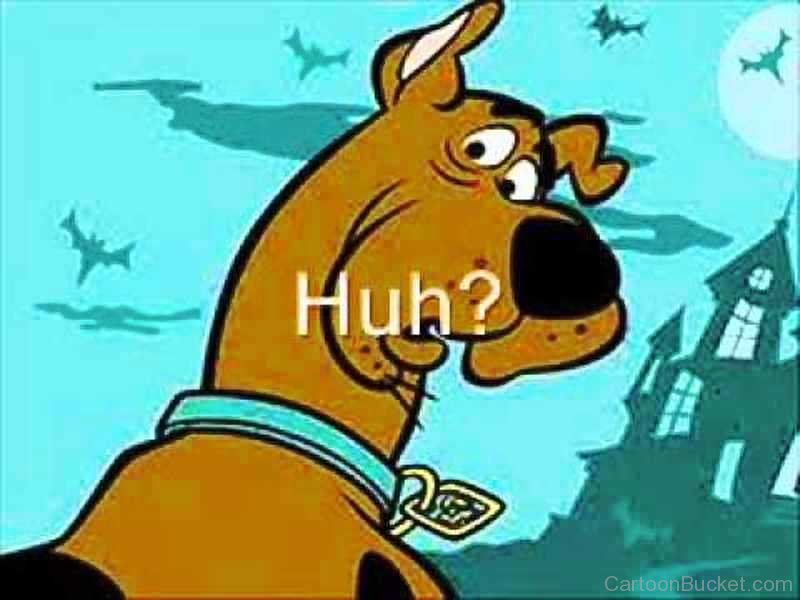
We have a submission today that is a good object lesson for all of us on the need to create an opening set-up that doesn’t leave the reader doing a Scooby-Doo. I’ll be back in a second to explain. Thanks to the writer for submitting!

INNOCENT VAMPIRE GIRLS

My name is Victoria Milford. According to The Sunset Heat, a local newsletter, I’m “The 24 year old, dark haired, sexy part owner, of the Sunset Strip nightclub; ‘Climaxes’.”

We serve drinks and we have live entertainment on the weekends. On weeknights, 25 year old Harry Edelstein is in the D/J booth.

Around 9 P.M. on a Tuesday night, business was slow. Less than half the tables were occupied. The recorded music blared, but not loud enough to drown out any conversation.

I was seated at the bar, going over some paperwork, when a guy sat on the stool beside me.

“Evening Victoria.” He spoke cheerfully. “Can I buy you something to drink?”

He was Jake; a mean looking dude in his late 20s, wearing a black leather jacket. He had a firm build and curly, light colored hair. He’d been showing up almost every night for the past two weeks, with a ditzy blonde chic named Rosalyn. She also had a mean look to her, but neither of them had caused any trouble. Tonight he was alone.

“Thank you Jake.” I told him, “Maybe you haven’t heard, but I’m part owner of the Club. I’m the one who buys drinks for customers. Not the other way around.”

“Then I’ll have my usual.”

I said, “That was slick, but you’re the one who has to pay for the drinks first.”

Then I asked, “So where’s your girlfriend, what’s her name? Rosalyn?”

“She’s on ice.”

“‘On ice’?” I said scornfully, “You mean you haven’t broken up with her, but you’re now on the prowl?”

“That’s partly correct.”

“What part?”

“When I said ‘She’s on ice’, I meant that literally. Right now she’s hanging upside down and naked, inside a freezer with the lights off.”

I laughed. “If that’s what dating you leads to, forget it. I don’t mind a little bit kinky, but risking death…”

“That wasn’t a joke Vick.”

“Yeah. Right.”

“You see, our employer doesn’t take any lip from any of their employees.”

“Don’t you think that’s kind of excessive? Every now and then I have to give somebody a good talking to, and that’s enough.”

“I said I wasn’t joking. We are employed by the Legal Department of Vidamort Corp. Our employer enforces Company rules, in a way that we employees never forget.”

I said, “Legal Department? You don’t look like a lawyer to me; and Rosalyn just doesn’t seem like someone who could pass any kind of a bar exam.”

“Roxy and I aren’t lawyers.” He told me, “She and I enforce company policy, in a way that our clients never forget.”

I said, “Enforcers?”

He said, “Vidamort Corp. wants me to explain Company policy to you Ms. Milford, in a way you’ll never forget.”

________________

I’m back. There are probably some of you out there who don’t remember Scooby-Doo. He was the Great Dane mascot in a 1960s cartoon featuring a band of young detectives. He was easily confused, and his favorite response was “huh?” Whenever I see a passage in a manuscript (including my own) that doesn’t quite make sense, I call it a Scooby-Doo Problem.  This, I think, is what we’re dealing with here in this submission.

I know we don’t cotton to hard and fast rules here at TKZ. But there is a cardinal rule in writing fiction: Don’t confuse the reader. Confusion is not the same as misdirection. The latter is a terrific tool in the novelist’s bag, especially for mysteries and thrillers.  Artful writers use misdirection to slip in vital information without hitting readers over the head, to change up pacing, to plant clues that may or may not later blossom (see Red Herrings), and to create characters that are not what they really seem to be (see Unreliable Narrator).  Some examples off the top of my head: the movies The Sixth Sense, The Usual Suspects and Pulp Fiction. Novels: Boo Radley in To Kill a Mockingbird, and in The DaVinci Code, the villain Aringarosa (whose name translates almost literally as red herring.)

Think of misdirection as the sleight-of-hand you see in magic acts. A great magician might do something to grab the audience’s attention. And in those moments of distraction, he is able to set up the trick’s pay-off.

So misdirection — good. But confusion? That’s a whole ‘nother kettle of red herrings. If your writing is simply unclear, you frustrate readers and they give up. What constitutes “unclear”?  Maybe we can’t tell what is physically happening, like a fist fight that is badly choreographed or simple movements of characters in place or time. Maybe the dialogue makes no sense in that a man says something and a woman responds with a non sequitur.  Maybe the writer hasn’t given us enough information for us to figure out where we are geographically or in time.  So we are left, like Scooby-Doo, going “huh?”

Okay, let’s apply this to today’s submission.  On first glance, this isn’t bad. We know who our protag is likely to be (because we get a Sue Grafton “My name is Kinsey Millhone” first-person opening graph.)  We know where we are — in a nightclub, maybe a strip club? — because the character tells us, also in the first graph.

But then things sort of get murky fast. When a mean-looking dude shows up, the dialogue begins to drift into illogical-land. Suddenly, things just don’t add up, the main character’s believability becomes compromised, and the set-up of the dead woman in the cooler veers off toward comedy.  Let’s take a look at this with Track Change edits:

My name is Victoria Milford. According to The Sunset Heat, a local newsletter, a newsletter is usually an in-house organ I’m “The 24 year old, dark haired, sexy part owner, of the Sunset Strip nightclub; ‘Climaxes’.” I’m not crazy about this opening.  We’ve seen it a million times, and it’s a prime example of “telling” ie  the newsletter used as a device to convey age, physical description, job, and that she’s “sexy.”  Find a way to SHOW this through the dialogue and plot.

We serve drinks and we have live entertainment on the weekends. On weeknights, 25 year old Harry Edelstein is in the D/J booth. You are wasting critical space on irrelevant info. Of course a nighclub does all of this. Lose this. Especially since adding Harry’s name (he’s a spear-carrier) clogs things up.

Around 9 P.M. on a Tuesday night, business was slow. Less than half the tables were occupied. The recorded music blared, but not loud enough to drown out any conversation.  Maybe the story starts here? Drop us smack into the place and moment. And you really need some scene-setting here. 

I was seated at the bar, going over some paperwork, This is where you SHOW us what her job is. I was seating at the bar signing the payroll checks. I hated the busy work but it had fallen to me, as half-owner of Climaxes, to do it since my partner Joe Blow went to prison (or whatever) when a guy sat slid? onto the stool beside me.

“Evening Victoria.” He spoke cheerfully. You call him mean-looking. That’s at odds with “cheerful.” Find a better way to convey his mood.  His voice had the bounce of too much booze. “Can I buy you something to drink?”

He was Jake; I smiled when I read this because “Jake” is actually an adjective meaning a good guy in old detective lingo. a mean looking dude this is generic. Can you describe what “mean” looks via Victoria’s consciousness? She works in a nightclub and “mean” probably means something very different to her than it would to a woman who works at Macy’s. in his late 20s, wearing a black leather jacket. He had a firm build and curly, light colored hair. He’d been showing up almost every night for the past two weeks, with a ditzy blonde chic named Rosalyn. She also had a mean look ditto to her, but neither of them had caused any trouble. Tonight he was alone.

“Thank you Jake.should be no thanks, Jake. I told him, “Maybe you haven’t heard, but I’m part owner of the Club. We know this and so does Jake if he’s regular enough to call her by first name I’m the one who buys drinks for customers. Not the other way around.”

“Then I’ll have my usual.”

I said, “That was slick, but you’re the one who has to pay for the drinks first.”

Hit pause: Here’s where the dialogue gets really fuzzy. Vick said I buy the drinks but then she says HE has to pay for it?

More logic lapses. I THINK Victoria could care less about this apparent loser, yet she is the one who keeps the conversation going below. And what happened to the paperwork she was doing? Maybe give Jake a line or two more that rachets up the tension (we don’t have any yet, by the way). Why is Jake here tonight? Why has he chosen to sit down by the owner and spill his guts? You need to set this up better for us to buy it or get interested.

Then I asked, “So where’s your girlfriend, what’s her name? Rosalyn?”  Both she and we already know this.  Just go with: “So where’s Rosalyn?” But why would she care? Is she just making small talk? This question is not logical. 

“She’s on ice.”

“‘On ice’?” I said scornfully, show me don’t tell me. Maybe she lets out a snort of derision. “You mean you haven’t broken up with her, but you’re now on the prowl? I am not sure what Vick means here.

“That’s partly correct.”  Again, this is a non sequitur. It doesn’t logically follow what she said above. She asked if they had broken up, so what is “partly correct” about that? Dialogue must be logical in its statements and responses.

“What part?”

“When I said ‘She’s on ice’, I meant that literally. Right now she’s hanging upside down and naked, inside a freezer with the lights off.” Okay, finally we have tension. We have  disturbance in the norm. But again, I have to ask, why is he telling her this? Vick has to AT LEAST have a thought about this.  Like:  Jake had been coming into the club for weeks but I could count on one hand the number of times he had talked to me. Why the hell was he getting so personal all of a sudden?  WHAT IS SHE THINKING? The guy just said his girlfriend is hanging in a meat locker and Vick has no thoughts? Don’t be afraid to go into internal monologues in your character’s mind. It is a great way to convey plot and you really really need it in first person POV. 

I laughed. More logic problems. I can’t tell what the tone of this book is going to be. Light and humorous? Sassy? Dark and moody? I THINK we might be in fantasy land but I am guessing that only because of the overly literal title with “vampires.” Why would a statement that Rosalyn might be dead elicit a laugh? “If that’s what dating you leads to, forget it. I don’t mind a little bit kinky, but risking death…” Another huh? moment here. Why would Victoria even mention dating? 

“That wasn’t a joke Vick.”

“Yeah. Right.” The dialogue really needs to work harder to advance the set-up.

You see, our employer doesn’t take any lip from any of their employees.” This doesn’t sound like Jake talking. He’s a borderline low-life. “You see…” is rather academic. I don’t see him using that. Pay attention to character’s voices. “Well, my dumb-ass boss doesn’t take no lip from the workers.”  (or whatever works)

Also logic again. This sort of implies (in Vick’s lack of logical response) that she already knows what he does. There is no graceful transition from what came right before.  Find a way for Jake to LOGICALLY segue into talking about his job.  Find a way to link Roz in the freezer to his boss.  And why doesn’t Jake seem to have no response of his own to the fact that his girlfriend is hanging naked in a meat locker? Is this meant to be humorous? Vick has to at least think it’s weird that he talks about it so casually.   

“Don’t you think that’s kind of excessive? Every now and then I have to give somebody a good talking to, and that’s enough.” Logic again. What is “kind of excessive”?  The last thing Jake said was his employer doesn’t take lip.

“I said I wasn’t joking. We are employed by the Legal Department of Vidamort Corp. Our employer enforces Company rules, in a way that we employees never forget.”  Clunky exposition here. Again, Jake wouldn’t talk like this — “we are employed?”…”We work for.” And they only thing relevant is that he works on the down-low for the legal department of a corporation. And I have to ask yet again — why is Victoria even wasting time with this guy? You need to set-up this interchange between two characters to be more believable.

I said, “Legal Department? You don’t look like a lawyer to me; and Rosalyn just doesn’t seem like someone who could pass any kind of a bar exam.” Me-ow. 🙂

“Roxy and I aren’t lawyers.” He told me,She and I  We enforce company policy, in a way that our clients never forget.”

I said, “Enforcers?” He never used the word “enforcers.” All we’re getting here is talk talk talk.  If you are using first person, you must go into the character’s head. What is she thinking about this creepy guy? 

He said, “Vidamort Corp. wants me to explain Company policy to you Ms. Milford, in a way you’ll never forget.”  Man, I am totally confused by now.  Jake has suddenly morphed into a threatening figure. It comes out of nowhere.  Maybe if you set it up better via Vick’s thoughts — she mentions that he never gave anyone trouble yet suddenly he’s coming on like a mafia hit man. And why did he suddenly go from calling her “Vick” to “Ms. Milford”? Give this some context.  Make it make sense. 

Some last general comments.  We talk often here about finding the optimal moment to begin your story. I call this the parachuting-in moment.  I think the writer got into this scene way too early with graphs of throat-clearing. S/he could also use a few quick brush-strokes to show me where we are. You TOLD me it’s a nightclub (with a raunchy name) yet I can’t see it, smell it, hear it.  Full disclosure: I have been in strip clubs on slow Tuesday nights (doing a story in my newspaper days) and it’s a pretty depressing scene but ripe for writers. Again, this goes to tone.  We can’t tell what kind of book this is because we get no descriptive details or thoughts from the protag. You can also slip in hints about how she feels about her job — good, bad, indifferent?  Start building your character’s onion layers as early as you can. Right now, Victoria is sort of a cipher. All we know is that she is “sexy,” according to a newsletter.  It might be fun, if you use that, to give us a zinger line about how SHE feels about that.

Thanks for submitting, writer. Comments open!

A Saleable Premise

Over the summer, while completing revisions on two WIPs (one YA, one MG) I took a quick step back to read a book focusing on story craft entitled ‘The Magic Words, Writing Great Books for Children and Young Adults’ by Cheryl B. Klein (a book, by the way, that I highly recommend). Most of the advice is just as relevant to adult and genre fiction and I thought I’d share some of her initial advice/comments around constructing a ‘saleable premise’ for your book.

A ‘saleable premise’ is basically a one sentence description of your book that defines the protagonist as well as the overarching action and conflict. Although constructing a saleable premise seems on its face to be fairly easy or obvious, it can be more challenging than it first appears. Embedded within this description is not only the basis of the story but also a promise to the reader that the book will live up to the expectations the premise demands.

Cheryl Klein notes that a premise can be ‘unsaleable’ if it is too dense, quiet or nebulous, or if the concept has been overdone, or the publisher can’t envision it reaching an audience. Some of the ways a premise could appeal is if the book puts a new spin on already successful material, fills a hole in the market, or when it plays to a publishing house’s particular strengths. Of course, the best way to sell your work is to make it great and compelling – but this assumes you can get someone to read it, which is why that initial description can be so important. A strong story concept is critical. It’s how readers decide to purchase your book over another one. It’s also how agents and editors decide to take the time to read your story amongst the hundreds of manuscripts they receive each week.

A ‘saleable premise’ is what you would articulate in a query letter or elevator speech to an intended agent or editor. It is also a way of getting a publisher’s attention and yet, I wonder how many writers necessarily think of a ‘saleable premise’ when they begin a writing project (?). In her book, Cheryl Klein identifies three exercises which I thought were useful for any writer when thinking about their WIP in terms of ‘saleable premise’. I’ve added some of my own thoughts when it comes to these exercises as well.

  1. Write down the promises of the novel. I think detailing the emotions promised to a reader can help a writer focus on reader expectations – what emotions do you want the reader to experience while reading the novel? Does the concept for the story reflect that?
  2. Write the premise of the novel in one sentence. I find summarizing any WIP in one sentence a challenge, but it does help focus my mind on what exactly the core/essence of my WIP is really about. As Cheryl Klein points out, you might be able to create several premises for your novel, each highlighting a different aspect or storyline in the book, but the exercise of creating each of these premises can help a writer focus on the most compelling/freshest and (dare I say it) most ‘saleable’ aspect of the book.
  3. Identify three comparison titles for the book. This is an exercise most writers undertake when composing a query letter or pitch to an agent or editor, but it’s also a useful process when composing a ‘saleable premise’ as it helps describe and position your novel in the marketplace and also point out how to frame your concept/story in contrast to other comparable books.

So TKZers, do you consider or compose a ‘saleable premise’ for your books? If so, at what stage of the writing process do you do this – before the first draft or only when it is ready to be submitted or published? Or is a ‘saleable premise’ something you don’t even worry about?


The Weapon of Surprise

by James Scott Bell
@jamesscottbell

Today’s first-page got me thinking about strategic decision making in fiction. That’s just a fancy way of saying that on occasion we need to step back, be objective, think about the overall plan, and be willing to give something up if it makes the whole thing better (which is where the admonition to “kill your darlings” comes from).

We writers are in a battle—for a reader’s attention. If the reader guesses where we’re heading, and we go there, said reader feels a twinge of disappointment. If that keeps on happening, the result is boredom and the battle is lost.

One of our primary weapons is surprise. When the unexpected happens on the page it delights readers. It pulls them more deeply into the story. It creates a mini-mystery. In my workshops I use the acronym SUES—Something Unexpected in Every Scene. It doesn’t have to be big (like a corpse dropping through the roof). It can be a small as a line of dialogue or a glimpse of something odd.

So let’s read this opening page and talk about it on the flip side:

Dark Elements

Sophia sipped her fish bowl-sized piña colada and wriggled her ring finger in the sun. The delicious princess-cut diamond fractured and rearranged the light, sitting on a platinum throne and presiding over her left hand like an ice queen. The sun was retiring to bed, and soon so would he. She lowered her sunnies and watched her fiancée hoist himself out of the pool, breathless after only two laps. He paused to recover under the shade of a palm. If she squinted her eyes long enough and let them go blurry, she could almost see what he would’ve looked like at her age. Almost. But that was a long time ago.

He towelled down his greying chest. I wonder if he knows, she thought, deep down surely he must know that I’m not marrying him for love. Maybe he thinks his sparkling personality has won me over, or his irresistible wit? Maybe he thinks I have a need for security, or some kind of daddy complex? Whatever it was, he wasn’t questioning it.

He came over to where Sophia lay on the sun bed, a polka dot bikini straining to cover her sensual curves.

“What did I do to deserve you, darling?” he said, kissing her forehead.

“You must’ve been a very good boy in a past life,” she said, smacking him on his wet speedo-ed bottom as he walked past. What was it with men and speedos? she thought, the older and more overweight the man, the smaller and more fluorescent the pair of speedos he tries to squeeze himself into.

Sophia herself had been a very bad girl in her past lives, and she was about to be bad all over again. She stretched her toned legs to check her tan and picked up a glossy magazine from the side table. As her lover boy went inside to shower, Sophia turned to a story about Kim Kardashian’s un-airbrushed butt, captured in its full glory on her recent holiday to the Bahamas. As she flicked through the uncompromising images, complete with dimples, cellulite and all, she smiled to herself. Not so perfect after all, are you? she thought, and for a fleeting moment she felt guilty for taking delight in another woman’s imperfections. But then again, celebrities aren’t really real people, are they?

Something stung Sophia’s ankle and she squished the first mozzie of the encroaching dusk. There’d be more where that came from, but she didn’t want to go inside just yet. She liked to milk every last minute of the dying sunlight out of these hot, lazy days. Daytime was her time, when she could do as she pleased while he was at work. Then in the evenings she felt like a B-grade actress, trying to play the role of the besotted fiancée with conviction.

At least it never got cold here, she thought. The nights were balmy and humming with cicadas as warm breezes tickled the tropical leaves. Kiralee Island felt wild, like anything could happen. Maybe she should wait a while longer, she thought, a few months at least, maybe even a year? What was the rush? The sex was surprisingly good, after all, and he was nice enough. She’d planned for next weekend, but it felt premature. You don’t pluck an under-ripe fruit from the tree just because you’ve become impatient, you wait for exactly the right moment. Yes, she could wait a while longer before she killed him.

***

JSB: Before I get to the editing, let me say up front that I like this voice. It’s got attitude, which is essential. It’s also funny and wry in its observations. All terrific qualities. But I suggest the strategy here ought to be reconsidered for one main reason: getting that last line to pop.

By the time we read before she killed him we already suspect this character. She’s a gold digger. She’s cold about it, too, mocking the guy’s personality and attempts at wit. Indeed, we are told outright she’s been a “very bad girl” in her past (lives).

So when we read the last line we’re not really shocked. It’s more like, “Oh, okay. She is taking this guy to the cleaners, and she’s also going to kill him. I could see that.”

What I suggest, then, is a rewrite of the page taking out all the on-the-nose references to her gold digging. And the snarky attitude toward the man. Keep the reader guessing about this relationship. Make the guy attractive. In fact, by using more dialogue, give us a reason to start liking the fellow.

And then, boom, drop the last line. Now you’ve got our attention. In fact, you’ve got us hooked.

The thing about voice, which everyone talks about but no one seems to be able to define (with, perhaps, one notable exception) is that when it’s good (as in this example) the author can easily overdo it. There’s a temptation to show it off at the wrong time (which is what I mean about strategy).

Thus, the observation about the Speedos (should be capitalized, as it’s a brand), while amusing, tells us we’re not exactly dealing with a warm personality. Again, that takes the surprise out of the last line.

The Kardashian bit seems forced and, by this time in our cultural zeitgeist, rather obvious. It feels like it’s in there only to be funny. Again, the temptation is to let voice show off at the expense of strategy. Voice should be in service to story, not the story itself. I say this because I really find this author’s voice has great potential. In fact, several times as I wrote this post I assumed the author was writing in First Person POV. When you can get a First feel into Third, you’re really on the right track with voice.

Now to some editing matters.

The sun was retiring to bed, and soon so would he.

Confusing, as the he seems to refer to the POV character, Sophia. I thought it was a typo. I’d just cut the entire line.

He towelled down his greying chest. I wonder if he knows, she thought …

Several times in this piece the author uses she thought when it is unnecessary. When we are firmly in the character’s POV, we don’t need it. The problem here is simply that we’re not firmly there. The fix is simply to get us into the character’s perspective with something like this:

She watched him towel down his graying chest. I wonder if he knows, deep down ….

Then you don’t need she thought. We know who is doing the thinking.

There are four other instances of she thought that can simply be cut.

He came over to where Sophia lay on the sun bed, a polka dot bikini straining to cover her sensual curves.

That’s a POV switch (“head hopping”) as the observance of the bikini is from his perspective, not hers.

Bottom line for me: The voice is promising, but I’d like it to be more seductive at first. Lull us into the scene so we’re really impacted by that last line. After that, there will be plenty of time for wry humor. Just don’t let that overtake your main task, which is to keep readers happily on edge from page one forward.

Okay, friends, take over from here. I’m traveling today so may not get a chance to comment. Help our brave writer out.    

First Page Critique: CROSSROADS

Welcome, Anon du jour, welcome, to our Saturday morning installment of FIRST PAGE CRITIQUE! We have here the beginning of a work titled CROSSROADS, so let’s cue up either the Sailcat album, Neil Young’s Comes a Time LP, or Cream’s Wheels of Fire to provide some background music and proceed:


Crossroads

Kelli Wade speeds along the 405 at night, wears her chopped jeans, favorite silk T, coffee-with-cream Chanel jacket, and cowboy boots.  She threads her way between a bus and rusty Toyota, leaning on her Harley.  Blonde hair streams straight out behind her; her helmet strapped to the side of the seat, unused.  Tears streak the sides of her face, momentarily blurring her vision of the dark traffic.

He was sleeping with that waitress-whore!  Did he think I wouldn’t find out?

She has keyed his car, front, back and both sides, before riding away from her ruined relationship.  And this, after getting word that Jackie, her college roommate, has been diagnosed with stage four ovarian cancer.

“Up yours!”  The rage in her voice blends with the deep-throated growl of the cycle’s engine.  Kelli skids off the exit ramp, swallowing back her pain and pulls up behind the Taft Building.  She chains her bike to a fat drain pipe and takes the service elevator to the sixth floor, shoving open the double doors of Sunset Investigations.  Did he think I was stupid, or didn’t he give a shit about my feelings?

She sits down hard behind her desk, alone, surrounded by darkness.  To keep her mind off murder, she begins to sort through stacks of paper, invoices, and case reports.  The normal day-to-day function of her job.

She takes a deep breath.  Is there’s any wine left in the fridge?

Dawn leaks in through the window blinds, sending streaks across the polished floor.  Other operatives of the agency begin to arrive to work, including her mother.


I’m predisposed to like CROSSROADS, Anon, because from the jump I liked Kelli Wade and how you are developing her from the jump. You get several things right. Naming your protagonist right out of the gate is a great move. You also put the reader in the moment from the first sentence by using the third person present narrative style. I especially like how you show your readers without telling them that Kelli is in Los Angeles: Taft Building + Route 405 + rusty Toyota (that sounds like award-winning author James Scott Bell’s hooptie to me!) = Los Angeles. Additionally, you show that Kelli does not take betrayal lightly. Revenge may be dish better eaten cold, but it’s pretty tasty in the heat of the moment, too. You paint a very clear picture of your character’s appearance and personality within just a few paragraphs, yet we don’t feel bombarded with information. That’s part of good pacing. The additional element of Kelli working with her mother is a nice touch as well.  More on that in a second.

Those are the positive elements. CROSSROADS needs to be cleaned up just a bit in a few places.

FIRST PARAGRAPH:

— First sentence: Kelli hits a tiny speed bump. She should be “wearing her jeans,” rather than “wears.” The third person present narrative is a good choice, but it has its pitfalls. I think you want a gerund there as opposed to a verb given that she already “speeds” along. Oh, and while you are at it: tell us the model of the Harley Kelli is riding. Enthusiasts love that information.

—  Third sentence: Let’s change that “her: her” to something else. I like to avoid using the same word twice in a row. And let’s get rid of that semi-colon. Here’s one way: Blonde hair streams straight out behind her. She has a helmet, but it’s strapped to the side of her seat, out of the way.

THIRD PARAGRAPH:

— First sentence: “She has keyed his car” …let’s change that to “She had keyed his car” since it takes place in the past, even if it’s just a few minutes ago.

— Second sentence: While we’re at it, let’s do the same thing and change “has been diagnosed” to “had been diagnosed” for the same reason.

FIFTH PARAGRAPH:

— First and second sentences: These aren’t really incorrect but I’d like to see them a little shorter and tighter. Let’s use all verbs and make a couple of other changes. As things stand right now,

“Kelli skids off the exit ramp, swallowing back her pain and pulls up behind the Taft Building.  She chains her bike to a fat drain pipe and takes the service elevator to the sixth floor, shoving open the double doors of Sunset Investigations.”  

Let’s change that to

“Kelli skids off the exit ramp. She pulls up behind the Taft Building and chains her bike to a fat drain pipe. A service elevator takes her to the sixth floor, where she swallows her pain and shoves open the double doors to Sunset Investigations.”

SIXTH PARAGRAPH:

— The next issue is a question to which I honestly don’t know the answer. It seems as though most businesses store their files and send their bills electronically.  Would a contemporary private investigation agency use stacks of paper or would Kelli be poring over files on her computer? I’ve converted almost entirely to e-billing, electronic documents, etc. That brought me up short, if only momentarily. Of course, if the book’s “present” is before 2007 she is almost certainly pouring over paper. It’s a minor quibble.

SEVENTH PARAGRAPH:

— “Is there’s any wine” should be “Is there any wine”…but I suspect that you know that, Anon. Otherwise, good proofing all the way through.

EIGHTH PARAGRAPH:

—Dawn leaks in…so…we’ve already been told that Kelli arrived at night, but was it really night or really, really early in the morning? I would like some sort of sense of how long Kelli has been sitting in her office before morning comes. This can be handled in a few words earlier in the text to give us some idea of what time of night Kelli arrived at the office.

— I like the surprise of Kelli working with her mom, but it’s a reveal that you might leave for just a little later. Or not. Also…as CROSSROADS is presently written… how does Kelli know that her mom has arrived? Is Kelli’s office door open and she sees her? Or is the door closed and she hears her? There are all sorts of ways that you can address this and you can do it by showing, not telling. As is in:

Three knocks rattle Kelli’s office door. Only one person in the office knocks like that. “Come in, Mom,” Kelli sighs.

These suggestions are made in the spirit of making a good first page better, Anon. I like the setup and I like your character. Please keep going with both.

I will now strive mightily to be uncharacteristically quiet while our friends at TKZ today offer their own observations and comments. Thank you so much, Anon, for submitting CROSSROADS to First Page Critique! And please don’t forget to circle back and let us know when we can see the rest of CROSSROADS!

READER FRIDAY: Does a big ego help or hurt writers?

Wikimedia Commons Attribution: Thomas Wolf, www.foto-tw.de

Think about very creative types. Often they are said to have ginormous egos. It makes them who they are. Think Kanye West, as an example. There are others.

1.) Many writers are plagued by self-doubt, especially when they first start out, but is a big ego part of the success formula for ANY creative art form?

2.) Does having a big ego help or hurt an author when it comes to writing?