Huckleberry Finn’s Transformation

by James Scott Bell
@jamesscottbell

Hemingway famously declared that all of modern American literature comes from one book, Mark Twain’s Huckleberry Finn. The novel, however, was controversial from the jump. In 1885 the Concord Public Library banned it from their shelves for being “the veriest trash, suitable only for the slums.”

In recent years Finn has been removed from reading lists for its copious use of the N word, though Twain was portraying a slice of 1840s America in order to expose and shame its prejudices. But this is not a post about that controversy. The interested reader can find a good overview of the dispute in this article.

What I want to focus on is Twain’s use of the mirror moment, and the transformation of Huck. In my book on the subject I assert that knowing the mirror moment tells you what your book is really all about. And that’s certainly true of Huckleberry Finn. (How Twain managed to read my book long before I was born is still a mystery.)

In the middle of the novel Huck has the opportunity to turn Jim over to some slave trackers, for a reward. In the culture Huck is part of this is the “right” thing to do. A slave is someone else’s “property.” Thus, helping Jim escape is stealing. And since stealing is agin’ the Good Book, Huck is in danger of hellfire. So he’s been taught.

But something makes Huck hesitate. He tells the trackers that he and the fellow on the raft (Jim in hiding) have small pox. The trackers make a quick exit.

All this causes Huck to reflect:

They went off and I got aboard the raft, feeling bad and low, because I knowed very well I had done wrong, and I see it warn’t no use for me to try to learn to do right; a body that don’t get started right when he’s little ain’t got no show—when the pinch comes there ain’t nothing to back him up and keep him to his work, and so he gets beat. Then I thought a minute, and says to myself, hold on; s’pose you’d a done right and give Jim up, would you felt better than what you do now? No, says I, I’d feel bad—I’d feel just the same way I do now. Well, then, says I, what’s the use you learning to do right when it’s troublesome to do right and ain’t no trouble to do wrong, and the wages is just the same? I was stuck. I couldn’t answer that. So I reckoned I wouldn’t bother no more about it, but after this always do whichever come handiest at the time.

So here is Huck asking himself who he is, who he is supposed to be, and deciding for the moment that the best thing is to just not think about it. But he’s teetering toward a transformation of some kind. He doesn’t have the capacity (yet) to completely understand what’s happening inside him. But we know whatever it is it’s at the heart level.

Here is Huck’s transformation late in Act 3. His inner struggle is too much to bear. He wants to feel cleansed, once and for all, so he won’t go to hell. He writes a note to Miss Watson—Jim’s “owner”—and says he’s got her slave and to send the reward money. He feels good for a moment because he’s not going to go to hell now. But then he starts thinking about all that he and Jim had been through:

I’d see him standing my watch on top of his’n, ‘stead of calling me, so I could go on sleeping; and see him how glad he was when I come back out of the fog; and when I come to him again in the swamp, up there where the feud was; and such-like times; and would always call me honey, and pet me and do everything he could think of for me, and how good he always was; and at last I struck the time I saved him by telling the men we had small-pox aboard, and he was so grateful, and said I was the best friend old Jim ever had in the world, and the only one he’s got now; and then I happened to look around and see that paper.

Huck takes up the letter and suddenly freezes,

because I’d got to decide, forever, betwixt two things, and I knowed it. I studied a minute, sort of holding my breath, and then says to myself: ‘All right, then, I’ll go to hell’—and tore it up.

One of the most powerful transformations in all of literature. Indeed, the esteemed Prof. Arnold Weinstein of Brown University calls it “[a]rguably the greatest moment in American fiction.” By ripping up the letter Huck proves his transformation, his breaking free from a false moral prison into nascent humanity. It finds completion in the famous last lines:

But I reckon I got to light out for the Territory ahead of the rest, because Aunt Sally she’s going to adopt me and sivilize me, and I can’t stand it. I been there before.

That’s how you make a classic. A moral dilemma, a mirror moment, a crisis of conscience, a final decision, proof of transformation, and a resonant last line.

Easy, right? Ha!

But, truly, these things can be done in any genre, and will elevate any book. There is plenty of competent fiction out there. But why settle for mere competence?

I’m sure each of you can recall a powerful, transformative ending in a book or movie, one that you’ve never forgotten. Tell us about it.

 

First Page Critique: THE DIVINITY COMPLEX

(Photo courtesy FancyCrave from unsplash.com)

Hello, TKZers! Please join me in giving a hounddog-howdy to Anon, who has bravely submitted the first page of The Divinity Complex for our consideration. Anon, take it away!


Title:  The Divinity Complex

We have no choice when it comes to life and death. But sometimes others make the choice for us.

Chris Martinez pulled into Jimmie’s Travel Center early Sunday morning. He parked his blue Chevy Impala in the spot closest to the front door and walked into the convenience store. The entire journey from car to register should have taken no more than a couple of seconds. But it took Chris a bit longer because every few steps, he stopped and looked back at the car. It was apparent something was wrong…very wrong.

Randy, the thirty-year-old attendant on duty, watched from behind the cash register. He thought the customer’s behavior seemed odd, but then he reminded himself of where he was. Jimmie’s was right off interstate I-95 in South Georgia. It was somewhere between late Saturday night and early Sunday morning. Under those set of circumstances, it would have been odd not to see something out of the ordinary. It wasn’t a matter of if, just when.

When Chris arrived at the cash register, he looked Randy straight in the eyes. He cleared his throat as if he wanted to say something. But he couldn’t tell what was on his mind. Chris had to be careful of the words he chose. That was because the phone tucked in his shirt pocket was recording the conversation. Chris knew if he said the wrong thing something terrible would happen. He had no choice but to play by the script.

If he wanted to stay alive, Chris would have to rely on his ability to send a single telepathic message. Being a carpenter by trade and not a psychic, made the chance of success infinitesimal. But Chris had to at least try. It was his only hope.

Chris locked onto Randy’s eyes and concentrated. He screamed as loud as he could into his own head hoping it would get Randy’s attention.

Help me…Help me…Help me

Sweating and trembling, Chris handed over a twenty and two fives. All he could muster was a half-hearted but utterly fake smile. It was apparent something wasn’t right.

“30 dollars…on…uh…Pump…10,” Chris said. That’s all he could say. Anything else and there was a good chance someone would die. Chris looked at Randy again.

Help me…Help me…Help me

“30 on 10, you got it, buddy,” Randy responded.


Anon, I absolute worship road trip stories, particularly those that wander off the freeway and into parts that are at least initially unknown. You accordingly had me from the jump. There is a glaring problem that jumps out at me, however, and it leads to others. It’s fairly easy to fix, so let’s roll up our shirtsleeves and see if we can Chris back on the road.

The main problem that I had with your first page from The Divinity Complex is that the narrative point of view keeps shifting. You’re using the “third person multiple.” narrative. That means that you are describing the action through the eyes, ears, and thoughts of multiple characters in the third person. That is fine, but it gets confusing when you shift so quickly.  You go from Chris to Randy to Chris again in the course of three paragraphs and then seem to shift into third-person omniscient, where the third person narrator knows everything at all once. A number of books shift point of view from character to character throughout. There is nothing wrong with that at all. I recommend, though that at the beginning and for at least the first couple of pages you stick with one character’s point of view before shifting to another. Let’s start with Chris, as you did, and keep things focused on him and his perceptions:

— You step away from Chris before the first paragraph is even done. “It was apparent that something was wrong…very wrong.” Apparent to who? Whose observation is that? Randy’s? We haven’t even met Randy yet. Let’s drop that sentence altogether. Let’s cut that last sentence and use something like this, instead: “He couldn’t help himself.”

— You’ve introduced Chris so let’s bring Randy into the narrative through Chris’s perception. How about if we eliminate the second paragraph (but not throw it away altogether; more on that below) and go for something like this:

The doormat sensor went “dingdongdingdong” as Chris walked into the store. The cashier stood at the far end of it behind the counter, holding an open copy of Cavalier, eying Chris with a look of uneasy surliness. Chris thought that the guy looked to be about his own age, thirty or so. As Chris approached the counter he could read the name tag — “Randy” — pinned to his blue smock. Randy looked to Chris as if he wanted to be anywhere but where he was, which was just how Chris felt.

— Let’s take a look at those fourth and fifth paragraphs:

If he wanted to stay alive, Chris would have to rely on his ability to send a single telepathic message. Being a carpenter by trade and not a psychic, made the chance of success infinitesimal. But Chris had to at least try. It was his only hope.

Chris locked onto Randy’s eyes and concentrated. He screamed as loud as he could into his own head hoping it would get Randy’s attention.

— Anon, these don’t quite work. I get what you’re going for, but if Chris doesn’t have telepathic powers what makes him think he’s going to suddenly develop them? And the third sentence — “ Being a carpenter by trade and not a psychic, made the chance of success infinitesimal.” You don’t need the comma for sure. What if you change the sentence order and a couple of words?  See if this is better:

Chris wanted — needed — telepathic powers in the worst way. The problem was that he was a carpenter, not a psychic. He locked onto Randy’s eyes, hoping he could in some way communicate that he was in trouble without using words.

— I do like what you did here, telling us a bit about Chris — he’s a carpenter, which is interesting — so good on you. Keep doing that. Drop a few more breadcrumbs like that throughout the first couple of pages so that we get to know Chris and begin to empathize with him.

— Let’s drop down now to the seventh paragraph, the one that begins with “Sweating and trembling…” It ends with “It was apparent that something wasn’t right.” Again, where is that thought coming from?  Have we switched point of view to Randy again, who is looking at Chris “sweating and trembling” all over the place? Again, let’s keep the point of view with Chris while we change that last sentence a bit, using some of that second paragraph that we removed but did not throw away:

Chris was sure that Randy could tell that something wasn’t right with him. That didn’t mean that Randy would do anything about it. Jimmie’s was right off I-95 in South Georgia. Chris figured that it would probably be odd for Randy,   to not see something out of the ordinary at this godforsaken hour and at the back end of Bumfreak, Egypt. There was no help here, for sure.

Notice that I changed “somewhere between late night and early Sunday morning” to “this godforsaken hour.” The reason that I did that was that you already established in the first paragraph that things are taking place early Sunday morning. If you want to give the impression that it’s really early then give the time or mention that it’s “full dark” or even “no see” (as they say in the cotton fields).

— When/if you want to change the point of view to Randy you might want to remove Chris from the scene altogether. Have Chris leave the convenience store. Skip a couple of lines, begin a new paragraph or chapter, and switch the third person narrative from Chris to Randy. You can do anything from having Randy decide, yeah, that guy was weird even for the night shift, and calling the police, to pulling out a burner phone and calling an unknown person and saying, “Yeah, your pigeon was just in here, right on schedule. He looked REALLY shook up.” You can have all sorts of fun with this. Just make sure that it’s plausible.

I hope this helps, Anon. My rewriting is merely illustrative. There are several different ways to follow my suggestions and you should follow your heart. Seriously, I LOVE stories that involve gas stations off of the highway.  I want to love this one. I kind of already do, warts and all. I’m just not ready to buy it coffee yet, gaze into its eyes, and have it throw me over its shoulder and carry me off.

I will now make a valiant and probably futile attempt to stay uncharacteristically quiet while some of the finest folks in the world — our readers at TKZ — comment and offer additional suggestions. Thank you, Anon, for participating in our First Page Critique by sending us the first page of The Divinity Complex!


Reader Friday: Moody Writers

Jack Dann

Writing is about putting words on paper, especially during those times when you’re not in the mood. — Jack Dann

What are our writing moods like? Are they variable? Predictable? How do they affect those around you? Can you write when you’re moody, or do you have to wait for the right feeling?

First Page Critique – Sofa

Creative Commons usage

Today we welcome an Anonymous Author with a first page that takes place in an unusual location—the East Siberian Sea. Please enjoy this submission. My comments follow.

Title Sofa

August 2007

Overhead clouds cast pale grey shadows over the floating ice chunks adrift on the East Siberian Sea. The Wolf stood at the prow of a crimson, expedition vessel, inhaled the unpolluted air of the Artic, and wondered if this refreshing air existed anywhere else on Earth. He marveled at the inviting crystal-clear water imprinted with cloud shadows, and the magnificent ice shelf that erosion had sculpted into a piece of frozen art. The silence stirred something within him a memory of gentler times, peaceful times.

The Wolf, aka, Dimitri Volkov tore his eyes from the surrounding beauty of nature and focused on a drifting iceberg 100 yards in the distance. He gazed at the NASA Aqua satellite photograph of a massive iceberg floating off the shoreline. He raised his binoculars and zoomed in on his target, inspecting the surface of the immense mountain of ice. A sharp crack vibrated through the air. Startled, he watched as a wall of ice broke off the ice floe and crashed into the sea. It disappeared beneath the icy water and shot an angry spray of seawater hundreds of kilometers into the air.

Dimitri grabbed his satellite phone and punched in a number. “Zdravstvuj, “Its here, but melting,” he said, in Russian. He listened for a moment, nodded several times, and ended the call. He twirled his fingers in the air and pointed to the sea. A sleek Poseidon inflatable boat splashed into the water; The Wolf shouldered a mustard-colored, waterproof equipment bag and lowered himself over the side, jumping the last few feet into the rubber dinghy. He revved the engine and maneuvered the inflatable toward the iceberg.

As he approached the glacial mass, Dimitri noticed the iceberg cast a blue-green sheen, a dead giveaway; the iceberg was melting faster than he thought. He nosed the inflatable to the base of the berg, shut off the engine, and pitched the anchor overboard. He opened his equipment bag and snagged a pickaxe, ice drill, laser, clawed shoe cleats, and a spool gun. Aiming the spool gun at the iceberg, He shot an aluminum wire into the iceberg twenty feet above the waterline.

            The ice creaked, moaned.

Concern clouded Dimitri’s deep-set, black eyes as he glanced up. A crack appeared in the center of the blue-green haze.

Okay, let’s roll up our sleeves and get to work.

The setting with ice floes and an expedition ship in arctic waters is exotic and intriguing. But you need to spell Arctic correctly. I’m guessing this is the start of a thriller or Clive Cussler-style adventure about climate change and melting polar ice caps, with the potential for international conflict because of the geographical location, north of Russia near Alaska. That’s compelling.

However, the title Sofa doesn’t hint at anything like that. My first thought was couch? Not compelling. You’ll come up with something better, perhaps relating to the locale, the intrigue, or the conflict.

The second sentence begins with The Wolf. Right away, I thought that was the ship’s name because ship names are italicized while human names generally are not. Why introduce the character in a way that causes momentary confusion?

Instead: Dimitri Volkov, aka The Wolf, tore his eyes from the surrounding beauty…

Whoops, another hiccup. Eyeballs generally stay in their sockets unless someone tears them out. It’s the gaze or focus that can be torn from the surrounding beauty.

Your description is vivid and colorful, but inviting doesn’t feel like an accurate adjective for water that must be near freezing temperature. You do a good job with sensory detail–I can smell and taste the fresh bite of pristine air. Nicely done. His memory of “gentler times, peaceful times” hints that the present is neither gentle nor peaceful–good foreshadowing.

Strengthen the sentence even more by cutting the vague word “something”: The silence stirred something a memory within him, a memory of gentler times, peaceful times. 

Work on more precise word choices (details below). Improve the clarity of action so the reader can see exactly what is happening. Also cut repetitions of ice, iceberg, and icy. Here’s a possible rewrite of the second paragraph to address those issues:

The Wolf, aka, Dimitri Volkov, aka The Wolf, tore his eyes gaze from the beauty of nature surrounding him beauty of nature and focused on a drifting iceberg 100 yards meters in the distance. He gazed at compared it to the photograph he held in his left hand–a the NASA Aqua satellite image taken a year before of photograph of a massive the same iceberg floating off the shoreline. He raised his binoculars and zoomed in on his target, inspecting the surface. of the Although still immense, the mountain had shrunk significantly of ice.

[Paragraph break] A sharp crack vibrated through the air. startled him. He watched as a wall of ice broke off the ice floe and crashed into the sea. It disappeared beneath the surface, icy water and shot an angry shooting spray of seawater hundreds of kilometers into the air.

Watch out for switches between US and metric measurements. The iceberg is 100 yards away, then water shoots hundreds of kilometers in the air. One hundred kilometers equals 62 miles in the air. I’m guessing you mean meters, not kilometers.

Next Dimitri jumps the last few feet into the dinghy and shoots a wire twenty feet above the water line.

Incorrect or inconsistent word choices jar the reader. Suggest you stick with the metric system since presumably Dimitri is Russian.

Need to fix typos in the following:  Dimitri grabbed his the satellite phone from his belt holster and punched in a number. “Zdravstvuj, “Its it’s here, but melting,” he said, in Russian.

This excerpt has been written in fairly close third-person point of view (POV). Yet you deliberately withhold the other side of the phone conversation. That may lead to the reader feeling cheated since the close POV gives him/her the expectation of hearing responses from the person Dimitri called. If the plot requires the speaker to be kept secret (and it probably does), suggest you come up with a different technique to mask that information.

Clarify the action in the below examples:

Why does Dimitri nod several times? That doesn’t make sense because the listener can’t see him unless it’s a video phone, unlikely in 2007.

Make clear when Dimitri twirls his fingers in the air that he is signaling to deckhands and giving the order that they lower the inflatable. As it reads now, the dinghy appears to fall magically from the heavens.

Recommend you replace semicolons with periods. Semicolons belong in nonfiction, not fiction.

Calling him both Dimitri and The Wolf seems unnecessary because, at this point, the reader doesn’t know the significance of the alias or code name. Suggest you defer the nickname until later, for instance, when another character refers to him as The Wolf or it comes up naturally as the plot unfolds. Right now, switching between the two names seems forced and pretentious.

Dimitri first needs to start the dinghy’s engine before he revs it.

Snagged is a good verb but it doesn’t quite fit here because he’s removing a number of items from the gear bag. Snagged sounds more like grabbing one item on the fly.

The following should read: Aiming the spool gun at the iceberg, he…

You say the iceberg cast a blue-green sheen. I like the visual a lot but the verb cast implies a reflection on another object, like the surface of the sea. A paragraph later, you write: A crack appeared in the blue-green haze. Is the reflection cracking or is it the actual iceberg? Suggest you find a more precise verb than cast, perhaps emitted a blue-green sheen or glowed with a blue-green sheen.

Don’t need italics for The ice creaked, moaned. By putting the sentence in a paragraph by itself, you’ve already emphasized it without using italics unnecessarily.  

Concern clouded Dimitri’s deep-set, black eyes is a POV lapse. He can’t see his own eyes cloud or that they’re deep-set. Also black eyes raises a question for the reader. Does he have a pair of shiners? Or is the iris color a very dark brown?

A few paragraphs earlier, Dimitri just watched a massive wall of ice crash into the sea. Now he’s at the base of the same iceberg. It could come down on him. Wouldn’t his reaction to the cracking sound be more extreme than simply glancing up? If it were me, I would jerk back, haul up the anchor, and get the hell out of there!

I realize you’re at the end of the first page but Dimitri should have a stronger reaction to the danger.

Brave Author, you have a colorful setting and you’ve set up a promising conflict that could go in interesting directions. But your attention to detail needs work. Correct punctuation, accurate proofreading, and precise word choice are vital. Once you master those skills, you should have an exciting story.

Be especially careful with word choice. Remember Mark Twain’s admonition:

“The difference between the almost right word and the right word is really a large matter—’tis the difference between the lightningbug and the lightning.”


Your turn, TKZers. What suggestions can you offer our Brave Author?


Hometown


Photo by Pixabay


This week I’m visiting my hometown of Cincinnati, Ohio. I only lived here for the first six years of my life, but a child’s first five or six years is a foundation for what’s to come. It’s a place of literal firsts, like first steps, first car ride, first pet, first friends, first happiness, first scrape, first heartache. And those firsts may not be consciously remembered, but they inform who we are.

This city has always been a touchstone for me, with plenty of family here to reinforce my memories. When I’m here, no matter what I’m doing or seeing, I feel a sense of permanence and history. I’ve lived other places for much longer periods of time, but Cincinnati is special.

As writers, we can’t escape having our earliest experiences inform our work. I set two of my published short stories and my second novel, Calling Mr. Lonely Hearts, here. As I wrote, I mentally traveled over the city’s many hills, recalling its striking architecture, its many bakeries, old neighborhoods with beautiful parish churches, and a baseball stadium or two. And then there’s the river. Always the river.

Calling Mr. Lonely Hearts and the stories set in the city are dark, suspenseful works. The characters are (mostly) human enough. But a lot of each story is wrapped up in my worries and experiences of being very shy, and being Catholic, immersed in a culture built on Original Sin and ancient mysteries. The child I was was very present as I wrote. And while the sum of our experiences is in every word we write, those early experiences have been with us the longest.

TKZers, please us about your hometown and how/if it affects your writing.


The Quiz Question That Inspires Fear

Photo purchased from Shutterstock

“Describe the theme of this novel” is one of those pop quiz questions that can inject terror into the soul of an eighth grader in English class. Sometimes even an experienced writer can struggle to identify a specific theme in his or her story, especially during the writing process.

A story’s theme is the fundamental and universal idea behind its plot. If a plot could be compared to the body of a race car, the theme would be the engine turning its wheels. In King Lear, for example, one of its main themes is authority versus chaos.

Theme vs. Subject

We should not confuse a story’s subject with its theme. The subject of a story would be a one-word descriptor of its main idea. “War”, for example, would be the subject of many stories. A theme would be an opinion related to that subject, such as “In War, everyone loses.” Joe Moore wrote an excellent post a while back about how to distinguish between a story’s subject and its theme.

Some writers approach theme almost as an afterthought. But having  a well-crafted theme adds dimension and depth to our stories.

Using a character-driven approach to develop a theme

I like to use minor characters to explore a story’s underlying theme. I call this method the “360-degree” approach to developing theme. In this approach, the secondary characters represent various aspects of the main theme, and they act as foils to the main character’s experiences. For example, the theme of A KILLER WORKOUT was “Mean Girls Suffer Last”. That theme was explored through the story arcs of several characters. One woman had been victimized by bullies in her youth; another was a bully. Another character was a protector of abused women.  Each of these characters explored different facets of the subject of bullying and  emotional abuse.

What’s your theme?

How do you explore theme? What’s the theme of your WIP? How are you working that theme into your narrative?

Significant Sites

When my last blog post was posted, I was on may way to Kraków in Poland – a place I didn’t know a great deal about but which I’ve always associated with the Second World War and the Holocaust (for obvious reasons). I didn’t know much about the old town or Wawel Castle (both of which I visited) but I knew my visit wouldn’t be complete without visiting the former Jewish quarter, the site of the Jewish ghetto, and Schindler’s enamel factory. As a writer of historical fiction, I find visiting significant historical places has a powerful, often visceral impact which informs not only my writing but my sense of self. On this visit, it was my trip to Auschwitz-Birkenau that left the greatest impression.

I can’t say it was an easy decision to even make the journey to Auschwitz but both my husband and I felt it was a necessary pilgrimage to make. I’ve never done extensive research on the 1930s but, as my twin boys were studying the Holocaust this last school year, I revisited Schindler’s List by Thomas Keneally and read for the first time Elie Wiesel’s memoir Night (the book my boys were required to read as part of their Holocaust unit). This helped, but it in no way truly prepared me, for what I would experience visiting Auschwitz-Birkenau. I was shocked by the immediate physical effect stepping into the camps had on me. I felt nauseated, upset, horrorified as well as, inexplicably, anxious. The initial, almost casual attitude of many of visitors angered me as did their desire to photograph everything – even the most horrific and terrifying aspects of what we saw (would you really show friends photographs of the ruins of the crematoria?) but I did notice that as the tour progressed a somber silence fell amongst even the most chatty groups of tourists. By the time we had completed our visit to Birkenau, you could sense that everyone had been profoundly affected by what they had experienced (and rightly so).

As a writer of a historical fiction, the act of visiting sites such as Auschwitz-Birkenau also gives me a renewed sense of purpose to my work. In many ways, though, I felt that my humanity demanded that I make this visit. I left feeling a renewed sense of outrage, horror, and also – after our visit to Schindler’s factory – hope.

So TKZers, have you ever visited a site that left a similarly lasting impression – one that affected you not only as a writer but as a human being?

It Helps If You Can Write

by James Scott Bell
@jamesscottbell

“For a long time now I have tried to simply write the best I can. Sometimes I have luck and write better than I can.” – Ernest Hemingway

There’s an old joke about a guy who gets paired with a priest for a round of golf. They hit the first green in regulation. The priest has a thirty-foot putt with a big break. He crosses himself and drains the putt.

The guy misses a five-footer.

On the next green, the priest crosses himself and nails a fifteen footer. The guy misses his.

Same story on the third green.

As they’re about to tee off on the fourth hole, the guy says, “Father, I noticed what you do before you putt. You think if I crossed myself I’d start making mine?”

The priest says, “It couldn’t hurt, my son.”

On the fourth hole the guy has a straight ten footer. He crosses himself, putts, and misses.

“So what happened?” he asks the priest.

And the priest says, “Well, it helps if you can putt.”

Which is how I feel about the whole how do I sell more books issue.

For many writers out there, unleashing a plethora of fancy marketing tricks is like crossing yourself. It can’t hurt. But to sell and keep selling, it helps if you can write.

The data backs this up. For example, BookBub recently put out an infographic based on a survey of their subscribers. Natch, most of them use BookBub to select new titles. But from there, two old reliables assert themselves as the largest slices of the book-buying pie.

The biggest factor is word of mouth. Overwhelmingly (and it has always been thus) people buy books they hear about from trusted sources. This usually means someone they know and can rely on, but also includes online communities such as Goodreads and well-trafficked blogs.

The other big slice is when an author someone has enjoyed in the past comes out with a new title. Once this happens a couple of times, the author has made a fan.

And how are fans created? By really good reads.

The $64,000 question (for those of you who remember the cultural derivation of that term) is this: What constitutes a really good read?

I am going to tell you.

It depends.

Thanks for stopping by!

Okay, here’s what I mean: It depends on your genre, your voice, your professionalism. It means you are able to write a book that not only meets expectations, but in some way exceeds them.

In other words, not just the “same old.” Because we’ve got too much of that. It means adding your own special something to the story.

I think of the old pulp writers. Who were the ones who caught on and were able to sell issue after issue, book after book?

Raymond Chandler, who could write description and dialogue like a trench-coated angel.

Erle Stanley Gardner, who could create twisty-turny plots featuring the smartest lawyer in the world.

Robert E. Howard, whose voice was as big and bold as the Texas winds that raised him.

Max Brand (real name: Fred Faust), the most prolific of them all, who elevated the standard Western into something that reaches into the soul.

I could go on, and we all can create our own list of favorite writers. What they will have in common is storytelling ability and “something more” that resonates with us.

Marketing only gets you an introduction. It’s your writing that does the heavy lifting. Which is why I offer a free novella to those who want to sample my wares. That’s a fair exchange. It’s like an arranged lunch date. As long as I don’t have broccoli in my teeth, maybe a reader will want to read more of my stuff.

So to you writers just starting out, or are trying to get a foothold in the market—keep learning and growing. Yes, you’ll need to lay a marketing foundation (e.g. a website, a bit of social media presence).

But keep the main thing the main thing: Always strive to write your best and sometimes you’ll have good luck and write better than you can!

What Character Age Do You Find Most Challenging to Write?

Jordan Dane
@JordanDane

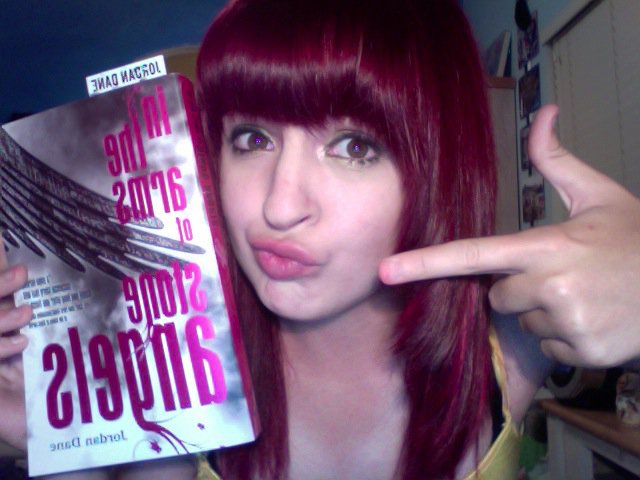
Yes, how did she get my book title backwards? MAGIC

I’ve written a few sub-genres, but the most different or diverse ones I’ve attempted were writing mainstream thrillers and young adult novels. I’ve always loved reading crime fiction (my big umbrella), so my comfort reads were always any sub-genre of adult crime fiction novels from espionage thrillers to police procedurals to romantic suspense. Although my YA books were suspense oriented, the YA voice was a real departure for me. It took quite a bit of reading it and researching the craft, but since I had grown to love these cross-genre books as a reader, the idea of writing them hit me hard and influenced me. More on that later.

When I first started writing in 2003, my main characters were in their thirties and maybe edged into their forties when I first wrote original mystery suspense novels. The first books I sold were in my comfort reads of crime fiction, yet with a cross-genre approach because that’s the kind of stories I liked to read. With as many books as I devoured as a reader, I figured I was the market. I wanted to write the books I would read.

In 2009-2010, as I sold my first YA novels and series, writing for teens influenced even my adult writing and my characters drifted downward into their mid to late twenties. Of course, my YA books covered teen protagonists, generally 16-18+. I’ve never written New Adult (characters in their early twenties or college age). I’m not sure why that is, except to say that I can relate more to my teen formative years (my rebellious teen self) and writing my other characters to be 25-35ish years old. (It’s like the lens of my creative world had focused on an age I had fun living.)

I had many ways to research my teen voice, including eavesdropping on teens in groups and using my nieces and nephews as lab rats. My aspiring author niece worked with me on my first YA novel – In the Arms of Stone Angels – and we had a blast. But that writing definitely influenced my other suspense books and I noticed the ages of my characters had dropped. On gut instinct, I was targeting the ages I thought my readers wanted to read about so I could bridge the gap between those reading my YAs and the ones who had transitioned into my adult books. From what my readers have said, that plan worked and my YA readers transitioned into my adult books and my adult readers seemed to enjoy my crime fiction YAs. Win-win.

I wrote one novella length story from the perspective of an older woman in her late 50s. I wrote her with an honest truth and I loved being in her head, but I wasn’t sure how readers might take her so I never wrote a repeat.

I’d like to hear from you, TKZers.

For Discussion:

1.) Have you ventured out of your writing comfort zone with trepidation only to learn something new where you grew as a writer? Please share and explain.

2.) What character ages do you find the most challenging as a writer? How did you get better at it? What resources or advice can you share?

3.) Is there a main character age that you DON’T like to read about? Do you find that your reading preferences gravitate toward a certain character age?