SATURDAY EVENING POST – 200 Years of American History

by Debbie Burke

@burke_writer

When I was a tot in the 1950s, my grandmother lived with us. She smoked Raleigh cigarettes and saved the coupons in her top dresser drawer.

Raleigh cigarette coupons could be redeemed for gifts, keeping smokers loyal and addicted.

The scent of tobacco and Yardley’s English Lavender mingled in a rustic perfume that belonged uniquely to her.

Looking back, I realize how much she influenced me to become a writer. In her clipped British accent, she read Mary Poppins and Dr. Doolitle to me, awakening a love of books. She introduced me to the romance of storytelling as she related her own exciting teenage adventures, like the time she stole a boat and sailed from England to Spain

She also subscribed to the Saturday Evening Post, which she used to teach me to read.

Each week when the magazine arrived by mail, we’d sit in her bedroom and giggle over the cartoons. Hazel was my favorite and became the basis for a popular 1960s TV sit-com starring Shirley Booth as the wise-cracking maid who was smarter than her bosses.

Today, the Saturday Evening Post has endured when most print magazines have disappeared.

Recently the Post unveiled their new website that includes every issue all the way back to 1821. The task of scanning and digitizing tens of thousands of pages took nine years.

For $15/year, subscribers receive six current issues plus access to nearly two hundred years of history. I just subscribed as a fond trip down memory lane because of my grandmother.

However, the deeper I delved into the Post’s archives, the more I realized what a valuable resource this could be for writers of historical fiction. Nearly two hundred years of American life are collected in one convenient location. I soon got lost in bygone eras.

Below are a few ideas how the Post archives can enliven your historical fiction:

Language: Reading prose written during your chosen era helps you better capture the particular phrasing, jargon, and speech rhythms of the time.

In an example from 1821, a fanciful story features a talking mirror warning readers about vanity with this snippet of dialogue:

“How many charming creatures have I spoiled, and made beauty the greatest misfortune that could befal [sic] them! . . . Alas, why was I made a Looking glass?”

Contrast that flowery style with the terse dialogue from Alastair MacLean’s 1960 short story, Night Without End:

“From now on, Zagero, you and Levin ride with a gun trained on you!” Mason snapped.

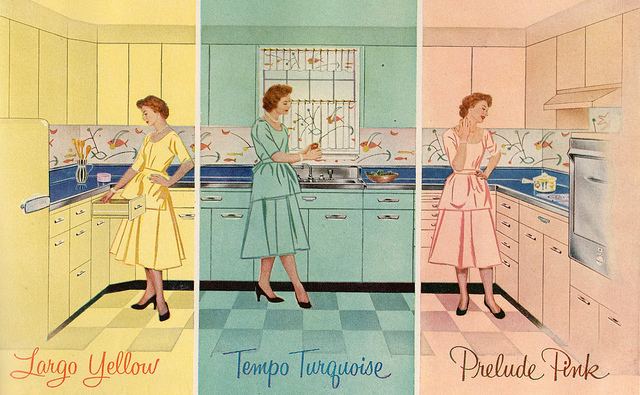
Setting details: Illustrations for architecture, building styles, and period home furnishings add authenticity to your story world.

Creative Commons


I was drawn to advertisements for home appliances from the 1950s, recalling brands like Kelvinator and Hotpoint, and refrigerators in a choice of colors like pink and turquoise.


Employment: In the 1910s and ’20s, many ads featured motor oil, tires, and batteries, reflecting industrialization as society changed from carriages to automobiles. A character living in Ohio then might work at the Timken Roller Bearing Company in Canton or manufacture Grande Cord tires at the Republic Rubber Corporation in Youngstown.

Styles: Fashion illustrations in the Post showcase clothing, shoes, and hairstyles of each era. In 1927, a female character might straighten the seam lines on her Realsilk hosiery while her husband shines his stylish Selz shoes.

1929 Ford 5AT Tri-Motor N9651-Wikimedia Commons

Transportation: In the span of two hundred years, horse-drawn carriages and stagecoaches were replaced by trains and steamships which gave way to airlines like Pan American and Trans World Airways. Automobile ads from the early twentieth century feature now-forgotten brands your characters might drive, like Hupmobile, DeSoto, and LaSalle. Or they might fly on a Ford Tri-Motor.

Health/Medical: In the 1960s, ads for Chesterfield, Pall Mall, and Viceroy played counterpoint to feature articles like “Crash Effort for a Safer Cigarette” from April, 1964. By the 1990s, the Post’s focus had shifted to breakthrough medical developments, with nary a cigarette ad to be found.

Warning: resist the temptation to pack in too many details simply because you don’t want to waste the research. Use only as many as are needed to capture the flavor of the era.

Perspective: By reading Post issues prior to a major historical event, the author can find insights into what precipitated the event.

I found one example in a cautionary article from 1900 by a young member of the British Parliament named Winston Churchill. He warned that a complacent citizenry and a weak, underfunded military could lead to future conflicts. His predictions came true in 1914 with the Great War. By 1940, he became Prime Minister and led the Allies against the Axis in World War II.

Political Issues: Letters to the editor illustrate why people believed and thought the way they did at the time. They voiced opinions based on how certain topics affected them that day, without knowing what was in store in the future. Articles, bios, and op-eds from the Post can lend authenticity to the attitudes of your characters during a given period.

For instance, in early 1960, the Post interviewed then-candidate John F. Kennedy. At the time, Pope John XXIII mandated a total ban on birth control. When JFK, a Catholic, was asked about his position, he stated: “Our government does not advocate any policy concerning birth control here in the United States.”

Letters to the editor expressed concern that JFK’s Catholicism would sway his political direction. In the 1960 election, separation of church and state was considered a critical issue.

By 1962, that concern was overshadowed by the Cuban missile crisis. As Americans stockpiled canned food and built backyard bomb shelters in anticipation of nuclear attack, JFK’s religion faded into a non-issue.

Authors and readers of historical fiction have foreknowledge. We know the North won the Civil War. However, story characters in 1860 can’t know that. Character A may feel optimistic about a certain event while character B views that same event with trepidation. The difference in opinion amplifies conflict between A and B. Plus, the reader feels an added layer of tension, knowing that event will soon lead to the bloody battle between the Union and the Confederacy.

Obviously, I fell way down the vast rabbit hole in the Saturday Evening Post archives. I’ll be back for more visits to the archives that refresh memories of my grandmother as well as tidbits about bygone days.


TKZers, what are your favorite historical references? Does reading about history tempt you to write about it?


Please check out my thriller Instrument of the Devil, on sale for $.99 until November 15 on Amazon.

First Page Critique: Titan’s Fall

Happy Monday! Today’s first page critique is entitled Titan’s Fall. My comments to follow. Enjoy!

Title:  Titan’s Fall

Steel gears grind overhead along thin aluminum girders. A red glow illuminated the gray cinder block wall to my right. The weighted anodized-pistol warms my palms. As I wait for the targets to line up, two questions rotate on heavy cycle: Why did my brother have to die? And, will Ms. Reddington remember I prefer chocolate cake over spice this year?

The panel next to the speaker box embedded into the wall beeps and ten cardboard birds drop down from the ceiling. According to my father, the gaming system is the latest in target technology. I wouldn’t know. My siblings and are allowed to leave the compound. The birds’ tails flash red, blue, and green. It doesn’t matter how quick they move or in which direction, blue is always first. I adjust my stance and squeeze the trigger. One by one, the targets return to the rafters.

GAME OVER.

“Kade Maddox,” Mother’s voice shrills from the intercom. “Upstairs! Now!”

My eyes flick to the red START button. Two-tenths of a second and I’ll have beaten the high score. Perhaps I can squeeze one more–

“Double-time, mister. Your father and I have to leave.”

But you just got here?

My dress shoes squeal along the glossy anti-static tiles as I sprint across the open atrium to the staircase. Spotless glass gleams all around me. Like the gaming system, the three-story, fully-staffed house in the heart of the Appalachian Mountains is supposedly hi-tech. Again, I wouldn’t know. My brother’s unexpected death changed a lot of rules.

“You promised this time would be different, August,” Mother barks. I press my back against the wall and lean closer to the door. The smell of Ms. Reddington’s overly-peppered roast beef mixes with chlorinated-air of the basement.

Father sighs. “He has been here two years longer than–”

“Don’t say his name.”

Comments:

Overall, I really enjoyed this first page. The first paragraph in particular combined just the right amount of description, intrigue and character. I thought the character’s voice was already compelling and that the humor as well as the anger and grief came through effectively, particularly in the first few paragraphs. I liked how the mystery of the brother’s death is introduced – although it did get a little confusing as we don’t really know why his death changed a lot of rules or who Kade’s mother and father are talking about in the final paragraph (I assume his brother?).

At times it was also difficult to picture the whole setting – for instance why would the air of the basement still be mixing with the kitchen aromas after Kade has gone up the stairs and through an atrium and (possibly) up another staircase? I was thrown by the reference to ‘dress shoes’ as I wasn’t sure why Kade would be wearing them to target practice. I am also assuming it is a typo in the paragraph beginning ‘the panel’ that Kade and his siblings are  allowed to leave the compound (I’m assuming it should be that they aren’t). As we always emphasize, authors should be vigilant for these kind of typos as they do have a nasty way of sneaking in and staying in!

Overall, my main recommendation would just be to add a tiny bit more in terms of background so the reader isn’t confused by some of the off-hand references to the compound or ‘supposedly’ high tech features. Just a sentence or two might help ground the reader. Are we talking a dystopian society here? What ‘rules’ were there before Kade’s brother’s death? If they could leave the compound before, what was the outside world like? What level of tech is there? and where are Kade’s mother and father going (especially since they just got here according to Kade)?

However, these are all relatively easy fixes that help ground the reader in the novel, and overall I thought this was a very promising start to a novel. TKZers, what advice would you give our brave contributor?

Writing About Experiences You’ve Never Had

by James Scott Bell
@jamesscottbell

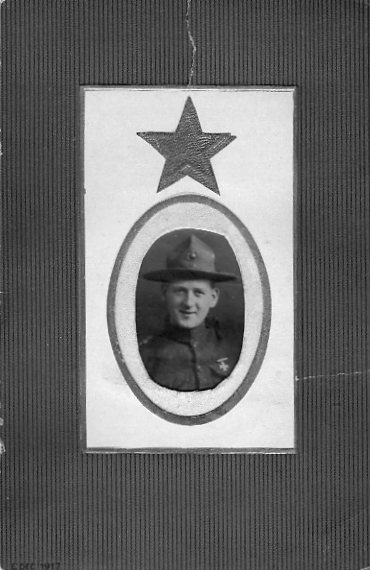
Ted Fox, USMC

One hundred years ago on this very day, the armistice ending the “war to end all wars” was signed just outside the city of Compiègne, France.

World War I, as it is now known, was a bloodbath, an unleashing of horrors heretofore unknown by humankind. From machine guns (“the devil’s paintbrush”) to phosgene gas, technology had overtaken military tactics, resulting in a massive scale of death.

One of those was my great uncle, Frederick “Ted” Fox, a Marine. He died in the Battle of Belleau Wood and is buried in Arlington National Cemetery.

The longest book I ever wrote was the historical, Glimpses of Paradise. It begins in 1916 Nebraska and ends in early 1920s Hollywood. In between is a World War I sequence that was the result of intense research.

Which raises a natural question: how do you write about experiences you’ve never had? I’ve never been to war. Does that mean I can’t write about it? I obviously didn’t think so when I wrote Glimpses. So here’s what I did: 

  1. Extensive reading. I found some books deep inside the downtown branch of the Los Angeles Public Library that were priceless first-hand accounts of World War I battles. I also spent hours in the microfiche room, going through newspaper accounts of the same.
  2. I connected my emotions. I believe that if we’ve made it past forty or so in this life, we’ve experienced every emotion there is to a greater or lesser degree. While I have never felt the fear that a soldier feels on the eve of battle, I have felt the fear of dying. The same physiological response is there, and by extrapolation I brought it to the characters in the book.
  3. I looked at a lot of pictures of battlefields, soldiers, weapons and so on. I wanted to be soaked in them, so I could write with that soaked feeling.
  4. I had an expert review it. I showed the battle pages to someone who knows warfare, and got some notes for changes.

How about you? Have you ever written way outside your experience? What did you do to get it right? Please tell us in the comments!

And please pause a moment this Armistice Day to honor those men who gave the last full measure of devotion for our country a century ago.

Also, my film professor son alerted me to a new documentary by Peter Jackson about soldiers in World War I. The talented Jackson took old, herky-jerky silent film footage, digitized it and used computerization to connect the frames and make all the movements natural. Then he colorized the footage.

The stunning result is a view of The Great War as we have never seen it. I hear it will blow you away. Here’s the official trailer:

Reader Friday: Your Most Useful Writers Confabs?

Photo purchased from Shutterstock

We’re winding our way toward the end of the year, so let’s share some of our hive wisdom. What are your favorite writer conferences for networking or making contacts? Describe the best conference you ever attended, and please tell us what made it a good experience for you.

Deadlier than the Male

By Elaine Viets

When I was a girl, Mom warned me about all the awful things that could happen to trusting young women. I was warned to be careful when I went to bars, and never leave my drink unattended, or some sly stranger would drug it and unspeakable things would happen – which she was happy to discuss. The way Mom regarded young men, they should all have “Beware of Dog.” signs.
My brothers did not get these helpful talks. Sure, Dad told them to carry a condom in their wallet in case they got lucky, but young men had nothing to worry about.
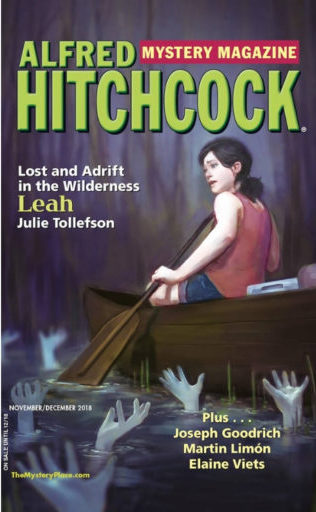
Except they do. “Mistress of the Mickey Finn” is the title of my new short story in Alfred Hitchcock Mystery Magazine’s November/December issue.

It’s also a warning to young men. No one tells them about predatory women, and they should. Here in South Florida, a travelling gang of young women preys on well-heeled men.

I found out about them from my husband Don’s barber. Oscar Alci, a US citizen from Turkey, is a master storyteller. He told Don about a client who’d been ripped off by a wily young woman at a fashionable Fort Lauderdale watering hole. That story became “Mistress of the Mickey Finn.” Oscar has his own book, Short Cuts from Oscar the Barber, coming out this month. In tribute to his storytelling skills, I made him a character in my own story.
If you write short stories, ideas are everywhere. You just have to listen for them. Hair stylists and barbers are good sources. So are bartenders (and the drinks are deductible as research). Listen to their stories of love gone wrong, problems making payments, and the weird person who came in last Thursday. Then ask yourself, “What if someone could get killed?” Now the stakes are high and you have a short story.
My short story, “Mistress of the Micky Finn,” opens this way:

“She cleaned me out. She took everything—even my towels.”
Will Drickens’ nasal whine echoed off the marble floor in his Fort Lauderdale beach house.
The thirty-something hedge funder pleaded for help with sad, puppy-dog eyes—at least, he tried to look sad. Private eye Helen Hawthorne saw a hound with skin tanned and oiled like a Coach bag.
Will wore enough flashy designer labels to stock a mall. Phil Sagemont, Helen’s husband and PI partner, had trouble hiding his contempt for their new client.

This set-up was typical for this kind of crime: Will met Donna Simon at the Perfect Manhattan. They talked for a bit, and he began feeling woozy. She paid his tab and called for his car, tipping the valet lavishly. Donna drove Will to his beachfront home in his car, and when he recovered, she fixed him breakfast in bed. They enjoyed a romantic weekend together, and on Sunday night, he couldn’t bear to part with her. Donna said she’d always wanted to spend a day at the beach, and Will told her she could stay at his house Monday. He spent his day hearing wedding bells, while Donna’s gang cleaned out Will’s luxurious home.
In South Florida, these gangs “travel up and down the Florida coast from Vero Beach to Miami.”
Oscar the Barber and Phil have this conversation:

“A beautiful woman will spend the whole weekend with the mark,” Oscar said.
“What about security videos?” Phil asked.
“These women are very, very smart. They are careful to turn their faces to hide from the cameras. Many have long hair, and use it like a curtain. Most security systems have such blurry images, it’s hard to see the person. The police rarely get anywhere.”
“Why haven’t the police cracked down on these scammers?”
“These are the cream of the crooks,” Oscar said. “They can spot an undercover cop.”
“How?” Phil asked.
“Easy. These women have fine-tuned senses. They notice little things: the undercover cops trying to pass as rich guys buy their expensive suits at resale shops, so they’re a couple of years out of style. They have ‘cop eyes’—they’re alert, watchful, not like someone having a drink at a bar.”


Oscar wasn’t my only source. A retired Fort Lauderdale detective told me these gangs have been around since at least the mid-’80s. Sometimes they work in teams—the woman drugs the mark’s drink, then drives him home, takes whatever she can carry out of his apartment, including his pricey watches and jewelry. Her accomplice may pick her up, or she may steal the mark’s car, too. By the time he wakes up, it’s in a chop shop or being loaded on a freighter to a foreign country.
The victims of this game are men of astounding innocence. The way Will met Donna at the mythical bar is classic:

“I stopped by the Perfect Manhattan on Las Olas. Just for some conversation,” Will said.
Right, Helen thought. Conversation. The two words heard most often in that bar were “how much?” and the customers weren’t asking
the price of the drinks. The Perfect Manhattan was known for “handcrafted cocktails” for the no-holds-barred singles set. Stunning supermodel bartenders displayed their implants as they “built” twenty-dollar Manhattans and whispered, “Would you like a cherry?” with a suggestive wink and a giggle, straight out of an old-school men’s magazine. The servers—all women—were expensively enhanced and barely covered.
“Donna was sitting at the bar in a black dress and pink heels. She told me they were Manolo Blahniks. Sexy as hell—little tiny roses all over and straps halfway up her legs.”
“Cage sandals,” said Helen, who knew her shoes. “They cost twenty-two hundred dollars.”
“For one pair?” Phil said.
“Donna appreciates the best,” Will said. “I asked if I could buy her a drink, and the next thing I knew we were talking. She was easy to talk to.”
Your mother should have named you Mark, Helen thought. You were the easy one.

First Page Critique: Musical Hairs

By John Gilstrap

I haven’t done one of these First Page things in a while.  As you read through Brave Anon’s submission, ask yourself one question in particular: So what?

MUSICAL HAIRS

Gertrude Watson, known as “Gert” or “Gertie” to her friends, was on the landline phone in her small, disheveled office in the back of her music store. The door was closed and she was finishing up a call with Mr. Carney from the local high school. “Of course, Mr. Carney,” she reassured him. “We’ll make sure all the instruments have been unboxed and checked for defects before we deliver them to the school. That’s always been our policy.”

Mr. Carney was new to the town of Cannonsville, Tennessee, and this was the first time Gertie had dealt with him. Bless his heart, she thought to herself. Not only did he seem to have a substantial case of OCD, but he was a talker and hard to get off the phone. He had a habit of repeating himself over and over again on the simplest of things.

Someone knocked on her office door loud enough that Mr. Carney heard it on the other end of the line and stopped talking for a second. Gertie said, “There’s someone here for a very important meeting I have this morning and I’ve got to go now. I’ll give you a heads up call when we get the instruments in.” She waited for a second and then hung up, breathing a sigh of relief.

The knock came again and Gertie said, “Come in, come in.” The door opened. It was her assistant manager, Olivia Stanton, with some papers in her hand. “Thank goodness, Olivia. You saved me from that new band director at the high school. He is a nice enough man, but he just doesn’t seem to know when to stop talking.”

“I know,” Olivia said. “I spoke to him yesterday and had to finally excuse myself to go to the bathroom to get him off the phone. Being new to the school, I think he’s a little bit overly nervous and is trying too hard to do a good job.”

“I suppose you’re right,” Gertie said, “but I’ve got a business to run. I know the customer is always right. I just need to learn how to graciously end a phone conversation when the other party gets over talkative.”

Olivia held up her hand of paperwork and frowned. “Have you seen these bills yet from Tommy’s session last week? There’re a little bit over the top if you ask me.”

It’s me again.  So . . . So what?  In my view, the most critical problem with this page is the lack of a so what.  What is at stake here?  Who are the players, really?  Truth be told, this reads like the warm-up to the beginning of a story rather than a story in and of itself.

As a self-taught writer, I’m not sure what “passive sentence construction” actually means, but I’ll apply it to virtually any sentence that relies on some conjugation of the verb, to be.  Gertie was on the landline . . . the door was closed . . . she was finishing up a call . . . Carney was new . . . That’s a snore-o-rama.  Consider: Gertie held the receiver . . . her closed door made the tiny office feel smaller . . . she wondered if the call would ever end . . . “I may be new,” he said . . .

The conjugated to-be+verb construction can’t be avoided in its entirety, but remember that better options always exist.  (Before editing that sentence, I had written, “It’s important to remember that there are always better options.”  Ha!)

Stories must always advance.  Word-by-word, paragraph-by-paragraph, page-by page.  If a sentence or scene does not advance either character or story, then it merely stops the story.

Let’s take another look at Brave Anon’s story.  My comments are in bold type.

MUSICAL HAIRS

Gertrude Gertie Watson, known as “Gert” or “Gertie” to her friends, [We don’t need to know this detail, and it interrupts the flow of the story] was on the landline phone [what would a landline be if not a phone?]in her small, disheveled office in the back of her music store. The door was closed and she was finishing up a call with Mr. Carney from the local high school. “Of course, Mr. Carney,” she reassured him. “We’ll make sure all the instruments have been unboxed and checked for defects before we deliver them to the school. That’s always been our policy.”

Consider: “Of course we’ll make sure that the instruments are fine,” Gertie said into the handset of her landline. “We wouldn’t deliver a defective product to your school.” If her office weren’t so cluttered with incoming inventory, she’d pace.  Or at least put her feet up.  As it was, every surface of her store was stacked horns, woodwinds and strings.

Mr. [I would give him a first name, but that’s a stylistic thing that you might not agree with.] Carney was new to the town of Cannonsville, Tennessee, [We don’t need this detail yet, and including it makes the syntax awkward.] and this was the first time Gertie had dealt with him. [If he placed an order, how can this be the first time she’s dealing with him?] Bless his heart, she thought to herself. [This is your first moment of narrative voice.  “Bless his heart” stands alone as a thought, and it establishes a Southern root for the story.  Also, is it possible to think to someone other than oneself?] Not only did he seem to have a substantial case of OCD, but he was a talker and hard to get off the phone. He had a habit of repeating himself over and over again on the simplest of things. [Either show it or kill it.  This entire paragraph is a squandered opportunity to show instead of telling.]

Consider: “I’m very serious about this,” Mr. Carney said in her ear.  “I may be new to the community and to the high school faculty, but this band is very important to me.  There can be no flaws.”

Gertie rolled her eyes.  “As your business is important to me,” she said.  “I don’t know how many times I can say the same thing until you believe me.”

“It’s not that I don’t believe you,” Carney said.  “I just want to make sure you understand the importance—”

A perfectly-timed knock at her door saved her from having to choose between homicide or suicide.  “Gotta go,” she said. “My next appointment just arrived.”  She disconnected before Carney could argue.  “Come in.”

Someone knocked on her office door loud enough that Mr. Carney heard it on the other end of the line and stopped talking for a second. Gertie said, “There’s someone here for a very important meeting I have this morning and I’ve got to go now. I’ll give you a heads up call when we get the instruments in.” [Say those lines of dialogue aloud.  Do they sound real to you? They sound stilted to me.] She waited for a second [Why wait?  Why not hang up as soon as possible?] and then hung up, breathing a sigh of relief.

The knock came [Knocks don’t come. Someone causes them to happen. A second knock does not advance the story unless there’s something different in the character of the knock.  More urgent, maybe?] again and Gertie said, “Come in, come in.” The door opened. [Of course it did.  Don’t need the detail.] It was h Her assistant manager, Olivia Stanton, entered with some papers in her hand. “Thank goodness, Olivia.  [Don’t need this.  The next sentence makes your point.] You saved me from that new band director at the high school Mr. Carney. He is a nice enough man, but he just doesn’t seem to know when to stop talking.”

Olivia laughed.  “I know,” Olivia said. “He’s a talker. I spoke to him yesterday and had to finally excuse myself to go to the bathroom to get him off the phone. Being new to the school, I think he’s a little bit overly nervous and is trying too hard to do a good job.”

“I suppose you’re right,” Gertie said, “but I’ve got a business to run. I know the customer is always right. I just need to learn how to graciously end a phone conversation when the other party gets over talkative [This point has been pretty much flogged to death.  Time to move on.] Consider: “What’ve you got?”

Olivia frowned as she held up her hand [stack?]of paperwork and frowned. “Have you seen these bills yet from Tommy’s session last week? There’re a little bit over the top if you ask me.” [“Tommy’s session” means nothing to the reader.]


First Page Critique:
Floating in Space

By PJ Parrish

I love stories about outer space. Maybe it goes back to when I got to be the papier-mâché planet Venus in an third-grade play.  And in the Fifties, I remember being enthralled with a book called You Will Go to the Moon. (I still want to). My childhood went by in a Raisonette-fueled fog of matinee cheese like Earth Versus the Flying Saucers and The Day of the Triffids.  I own a complete set of original Star Trek videos, and if Contact, Interstellar or either Alien movie comes on at night, I will watch it again. So, yeah, let’s say I am predisposed to like any story that’s spacey.  That said, strap in for today’s First Page Critique.

TITAN

Fynn pressed close to the shuttlecraft’s window, ignoring the cold against his fingertips. “I always dreamed of a trip into orbit. I’m lucky Dad arranged this tour before the fall semester starts.”

They were about to dock at the Herschel. It didn’t look like a classic spaceship. From their approach vector, it looked like a fleet of gleaming white submarines bundled together and attached to the tee-shaped Collins Spaceport by a straw. Beyond the spaceport, the moon loomed huge against a galaxy of stars.

“I’ll race you to the ship when we dock.” His sister, Maliah, was older than Fynn. Pushing thirty. But she often sounded like a kid. “You’re gonna get a big surprise.”

Fynn felt like a kid himself, and excitement further agitated his queasy, zero-g stomach.

Once inside the dock, while the other passengers obediently gripped a railing to listen to their flight attendant, Maliah pushed Fynn towards the passageway to the Herschel. “I’ll explain anything you need to know. I’ve been here before.”

“You never told me that.” He scrambled to find handholds, pushed off, and followed her. He’d studied the diagrams. They’d be entering the Herschel’s central core, an open recreational space, so he slapped both hands on each railing ring, gaining speed.

Maliah snagged his arm as he emerged and spun them close to the hull. “Surprise.”

Fynn’s chest tightened. This wasn’t a recreation bay. Streamlined coffins ringed the module like spokes of a wheel, each with a panel of steady green lights and a bright yellow gear bag alongside. Another level of the shiny steel pods hung above them, and another, as far as he could see up the Herschel’s dimly lit core.

Fynn stared through the layers of pods, trying to understand what he saw, and gawked open-mouthed for a moment. “Where are we?”

“The Herschel’s a colony ship.” Maliah’s face glowed. “We’re going to Titan.”

She hugged him tight, losing her handhold, and they floated towards the core’s center.

Fynn gripped her with one arm, twisting for a better view of the endless pods. “But, the Herschel’s a research station, to study the Saturn system.”

“So the mongrels think.”

Despite the ship’s distractions, he winced at the word. “Don’t call them that.”

“You’ve spent too much time at university.”

“University…” Fynn gasped for a lungful of air. “My PhD classes start in two weeks.”

“That doesn’t matter.”

__________________

Okay, we’re back to Earth now. On first quick read (the way I always do a critique, purely as a reader not editor), I thought I was reading young adult or even more likely, a book for a younger-yet crowd. Maybe it was the simplicity of the phrasing and vocabulary. But Fynn feels, on first glance to me, very young, a wide-eyed naif. Which isn’t a bad thing. I rather liked the idea I was going to follow a boy into space, because I went there often as a kid myself.  Fynn’s voice registers as young, enforced by the first graph mention of “Dad” arranging the trip, and the fact his sister challenges him to a race down the gangway — a very childlike thing to do.

But very late in the page, we learn he’s a PhD candidate. Whoa. To my ear, even a twenty-something going into space for the first time would sound more adult, especially if his PhD study was science. (He could be a philosophy major; we don’t know yet if he’s a fish-out-of-water civilian here or an educated traveler.) First impressions of your characters count. A lot.  I am having trouble buying into Fynn as a capable, highly educated adult character.  The actions and dialogue the writer has chosen to use for him do not support the narrative reality — man vs child.

Getting beyond that, the writing here is good but a tad workmanlike for me. There is some good description — I liked the image of  the ship they are docking with as “a fleet of gleaming white submarines bundled together and attached to the tee-shaped Collins Spaceport by a straw.”  But I wish there had been a little more of it.  When you take a reader to foreign locales — and can outer space be any more foreign? — then you must spent good time and effort world-building, so we can enter your conjured realm and easily suspend disbelief or move beyond our limited knowledge. To paraphrase the famous poem about flight, you have to slip the surly bonds of earth, dance the skies on silver wings, join the tumbling mirth of sun-split clouds –and, most important as a writer, do a hundred things the reader has not dreamed of.

Here’s the opening graphs of Andy Weir’s (The Martian), latest novel Artemis:

I bounded over the gray dusty terrain toward the huge dome of Conrad Bubble. Its airlock, rigged with red lights,stood distressingly far away.

It’s hard to run with a hundred kilograms of gear on — even in lunar gravity. But you’d be amazed how fast you can hustle when your life is on the line.

Notice how Weir sketches in two short graphs his landscape PLUS tells us something bad it happening.  Another terrific opening to learn from is Tess Gerritsen’s Gravity. The first line:

He was gliding on the edge of the abyss.

We are in a tightly confined ship moving through “the vastness of space.” But — surprise! — we are in the deepest parts of the ocean. Which makes her second chapter all the most powerful when she switches to actual deep space, where the plot really takes off. I love how Gerritsen compared and contrasted both hostile frontiers, where there is no air and only darkness.

I also like the second chapter of The Martian Chronicles, which gives us the vivid image of everyday life of a couple, Mr. and Mrs. K.,  whose ancestors have lived by the dead sea on Mars for generations but now, something bad is about to upset their domestic bliss. When I first read this in high school, I totally bought into the idea of was reading about a married Martian couple and not my next door neighbors the Vanderloops.

The best example I could find of a compelling world-building purely descriptive opening is The Dispossessed by the incomparable Ursula K. Le Guin. I can’t run the whole opening here because it’s too long, but I beg the writer of our critique today to go read it.  It’s all description, but man, it sets you down into an alien world with the precise beauty of an Elon Musk SpaceX rocket return.

Those are my major points about this submission. Let’s do a little line editing now.

Fynn pressed close to the shuttlecraft’s window, ignoring the cold against his fingertips. “I always dreamed of a trip into orbit. But he’s not merely in orbit of Earth; he is somewhere out in deep space. I’m lucky Dad arranged this tour before the fall semester starts.” Who is he talking to? Himself? You need a quick answer from his sister here I think. BUT…before the dialogue, I suggest you show us what he is seeing outside the window here, filtered through his consciousness. Then go with the dialogue and response.

Also, note that the line about Dad arranging this trip before school starts juvenilizes your hero. This is where I began to picture a boy instead of a man. Yes, any sane human would be entranced by his first sight of this space station out there in the void, but Fynn sounds way too young. 

They were about to dock at the Herschel. It didn’t look like a classic spaceship. Little confused here. From your description that follows, the Herschel sounds to me more like a space station which accommodates many space craft? Plus you later call it a “spaceport.”  From their approach vector, it looked like a fleet of gleaming white submarines bundled together and attached to the tee-shaped Collins Spaceport more confusion. I thought the space station ship was call the Herschel by a straw. Beyond the spaceport, the moon loomed huge against a galaxy of stars. You can do better than this. What does it look like to Fynn? BE ORIGINAL

“I’ll race you to the ship when we dock.Again, I pictured a 12-year-old girl here and she’s 29. Any sane adult on a space mission would not even think this. His sister, Maliah, was older than Fynn. Pushing thirty. But she often sounded like a kid. “You’re gonna get a big surprise.”  She seems to have prior knowledge of this place or what is happening yet she sounds like a kid. What does she do for a living? Why not make the dialogue appropriate to her age, station, profession and the action at hand. 

Fynn felt like a kid himself, I understand what you are trying to do here — capture the childlike wonder any adult might feel in this situation but this is TELLING US what he is feeling. Find a way to get in his thoughts, maybe a childhood memory or compare and contrast: It was nothing like he had seen in his textbooks, nothing like he seen through his telescope back on the farm in Iowa. Start layering in some background and context for your characters. and excitement further agitated his queasy, zero-g stomach. I’m a little confused here. Zero-g is weightlessness. Are they strapped in some kind of unit for landing or just floating around like Jody Foster did in the space ball in “Contact”? You can’t get away with such non-specific descriptions in sci-fi.  Readers are too smart.

Once inside the dock, See comment above. You are stinting on needed description. while the other passengers obediently gripped a railing to listen to their flight attendant, Maliah pushed Fynn towards the passageway to the Herschel. “I’ll explain anything you need to know. I’ve been here before.” I don’t know why, but you have an odd habit of not using any attribution. Who said this? 

“You never told me that.” He scrambled to find handholds, pushed off, and followed her. He’d studied the diagrams. Missed opportunity here to insert a little context and backstory. Why did he study the diagrams? Why is he here? For fun? Why did Dad arrange this? I don’t mean this to sound flip, but right now, this sounds like the nice little trip to Europe between college semesters compliments of the parents. They’d be entering the Herschel’s central core, an open recreational space, so he slapped both hands on each railing ring, again, your description is really meager. Are they walking down a tunnel, a hallway? Where’s everyone else? Is it dark, lighted? This sounds as generic as a Newark Airport TSA approach gaining speed.

Maliah snagged his arm as he emerged and spun them close to the hull. “Surprise.” So they are still in a no gravity zone? Why?

Fynn’s chest tightened. This wasn’t a recreation bay. Streamlined coffins How does he know they are truly coffins? They are steel pods, the kind you see in every space movie these days, are they not? He might think they LOOK like coffins, but unless he can KNOW they are, neither can the reader at this point. ringed the module like spokes of a wheel, each with a panel of steady green lights and a bright yellow gear bag alongside. Another level of the shiny steel pods hung above them, and another, as far as he could see up the Herschel’s dimly lit core.

Where did the other shuttle passengers go, by the way? How come they are suddenly all alone? 

Fynn stared through the layers of pods, trying to understand what he saw, and gawked open-mouthed for a moment. “Where are we?”

“The Herschel’s a colony ship.Again, I am confused. They apparently took a shuttle to a ship named the Herschel. But did they first dock at a station called the Collins Spaceport and then somehow get into this ship? You must be clear. Maliah’s face glowed. “We’re going to Titan.”

She hugged him tight, losing her handhold, and they floated towards the core’s center. Still in zero gravity? And Fynn has trouble getting his breath. Are they wearing spacesuits?  

Fynn gripped her with one arm, twisting for a better view of the endless pods. “But, the Herschel’s a research station, Two paragraphs ago, she called it a ship to study the Saturn system.”

“So the mongrels think.” This is a good line of dialogue because it creates the first sense of suspense. Using such an epithet is intriguing, even though we don’t know what it refers to yet. 

Despite the ship’s distractions, he winced at the word. “Don’t call them that.”

“You’ve spent too much time at university.”

“University…” Fynn gasped for a lungful of air. A space station would have its own oxygen supply. “My PhD classes start in two weeks.”

“That doesn’t matter.” No, it really doesn’t at this early point in your story. 

Some final points.  I don’t mind that this story starts a little slow. I can buy into the idea of Fynn, as a first-time space traveler, getting his first view of his destination (or what he thinks it is) and that can be interesting in itself. But Fynn’s point of view is so sparse and underwritten that I don’t see this strange world or feel any of his excitement. If you chose a slow-burn beginning like this, the writing has to really sing. It has to pull us into a new world. The location has to become a character in itself.  But soon after that you have to get your hero into some deep space do-do. Because this opening is perfunctory and the only suspense comes from Fynn worrying he’s not going to get home in time for classes, I don’t think this opening, in the whole, works as well as it could.

So, don’t give up, dear writer. There is the germ of a good idea here — a young man, who apparently isn’t a hard scientist about to embark on a great adventure. It has the makings of a good fish-out-of-water story, which is always appealing. And thanks for submitting to TKZ.

And one last word — taken on my walk downtown — from my northern hometown as I get ready to head back down to Tallahassee on this cold rainy Michigan morning:


Questioning an Eyewitness: To Lead or Not to Lead?

By SUE COLETTA


As promised, let’s continue with false or misleading eyewitness testimony, and how writers can use interview techniques to our advantage. Today, we’ll change it up a bit by focusing on how to question an eyewitness. More importantly, how not to.


Questioning a Witness

The context in which a question is asked becomes an important factor. A witness, however innocent, may try to answer the investigator’s questions by telling him/her what s/he wants to hear, not to confuse the investigation but because it’s human nature to want to help. Add a leading or suggestive question on top of that mindset, and most of what the investigator receives will be unreliable information. Incidentally, children and mentally challenged individuals, including folks with borderline IQ’s, are the most easily influenced, because they tend to want to please adults. 

Leading or Suggestive Questions

Leading questions suggest the response is expected and/or implies information the witness has no prior knowledge of. Let’s say the investigator asks, “How hard did the robber punch the victim?” Most witnesses will try to fill in the blanks, even if they never actually witnessed physical contact between the victim and suspect. This results in guesswork on the part of the eyewitness. Therefore, it’s imperative that the investigator doesn’t inadvertently suggest an answer.

Suggestibility is defined as: “The act or process of impressing something — an idea, attitude, or desired result — on the mind of another.”

With that in mind, the detective should keep the testimony as uncontaminated as possible. Part of the problem is, it’s difficult for eyewitnesses to distinguish between information they saw during the event from information they heard from other witnesses, after the event—also called “post-event information.”

In one study, Loftus and Palmer investigated the ability of post-event information to influence the eyewitness testimony. Participants were shown a video of a motor vehicle accident. Afterward, researchers asked several questions with a variety of phrasings. In the spirit of brevity, I’ll only mention two.

“How fast were the cars going when they smashed into each other?”

“How fast were the cars going when they bumped into each other?”

The participants who were asked the first question, reported high rates of speed and broken headlights, even though broken glass wasn’t shown in the video. The second group reported lesser speeds with very little damage to either vehicle. It’s easy to see why. Verbs matter, but we knew that already, didn’t we? 🙂

Open Questions

Open questions seek an open-ended response from eyewitnesses. They also don’t limit the scope or direct the witness to answer in a certain way. “What happened?” Or, “What did you see?” are both examples of open questions.

With open questions the detective is more likely to get a true recounting of events. A study showed responses to open questions were three-to-four times longer and three times richer in relevant details.

Facilitators

Facilitators are non-suggestive verbal or non-verbal responses that encourage the eyewitness to continue recalling the events. For example, “Okay.” Or, “Uh-ha.” Or, “Hmm.” Because these responses are non-leading and non-specific, they’re effective at maintaining the eyewitness’ narrative without decreasing the accuracy of their statement.

Focused Questions

Focused questions are exactly as they sound. Usually they’re open-ended so as not to taint the testimony. “Tell me what the man looked like.” As long as the eyewitness mentioned “the man” in his or her initial statement, the detective won’t risk muddying the response. A focused question is used to further support the testimony that’s already been given, which aids in garnering more useful details. However, if they’re overused by the detective, they can actually have the opposite effect, thereby limiting the accuracy of the eyewitness testimony. Especially if the witness feels obligated to provide details.

Option-Posing Questions

Generally, for details the eyewitness hasn’t described, an option-posing question involves recognition. Such as, “Was the man running or walking?” As you might have guessed, option-posing questions also limit the scope of the answer. Because of this, they may be seen as leading or suggestive. You’ll notice option-posing questions at court when attorneys are trying to coax certain answers from witnesses on the stand.

Would questioning differ with a suspect vs. witness?

It shouldn’t, unless the detective wants to skew the facts by forcing an involuntary confession. We’ll dig into the difference between voluntary and involuntary confessions next time. Why innocent people confess is a fascinating subject. In the meantime, the perfect example of real detectives asking leading and suggestive questions occurred in the interview of Brendan Dassey, featured in Part II of Making a Murderer on Netflix. If you haven’t watched the second season, take a peek. Whether or not you believe the confession was coerced is irrelevant for our purpose. Watch the interview through a writer’s eye.

In thrillers and mysteries, if we play with interview techniques, we buy time. Need to send your law enforcement character down a dead-end? Have a newly-minted detective ask leading or suggestive questions outside the lead investigator’s presence. Once the new scenario is planted in the eyewitness’ mind, they’re testimony will be of little value.

So, my beloved TKZers, what are other ways to play with interview techniques? Fire up those writer brains and lay out some scenarios. Bonus points if you can name a thriller where false or misleading eyewitness statements led to the investigation of an innocent (wo)man.


How to Win Friends and Influence Beta Readers

by James Scott Bell
@jamesscottbell

Gustave Flaubert

Gustave Flaubert (1821 – 1880) was, of course, the French novelist known primarily for his masterpiece, Madame Bovary. He was a man of tremendous passion and ambition. His greatest desire, from a young age, was to become a world-class novelist.

At the age of 24, Flaubert was mesmerized by a painting depicting the temptation of St. Anthony. It inspired his first attempt at a novel. Flaubert worked on it off and on for the next five years, finally completing a 500 page manuscript in 1849.

Now what?

Flaubert had two close literary friends, Maxime Du Camp and Louis Bouilhet. He called them to his home in Croisset on the condition that they listen to him read the entire manuscript out loud, not uttering a single word until he was done!

Yeesh.

Just before the reading began, Flaubert declared, “If you don’t cry out with enthusiasm, nothing is capable of moving you!”

Then he began to read. Two four-hour sessions per day!

Flaubert ended a little before midnight on the fourth day. The exhausted would-be novelist put down the last page and said, “It is your turn now. Tell me frankly what you think.”

Du Camp and Bouilhet were in agreement that the latter should speak for them both.

Bouilhet cleared his throat and said, “We think you should throw it in the fire and never speak of it again.”

Now that is what you call a short and sweet critique.

The reaction, as described by Prof. James A. W. Heffernan in a lecture on Flaubert, was as follows:

Flaubert was flabbergasted. And of course he did talk about it—the three of them argued about it heatedly all through the night, right up until eight o’clock the next morning—with Flaubert’s mother listening anxiously at the door. Flaubert defended it as best he could, pointing out fine passages here and there, but fine passages alone don’t make a good book. His friends saw no progression in the story, no vitality in the figure of St. Anthony himself, no real grip on the theme. Essentially, they argued, Flaubert had taken a vague subject and made it vaguer. He had fatally indulged his own Romantic tendency toward lyricism—toward the fantastic, toward the mystical. To get a grip on these tendencies, Flaubert needed something that could not be treated lyrically.

Flaubert’s two friends did not let him wallow in despair. Instead, they gave him some advice that would change his writing forever. Don’t try to tackle some big theme in a lyrical manner, they told him. Write about something down-to-earth, and do it in a naturalistic style. Prof. Heffernan recounts:

On the day after the long night of the argument, the three friends took a walk through the gardens of Croisset by the River Seine. According to Maxime du Camp, Bouilhet suddenly proposed that Flaubert write a novel based on the true story of a public health officer whose second wife committed adultery, got herself into debt, and then poisoned herself.

Flaubert took their advice. In 1851 he began writing his second novel, Madame Bovary.

The lessons here:

  1. Good beta readers are those who will be completely honest with you, but also are capable of giving you specifics on what doesn’t work.
  2. Don’t overestimate your prowess by telling your beta readers, “If you don’t cry out with enthusiasm, nothing is capable of moving you!”
  3. Perhaps it’s best to give your beta readers a manuscript, rather than reading it to them out loud. But that’s entirely up to you.

Do you have trusted beta readers? How have they helped you?

Requiescat in Pace

Photo courtesy John Ehrlich on unsplash.com

This past Thursday, November 1, we lost a great and terrific guy named David Williams. Many of the regular contributors and visitors to The Kill Zone know that name.  

David told me on a number of occasions that the very first thing he did every morning was sit down in front of his computer and read the daily post of The Kill Zone. When David would choose to comment he always made the post just a little bit better, no matter how superlative it was to begin with. I told him quite truthfully that it was that knowledge which frequently gave me the inspiration to write something when it seemed like the well was dry. It’s accordingly more than fitting that David is the subject of today’s post. Hopefully, I will be forgiven for stating that today he is undoubtedly reading this from a place of comfort which he has earned and deserved. I accordingly really, really need to make this post a good one.

I got to know David through correspondence generated by The Kill Zone. We then became the modern day equivalent of “pen pals” through email and telephone. I learned over time that David wore a number of hats.  He was a minister, theologian, photographer, author, and student of the human condition. David was a man of deep and abiding faith which, in spite of personal obstacles (and maybe because of them) inspired him to bring comfort to others in their hours of greatest need. He also took it upon himself to record and share the images of God’s creations with photographs that he took, each and all of which had something to recommend them, something that an ordinary observer might have missed. The stories which David wrote may not have made it to prime time, but they were surely worthy of it. The most recent one he shared with me — rejected inexplicably a couple of times — haunts me still. Most importantly, however, David was a husband, father, and friend. David’s wife Betsy was (and is, for all eternity) his rock, particularly during these past few months, weeks, and days.  David’s good cheer and generosity of spirit — traits which he exhibited right up to the end of his life — belied a number of health problems, discomforting at best and excruciatingly painful at worse. They, to paraphrase Hemingway, took him from us gradually and then suddenly. His major concerns in his final days, as always, were not for himself but for his family and his Creator.

I miss you, buddy. I wish I had made it to Kansas City to fang down on a slab or two of ribs with you. Maybe you can arrange to have the grill heated up when I pass over to your side. Failing that, I’ll certainly need your influence with the powers that be, not to mention a miracle or two. In the meanwhile, you are neither gone from our hearts nor forgotten from our memories. It is with the following words, the Prayer of St. Francis, that I will remember you:

Lord, make me an instrument of your peace:

where there is hatred, let me sow love;

where there is injury, pardon;

where there is doubt, faith;

where there is despair, hope;

where there is darkness, light;

where there is sadness, joy.


O divine Master, grant that I may not so much seek

to be consoled as to console,

to be understood as to understand,

to be loved as to love.

For it is in giving that we receive,

it is in pardoning that we are pardoned,

and it is in dying that we are born to eternal life.

Amen.

Requiescat in Pace, David.