TKZ’s Words of Wisdom

Now and again we reach back into the TKZ archives for some timeless advice and offer them to you for discussion. Please reply, riff, or rant in the comments and interact with each other!

Today, we have discussions on violence and desensitization, reading reviews, and messy desks. Here’s to a spirited discussion.

In movies, books and television, I wonder sometimes if the downplayed violence–the off-screen murder that drives the meat of the plot–isn’t more of a disservice to society than their counterparts which take you and your senses into the true horror that violent crime inflicts. The dead butler in the library didn’t just arrive there to provide a puzzle for our sleuth to solve. He was a person whose last moments were anguished and wracked with agony. I’m not sure it’s good that the likes of Miss Marple, Jessica and Hercule are so able to push that aside.

Obviously, tastes vary. I respect that different forms of suspense attract different readers, but when it comes to desensitizing people to violence, I do wonder which form erodes the social fabric more. Or, as an alternative, does fiction have a measurable impact at all on such real-life sensitivities? What do you think? What are your violence thresholds? – John Gilstrap, January 2010

***

I know this is going to sound counter-intuitive, and for many authors, nearly impossible, but here’s my advice: don’t read your reviews, ever. Turn off that Google alert. Skip the Amazon reviews section. Ignore your GoodReads ratings. And if you must know what a blogger or traditional media reviewer is saying about your book, enlist someone you trust to skim the contents and give you the highlights.

This applies not only to negative reviews, but positive ones. Because here’s the thing. As we all know, a reader’s opinion of a book is enormously subjective. The way they approach a story can vary at different points in their lives, or even their day. They read things into it that you might never have intended–and they’re all going to have vastly different opinions about what worked and what didn’t. – Joe Moore, January 2013

***

I was pleased to read that this phenomenon is borne out in a book called The Perfect Mess by Dave Freedman and Eric Abrahamson which contends that those with cluttered, messy desks are often more efficient and creative than their neatnik brethren. Since my desk always looks like a disaster zone, I think I am going to stick with the Freedman/Abrahamson interpretation…but nonetheless I have to wonder whether most writers are like me – or whether I am just deluding myself that disorder is merely a sign of a great author in the making.

So, what about my fellow writers? Do you, like me, have a messy desk full of piles of paper or are you a neat freak with everything organized and de-cluttered for the sake of productivity and sanity? What do you think, is a messy desk a sign of creativity or just plain slovenliness? – Clare Langley-Hawthorne, February 2011

I will respond to comments this morning. This afternoon I will be away from my computer for a family gathering, and I will respond to your comments later this evening.

Forensic Hypnosis for Memory Enhancement

Forensic hypnosis is the scientific application of memory enhancement—an investigational aid to law enforcement leads and admissible courtroom evidence. Hypnotic recall assists witnesses to reliably relay hidden details of events and descriptions that aren’t extracted through conventional interview techniques.

In my police career, I’ve had cases using hypnotic memory enhancement. Several had successes. One was amazing.

I’m fascinated with the human mind. I think modern medicine and psychiatry are just beginning to understand the complexity of how our consciousness works. Hypnosis is a tool to assist in entering our subconscious and unlock the vault where memory is stored. Its magic is the ability to alter the subject’s state of consciousness which is what shamanism is all about. But, then, shamanism is for another discussion.

The best forensic hypnotherapist I’ve had the pleasure to work with is Dr. Lee Pulos of Vancouver, British Columbia, Canada. Here’s how Dr. Pulos explains it.

Hypnosis is a natural state of consciousness that we drift in and out of quite regularly. For example, while driving along a highway and then suddenly discovering that you ‘lost’ several miles without being aware of it. This can also happen during reading when you may notice that you have ‘read’ a chapter or two without being mindful of the content. Hypnosis is basically a technique for focusing consciousness by entering a deep state of absorption. It allows you to shift from your outer to inner awareness and tap deeper levels of consciousness so we can re-educate and reprogram the subconscious with empowering suggestions or beliefs.”

The word hypnosis comes from the name of a Greek god Hypnos, who presided over sleep. In the late1700s, Anton Mesmer brought the technique into popular consciousness in Europe, and in 1843 Scottish physician James Braid coined the term hypnotism for the experience that was passing in many circles as animal magnetism.

Hypnosis places a person in a trance state that can resemble sleep. Instead, it’s an altered state of consciousness more akin to lucid dreams. Often, people in a trance are quite alert but focused in a way that differs from their normal conscious state. Contrary to popular notions, subjects aren’t out cold. They’re in a light trance and aware of everything going on.

I’ve seen a rough and tough biker-witness under hypnosis who was instructed to play “patty-cake” by clapping his hands on his knees. He couldn’t stop laughing at the fact that he couldn’t control his hands, though he seemed perfectly conscious in a way that ought to have enabled him to resist the instruction. His hands changed to patting his head and stomach at the hypnotist’s instruction. They looked at each other the whole time and even had a conversation with his hands patting about.

The trance-state, which has its own ebb and flow, is the result of a trusting and cooperative process between the subject and the hypnotist. It’s not one person controlling another, and there’s no way the hypnotist can make the subject do something they would not do while they’re in a normal state, such as an illegal or immoral act.

Hypnosis,” says Kevin McConkey, President of the Australian Psychological Society and co-author of Hypnosis, Memory, and Behavior in Criminal Investigation, “is essentially a phenomenon that reflects genuinely experienced alterations of reality in response to suggestions administered by a hypnotist. The subject’s testimony is what confirms the trance, although susceptibility varies among individuals. Those who are highly suggestive will behave as if going through truly significant cognitive alterations.”

Forensic hypnosis involves concentration that is heightened to the point where one can recall details that seemed to elude that same person in a conscious state. It’s a powerful tool for criminal investigation, although some researchers challenge the notion that hypnosis leads to significant increases in memory.

There are two primary purposes for using forensic hypnosis.

Most common is inducing relaxation when anxiety and stress obstructs a witness’s ability to recall maximum information. The second is when information retrieval from witnesses can’t be acquired through conventional means.

The first court case involving forensic hypnosis was Cornell v. Superior Court of San Diego in 1959. Although forensic hypnosis is mostly used by prosecutors, in this particular court case, it was the defense that used hypnosis as an aid in preparing its strategy. Since then, many famous cases have used hypnosis as an aid, including the Boston Strangler, Ted Bundy, and Sam Sheppard.

Currently, no overriding judgment has been handed down regarding the admissibility of evidence achieved through forensic hypnosis, and the use of hypnotic evidence varies between jurisdictions. Adding to the reliability problem is that solid evidence can be devalued as a result of unprofessional circumstances in obtaining evidence through hypnosis.

I remember one judge rejecting evidence from a witness who had been subject to hypnotic recall stating, “There’s nothing more unreliable than an eyewitness, never mind one who is tainted by hocus-pocus.” One the other hand, I recall another judge being fascinated by the process and readily accepting witness evidence, particularly because the information obtained under hypnosis was corroborated by independent facts.

As in all types of evidence, the key is reliability.

To ensure solid forensic hypnosis used in criminal investigations is not devalued, it’s become standard and vital operating procedure that all hypnosis sessions are video/audio recorded and the session is witnessed by independent observers. To strengthen the case, the hypnosis must be performed by a trained forensic hypnotist.

Before a forensic hypnotist is allowed to begin a session, one very important condition must be met. The subject must be assured that during the hypnotic session no attempt shall be made to elicit any information that is not directly relevant to the investigation. In addition, the forensic hypnotist must also assure the subject that no information retrieved will lead to self-incrimination.

Critics of forensic hypnotism center their attacks on the accuracy and reliability of the evidence that’s obtained. The concern is that suggestion(s) implanted during hypnotism may create false memories using leading questions.

One thing that a forensic hypnotist cannot do, and is never called to do, is to help a suspect confess to a crime. Not only is this impossible, but any confession arrived at through hypnosis would never be admissible in court.

Here’s a true case I investigated where forensic hypnosis for memory enhancement led to a breakthrough in solving the crime. It was conducted by Dr. Lee Pulos.

In wintery April, an elderly lady in her 70s was alone in her cabin on a remote gold claim in northern British Columbia. A masked man with a handgun appeared at her door, demanding she hand over her gold stash. She refused. He proceeded to blindfold and hog-tie her, then began torturing by burning her hands and ribs with a red-hot knife heated on her wood stove.

Now this lady was one tough old bird, as you’d expect a gold miner to be. She later stated she’d worked so hard to build her gold stash that she’d “rather die than turn it over to this asshole.” Realizing his interrogation technique was going nowhere, the bad guy quit in frustration. He set the cabin on fire with her still tied, blindfolded, and left her to die. She was able to wiggle over and boot the door, then crawl outside where she laid in excruciating pain on the snow in sub-zero temperature until her husband returned.

Because this was such a horrific crime, we “pulled the stops”.

We flew her to Vancouver to undergo hypnosis with Lee Pulos. He was able to extract two things that led to solving the case. One, she recalled the bad guy was using a two-way radio or ‘communicator’, as she called it. Second, he used the term for her gold stash as being ‘squirreled away’.

Now knowing an accomplice was involved, we focused the investigation on a neighbor who’d been involved with a gold claim boundary dispute. We identified the suspect as a Hells Angels striker who’d been hired by the neighbor, so we ran a wiretap which caught him using the term ‘squirreled away’. This led to an elaborate, clandestine sting operation resulting in his confession to an undercover agent. He was convicted and got twenty years.

Like I said, I’ve always been fascinated with how the human mind works. One thing I’m positive about—there’s more to consciousness than modern medicine and psychiatry know—except for the shamans.

But, then, shamanism is for another discussion.

What about you Kill Zoners? Have you used hypnosis scenes in your works? Have you ever been hypnotized? Do you believe hypnosis is valid science? Tell us in the comments.

The Virtual You Redux

By John Gilstrap

Back in October of 2020, I posted a piece here that I called “The Virtual You,” which Talked about some of the basic lessons I’d learned about Zooming. That article talks about framing and lighting and a little about set design. A lot has changed since then, so I thought I’d share some updates.

My New Set

Two months ago, we completed our move to West Virginia, which was two years in the making, the final 7 months of which was in a tiny apartment in an urban part of Northern Virginia. In moving into the new place I designed my office around the reality of video-oriented promotional opportunities. My office in the previous house was designed such that my desk was in front of a pretty bay window that looked out onto the neighborhood. I enjoyed having all that light coming in over my shoulders while I worked, but it made for a terrible video backdrop. As a consequence, I did all my Zooming from the bar in my basement. It looked cool, but was not appropriate for all audiences.

Now, in the West Virginia forever office, I can shoot video from my desk, and the backdrop is a bookcase loaded with my books. (Always be marketing, right?) It’s quite the relief not to have to go traipsing down two levels every time I need to do an interview.

Built-In Teleprompter

Because I can do what I need to do from my desk, I have the advantage of a second screen on which I can see the people I’m talking to without looking down, or, in the case of videos for my YouTube Channel, I can have an outline of what I want to say right there in my peripheral vision. In my old YouTube setup, I would have to tape cheat sheets to the walls and bookcases to keep the narrative on track.

Note The Angle Of The Camera

In the first iteration of “The Virtual You” I talked about my obsession about not featuring my various chins in the video frame–the curse of recording through my laptop’s built-in camera. What you see in the photo is a Logitech 1080p Webcam. Mine is a couple of years old, but the newer versions cost less than $60.

It’s a bit tricky getting Windows to recognize the external webcam as the default device. You have to go into settings and disable the built-in cameras. (That was about 45 minutes of research boiled down to a sentence. You’re welcome.)

New Lighting Design

The French doors you see on the right in the photo create interesting challenges for lighting. Those doors face due west. Without obscuring them with a blanket–something I don’t want to do–any camera work that happens in the last 30 minutes before sunset will be impossible to light properly. For the rest of the day, though, I find that if I turn on the overhead light, and crank up the ring light in the corner, I can live with what I get. The light is pointed toward the wall because the reflected light works better than straight-on.

Improved Sound

With the publication of Blue Fire back in February, I have been slammed with podcasts and radio interviews. One of the most enjoyable interviews was with David Temple, who hosts The Thriller Zone podcast. At the conclusion of the interview, I asked him specifically for suggestions on how to make my own performance (if that’s the right word) better. Reluctantly, he told me that my audio quality was substandard with lots of echo. At my request, he sent some recommendations for high-quality yet affordable sound equipment.

After a couple of weeks of due diligence, I decided on the Rode NT-USB Mini studio-quality microphone. For less than $100, I am very pleased with the results. Since then, several interviewers have commented without my asking that the quality of sound is very good. And let’s face it, when you’re listening to a podcast, bad sound is a turnoff. Through experimentation, I learned that closer is better when using the USB Mini, so I bought a mic stand that keeps the device about two inches from my lips while I speak, yet still below the lower margin of the viewing frame.

Anything Worth Doing . . .

You know the adage, and you know it’s true. Remote speaking and teaching and conferencing are a permanent part of our business lives. How are y’all embracing the new reality?


First Page Critique: What Fresh
(And Fetid) Hell Is This?

By PJ Parrish

Our brave writer tells us we are in “mystery genre” with this submission. And yes, indeed, we are. For there are many mini-mysteries to unwind in this spare but evocative opening. Let’s read and then discuss.

A Wolf Near Woman Howling Creek

Andi Wolf escaped hell at eighteen and swore never to step foot in it again.

Yet twenty-five years later, here she stood, back in Texas, wishing she had on her Georgia Giant ranch boots, surrounded as she was by bison excreta. But no. The boots were packed in a box, sitting in a closet at her mom’s house. Which, she supposed, was her house now too.

She stood in the middle of a pastoral scene gone wrong. Bison dotted the land around her, bellies up and bloated, stiff legs poking the air. Bison were enormous creatures, weighing anywhere from 700 to 2000 pounds. But these looked smaller, likely calves and yearlings. When she and Isa, the investigator who hired her, first arrived on the scene, the first few dead bison she saw pinched her heart. When the count rose past a dozen, she inured herself against it to focus on her job.

Andi stationed herself by the heavy-duty inner perimeter fence near the corner at the western edge of an expansive property comprised of a few thousand acres, according to Investigator Bastos. The mid-afternoon sun shone without mercy, glaring off of everything it touched. At least she’d remembered her sunglasses. There were no clouds in hell. The heat baked the fresh manure around her, filling the air with an aromatic stench that made Andi’s eyes water. Behind her stretched the perimeter fence. The three strands of barbed wire on top of traditional cattle fencing made the five-foot-three fence the same height as Andi, entrapping her and the bison. The still-living ones, in any case. It joined with the high-tensile wire fence to her right, splitting the front pasture from the back, where she stood now. It stretched parallel to the road, as far as she could see.

A scratching sound caught her attention. She turned to see a turkey vulture sitting nearby on a post, distinguishable from its black cousin by its wrinkly redhead and two-tone underwing, now visible as it stretched out to peck at something.

“They creep me out.”

She spun around at the sound. Detective Bastos walked toward her, picking her way through the excrement minefield.

___________________________

When I first received this submission, I read it very quickly and you know, I wasn’t that impressed. But days later, I read it again. And then a couple more times, trying to read it both as editor and pure reader. (It is sometimes hard to keep those two entities separate, I confess). I concluded finally that I have some mixed feelings about this one. Not because I don’t like it. I do. Not because I think it has major issues. It doesn’t. It’s because I kept coming back to one big question.

I often talk here about finding the prime dramatic moment to enter your story. Too early and you get throat-clearing. (Example: Cop, usually hung over, gets phone call in middle of night to come to a crime scene and we get him slinging his bare feet onto the cold floor and padding off to look at his sad unshaven mug in the bathroom mirror. No…open at the crime scene).

But if you enter a scene too late, sometimes you miss a golden moment to engage the protagonist (and thus the reader) emotionally.

So my big question: Did this writer come into the opening scene too late?

It’s a heck of a dramatic scene — the protagonist is surveying a prairie-like landscape littered with dead bison. Very young bison. Which is even more appalling and mysterious, of course. And as I said, there are several other small mysteries unfolding here: Why, 25 years later, has Andi Wolf returned to her Texas home, which she tells us is “hell.”  Why, given this history, is she here? What happened to her mother? And of course, what killed the animals? So, kudos, writer, on hooking us with all this in such a small sample. I would definitely read on.

But I have to go back to my big question: Would this submission be even better if the writer had opened with Andi Wolf arriving at the scene. The writer tells us that the first sight of the dead bison “pinched at her heart.”  Why not show us and let it pinch at our hearts? I think by opening with the “escaping hell” idea, the writer drifts into backstory when, in fact, the present story — coming upon a pasture of dead animals — is so very visceral, immediate and yes, heart-pinching.

As much as I like this opening, I really wanted to see, hear, smell, and experience that first sight of the corpse-ridden landscape at the same moment Andi did. That hell, to me, would have been far more powerful than the metaphoric backstory hell.

And consider, dear writer, that “hell” can perhaps mean two things: The hellish deathscape Andi sees before her resonates with her own inner hell. The dead bison become a metaphor, perhaps even of her emotional journey over the course of your story.  There’s a reason you opened with the dead animals. Use it thematically if you can.

And that, folks, is my only issue with this submission. Very quickly, before I do a quick line-edit, let me point out some things the writer did well:

  1. Identified the protagonist gracefully. We get her name, gender and age quickly. .
  2. We know where we are. Somewhere in rural Texas.
  3. There is a pretty major disruption in the norm. Dead bodies everywhere.
  4. We know Andi has some issues in her past. Nicely hinted at but not defined yet and thus dragging us down in info-dump backstory.
  5. Some pretty darn good description.

Let’s do a quick edit, my comments in red:

Andi Wolf escaped hell at eighteen and swore never to step foot in it again. Again, not a bad opening line at all. Until you get down to the dead bodies, which is more compelling, in my opinion.

Yet twenty-five years later, here she stood, back in Texas, nice and clean way to slip in age and place wishing she had on her Georgia Giant ranch boots, I know this brand cuz my brother-in-law swore by them. They are heavy-duty lace-ups, favored by construction workers. To me, this implied she once had a different kind of job? surrounded as she was by bison excreta. Nit picking here but this strikes me a $50 word when excrement would have been fine. But no. The boots were packed in a box, sitting in a closet at her mom’s house. Which, she supposed, was her house now too. As I said, I like that this iota of backstory was slipped in. 

She stood in the middle of a pastoral scene gone wrong. This, to my ear and eye, is telling rather than showing. You don’t need to TELL us it has “gone wrong.” Let your powerful details SHOW us, and trust the reader to get it. Bison dotted the land around her, bellies up and bloated, stiff legs poking the air. Bison were enormous creatures, weighing anywhere from 700 to 2000 pounds. But these looked smaller, likely calves and yearlings. That got me, intriguing me and pinching at my heart. When she and Isa, the investigator who hired her, first arrived on the scene, the first few dead bison she saw pinched her heart. When the count rose past a dozen, she inured herself against it to focus on her job. This is where I think things could have been better. We are now in PAST TENSE.  By not showing us this powerful first impression ON CAMERA, as it happened, the writer might have missed a chance to really involve us. Try this as an exercise, dear writer: Start with Andi cresting a small rise or something and then, like some awful battlefield revealing itself, she sees the killing field. And don’t forget to bring ALL Andi’s senses into play. What does it smell like? What does it sound like? What sounds are the surviving bison making? (I Googled it and normal bison sound like something out of The Exorcist). And I have to wonder: You say some animals are still alive — are they reacting? Are cows hovering over their dead calves? Don’t just pinch at our hearts, wrench them.  

Andi stationed herself by the heavy-duty inner perimeter fence near the corner at the western edge of an expansive property comprised of a few thousand acres, according to Investigator BastosThis is a little clunky. Try: Andi stopped at the perimeter fence, three strands of barbed wire atop five feet of heavy wood posts. (“traditional cattle fencing” means nothing to those of us outside Texas)  The mid-afternoon sun shone without mercy, glaring off of everything it touched. We are in a pasture. What is there to glare off of? At least she’d remembered her sunglasses. Make this mean something. Maybe she takes them off, the better to absorb the terrible scene? Or she puts them on, almost to shield herself from it? There were no clouds in hell. The heat baked the fresh manure around her, filling the air with an aromatic stench that made Andi’s eyes water. Behind her stretched the perimeter fence. The three strands of barbed wire on top of traditional cattle fencing made the five-foot-three fence the same height as Andi, entrapping her and the bison. The still-living ones, in any case. It joined with the high-tensile wire fence to her right, splitting the front pasture from the back, where she stood now. It stretched parallel to the road, as far as she could see. I think we get too much time on the fencing. Describe it once above and move on. 

A scratching sound caught her attention. She turned to see made her turn. A turkey vulture sat atop sitting nearby on a post, distinguishable from its black cousin by its wrinkly red head and two-tone underwing, now visible as it stretched out to peck at something.

“They creep me out.” I like this bit of dialogue here to break things up and to intro Bastos. 

She spun around at the sound. Why spun in surprise? She was summoned here by Bastos and Andi knows she’s there. Detective Bastos walked toward her, picking her way through the excrement minefield.

So, in conclusion, I want to emphasize that I really liked this. It is well written and pretty darn polished. I was drawn by the first line because it works, in its own way, by making us wonder what was it that made Texas such a hell that Andi had to escape it. But — and for me, this is a major but — when I got to the dead bison, I was really engaged because I was experiencing something that was real and visceral. I just wish I had seen and felt it as Andi did, not as a memory. Present tense is always more powerful than past.

Keep going with Andi’s story, brave writer. And thanks so much for sharing with us.


A World Filled With Ideas

I often have the opportunity present talks and workshops here in Texas, and recently a lady raised her hand when I asked for questions or comments. “So where do you get your ideas for these novels you’ve written?”

“They’re all around us. I draw from the news, recollections, personal experiences, stories I’ve heard, and people who are great story tellers.”

“I never see anything I could put in a book, even if I could write.”

I laughed and told her about the Florida experience below.

The story in a nutshell.

I flew to St. Petersburg a few years ago and while driving to Sarasota in my rent car, heard two angry men exchange words. Only a mile later, I came across a beached sailboat full of drunks who were arguing with other inebriated individuals who’d been enjoying a quiet day on the sand.

I took what I saw and added some imagination…and the following paragraphs are the result of that question.

After flying down to St. Petersburg for a writers conference a few years ago, I rented a cherry red convertible and joined hundreds of cars headed south to Sarasota along Highway 41. That gulf coast ribbon of highway was stiff with vehicles, forcing us to proceed at school zone speed.

Except for the bumper to bumper cars and trucks, it would have been a peaceful drive down the old highway. The flow of traffic passing colorful old buildings, neat little vintage 1950s trailer parks, and palm-ridden mid-century motels kept me locked into place from one red light to the next.

At still another red light under a bright blue sky, I was startled when an angry, red-faced guy with a head bald as a cue ball pointed his finger in my direction and shouted over his female companion and through her open window. “Hey, you dread-headed fool! Get off your phone and pay attention to the damned highway. You’re all over the lanes!”

Startled by his verbal attack I had to study on what he said. I hadn’t been on my phone, so I knew he wasn’t shouting at me. Oh, and I don’t have dreads anyway.

A voice from my right yelled through his own open window. “Shut the hell up!”

I turned right to see a man with long dreads responding with vigor.

“The Bible says the word fool is the worst insult you can use, fool! And besides, it’s a free country! You and your mama need to mind y’own dayum business.”

Incensed, the woman beside Bald Guy immediately became enraged. “I’m not his mama, I’m his wife!”

Thinking I was kinda right there with Dreads’ unfortunate observation, my eyebrows raised when Bald Guy yanked the handle of his car and roared from the vehicle like an attack dog. “This free country you’re talking about gives me the right to come over there and knock your #@&%ing head off!”

The light changed and I drove off from between the combatants, leaving them to their philosophical, observational, and constitutional discussions.

The road forked half a mile later and I took the two-lane hugging the beach lined with palm trees. It wasn’t five minutes before I came up on a sailboat full of tanked partygoers heeled over in the shallow water directly in front of a beach packed with young sunbathers.

Traffic slowed even more, as drivers tried to watch what was happening. The pace was so slow that an ambitious turtle could have passed us without breaking a sweat, giving me the opportunity to absorb the scene in its entirety.

An equally sloshed and obviously visually impaired young man sitting on the sand with his girlfriend pointed and shouted. “Get that damned boat out of here!”

The mast stuck out over the beach, and the vessel’s annoyed occupants milled around the deck on a thirty degree slant. Again, a red light brought me to a stop in the middle of two armies so mad they could spit at each other.

“Can’t you see I’m trying for God’s sake!” A guy on the tilted deck braced his feet on the rail. “Whatta ya’ want me to do, get out and drag the sonofabitch back into deep water?”

A young woman barely covered by three Dorito-size triangles of thin blue material stood on her towel as if afraid of getting sand on her feet. “I don’t care how the hell you do it! Just get it out of here, you’re ruining our view!”

One of the many young men on the sailboat tilted a liquor bottle to his lips and swallowed before verbalizing his own opinion of the situation. “The view ain’t half bad from here.”

“I’ll ruin your ass!” A young man in colorful jams charged the listing sailboat.

The boat’s passenger with the view chucked an unopened can of beer at his attacker but missed and hit a previously uninvolved guy sitting on the sand.

In response, the offended beachgoer picked up the beer, and for some confounding reason, opened it before firing it back at the boat like a rocket. It struck the cockpit coaming right beside a young female passenger, spraying her tiny bathing suit with foam.

The return fire angered one of her other companions who then heaved another full beer at the beachgoers. By the time the light turned green, the air was filled with a barrage of glittering cans arcing in the sun.

The last thing I saw as the light changed was a young man on the beach, throwing handfuls of ice at the shipwrecked crew that was returning the frozen salvo with empty liquor bottles.

A landlubber woman shrieked. “No glass on the beach for chrissakes!”

And the battle faded into my rearview mirror as I resumed my pleasant drive to Sarasota.

Where do plots, characters, and ideas come from?

They’re all around us. Authors simply need to grab one and ask themselves…what if, and expand on that two-word question.


Reader Friday: Crossword Puzzles

The first crossword puzzle was published December 21, 1913, in The New York World by British journalist, Arthur Wynne. 109 years later, crossword puzzles remain wildly popular. A Google search revealed 10 free online crossword puzzles on the first page.

Being slow on these matters, I wondered, Are there free crossword puzzle builders? And, yes, there are. Here’s an article that lists “the best,”

What could be the benefit of using crossword puzzles for businesses or creatives? Well, here’s a link to that article:

And, being trained to keep asking, “What if,” and to think outside the box, I wondered if anyone is using crosswords on their blogs to engage readers.

So, I thought I would ask you, the TKZ community:

Here are today’s questions:

  1. Do you do any crossword puzzles?
  2. Why do you do them?
  3. Which ones do you like best?
  4. Have you ever thought of using crossword puzzles in your blogs to engage readers?

Interview with a Vampire Mother: Charlaine Harris

By Elaine Viets

Charlaine Harris gave birth to vampires, werewolves, fairies, and other supernatural creatures in her Southern Vampire series. Charlaine breathed new life into musty old vampires, building a vibrant, complicated world in the small town of Bon Temps, Louisiana, centered around Sookie Stackhouse, a waitress who hears what people are thinking. And that was just the start. Because a big-deal TV writer and producer was early for a dentist’s appointment, “True Blood,” the HBO series based on the Sookie books was born.
Charlaine seems like the nicest possible southern lady, but she has a delightfully twisted mind (and I say that with admiration). Full disclosure: I’ve known Charlaine for many years and we have the same agent.
Enjoy this conversation with Charlaine Harris.

Grand Master Charlaine Harris and her husband, Hal Schulz, at the Mystery Writers of America Edgar awards

EV: Congratulations on being named the 2021 Mystery Writers of America Grand Master – or is it Grand Mistress? How did you feel?
I was beyond excited when Greg Herren, MWA’s executive vice president, called me. He left a message on my phone, telling me not to worry, it was good news. I hoped that it was the same good news he gave me when we finally connected. Looking at the names of the other Grand Masters, I am humbled. Being on this list is amazing.
EV: Charlaine has been added to the roster of Grand Masters that includes Jeffery Deaver, Barbara Neely, Peter Lovesey, Walter Mosley, Robert Crais, Ken Follett, Martha Grimes, Sara Paretsky, James Lee Burke, Sue Grafton, Stephen King, Mary Higgins Clark, Alfred Hitchcock, Graham Greene, and Agatha Christie.

EV: Where did you get the idea for the Sookie Stackhouse Southern Vampire series?
The idea for Sookie’s world first occurred to me quite some time before I began to write the series. It gradually began to form in my brain, and then when I had it mostly settled, I was able to write the books. I still made a lot of spur-of-the-moment decisions. (I always do.)

EV: Was Sookie a hard series to sell?
My poor agent, Joshua Bilmes, tried for two years to sell DEAD UNTIL DARK before John Morgan at Penguin took the book. (It was published in 2001.) That was the hardest sell I’ve ever had.

EV: Why did you end the popular series?
I decided to end the series because I had said everything I had to say about Sookie and her world. I’d reached my goal. It was a controversial decision, but I couldn’t face trying to write another book with my former zest.

EV: Was the ending of the series, when Sookie chooses the man she’ll marry, controversial with your fans? Is it true you needed a bodyguard for a while?
The ending was controversial, for sure, because some key elements got leaked before the book was even out. The book didn’t get a fair chance, and a lot of readers were very angry. I started to hire a bodyguard, but instead I just stayed home. That was a smart decision.

EV: What did you write after Sookie ended?
I wrote the Midnight, Texas books after I finished Sookie, and then I felt ready to write something completely new and different.
EV: The Midnight, Texas trilogy became another TV series on NBC for two seasons.

EV: Tell us about your latest series, featuring Gunnie Rose. It’s one of my favorites.
The world of the Gunnie Rose series is complex, and I have to be aware of a lot of history when I’m changing it to suit my narrative. America is split into parts following the assassination of Roosevelt, the Spanish Flu, and the collapse of Wall Street. Lizbeth Rose, a gunslinger by trade, lives in Texoma, the poorest of the new countries.

EV: AN EASY DEATH is the title of a Gunnie Rose novel. What does that mean?
“An Easy Death” is what gunnies wish each other. It’s a traditional farewell for gunnies going out on a job. It means, “I hope you don’t get gutshot. I hope you pass quickly.”

EV: Your vivid novels have been successful on TV. Alan Ball made the Sookie series into “True Blood” on HBO. How did Alan discover Sookie?
Alan told me he was early for a dentist appointment and went into a Barnes and Noble to get something to read. He loved the cover of DEAD UNTIL DARK and began reading. He loved it.

EV: You’ve also had several Hallmark movies based on your Aurora Teagarden mysteries. Is there another one coming up?
There are eighteen Hallmark movies in the Aurora Teagarden series on Hallmark. Since Candace Cameron Bure is leaving Hallmark, there may not be any more. But again . . . well, it’s up in the air.

EV: What’s the best part of your mega-success?
Not having to worry. And making friends with other writers. And buying a book if I want it.

EV: What’s next for you?
The fourth Gunnie Rose, THE SERPENT IN HEAVEN, will be out in November, I’m working on the fifth, and I don’t have a title for the one I’m writing at the moment. It’ll come to me, I hope.

Treat yourself to Charlaine Harris books at your favorite bookstore, online at Amazon and Barnes and Noble, or the Book Depository: https://www.bookdepository.com/author/Charlaine-Harris/

The Nearest Exit May Be Behind You

The Nearest Exit May Be Behind You
Terry Odell

scene endingsKeeping readers turning pages is a big thing for authors. Who doesn’t love a message saying “I stayed up all night reading your book”? I’m closing in on ‘the end’ of my first draft of my new book, Cruising Undercover. One of the things I look at on my read through is how I end my scenes. Will a reader be invested enough to turn the page? This is a topic that’s been covered here before, but even though I’m writing novel number thirty-something, it’s a piece of the craft I have to revisit every time. I thought a refresher or reminder might be worthwhile.

I’m a “self taught” author. That’s not to say I never took classes or workshops, but I was a Psychology major/Biology minor in college. I took the requisite English classes—the ones you couldn’t graduate without. I got decent grades, but I learned more about how to string words together in high school than in those few college classes. I never took a “How to Write” class. The writing courses I took were at conferences or online.

Writing began as a whim. Could I do it? When that moved from writing fan fiction to attempting an actual, original novel, I simply sat down and wrote. My first manuscript was my writing class. That manuscript was one long (140K words) puppy. And there were no chapter breaks. That’s not to say I was trying to avoid using chapter breaks. Rather, it was because I didn’t really know where to put them.

Readers look for reasons to put the book down. They have chores, or work. Kids. Schedules. Bedtimes. Chapter breaks are logical stopping points. Long before I started writing, I learned that if I was going to get any sleep, I had to stop reading mid-page.

A former critique partner referred to these endings as landings. Others have called them hooks.

What makes a reader say Okay, I’ll read a little longer?

Cliffhangers are a tried and true way to get readers to keep going. Leave the character with a dilemma. Jump cuts have been discussed here as well. Since most of my books have alternating POV characters, I often leave one character hanging while I shift to the other’s POV. Since these POV shifts mean each scene has to be a mini-chapter, they need their page-turning landings.

They don’t always have to be character in peril cliffhangers.

You can leave readers with a question they want answered. It could be a phone ringing or a knock at the door. (I use these too often in my first drafts and have to go back and mix things up. You don’t want your chapters to be monotonous or predictable.)

Short chapters, or short scenes are another way, which seems to be a current trend. I recall a workshop given by the late Barbara Parker who told of going to the pool in her apartment complex and asking a woman reading there if she liked the book. The answer, after a moment or two of reflecting, was, “Well, the chapters are short.”

**Personal note: I’m not fond of the super-short chapter. To me, it screams gimmick. Not only that, in a print book, it’s an extreme waste of paper. It’s as if the author or publisher is trying to meet a page count quota and all those short chapters make the book seem longer than the story actually is.

Back to my learning the craft of landings. When I went back and added breaks to my endless tome, I discovered that I’d ended every chapter or scene either with someone driving away or going to sleep. They were, to my still learning the craft mind, logical stopping places. But not exactly page-turners.

More often than not, the best exit was behind where I’d put my break. I’d gone too far, feeling the need to wrap things up. Sometimes a sentence or two was all I needed to cut—usually those extras leaned into telling rather than showing. Sometimes several paragraphs. Once I accepted that those words might still be good, they just weren’t good where they were sitting, it was easier to cut them. I hardly ever needed them, but I felt better knowing that hadn’t been destroyed.

An example of a scene ending from a very early version of what ended up becoming Finding Sarah:
Sarah didn’t care; she cried great gulping sobs until exhaustion overcame her and she slept.

A better version of the ‘end with bedtime’ scenario adds a question:
As she drifted off, she heard a man’s voice from the main house. Had Jeffrey come home?

Here are a couple of examples of “non-cliffhanger, non-action-filled” chapter endings:

From Forgotten in Death, by JD Robb:
Kneeling, she pulled off the work gloves, then resealed her hands. And took a closer look at her second and third victims of the morning.

From A Thousand Bones, by P.J. Parrish
He took another drag on his Camel. “Maybe I will have something else for you as well.”
“What?” Joe asked.
He smiled. “A little surprise.”

What about you TKZ peeps? Do you struggle with ending scenes and chapters? Do you tend to overwrite? What tips can you offer for keeping readers turning pages?


Available Now. In the Crosshairs, Book 4 in my Triple-D Romantic Suspense series.


Terry Odell is an award-winning author of Mystery and Romantic Suspense, although she prefers to think of them all as “Mysteries with Relationships.”

First Page Critique – A Study in Suffering

Image credit: Pixabay

By Debbie Burke

@burke_writer

Today, let’s welcome another Brave Author with a first page submission that’s described as an adaptation of Sherlock Holmes set in the future. Please enjoy then we’ll discuss.

A Study in Suffering

Ch. 1

“I’m sorry for your loss miss. Very sorry.” But right as the words leave his lip he glances down at his watch. The foot vibrates from his jostling foot.

“How did she die?” The words are strange, foreign. They leave my mouth, but I know they don’t come from me.

His features contort into a twisted pretense of sympathy. “I’m sorry, it’s classified. All you’re permitted to know is that it was an unexpected attack by one of the Betrayers. It’s not my choice, this is all that I know.”

I nod, but after a moment ask “You don’t know which one? Why would that be kept classified?” I’m once again shocked by the numb coldness of my words.

“I’m sorry, but I honestly don’t know. I’m sure you will be told more at a later date. Oh, and i do know that the prime minister will be reaching out to you soon.”

I stare at him.

“Now I truly am sorry miss, but I must go.” He practically runs out the door.

I remain frozen, practically glued to the seat. Then the tears come.

He was supposed to stay for at least a half-hour, but he left halfway through. That’s why it takes fifteen minutes for the secretary to find me, trembling in the chair, tears merging with mascara to create trails of grief running down my face, paper clenched so tightly in my hands that they turn a shade quite similar to it. The paper reads: Valentina Watson, died fighting in combat, 5:55 pm.

My sister is dead

~~~

Let’s dig in. Quotes from the original text are in red. My suggestions are in blue.

The chapter starts with a major upheaval in the life of a character who’s presumably the protagonist. Her sister has been killed in combat and the circumstances of her death are murky. Questions are immediately raised in the reader’s mind. What happened and why is the death is “classified”? Those are excellent hooks with which to begin the story.

However, typos distract from an otherwise promising start.

“I’m sorry for your loss [missing comma] miss. Very sorry.” But right as the words leave his lip [missing s] he glances down at his watch. The foot vibrates from his jostling foot. [this doesn’t make sense.]

…but after a moment ask [missing comma] “You don’t know which one?

“Oh, and i [needs to be capitalized] do know…”

“Now I truly am sorry [missing comma] miss, but I must go.”

My sister is dead [missing period]

Setting: The conversation between the POV character and an unidentified man floats in a vacuum. Is this taking place at her home or work? At military headquarters? Or somewhere else? The reader has no idea.

That’s why it takes the secretary fifteen minutes to find me… This line suggests the location might be a large government office but it’s not clear.

Grounding readers in the fictional world is important. If they have to guess where the action is happening, that not only feels unsettling but also lessens the impact of compelling questions about Valentina Watson’s death. Instead of being pulled into the story, readers are trying to figure out where they are.

This scene is probably crystal clear in the Brave Author’s head but it didn’t quite make the transition from brain to page.

Here’s one possibility to add hints about the place.

“I’m sorry for your loss, miss. Very sorry.” The uniformed soldier sits in a straight-back chair opposite me in a closet-size alcove at the British Embassy. Right as the words leave his lips, he looks down at his watch and crosses his legs. One foot jostles incessantly.

Mood: The characters’ dialogue and actions establish a tense, highly-charged mood for this opening scene. A terrible event deeply affects the POV character yet she is denied answers as to why her sister died. The mention of the prime minister foreshadows a brewing national or international crisis with high-stakes repercussions. Great job!

Character names and functions: First-person POV makes it difficult to introduce the main character’s name without feeling stilted and forced. However, there are a couple of chances to give her name in a natural-sounding way:

“I’m sorry for your loss, Miss Watson. Very sorry.”

Another option is to insert her name in the paper she’s been given: The paper reads: Valentina Watson, died fighting in combat, 5:55 pm. Notify next of kin, XYZ  Watson.

Brave Author effectively shows the obvious discomfort of the man who delivers the bad news. I’m guessing he’s probably a walk-on character whose name isn’t important to the story. But identifying his job or function would add valuable background information.

For instance, is he a flunky bureaucrat in a business suit? A doctor or nurse wearing blood-stained scrubs who’s just come from the field hospital where Valentina died? A reluctant grief counselor who’s supposed to stay with the bereaved sister for half an hour but runs out after 15 minutes?

Protagonist’s reaction: Brave Author shows her shock but the phrasing is a bit awkward.

Original: “How did she die?” The words are strange, foreign. They leave my mouth, but I know they don’t come from me.

Suggestion: The words come from my mouth but they sound as if a stranger is speaking.

Original: I’m once again shocked by the numb coldness of my words.

Suggestion: The cold, detached tone of my questions surprises me. How can I sound so calm?

Original: I remain frozen, practically glued to the seat. Then the tears come.

Try to avoid the cliché practically glued to the seat.

Original: “…tears merging with mascara to create trails of grief running down my face…” I like this description a lot because the image nicely combines physical and emotional reactions. However, it’s a minor lapse in POV—she can’t see her own face unless she’s looking in a mirror. Still, I’d keep it because it’s strong and vivid.

Suggestion: My muscles are numb, useless. I can’t rise from the chair. My eyes fill, tears overflowing and merging with mascara to create trails of grief running down my face.

Use the paper clenched in her hand to add more information.

Suggestion: My clenched hand turns the same shade as the crumpled white paper I hold—official Army letterhead that reads Valentina Watson, died fighting in combat, 5:55 pm.

Story questions: The man states: “All you’re permitted to know is that it was an unexpected attack by one of the Betrayers.” This is a great sentence that provokes many questions.

Who has the vast power to decide what information the surviving sister is allowed to know? Why was Valentina in combat? Who are the Betrayers? Why are the details classified? What is Valentina’s importance that causes a prime minister to become involved?

Time: As written now, the encounter between protagonist and the man lasts about 15 seconds rather than 15 minutes. What else happens during the rest of the conversation? Why is it supposed to last a half hour? Is this particular detail about time important? If so, give a hint why.

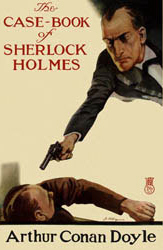
Photo credit: Wikipedia, First edition 1887

One last observation: The book is described as an adaptation of Sherlock Holmes set in the future. I’m guessing the Watson sisters are descendants of Dr. John Watson? The title A Study in Suffering could be a takeoff on A Study in Scarlet. Making the connection at this early stage is not necessary but the Brave Author will need to address that at a future point.

Overall impression: Brave Author, you quickly establish disturbance, tension, and mystery. The strange circumstances of Valentina’s death are compelling. The unanswered questions make the reader eager to learn more. But this first page is too bare bones. Flesh it out and it will be a good start.

Nice work, Brave Author! Wishing you the best of luck!

~~~

TKZers: What’s your impression of this first page? Would you keep reading? Any ideas for the brave author?

~~~


My new thriller, Until Proven Guilty, raises troubling questions about DNA evidence that’s supposed to show proof but may not.

Available at these online booksellers. 

Or ask your favorite independent bookstore to order it. 


Iron Sharpens Iron — The Wright Brothers

“Before the Wright Brothers, no one working in aviation did anything fundamentally correct. Since the Wright Brothers, no one has done anything fundamentally different.”

– Darrel Collins, US Park Service, Kitty Hawk National Historic Park

* * *

The incredible story of the Wright brothers is well known to all elementary school students. At least it used to be. Two men, neither of whom had completed high school, solved a problem that had been around since the time of Icarus. A problem so complex that it had befuddled some of the best engineers and scientists for centuries — the invention of controlled, powered flight.

How did they do it?

A March 2020 article in Scientific American aimed to answer that question:

Aviation pioneer Octave Chanute predicted in a speech in 1890 that “no one man” was likely to possess the imagination, mechanical acuity, mathematical capability and fundraising skill necessary to solve the problem of flight. “It is probably because the working out of a complete invention requires so great a variety of talent,” Chanute said, “that progress has been so slow.”

Chanute was correct. It did take more than one person to solve the problem of flight. It took two. Working together to solve the hundreds of issues that stood in the way of the first flight, the Wright brothers proved to be the perfect team, combining intellectual curiosity with mechanical expertise, hard work, and dogged determination to find the solution.

But in addition to all the natural talent and discipline, the brothers had another attribute that may have been the catalyst: they argued with each other.

But wait. Isn’t argument always bad? Apparently not.

The Wright brothers’ respect for each other made it possible to work together and argue every aspect of the project without having it affect their personal relationship. This may have been the deciding factor in their success.

Back to Scientific American:

They often argued about the technical specifications of their craft late into the night. After one particularly heated argument about the proper construction of the propellers, they found themselves in the ridiculous situation of each having been converted to the other’s original position in the argument, with no more agreement than when the discussion began. They argued because they sought truth, not because one brother desired to win a victory over the other.

The Wright brothers achieved their remarkable success because of their arguments, not in spite of them. I think there’s a lesson here for all of us.

* * *

I’ve had the good fortune to have worked with software development teams to design several systems. I’ve found the best teamwork is enabled when team members leave their egos at the door and engage in robust discussion about how to get the job done. Ideas are floated and team members are encouraged to poke holes in them and find alternate solutions to problems. Disagreeing without being disagreeable is the goal.

* * *

How does this apply to writing? Authors often find themselves on the receiving end of criticism and rejection. Feedback from editors, agents, critique partners, and even spouses can feel like cold water thrown on a writer’s best effort. And then there’s the occasional less-than-glowing review posted after the book is published. But sometimes even the harshest criticism given in a positive way will culminate in a better product and a better writer.

“Iron sharpens iron, and one man sharpens another.” –Proverbs 27:17

* * *

So TKZers: How do you handle criticism? Do you see it as “iron sharpens iron”? What advice would you offer new authors on the subject?


TIME AFTER TYME

Murder with a dash of humor