The Lessons for All Writers
Woven into ‘Charlotte’s Web’

“Remember that writing is translation, and the opus to be translated is yourself.” – E.B. White

By PJ Parrish

Writers are often asked what their favorite book is. Or which one most influenced them as a writer. The first question has always been easy for me — my favorite book is E.B. White’s Charlotte’s Web.  But it has only been in the last couple years that I realized Charlotte’s Web might be one of the biggest influences in my writing life.

I fell in love with this book the first time I read it. I was maybe eight or nine, just around the age of the heroine Fern.  But a couple years back, on the 60th anniversary of its publication, I decided to read it again.

What a revelation. It is, of course, maybe the most famous kid book ever. It won the Newbery and remains the bestselling children’s paperback even today. But what I didn’t realize is that it is a terrific story for adults.  Like the Harry Potter books, it has a magic that transcends age and a theme that resonates deeper the older you become.

I pulled out my copy last week and read it yet again. Yes, it still holds up for me. But I also tried to look at it with different eyes and dissect how it works as a novel. It has lessons to teach any writer working in any genre.

First off, it teaches us to write from our inner selves, from the most shadowed places of our hearts.  I think this is what the adage “write what you know” really means. It does not mean write about your narrow everyday world.  It means write about what is essential to your unique soul.

E.B. White has said the story came from his childhood memory of being unable to save a piglet. But in his book The Story of Charlotte’s Web, Michael Sims explains that in 1949, White found an spider egg sac in his Maine barn and cut the sac out of the web with a razor blade. He put the sac in an empty candy box, punched some holes in it, and absent-mindedly put the box atop his bedroom bureau in New York.  Weeks later, hundreds of spiderlings began to escape through the holes and spun webs on his hair brush, nail scissors and mirror. Thus was hatched White’s magical meditation that teaches us about life, death and the beauty of friendship.

But the book has many other things to teach us as writers.

Let’s start with the opening. I talk here often about picking the right moment to inject your reader into your conjured up world. And James writes often here about how you need to build your opening chapter around a “moment of disturbance.” Something has to happen. And it has to happen early enough in your plot to engage the reader’s interest. So how does Charlotte’s Web begin?

It’s breakfast time at the Arable family farm. Fern comes in to the table to see her father heading out to the barn with an ax. Mom tells her that one of the piglets is a runt and father is going out to do away with it.

Yikes. Gets my attention! Notice White didn’t start his story with Fern waking up in her little bedroom and thinking about the cute piglets that were born yesterday. He didn’t start it with a beautiful description of the Arable family farm. He went right for the dramatic heart. And what a great contrast he set up in our imagination: The warmth of a morning kitchen and a man leaving it with an ax on his way to a “murder.”

And is there a more chilling opening line in all of fiction: “Where’s father going with that ax?” Fern asked.

THE LESSON: Don’t waste time with pages of gorgeous description. Find the right moment to parachute the reader into your story. Build tension as quickly as you can.

Fern runs outside and we learn in a quick brushstroke that “the grass was wet and the earth smelled like springtime.” The crying Fern confronts her father that killing the piglet isn’t fair. To which dad says “you have to learn to control yourself.” Which is backstory, right? We now know Fern has a history of impetuousness. Dad relents and tells her she can bottle-feed the runt so she’ll learn how hard life can be.

THE LESSON: White sets up the protagonist’s challenge and has begun Fern’s character arc. And he starts plumbing the first level of the most important question an author must answer about motivation: What does the character want? Well, level one: Fern wants to save the pig.

We then meet her brother Avery, who wants to know why he can’t have a pig, too. Dad says “I only distribute pigs to early risers. Fern was up at daylight trying to rid the world of injustice.” (Level two: Fern wants the world to be just)

White then slows things down with a nice narrative about how Wilbur the pig thrived under Fern’s care. But then Dad says that Wilbur is old enough to be sold to the Zuckermans. Fern cries but Wilbur is banished to a manure pile.

THE LESSON: Your plot must have a series of setbacks for the heroine to deal with and overcome.

Chapter 3 opens with a long and lovely description of the Zuckerman barn. Because the plot is chugging along now, readers will be willing to slow down.

THE LESSON: Good pacing isn’t just a matter of full speed ahead. You have to know when to slow down and let the reader catch his breath. A good plot is a roller coaster with a series of tense climbs, terrifying plunges, and areas where you coast along – “whew!” – while you anticipate the next dip.

We then switch to Wilbur’s point of view as he meets the barnyard animals, each one indelibly drawn, especially the goose who helps Wilbur escape and Templeton the rat who steals his food. Fern hasn’t been to see him and Wilbur feels lonely and friendless.

THE LESSON: Don’t neglect secondary characters. Make them vivid and useful to the main character, be it a sidekick, foil, confidante – or a nefarious rat. Good secondary characters are prisms through which reader “see” the main character.

Speaking of secondary characters…has there ever been a finer one then Charlotte the spider? From her first lines – “Do you want friend, Wilbur? I’ve watched you all day and I like you” – we can’t help but love her. She’s smart (“Salutations! It’s just my fancy way of saying hello!”) and pretty and good at catching flies.

Wilbur is appalled by the fact she traps and eats bugs. He thinks she’s cruel. But in a matter-of-fact monologue, Charlotte explains that is what her kind has always done, that flies would take over the world if not for spiders, and besides, she fends for herself while he depends on the farmer to bring a slop pail.

THE LESSON: Never be content to create cardboard characters. Make every character as rich as you can — they are lightness and darkness  — and find ways to make readers understand your characters’ complexities.

Next, the plot turns dark when the goose tells Wilbur he’s being fattened up to become Christmas ham dinner. Wilbur is distraught but Charlotte says, “Don’t worry, I’ll save you.”

THE LESSON: All good plots are a series of setbacks. Wilbur thickens and so does the plot.

In Chapter 9, in what feels like a digression with no relation to the plot, Charlotte explains to Wilbur and Fern why she has so many legs and how she makes a web.

THE LESSON: Readers like to learn things about how the world works, but you have to weave such narratives subtly into your plot or they are boring or worse, preachy. Don’t show off your research. Have it relate to your characters. White slips in this factoid: It took eight years to build the Queensborough Bridge but Charlotte says this only to comment that men “rush rush rush every minute…”

Then we come to the “The Miracle.” Charlotte conjures up a plan to save Wilbur by weaving the words SOME PIG into her web. The Zuckermans are gobsmacked and decide Wilbur is special. People flock to see the miracle pig.

THE LESSON: Give your characters setbacks to overcome, but a good plot also includes triumphs, which usually escalate as the climax nears.

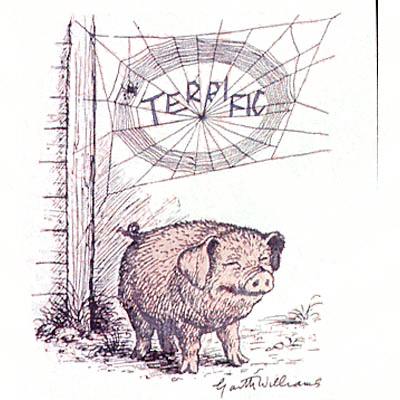
Charlotte worries that people are getting bored with SOME PIG so she gets Templeton the rat to go fetch some words from magazines that she can copy into the web. She weaves TERRIFIC and then RADIANT. The excited Zuckermans think of ways to exploit their pig.

THE LESSON: Always look for ways to up the ante, increase the stakes.

Chapter 14 is titled “The Crickets.” It’s a lovely descriptive dirge about the dying of summer. School would start soon. The goslings are growing up. The maple tree turns red with anxiety. “The crickets spread the rumor of sadness and change.”

THE LESSON: A little foreshadowing and mood is good but don’t be heavy-handed. Let it flow naturally from your setting. This is also White telling us what the theme of his story is – that life is about the inevitability of sadness and change.

The Zuckermans take Wilbur to the county fair for display. Charlotte, who needs to lay her eggs, reluctantly agrees to come along. At the fair, Wilbur is worried about a rival pig taking top prize and tells Charlotte to spin a special word for him. Charlotte confides that she’s not feeling well – “I feel like the end of a very long day” — but she promises to try. The cool of the evening comes and everyone is bedding down. White give us this wonderful dialogue between two old friends.

“What are you doing up there, Charlotte?”
“Oh, making something,” she said.
“Is it something for me? ” asked Wilbur.
“No,” said Charlotte. “It’s something for me, for a change.”
“Please tell me what it is,” begged Wilbur.
“I’ll tell you in the morning,” she said. “When the first light comes into the sky and the sparrows stir and the cows rattle their chains, when the rooster crows and the stars fade, when early cars whisper along the highway, you look up here and I’ll show you something. I will show you my masterpiece.”

THE LESSON: Yes, you should tug on the heartstrings. But whatever emotion you are going for must be well-earned. We have come to know and love these characters and as White moves us toward his climax, we have a soft dread in our hearts. Every emotion he has invested in this scene has come organically. Nothing feels tacked-on or artificial. Everything has pointed toward this logical end.

The fair opens and Wilbur, standing under Charlotte’s latest spun-word HUMBLE, wins a special prize. At night, left alone, Wilbur listens to fading Charlotte deliver her poignant speech about death and renewal:

“Your success in the ring this morning was, to a small degree, my success. Your future is assured. You will live, secure and safe, Wilbur. Nothing can harm you now. These autumn days will shorten and grow cold. The leaves will shake loose from the trees and fall. Christmas will come, then the snows of winter. You will live to enjoy the beauty of the frozen world…Winter will pass, the days will lengthen, the ice will melt in the pasture pond. The song sparrow will return and sing, the frogs will awake, the warm wind will blow again. All these sights and sounds and smells will be yours to enjoy, Wilbur, this lovely world, these precious days…”

“Why did you do all this for me? ” he asked. “I don’t deserve it. I’ve never done anything for you.”

“You have been my friend,” replied Charlotte. “That in itself is a tremendous thing. I wove my webs for you because I liked you. After all, what’s a life, anyway? We’re born, we live a little while, we die. A spider’s life can’t help being something of a mess, with all this trapping and eating flies. By helping you, perhaps I was trying to lift up my life a trifle. Heaven knows anyone’s life can stand a little of that.”

THE LESSON: Don’t neglect your theme. It is the heart of your machine, purring beneath the grind of your plot. When you are asked, “What is your book about?” the answer is never about its plot. It is about its theme.

Then, of course, Charlotte dies. Here is how White ends this chapter:

“Good-bye!” she whispered. Then she summoned all her strength and waved one of her front legs at him. She never moved again. Next day, as the Ferris wheel was being taken apart and the race horses were being loaded into vans and the entertainers were packing up their belongings and driving away in their trailers, Charlotte died. The Fair Grounds were soon deserted. The sheds and buildings were empty and forlorn. The infield was littered with bottles and trash. Nobody, of the hundreds of people that had visited the Fair, knew that a grey spider had played the most important part of all. No one was with her when she died.

THE LESSON: Sometimes you must kill off a sympathetic character. If it serves your plot and it is not gratuitous, the reader will accept it. But it must have a feeling of inevitability so that when the readers comes to this point they are sad but acknowledge there was no other way.

Chapter 22 is titled “A Warm Wind.” Life at the farm resumes its cycle. The snows melt, the sparrow chicks hatch. The last remnants of Charlotte’s tattered web float away. Wilbur misses Charlotte but one morning, her egg sac – which he had carefully brought back to the farm in his mouth – erupts and her babies emerge. Wilbur is happy to meet the new spiders but one day Zuckerman opens the barn and a soft wind carries the babies away. Wilbur is crushed, thinking he has lost his new friends. But three of Charlotte’s daughter stay and begin weaving webs above him.

THE LESSON: Don’t neglect the denouement.  A powerful story doesn’t end at the climax. There should be a tail to the tale wherein you wrap up some loose ends if needed, update readers on time passage and what has happens to some of the characters. In White’s story, of course, the denouement is also a coda of hope. Life goes on. Depending on the tone of your story, a happy ending might not be in your recipe.  But a hint of redemption or hope is never a bad thing.

Which goes to the point of theme. In the final chapter, the narrative recounts the passage of months and years. Fern, growing up, doesn’t come to the barn much. But every year, Wilbur has new spider friends – the offspring of his good friend Charlotte. Here’s the last graph of the book.

Wilbur never forgot Charlotte. Although he loved her children and grandchildren dearly, none of the new spiders ever quite took her place in his heart. She was in a class by herself. It is not often that someone comes along who is a true friend and a good writer. Charlotte was both.

THE LESSON: Bring it home. Your ending graphs are as important as your opening ones. A good story is circular in that it wraps back around itself, weaving a web of logic and emotion that captures your reader and  leaves them with a feeling of satisfaction.

 

First Page Critique: Strangled by a Cloud

Welcome to this week’s first page critique – today we have the first page of a historical mystery/thriller entitled ‘Strangled by a Cloud’. As always, my comments follow.

Strangled by a Cloud

My part in the Tenant’s Harbor affair began on the last day of January in 1878. That morning I was at my usual station: peddling hand-penned calling cards in the lobby of one of Boston’s many hotels; this time it was Young’s, in the financial district. A dozen cards for a Harvard toff had already bought me a hearty breakfast; a dozen more – perhaps with some flourish – for a Court Street banker would carry me through the rest of the day.

As the clock and the thermometer waned and the clouds began to spit sleet, my mood soured:  I take days like this personally, as have the thousands with my surname since the days of Noah. To lighten my mood, I left the outer crust of the lobby and strode towards the warmth of the core – the front desk – where I was greeted with the welcome smile of my friend, Adam.

“Cold is it, Mr. Merryweather?” he asked

“As colde as eny froste,” I replied, in an ersatz Middle English tongue.

“Ah, Chaucer – very good, very good,” he said (Adam was also the hotel’s unofficial man of letters and always appreciated a well-placed quote from the Tales).

I pulled the hotel register at his hands my way.  Now and then I made a sport of guessing at the age, nationality, personality, or occupation of guests based on their handwriting. I traced my finger down the list of guests until I reached the name “Charles Goodword.”

“Now here’s a bad character, Adam,” I began. “I’m guessing a gambler by profession, maybe something worse…he’s about forty years old, broad-shouldered, perhaps five feet ten or eleven…stout…and mean.  You’ll want to be rid of him, and soon.”

“Mr. Merryweather, it’s remarkable!” Adam said, truly surprised.  “As to age and height and build, you are quite correct, sir, quite correct. But as to his character, you are very mistaken: he’s a clergyman, you know – here to preach for several weeks – the Benevolent Society for something-or-t’other is paying his board.”

“A clergyman, is he?” I asked, adding, “Well, he’s a thief to boot.  Humor me and send for him,” I said, handing him one of my cards.

Adam obliged and sent a valet to call on Mr. Goodword.  The valet returned swiftly, confirming that he had successfully delivered the card and invitation, with my compliments.

“You think he’ll come?” I asked Adam. He nodded in assent.  “We shall see,” I said, shaking my head. “We shall see.”

Overall Comments:

Overall this first page was cleanly executed with an initial voice and style emerging that I think is pretty engaging. It appears to be emulating a Sherlock Holmes detachment and narration which I think could work well. What it initially lacks, however, is a bit of ‘oomph’ to set our story in motion and build intrigue. It also teeters, I think, in terms of credibility (see my specific comments below), but overall with some editing this first page could be an effective one.

Here are my specific comments:

Credibility

I think in this first page we need more background regarding the main character, Mr. Merryweather, as I’m initially skeptical that a man who makes his living penning calling cards in hotel lobbies would be educated enough to quote Chaucer and have even peudo-expertise in handwriting analysis. I’m also a little doubtful that a front desk clerk would be even an unofficial ‘man of letters’ without a bit more background. I’d be more willing to believe all of this if we got a sense that either Merryweather is an educated man that has fallen on hard times or that he is deliberately masquerading as someone he isn’t. Likewise I need a little more to buy into the fact that Merryweather has uncanny, Holmesian powers of deduction based on viewing Mr. Goodword’s handwriting.

Oomph

I wanted a little more intrigue from this first page when it came to the set up re: Mr. Goodword. I was expecting the valet to discover his dead body! The pay off on the initial page wasn’t really there and I was also skeptical as to why a clergyman would be interested in meeting a man who penned calling cards (or why the main character thought if he sent the valet up with his card the clergyman would respond – to be honest I’m not sure I even believe a man who makes his living hand to mouth by making calling cards would present his own card to anyone).  I feel that on this initial page, more intrigue would set the story on a stronger footing and would entice readers to keep turning the page.

Minor editorial issues

There were a few moments where I was taken out of the story. The first was when the main character said ‘I take days like this personally, as have the thousands with my surname since the days of Noah’. I didn’t feel this reference worked, mainly because the name ‘Merryweather’ doesn’t exactly sound like a surname from biblical times. Perhaps a middle ages reference would be more appropriate but at the moment it sounds awkward. Likewise the reference to the ‘outer crust’ of the lobby sounds strange – even though I understand what the writer was trying to get at and how the main character moved to the ‘core’ of the lobby – It didn’t work for me in the context of this story. In addition, the clock and thermometer ‘waned’ didn’t seem quite the right expression either – as the clock ‘waning’ would surely mean going backwards if the numbers got smaller (?).

I also found it odd that Mr Merryweather would call Adam by his first name but Adam didn’t reciprocate, but called him the more formal ‘Mr Merryweather’ in return. I’m assuming they are on the same social level and know each other well enough (as Merryweather calls him a friend) so the formality of Adam’s response doesn’t seem to ring true.

Also when Adam says: ‘ But as to his character, you are very mistaken’,  I feel that this should be either ‘very much mistaken’ or just ‘mistaken’ (‘very mistaken’ sounds weird to me).

So TKZers, what comments do you have for our brave submitter today?


First Page Critique: MERCY KILLER

“Cloud Sculpture” by Berndnaut Smilde, from Architizer. All rights of ownership reserved to respective creators.

Good Saturday to you, and please join me in welcoming today’s Anon to First Page Critique! Anon combines thriller elements with a touch of the supernatural in a work entitled Mercy Killer, which begins as follows:


Mercy Killer

I checked the picture on the screen of my cell phone one last time.  Errors were not acceptable in my profession.  The blue light of my phone spilled out into the darkened hospital room that smelled of antiseptic and decaying flesh.  I glanced up at the old man in the bed. An overhead lamp lit his face in a circle of warmth. He was the one. His chest quivered as he drew in a ragged breath. I wondered how many breaths he would take before the end.

His silver blue mist floated in the air above him. I shook my head.  That was not a good sign.  When the mist had become completely detached, I knew that the time had come.  Sometimes the mist still clung to them, but as the hour approached, it tugged and pulled, begging to be free.  I could always tell when the end was near.  The mist told me and this man’s mist was already free. He was ready to die.

I glanced at a photograph on the stand that showed a young man in a suit holding a new born baby with a pink face.  Beside it stood a vase with a blood-red rose. Propped against the vase sat a card that lay open. I stepped close to read the words scrawled in an impeccable hand.  “To my dearest love.”

Crayon pictures of what looked like animals and grass and trees had been taped to the wall.  A photograph of a sailing ship with its sails billowing out before the wind clung to the wall over his bed.  This man had lived in this room for a long time.

I checked the history on my screen.  He had been here for over a year and he was scheduled for death in two days. I glanced at the mist again.  I couldn’t leave him for two days. He was ready now.

The man grimaced and opened his eyes. A hand strayed to his stomach were a cord poked out from under the sheets. I had seen pain before–many times. But I never got used to it. Seeing another human being in pain always sent a stab of sorrow to my heart.  I had endured pain, real pain. My handler told me that that is why I had been chosen for this special task. Not just anyone could do it.

“You have empathy,” she said as she peered down me from over her pink rimmed glasses.  “We need people like you.


Anon du jour strikes a mood here, for sure. I currently have a friend in what is known as a “rehabilitation center.” It is a nice one, as such places go, but there are certain things you just can’t clean up and the smell of slow-motion decay is one of them. I’ve been thinking of “Mercy Killer” often over the past few days as I walk through the corridors of the center toward his room. There’s a lot of misery in that place.

Overall, let’s give our Anon some applause for creating mood. I want to clean up a few things, however, to make it even better. I’m also going to propose reshuffling a couple of paragraphs to arguably improve the flow of the story. And…I know Anon uses the word “mist” frequently here, but I can’t think of a way around that. Maybe one of you out there can help.

First paragraph:

—  Errors were not acceptable in my profession. Anon, do you mean that errors were not acceptable in the narrator’s profession, but they are now? If there’s been a change in standards, fine, but if errors will still get the narrator dinged on their performance evaluation, the sentence should read that “Errors are not acceptable…”.  

— An overhead lamp lit his face in a circle of warmth. Anon, I kind of get where you’re coming from but let’s cut that sentence off at An overhead lamp lit his face. so that the reader isn’t wondering if the lamp is a heat lamp or an illumination lamp or both.

— Also, let’s cut out the second “breath(s)” in the paragraph so that it reads, “I wonder how many he would take before the end.”

Second paragraph:

Parts of this paragraph — those dealing with the significance of the mist — are redundant. Your protagonist explains that they can tell when the patient is ready to die by the state of the mist, then notes the state of the mist and concludes that the patient is close. Also, you use the word “free” twice in the space of a couple of sentences. Let’s shorten and sharpen this up just a bit. One way to do it would be:


His silver blue mist floated in the air above him.  That was not a good sign. I shook my head. Sometimes the mist still clung to them, but as the hour approached, it tugged and pulled, begging for release. This man’s mist was already free. He was ready to die.

Actually, Anon, we’re going to do a bit more with this, combining it with the fifth paragraph when we get there. See below.

Third and Fourth Paragraphs:

— I like these. You do a nice job of putting us in the room, Anon. One typo: “new born” should be “newborn.” You might also combine these paragraphs, but they work fine separately, as well. It’s up to you.

Fifth paragraph:

— I recommend combining this with the second paragraph since as a whole it is somewhat redundant. Thusly:

His silver blue mist floated in the air above him.That was not a good sign. I checked the history on my screen.  He had been here for over a year and he was scheduled for death in two days. I glanced at the mist again and shook my head.  I couldn’t wait that long.  Sometimes the mist still clung to them, but as the hour approached, it tugged and pulled, begging for release.    When it was completely detached, however,  it was time.  This man’s mist was already free. He was ready to die.

Sixth and seventh paragraphs:

— Anon, I think that you should save the introduction and mention of the handler for later in your story. Let’s try to keep things in that room and between the patient and mercy killer until things play out. We’re accordingly going to remove the seventh paragraph altogether, as well as the last three sentences of the sixth paragraph.

— As for the sixth paragraph:

1)  “Let’s change “A hand strayed…” to “THE PATIENT’S hand strayed…”

2) “were the cord” should be “WHERE the cord.”


Last…I would like to rearrange your paragraph order, Anon, so that the story goes from observations of the patient to the room and then concentrates on the mist. This involves keeping the first paragraph where it is, and moving your second paragraph (now combined with the fifth) so that it follows the description of the room. It’s going to look like this:

I checked the picture on the screen of my cell phone one last time.  Errors are not acceptable in my profession.  The blue light of my phone spilled out into the darkened hospital room that smelled of antiseptic and decaying flesh.  I glanced up at the old man in the bed. An overhead lamp lit his face. He was the one. His chest quivered as he drew in a ragged breath. I wondered how many he would take before the end.

I glanced at a photograph on the stand that showed a young man in a suit holding a newborn baby with a pink face.  Beside it stood a vase with a blood-red rose. Propped against the vase sat a card that lay open. I stepped close to read the words scrawled in an impeccable hand.  “To my dearest love.” Crayon pictures of what looked like animals and grass and trees had been taped to the wall.  A photograph of a sailing ship with its sails billowing out before the wind clung to the wall over his bed.  This man had lived in this room for a long time.

His silver blue mist floated in the air above him.That was not a good sign. I checked the history on my screen.  He had been here for over a year and he was scheduled for death in two days. I glanced at the mist again and shook my head.  I couldn’t wait that long.  Sometimes the mist still clung to them, but as the hour approached, it tugged and pulled, begging for release.    When it was completely detached, however, it was time.  This man’s mist was already free. He was ready to die.

The man grimaced and opened his eyes. His hand strayed to his stomach where a cord poked out from under the sheets. I had seen pain before–many times. But I never got used to it. Seeing another human being in pain always sent a stab of sorrow to my heart.  

I’m done. TKZers…please have at it. I will stay uncharacteristically quiet for the most part during your comments. And Anon…thank you for providing us with your first page. Your story feels as if it will raise an important issue which is still being played out. I hope that you get to the end and that we’ll have the benefit of reading it.

Key Ways to “Show” Your Character & Not “Tell” on Him – First Page Critique: Palm Beach Nasty

Jordan Dane
@JordanDane

This photo makes me want to go on vacation. Let’s take a ride with Crawford, our character in Palm Beach Nasty, a 1st Page Anonymous Submission. Read and enjoy. My feedback follows:

ONE

It turned out Crawford really missed the murder and mayhem up in New York. Which was weird, since the whole reason he’d gone south was to get away from it all.

At age thirty-six, with a bad case of acid reflux, chronic cynicism, and acute burnout, Charlie Crawford had packed up his Upper West Side apartment and headed down to the Sunshine State. He decided on the Keys, the plan being to take up surfing, give the Jimmy Buffett thing a shot. But after three long months of listening to stoned-out beach bums in lame Hawaiian shirts oohing and aahing pretty average sunsets and duding each other to death, Crawford was ready to move on.

So he’d reached out to a handful of Florida law enforcement agencies, and when the Palm Beach Police Department made him an offer, he grabbed it. But almost a year into the job, no one had come close to getting knifed, shot, garroted, or even banged up a little. Christ, what he’d give for a nice facedown stiff, a little rigor setting in. Crawford was drawing a bunch of nowhere cases, which could best be summed up by the one he was writing up now.

It was late afternoon on Halloween, and a call had come in about a possible trespass up on the north end. The north end of Palm Beach was really two places, depending on the exact location. Obscenely rich or doing just fine, thanks. Spectacular houses on the ocean and Intracoastal that started at ten million dollars and went up from there. Or fixer-uppers, on postage-stamp lots at around a million. Recently a Russian fertilizer billionaire had plunked down a shade under a hundred mill for Trump’s monumentally ugly, but colossally huge, ocean spec house.

But despite that, the real estate market had been hit hard when Wall Street collapsed three years before and was still wobbly. Somewhere between anemic and soft, desperately trying to claw its way back to pre crash levels. One of the top brokers in town was whining about having a lousy year—4.8 million in commissions as opposed to over 7 million in ’07. And real estate lawyers quietly grumbled about fewer closings, but even more about a troubling new phenomenon: clients hondling them on their fees. And pity the poor builders, who had traded down from tricked-up ninety-five-thousand-dollar Escalades to basic Ford 150s.

FEEDBACK
Overview – There is an ease to this writer’s voice that I liked. This intro is written in a deep POV that is close to first person. I almost wish it was full blown 1st, to give the character more room to breathe. This character has opinions about everything, which would work for the intimacy of 1st person if the author can tighten the narrative (without too much meandering). Because of the mental meanderings, the pace is significantly slower with a lack of focus for the action or world building.

A good thing to note is that this author can hear the character and is willing to channel him. That’s not an easy thing to get and execute. Kudos.

But how can this author retain the good parts of the character voice, yet not slow the pace? A big part of this resolution is how to introduce a key character by SHOWING rather than TELLING about him.

HOUSEKEEPING:

Where to Start? – The author started with a back story dump, sharing where Crawford had lived in NYC with a subsequent stay in the Keys, then on to police work in Palm Beach. These are all things that can come out later with patience. At the start, it’s too much misdirection without a point. That puts us down to paragraph 4 to search for a place to start–at the body or crime scene and any interesting lead up to that moment–but we get a lesson in real estate and the Wall Street crash. Bottom line, we need a better place to start that can showcase Crawford and his personality, through his actions and his cynical dialogue or banter with his colleagues.

Passive Voice – There were too many uses of ‘was’ and ‘had’ to indicate a past time period, or hint of backstory. ‘Was’ is used 8 times and ‘had’ is used 9 times in 400 words of this introduction. These are words I try to minimize and correct in an edit. It indicates this story should start with the present action and minimize the backstory.

Missing words typos – These are hard to catch. As authors, we are too familiar with our own work and miss words that should be there if we don’t read more carefully or read aloud. Last sentence in 2nd paragraph – “…oohing and aahing AT pretty average sunsets…” (‘At’ is left out.)

But how can this author retain the good parts of the character voice, yet not slow the pace? A big part of this resolution is how to introduce a character.

Key Ways to SHOW your Character rather than TELL On Him:

Try introducing your character like some films do, with big character stars like Capt Jack Sparrow in Pirates of the Caribbean. Johnny Depp doesn’t merely walk onto the scene and speak his first line, he makes a big intro to SHOW who he is. In mere seconds, we know him and who he’ll be. It takes practice to do this for an author of fiction. I call this “The Defining Scene.”

So imagine who Crawford is when he’s first introduced to this story. Since I like the author’s instincts on voice, I wanted to ask open ended questions for a rewrite of this intro. I didn’t want to influence the author by rewriting it myself. Think of it as a homework assignment, a short exercise.

1.) He’s a transplanted New Yorker with a side trip to the Keys. I can see his NY accent coming through. Are there remnants to his Keys stay? What does he wear in Palm Beach as a former New Yorker?

2.) Crawford is cynical and opinionated. How does this affect his co-workers, the other cops. Is he liked? Does he like them? Is he a loner?

3.) What hobbies does Crawford have? Are these apparent? Does he let other people know about them? What does he dream about? Is he saving for a beach house or a boat? Maybe he works more than one job to save up for something he doesn’t want to share with anyone else. Why did he choose the beach again? Does he miss NYC?

4.) He seems to thrive on crime scenes, being in his element. How does that manifest? Is he overly detailed in his approach or almost too relaxed? Does he communicate on the scene or keep to himself? Does he have a partner? If so, is his partner the same or opposite? Do they get along or not? How does that work for them?

To make Crawford memorable, the author gets a ‘first shot’ at a reader’s first impression. How would the author set the stage?

Below are some things to keep in mind.

  • Devise this crime scene for Crawford to shine or standout. Is it particularly morbid? Has he seen cases like this before? Does he bring NYC bagels and coffee? How does he react versus how others do? Set the stage for Crawford.
  • Give him something to do that will show the reader who he is. When others are turning away, he’s unusually attentive to details of the corpse. Does he have any idiosyncrasies at the scene, like how he treats the victim? Does he notice a stray cat in an alley with a possible clue when no one else does?
  • Make this scene about Crawford and focus on him. Let the reader know how he ticks, his values, his likes and dislikes. Carry these things through the book to take the reader on a journey.
  • Focus on Crawford’s character, more than plot, to give the reader a sense of him in this intro. If the author can devise a way to jump-start the plot (as in the murder scene), then you’ll get two birds with one stone.
  • Build on the energy from the Defining Scene. The reader will make an investment into Crawford going forward.

DISCUSSION:

What feedback would you give this author, TKZers? Is the engaging voice enough to keep you turning the pages?

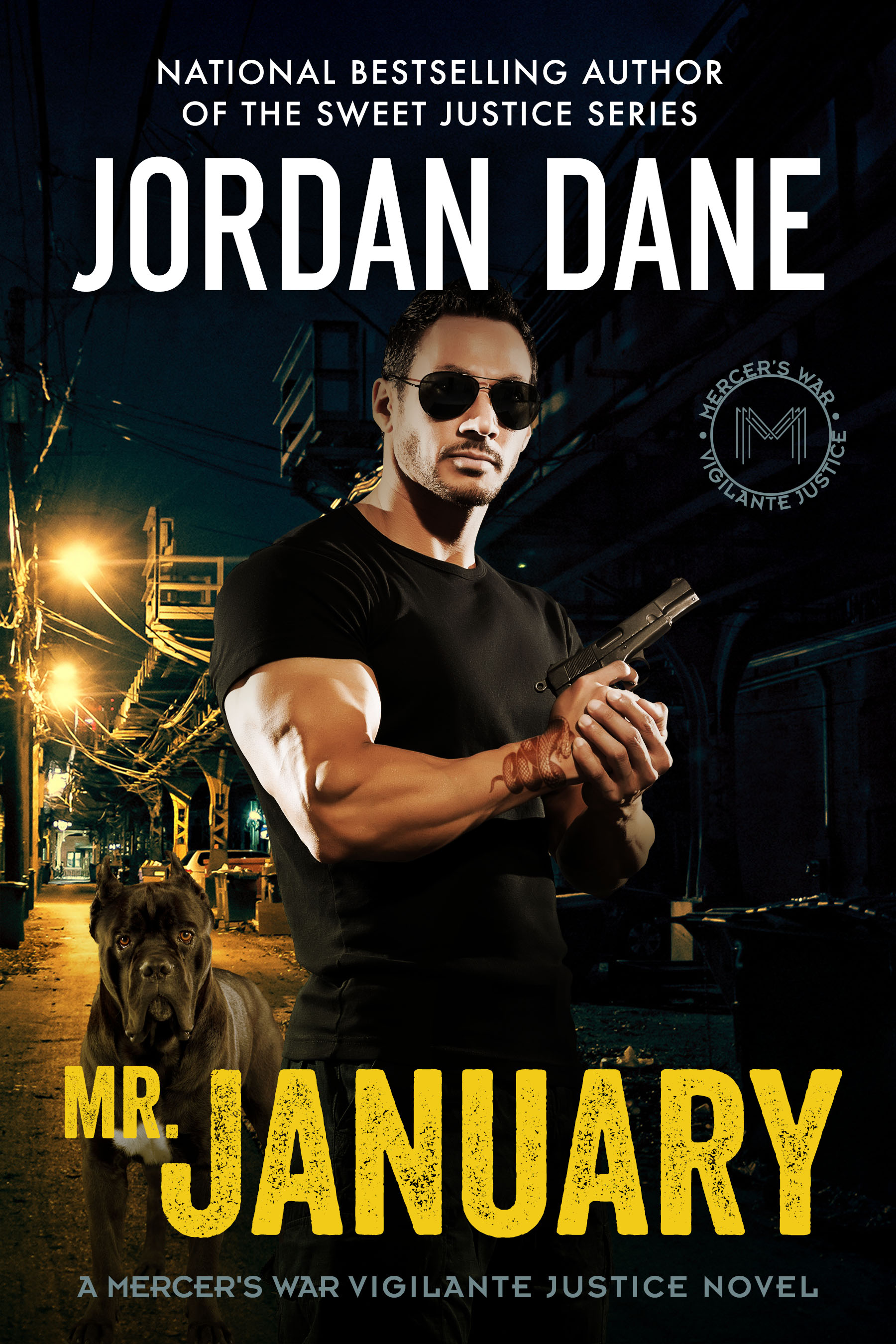
Mr. January Available NOW! $2.99 Ebook

Zoey Meager risks her life to search for her best friend Kaity in a burning warehouse, only to cross paths in the inferno with Mr January, a mysterious man with a large black dog, completely devoted to its master.

So You Wrote the BEST BOOK EVER! Sorry, There’s More to Do.


Writers have a reputation–sometimes deserved–of being drama queens. Right this very moment, I am wearing the crown. ? My head aches, my eyeballs are dry as ping pong balls, I just this moment came thisclose to accidentally taking a family member’s Adderall instead of a handful of ibuprofen, when I turn my head, my neck sounds like it’s filled with potato chips, and I’m at the computer two hours past my bedtime for the 13th night in a row. This can only mean one thing:

I finished my latest book and sent it to my agent today!

Maybe it’s just the sleep-deprivation, but I feel a bit…insane. I actually left the house today for the first time in let’s-not-talk-about-how-many-days. Tuesday is the day I schedule appointments and run errands (and, no, I’m not yet eligible for the Tuesday senior discounts!). I have a vague memory of mailing things, and listening to someone telling me about a friend’s son who has a collapsed lung. I could only respond, “Oh, that’s terrible.” But I think I said it about 30 times, because it felt weird to actually be talking to another human who wasn’t my husband and I was having trouble following the details. I could go on about how I’m waking up to the alarming state of our home, and the nutritional paucity of the meals I’ve been slinging to my family over the past two weeks, but you can simply picture a post-tornado scene, littered with Chinese takeout boxes and piles of unopened mail. (Okay. There aren’t really food boxes, but there’s a lot of mail, and I might have had reheated pizza for lunch.)

BUT. The state of things isn’t going to change for the next little while, because while I’ve sent off the manuscript, there’s much more to do. (Hey, I bet you thought this was going to just be a touchy-feely blog. Surprise!)

I suspect that in the long history of TKZ, folks have talked about what an agent needs from a writer in order to put together a nice package for editors. But here’s a refresher. I have an excellent agent, and she has very specific requests. Your experience may differ.

Your agent (or you, if you’re doing the submitting) wants editors to see you as somebody who: 1) has written a kick-ass book; 2) fits into an identifiable category; 3) will be a partner in selling your book. It’s pretty simple, but this is stuff you need to think about between the time you finish your book and start sending it out to agents. Yes, even before you have an agent because if you have all of this information together, you’ll be more appealing to an agent.

A clean manuscript. Tidy it up, make sure it’s double-spaced, in a legible font with page numbers, your name, and title in the header. Don’t include a picture of your cat, child, or sketches of what you want the cover to look like.

A bio. Who are you? Where are you from? Have you published anything else or won any contests? Keep it brief–around 250 words. Don’t share your hobbies or recipes or phone number (that goes on the cover page)

Oh, and do have a cover page with your name, address, phone, and email up in the left-hand corner. Title should be centered in the middle of the page, with “by” and your name below it in a smaller font. No page number on the cover page. There’s a box you can check for “different first page” in the header format menu.

Comps. This can be tough. List writers who write similar books to yours. The Amazon “Customers Also Bought” list is a good place to start. Include as many as you can. Be specific. Don’t list, say, Michael Connelly, if you write bakery mysteries, or romantic suspense. Do reach, though.

Your platform. There are tons of places on the Internet (i.e. Jane Friedman) where you can learn what a marketing platform is. Everywhere you’re found online is part of your platform. (I’m certain TKZ has info–anyone have a link?) Facebook, Instagram, Twitter, Pinterest, Google+, Linked In, Goodreads. No Tindr or Grindr. I confess I’m not a Snapchat-er. Does anyone here use it for promo? But your platform also includes your website, blog, and email list. (It’s never too soon to start building a mailing list. Start with people you know in real life.) Sex tapes totally count. But they can also count against you.

Professional Associations and Contacts. Networking can be challenging for introverted writers. Most professional groups have associate memberships for unpublished writers or readers. Join. Get the newsletters. Go to conferences and volunteer. Get involved. An editor wants to know that you’re out there networking with other writers and getting your name in front of potential readers Your agent will also want to know if you have writer contracts who might provide you with the B-word: BLURBS. Most writers will tell you that this is by far the most awkward and uncomfortable thing about the business. But it must be done. Blurbs from other writers not only look nice on a cover, but suggest that someone a reader might admire likes your book enough to say something nice about it. A big name can be a huge deal. If you can’t get a big name, a medium name will do. You’ll find that some writers, particularly indie writers, quote reader reviews. It’s fine, but they won’t get an agent’s or publisher’s attention. Don’t make up blurbs. That’s really bad, and you’ll get caught.

If you can get a writer to blurb your book even before it goes to agents and editors you get bonus points. It’s something my agent likes me to do before she goes out with a book.  Talk about a difficult ask…I once had a NYT bestselling writer turn me down for a pre-submission blurb, and she wasn’t very nice about it. It’s worth a shot, though. Give your book every advantage.

Be proactive in describing how you might promote your book. Newsletters, contests, ARC giveaways, guest blogs, etc. Think about reaching out to readers. Even if your publisher has a promotion budget–a rarity these days–you need to do everything you can to pitch in.

Editors. Do you know folks in the business? A friend of a friend? Your agent will have many contacts, but if you know someone, they might be able to direct you to just the right editor in their publishing house.

I think that’s it. Can you all think of anything I’m missing? Remember–You’ve put your heart and soul into your work. Honor it, and take responsibility for it. You can make a real difference for yourself.


“The Dot”: Grist For A Sci-fi Thriller?

By Kathryn Lilley

I’m slightly obsessed with science and technology TV shows (How The Earth Works, Through The Wormhole, etc.). In fiction, I love Michael Crichton-style techno/sci-fi thrillers, such as stories about a new technology run amok (JURASSIC PARK and PREY, for example). So I was intrigued by a story I recently heard about a worldwide research effort called The Global Consciousness Project. The research project (which is being conducted at Princeton University) is collecting data to investigate  the theory that a global, coherent consciousness exists, composed of the energy created by human minds.

Up until recently, any notion of a global consciousness existed only in the realm of science fiction novels and B movies. But according to the project’s researchers, recent studies have suggested that the presence of humans (specifically, human minds) can in fact have a discernible effect on random number, machine generated data. I’m probably not explaining the concept well, so  below is a YouTube video with more information. But basically, the idea is that human thoughts and reactions to significant events, scaled up to a global level, creates measurable impacts on patterns of otherwise random data. The researchers are tracking the changes in “thought energy” by tracking realtime color changes in a so-called “Global Consciousness Project Dot.” The dot changes color every time there is a structured change in an otherwise random data pattern. In other words, the Global Dot is supposed to function as a sort of planetary Mood Ring. (Remember those?)

When I checked the Global Dot this morning, it was Orange, which suggests people are responding to some significant event taking place in the world. (Did I miss something big?)

So, getting back to science fiction and technology run amok: in the hands of a novelist, how might the theory behind the Global Consciousness Project be helpful or harmful to humanity? To be the stuff of a good sci-fi story, the technology or science must appear promising at first (as the Global Consciousness researchers declare this project to be), but then–talking strictly fiction here, I’m not impugning the actual GCP itself in any way–that technology has to morph or change in some unanticipated way, becoming a monster that threatens humanity instead of helping it.

If you were to write a sci-fi novel based on the science of The Global Consciousness Project, how would you turn it into a “monster” for your thriller?

First Page Critique: “Blues In The Night”

This submission landed in a Kill Zone Inbox sometime last fall, and after a who’s-on-first? journey from then ‘til now, residing next to Trump’s tax return in a top secret eyes-only clandestine subterranean vault (my name is complicit, I’m told)… it finally shows up here, for our most well-intended group critique.

A consolidated apology goes out to today’s brave and persistent author.

Because this is short, I’ll show it undisturbed at first pass (nothing disrupts a read than a line of red typeface from someone suggesting it could/should be different), followed by— for the author, and those readers so inclined—my most empathetic input.

As usual, feel free to chime in. That’s the point, after all, shooting for consensus and clarity.

I will say, though, that while I’m delighted to be here participating, I’m not all that sold on first page critiques. It’s a bit like doing a home inspection with a high speed drive-by (“looks like that roof could use some patching up…”). And if the math of these things holds up, the dozen or so editorial suggesti0ns that almost always seem to manifest in these submissions (POV being the most frequent imposter), that translates to roughly 4800 total manuscript notes (12 per page in a 400 page manuscript)… which would send most of us sprinting to the local bar instead of back to the drawing board.

The math is explained by this particular human observation: when you ask a bunch of people sitting in front of the room for input, using the word “critique” to frame a process that is anything but precise—because this is not math—rest assured, they’ll find something.

If you think this is brutal, sit in on one of these things at a writing conference, especially if agents are doing the evaluations… it’s like a public hanging: dark, yet morbidly compelling… unless it’s us wearing the rope.

Remember what William Goldman once said: “Nobody knows anything.”

In this and all KZ critiques, know this: we’re just trying to help… and, we’ve all been there, swinging from that tree.

——————————————

Blues in the Night

Everett

Miami Beach, Florida

Tuesday, October 16, 1951

12:10 AM

Sarah rolled naked out of bed and sashayed into the kitchen to pour a couple of drinks. Her cute ass, uncommonly tight for her age, swayed from side to side as she left the bedroom, putting a smile on Everett’s face.

Not bad for an old gal.

When he heard her puttering around with the drinks, he slipped out of bed and across the room, and grabbed her custom-made replica of the Maltese Falcon from the occasional table. Stoneware bird in hand, he moved to a spot behind the door.

She never saw it coming. As she walked in with their drinks, he swung the falcon, which had to weigh five pounds, smacking her in the temple. The glasses flew from her hands as she sank to the floor, blood flying from the wide gash on her head.

In an instant he was on her, straddling her, hands wrapped around her neck tight, tighter, tighter. Her eyes, which only minutes ago gazed at him with unbridled lust, now bulged outward, as if in astonishment. Her well-tended complexion took on a ghastly blue tint.

Tight, tighter … until the faint rhythmic throbbing beneath his thumbs fell still. The only sound now was soft band music wafting out of the console radio, tuned to the late-night Sleepy Time Gal program.

Her hair hid the split in her skull but not the last of the blood. Everett watched it seek its own level, changing from red to reddish-brown as it spread across the rug. He touched it with the tip of his index finger and examined it, tilting his head to one side, then the other, to maybe discover some new feature of the droplet visible only from an odd angle.

The urge to lick the little red bead off his finger was great, and he thought about taking some of Sarah home with him, having her protein — her very essence — flowing through his own veins.

He recalled Violet. He hadn’t done that with her. But now? Yes! He swiped it off with his tongue and let it glide down his throat, then stood up and went into the bathroom to wash the blood from his arms and torso.

He got dressed, then rifled her purse for money and grabbed what jewelry he could find, including what looked like a nice diamond bracelet and a pair of emerald earrings.

He pulled a few drawers out of her dresser, looking for that stash. Everyone like her — rich, that is — had a big stash somewhere close by. He only had to find it.

——————————————

Here are my notes. In general I like the writing, but like everything just out of the printer, it could use some re-thinking to make it even stronger. It could be more visceral, more nuanced, and thus, the scene rendered more disturbingly.

One of the things that hit me is that this is more than a little terrifying. Which I suppose is a good thing in its genre. But keep in mind, a first page has a specific and unique mission: to thrust the reader forward, compelling them to keep going.

With that filter, read this again and ask how much invitation and motivation you’ve given your reader. While you tell us this isn’t his first time, there isn’t even a hint of motivation (beyond psychopathy) or a general sense of why we’d want more.

That becomes the context for my input today. Look for ways to get into the heads of these players, minding the fence of POV, using inner dialogue and context to intensify both vicarious roles.

Sarah rolled naked out of bed and sashayed into the kitchen to pour a couple of drinks. Her cute ass, uncommonly tight for her age, swayed from side to side as she left the bedroom, putting a smile on Everett’s face.

Not bad for an old gal.

Okay, this is seriously twisted.  But you don’t bridge it from what seems innocent to what ends up being incomprehensible… and you could. Perhaps add a comment that, a few sentences from now, will link his appreciation of her “”sashay” – am thinking you could find a better verb here; who gets out of a bed and sashayes anywhere? – to what will be her dark fate? He enjoys having put her at ease, it makes the take-down all the sweeter.

Play up the sickness playing in his head.

When he heard her puttering around with the drinks, he slipped out of bed and across the room, and grabbed her custom-made replica of the Maltese Falcon from the occasional table. Stoneware bird in hand, he moved to a spot behind the door.

You have three actionable movements here, in one sentence: hearing the drinks, slipping out of bed, and grabbing the fake Falcon. That’s too many. Chunk it up. While the writing is good, this is the most amateurish of all your sentences on this page.

And “stoneware in hand” is just… rewritable. Do so.

She never saw it coming. (Skip that… this is obvious.) As she walked in with their drinks, he swung the falcon, which had to weigh five pounds, smacking her in the temple. The glasses flew from her hands as she sank to the floor, blood flying from the wide gash on her head.

Could be tighter: He swung the falcon the moment she appeared in the doorway, anticipating,his feet leaving the floor from the force of his effort. Ceramic colliding into flesh, framed in an arcing spray of red. Bone shattering, creasing the skin before it tore apart. It played before his eyes as if in slow motion, a moment he would revisit again and again, turning up the sound to capture the wet thud of it, going in for a closeup on her eyes, scanning for the moment she knew she was dead, wondering if she could connect him to it before the darkness fell.

Present tense would put us more in his head.

He was on her as she fell, straddling her already limp body. Hands wrapping around her neck… tight, tighter, tighter. Her eyes, only minutes from gazing at him with unbridled lust, now bulging outward, a confusion of astonishment and realization. Her face took on a ghastly blue tint.  (Would that happen that quickly, moments after impact?  I don’t think it would.  And… not the time or place to comment on her well-tended complexion.)

His hands froze on her throat, his forearms screaming at him … until the faint rhythmic throbbing beneath his thumbs fell still. The only sound now was soft (we don’t care if it’s a band or an accordion) music wafting (wafting? Really?) out of the console radio, tuned to the late-night Sleepy Time Gal program.  (Why do we need to know the name of the program?  Don’t think we do. You’re trying too hard here… stay in the moment, author, go deeper into it, don’t dress it up with peripheral uselessness.)

Overwriting. The bane of the new author. Start to notice, and start to avoid it.

(cut this: Her hair hid the split in her skull but not the last of the blood.) Everett watched the blood emerge from beneath her hair, seeking its own level, changing from red to reddish-brown as it spread across the rug (nope, it wouldn’t change color before his eyes, moments after impact). He touched it with the tip of his index finger and examined it, tilting his head to one side, then the other (you already said “side to side,” so what do you mean by “then the other” – which translates to “side to side to side”… need to clean this up), to (not maybe) discover some new feature of the droplet visible only from an odd angle. (this sentence is a stretch, I think… nobody looks for, or cares about, a “new feature” of a drop of blood; you’re contriving here.)

The urge to lick the (don’t need the adjective “little” here; we’re pretty sure it’s not a “huge” bead of blood) red bead from his finger was tugging. (new sentence, avoid the run-ons) He thought about taking some of her (we don’t know her name, this isn’t the time to tell us, either) home with him, having her protein — her very essence — flowing through his own veins.  (I like this… it’s twisted as hell…)

He recalled the last girl. Violet, he recalled. He hadn’t done that with her. But now? Yes! He swiped it off with his tongue and let it glide down his throat, motionless, submitting to the sensation. He then stood and went into the bathroom to wash the blood from his arms and torso, tasting it again before it was all gone.

He dressed (did he “get dressed, or perhaps a more active verb – dressed – works better here), then rifled her purse for money. Coming up with nothing, he rifled her dresser for jewelry, grabbing what he could find, including what looked like a nice diamond bracelet and a pair of emerald earrings.

He pulled out the remaining drawers, looking for that stash. There was always a stash. Everyone like her — rich, that is — had a wad of cash somewhere close by. He only had to find it.

But even if he didn’t, he would go away satisfied.

(This closing line punches up the darkness of it all.)

____________________

Of course, these are editorial prompts only.  They suggest a deeper dive into the moment, into the perp’s head, which is the scariest place of all you can take your reader. We get a sense he’s not done, which is why we’ll stay with him in this story.  Because we want him to go down.That context – not so much to experience him, but to build a sense of dread, so that we will root for his ultimate failure and demise – is the nuance that will add to this project.

I wish you great success going forward!

Kill Zoners, what say you?

Passion

Today’s TKZ guest, author Sasscer Hill, has been involved in horse racing as an amateur jockey and racehorse breeder for most of her life. She sets her novels against a background of big money, gambling, and horse racing, and her mystery and suspense thrillers have received multiple award nominations. She’s well qualified to write about writing with passion. Welcome, Sasscer.   — Elaine Viets


 PASSION

By Sasscer Hill

Here’s what I believe: if a current of passion doesn’t run beneath a story, it will never be as good as it can be.

Let me mention three authors who have greatly influenced me with the passion that appears to drive their writing. All three are terrific writers with an excellent grasp of the craft of writing, but each has that something extra, that something that polished technique alone doesn’t produce.

Michael Connelly, previously a crime journalist for many years, has a visceral theme in his books that appears to be propelled by a desire for justice. His main character, Harry Bosch, strongly believes that someone must speak for the victims of violent crimes. Bosch’s empathy and integrity lends an authenticity and tension to his stories that has kept readers coming back for years.

Born in 1908, M. M. Kaye, author of the book, The Far Pavillions, had a lifelong fascination with India and the history of the British Raj. She had a wonderful story idea for her book. But her passion for India’s exotic culture, the mysticism and mystery found in its rugged land and among its people appear to have impelled her to create a book that became an international bestseller.

Lke me, author Walter Farley had an intense passion for horses and horse racing. His love of speed and the thrill of the sport, coupled with his ability to translate it into fiction, made his Black Stallion series one of the most popular children’s series of all time.

As a reader, I graduated from Farley to Dick Francis, the famous British author whose career began with horse racing mysteries. In school, the only thing I truly loved, and consequently excelled at, was literature and creative writing. My extracurricular activities centered on horseback riding.

When I set out to write my first horse racing mystery, I worried. Just because I loved the sport, how could I make my racing novel mysterious or compelling for others? Back in the eighties, I went to Maryland’s Laurel Park racetrack quite often. One day standing by the winner’s circle and gazing beyond the vast oval track to the backstretch beyond, I realized it was all there, right in front of me. From the terrible intensity of the gamblers, to the possible cheating by trainers, owners, and jockeys, and finally, to the drug problems. And more importantly, the love and care shown to the horses by the backstretch workers. Most important of all, the heart and courage exhibited by the jockeys and horses when they reach deep inside themselves to pull out that win. I was pretty sure that if I could weave these things with good craft, I could produce a competent and entertaining novel.

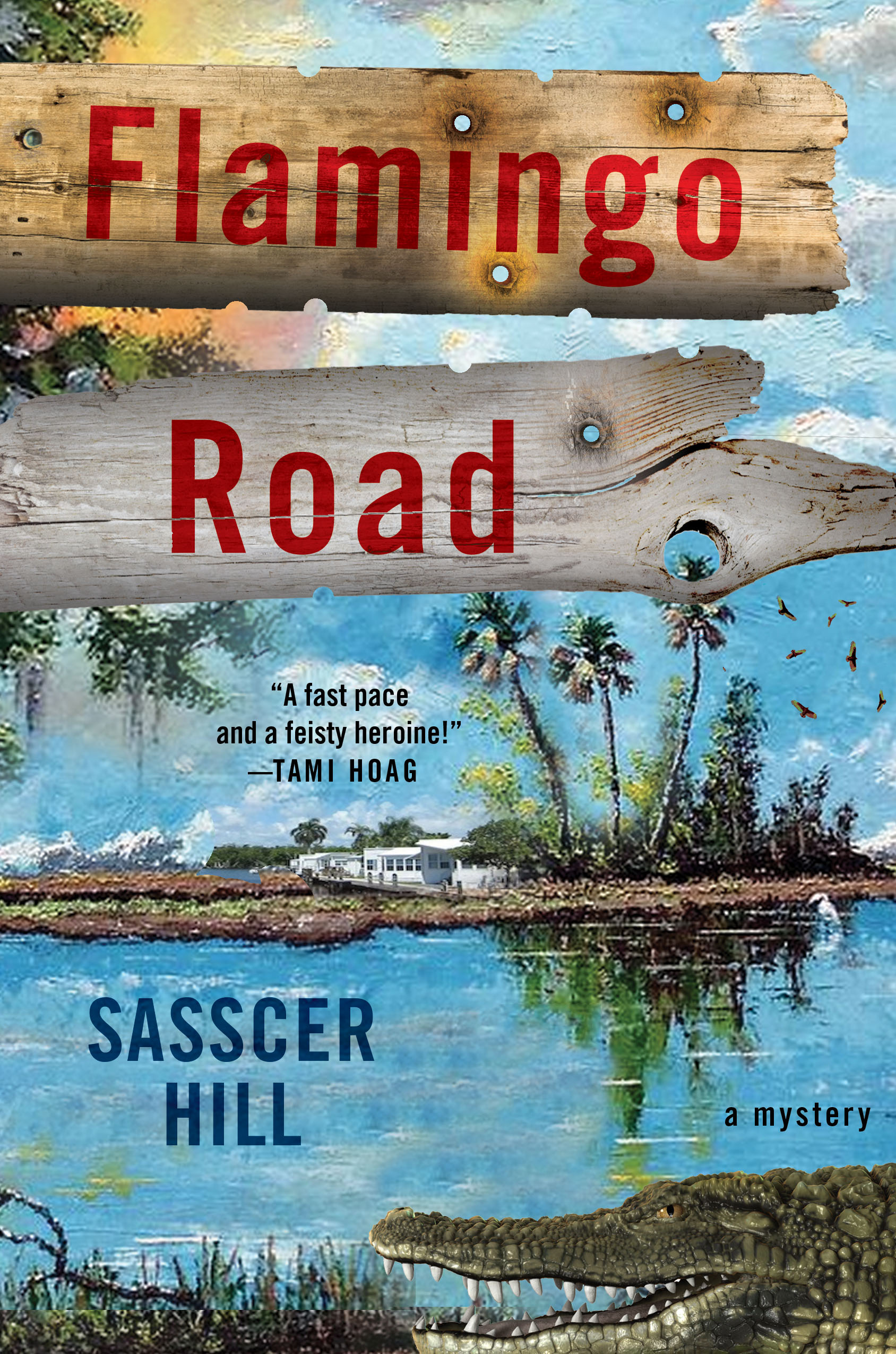
Lacking craft, that first novel wasn’t too competent and still hides in a drawer where, I fear, it belongs. I knew nothing about plotting, and had no idea was a story arc was. So I took mystery classes at Maryland’s Bethesda writer’s center where I wrote Full Mortality, the first of four Nikki Latrelle books. The novel was published and garnered nominations for both Agatha and Macavity best first book awards. Several years of hard work and a new agent later, I finished the first in the Fia McKee series and landed a two-book contract with St. Martins. The first in this series, Flamingo Road, will appear on April 18. If adult mystery-thriller readers like the novel half as much as the kids who still love the Black Stallion books, it will be one of the greatest events of my life. If you’re interested in the best horse racing tips there are hundreds of useful websites to help you out!

Flamingo Road, published by Minotaur Books, St. Martins Press, can be found at Amazon, bookstores, and any ebook outlet on the April 18 pub date. Find it here?http://tinyurl.com/gq4lyql

First Page Critique: NUTTER BODINE

Bu John Gilstrap

Another brave soul has stepped up to the plate and volunteered for a First Page Critique.  The Italics are all mine, just to separate the author’s text from my comments, which appear on the far side.  Here we go . . .

NUTTER BODEEN

’tis a gift to be simple, ’tis a gift to be free

     Eighteenth century Shaker song


“I think I killed someone.”

Not what Police Chief Will Edd Pruitt wanted or needed to hear first thing on a scorching hot Monday morning with the department’s A/C on the fritz. He’d positioned an oscillating fan next to his desk, but it only made his small office feel like a convection oven.

He silently cursed Jim Beam for last night, and waited for the caffeine and four aspirins to kick in. His eyes hurt as he tried to focus on the giant standing in the doorway to his office. He was shirtless, wore faded, grime-stained bib overalls meant for a much smaller person, and his sockless feet were stuffed into laceless brogans. His square head reminded Will Edd of Boris Karloff in the old Frankenstein movie.

Out at his desk, Gus Temple, made the “crazy” sign with his finger, careful to make sure the big man didn’t see him. Will Ed frowned at him, but the skinny dispatcher just grinned.

His name was Arvil LeRoy Bodeen, and he wasn’t crazy, just slow—— the result of a teen-age mother who consoled her unwanted pregnancy by snorting meth and drinking cheap wine. His eyes darted nervously around the room like a frightened kid on his first visit to the dentist.

Will Edd took a sip from his warm Dr. Pepper, sighed and said, “Come on in, Arvil.”

Arvil LeRoy Bodeen lumbered in and plopped down in the visitor’s chair. It groaned in protest. In the closeness of the room, the smell that rolled off him was a mixture of cheap booze, old vomit and unwashed armpits. Will Ed scooted his chair back as far as he could and tried to breathe through his mouth.

“My friends call me Nutter,” Arvil Leroy Bodeen said, his voice seeming too high pitched for his massive body. “You can too, if you want.” 

Will Ed doubted the man had any friends. He frightened the women and scared the men. Over the years, the town had learned to accept him as they would a stray mongrel—— let it sleep under your porch, but never let it into the house.

“How ‘bout I just call you Arvil?”

“Okay, but you can still be my friend.”

First the good:

There’s a lot here to like.  The first line is everything a first line should be. It’s short, to the point and engaging.  I get a real sense of place, a sense of atmosphere.  The writing is journeyman like (that’s a compliment), though it needs tightening (see below).  It’s a compelling setup.  If the point of a first page is to drive the reader to turn to the second page, then this is a success.  Except . . .

Now let’s talk about strengthening the already-strong writing:

Not what Police Chief Will Edd Pruitt wanted or needed to hear first thing on a scorching hot Monday morning with the department’s A/C on the fritz. He’d positioned an oscillating fan next to his desk, but it only made his small office feel like a convection oven.

  1. Is his middle name Edd or Ed? You present it both ways.
  2. Pruitt just heard some startling news, yet he’s more concerned about the heat and the fan.  I’m not sure I buy it, but I’m thinking like a critiquer (critic?), not a reader. If this were from an author I liked, it would not be a deal breaker because I would assume that the author wanted me to think Pruitt is something of a prick.  If that’s not your point, consider changing it.
  3. “Scorching hot” is superfluously redundant. Pick one, drop the other.
  4. “He’d positioned…” Who’s “he”?

He silently cursed Jim Beam for last night, and waited for the caffeine and four aspirins to kick in. His eyes hurt as he tried to focus on the giant standing in the doorway to his office. He was shirtless, wore faded, grime-stained bib overalls meant for a much smaller person, and his sockless feet were stuffed into laceless brogans. His square head reminded Will Edd of Boris Karloff in the old Frankenstein movie.

  1. The adverb in the first sentence weakens it, and the second part of the sentence weakens it further.  Consider: “He cursed Jim Beam for last night. The caffeine and four aspirins hadn’t kicked in yet.” Maybe it’s just my style, but I think breaking the one sentence into two strengthens them both.
  2. I think you need to give the giant man a name in this paragraph.  Consider: “. . .  in the doorway. Arvil LeRoy Bodeen.  He was . . .”  Note I deleted “to his office” because we already know that.
  3. Sentence construction that begins, “He was . . .” is inherently weak.  Consider, “Shirtless, he’d stuffed his sockless feet into laceless brogans.  Faded, grime-stained bib overalls barely contained the man’s girth, making Will Edd wonder if the man had dressed himself in someone else’s clothes.”  By eliminating the passive voice, the images become more vivid and the prose snaps a little more.

His name was Arvil LeRoy Bodeen, and he wasn’t crazy, just slow—— the result of a teen-age mother who consoled her unwanted pregnancy by snorting meth and drinking cheap wine. His eyes darted nervously around the room like a frightened kid on his first visit to the dentist.

  1. By introducing Arvil’s name earlier, you eliminate the need for more passive construction.  Consider: “Arvil wasn’t crazy, just slow . . .”
  2. This whole sentence, from Pruitt’s POV, presumes knowledge of backstory that doesn’t jibe with future paragraphs. Knowing about the unwanted pregnancy and the meth is pretty personal stuff.
  3. I would end the final sentence of this graph at “room”.  The simile about the frightened kid seems over-worked. (That is a simile, right?)

Arvil LeRoy Bodeen lumbered in and plopped down in the visitor’s chair. It groaned in protest. In the closeness of the room, the smell that rolled off him was a mixture of cheap booze, old vomit and unwashed armpits. Will Ed scooted his chair back as far as he could and tried to breathe through his mouth.

  1. More passive construction. Not bad, per se, but not strong to my ear. Consider: “A toxic bouquet of cheap booze, old vomit and unwashed armpits made Will Edd’s eyes water.  He scooted . . .”

“My friends call me Nutter,” Arvil Leroy Bodeen said, his voice seeming too high pitched for his massive body. “You can too, if you want.” 

Will Ed doubted the man had any friends. He frightened the women and scared the men. Over the years, the town had learned to accept him as they would a stray mongrel—— let it sleep under your porch, but never let it into the house.

“How ‘bout I just call you Arvil?”

“Okay, but you can still be my friend.”

  1. This is the part that confuses me.  Does the chief know him or not? That equation needs to be equalized somehow.
  2. Also, is it necessary to use all three of Arvil’s names at every mention? It feels awkward to me.

Fearless Writer, congratulations on a fine start.  These edits are of a polishing nature.  You done good.

What say you, TKZers?


First Page Critique: A Primer
On Prologs and Wavering POV

By PJ Parrish

Hello crime dogs! Today’s offering from one of our brave contributors doesn’t have a title but it does have things to teach us.  Thank you, writer, for letting us share your work. My comments follow and I hope you will all weigh in.

PROLOGUE
BARRY MARSHALL
I’ve been a police detective for six years. One thing this job teaches you is that nobody is really what they pretend to be. It’s a lesson you learn over and over — and that changes you. With this case, the learning was crippling. I’d like to say it changed me for the better, but that would be a lie…

Chapter 1
TEMPLE LAKE PA
Temple, Texas

Friday, March 6th, 4:10 P.M.

The mint-green Mini Cooper sat in the parking lot about fifty feet from the shoreline of Lake Belton. Inside the car, the young couple kissed and fondled each other. Neither of them saw the man slink toward their car from behind the stand of cedar trees. Nor did they know death was coming with him.

The young man pulled back when he heard someone whistling a tune. His arm slid off her. His head cocked to one side, listening.

“What is it?” Her brow furrowed as she brushed a tendril of hair off her forehead.

“Shhh.” He held up a finger. “Listen.”

He wiped the condensation off the driver’s side window using his sleeve. A glance outside. Nothing.

“I don’t hear anything,” she whispered.

A few moments of dead silence passed, broken only by the faint whirring of an outboard motor in the distance.

“Humph.” He shrugged. “Thought I heard somebody whistling.”

“C’mere,” she said, pulling his head over to her. “I got something that’ll make you whistle.”

The back end of the car began rocking up and down. Slow at first, then faster.

“Who’s doing that?” the driver asked. He looked out his side window, then hers, as if he could actually see anything through the steamed-up window.

The rocking stopped.

He twisted his body to look out the rear window, but it was no clearer than the others.

The rocking started again.

“Okay, that’s it.” He pushed open the door and crawled out.

She hugged herself as chilly air flooded the inside of the car.

He yelled, “What the hell, man?”

A loud grunt, followed by a thud. The car shook for a split second.

The young woman’s eyes widened. She leaned toward the driver’s seat and peered out the open door.

“Jerome?”

A couple of seconds passed. A gurgling sound reached her ears.

She shouted his name louder. “Jerome?”

Dead silence.

_________________________

Back to me again. I’m guessing that a lot of you are way ahead of me on this one, because if you are regular here, you are well-versed in the gospel according to James et al about picking a point of view and staying with it to establish that vital reader-writer bond. So what is the main issue with this opening? (Forget the prologue. We’ll deal with that in a second. Focus for now on the main action between the two lovers).

It has no point of view. Well, actually it has three, count ’em, three. (Four if you count the prologue). The opening graph is omniscient POV with the writer hovering above the car and TELLING us what is happening below in the car. And we have these two lines:  “Neither of them saw the man slink toward their car from behind the stand of cedar trees. Nor did they know death was coming with him.”

Lots of problems here, right? First, omniscient POV is quaint. It was a mainstay of 19th century fiction and rears its grizzled head in some modern literary stuff. But it doesn’t work in today’s crime genre where there is an expectation of creating a bond between character and reader quickly and cleanly.  And then there’s that hoary device of “Little did they know what awaited them…” These victims can’t know what they don’t know. They can’t SEE the cedar trees or the slinking man. They can’t know death is coming for them.

You don’t need this false foreshadowing, dear writer.  Use your power of description to create a mood of impending horror, doom, intrigue, whatever you’re trying for here. But don’t TELL us death is coming. SHOW US. Make us feel it. You really need more description in this opening, not just to establish where we are but to make us feel a mounting sense of suspense.  I don’t know why some writers stint on description in their openings. Maybe they feel it will slow things down? It doesn’t if it is evocative and fuels the intrigue.  (Tip to writer: Go read Poe’s essay on the unity of effect.)

But omniscient POV isn’t the only issue here.  After that, the writer moves into the man’s POV as he hears a sound and feels the rocking. And after he exits the car, we slide into the woman’s POV as she hugs herself and cries out Jerome’s name.  This is called head-hopping. This is not good.  Why? Because we don’t know whose story this is.  I suspect what we are getting with this opening scene is a set-up and these two die. The next chapter might be the true protag then dealing with the aftermath, be it a cop, detective or someone who then has to begin facing the challenge and conflict of whatever this story is about.

And that leads us to yet another issue I have with this opening. It isn’t very fresh. Outside of the terrifying lovers-at-the-lake scene in Zodiac, this scenario is a cliche. Such set-ups are so corny that they were lampooned in a 1999 movie called Lover’s Lane. (“There’s no such thing as safe sex!”).  And how many of us growing up heard the “true” story about the hook-handed mental patient escapee who murdered teens making out in the woods but one couple didn’t realize they had narrowly escaped doom until they got home and saw…wait for it…a hook hanging off the car door!  But I digress…

In today’s sophisticated and crowded crime fiction market, you can’t get attention with old chestnut plots, especially about serial killers. Maybe there is a way to make a lover’s lane murderer feel fresh but I wouldn’t want to try it. It is true that crime fiction is dependent on formula and there are only so many variations on plots. But I have to go back to something I heard an agent say once about how she is always looking for freshness within the formula: Say something unique or say something uniquely.

Some other quibbles here: I really really really don’t like prologues. Why? Because nine times out of ten, they are just throat-clearing, or evidence that the writer has not figured out how to grab the reader legitimately so he/she tacks on a preamble teaser. (Caveat, I have seen good prologues that really work, so I am not blindly biased, just burned by bad examples).  I am not sure what this prologue is trying to do.  Is it introducing the protag Barry Marshall? If so, I’m not intrigued.  I’d rather meet Barry the detective on the job, maybe looking at the bloody hook hanging on the car door. (Just kidding!)  If Marshall is the protag, find a way, dear writer, to SHOW HIM in action at what James here calls a critical moment of disruption.  Don’t let our first encounter with your hero be a paragraph of navel-gazing. Yes, I get that Marshall is damaged in some way — what he learned was “crippling” — but get your story moving first and then let us learn about Marshall’s damage through the action of the story. Don’t TELL us he is in pain — SHOW us. How? Via his reactions to the case, via his interactions with other characters, via his own arc over the story, via his thoughts as they relate to the ongoing action.  This is what I meant in my comments about point of view: Your job as a writer is to make us feel Marshall as a human being and bond with him.

But…

Here’s the thing like about this submission — the potential implied in the protagonist.  I am somewhat intrigued by Marshall by this teaser. I have a feeling that he’s an interesting protag with a powerful story to tell. Something happened to this man to leave scars.  That’s always good.  But it is your job, writer, to pull us deep into his soul and make us care about his journey. Because it’s never about the dead. It’s about the living.

And while we’re talking about Marshall — is this story in first person or third? If I were you, I’d pick one and stick with it.  Switching between first and third can be very effective but you really have to be in control of your craft to pull it off.  Don’t juggle with chain saws until you’ve mastered bowling pins.

That’s it for general comments. Here’s my Track Changes edits if you want more.

PROLOGUE
BARRY MARSHALL  If you have a chapter from his POV find a way to insert his name into the text.  Even Sue Grafton, who starts out nearly every story with “My name is Kinsey Millhone…”  finds a way to make this feel graceful.
I’ve been a police detective for six years. One thing this job teaches you is that nobody is really what they pretend to be. It’s a lesson you learn over and over — and that changes you. With this case, the learning was crippling. I’d like to say it changed me for the better, but that would be a lie…

Chapter 1
TEMPLE LAKE PA
Temple, Texas

Friday, March 6th, 4:10 P.M.  Why do you need this time/place tag? One of my pet peeves is the overuse of this device because it usually indicated the writer can’t figure out a graceful way to integrate this info into the narrative flow. And are we in Pennsylvania or Texas? 

The mint-green Mini Cooper sat in the parking lot about fifty feet from the shoreline of Lake Belton. Inside the car, the young couple kissed and fondled each other. Neither of them saw the man slink toward their car from behind the stand of cedar trees. Nor did they know death was coming with him.  Get out of the way of your story, writer.

The young man pulled back when he heard someone whistling a tune. His arm slid off her. His head cocked to one side, listening.

“What is it?” Her brow furrowed as she brushed a tendril of hair off her forehead.

“Shhh.” He held up a finger. “Listen.”

He wiped the condensation off the driver’s side window using his sleeve. A glance outside. Nothing. Missed opportunity to show us the surroundings, just a little. You can use this moment to even tell us where we are…He had been coming to Belton Lake since he was ten, the year his family had moved to Texas. It had always been a place of barbecues and tubing until he grew older and realized its shadowed pine coves were the best places in the little town of Temple to bring girls to make out.  Now, as he looked out into the window, the trees moving in the wind, seemed to be alive. (That’s bad but you get the idea!)

“I don’t hear anything,” she whispered.

A few moments of dead silence this doesn’t cut it as suspense. passed, broken only by the faint whirring of an outboard motor in the distance.

“Humph.” He shrugged. “Thought I heard somebody whistling.”

“C’mere,” she said, pulling his head over to her. “I got something that’ll make you whistle.” Can you find a way to insert her name?

The back end of the car began rocking up and down. Put this in his sensibilities. Slow at first, then faster.

“Who’s doing that?” the driver asked. The driver? He’s not driving. He looked out his side window, then hers, as if he could actually see anything through the steamed-up window. There’s a slight problem here. It’s 4 in the afternoon. The sun is probably nice and bright, starting to come in at a slant. No way could he not see anything, even with steamy windows.  Change the scene to night?

The rocking stopped.

He twisted his body to look out the rear window, but it was no clearer than the others.
The rocking started again.

“Okay, that’s it.” He pushed open the door and crawled got out.

She hugged herself Rut-Roh…POV whiplash. as chilly air flooded what time of year is it? I was thinking summer but it’s chilly at 4 p.m.? the inside of the car.

He yelled, “What the hell, man?”

A loud grunt, followed by a thud. The car shook for a split second.

The young woman’s eyes widened. She leaned toward the driver’s seat and peered out the open door.

“Jerome?”

A couple of seconds passed. A gurgling sound reached her ears. She heard…

She shouted his name louder. “Jerome?”

Dead silence. This is a cliche. Too many others before you have used it so it is devalued as an attempt to inject suspense.  It is just silence.  And if you have made the scene creepy enough, by building in tension with good description (you’re too spare on that account!) you don’t need this.