Raising Social Issues in the Cozy

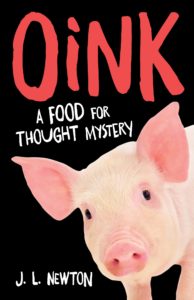
Please welcome Judith Newton to the TKZ. Today, her guest post is about raising social issues in cozies, based on her experiences writing Oink: A Food for Thought Mystery. I look forward to reading your comments and feedback!  Clare
Raising Social Issues in the Cozy

by  Judith Newton

I became interested in mystery sometime in the 1990s when I began reading Tony Hillerman, whose sleuths are two Navajo policemen. What I liked about Hillerman’s books was that they dealt with social issues—the ongoing colonization of Native peoples—and that they presented stories from the points of view of people on the margins. I was especially drawn to Hillerman in the 1990s because I saw myself as living on a different sort of margin at my university. I was director of women’s studies, the faculty of which I had worked to make half women of color, and I and my program had formed deep personal connections with faculty in the four ethnic studies programs.

This community building took place, however, just as a newly prominent national development (often referred to as “the corporatization of the university”) had begun to make our already marginal positions less secure. With its ever greater focus on profit, my university administration was threatening to defund our programs. In the end, I am happy to say, the administrations’ very efforts to do away with women’s and ethnic studies prompted the faculty in these programs to form an even more tightly-knit community and to fight successfully for our survival.

When I began to write Oink, I followed Hillerman in making my main characters people on the margins of the university, faculty in women’s and ethnic studies, but the biggest issue I faced in outlining the novel was how to write about their issues so that a general audience would want to read about them.. I was aware that puzzles and unsolved crimes keep people turning pages and that within different mystery genres there were additional inducements to reader engagement. Hillerman, of course, uses elements of the thriller. Guns booming in the dark always kept me reading. But I wanted a different feel for my novel, which would have a lot to say about the value of caring community both for our lives and for political resistance, so I turned to another genre, that of the cozy.

Cozies are characteristically set in a small and valued community. By making one of the most valued communities in Oink that of a political coalition I gave this convention a political twist. Many cozies also involve food and come with recipes. The presence of food usually affirms pleasurable connection among the characters, a connection that is then extended outward to the reader through the inclusion of recipes. In Oink the same is true, although there the major connections being affirmed are among those resisting the university’s turn toward competition, self-interest, and profit. The inclusion of recipes pleasurably invites the reader into this alliance.

In Oink, moreover, as in the history on which it was based, gathering around food is one manifestation of a larger organizing impulse based upon “working on the relationship” through multiple acts of friendship, love, and support. This is a strategy which black women had already employed to organize grassroots communities during the Civil Rights Movement and it reappears in Oink among the women characters in particular.

The cozy’s quirky, often, female sleuth and its characteristic humor are also present in Oink and serve a related purpose. According to J. K. Gibson-Graham, our repertory of tactics for getting people together should include playfulness and humor, which can toss us on to the terrain of new possibilities. By fusing playfulness and humor with a story of struggle, I aimed to attach a sense of optimism and possibility to political resistance.

By merging Hillerman’s focus on social issues and marginal points of view with the conventions of the cozy I could write about some of the difficulties for people on the margins in the university and in the nation while also immersing the reader in experiences of connectedness, love, humor, and pleasure, experiences which I hope will keep the reader reading and which I identify both as ways to live a more fully human life and as crucial to effective struggles for social change. In a way I hadn’t anticipated, the continuation of these values seems ever more critical to our time.

  • What do you see as the advantages of or the difficulties in using cozies or other kinds of mystery to address social issues?
  • Are there particular cozies with a social issue or political theme you have read and enjoyed?
  • Does exploring social issues even belong in a cozy?
Knowing the Year

(c) Dan Povenmire and Jeff Marsh. All rights reserved to the creators.

Here is a short bit of morbidity for you. I had a very short dream several nights ago. I was standing in front of a pedestal-type entryway table with a faux leather top. There was a piece of paper on top of it. It was a death certificate. The death certificate was mine. I focused on my name — “Joseph V. Hartlaub” — and the date of death. All that I was able to read was the year: 2030. I then woke up.

I mentioned the dream to my wife the following morning. She said, “Well, you have thirteen years to prove the dream wrong.” My response was, “True. But that could work either way.”

The dream has been weighing heavily on my mind since that time. I’ve sharpened up my bucket list, stepped up my writing game, and considered asking David Levien to fix me up with Maggie Siff (I’m just kidding about that last one. Heh. Heh.). I’m thinking all along, however, that I could accept knowing to a reasonable degree of certainty at this point that I have thirteen more years to hang around. As I sit here right now I’m sixty-five, in good health, have twenty-six years of sobriety, and possess all of my mental faculties. I hope that’s true in thirteen years. It probably won’t be. It might be time to go.

I’m wondering, however, if EVERYONE has dreams like this and doesn’t talk about it. Have you ever had a dream like this, which gave you a date certain for your departure from this side of the veil? Do you want to know? And if you had a dream like this, and took it seriously, what would you want to accomplish in the interim with regard to your life, your relationships, and yes, your writing?


Characters Need Redemption – First Page Critique – Angie’s Ruin

Jordan Dane

@JordanDane

http://flickr.com/photos/60058591@N00/2369412952

I have a first-page critique for your consideration today. Please read and comment. My feedback is on the flip side.

***

“I can’t do this anymore I hate you. Listen to me, I really do hate you. You prick”

Angie screamed those words and cried them at the same time, it was a horrible indescribable sound but Danny didn’t seem to care.

“Well if you hate me so much then pack your bags and leave, but I’m keeping the kids, do you hear that THEY ARE MINE NOT YOURS, MINE, so go on sod off. No one likes you anyway, you waste of space”

She started to cry, uncontrollably a solemn weep that seemed to come from a place, no, a pit so very deep inside and below it could have been hell. Sitting in her new kitchen, with her beautiful babies upstairs, this man, if he actually qualified as a man was trying to finish her off altogether. He acted and spoke like a child but he was 37 and the love of her life.

They had been childhood sweethearts, next door neighbours and nobody had ever understood her like Danny. The crack the prostitution, the gambling, the shoplifting even the trafficking. All those years ago…It was another life.

Look, she new she wasn’t perfect. But Danny understood why, Danny understood her and now he was gone or he may as well have been.

He didn’t love her, he didn’t want her anymore and she felt done with love, with life with everything, it was all too much. So, she pulled herself up from the manky chair she was slumped in, her favourite velour chair that was once red, ready to go upstairs and pack up her life.

“I never loved you, you stupid, pathetic cow” Danny laughed the words in her face as if she was nothing, as if they had never had anything together, as if she was dirt under their wheelybin. PIG, she shouted in her head, because she didn’t have the energy to say it out loud, he had drained her that much, HE WAS WORSE THAN THE DIRTIEST MOST DISGUSTING FILTHY SHIT INFESTED PIG.

“You had better go right now” he said “Sharon’s coming round.” She’s been desperate for me to tell you and now I’ve done it. Why did it take me so long, he laughed, laying on the floor watching telly, to kick someone as ugly, stupid and pathetic as you out?”

FEEDBACK

I had a tough time with this submission. The lack of punctuation, the overabundance of run on sentences, typos, and writing craft issues made it a hard read. My biggest concern was for the main character of Angie. I found her overly aggressive without vulnerability. I didn’t find her redeemable in this first peek. It’s a fine line to portray real emotion in a scene, like fighting, if a writer doesn’t connect the reader with the character’s redemption and a humanity the reader can relate to. I’ll have suggestions on this below, but let’s look at basics first.

In order to submit to an editor or agent, or even self-publish, an author must know basic grammar and punctuation rules to submit a clean copy. Otherwise it would be too easy for the industry professional to reject it before they get a paragraph into it. Below are my more detailed thoughts.

Run On Sentences – Examples:

First sentence is a run on with poor punctuation.

Example 1: “I can’t do this anymore I hate you. Listen to me, I really do hate you. You prick”

Rewrite 1: “I can’t do this anymore. I hate you. Listen to me. I really do hate you. You, prick!”

Use of Internal Thought:

Example 2 – PIG, she shouted in her head, because she didn’t have the energy to say it out loud, he had drained her that much, HE WAS WORSE THAN THE DIRTIEST MOST DISGUSTING FILTHY SHIT INFESTED PIG.

An author should follow rules on punctuation to make the work easier for readers, who are quite knowledgeable on basic grammar. In the above example, it is one LONG run on without any punctuation. The overuse of CAPS isn’t necessary to indicate screaming. If the author picks words that ‘show’ the action, the reader will get it.

Rewrite 2:

‘Pig!’ she shouted in her head. Angie had lost the energy to say it out loud. Her husband had drained her that much. ‘He’s worse than the…’ (Break apart the run on sentence and single quote the internal monologue or italicize it. Personally, I find Angie too harsh and unlikeable. Anytime there is name calling, even if it’s in a character’s head, it makes them unsympathetic for me, as a reader.)

Typo:

Example: Look, she new she wasn’t perfect. (Knew, not new.)

No Setting:
Setting can be a big help to add color and depth to this scene of domestic abuse. What is the setting in this story? Has she been cooking all day and he shows up late and drunk? Does she keep a neat house or a sloppy one? Depression can enter into this and her house could be indicative of her emotional state.

Focus on Angie’s Vulnerability:
Unless the author envisions Angie as vulnerable and shows it, the character’s yelling and cursing in her head doesn’t make her sympathetic. If she starts out this way and the whole story is centered on an unlikeable character, a reader will not keep turning the pages. I’m not suggesting a back story dump, but at least in a solid intro, the author must show Angie as vulnerable and scared of her husband’s anger or vulnerable to his betrayal.

1.) Show her cower when he gets in her face, yelling. She physically shakes and reacts to his abuse that the reader knows has been happening over a long time.
2.) Have her concerned over kids hearing or neighbors.
3.) Have Angie show emotions of hurt and betrayal when he finally admits he’s having an affair.
4.) What does she looks like? Her appearance? Does he make her feel worse by pointing out her looks?
5.) Has he ever hit her? A victim of physical abuse acts differently than Angie does in this scene.

A more vulnerable Angie would have me turning the pages, even if the fighting gets ugly. I would root for her to get out of the house or find a way to get out from under an abusive husband.

DISCUSSION:
What do you think, TKZers? What would you add? Would you keep turning the pages?

Choose Writing


If bet if we all had put aside a quarter for each time we heard someone say, “I’d write if I only had the time,” we could take the entire TKZ crew to Bali for a week, and bring along most of you, dear readers.

People say, “I don’t have time,” as though time were a finite thing, and not an infinite stream of possibilities. Does the idea of time as an infinite stream sound derpy and pie in the sky? Well, okay. Maybe it’s a little derpy. But it’s also true. (Oh, and yes, of course we will all die, but this fact will only serve to support what I want to say today.)

I don’t have time to write, and never have. There are eight million things in my ADHD head, all clamoring for attention. I suck at prioritizing because everything appears to be equally important. So other people set deadlines and I end up juggling them: tax deadlines, teaching deadlines, promotion gigs, car repair, pet and child maintenance. The family likes to be fed, bills have to be paid. And on, and on. It’s easy to feel like I have no time for anything I want to do.

If you don’t set your own priorities, other people will set them for you.

Being a writer is a choice. There are some writers who decide very early that their writing will be the primary focus in their lives, and every choice they make follows from that. What if you did that? What if you made writing your number one priority? What would that look like for you? Maybe it sounds pleasurable to you, maybe not. But many who’ve done that have found enormous success because they followed that narrow path. Those folks are people who, after a few years, don’t ever think twice about what comes first in their lives.

Or maybe that sounds a little freakish to you. Most of us have rather more prosaic needs. We like to have families or lots of friends. Quality of life is important. Or earlier choices we made preclude us from living like a Monk Servant of the Word.

Our writing choices are necessarily different:

We can cook a gourmet dinner, or we can heat up a can of chili and spend the extra forty-five minutes writing. We can binge-watch The Avengers or Stranger Things or The Great British Baking Show, or we can watch one episode and write for two hours. We can sleep eight hours, or sleep seven hours and stay up late to write in that sleepy zone in which weird, dreamlike ideas punch their way through our consciousness. We can take an actual lunch hour at the office, close our door, eat a protein bar, read for half an hour and write for half an hour. We can let the grass get a little too long and admire the words we wrote instead of worrying what the neighbors will think.

We can choose from a hundred different ways to nurture our creativity, even at random times. But if you’re hanging out here, words must be your poison.

Did I say poison? I did. Maybe that’s some kind of Freudian slip. It has occasionally felt like a kind of poison. For a long time I approached writing with a sense of dread, with a sense that I was doing something VERY SIGNIFICANT. Who in the heck is going to want to make time for something dreadful? One of my favorite synonyms for dreadful is formidable. If you’re thinking that what you will write if you take the time to sit down to write must be formidable, that’s a heck of a lot of pressure to put on both you and your work.

 If you’re approaching your work this way, I encourage you to lighten up this very minute.

When we’re writing, what we’re doing is not so formidable that we can’t do it in a notebook when we’re waiting in the doctor’s office. It’s not so important that we can’t jot down the outline of a scene while there are five minutes of commercials of people wearing Ralph Lauren fancy pants while they’re dancing on a glorified party barge as it floats down the Rhine. Is our writing too formidable to be present while we wait for an oil change?

Don’t make your writing an idol. Writing is not special. Writing is telling stories. Yes, there will be times when you need a chunk out of the time stream to organize chapters or write a difficult scene. But you will never have the perfect time to write. There’s no such thing.

So plunge into the stream and swim while you can.

When “What if?” Isn’t Enough

By Larry Brooks

Those two words — what if? – can be a powerful tool for writers in search of their next story. In much the same way a chain saw can be productive for someone who understands what a chainsaw is for.

But they can also be seductive in a potentially toxic way (suddenly switching analogies here) in much the same way that someone with the face of an angel can walk through the door can end up breaking your heart. Because like a guy chasing a windmill, what if? can lead us toward a dead end. Or even a cliff.

Great stories — including great thrillers and mysteries, the stuff of our Killzone focus — need more than the intrigue of a puzzle or even the attraction to a character. They also need to launch a compelling dramatic arc that is worth reading about within a story world worth visiting, leaving the reader breathless from intrigue, raw with emotional resonance, and fulfilled from their return to reality from the vicarious experience you’ve thrust them into.

Toward this end, allow me to share one of the best writing tips I’ve ever heard, from the mouth of a New York agent who has lived even more decades that my very ancient self: when you feel an idea dawning, and your first impulse – versus instinct, which is different and orders of magnitude more valuable – is to jump on it and start writing (whatever that means to you, be you planner or pantser), the wiser writer (one with the scars to know better) will do this:

Run.

See if the idea chases you.

See if come morning that idea seems as ripe as it did in the heat of the brainstorm, or amidst the swoon of too many writing conference happy hour cocktails. Our goal should be to apply a higher level of criteria to the ideas that call our name (you wouldn’t marry someone after the first date – a blind date, at that – now would you?).

Here’s a fact: in the world of agents and publishers, more projects get rejected because of the story than because of the writing. These days your novel needs to be a home run piece of dramatic and thematic imagining, something fresh and compelling, rather than a thin, been-there-read-that shell that exists merely as a vehicle for your brilliant sentences. Which, in that league, are the ante in, such skill is as common as footspeed and strength is at an NFL Combine pre-draft tryout.

This all came up during lunch with a writer friend. 

Like most writers, my radar for “what if?” propositions is always rotating, and I got a hit when the topic (my friend, her sister, and my wife… I was out-numbered) brought up the ladies room at one of the area’s hottest bars, the kind where all the women look like they’re vying for a spot on The Housewives of Scottsdale, and the men like the buzz cut, cheesy golf shirt wearing guys they’re married to.

The talk focused on a woman who has served as the hostess in the ladies room at such a famous night spot for the past decade. A woman beloved by all who have washed their dainty hands there after reapplying lipstick. Oh, the sights she must have seen in the room, the stories she has heard. 

She, it was offered, should write a book. Which led to… hey Larry, there’s a novel in that! You should write this!

Like, I didn’t have enough rusty ideas kicking around in my head.

And then, like any author worth his printer ink, the “what if?” descended on the table like a bird dropping: what if this woman heard something in that bathroom that she shouldn’t have heard? About someone in the bar who wasn’t supposed to be there, saying and doing things that shouldn’t be said and done? And what if something happened later in the evening inside that bar, something bad, lighting a fuse toward the elimination of anyone who might have heard too much?

Like, in the bathroom, for example.

Approval was immediate. Because — let’s call it what it was — they weren’t the ones who had to to turn this turkey of an “idea” into a novel.

We brainstormed for a while, taking it through the First Act to a proposed first plot point, at which time the food arrived and we turned to other things. Like why some writers drink and others simply go mad.

On the way home my wife asks me, “so, are you going to write that story?”

I didn’t have to think about it.  My answer was a firm, no-looking-back, no.

I didn’t have to run away from it to be sure. As sure as I have been every time someone pitches me the idea of, “hey, you should write a story about someone who is born old and ages… backward!” An idea I’ve heard put forth at least a half dozen times.

Bad ideas are just that. Because they’re too easy, too obvious, and too done to death.

Story ideas are just that, and nothing more.

They are aromas, not food. Promises, not deliveries. Seeds, not gardens. And if the flower isn’t something that floats your boat, then the seed is better off as bird food.

One of the great pitfalls of newer writers opens wide when you sit down and try to write an idea that is only an idea, without having sprouted the wings of a story, and too often, don’t have wings to sprout after all.

Ideas – especially in the form of “what if?” – acquire true value when they open doors (rather than yawning pits) to something more substantive than whodunit gratification. When they put you, the writer, into a place that transcends immediate gratification and allows you to go deep and wide into the things that matter in a novel.

Ideas should scare the crap out of you, more than they tickle at first blush. Or at least, excite you to the point of an enduring, informed obsession. When you link a compelling “what if?” proposition to a deeper realm of time-tested passion, vetted in context to an awareness of the higher criteria of story – conceptual allure, dramatic tension and arc, emotional resonance, hero empathy, vicarious experience, and a fresh way to tell the story… now you’re on to something

That’s the story you should write.

I had no real passion for the ladies room at this club, or for the dynamic that becomes the social arena of such a story. I admit, I’ve never been inside a crowded ladies room full of preening cougars – and yeah, that sounds kinda interesting – but who am I to write this story?

Not that you have to have lived every story you tell. But at least you should want to have lived some form of it. Want it beyond that first glimpse of it. Starting a book on the heels of a breakfast conversation is like getting married after a conversation in the check-out line at Costco.

It happens. It hardly ever ends well, even in the most romantic of fiction.

The desire to live vicariously in our stories needs to be matched by our passion for the dramatic landscape across which the story will unfold.

And that’s the question a writer should ask before taking any “what if?” idea seriously. What floats your boat, each and every time something like this has crossed your mind?

This crystallized for me one morning while reading about a new J.J. Abrams television show (Alcatraz), in which criminals who seemingly disappeared from an island 50 years ago are showing up in present day San Francisco, and they are killing people. They’ve traveled through time. They might be ghosts. But the dead bodies they leave in their wake are real, and these time-traveling killers must be found and stopped.

Now that interested me. Both on a “what if?” level, and on a time-tested passion level. I wish I’d thought of it. Time travel is one of the most intriguing premises I can think of… and yet, I’ve never written a time travel story.

Come to think of it, the idea hit me in the checkout line at Costco. And it’s chased me ever since.

Don’t jump too fast at your “what ifs.”

Develop stories from a place of passion and obsession and innate, time-tested curiosity and passion, a place where thematic issues collide with the conceptual, set in an arena that fuels the dramatic as much as it informs any characters you can place within it.

Write the story you should be writing.

Which is an even better writing this than… run.

The Great Culling of 2017

By John Gilstrap

I came to an interesting realization this week: I’m afraid of my own Facebook Timeline.

Over the years, I’ve accepted friend requests pretty much as a matter of course, and now the majority of my “friends” are in fact strangers, among whom most are fans, or aspiring writers or friends of others who are.  It’s a little like walking out of your bedroom and finding the hallway populated by people you don’t recognize.

I’ve inadvertently allowed my Facebook Timeline to become a marketing platform for my books.  Consequently, I need to be circumspect about everything I post there, for fear of affecting my brand.  I don’t post adorable pictures of grand-nieces and nephews because it’s wrong to invite strangers into the lives of other family members.  It’s crazy.

I have an Author Page on Facebook for fans and potential fans, and it is designed to be a marketing and writer-education platform.  That’s where I post relevant items about my books and other projects, and a controlled stream of personal information about myself and my family–just not everything about us.  I try to display the me-I-am, but with some of the sharp edges dulled.

So, I have begun the Great Culling of 2017. My plan is to work my way through my Friends List and un-friend anyone whose hand I have not shaken, or with whom I have not had a personal conversation.  There will be some exceptions, of course, because I have become quite close with a number of online correspondents whom I’ve never met, and I welcome those people into my life.  Before un-friending them, though, I will send a message explaining why, and I’ll provide them a link to my author page.  I’ve already heard from a few “friends” who are pissed at being eased out of my house and into the yard, but most seem to understand.

What do you all think?  Is this a rude thing to do?  Is there a gentle way to tell loyal fans that as much as I love them, I don’t necessarily want them hanging out with the family and me?

Where History Comes Alive

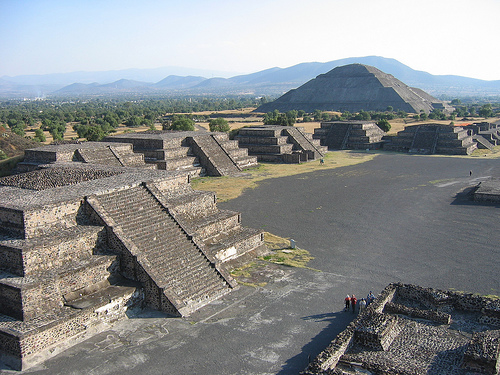
It’s Spring Break so I will be visiting Teothihuacan outside Mexico City when this blog posts, so my apologies, I probably won’t be able to respond to your comments until later in the day/Monday evening. I’ll be showing my boys these amazing pyramids as they have been studying Mexico’s history in their social studies class. We will also visit the  Anthropology museum in Mexico City as well – when traveling with me no one gets to avoid history!

One of my favorite parts of research is visiting places and immersing myself in a sense of history. Some places are able to evoke the past easily – as if the past remains stored in the stone walls, cobble stones or timbers of the houses. Other places, however, feel more inaccessible. I find Teothihuacan, with its vast avenue and towering pyramids, is a place that evokes awe but is also so alien in many ways that it is hard to picture what life must have been like way back then. It’s more challenging to imagine the past here but nonetheless the echoes are still there, if you listen hard enough. Likewise, I used to find the Australian landscape much harder to ‘read’ – the aboriginal past seeming to be more elusive and the colonial overtones a little too blunt. By comparison, somewhere like London the past really is omnipresent. For me, the voices of the past are all around and it is easy to imagine the sights, smells and sounds of history.

So TKZers where has history come alive for you? What places have you visited (for research or pleasure) that have evoked the greatest sense of history?

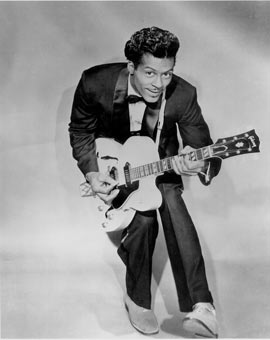
What We Can Learn From Chuck Berry

Chuck Berry left us a week ago at the age of 90. He didn’t begin his music career intending to be a rock ‘n’ roll…star? Icon? Immortal? No. Berry wanted to be a blues singer initially, and that genre would sneak onto his albums here and there (including, I understand, Chuck, an album of new material to be released in June). Rock ‘n’ roll, however, was what paid the bills, and that’s what he did, arguably better than anyone else before or since.

Berry’s lyrics were amazing. He could put years and years of story into a three minute song, with three verses, chorus, and guitar solo. Badda bing bang boom. Go to Spotify (or better yet, your own music collection) and listen to what might be his most widely heard song (if not his most famous one), “You Never Can Tell,” which was prominently featured in the film Pulp Fiction. It’s about a teenage girl and boy who get married — probably too early — but with some hard work acquire an apartment with a “coolerator” full of tv dinners and ginger ale (described in a throwaway line that might be the best single pop song lyric ever written), a stereo with all sorts of 45s, and a flash car. They make a go of it against all odds, and Berry tells you everything you need to know about the whole shootin’ match in two minutes and forty-five seconds through a tune driven by Johnnie Johnson’s piano in the background. A somewhat tragic side note to the song is that Berry wrote the song while in prison. Berry also wrote and recorded his autobiography in three songs that you can listen to in just over seven minutes: “Johnny B. Goode,” the lesser known and bittersweet “Bye Bye Johnny” (which tells the story of his acquired stardom and fledgling motion picture career through the eyes of his mother, who drew out all her money from the bank to buy her son a guitar and put him on that Greyhound bus), and “Promised Land,” the mortar between the bricks of the two other songs. I don’t hang around bus stations (…) but I challenge you to go to one in any city and not hear “Promised Land” playing in your head.

What we can learn from this? Keep in mind that Berry’s art had baked-in limitations. For one, songs had to be relatively short if the artist and record label expected to get them played on the radio. For another, the lyrics had to rhyme. A third was that the clock was ticking. You had to keep putting product out back then to keep your place in radio rotation because some young, hungry upstart was breathing down your neck, hoping to take your place. Berry just painted a picture and kept it simple, particularly in songs like “Carol,” where the singer begs the object of his affection not to go off with someone else, and assures her that he’ll learn to dance if he has to practice all night and day. Berry communicates need and desire in two lines. You and I can do this too. If you have an idea for a story or novel, try to write it from beginning to end in one page (single spaced, 12 font size), from beginning to end. Don’t include every character, car crash, or explosion that you conceptualize. Describe each of your main characters in a medium length sentence, set forth what they are chasing, or after, or trying to achieve — the MacGuffin of the work — and what they are going to do to reach their goal. When you wrap up, provide the ending in terms of emotion or result: happy, sad, death, life, win, lose, or draw. There’s your first step, your blueprint, your demo, what they refer to in Nashville as a “guitar/vocal.” You’re not going to be showing this to anyone so if you feel the need to drift off a bit go ahead and have at it but you’ll at least have something down. Think of Chuck Berry while you do it, and remember that all of those great tunes he recorded were the end result of hours and hours or writing, rehearsal and recording, some of it very frustrating. I’m hoping that at some point a boxed set of alternate takes of Berry’s best known songs is released so that we can get a look at some of the entire process. You’re starting in reverse of what Berry did — you’re going to take something short and make it longer — but the principle of keeping it simple is the same for both.

My questions for you: if you have a favorite Chuck Berry song, what is it? Mine is the live version of “Johnny B. Goode” found on The London Chuck Berry Sessions. Berry starts off playing a ferocious version of “Bye Bye Johnny,” savagely spitting the first verse out, but the crowd, either because of their unfamiliarity with the song or confused by its similarity to “Johnny B. Goode,” starts singing the chorus to “Johnny B. Goode” in unison, startling Berry (“Look at ‘em! Look at ‘em! Sing! Sing, children!”) and causing him to switch to the lyrics of “Johnny B. Goode” for the second verse. Listen all the way to the end, when the M.C. pleads with the crowd to vacate the hall because they’re over time and — Oh, The Humanity! — Pink Floyd fans are waiting outside. Meanwhile, the crowd chants “WE WANT CHUCK! WE WANT CHUCK!”

If you don’t have a favorite Chuck Berry song, what is your favorite song otherwise?