Write That Caption! New Yorker Cartoon Contest

Purchased from Shutterstock by KL

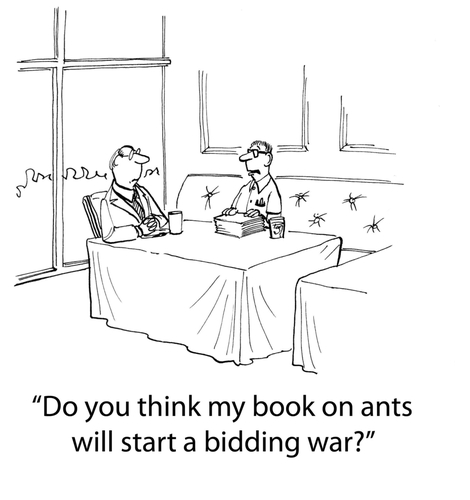
How did I manage to miss this elegant little contest/game–The New Yorker Cartoon Caption Contest–which offers a new way for writers to procrastinate and waste precious writing time? The New Yorker cartoons were a cherished element of my childhood reading experience (I confess I skipped reading the articles until I was well into high school years).

Check out the weekly New Yorker cartoon (by clicking this link) and tell us what caption you’d write for it. Here’s my entry for the caption:

“My doctor says it’s an off-label use for energy drink withdrawal.”

Yours?

A Nuance of Understanding That Can Change Your Writing Career

by Larry Brooks

Today I am waxing enthusiastic about what might end up being the most important step in the development of your story. Because right here, at the concept and premise stage, is where many writers come up short.

Most writers begin a draft with a vision for concept and premise in mind. Others don’t, using the draft itself as the search-mechanism to find concept and premise, then retrofitting it into the story in subsequent drafts. The common mistake is to forget to do just that, leaving the story without a clear and compelling concept and premise at its core.

Concept, as it relates to premise, is the vision for the entire story… at the idea level.

Weak story ideas easily account for half or more of story rejection, or at least, when it comes to explaining why they don’t resonate. I was talking to a writing-guru type friend recently, and he suggested this issue resides at the core of as much as 80 percent of story failures.

If you don’t get this right, if you don’t make it as strong as it can possibly be through an understanding of this nuance, then you are already putting your story at risk no matter how well you write it.

Concept and premise are the first things agents and editors look for in a story, over and above characterizations and writing voice. The nuance is this: concept and premise are different things. Superman is a concept. The plot of each story, which includes the villain and the threat they represent, is the premise… one unique dramatic arc for each Superman movie, TV episode and comic book edition.  One concept has birthed 13 major films and at least six television series alone.

One concept. An alien child crashed on earth, is raised by human parents, and ends up with powers we consider super, which he uses to fight evil and save us, time and time again.  Notice this is not premise (which is synonymous with plot in the context of this understanding).

Not every story needs to be “high concept.”

But the presence of something conceptual – which is the very essence of concept – adds strength to any story.

Concept and premise are different essences, yet one (concept) feeds into the other (premise). One of the most common shortfalls of rejected stories is when a premise doesn’t promise something conceptual to the story, when it’s all plot with nothing fresh or freshly respun, or worse, where there is nothing inherently interesting or provocative at its core.

An Example

I was teaching this at a workshop recently. I asked people to toss out a concept, old or new, for the purpose of seeing whether it met the criteria for concept (which I had presented first, but have not yet revealed here; I do this to see if, upon reading this example, you might quickly and intuitive see how and why it lacks “concept” at the level required to carry an entire novel).steals a woman’s ashes on the way to a funeral.”

“Someone steals a woman’s ashes on the way to a funeral.”

We talked about this one for a long time.

The Definition of Concept

A concept is the presence of something conceptual at the heart of the story’s essence.

A concept is a central idea or notion that creates context for a story – often for a number of stories, not just your story – built from it.

A concept becomes a contextual framework for a story, without defining the story itself.

It is an arena, a landscape, a stage upon which a story will unfold.

It can be a proposition, a notion, a situation or a condition.

It can be a time or place, or a culture or a speculative imagining.

It can even be a character, if even before the premise itself surfaces there is something conceptual about that character.

Concepts are a matter of degree.  Every story has a concept, the issue then becomes this: how does it contribute toward the reading experience?

Those stolen ashes?  That idea is more suited to a scene in the Part 1 setup of a a novel, something that starts a sequence of events.  But the real concept would be why someone did that, toward what end. And at that level, the criteria shown below would still need to apply.

The Criteria for Concept

It is inherently, before character or plot, interesting, fascinating, provocative, challenging, engaging, even terrifying.

High concepts depart from the norm, they exist at the extreme edge of imagination and possibility.

Not all stories are high concept. Stories about real people in real situations also benefit from something that creates a compelling context for the story.

Concepts promise a vicarious ride for the reader. Taking them somewhere, or placing them into situations that are not possible, realistic or something tense or horrific, something they would not choose to experience in real life.  But will love experiencing vicariously in your story.

A concept can define the story world itself, create its rules and boundaries and physics, thus becoming a story landscape. (Example: a story set on the moon… that’s conceptual in its own right.)

In summary, a concept is simply the compelling contextual heart of the story built from it. It imbues the story atmosphere with a given presence.

It does not include a hero… unless the hero is, by definition, a conceptual creation (examples: Superman, Sherlock Holmes, a ghost, someone born with certain powers or gifts, a real person from history, etc.). A story is then built around that hero leveraging the hero’s conceptual nature.

All of this is a matter of degree.  Do those stolen ashed meet these criteria? Perhaps. Could they crack open a killer story? Maybe that, too. But would that pitch – “someone steals a woman’s ashes on the way to a funeral” – offered in an elevator to an agent, motivate the agent to his the STOP button and hear the entire story

Doubtful. Because a concept is not a tease or a piece of setup. Rather, it is an OMG notion that becomes the contextual foundation of the entire story itself.

It might be helpful to consider what a story without a vivid concept would sound like in a pitch: two people fall in love after their divorce. Period. End of pitch.

And the agent says, “next!”

It’s not a bad story if you can pull it off – the writer of such a story would intend to plumb the depths of characters on both sides of the divorce proposition – but there’s nothing unique or provocative beyond the notion of divorce itself. Which is all too familiar, and therefore not all that strong a concept. If you could bring something contextually fresh to it – like, two people who both want to murder their ex fall in love – then the story has even more upside.

When we read that agents and editors are looking for something fresh and new, concept is what they mean.

When a concept is familiar and proven – which is the case in romance and mystery genres especially – then fresh and new becomes the job of premise and character, as well as voice and narrative strategy.

Concept is genre-driven.

Literary fiction and some romance and mysteries aren’t necessarily driven by concept (however, the sub-genres of romance – paranormal, historical, time travel, erotica, etc. – are totally concept-dependent). Other genres, such as fantasy and science fiction and historical, are totally driven by and dependent upon concept.

If your concept is weak or too familiar within these genres, you have substantially handicapped your story already.

Examples of Criteria-Compliant Concepts

“Snakes on a plane.” (a proposition)

“The world will end in three days.” (a situation/proposition)

“Two morticians fall in love.” (an arena)

“What if you could go back in time and find your true love?” (a proposition)

“What if the world’s largest spiritual belief system is based upon a lie, one that its church has been protecting for 2000 years?” (a speculative proposition)

“What if a child is sent to earth from another planet, is raised by human parents and grows up with extraordinary super powers?” (a proposition, leading to one of the most iconic characters is all of entertainment)

“What if a jealous lover returned from the dead to prevent his surviving lover from moving on with her life?” (a situation)

“What if a paranormally gifted child is sent to a secret school for children just like him?” (a paranormal proposition)

“A story set in Germany as the wall falls.” (a historical landscape)

“A story set in the deep South in the sixties focusing on racial tensions and norms.”  (a cultural arena)

These cover a breadth of genres, a few of them from iconic modern classics in their own right.

Notice than NONE of these are plots. Each is a framework for a plot. For any number of plots, in fact. The are conceptual.

Just remember: concept is not premise.

This one differentiation can make or break your career.  By way of analogy… concept is the idea to go to college and major in architecture. Premise is actually what happens when you do that, with a fresh and dramatic twist.  Different levels of meaning, with different criteria almost entirely.

Concept, when it works, becomes the reason why your premise will compel readers. Because it is compelling. Fascinating. Intellectually engaging. Emotionally rich. Imbued with dramatic potential. It infuses the premise with something contextually rich, even before you add characters and a plot.

Can you differentiate the concept from the premise in your story?  If not, then this becomes an opportunity to take your story to the next level.

Final thought on this, for now.

Thrillers are one of the most fertile genres for concept. Great thrillers are just that – great – often because of the concept.

Series heroes – Jack Reacher, James Bond, Tom Cruise in the Mission Impossible stories – become their own concept. People come to the story for Jack Reacher, rather than the specific plot idea on the back cover.  As authors trying to establish a thriller series, this is a critical nuance to understand.

Mysteries, however, are more challenging at the conceptual level. Given that, the creation of a conceptually fresh hero is the key, and then giving her or him something highly vicarious and emotionally-resonant to do.

Of course, this implies the need to grasp the difference between a mystery and a thriller, which is obvious once you get it, less-so before that ah-hah! moment arrives.

Have fun with that one here… I’ll chime in with that difference if it doesn’t emerge clearly in the thread. I have a feeling it will.

First Page Critique: Like Hell

Critiqued by Elaine Viets

Thank you to another brave soul who gave us this intriguing first page, called Like Hell. This seems to be a mystery with paranormal elements. Let’s start with the first page, then my comments for AA – our Anonymous Author – and then yours, TKZ readers.

Alyssa lay facedown in a pool of blood that wasn’t hers. The weight of a stranger’s body crushed her, smothered her. She tried to tamp down her panic, but she was drowning in his blood. It bubbled in her nose and mouth, soaked through her clothing. The metallic taste of it gagged her, but she didn’t dare move.

The shooter was still here, his boots echoing in the university library. Someone whimpered, and received a burst of gunfire in response. He talked in a steady stream, in a language Alyssa didn’t understand. She had no idea who he was speaking to.
The thud of his boots approached and Alyssa held her breath. He kicked her ankle and she choked back a cry. With a grunt, he fired another shot into the poor stranger who had tried to shield her when the shooting started.

Somehow she didn’t scream. The shooter maintained his monologue as he paced the room. A door slammed, then … silence. Alyssa felt hot, sick, as she battled the gorge rising in her throat.

The door slammed against the wall with a loud crack and she nearly screamed. Heavy steps, running straight at her. Suddenly, the body sailed off her, striking the wall with a thud. Impossible. The dead man had to weigh at least 250 pounds.
Alyssa opened her eyes. This man was much smaller than the one who’d shielded her, but he hauled her up with ease. Panic flashed in his blue eyes. He seized her face and jerked her head to the side.

“Where are you hit?” he demanded, as his fingers crawled over her scalp, searching for a wound.

“It’s … not …” Alyssa swayed and he caught her. “It’s not my blood,” she whispered against his chest.

Footsteps thundered into the room. Alyssa clutched the stranger and squeezed her eyes shut.

Bullets struck him in the back. She heard them thud, felt their impact, though he barely flinched.
He roared something incomprehensible. Alyssa glanced at him just before he peeled her off him. His blue irises were replaced with flames.

Stunned, she fell as he pivoted. Black wings erupted from his back, protecting her as he screamed at the shooter in his own language.”

The shooter shrieked. Babbled.

Something crashed against the wall. Her protector cursed. He turned and hauled her up again. His wings closed around them an instant before the room exploded.

Elaine’s Comments: You’re off to a sizzling start, AA, and I’d like to see more of this novel. But I’m itching to change the very first line. Try, “Alyssa lay face down in a pool of blood.” Extra words – “that wasn’t hers” — are distracting, and you tell us whose blood it is a few paragraphs later, when Alyssa tells the creature who saved her, “It’s not my blood.”

The “black wings erupting from his back,” and “blue irises were replaced with flames” are intriguing details: Is Alyssa’s savior an angel or a devil? He’s definitely supernatural. The last line is vivid – I want to know more about who – or what – saved Alyssa and why.

But here’s the major problem with an otherwise good beginning: Alyssa is too sketchy. Give us a few more details. This is a university library. Is Alyssa a teacher, a student, a scholar or a librarian? How old is she? What does Alyssa look like? These vital questions can be answered with a few phrases.

Also, tell us where we are: Is the university library in New York, the Midwest, another country? A word or two will solve that unnecessary mystery.

There’s a stray pronoun that needs to be rounded up and branded in this pair of sentences: “Someone whimpered, and received a burst of gunfire in response. He talked in a steady stream, in a language Alyssa didn’t understand.” Make that “He talked” into “The shooter talked.”

I’d find another way to phrase this sentence about the gorge in her throat: “Alyssa felt hot, sick, as she battled the gorge rising in her throat.” Technically, “gorge” means “throat,” and Merriam-Webster says, “‘Gorge’ is often used with ‘rise’ to indicate revulsion accompanied by a sensation of constriction – ‘my gorge rises at the sight of blood.'”

You might also want to combine these two sentences into one paragraph: “Footsteps thundered into the room. Alyssa clutched the stranger and squeezed her eyes shut. Bullets struck him in the back. She heard them thud, felt their impact, though he barely flinched.”

These are small complaints, AA, and can be easily fixed. You’ve done an excellent job of building tension when the shooter comes back and kicks Alyssa to make sure she’s dead.

I have one technical question about this sentence: “With a grunt, he fired another shot into the poor stranger who had tried to shield her when the shooting started.”
What kind of weapon was the shooter using? I’m not a Kestrel Ballistics expert, but many bullets can go right through that stranger’s body. Why wasn’t Alyssa hit and hurt?

Keep writing, AA. Hope this sells like hell.

************************************************************************************************

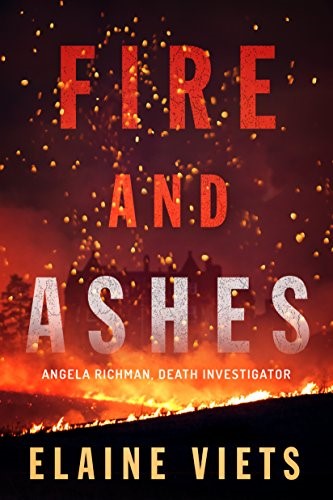
Fire and Ashes, the second Angela Richman Death Investigator mystery, will be published July 25. Pre-order the ebook for $3.99 here.

Bringing a Gun to a Knife Fight

By John Gilstrap

Let’s get back to talking about how to kill people.  It is, after all, what our characters do, right?  This week, the topic is knife fighting.

That’s a pig carcass wrapped in a leather jacket (the one on the right).

Over the years, I’ve had the good fortune to train on guns and knives with Steve Tarani, whose martial arts skills are the stuff of legend.   My most recent training was about a year ago at Gunsite Academy in Paulden, Arizona, where I spent a week training with carbines, pistols and . . . wait for it . . . knives.  While I’ve done a lot of shooting in the past, this was my first exposure to knife fighting, and it was, frankly, terrifying.  As you might imagine, on the pistol and carbine courses, there’s no shooting at each other, but when it came to the knife sessions, there was sparring among the students, albeit with practice knives.  In part because Tarani and I are friends–and in part because my nickname was “Writer Boy”–I was frequently called out to be the victim during demonstrations.  The most embarrassing of those episodes was when Tarani disarmed me and “killed” me with my own knife before I even knew he’d moved.

The 21-Foot Rule

Same pig carcass but with an overhand thrust.

A long time ago someone did research to show that within 7 yards, and attacker with a knife can close the distance and kill a skilled shooter before the shooter can clear his gun from his holster.  Our class proved that to be a bogus number.  The real number is closer to 30 feet, and once the attacker with knife skills is within arm’s length, the shooter doesn’t have a chance.

Fair Warning: It gets a bit gruesome from here.  While there are no upsetting pictures, there are some toe-curling concepts.  Read on at your own risk.

Once you’re close enough to touch your gun-wielding opponent, slash the tendons of his wrist and the guy can no longer hold his weapon.  We were taught to next slash his eyes to blind him.  From there, it’s a matter of evaluating the threat.  If he’s done, then so are you, but if he’s still got fight in him, you go for the kill.

The (Other) Kill Zones

A knife fight is an exercise in exsanguination.  The last one to bleed out is the “winner”. Thus, knife fighting is geared toward severing major blood vessels.  Arteries produce a more crippling blood flow than veins, but they arteries lay buried significantly deeper in the body than veins.  To get to an artery, then, you’ve really got to want it.  To sever the carotids, for example, we were taught to start the strike with the fist of your knife hand in direct contact with the victim’s neck and push through.  Same thing with the femoral arteries, which made for some awkward posturing while sparring.

Best access to the subclavian arteries is via the arm pits.  Like the carotids, they branch directly off the aorta, but I found the armpit thrusts difficult to execute.  There’s also a belly thrust that will take you through the navel to the abdominal aorta, but it involved the assistance of a knee strike to get the blade deep enough, so we didn’t practice it.

Defensive Moves

While all of the above applies to defense against a lethal attack, we were taught potentially less lethal moves to be employed if we’re more interested in discouraging an attack than engaging in one.

The Windmill. Say you’re at the bus stop with your kid or your mom or with your significant other, and that skeezy guy who’s been eyeballing you approaches in an unsettling way.  You tell him forcefully to stay away, yet he keeps coming.  You want to break off the encounter, and you certainly don’t want to fight the guy.  This is where the move I call “the windmill” comes in (if Tarani gave it a real name, I don’t remember what it was).  You draw and open your locking blade folding knife–if you don’t carry one, I think you should–and hold it in a thumb-support or fencer’s grip (the blade on the thumb end of your fist, not the pinky end) and as you back away, you make slashing motions in the air.  Big figure X’s at face-to-shoulder level.  You tell him over and over to stay away.  No sane person would walk into that razor-sharp windmill.

Which brings us to The Filet.  So, Mr. Skeeze keeps coming and he gets a hand around your free arm or he gets a fistful of your clothing.  You bring the edge of your blade down perpendicular to his arm bone and dig deep.  Then, in one fast, continuous motion, you pivot your blade to be flat against the bone and you slice from wrist to elbow, separating the flesh and muscle tissue of his arm completely off the bone.  I’m told it’s not a fatal wound, but goodness gracious it would be an ugly one.

Zero Resistance

On the final day of classes, Steve Tarani brought in a bunch of pig carcasses and dressed them up in clothes from all seasons.  Pigs in T-shirts, pigs in leather jackets, that sort of thing.  The point was to employ the lessons of sparring with real blades on actual flesh and bone.

While I always carry a sharp knife, I’m not obsessive about the edge.  I certainly couldn’t shave with the blade.  So I was surprised–shocked, actually–by the ease with which I could slash through the heaviest clothing all the way through the carcass’s thoracic cavity.  On one of my slashes, in fact, I thought I had whiffed it, only to find out that I’d gone through to the bone.

Now I Need Input

I’m told sometimes that my filter for that-which-is-disgusting is out of sync with those of normal people.  If posts like this are a step too far into the violent side of reality, I can tone them back. All input is welcome.

And I have mentioned that I have a YouTube channel called A Writer’s View of Writing and Publishing.  Feel free to visit and subscribe!


First Page Critique: Beethoven
And the Well-Aimed Bullet

To play a wrong note is insignificant. To play without passion is inexcusable —  Ludwig van Beethoven

By PJ Parrish

A new First Pager found its way to my in-box Sunday, and it had such an immediate impact on me that I decided to postpone my post-in-progress and use the submission. I think it offers us a good departure point for a discussion about using pacing to keep the reader in the reality of the moment.  The fact that I was listening to Beethoven’s Ninth as I wrote this well, I’ll get to that in a sec.

First, a huge thank-you to the writer for letting us learn from your first page. (And I wish you had sent us a bit more. Your line spacing bar must be set at 3!) Before I talk, take a moment to read today’s submission:

A Thriller – KEEP IT SAFE

I levered the cork out of a bottle of Chardonnay and a bullet slammed into my back. Below the right shoulder blade. More to the center. A lousy spot where if you have a rash or insect bite it’s impossible to scratch and not look like you’re having a seizure of some sort. If I knew this was the night someone was out to kill me I would have brought something up from the cellar more unique than a domestic Chardonnay, even though it had a pleasant balance of oak to it. There was that bottle or Nieto Senetiner Malbec from Argentina, I was holding for a special occasion, for example.

Anyway, the chard went flying, the bottle hit my hardwood floor, didn’t break, the amber liquid flowed out. As for me, the impact of the slug jolted me forward. I tripped over my feet and did a full body slam on the deck.

There I was, face down, flat on a hard wood floor, my back hurt like hell and I heard heavy footsteps crunch their way over to me. We’re talking serious, heavy duty, outdoorsman rubber soles here.

________________________________

Short and sweet, right? Well, it’s not bad. I like that we are immediately in a dramatic moment, but I think the writer has two problems here, and by addressing them this opening might go from adequate (I’ve read this setup before) to unique (Yes, I have read this before but this reads so well that I’ll stick around a little longer).

What are the problems? I think the issues are with point of view and pacing — or more to the point, that sweet spot where the two intersect.

This opening is pure action scene, right? But the only action is the uncorking of a bottle and then a bullet in the back. We get no setting and no sense of who this man is, although because this is first person, I am guessing he’s the protagonist. (If not, that’s another issue for another post). Now, I don’t mind this lack of information — it’s sort of intriguing — but with such an abbreviated submission, I can’t tell if the writer will soon give us the context we need to care about this poor guy.

Pacing is important in your whole story, but when you are in an action scene like this, it is extra-critical.  When you move into an action scene, you the writer need to shift gears, changing your style (word choice, syntax, size of sentences and paragraphs) so the reader gets a sense of speed, urgency (which is different than speed) and intensity. Action scenes are meant as a contrast to slower scenes of information. They are meant to be ingested quickly in smaller and sharper bites rather than digested in more leisurely paced scenes. Think staccato not legato.

But, but…my overall writing style is more legato! Yeah, I hear you. I know. I’m a legato by nature, too, but I’m learning (still!) when I need to switch to staccato.

Okay, think Beethoven. I’m going to him because as I said, he was my soundtrack today as I wrote. Beethoven was a genius, an original. But like any good genre writer, he worked within a “formula” — the classic symphony. The classic symphony has four movements: The opening (allegro or “lively”), the second (adagio or “slow”), the third (scherzo or “quick) and fourth (allegro presto or molto or “really fast!”)

This roughly translates to crime fiction’s three-act structure: a quick intriguing opening that hints at the story and theme to come; the middle where motivations, backstory, clue-trail and complications are laid out; and the climax where the action peaks, the hero usually triumphs, themes are echoed, and all is resolved.

Now by the time Beethoven got to his magnum opus ninth, he knew all the ropes and tropes so he played with the structure a little, moving the scherzo ahead of the adagio, but we’ll ignore that for now.

Let’s start with Beethoven’s “First Page.” He specified the tempo of the ninth’s opening as allegro ma non troppo, which means “quickly but not too fast.” Which is what you want in a book thriller or mystery — a quick-paced intriguing setup but with something held in reserve for the climax. Bear with me, but please go listen to a few moments of how the ninth begins:

Hear that cool quiet introduction? It’s almost creepy with its build-up of tension. But then, thirty seconds in — BAM! — Beethoven hits us with a bullet in the back. This is what I wish our writer had given us.  Before the man gets shot, give us maybe a graph or two that serves as a quick line-sketch of where we are and who we are watching. Maybe a bit of mood. I can’t tell if this man is a seasoned operative or cop who senses that someone is coming to kill him tonight or if he’s a civilian oenophile who’s just unlucky. A few well-placed bars could have gone a long way here, and then when we do get the bullet in the back, it would sting even more.

Let’s move on to Beethoven’s adagio. Again, listen to just a few bars and come back.

Here, Beethoven is laying out the theme. Here, we crime writers would use this middle to give us the context for what we witnessed in the opening, tell readers about our characters and their motivations, slip in backstories, begin addressing theme, and set up complications. But even when the tempo is slower, you still need to watch pace. The ninth’s 14-minute third movement is all in slow tempo, yet if you listen to the 9:30 moment, you hear a definite building of tension, a dark foreshadowing, and a hint of the ninth’s booming climax.

Then we get to the fourth movement of the ninth, and boy, what a doozy of a climax. Beethoven opens with a rush of urgent sound — the car chase has begun, the hero is in pursue down the unlit hall — but then he backs away and the mood goes dark and swirly. If you know the ninth, you know how the story ends — as it should in redemptive triumph. But check out the opening moments for now:

https://www.youtube.com/watch?v=mXOG4X-6bz8

Now back to our submission and that sweet spot where pace and point of view intersect.

The main issue I have with the submission is that it is neither staccato or legato but a curious hybrid of the two that fails to deliver on the premise promised by the setup. It’s like the writer was listening to the adagio instead of the allegro as he wrote it. The plot event (getting shot) is intrinsically fast yet the style of this opening is leisurely, almost as if the character is sitting in a bar ten years later telling a friend what happened to him. Let’s go to Track Changes. The comments in red are mine:

I levered I rather like this verb choice here though it’s technically incorrect the cork out of a bottle of Chardonnay and a bullet slammed into my back. Below the right shoulder blade. More to the center. A lousy spot where if you have a rash or insect bite it’s impossible to scratch and not look like you’re having a seizure of some sort. These thoughts are out of place. there is no time for such navel-gazing when you are in mortal danger. If I knew this was the night someone was out to kill me A character can’t know what he can’t know ie: Little did he know…. I would have brought something up from the cellar more unique than a domestic Chardonnay, even though it had a pleasant balance of oak to it. Again, he’s about to die so he’s not  thinking about bouquets. There was that bottle or Nieto Senetiner Malbec from Argentina, I was holding for a special occasion, for example.

When I first read this, I wondering if the writer was going for satire here, maybe doing an homage to old detective movies.

Anyway, anytime you have to resort to his word, your transition is weak. the chard went flying, the bottle hit my hardwood floor, didn’t break, the amber liquid flowed out. Again, if you’re shot, you aren’t likely to be thinking in terms of “chard” and “amber liquid.” As for me, another weird transition that jerks me out of the moment the impact of the slug jolted me forward. I tripped over my feet and did a full body slam on the deck. He just falls to the floor. Also, he‘s outdoors? I thought he was on a hardwood floor.

There I was, another of those weird transitions. face down, flat on a hard wood floor, my back hurt like hell and I heard heavy footsteps crunch rubber crunches on wood? their way over to me. We’re talking serious, heavy duty, outdoorsman rubber soles here.

So see the problem here? This is an adagio tempo imposed on what should be an allegro moment.  It’s hard enough to mix tempos between scenes and keep the pacing good. But when you mix the two within a scene, we hear only noise, not the special music of your style.

My sister Kelly is good at writing action scenes, better than I am. So I asked her to give this a quick rewrite while still honoring the writer’s setup and style. I offer this not because I believe one writer’s style should be imposed on another — you need to find your own voice! — but to show how to keep a character’s point of view firmly in the reality of the moment.

Just as I levered the cork from the Chardonnay, I heard a sharp crack and felt something hit my back — a hard, hot poke that I instantly knew was a bullet.

I dropped the bottle, heard it clunk but not break, as it hit the kitchen floor. I grabbed for the counter, trying to stay upright, trying hard to breathe, but my legs caved and I hit the floor.

The pooled wine felt cool against my face and though I knew I had taken a bullet, knew someone outside my window had just tried to kill me, I had the strangest thought — I should have brought up the bottle of Nieto Senetiner Malbec, because that would be a much more dignified wine to die in.

The difference here is that Kelly has included only those things that would register in the man’s consciousness given the dire circumstances. She saved that odd thought about the Malbec for a kicker…and it comes only AFTER the man is down and bleeding. If you are lying on the floor with a bullet in your back, well, yeah, you might have a weird existential thought — I should’ve, I could’ve, I didn’t, I never… But save it for when there is a “quiet” moment in your action scene, make it quick, and then get back to the action at hand.

I’ll leave you with a few, ahem, bullet points about pacing and point of view.

  • Never include unnecessary details that can disrupt the flow of the action. If you have a helicopter crash into a mountain, don’t stop and have the pilot tell me that in his long history of flying with the army, including that tour in Nam, this helicopter model always had a history of tail-rotor failure.  If a wounded man finds himself face down in a pool of wine, don’t stop and give me a detailed memory of that year he spent in his twenties backpacking through France.
  • Describe the scene only through what your character can know. If he is lying on the floor dying, he can only see what is in front of him — the steel tip of an approaching boot comes slowly into focus. And use all the senses! Beginning writers are overly reliant on sight. In action scenes, other senses are often more powerful. A blindfolded man hears a sloshing sound then smells gasoline.  A woman victim feels the featherly caress of a cold gun against her cheek.
  • Make your physical movements clear and concise.  Moving characters around in space is grunt work but you have to pay attention. He walked into the bedroom, she turned the corner…etc.  But in action scenes, you have to be careful that you choreograph each step on the page so the reader has no doubt what is happening to whom.
  • But don’t over-describe. In your head, your action scene is playing out like the slow-mo shoot-out in Peckinpah’s The Wild Bunch. On your first draft, sure, go ahead and bleed purple. But then go back and clean things up. Remember — as in sex scenes, which are also action scenes, less is usually more.

Thanks again, dear writer. I would like to read more. The set-up is intriguing. And a character who would rather have a majestic Malbec from Argentina instead of a plunky Chardonnay from Trader Joe’s is worth following.

Empowering History?

In a recent lecture, Hilary Mantel, the bestselling author of the historical novel, Wolf Hall, berated her fellow female writers for what she considered ‘falsely empowering’ their female characters in their work. This lecture, detailed in an article by The Telegraph newspaper (see link here), raises an interesting issue for any historical fiction writer, or indeed any writer incorporating the social, political or economic landscape of a particular time or place. Characters, after all, must be viewed within a frame or context – even when that appears to weaken rather than empower them.

Mantel’s major concern is with some (unnamed) female writers who retrospectively make their female characters look stronger or more independent than they would have been during a particular historical period. “A good novelist,” she argues, “will have her characters operate within the ethical framework of their day – even if it shocks her readers.” Fair enough – even though implicit within her statement is a criticism of predominantly female authors she obviously believe falsely attribute ’empowering’ characteristics upon their historical characters (even though I’m sure authors of both genders have been guilty of the same!). I also think Mantel’s criticism fails to address the expectations in the current book/publishing market and the demands for a more nuanced approached to historical fiction.

Many writers want to uncover forgotten voices in history – to give  a voice to people whose stories may not have been sufficiently examined in traditional historical textbooks or fiction. They also want to give readers a connection to these people – making them relatable as well as consistent with their time period. This can often be no easy task – as Mantel herself points out, many modern readers would find the beliefs and opinions of many historical figures unpalatable. That doesn’t mean, however, that writers shouldn’t be allowed to explore the commonalities that bind people together. No one, after all, would really want to immerse themselves in a world in which the characters have little or no redeeming features. Likewise, I think many women today would want to read historical fiction that relegate female characters to being weak, uninteresting or dull. In many ways it was the desire of readers to connect with female characters of the past that has created fiction that aims to have ’empowered’ female characters.

So how should a writer approach the delicate balancing act of appealing to modern readers, presenting an intriguing and relatable character, and yet remaining true to a historical period/place or social milieu? This is where Mantel could perhaps have been less strident and more forgiving of the challenges facing historical (as well as other fiction)  writers. With my own work, I know I want to portray strong characters even though I remain mindful of the social, political and economic constraints they would face during the time period I’ve chosen. To be honest, I’m not sure many editors would be interested in a completely ‘unempowered’ female character…it would certainly be a difficult book proposal to sell!

For me, history is not something that needs to be ‘revised’ in my fiction, but equally well, I want to explore the depths of my female characters that make them relatable to modern readers. I worry that Mantel’s view implies that somehow writers simply aren’t doing their homework even though the balancing act is a far more delicate one (in my opinion).

So TKZers, do you agree with Mantel that some writers have been guilty of falsely empowering their female historical characters? How do you approach the task of developing your characters against the context/landscape of their time period? If you are a reader of historical fiction, which do you value more, complete historical accuracy or characters who, despite the era, are still relatable?


The Corporal Works of Mercy

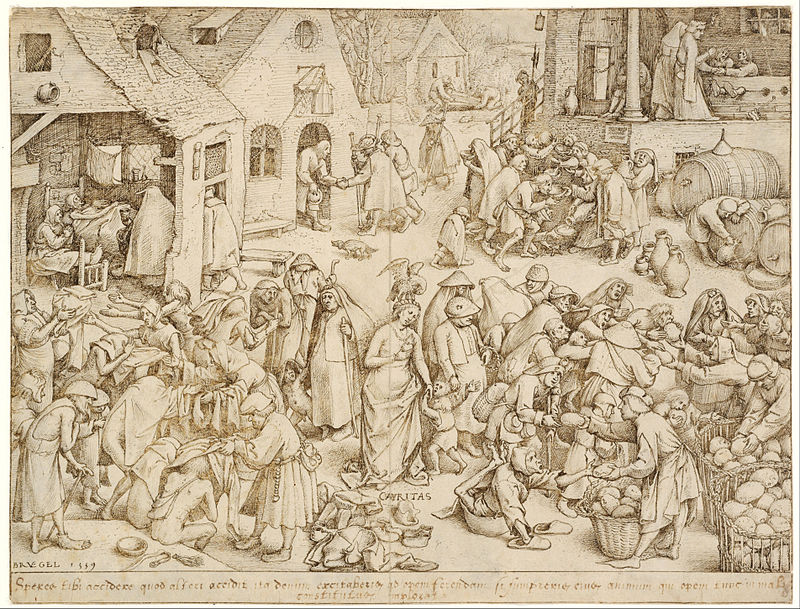
Caritas: 1559, Pieter Brugel the Elder

Bear with me, please. If you stick to the end of this humble offering it will help you with your writing and your life. Guaranteed. Just give me a few minutes.

I usually wake up in the morning with a coherent thought. It is often a song title or phrase — this morning it was “Gimme Danger” by The Stooges — but sometimes it will be a title or a name or an object. Several weeks ago on a Saturday morning the phrase “Corporal Works of Mercy” was standing there at 0500 hours reporting for duty in the forefront of my consciousness.

I hadn’t thought of the Corporal Works of Mercy for decades. They were drummed into me by rote memorization by the good, stern and strict Sisters of Charity at St. Agatha Grade School, and if you put a gun to my head I can still recite a few of them:  clothe the naked (this always elicited a snicker or two from one of the ten year olds in the classroom corner); visit the sick; feed the hungry; shelter the homeless; visit the imprisoned;  and bury the dead. I just checked myself and I only missed one: give water to the thirsty. Those nuns did a pretty good job. Anyway, the term nagged and tugged at me all day, right up to the time when I retired for the night.

I found out why a couple of hours later when I was awakened by a telephone call. The caller was an acquaintance that I hadn’t spoken with for several years, an alcoholic like myself. He somehow had my number which I had given him all that time ago, and was taking me up on the offer that I had made: he could call me anytime, anywhere, if he needed help. The caller needed help, badly. I provided it that night, and since then we’ve formed a de facto AA group with another guy we both know, a good guy whose problems would send most people into a ceiling beamed room, holding a chair in one hand and a rope in the other. It’s been a humbling experience.

Two days after that weekend phone call I got the news that an elderly client and friend of mine who had seemingly disappeared was in fact a patient in a rehabilitation center not ten minutes from my home. I immediately went to see him. It was the first time I had ever seen him smile. I told him that I would visit, and that I wouldn’t stay long — I’m not really a social animal — but that I would visit frequently, and have fulfilled that promise. I don’t have to, but I want to. I take the sense that he will not be leaving there, and I want to do what I can to help him with his passage.

Both of the above actions would qualify, I think, under the heading of “visit the sick.” There are a whole bunch of other works of mercy there for the choosing, however.  Writing a check to help someone out is wonderful; but what people in need really, really require is your time and an act of friendship. You don’t have to go very far to do it, either. There are volunteers needed at food banks and The Make-A-Wish Foundation and St. Vincent de Paul clothing stores and yes, at rehabilitation centers, places where you encounter people at their worst and lowest and need somebody to…heck, to be nice to them for a few minutes. Those of us who are a bit older and are watching those in our personal herd go ahead of us into the next adventure need to make sure that they don’t make the transition alone. With regard to the latter, women know this. Men generally do not. Women go and visit and sit by the bedside and hold their friends’ hands and give them comfort. Men sit and say, “Gee, I wonder how (insert name here) is doing. I probably should call him. Or something.” Guys, if you think about it, do it.

What I am here to tell you, however, is that it’s not a one way road. My writing and my work has gotten better since I have been visiting my one friend and meeting with my other.  What the Sisters didn’t tell us is that doing one or two or all of the Corporal Works of Mercy will focus and settle the doer. It is in a sense counterintuitive; if you’re spending time with someone else that’s time away from writing or working or all of those things that you have to do. Just so. But. But. There is a lot of focus on exercising the mind and the body. What we often forget, however, is that we need to exercise the spirit. I would submit to you that the spirit motivates our writing as much as the mind. Try it, at those points in your life when your life is low or troubled or afflicted. It works.

Thank you for bearing with me. I know that at least a few of you who visit these pages regularly are already heavily involved in the Corporal Works of Mercy, even if you don’t call them that. What do you do? What would you be interested in doing? Please share. I will be somewhat uncharacteristically quiet, but I’ll be here. Thank you.


Interesting Publishing Trends to Watch in 2017

JordanDane
@JordanDane

I found these trends interesting and wanted to share them here at TKZ. As many of you know, I’ve been writing with author friends on various Amazon Kindle Worlds where they host/create a world and invite authors to write for their series. It’s been fun and I get to explore many topics and experiment with styles and research topics and lengths. Plus the group of launching authors share promotion and benefit from each other’s readerships when we cross promote. So given that, I thought you might like to explore these ideas for your writing goals.

Novellas, Anthologies & Co-Authoring – What makes this growing trend popular is affordability and the recognition of shorter attention spans. These shorter types of books are cheaper for authors to produce and affordable for voracious readers to buy. With people’s shorter attention spans, the shorter format is more convenient. The cheaper price point also allows readers to try new authors without busting the bank. Win/Win. As for anthologies, a group of authors can merge their resources to come up with a top-notch product and also save on production, distribution, and promotion costs that can be shared jointly. Multiply the aggregate authors combined reader base and it’s another win/win.

Changing Book Themes Influenced by an Evolving World – In my latest book (due out June 8th – Vigilante Justice) I explore the topic of conspiracy theories and immigration. I brainstormed my “what if” question on those topics and came up with a story that could’ve been ripped from the headlines. It’s a risk to attempt books on the edge of politics, which I leave out of the story. Instead I focused on the emotional human conflicts that were organic to such a story. Be aware of the realistic elements to our culture and society and the struggles we have to infuse them into your themes. You not only explore your own thoughts, but you can crystallize conflict in such a human way. Such themes may be the refugee crisis, climate change, LGBT issues, terrorism (both international and domestic), and drug addiction. As an author you could choose to write about the stark reality of these themes, or you could provide a Utopian escape for readers to find refuge. Give your world building a dose of reality or provide readers a panacea for what they see on TV or in the news.

Indie & Hybrid Houses – Today, authors have options on how to publish, whether it’s self-publishing or attempting to sell to indie or hybrid houses. The Big 5 Publishers are also an option, but the author would have to consider giving up creative control & handing over copyrights and still be required to promote. Many smaller houses are offering better royalty rates and could give the author a more collaborative approach with more control.

Audio Books – With the growing popularity of products like Amazon’s Echo and Google Home, many consumers are gaining access to audio books in their homes, These can be techy types who liked controlling everything in their domain or older folks who (if they can remember Alexa’s name – insert my parents’ names here) like to be read a nighttime story. This kind of technology has enhanced the audio book market and authors can ‘self-publish’ their own audio book format through ACX.

For DISCUSSION:

Have any of you tried variations of these trends and found success? Please share.

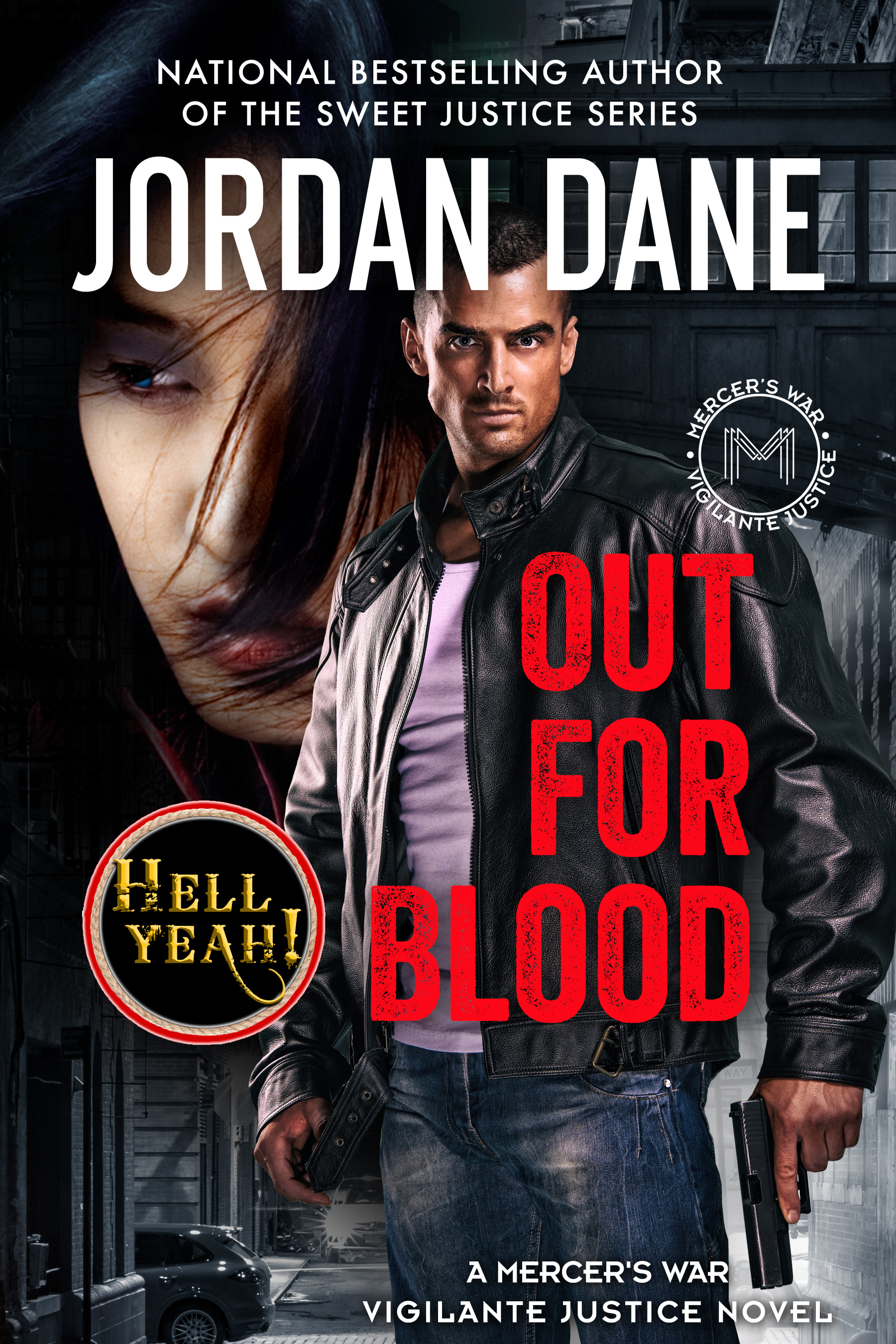
Out for Blood $1.99 Ebook

After the Jaguar destroyed his world, former CIA operative Mercer Broderick targets the faceless cartel boss using the Equalizers as pawns in a deadly game to avenge the murder of his beloved wife and child. (Mercer’s War – Book 2)

When Is It Time to Let Your Old Work Go?

What do you do with your unpublished/unsold work? Where is your juvenilia? Do you treasure it, or let it go?

I’m a let-it-go person. My first two unpublished, and probably unpublishable novels are around here…somewhere. Well, the second one might be in a box in the mudroom. At least I think it made it onto the moving truck eleven years ago. I kind of hope it’s not, because I really don’t want anyone finding it and reading it when I die. (Let alone trying to publish it–that never works out well for the dead writer. I’m put in mind of some of Shirley Jackson’s early story drafts that were published posthumously. And isn’t there 3/4 of a Hemingway novel out there somewhere?) There are probably also drafts of that second novel on 3.5″ floppy disks in my office closet.

My very first unpublished novel may not even have made it onto a 3.5″ disk. I think I finished it in 1998. Before I wrote it, I read a Somerset Maugham autobiography that suggested that all writers should finish their first novel and then immediately put it away in a drawer. It’s only just this minute that I realized he said, “a drawer,” and not, “the trash.” So perhaps I shouldn’t have completely lost track of it.

I have a 17-year-old son who is embarrassed by everything he’s done in the past–the past being fifteen minutes ago, or longer. I’m not that bad, but I don’t feel the desire to go too far back and look at the writer I was. It took years and years and years for me to get that (third) first novel published. To get it good enough. While I’m very comfortable with reflecting on my own work, or poking fun at my old habits–the first 3 short stories and first 2 novels I wrote all had old-fashioned silver-handled vanity hand-mirror and brush sets in them!–in workshops or, well, here, I don’t necessarily care to see them on paper.

It’s a lot like travel. If I am not overburdened with luggage, I’ll take my SLR camera with me because I love, love, love to frame the world through the camera’s lens. But if I can’t take it, I don’t stress about it. The things I see and do live in my memories. There are times when I’ve consciously said, “I will remember how this looks and how it feels.” And I do. That’s enough.

I remember how it felt to write those books and stories. They are landmarks on my journey through the writing life, and I don’t need physical evidence of them. Bits and pieces of them survive in other work. Creativity is never, ever wasted. The words and ideas make their way through my fingers and travel out into the world. I guess I could go full-on dork and say I set them free and they take on their own lives. Or not. And I get to make new ones. Always new ones.

What’s your relationship with work from your past?