Research to Right the Wrongs … and Mary Poppins

Research to Right the Wrongs … and Mary Poppins
Guest Blog by Lee Lofland

Given I was still supposed to be in Antarctica this week (long, sad story), I’d asked Lee Lofland to fill in, and his post is definitely worth reading, so I’m turning the stage over to him.

Retired cop Lee Lofland got so sick of reading blatant errors in police procedure that he founded the Writers’ Police Academy, which is where I met him. I can’t recommend this conference enough for its hands on experiences and workshops given by experts–one of whom was TKZ’s own John Gilstrap. I’ve attended at least four times and learn something new every time. But I’ve rambled long enough … take it away, Lee.
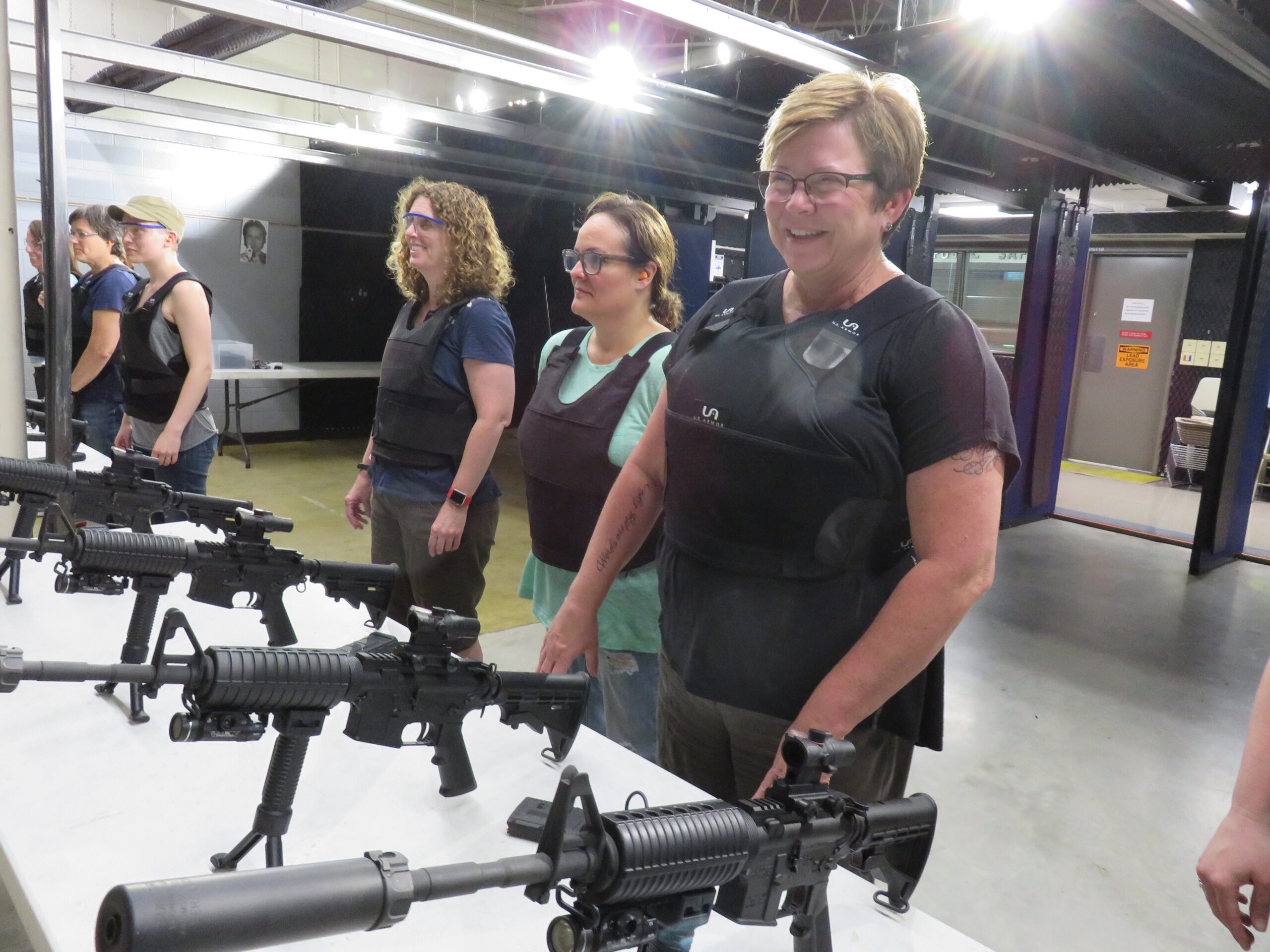
Writers' Police AcademyWriters sometimes bypass the research portion of their craft and rely on rehashing outdated inaccuracies and dog-tired cliches about police. Unfortunately, allowing those blunders to wiggle and squirm their way into dialog, scenes, characters, and settings is occasionally the factor that sends once loyal readers to the words of another author.

I’m always amazed to learn of the writer who still uses cop-television as a research tool over the many true experts who make themselves available to writers. A great example of a wonderful resource for writers is this blog, Kill Zone. The combined knowledge shared by the contributors to this site is a treasure-trove of information.

With the so many top law enforcement resources available to writers, why, I often wonder, do some still consider as accurate the things they see on television shows such as Police Squad and the woefully ridiculous Reno 911? Even top-rated crime dramas take shortcuts and often make errors in police procedure, cop-slang, etc. It’s TV, and the duty of writers and producers of fictional shows is to entertain, not educate viewers about the NYPD Patrol Guide.

Writing a novel is, of course, a completely different enterprise than writing a television show. Scenes and action play out at a much slower pace; therefore, readers have more time to absorb and analyze the action and how and what characters are doing and WHY they’re doing it.

Shows like Star Trek and Amazon Prime’s Reacher are fiction, but viewers are easily drawn into the action. They’re engaged in what they see on screen because writers provide plausible reasons for us to accept what we’re seeing. (believable make-believe).

The ability to expertly weave fact into fiction is a must, when needed. But writers must have a firm grasp of what’s real and what’s made-up before attempting to use reality as part of fiction.

For example, confusing a semi-auto pistol with a revolver, or a shotgun with a rifle. Those are the sorts of things that cause writers to lose credibility with their readers.
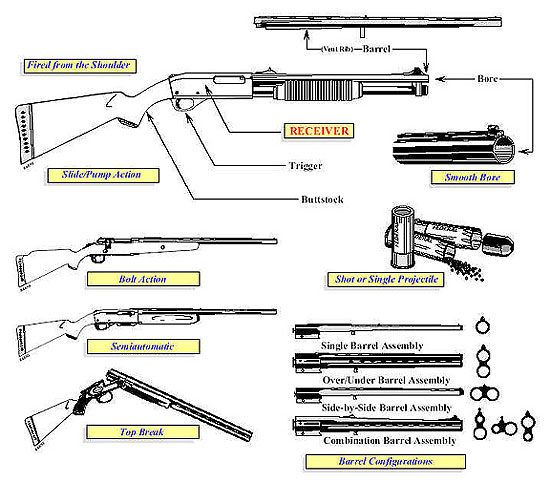
shotgunA great example of this is in a current book I read a few weeks ago, where the main character “racked” a shotgun shell into the chamber of her rifle. A quick message to an expert, such as Kill Zone contributor and weapons expert John Gilstrap, and the writer would have learned that racking a shotgun shell into the chamber is an action used for shotguns, not rifles.

The writing in the book was wonderful, and the story flowed as easily as melting butter oozing from a stack of hot pancakes … until I read that single line. At that point, as good as the book had been, from that point forward I found myself searching each paragraph for more errors.

So, what are some of the more glaring police-type errors often seen in crime fiction? Well …

  • When shot, people fly backward as if they’d been launched from a cannon. NO. When struck by gunfire, people normally fall and bleed. Sometimes they cuss and yell and even get up and run or fight.
  • “Racking the slide of a pistol” before entering a dangerous situation is a TV thing. Cops carry their sidearms fully loaded with a round in the chamber. Racking the slide would eject the chambered round, leaving the officer with one less round.
  • People are easily knocked unconscious with a slight blow to the head with a gun, book, candlestick, or a quick chop to the back of the neck with the heel of the hand. NO! I’ve seen people hit in the head with a baseball bat and they never went down.
  • FBI agents do not ride into town on white horses and take over local murder cases. The FBI does not have the authority to investigate local murders. All law enforcement departments, large and small, are more than capable of solving homicides, and FBI agents have more than enough to do without worrying about who shot Ima D. Crook last Saturday night.
  • The rogue detective who’s suspended from duty yet sets out on his own to solve some bizarre and unrealistic case. He’s the alcoholic, pill-popping unshaven guy who never combs his hair, wears a skin-tight t-shirt and leather jacket, and carries an unauthorized weapon tucked into the rear waistband of a pair of skinny jeans. No. If an officer is suspended from duty, they are forbidden to conduct any law-enforcement-related business. Many departments require that suspended officers check-in daily with their superiors.
  • CSIs do not question suspects, nor do they engage in foot pursuits, shootouts, and car chases. Typically, they’re unarmed and come to crime scenes after the scene is clear.
  • Revolvers do NOT automatically eject spent brass.
  • Cops cannot tell the type of firearm used by looking at a bullet wound.
  • Cops do NOT fire warning shots.
  • Cops do NOT shoot to kill.
  • Cops shoot center mass, the middle of the largest target, because it’s the easiest target to hit when even a second could mean the difference between life or death for the officer.
  • Cops do NOT shoot to wound. They shoot to stop a threat.

Imagine that a man suddenly turns toward you, an officer. He has a gun in his hand, and it’s aimed at you. His finger is on the trigger, and he says he’s going to kill you. How do you react?

First, the scene is not something you’d expected, and in an instant your body and brain must figure out what’s going on (perception). Next, the brain instructs the body to stand by while it analyzes the development (Okay, he has a gun and I think I’m about to be shot). Then, while the body is still on hold, the brain begins to formulate a plan (I’ve got to do something, and I’d better do it now). Finally, the brain pokes the body and tells it to go for what it was trained to do—draw pistol, point the business end of it at the threat, insert finger into trigger guard, squeeze trigger.

To give you an idea as to how long it takes a trained police officer to accomplish those steps, let’s visit Mary Poppins and Bert the chimney sweep from the movie Mary Poppins. More specifically, that wacky word sung by Julie Andrews and Dick Van Dyke—supercalifragilisticexpialidocious.

The time it takes me to say the word is somewhere between 1.01 seconds and 1.22 seconds, depending upon how quickly I start after clicking the button on the stopwatch. To put this scenario into perspective, the average police officer’s reaction time (based on a study of 46 trained officers), when they already know the threat is present (no surprises), AND, with their finger already on the trigger, is 0.365 seconds. That’s less than half the time it takes Bert to sing that famous word.

In short, in a deadly force situation like the one mentioned above, police officers must decide what to do and then do it in the time it takes to say “supercali.” Not even the entire word.

Considering that hitting a moving object such as an arm or leg while under duress is extremely difficult, if not impossible for some, shooting to wound is not a safe option when a subject is intent on shooting the officer.

  • Cops do NOT use Tasers when the situation calls for deadly force.
  • Cops should never use deadly force when the situation calls for less than lethal options, such as Taser, pepper spray, baton, etc.

Finally, unless you’re writing historical fiction, your characters will not smell the odor of cordite. Cordite manufacturing ceased at the conclusion of WWII; therefore, scenes written in the past 75 years or so shouldn’t contain anything resembling, “I knew he’d been shot within the past few minutes because the scent of cordite still lingered in the air.”

Lee LoflandLee Lofland is a veteran police detective and recipient of the Virginia Association of Chiefs of Police Medal of Valor. He’s the author Police Procedure and Investigation, blogger at The Graveyard Shift, and founder and director of the popular Writers’ Police Academy, a hands-on training event for writers, and Writers’ Police Academy Online.
Reminder or Repetition?

By Debbie Burke

@burke_writer

Photo credit: wwnorm on visual hunt


When you read a novel, do you like occasional reminders?


Or…do you find reminders tedious and repetitious?


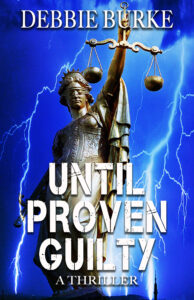
Recently, I discussed these questions with author/editor Karen Albright Lin. Karen is currently reading my WIP, Until Proven Guilty, book #7 in my Tawny Lindholm Thriller series.

Speaking as an older reader with termites eating holes in my memory, I need reminders. Most of the time, I read a novel in bed and fall asleep after a few pages. Days may pass before I pick up the book again.

In stories with many characters, POVs, and plot lines, I get lost and need to scroll backward to review. Who are these people? How are they connected? When and where is the story taking place? What just happened?

My readers are generally older and probably have similar memory lapses. Because of that, as a writer, I make a conscious effort to include small reminders to ground the reader at the beginning of each new scene and chapter.

Authors often leave a character hanging on the edge of a cliff, particularly in thrillers. In the next scene, they jump-cut to a different character in a different place and time. Three or four scenes later, they return to the poor hanging character. At that point, I appreciate a brief reminder of how and why the character wound up in that situation.

Reminders are also helpful for secondary characters who are offstage much of the time. When they reappear, in addition to their names, I usually mention their role or function.

A minor character, Mavis Dockerty, appears only three times in Until Proven Guilty—in chapters 1, 18, and 32.

She’s first introduced during a preliminary hearing on page 2, questioning a rape victim in what should be a slam-dunk prosecution:

County Attorney Mavis Dockerty said, “Take your time.” She picked up a box of tissues from the prosecution table and handed it to Amelia.

A few pages later, Mavis’s airtight case against the rapist is destroyed by defense attorney Tillman Rosenbaum, the male lead.

Mavis doesn’t appear again for 150+ pages and could be forgotten by some readers. So, I reintroduce her on page 166:

Flathead County Attorney Mavis Dockerty was sitting by herself in the last row of Courtroom #2 when Tillman tracked her down.

She appears for a final time on page 287:

County Attorney Mavis Dockerty was doggedly determined not to lose twice against the rapist Claude Ledbetter. Her evidence at his second preliminary hearing was flawless and overwhelming, every possible loophole sewed up tight.

Quick reminders like that are easy.

But when do reminders turn into repetition?

Back to my discussion with Karen. In my manuscript, she made many notes where she thought I was being repetitive. She advised: “Trust the reader to get it the first time.” 

My initial reaction was Really? Nah, I don’t repeat myself.

Writers can’t see their own flaws. That’s why we depend on critique groups, beta readers, and editors to point out problematic trees amid the dense forest of our novels. I trust Karen’s sharp eye and savvy skills as an editor so I took a closer look.

What I found was shocking. Here are a few examples:

One hint the writer is being repetitive is when the reminder appears three times in two paragraphs.

In the following passage, protagonist Tawny is experiencing empty-nest syndrome. She loves her husband’s three children from his previous marriage but they’re away at school or traveling. Her own son Neal is in his mid-thirties, in the military, and is home for a rare visit.

She’d already had one disappointment, when Neal declined to stay in the beautiful, sprawling, ranch-style house that Tillman had bought when they married because it had enough bedrooms for all their kids. Instead, Neal opted to sleep at Tawny’s creaky old bungalow in the historic district—the home where he’d grown up and still felt comfortable.

The hollow bedrooms of the new house sometimes made Tawny melancholy. Occasionally Tillman’s two daughters and his son came for weekend visits but otherwise the rooms stayed empty. But that was the way with grown children.

Did you get the picture of the vacant bedrooms?

Again and again and again.

Based on Karen’s suggestions, the first paragraph stayed the same but the second now reads:

The hollow bedrooms of the new house sometimes made Tawny melancholy, wishing Tillman’s two daughters and his son visited more often. But that was the way with grown children.

In another example, Karen noted that the location of a coffee kiosk had been repeated. In that instance, since there were only a couple of mentions, with many pages in between, I did not take her suggestion because it seemed like a reasonable reminder that wouldn’t bug readers.

The bigger problem is how to express themes without being repetitive. That’s where Karen busted me big time.

Until Proven Guilty weaves together three plots, each showcasing a different perspective in the tug of war between the law and justice. The first involves a clearly guilty character who walks free; the second addresses an innocent character who’s wrongly imprisoned; the third shows the perils of presuming guilt without proof.

The two protagonists, Tawny and Tillman, are married, work together, and clash over their different beliefs. Tawny is an idealist who wants justice for crime victims. Tillman is sometimes a righteous crusader but he’s also a cynical, pragmatic attorney whose job is to vigorously defend his clients whether they’re guilty or not.

At the start of the story, Tillman destroys County Attorney Mavis Dockerty’s case against an accused rapist because of faulty evidence. Tawny didn’t know Tillman’s plan before the hearing and is shocked and dismayed that the accused rapist is set free.

As they walk from the courthouse back to the law office, she confronts Tillman:

Tawny looked up at him. “Why didn’t you tell me?”

His deep, rumbling baritone rose above traffic noise. “So you could distract me with a lecture about right and wrong, good and evil?”

“You know he’s guilty,” she said. “The judge practically said so.”

His dark gaze, half sexy, half scary, pinned her. “The cops botched the evidence collection. The crime lab mishandled the DNA samples. It’s not my responsibility to help the county attorney prove her case. It’s full of holes bigger than the Berkeley mine pit.”

“But he’s guilty,” Tawny repeated. “He assaulted that poor woman. That doesn’t bother you?” She dearly loved her new husband but sometimes she didn’t like him very much.

Tillman stopped in the shade of a maple tree overhanging the alley behind the office. “I did my job, Tawny. That’s how the system is set up. Presumed innocent until proven guilty. Mavis didn’t prove Ledbetter guilty. And the fee Ledbetter paid me allows me to take on more pro bono cases.”

He didn’t say “like yours” but the unspoken words hung heavy in the late summer air.

A scene follows at the law office where Tawny expresses her indignation to a coworker:

A new headache settled behind Tawny’s eyes, the pressure making them feel like they were bulging. “When the judge threw the case out, that poor woman was crushed. Her husband looked ready to peel off Ledbetter’s skin and dunk him in alcohol. I wouldn’t blame him if he had.”

Then she thinks even more about it:

Tawny knew the system. Yet, in cases like Ledbetter’s, her conscience chafed. What about the victim’s right to justice?  

A few pages later, on their way home:

Tillman said, “If you wanted a lawyer who represents only innocent people, you should have married Perry Mason. This is how the system works. What can be proved versus what can’t be, what evidence is admissible versus what isn’t. I use the law as it’s written to defend my clients.”

“But it’s wrong,” Tawny said.  

“It’s the law.”

Tillman was hard to argue with. That’s why he was so good.

Tawny couldn’t think of a rebuttal.

A heavy silence hung over the rest of the drive home.

Then, at home, they talk more about the case:

“You’re such a Pollyanna,” he murmured but without his usual sardonic tone.

“I know you have to do what you have to do. I just feel bad for that poor victim.”

“It’s not a justice system, Tawny. It’s a legal system. Right and wrong, good and evil. None of that comes into play.”

In the first 15 pages of the book, I repeat the theme five different times.

Didja get it? Sure you got it? Are you positive? Just in case, let me smack you over the head with a two-by-four.

The author’s personal beliefs are bleeding all over the story.

That refrain echoed through the rest of the manuscript as Karen observed over and over that I was beating the same drum. By page 188, her understandable frustration was showing: “This drum has been beat until there’s a hole in it.”

Therein lies my dilemma. Three different plots share the same theme but are seen through contrasting lenses by various POV characters. How does a writer show multiple perspectives yet avoid being repetitive? How do I keep my obvious bias in check?

Through the book, the running argument between Tawny and Tillman escalates. It ultimately leads to a crisis in their marriage.

Photo credit: matthijs smit – Unsplash

How the heck do I show that important plot arc without beating a hole in the drum?

Right now, I’m going through page by page with Karen’s cautions in mind. I have to decide when reminders become repetitious and cut those parts.

Sometimes I can combine several references into a single one that makes the point.

I’m trying to reserve dialogue about theme for the most important pivotal scenes.

Karen says, “Trust the reader to get it the first time.”

She’s right but, oh, it’s a struggle to restrain my drumstick.

~~~

TKZers: As a reader, how do you feel about reminders?

Do you sometimes want to tell the author enough is enough already?

As a writer, how do you incorporate reminders?

Do you catch yourself making a point until it becomes repetitious?

~~~

Receive a FREE BONUS Short Story when you sign up for my newsletter at debbieburkewriter.com.

You’ll also be among the first to hear when Until Proven Guilty is published.

Happy Pi Day!


In our ever-changing world, it’s nice to have something constant that we can point to, so I’m happy that March 14 is celebrated as National Pi Day.

Pi is the ratio of a circle’s circumference to its diameter, and it’s a constant. (It’s also an irrational number, but that’s another story.) It doesn’t matter how big or small the circle is, the ratio of circumference to diameter is constant. The actual number begins with 3.14, hence our celebration of pi on 3/14.

Here are a few interesting facts about pi that I gleaned from piday.org:

  • The notion that there was a constant ratio of a circle’s circumference to its diameter has been known for about 4000 years.
  • Pi is such a fascinating concept that it inspired a style of writing called Pilish, where the number of letters in each word match the corresponding digit of pi (e.g., “Buy a girl a watch” corresponds to the first five digits of pi: 3.1415.) Software engineer Michael Keith wrote an entire book, called Not a Wake in this language. (The ebook sells on Amazon for $3.14.)
  • The Greek symbol for Pi wasn’t always used to represent the mathematical concept. It was introduced by the Welsh mathematician William Jones, a friend of Sir Isaac Newton, in 1706.
  • In 2015, Rajveer Meena memorized and recited pi to 70,000 decimal places.
  • Albert Einstein was born on March 14, 1879.

***

But there are other celebrations on March 14. Have you ever used the National Day Calendar? It’s a great source of information about everything we celebrate in this country (as well as good fodder for blog posts). Today is also the national day of:

Write Your Story Day (This one should motivate us all.)

Learn About Butterflies Day

Potato Chip Day

***

It’s fun to look up birthdays, anniversaries, or other special occasions in the National Day Calendar. I just looked up my husband’s and my anniversary. Oh – it’s today! Time to make dinner reservations at a restaurant with really good pie.

So TKZers: Take a moment to look up your special days in the National Day Calendar and let us know what you find. Extra credit if you write a few words in Pilish.

Tools for Collaboration, Editing, and Beta Reading

Tools for Collaboration, Editing, and Beta Reading

by Steve Hooley

Today we’re going to discuss tools, one of my favorite topics. I have been a big fan of Beta Books for the past three years, using it to gather comments and reviews from students at surrounding schools as part of my editing process. This year, when I began inviting beta readers, I discovered that the website had a problem with the reader signup link not working. The support at Beta Books was good and helped me find a workaround, but it caused a pause in beta reader invitations.

I’ll discuss Beta Books at the end of this article, because I still think it is the best tool for beta reading, especially when they get the signup link fixed.

While I was frantically deciding what route I should take for beta reading, I began looking for other choices. I could not find any other site dedicated to just beta reading, and searches ended up being a review of collaboration tools.

I had used Word several years ago while working with my editor, but we had problems with different versions of Word. Google Docs worked nicely in the past when I was collaborating with someone who used Word for Mac, while I was using a PC. What were the “experts” saying in comparing those two? And what else was available and free?

I found these two articles that are worth reading for a quick review of the tools available, and for a comparison of Word vs. Google Docs:

The Top 7 Online Collaborative Writing Tools

Google Docs vs. Microsoft Word: 4 Reasons why Google is the Clear Winner

The first article (3/30/20) briefly discusses 7 writing tools and concludes that Word is better than Google. The other five tools discussed are Draft, Etherpad, Quip, Dropbox Paper, and Penflip. I’ve had no experience with any of them.

The second article (6/2/21) is written by a writer at SADA, which is associated with Google, and gives 4 reasons why Google is better than Word.

Two misconceptions that I had (and may be worth mentioning): I thought that when using both Google and Word, all collaborators needed to have a Word or Google account. According to my reading, the Word online tool can be shared by the owner of the document (who has a Word account) with collaborators (who do not have an account). And with Google Docs, the owner of the document must have Google account, but collaborators if they are only viewers and commenters – not editing do not need a Google account.

So, both Google Docs and Word could be used for beta reading.

I look forward to your comments on these two contenders in today’s discussion. And any comments on the other five tools listed in the first article would be appreciated.

But, before that, I’ll give you a quick review of Beta Books and encourage you to visit their site to check out the specifics.

Beta Books was created in 2016 as a site dedicated to beta reading only, built to solve the problem of format compatibility, knowing and tracking if readers were actually reading, and organizing the reader comments so they could be searched in one place by chapter or by reader.

For the writer, the site is intuitive and easy to navigate. Sign up is quick, and pricing is very economical:

  • Free to try for the first book with up to three readers
  • Standard plan for 14.99/mo. with unlimited number of books and up to 22 readers per book
  • Pro plan for 34.99/mo. and unlimited number of readers plus the ability to have a collaborator or a view-only monitor.

And, best of all, the writer can “turn off” the subscription during the months it is not being used. When the writer turns it back on, all the previous data is there.

Set up for a book is simple. After signing in and selecting a plan, the writer goes to the dashboard and clicks on “Create a New Book”. After book setup, then clicking on “content,” the writer clicks on “Add a chapter.” The chapter is titled, and can then be copied and pasted into the site from a Word document. (With my first book, I tried uploading the entire manuscript. I couldn’t make that work, and would recommend uploading one chapter at a time.) At that point, the writer can also leave pre-chapter and post-chapter questions for the reader.

When invited readers sign up, they can be given a specific link that takes them to Beta Books and the sign-up page for readers. (That’s what is not working currently.) The other option is to send an invitation email from the Beta Books site, and the reader responds to the email and signs up. Once in, the readers find themselves at the current book and ready to read and comment. They can highlight and comment in line, leave an emoji, or comment at the end of the chapter.

The writer is sent an email when a comment is written, and can respond on the site to the commenter. This option can be turned off.

When the writer begins reviewing the comments, they can review by specific beta reader or by specific chapter.

Also, under the dashboard, the writer can track who has accepted an invitation, and can track how far the reader has read, as well as how many comments they have made.

That’s probably more than you wanted. I’ll try to answer any questions in the discussion.

Today’s questions:

  1. What tools or software do you prefer for collaboration, working with an editor, and beta reading?
  2. In your opinion, what are the pros and cons of Word vs. Google Docs for collaboration, editing, or beta reading?
  3. What other route(s) besides what I’ve discussed have you found to accomplish your goals with collaboration, editing, or beta reading?
  4. Any experience or comments regarding the other 5 tools mentioned in the first article?

Reader Friday – Beware the Ides of March

Beware the Ides of March. Originally the Ides of March (March 15th) had no ominous connotation, but referred to the beginning of March and a new year. Thanks to Shakespeare it is now an ominous warning. Do you have any superstitions that affect your reading or writing? A time or a place? Certain clothing? Is the superstition positive or negative?

Owning the Stage

By John Gilstrap

This past weekend, I had the honor of judging the state finals of a national oratorical competition for high schoolers. First of all, cudos to the students–one of them only a 9th grader!–for showing the courage to step before their colleagues, families and us judges to deliver their presentations.

The format required each contestant to deliver a memorized presentation that could be no shorter than eight minutes, and not a second longer than ten minutes. To fall short or run long triggered penalty points. No applause was allowed. No notes, either.

After all of the prepared presentations were finished and scored, each contestant was allowed exactly five minutes to prepare remarks on a topic chosen out of a hat, and then deliver a speech that could be no shorter than three minutes nor longer than five minutes. Again, steep penalties awaited anyone whose remarks fell outside the timed guidelines. The assigned topics were chosen from a list of possible choices of which the contestants were all aware, all of which dealt with some element of the U.S. Constitution. So, they weren’t entirely blind-sided, but they had no idea which one they’d be hit with.

As an aside, I had good success on the debate and forensics teams when I was in high school–back when “public speaking” was the only definition I knew for the word, forensics. I cannot imagine the pressure these kids were under, and I applaud each of them for hanging in there–even during those horrific moments when they lost their place in their speech and the room full of adults bled silently for them while pretending not to notice.

As a judge, of course, I had to notice. I only regret that there was no opportunity to speak to the contestants afterward, and maybe provide some points they could work on. Instead, all they will see is their numerical scores.

We haven’t discussed public speaking much recently in the Killzone Blog . . .

Now that the world is pulling out of pandemic panic–at least my corner of it is–I think the time is near when we will once again speak to people’s eyes instead of just a webcam, I thought it might be a good time to share some of my observations on speaking essentials. Here goes:

Be prepared but don’t overcook.

Professionals–even the ones who don’t get paid–owe it to themselves and their audiences to know what they’re going to talk about before they start. If the presentation is a factual one–driven by statistics and such–it behooves the speaker to have that stuff down flat–or to have quick access to a cheat sheet.

I witnessed a couple of vapor-locks among the student contestants yesterday, and in each case, it was clear to me that the issues were not their problem, but rather that they had forgotten the order of the words they had memorized. In each case, even when they were on track, they were so intent on getting the lyrics of the speech right that they forgot that the audience was there to hear the music, too. They want to watch the speakers make their point in a passionate way, even if the words are flubbed a bit. That happens, and as soon as that spark of panic flashes, the remainder of those eight minutes last for-friggin’-ever, even for the audience.

Tell a story.

Every memorable speech has a narrative attached to it. While statistics are important, and a presentation may collapse in on itself without them, they carry much more weight when they are wrapped within a compelling story. The added advantage of having a story to tell, it’s much harder to forget where you’re going, and the specific words themselves bear less importance.

When I give a formal presentation, the only element that is truly memorized is the ending. I used to memorize the beginning, but I’ve learned that those first words offer a unique opportunity to connect with the specific audience.

Don’t pace, but use the stage.

My preference is to not speak from behind a lectern. I think it’s a barrier between me and the audience, and that is the antithesis of what I’m trying to accomplish. I also prefer a lavalier mic to have access to both hands. The competition this weekend had no lectern and no amplification. That last part was a real disservice to the kids because the acoustics of the room were far from ideal. At least they all had to face an identical challenge.

I will concede that many of the best speakers and performers ply their craft while their feet remain within a three-foot-diameter circle, and that that is probably the most effective approach. I am incapable of doing that. I need to move.

Recognizing my need to fidget, a speaking coach taught me to put the fidgeting to good use and use it as a tool to connect to more of the audience. I generally start downstage center, then move along the apron to the left and then the right and back again.

A couple of the weekend’s contestants–interestingly, the same ones who vapor-locked–paced aimlessly as they tried to squeeze their memories for the words they’d memorized. They looked as the floor, or perhaps as far as the apron of the stage, but they made no effort to make the kind of eye contact that is meaningful.

Own the stage.

In the competition, the introduction for each contestant was the same: “Ladies and gentlemen, Speaker Number One (or two . . .).” Remember, applause was forbidden. The student then entered through a door at the back of the stage and launched themselves. There was no countdown or nod. Their timer started when they uttered their first words. That’s a tough way to begin.

Think about it. When was the last time you watched anyone perform anything without at least a little crowd preparation. That biographical intro at the beginning of a conference presentation is essentially a transition that hands the stage over to the speaker, for which the speaker is rewarded with applause s/he hasn’t even earned yet.

Of the weekend’s contestants, most entered with their eyes cast downward, with every element of body language shouting how nervous they were. Some did better than others, but only one realy nailed it

A high school junior with the poise of someone far older, she entered from that back door with a bright smile. As she walked to her mark in the middle of the stage, she seemed pleased to see everyone whose gaze she met. When she hit her mark, she clasped her hands loosely at her waist, and continued to silently greet the audience as she settled herself. Before she uttered her first word, she had everyone’s attention. From that point on, she did everything right.

It wasn’t till afterward that I realized that she had assumed ownership of the stage from the first second she entered that back door. For all I knew, she could have been petrified with fear, but if she was, she flawlessly performed the first duty of public speaking: she made everyone feel comfortable.

So, TKZ family . . . Any other suggestions to share?

Do You Really Need Talent?

It took me fifteen years to discover I had no talent for writing, but I couldn’t give it up because by that time I was too famous. –Peter Benchley

By PJ Parrish

I wanted to be a ballet dancer. This was way back in grade school, when I was as round as a beachball and rather lost. Watching a ballet pierced me with the deepest ache of envy. So I bugged my dad until he let me enroll in Miss Trudy’s School of Dance and Baton Twirling.

Did I mention I was chubby? Did I mention I had no talent? Neither stopped me. I had a ball trying and to this day, I can remember every step of my first recital dance. I eventually lost the weight but never the desire to dance. So around age 30, I took up lessons again. I did pretty good. Until I got to pointe. You know, the part where you shoe-horn your feet into those pretty pink satin shoes with a hard box at end and then you’re supposed to just rise up on your toes?

It hurts like hell.

So I gave up. Did I mention I had no talent?

Flash forward. I became a dance critic. Those who can, do. Those who can’t, well…

I got to cover the birth of the Miami City Ballet, and became friends with the artistic director Edward Villella. One day, he asked me if I wanted to be in The Nutcracker. In the first act party scene where the parents do a little minuet-type of dance. I accepted. So I danced, in front of 5,400 people. I didn’t screw up. It was one of the most memorable nights of my life. To quote one of my favorite writers, Emily Dickinson:

I cannot dance upon my Toes—
No Man instructed me—
But oftentimes, among my mind,
A Glee possesseth me,

This is my round-about way of getting to my topic — talent vs technique. See, I had the desire, but I didn’t have the body type, the turn-out of the hip joints. I knew the steps, sure, but I didn’t have that vital muscle memory that comes to all dancers after years and years of learning their craft. I didn’t have the music inside me that separates the mere dancer from the artist.

So it is, I believe, with writers.

Years ago, my friend Reed Farrel Coleman wrote an article in Crime Spree Magazine titled “The Unspoken Word.” It was about his experience as an author-panelist at a writers conference. Reed was upset because he thought the conference emphasized technique to the exclusion of talent.

Reed wrote: “To listen how successful writing was presented [at the SleuthFest conference], one might be led to believe that it was like building a model of a car or a jet plane. It was as if hopeful writers were being told that if everyone had the parts, the decals, the glue, the proper lighting, etc. to build this beautiful model and then all they needed was the instruction manual. Nonsense! Craft can get you pretty damned far, but you have to have talent, too. Writing is no more like building a model than throwing a slider or composing a song.”

At the time, I was the president of the Florida chapter of Mystery Writers of America, and our board decided, after much debate, to purposely steer SleuthFest toward the writers “workshop” conference. We did it because attendees told us they didn’t want any more authors getting up there just flapping their lips telling tired war stories. They wanted authors to pull back the green curtain and show how it is done. They wanted to hear authors talk about how they created memorable characters, how they maintained suspense, how they built a structure, why they chose a particular sub-genre. That’s what we gave them.

But Reed did raise an interesting question in his article — can novel writing really be taught? I think it can and should be. I think unpublished folks can go to workshops, read books, and learn the basics about plotting, character development, the arc of suspense, the constructs of good dialog.

Does that mean they have the stuff they need to be a successful writer? No, it only means they might — if they work hard — have a chance of mastering their craft. And I don’t care how talented you are, you aren’t going anywhere without craft.

Let’s go to the easy metaphor here — sports. A person may be born with a natural ability for basketball. They may be tall, able to shoot hoops with accuracy and be a fast runner. But that’s not enough. There was this guy who played for the Chicago Bulls…I forget his name. He didn’t make his high school’s varsity basketball team until his junior year, and when he got to University of North Carolina, he told the coach he wanted to be the best ever. Yeah, he had talent. But he worked like a dog. He became the best.

When I teach writing workshops, I preface everything with this one statement: I can teach you the elements of craft but I can’t teach you talent. Anyone can learn to hit a baseball. But only a few are going to have Ted Williams’ eye. The rest are going to be the John Oleruds of the world — competent major league role players. And what’s wrong with that if you can at least get to The Bigs, have a healthy backlist and maybe take the kids to Disney World on your royalties?

So where to I come down on the talent question? I agree with Reed. All good writers have some talent. But I also believe you can’t have talent without craft and desire. Peter Benchley’s self-effacing quote to the contrary, his book was a little cheesy, but it was one of the greatest serial killer thrillers ever imagined.

As the great acting coach Stella Adler said, “Technique makes talent possible.”


Immersion

Back in August, my youngest daughter called. “Hey, Dad, I have something you need to do.” That usually means she needs something repaired at her house, or for us to watch the grand-critters for a while.

“Collin can’t do it?”

“No, I don’t mean work, though I wish you’d come over and tighten up the kids’ playset in the back yard, but this is for you. I saw on TV last night they’re making a movie in Ft. Worth and there’s an open call for extras. It’s a western with Sam Elliott in it and I think you need to see if you can get a part. With that big white mustache, they’ll have to make you a cowboy.”

I wasn’t sure whether to give her grief about referring to my age and white handlebars, or to thank her. I went online and found they were filming 1883, a TV series written by one of my favorite producers and directors, Taylor Sheridan. When I discovered he also wrote the screenplay, I wanted in.

I’ve written a screenplay myself, and found it was one of the hardest writing assignments I’ve ever undertaken. But the real reason I wanted to be on set was to see how the sausage is made. You see, I’m working on a manuscript in which two young men travel from Texas to Arizona in 1971, to meet Steve McQueen and be in a movie that ultimately became Junior Bonner.

I filled out all the requested info, sent in a photo of said mustache with the rest of me somewhat attached, and waited. Two days later the casting director sent an email saying they had two places for me as an extra, but the sad news I wasn’t selected to be a cowboy, which I really, really wanted. Instead they had a place for me as a city dude.

Bummer.

After a barrage of emails, Covid tests, and wardrobe fittings, I found myself in Ft. Worth one morning at 2:00 AM. They tested us yet again, put us on a bus and we arrived on set just as the sun rose on a hot September day. It was my first experience as an extra and moviemaking and I found it was fun at first, then boring…hot and boring.

Texas in early September is a sauna and that day the temperature reached 110 degrees…more inside the a three piece wool suit they had me wearing, not to mention the wool bowler. Now I know why those old folks looked so serious in photos from that time, they were miserable and melting under all those clothes.

But because I took the opportunity that arose at just the right time, I saw behind the scenes at how directors operated on a movie set. Terms I doubt I could find online will find themselves into my manuscript. The boredom, monotony, dirt, dust, and constant resetting of cast and cameras will hopefully give my readers a sense of really being there.

It was research, but on a different level from what I’ve done in the past. This interactive exploration allowed me to brush shoulders with Tim McGraw, say howdy to Sam Elliott (more of a nod, grin, and his comment, “Nice ‘stach,” to which I replied, “Right back atcha.”), and to watch Taylor Sheridan work.

For example, assistant directors and camera operators were there before daylight, setting up equipment, framing shots, and placing wagons, horses, barrels, thousands of props and hundreds of extras. When Sheridan arrived after tweaking that day’s script, he called “roll cameras,” “action,” and watched the scene unfold. Then he went about resetting a couple of cameras, calling for more dust and dirt in the air (more!!!???), re-blocking the scene while issuing orders to both cast and crew.

“Cut! Reset!”

“Original positions!”

“Too many wagons in the way. Reposition the cameras!”

That was our day that ended at 10:00 PM and everyone was back at two the next morning for the next day’s shoot.

Then the months passed until the first episode streamed and I wore the Bride out that night, stopping the program and pointing out where the other cameras were positioned, where I was, regaling her with anecdotes, and telling her that at the end of that street scene there was a sixty-foot blue screen to hide the modern buildings.

We waited for my big moment on screen and missed it. I rewound to the scene I knew I should be in, and we watched it again…and rewound again and again without result until my niece called and said she saw me! Now knowing where to look, I was successful and found I was on for one whole second. If you concentrate on that first scene when McGraw’s character rides into town on his wagon, you’ll find my head popping up over the mule’s rear end just before the scene cuts.

Figures.

But that wasn’t why I was there. It was research, and that’s what writers need to do. I wrote several weeks back about going on location to find out what a particular place looks, sounds, and smells like, instead of simply Googling information. But this is different.

It was hands-on like the time a few years ago when John Gilstrap and I trained with the Florida State SWAT team for several days, even riding along on an arrest warrant and later acting as the “bad guys” in live action shoots. It was invaluable and what I learned that week made its way into some of my novels.

I also learned that you will lose if you go up against any SWAT team.

It might not be possible for authors to immerse themselves in all the scenes or situations they write about, however you can take courses on wilderness survival, or sailing for example. Learn to fly, travel to those places in your manuscript, or ride along with police officers.

Time machines aren’t here yet, so I couldn’t go back to the year 1883, but I experienced a fictional version of what it was like to live in that time. Despite the artificial nature of my experience, I had no idea how dusty and gritty a real old west street could be. I dug dirt out of my ears for two days.

Though I have intimate knowledge of the odors exuded by horses, goats, and mules, I didn’t know what 700 sweaty people would smell like at the end of a two day shoot when our damp clothes couldn’t be washed.

Little details from that shoot will likely appear in a future novel. For example, did you know that oysters were common in those boom towns? Folks gulped them down by the dozens, and where did those shells go? Dumped out in the street where they turned rancid and drew flies. How did I learn that? Because the prop department did their research and brought in fresh oyster shells to rot in the sun and draw more flies to the set, thus adding to the realism they needed.

So if you have the opportunity to live in that region, or location, or to participate in activities that will add to the realism of your novel, grab onto it and hang on!

Reader Friday: Can You Unplug?

Today is National Day of Unplugging, from sundown tonight to sundown tomorrow night, a time to unplug from technology, electronics, and social media. So, are you going to unplug? Could you do it? Would you write? And how (charcoal on the wall of a cave, mitten in the snow, quill pen, pencil, fountain pen, ball point, Sharpie)?

The Secret to Being a Successful Writer

Rachel Thompson, today’s guest, is my mover & shaker writing friend who hosts two sites, Bad Redhead Media and RachelInTheOC.com. We’ve cross-blogged over the years and hang around on Facebook and Twitter. Rachel shared her popular post titled The Secret to Being a Successful Writer on my website a while back, and it had great reception—it’s a real motivational kick-in-the-a. I thought it’s well worthwhile for Kill Zoners to read, so Rachel generously gave me permission to repost it here. Let’s welcome writer, book marketer, and social media expert Rachel Thompson to the Kill Zone.

———

Regardless of how you publish your books, articles, or blog posts, the secret to being a successful writer is not anything pie-in-the-sky or full of inspirational goo-gah. Besides, I’m not the kind of person to spray glittery sunshine up your you-know-what, so here’s the real deal. It’s the big secret. Ready? Grab your pen.

Don’t Be Lazy.

That’s it. Let me deconstruct this a bit. Pull up a chair.

Make It Happen

You. Yes, you. Stop looking around.

I’ve worked with writers in all kinds of ways since hmmm, gosh, 2009-ish. Ten years of observing that unique species of human we refer to as, writer. I’m a writer myself (six books released so far , been in a few anthologies, two new books on deck for this year), so I fully comprehend the challenges of balancing writing, marketing, the day job, real life, chronic pain, mental health, and single parenting.

Completely and totally get it.

There isn’t room in any of those roles to be lazy if we’re being #TruthBomb honest here. Yet, in my ten years of working directly with writers, I can count on one hand the writers who are get-out-of-my-way go-getters.

Not the kind who will eat you for lunch with some fava beans and a nice chianti. I mean those who actively set aside time for writing AND marketing AND promoting strategically — not creepy, spammy, ‘must take a shower after seeing this’ ways. Nope, I mean those who treat their publishing career as a business, not a hobby where they lollygag around on social media arguing politics or talking about writing their book, then hope and pray someone eventually buys it.

In fact, I so related to that panicky, ‘Where do I even start?” feeling I experienced with my first book back in 2012, that I created an entire month last year (year two is happening right now! and every May going forward if I decide to continue this exhaustive effort) where I’ve wrangled publishing experts this entire month of May to generously donate books, guides, and consultations, and yet shockingly (she says not shocked), few writers are taking advantage of it.

When I speak with them as to why not, several have told me they know about it but don’t want to participate because then they’ll HAVE to work on their writing and marketing.

This baffles me. And yet, nah, it doesn’t.

Lazy Writer Syndrome 

It’s a thing, right? We all get it. I get it, too. It’s not that I’m not writing. I’m here, aren’t I? I also write for my own author blog, RachelintheOC.com as well as on Medium, which are important parts of my author marketing and business marketing. I have those two manuscripts mentioned above on my desktop: one is in edits, and the other is in draft. I also keep a journal, a planner, and a book just for creative notes and ideas.

So, yea, I’m writing. Yet sometimes it feels like I’m not writing writing.

Am I accomplishing stuff? Am I climbing the mountain? Well, yea. Kinda.

It feels like this: it’s a big mountain, full of mud. It’s raining. Hard. I’m carrying this heavy weight. But I’ve got this! It’s just that some days it’s just…so exhausting. Or I have a migraine. Or I’m running my kids around (single mom). Or I’ve got client deadlines (solopreneur).
So, I set the weight down and make camp. For a little while. To rest and recuperate. And then get back out there when I’ve got my wind back.

That’s okay. I’m getting there. We’re all getting there (wherever the hell there is). (Maybe lazy doesn’t describe me. I am a Capricorn, after all.)

Are You a Lazy Writer?

These are the hard questions you have to ask yourself:

  • What am I doing to move my writing career forward?
  • What am I not doing?
  • What actions am I taking to build relationships with readers?
  • How can I learn more about how to market my work?
  • How am I standing in my own way?

Creating an author platform is not a choice in today’s market. It’s not an option. At least, not if you want to sell books and be taken seriously by not only readers but also other writers, book bloggers, and book reviewers (as well as agents and publishers, if you go that route, or plan to). Many writers refuse to treat their writing like a business — they think if they can just sign with a traditional publisher, and then that publisher will swoop in and do all that work for them.

If only.

As a survivor of childhood sexual abuse, I deal with many stumbling blocks: anxiety, depression, chronic pain. There are days where all I can do is the bare minimum for my business, kiss my kids, and that’s it. And that’s okay. Big fan of The Four Agreements: always do your best, and if your best is just getting out of bed that day, okay. I Scarlett O’Hara that bitch: tomorrow is another day.

In my business, many of my clients are traditionally published. Big 5 even. They hire me to do their social media and book marketing because no publisher does that for them. It’s on you, writer friends. Start early, share often. Learn author branding (we brand the author, not the book).

You don’t need to hire someone to do this marketing stuff for you. You learned how to write. You can learn how to market.

The other big secret I’ll share with you is this: Book marketing isn’t about spamming your book links with everybody (that’s desperation). It’s about building relationships with readers early on.

I do a free weekly chat on my @BadRedheadMedia business Twitter, #BookMarketingChat, every Wednesday, 6 pm pst, 9 pm est. Every week for the last 4 years, I share my time and/or recruit an expert in publishing and marketing to share their expertise with you, the writing community.

Invariably, someone says, “Yea, I should do that,” or “I’ll give that a try.”

Writing is great. Publishing is a business. Treat it like one.

———

Rachel Thompson released the BadRedhead Media 30-Day Book Marketing Challenge in December 2016 to rave reviews. She is constantly updating the book, and released a newly updated version in 2020 in both ebook and print.

She is the author of the award-winning, best-selling Broken Places (one of IndieReader’s “Best of 2015” top books and 2015 Honorable Mention Winner in both the Los Angeles and the San Francisco Book Festivals), and the bestselling, multi-award-winning Broken Pieces (as well as two additional humor books, A Walk In The Snark and Mancode: Exposed).

Broken People was released in 2020.

Rachel’s work is also featured in Feminine Collective anthologies (see Books for details).

She owns BadRedhead Media, creating effective social media and book marketing campaigns for authors. Her articles appear regularly in The Huffington Post, Feminine Collective, Indie Reader Medium, OnMogul, Blue Ink Review, and several others.

Not just an advocate for sexual abuse survivors, Rachel is the creator and founder of the hashtag phenomenon #MondayBlogs and the live weekly Twitter chats, #SexAbuseChat, co-hosted with Cee Streetlights and Judith Staff (Tuesdays, 6 pm PST/9 pm EST), and #BookMarketingChat, co-hosted with Melissa Flickinger and Dr. Alexandria Szeman (Wednesdays, 6 pm PST/9 pm EST).

She hates walks in the rain, running out of coffee, and coconut. A single mom, she lives in California with her two kids and two cats, where she daydreams of Thor and vaguely remembers what sleep is.

———

Thanks so much, Rachel, for joining us here at the Kill Zone. What about you KZers? Am I the only writer here who gets lazy from time to time and have someone else do their bi-weekly post for them? Does the L bite you too? Let’s hear the comments!