Happy Monday TKZers! Today, I have a first page critique that I think is really terrific – which means I don’t have a lot of comments as a result (though I have some you can read at the end). I think this submission demonstrates what a tight, well-written, historically authentic first page should look like!
THE HEIGHTS OF VALOR
Platteville, Wisconsin
April 26, 1898
The white-haired man behind the desk threw the newspaper down on the blotter. “It is completely out of the question,” Jeremiah Dawson sat back in the leather chair and stroked his beard. “The semester is not yet over. If you fail to complete the term, you shall not graduate with your class next year.”
The well-built young man sitting in front of his elder responded with a sober nod. “I am aware of that, Father. After my service in Cuba, I can return to the campus and take my final examinations. I have spoken to my professors. My standing in the class has earned me some measure of…leeway, let’s call it.”
“Charles, I–”
The young man leaned forward. “If you’re concerned about me delaying my joining the firm, rest assured, Father, I have every intention of coming back here once I complete law school. When the new century dawns, I will be here, at your right hand. Just as you and Mother planned all these years.” He sat back, crossed his legs and joined his hands. “I know that was her wish, God rest her soul.”
“It was most certainly not her wish for her only son to become cannon fodder.” The older man frowned, then stood, boosting himself up with a hand on the heavy oak desk. He reached for a cane. “You have no idea,” he whispered, shaking his head. He walked to the display case on the far wall of the office, unable to hide his limp. Pausing before the case, he placed a hand on it. “Son, war is not a lark. It is not…it is not some grand adventure.”
The young man stood, tugged at his waistcoat, and strode confidently to his father’s side. He moved with the easy grace of an athlete, and indeed he was one of the best boxers at the University of Wisconsin. He’d also taken up polo, further developing the horsemanship skills he’d honed riding through the ridges and valleys of Grant County. Fully three inches taller than his father, he stood next to the old man and placed a hand on his shoulder. “I understand that, Father,” he said. “Truly, I do.”
“That is not possible. You have not seen the elephant.” He flipped the latch and raised the glass lid. Reverently, he reached down and touched the old sword that rested on the red velvet. “If it is glory and adventure you desire, Cuba is the last place you shall find it.”
Comments
I think this is a great first page. The conversation between Charles and his father has a nice balance of tension, affection, and drama when it comes to why Charles wants to go serve in Cuba. I found this first page compelling and I would certainly continue reading. Even after just one page I have a good sense of the relationship between father and son, their expectations, and the conflict between them. I can already visualize both characters and have an understanding of who they are and what motivates them. Without having a whole lot of historical information, there’s just enough provided to set the scene and the dialogue and descriptions provided feel authentic for the time period.
If I was to be nitpicky I might say there were just a tad too many adjectives and description for Charles but that really didn’t bother me (although I was wondering if the writer meant ‘somber’ nod as opposed to ‘sober’ nod). I wasn’t totally sure about the reference to the elephant (seemed a strange nickname for a sword) but again, that didn’t bother me. Overall, I think this first page is tightly written and compelling. Bravo, to our brave submitter!
So TKZers, what comments or advice would you provide?
Many of you have been writing for a long while, been traditionally published through big and/or boutique houses, or self-published. All of these struggles have brought knowledge gained through experience.
For discussion – What advice would you give your younger writing self when you were first starting out? Knowing what you do now, please give your top 3 tips.
We have an anonymous submission of the first 400 words to a work entitled “NELF.” Please read and give your constructive criticism in your comments. I will provide feedback below. Our gratitude to the anonymous author for their submission. Enjoy.
***
Geraldine jogged around seaweed and broken shells deposited along the low-tide line by last night’s rainstorms. Turning from the gusting wind, she faced the horizon as the sun broke through a grey cloudbank. The tail of the storm had moved out to sea. She might have customers today after all. She’d better pick up her pace if she wanted a shower before opening the beach shop.
She searched the ocean for her half-way marker, the Hyde Channel buoy. As Geraldine hurdled over piles of seaweed and shells sweat rolled down her spine. Without slowing, she pulled off her sweatshirt, cinched it around her waist, and ran closer to the surf.
When she was parallel to the channel marker, she turned around. Wind pushed against her back and she sprinted all the way to the path leading to Beach Road.
While bringing her heartrate down, Geraldine trotted in place and faced the roaring Atlantic. A red object bobbed in the ocean. Too small for a boat or surfboard. The object disappeared behind cresting waves. Shielding her eyes, Geraldine focused on the whitecaps and waited for the object to reappear.
A small arm stuck up from the waves. A flash of red hair and white face. A child!
Geraldine dashed forward, her pulse racing, and stopped short at the surf line. The child bobbed up and down. The ocean was rough. Dangerous. She couldn’t go in without a boat or a boogie board or they might both drown. She sprinted toward the lifeguard hut. Any floatation device inside would do. She pulled the handle and the door rattled. Locked!
She glanced back at the rolling surf, but didn’t spot the child. Her stomach tightened. Had the child gone under? She shifted her gaze down surf. A flailing arm, and then a head broke through the foam. Thank God. The child was still afloat.
She scanned the beach for someone to alert.
The beach was deserted, but the child needed saving now.
She yanked off her sneakers and ran until she was a half-bay ahead of the child. Geraldine took a deep breath and dove into the surf. She torpedoed under the water.
Geraldine exploded to the surface and swam at an angle to reach the child quicker. Please stay afloat just a little longer.
***
FEEDBACK
This introduction sets up a classic and eerie story. I envision a bleak seashore on the morning after a turbulent storm that has disrupted an unwavering sea. How frightening to see the body of a child adrift in the current with YOU as the only one there to save a life. The premise is a good one that would normally get me turning the page to read more.
The writing is relatively clean and easy to get through without a lot of hiccups, but I wanted more. Let’s talk about setting first in a general overview.
SETTING – Setting can really contribute to setting up a story if it’s entwined with the character or contributes to the atmosphere or mood to the plot. When I think of great examples of settings that ARE an integral part of the story, I think of movies like the Jesse Stone stories from Robert B Parker, starring Tom Selleck. The Maine town of Paradise is mysterious, breathtakingly beautiful and scary at the same time. Another example of a setting that becomes the story is the crime show Wallander (from Swedish novelist Henning Mankell), starring Kenneth Branagh in the role of Kurt Wallander. The isolated setting in Wallander is haunting and also says a lot about the character who is content living alone and isolated.
Tips on Setting
1.) Decide what role you want for setting to play in your plot. In J K Rowling’s Harry Potter series, Hogwarts IS a character, a very enchanting and unforgettable one. Not every story needs to have the setting so prominently described, but a great setting can enhance the plot or give insight into the character(s).
2.) Settings can contribute to the mood or add tension or a mysterious sense of foreboding. I’ll never forget the effective use of setting in Tami Hoag’s book NIGHT SINS where children go missing as the extremely chilling winter nights continue to drop in temperature, dead of winter in Minnesota. The tag lines were a constant reminder that the child could die from exposure and the clock would be ticking for the police. I was a nervous wreck as I turned the pages and stayed up way too late to finish the book.
3.) Use the senses of the reader to convey setting. It’s easy to describe a visual setting, but it can add layers of nuance if the reader’s senses are engaged. In this example (NELF), what does the sea smell like after a turbulent storm? Does it affect her breathing as she runs? Does the grit on the shore cling to her damp clothes? How does the salty sea air affect her breathing as a runner (salt through her nostrils or the taste of it on her tongue).
4.) Setting can reflect something of the character and mirror mood or be symbolic of something in the character’s life. The example I gave before about Wallander and his remote home is a solid visual example of the isolated way he lives his life. He’s content, but trouble comes to his door like a personal affront, threatening his comfort zone.
5.) Setting can be described through the character’s POV by giving the character an opinion or by accentuating the character’s body and mind through setting. In the case of NELF, the lone woman runner describes her body as she runs. Rather than focusing so much on a simple task that most people know about (ie running), why not have the mist off the crashing waves mix with the dripping sweat of her body or have the chilly wind fight the heat of her churning blood as she ramps up her pace. I’ve run in the rain before and it’s exhilarating yet very soggy on the clothes and hair.
Examples of interesting settings reflected through the characters:
Catcher in the Rye – J D Salinger (on NYC) “I live in New York, and I was thinking about the lagoon in Central Park, down near Central Park South. I was wondering if it would be frozen over when I got home, and if it was, where did the ducks go? I was wondering where the ducks went when the lagoon got all icy and frozen over. I wondered if some guy came in a truck and took them away to a zoo or something. Or if they just flew away.”
The Goldfinch – Donna Tartt (about Las Vegas) “Though we’d been driving a while, there were no landmarks, and it was impossible to say where we were going or in which direction. The skyline was monotonous and unchanging and I was fearful that we might drive through the pastel houses altogether and out into the alkali waste beyond, into some sun-beaten trailer park from the movies.”
To the Lighthouse – Virginia Wolff (about the Isle of Skye – Scotland) “So fine was the morning except for a streak of wind here and there that the sea and sky looked all one fabric, as if sails were stuck high up in the sky, or the clouds had dropped down into the sea.”
Wuthering Heights – Emily Bronte (about the Yorkshire moors, England) “My love for Linton is like the foliage in the woods: time will change it, I’m well aware, as winter changes the trees. My love for Heathcliff resembles the eternal rocks beneath: a source of little visible delight, but necessary.”
NELF Thoughts
TIME OF DAY – I didn’t get a sense of the time of day. I presumed it to be morning since the woman is thinking about opening her beach shop and references a storm from last night, but time of day could contribute to the mood. I would recommend this to be clearer.
REPEAT DESCRIPTION – In the first sentence, seaweed and broken shells are mentioned. The same is described in the very next paragraph (ie “piles of seaweed and shells). With such a moody setting, surely there is more to describe.
MAKE THE INTRO STAND OUT MORE – The description of the woman running is bland and forgettable. The setting is also bland, considering that this eerie shoreline could contribute to the foreboding aspects of finding a body adrift in the waves.
CAN THE SETTING ENHANCE THE INTRO? The author does not dwell too much on the setting before he or she gets into the mystery, but the set up could be more effective if the author decides how much the setting can enhance the intro. Review the tips on setting above to see if there is anything that would fit and enhance this mystery opener. An author would know the mind of the character and what would work best, but I would recommend the setting be enhanced to weave it into the mystery more.
WEAVE IN MYSTERY SOONER – The setting description and the woman running covers the first four paragraphs, then the story switches to “a small arm” and the mystery begins. There’s virtually no lead up to the moment she sees the arm. Fear and foreboding should be enhanced to draw emotions from the reader. What if she’s running and sees the red color on the water and keeps her eye on it. Any setting can be enhanced by the mystery element of what that red thing is that’s floating. This would give her something to do, rather than staying in her head and focusing on her running. Weave the mystery in sooner and let it unfold as the sense of foreboding ramps up.
NEEDS MORE TENSION AND EMOTION – As far as tension, the author has described the woman and her reaction, but it’s more in the sense of a clinical description of what she does. The emotional component is lacking for me as a reader. I can easily imagine what this might feel like to be alone on a beach run and see something horrifying, forced into action. Imagine that after she tries breaking into the lifeguard station, she dives into the ocean. On the same level as the rolling waves, she would easily lose sight of the body. Think of how that body might look as the waves undulate and lift that pale form into the sky. How would that body look in the crest of a wave?
If she thinks the child is still alive, the clock would be ticking and she’d be in a panic to get to the kid. How does that affect her breathing? Does she tread water to search the waves? Is the body floating on the back or on the face? Now imagine coming up on the body too fast and being faced with it as it brushes up against you. Cold skin. Icy water. Bloated face of the child? This opening scene could be much more emotional and I can picture how anyone would be drawn into the mystery of this child’s death.
DISCUSSION
What feedback can you give our brave author, TKZers?
2.) How do you work setting into your stories? Have you ever enhanced your story with setting? Describe how it worked.
A few weeks ago I spotted an article in the New York Times entitled ‘Micro-Progress and the Magic of Just Getting Started’ (you can read it here)and realized it was tailor made for us writers (especially after I’d seen a number of posts on my writing groups about writers writers feeling overwhelmed about their projects).
The idea of ‘micro-progress’ is simple: For any task you have to complete, break it down to the smallest possible units of progress and attack them one at a time.
In many ways, it’s an obvious concept. But what caught my eye, was the fact that studies had shown that micro-progress (or establishing micro-goals) can actually trick the brain into increasing dopamine levels, providing satisfaction and happiness. Sounds like the perfect plan for anyone facing the daunting prospect of completing a novel:)
Online I was seeing posts from people who felt overwhelmed by revisions, who were despairing that their novel had run aground mid way through, or who were experiencing chronic writer’s block and desperate for advice. In all of these situations, focusing on ‘micro-progress’ seemed a useful place to start.
The concept of ‘micro-progress’ has also helped me. I currently have a number of projects out on submission and a couple of ones with my agent – so it was time to start a new WIP. I faced a dilemma though – I had the first 50 pages of a YA novel that I’ve been noodling over (actually driving myself insane over is probably more apt) and yet I was concerned it still wasn’t quite ‘there yet’. I struggled with whether I really knew what the book was about (despite a synopsis and outline, mind you). So I decided it was best to put it aside and start a completely new project – yet at the back of my mind I still couldn’t quite let the old project completely die. Enter ‘Micro-Progress’!
I decided to use the advice in the NYT article and tackle both projects but with a different mindset. For the brand new WIP I’d sit down and get started in the usual way. I have the synopsis and outline so it was time to face the blank page and get writing. I’d focus on this everyday except Friday – when I’d allow myself to tackle the old project but with a ‘micro-progress’ approach. I’d just take it scene by scene in Scrivener and see what happened – without placing too much pressure on myself. The regular WIP could progress in the usual fashion – but for this one I’d be happy setting smaller, more manageable goals to see how it would all come together. In this way a ‘micro-progress’ mindset helped overcome my confidence issues as well my concerns about abandoning the project all together.
A ‘micro-progress’ mindset could be helpful in almost all our writing as it focuses on the smaller more manageable steps that can be taken. The evidence also seems to demonstrate that this approach can stimulate our brains, enabling us to continue, progress and feel a sense of achievement and satisfaction – rather than becoming overwhelmed by the totality of the task ahead. But I guess the key question is – TKZers – what do you think about ‘micro-progress’?
I heard some disappointing news from Amazon Kindle Worlds (KW) yesterday. They are changing the program and not offering a bonus to help defray production cost. The money wasn’t much. It was $500 and went down to $250, but that money took care of the cover design and formatting. It wasn’t considered an “advance.’
Amazon is keep the program the same (including promised bonuses) for any approved launches already set up for the rest of 2018. They are working with the host authors on who is signed up as a writer, etc.
The host authors who have kindle worlds are continuing with their host duties, but in 2019, Amazon will not be involved in scheduling the releases (the host authors would do that). Nothing much will change for the host authors. They will have the same revenue sharing and agreements in place. It’s too soon to tell whether the lack of bonus money will lessen the enthusiasm for authors to sign up. Initial discussions are mixed, but I would imagine Amazon’s gamble will pay off, that many authors will still see a benefit in a group launch and the host authors organizing things. They will probably like getting their work exposed to a larger reader base shared by the other authors and the host writer.
Amazon never did much promo for the launches, but the fact that they have and maintain the platform is a benefit that would be hard to replicate. Amazon is banking on authors not caring if they get the bonus and hope they get to retain the same enthusiasm for writing stories but pay nothing for the copyright retention.
But Amazon KW does nothing with those copyrights. The fact that KW doesn’t take advantage of subrights like audio, film, or foreign rights makes me have second thoughts about continuing with them. For many of the worlds, authors retain rights to their original characters (but not all worlds do this, so read the fine print). If the author has a unique setting that hasn’t already been established in another series from that author (before it’s crossed over with the host author’s world), then Amazon could get copyrights to that setting. Another drawback at present is that Amazon Kindle World does not have a worldwide distribution. It’s something they want to achieve, but KW is only a division of Amazon and does not share the same distribution channels.
RADISH FICTION
But after reading about the changes to Amazon Kindle Worlds, authors were talking about another new start up company that has found a niche in serialized fiction. Have you heard of RadishFiction.com ? Radish is a new app for serialized fiction, geared for the mobile generation to bring novels to smart phones. It’s open to a global market (really big in eastern Asia (Korea and China) where the enthusiasm started) and Radish can be used as a different source of income or to create buzz for an upcoming book that hasn’t gotten published yet.
Could this replace Netgalley? The expense to place an ARC on Netgalley is pricey, even if an author joins a group or service to help defray the cost. Radish wouldn’t specifically earn an author early reviews, but the writer would score money for fiction sold. Netgalley doesn’t do that.
Plus there apparently isn’t any copyrights sold. Although I haven’t seen a confirmation of this, I believe the author retains copyright and is only making their content available for sale.
Radish is recruiting authors who have written for Canada’s WattPad and Amazon Kindle Direct Publishing or other similar type opportunities.The idea is to write serialized shorter fiction with cliffhangers to hook a readership. Generally this is 2,000 word chapters of original short genre fiction with cliffhangers that hook the reader to keep reading and keep buying.
So with the changes to Amazon Kindle Worlds, writing that is similar to fanfiction.net, Radish could be a good opportunity to find a different income source with fewer hassles. Authors are paid in “micropayments” with authors receiving a range of $3,000-13,000/month, similar to how game platforms work.
Radish has an impressive list of investors and plans to hire editors, developers, and designers. They have about 700 writers creating serialized fiction for 300,000 readers.
The initial genre that has been big with Radish is YA romance, science fiction and fantasy. It’s geared for a younger audience that is comfortable reading off smartphones, but I would imagine there is room for growth into other genres. Radish is also looking for traditionally published authors who want to bring original content to them.
Authors must submit to write for Radish and there is a review team to screen applicants. HERE is the link to get started and fill out the application. Read the various press releases on their site. You’ll get more insight into what they are doing.
So what Amazon Kindle World takes away, Radish delivers something new that could be very exciting.
Discussion:
1.) What other out of the box outlets have you seen for authors to bring original content?
2.) Are you a smart phone reader? Do you see potential in what Radish is offering?
The Phoenix Agency hires a mysterious woman psychic from the ancient and mythical Lotus Circle to break down the mental barriers of Braxton Valentine—a black ops Psi agent with a death wish and a hunger for revenge.
Today’s post is short. I promise I’m not lazy. I’m really, truly not. This past week, I was on the road (I’m looking at you, Alabama!) and when I returned, I immediately resumed Mom’s Taxi Service for my eighteen year-old son who’s still on crutches.
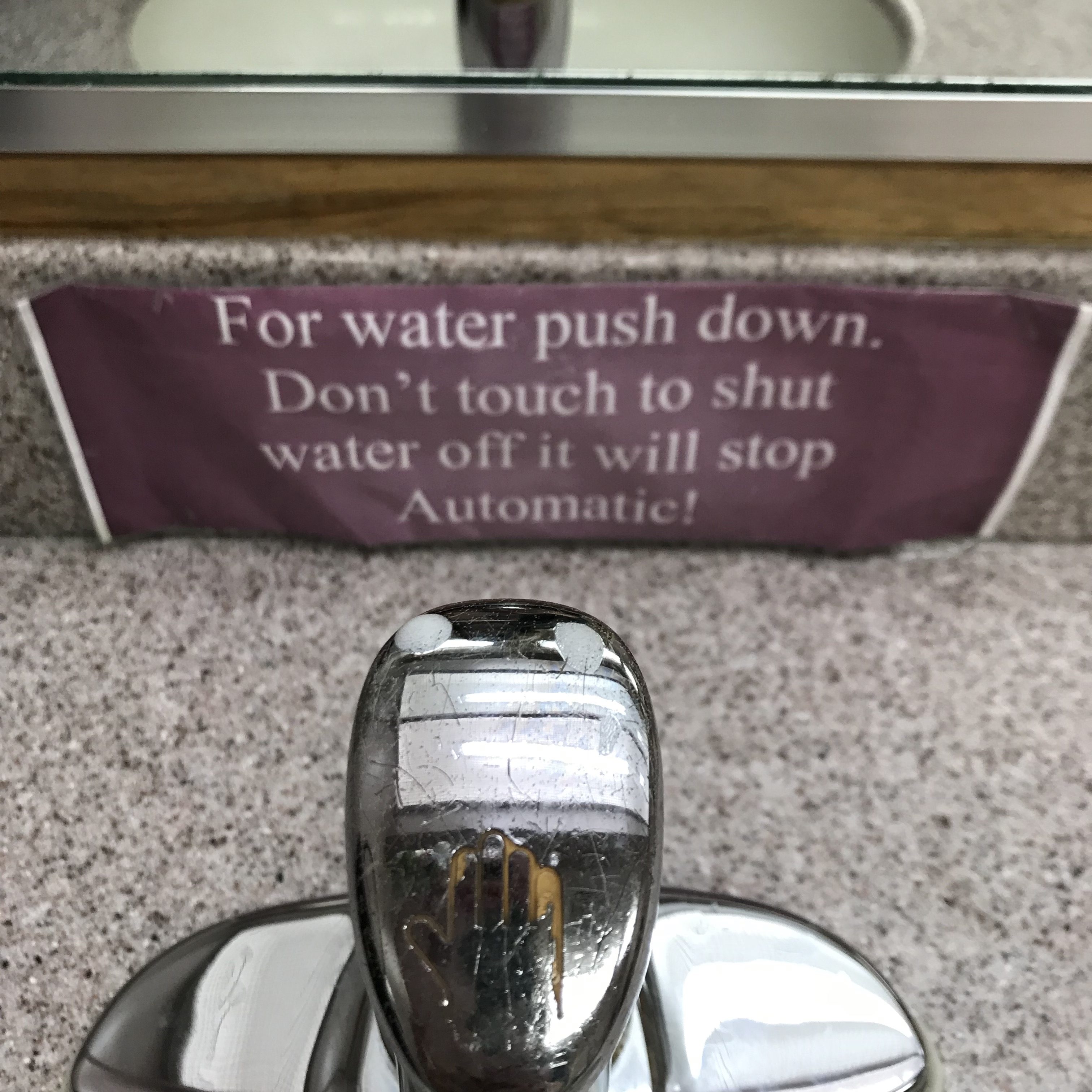
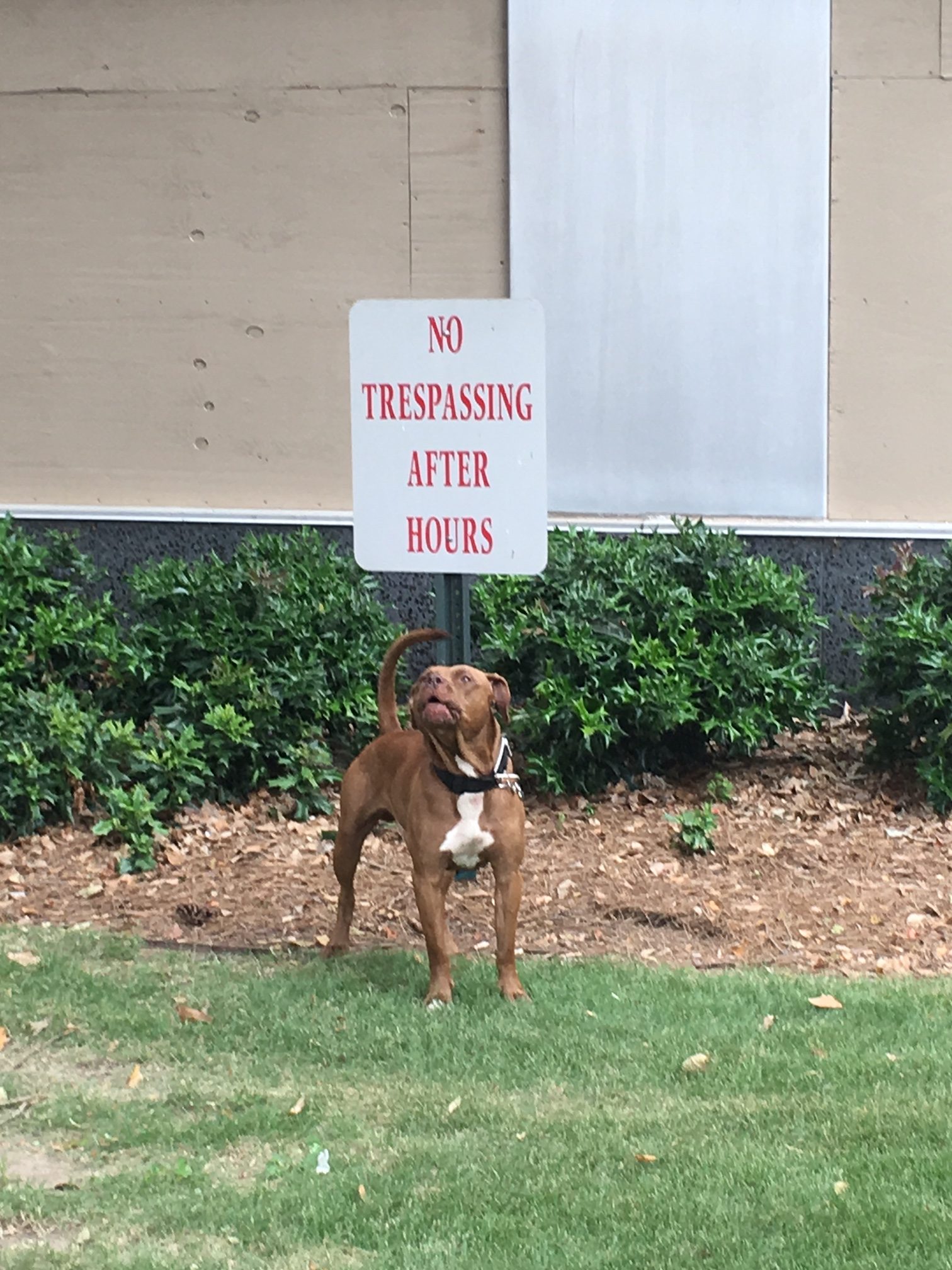
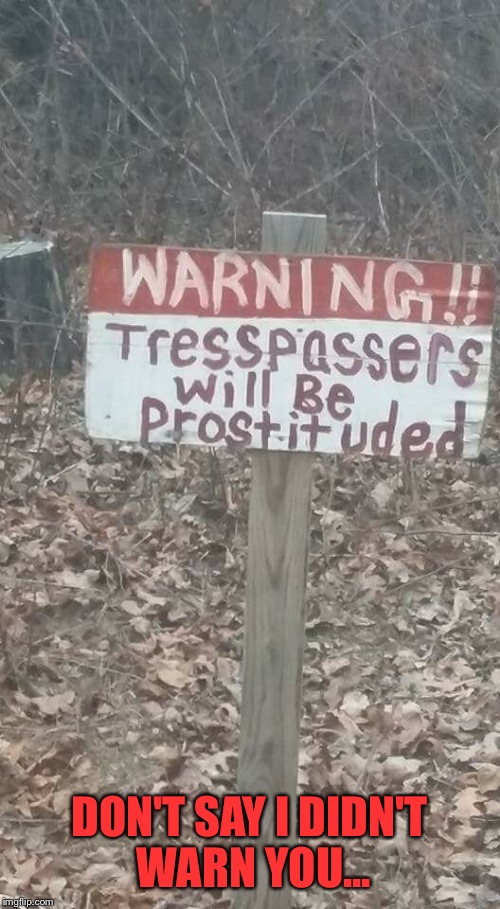
When I was on the road, I couldn’t help but notice bad signage. Mostly it was hanging in bathrooms, as though it were trying to hide. And, frankly, I don’t blame it. While I’m all for the evolution of the English language, I despair. I toyed with the idea of correcting them, but I’m not an enthusiastic defacer of any printed words. Here are the three appalling signs I was able to snap without drawing too much attention.
It’s hard to know where to start.
I suppose the two ** represent the phrase “if there are no paper towels.” And that must be a majestic Hair Dryer to warrant initial caps.
This one never gets old. Fish in a barrel, folks.
It’s show and tell time!
I’ll repost the first five you all send to me at laura@laurabenedict.com.
—Thanks, Sue Coletta! I like that they finish this masterpiece off with three !!!
–From George Smith, “Trespassing during normal hours is okay, though.”
George Smith: “Somewhere there’s a empty sign frame…”
I can’t believe how long it too me to get this one. Too funny!
George Smith: “For those approaching from the edge of the building.”
For your reading pleasure, we have an anonymous submission of the first 400 words to a story titled – Rabya. I give my feedback below, but I also wanted to share this tidbit that the author shared on the inspiration for the story. In my own writing, headlines often inspire my novels and I love blending my research into fiction to add gravitas and authenticity.
FROM THE ANONYMOUS AUTHOR – Based on a true situation, RABYA is the story of how an American software engineer lands on the Terror Watch List because his live-in girlfriend, Rayba Salik, is Turkish. Does she have a secret?
***
Two minutes before take-off, Justin Karns twists side-to-side, trying to carve out room for his shoulders. The tall guy to his left has already commandeered the armrest. His manspread invades Justin’s space. The thought of rubbing knees with him across the Atlantic Ocean is creepy. If Justin doesn’t resolve this problem soon, he’ll be a mess for his big interview.
A few rows ahead, three seats sit empty. Though it’s verboten to move during takeoff, the seat should still be available in five minutes if everyone follows the rules. Yet, when the plane levels off—with the seat belt sign still lit—a man darts into the empty row. Justin pushes his call button.
“May I help you?” The flight attendant asks.
“Yes, please.” He glances at her name tag. “Kirsten, this row is way too crowded for three tall men. I’m six-foot and cramped. Imagine how these guys feel.” He flips his thumb to the left. “There was an empty row ahead, but someone just took the middle seat.”
She glances over her shoulder and then back without a word.
“Would you mind asking that guy to take the window seat so we could both be comfortable up there. Then my friend here,” Wilt the Stilt, “will have a place to stow his legs.”
“I’m sorry,” Kirsten says. “That is not possible.”
“Seriously? I fly international all the time. People always change seats.”
“There are new rules. Sorry.” She walks away.
When Justin can’t settle in, he calls her back. He considers name dropping his interview with Cruise Talon, the famous international consulting firm, but he’d sound like a braggart. He could hyperbolize his agony, but he’d sound like a wimp. Instead, he resorts to the truth. “I really need to change seats. My future depends on being rested.”
Her blue eyes turn icy. “I am sorry. Enjoy the flight.”
Perfect. Flight attendant on a power trip.
Justin stands up, stretches his body, and watches Kirsten return to the galley. A man on the aisle with a cop’s buzz cut smirks at him and reaches into his jacket, for what—a citation pad? He wouldn’t be so judgmental if he were stuffed into a row with daddy long legs.
Desperate to relax, Justin tilts back and waits for a chance to steal a piece of the armrest.
So, I’m the only one on this flight who can’t change seats.
FEEDBACK
TO LIKE OR NOT TO LIKE JUSTIN – My overall impression is that I’m not sure I want to be in Justin’s head for an entire book. If I were a reader picking up a book and reading the first page or so, how important is it for me to like him?
Some authors can pull off complex characters, where it’s not necessary for the reader to instantly like them. If the reader can be won over by the deeds of a complicated character, you have a major bond and great writing.
But in this short sample, Justin comes across as self-involved, arrogant, cynical to a fault, and inconsiderate. If this is a story inspired by real events, I would recommend shining a more sympathetic light on Justin. The author would be better off making this guy relatable from page one. Even if Justin is irascible, if the reader sees him in an uncomfortable situation that they have been through, the focus wouldn’t be on Justin’s worst traits.
HELP THE READER RELATE TO THE SITUATION INSTEAD – If the author plans on Justin being a challenging character with a prickly nature, I would recommend the author divert the reader’s attention from his unsavory personality to focus on his situation.
Who hasn’t endured a terrible flight where everything seems to go wrong? I would concentrate on the things that many readers would have experienced, then show Justin navigating those waters to see how he deals with things.
1.) Cramped seats
2.) A crying baby or two
3.) Recirculating air that doesn’t work
4.) Seat that doesn’t recline
5.) The interior of the plane feels like a sweltering oven
6.) Someone knocks his elbow on the aisle and hits the raw nerve of his funny bone
7.) Or a plane too small for good overhead bin space and he has to cram his carry on under the seat in front of him, leaving him no leg room.
(Can you tell I’ve had my share of really awful flights? I traveled on business when I was with the energy industry. Now my commute is from my bedroom to my home office. Sweet.)
If the author is going for the kind of characters featured in GONE GIRL – as seen through the eyes of a failed and bitter marriage of a husband and wife where both of them look guilty – then the voice attempted in this opener would pose a challenge to a reader who might like to relate to a main character. It’s a fine line to have an arrogant character still be likeable enough that a reader might want to eventually root for him. Finding the right balance in a character like that takes a deft hand.
A book that resonated with me and I highly recommend is PARANOIA by Joe Finder. This novel was made into a movie. Read the book. It’s a MUCH BETTER story. As you can see from the synopsis below (embellished by me), the author has borderline criminal, Adam, start his downhill spiral by doing a favor for a friend, a buddy of his who works in the warehouse. After he gets caught in a crime by his employer, Adam is given a chance to rectify his situation and do the right thing, but instead he takes the corporate ultimatum/blackmail and breaks the law to spy on another company. It’s a story of David versus Goliath.
In Paranoia, Adam Cassidy is twenty-six and a low level employee at a high-tech corporation who hates his job. He’s a real slacker with hustler, street smarts. When he manipulates the system to do something nice for a friend, he finds himself charged with a crime and corporate security gives him a choice: prison – or become a spy in the headquarters of the company’s chief competitor.
PRESENT TENSE – I didn’t see the point to writing this story in present tense, since more readers dislike it. Present tense is more likely to appear in YA where teen readers don’t have the bias of living most of their lives reading 3rd person, past tense books.
PLAUSIBILITY ISSUES – I found several issues wrong with this intro, just from a factual standpoint.
Call Button – Before Justin presses the call button, he makes a point to notice the seat belt sign was still lit. Yet once he presses his call button, the flight attendant pops up at the ready to serve. Things happen too fast in sequence for them to sound realistic.
Rules on Changing Seats – I took issue with Justin expecting the flight attendant to settle his seating problems. Any flight attendant is there for safety reasons first, but pushy Justin expects her to fight his battles by intervening. But to compound the issue, he argues that he flies international “all the time” and people change seats. (Why he argues only about international flights and not domestic too, I have no clue.) The attendant tells him there are new rules and changing seats is not permitted, yet the whole incident that started this argument was that a guy changed seats and was allowed to stay. That’s a logic problem that readers would see, like I did, and not take the story seriously. The whole argument comes off silly. Justin is being belligerent and the attendant is being overly mean. (Most flight attendants are very accommodating.)
Justin has options – Justin has the option of asking the man who has the row to himself if he can share the seating with him. When he chooses to force the attendant to intervene, he comes across as weak and a whiner. If the objective is to give a voice to Justin that sets the stage for the entire book, I would recommend the author take a harder look at how Justin should appear in his debut moment of first appearing on the page. Is he a victim or is a jerk who’s asking for it? Does he have poor judgment or is the Cosmos teaching him a lesson in humility? The author could go anyway with this. I suggested drawing the reader in by putting Justin in a situation where the reader can relate to a terrible flight and a seriously bad day, but there are other ways for the author to go. We simply don’t what the author has in mind. As a reader, I would put this book down, however. Justin hasn’t won me over to turn the page or buy the book.
As an author, you have control of ANYTHING in the story, but the fictional world should be consistent or must seem real to the reader, in order for them to suspend disbelief and read along.
NITPICKS – Word choices and pop culture references are important and should fit the character if the story is from his or her POV.
1.) Do guys really use the word “creepy” to describe man-spreading and knocking knees with a guy sitting too close? That sounds like the word choice of a victim or a word that a woman would use. Similarly, the line below makes Justin sound childish and unwilling to even try to rectify his own problem. Not a very mature response for a guy traveling across the Atlantic for an international job with an elite employer. Anyone in this position would be assertive, a negotiator, and a charmer.
So, I’m the only one on this flight who can’t change seats.
2.) How many readers would get the reference, “Wilt the Stilt”? Wilt Chamberlain played from 1959 to 1973. Justin strikes me as a younger guy who might reference an NBA player currently playing. Another example of a description that stands out as odd to me is – Daddy Long Legs. My parents would use this. Pretty ancient reach back.
3.) By calling attention to Justin’s internal thoughts on his options (see below), the reader gets unfavorable thoughts planted about Justin that the author may not intend. By his actions, he’s already an acquired taste. Why add fuel to stoke the fire?
He considers name dropping his interview with Cruise Talon, the famous international consulting firm, but he’d sound like a braggart. He could hyperbolize his agony, but he’d sound like a wimp.
TITLE – Rabya may be a working title, but it wouldn’t make a good published title in my opinion. Using the woman’s name might also limit the cover design to feature the woman, when the story is truly about Justin and the calamity of his life. When I don’t “feel” the title right away, I start writing down alternatives and make a long list before I settle on one. Get feedback from beta readers.
DISCUSSION 1.) What do you think of books written in present tense, TKZ? Am I the only one without my 3-D glasses?
2.) What feedback would you add for this courageous author?
Since P J Parrish had to throw down the guantlet by adding music to the end of her post this week, I’ve included this link & dedicate the song to the character in this submission. Justin is having a very bad day. #TKZMusicChallenge
John Gilstrap had an excellent post yesterday on Internal Monologue that resonated with me. He gave great examples of what works and what may not, with explanations on his sage reasoning. He certainly gave me things to think about in my own writing.
I tend to write in deep POV and very tight, with sparse narratives. This is especially true when I write my novella length stories for Kindle World, which is a great exercise in writing a tight plot and keeping the pace up.
In my full novels, I reign in my internal monologue and make it focused, with the character having a journey from beginning to end of the book, as well as a journey even within each scene, so I don’t repeat the deep POV thoughts.
On the FOR WRITERS resource on my website, I have a post titled – START WITH A BANG. If you scroll down to the “Ever thought about building an onion from the inside out?” sub-heading, you’ll find a section on how I let dialogue be the starting framework and how I layer in elements to fill out a scene. Internal monologue is vital to establishing my character’s journey and emotional growth and it’s something I focus on a great deal – even when I do my final draft read – but it’s the last thing I add to any scene, because I want to control it and isolate the journey to avoid pitfalls.
Despite my own methods, I greatly admire writers like Michael Connelly (particularly his Bosch series) where his mastery of his character’s internal views feel so authentic of an experienced war weary cop. He effortlessly brings in Bosch’s personal relationships and his workload to give a 360 view of this man’s life. That’s not an easy thing to do. It requires an intense knowledge of his character Bosch.
No matter how a writer learns how to craft internal monologue, it is easily one of the areas an author can veer off course and overuse…or under use, for that matter. Have you ever read a book that is all action, devoid of emotion or insight into the character’s internal battle and conflict? This is definitely a balancing game to get internal monologue to enhance your writing and make your stories memorable for readers.
Key Points to Finding the Right Balance for Internal Monologue:
1.) DIALOGUE – If you see your narrative paragraphs stretching out onto the page in weighty clumps, look for ways to make your internal monologue lean and mean by use of dialogue. This is something I have to pay attention to, even with my sparse style. Clever dialogue is a challenge, but it can be so much fun to write.
Plus, effective dialogue can help you pace your novel and tease the reader with red herrings or mystery elements, and not a plot dump of internal thoughts.
2.) LESS IS MORE – It’s easy to get carried away with every aspect of a character’s POV. The reader doesn’t need to know every logical argument for their action or inaction. People don’t think like this, especially in the heat of the moment in an action scene.
Have patience to let the story unfold. Too much internal thought can dry up pace and bore readers. The reader doesn’t need to know everything, especially all at once in a dump.
Also be careful NOT to repeat the same thought over and over. Repeating internal strife does not constitute a journey. It only reminds the reader that the author is searching for different ways to describe the same thing. Oy.
3.) TIMING – pick your spots when internal monologue makes the most sense. James Scott Bell wrote a great post on What’s the Deal on Dreams in Fiction where he talks about starting a novel with a character in thought, no action or disturbance. Resist the urge to bury your reader in internal monologue right out of the gate.
In addition, if your character is in the middle of a shoot out, that would not be the most opportune time to share his feelings on getting dumped by his girlfriend, not even if she is the one shooting at him. (Although I would love to read a scene like that.) To make the danger seem real, stick with the action and minimize the internal strife until it’s logical for the character to ponder what happened after.
Plus, if you spill the exposition too early, the reader won’t retain it as well as if you had waited for the right timing, when the reveal would be most effective.
4.) SHOW DON’T TELL – Once you get into the quagmire of telling a character’s POV, it’s too easy to get carried away with the rest of your book. If you can SHOW what a character is feeling, and let the reader take what they will from the scene, you will leave an image nugget that will stick with them. TELLING doesn’t have the same impact.
5.) ACTION & DIALOGUE DEFINE CHARACTER – These are the two areas where readers will most remember a book. Unless you’re into author craft and can appreciate the internal monologue finesse of John Gilstrap and Michael Connelly and many other author favorites, you probably may not remember how effectively the author used internal monologue. It’s like the color black. It goes with everything in such a subtle way that you may not notice it.
FOR DISCUSSION:
1.) What tips do you have to share on how you handle internal monologue in your own writing?
2.) With the key points I listed above, do any of them pose a particular challenge for you?
3.) Name a recent book you read where you noticed the author’s deft handling of internal monologue. (I would love to expand my TBR pile.)
I love writing pets into my stories. Not only is a great way to show a killer’s soft side, but they’ve become important family members for my main characters. In my stories, I’ve used a Rottweiler, English Mastiff, St. Bernard, a calico, tabby, and all-black cat, pet crows, and a black bear.
I’ve even borrowed a friend’s Bulldog, but I felt so responsible for him, I couldn’t include him like I’d originally planned. God forbid I returned him emotionally scarred from the experience. It’s much safer to create a fictional pet.
Need a way to show your character’s quirky side? Include a bearded dragon, snapping turtle, boa, tarantula, or exotic bird.
Is your character adventurous? Give him a pet moose, lion, leopard, or tiger to love. How ‘bout a pet elephant? When writing about pets let your imagination soar.
Fit the pet to a specific character to cue readers about their personality. By using well-thought-out animals, it can say a lot about who they are, where they live, or even, their state of mind. It’s also fun to juxtapose. Give a tattooed biker a Chihuahua or toy poodle. Readers will love it!
A few things to keep in mind when writing pets into fiction…
If you kill the pet, you better have a damn good reason for it, a reason readers will understand.
For example, not long ago my husband and I watched John Wick. [SPOILER ALERT] I fell in love with the Beagle puppy his dead wife sent from the grave. When the bad guys murdered the dog I almost shut off the movie. If my husband hadn’t begged me to keep watching, that would’ve been it for me. Turns out, this moment kicked off the quest (First Plot Point in story structure). Not only is it an important scene, but if it didn’t happen there’d be no story. See? Understandable reason why he had to die. John Wick would not have gone ballistic over a stolen car. The puppy was the only thing left he cared about. It had to happen.
The safer option is to not harm the pets.
Why Does the Character Have That Specific Pet?
As I mentioned earlier, you need to know why the character chose that pet. Is he lonely? Does a couple use their pets to fill a maternal/paternal need? Are you using that pet as a way to show the character’s soft side? Does the pet become the only one who’ll listen to their fears, sorrow, or hidden secrets? In other words, for an introverted character, pets can assume a larger role in the story so your character isn’t talking to him/herself.
As the writer, you need to know why that dog, cat, bird, lizard, or bear is in the story and what role they play. Does a K9 cop track criminals? Did your criminal character train a horse to be the getaway driver? Does the killer feed his pet hogs or gators human flesh? Knowing why that fictional pet exists is crucial.
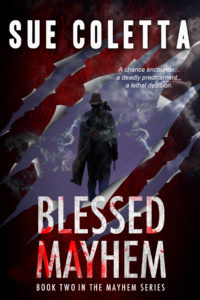
What’s the Pet’s Personality?
Animal lovers know each pet has his/her own personality. If you’ve never owned the pets you’re writing about, then I suggest doing a ton of research till you feel like you have. For example, while writing Blessed Mayhem I needed to know how crows communicated and how people could interpret their calls. What separated a crow from a raven, what they felt like, what they smelled like, what foods they enjoyed most. In order to make the characters real I spent countless hours of research into the life of crows. I even went so far as to befriend a crow of my mine. Turns out, Poe was female. It didn’t take long for her to bring her mate, Edgar. When they had chicks, they brought them too. It’s turned into a very special experience (story for another time).
What Does the Pet Look Like and How Does S/he Act?
First, you must know the basics … their markings, voice, breed, habitat, diet, etc. Then delve deeper into the expressions they make when they’re happy, content, sleeping, aggravated, and downright pissed off. Every animal has their own unique personality, mannerisms, and traits. Evoke the reader’s five senses. Don’t just concentrate on sight. By tapping into deeper areas, our fictional pets come alive on the page. A scene where the hero or villain cuddles with a pet can add a nice break from the tension, a chance to give the reader a moment to catch their breath before plunging them back into the suspense.
Plus, pets are fun to write.
Does the Basset Hound snore so loudly he keeps the rest of the family awake? Is he now banished to the garage at night? Does the German Shepherd’s feet twitch when he’s dreaming? Does the Mastiff throw his owner the stink-eye when he can’t reach his favorite toy?
Let’s talk dogs. They do more than bark. Use their full range of grunts, moans, groans, happy chirps, and playful growls when your character plays tug-of-war. For cats, nothing is more soothing than a purr rattling in their throat as your character drifts asleep. Soft claws can massage their back after a brutal day.
Years ago, I had a pet turkey who used to love to slide his beak down each strand of my hair. This was one of the ways Lou showed affection. I’d sit in a lounge chair with a second lounge Papa Bear lounge chair behind me, and Lou would work his magic till I became putty in his beak. He knew it, too. After all that hard work, I couldn’t deny him his favorite treats.
Symbolism and Locale
Need an already-creepy area to become even more menacing? Have vultures, eagles, or other carrion birds circle overhead. Use coyotes’ eerie chorus of howls. Crickets and tree frogs symbolize a desolate country milieu or swampland.
Dead silence also works well, but sometimes you need that extra oomph to evoke the correct emotional response. Anyone who’s ever spent time outside, in the dark, with only wildlife around for miles, can tell you their calls have a way of raising all your tiny body hairs at once.
Ever hear a Fisher cat? Their cries sound like a baby being slaughtered. This the best YouTube video I could find, but around here they’re even more sinister. When a Fisher cat screams it’s a tough sound to ignore.
If your character is camping or lost in the woods, ground the reader with the songs of nature and a crackling fire.
Near a lake, use water lapping against the shore.
Listening to nature and animal sounds can also be a great way to trigger the muse.
Consistency
If your characters are snuggling with a pet in the first few chapters, then you must include them in later scenes as well. Otherwise, the home environment won’t ring true. Where’d the dog go? He was in Chapter Three and now, he’s gone. What happened to him? Animal lovers will notice his/her absence.
If your villain is killed and you’ve gone to great lengths to show how much he loves his dogs, then make sure the reader knows what’ll happen to those dogs after his death. Did your hero just orphan them? Or did the villain write them into his will? Maybe he or she has a family member that will care for the dogs. The tiny details matter. Think of it in terms of yourself. If you own an African Gray, then chances are s/he will outlive you. What provisions have you set in place for his/her care after you’re gone? Same goes for fictional pets.
Aging Pets
Everyone ages, even fictional pets. Sometimes the years aren’t kind. Does your dog character limp from arthritis? Then you can’t let him charge out the door with a spring in his step. He needs to lumber into a room. He’s slower than your younger animal characters. His muzzle now has gray. Around the eyes are graying too. Maybe he takes medication for achy joints. By including the aging process readers can relate. We’ve all had older pets, and it broke our hearts to see them age. Unfortunately, your fictional pet needs to age. We can prolong this process, but we need to at least show them slowing down. By doing so, we can also show the emotional angst it causes our character to see them this way.
The Day-to-Day
Does your fictional dog have a favorite squeaky toy? Does your cat like to get high on catnip? Maybe s/he knows where your character stashes the bag, and every time they leave the house the cat gets wasted. Maybe your character goes to the local butcher every Saturday to buy the family dog a bone. If your fictional dog is panting in the summer heat, please give him a bowl of water to cool off. Whatever you do, don’t lock him inside a car in ninety-degree heat.
Ever see a dog drunk on apples? It’s hilarious! Let your fictional dog eat fallen apples, then show him stumbling back to the house. How about peanut butter? Peanut butter and animals can be a winning combination. Does your fictional cat walk on the counters? Does your fictional dog beg for food at the dinner table? On the sly do your children characters slip bacon to him? How ’bout cauliflower, and even the dog spits it out. You get the picture.
Have fun with your fictional pets. I do. They’re some of my favorite characters to write.
What are some ways you’ve used pets in your writing? Have you ever created an exotic pet?
2017 winner of #RBRT Readers’ Choice Award in Mystery/Thriller. Available in paperback and ebook. Look inside HERE.













 I love writing pets into my stories. Not only is a great way to