About Debbie Burke

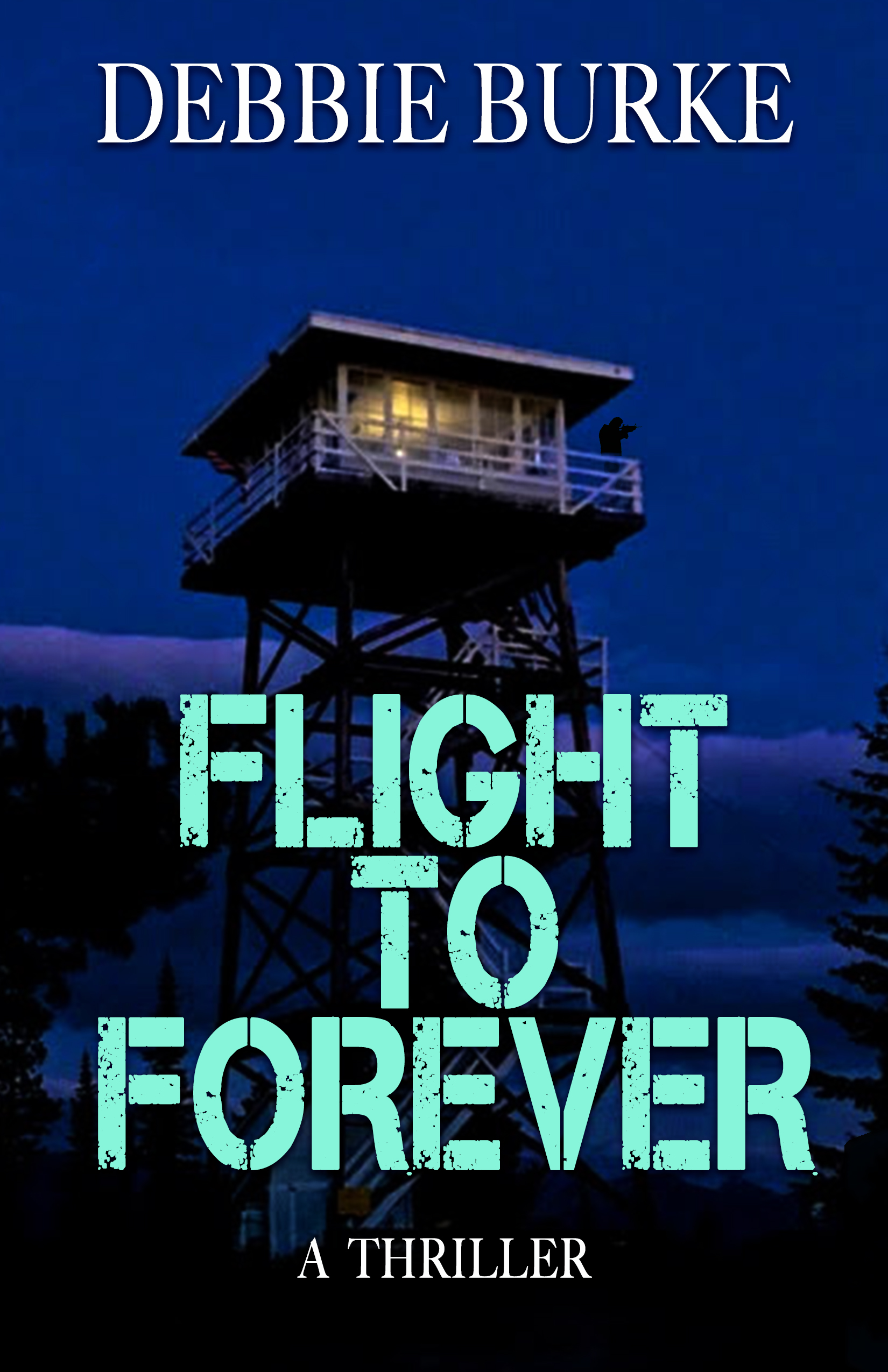
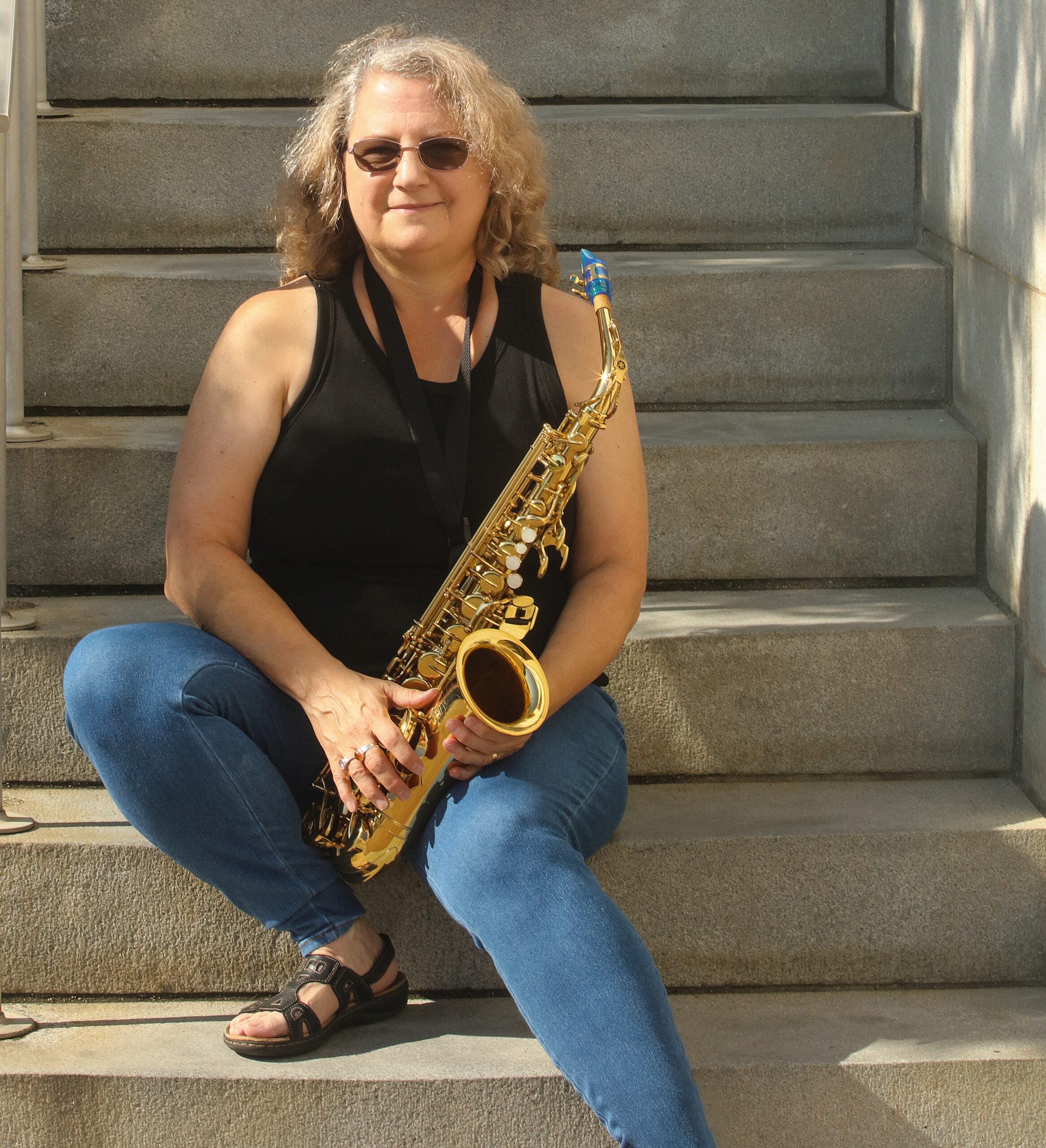
Debbie writes the Tawny Lindholm series, Montana thrillers infused with psychological suspense. Her books have won the Kindle Scout contest, the Zebulon Award, and were finalists for the Eric Hoffer Book Award and BestThrillers.com. Her articles received journalism awards in international publications. She is a founding member of Authors of the Flathead and helps to plan the annual Flathead River Writers Conference in Kalispell, Montana. Her greatest joy is mentoring young writers. http://www.debbieburkewriter.com

My Brief Life and Tragic Death – First Page Critique  

 By Debbie Burke

@burke_writer


Photo credit: Wikimedia Commons

Please welcome another Brave Author who’s submitted a first page for a story entitled:

My Brief Life and Tragic Death

Chapter 1. Purple Pumpkins

I met Frank and survived an assassination attempt between lunch and teatime.

I suppose it started with the whistling. I had the palace library all to myself, as usual. The hush was shattered when a boy walked in, whistling. He caught sight of me and approached. It’s hard to smirk and whistle at the same time, but he managed it. When he reached my table, he stopped whistling and stood smiling at me. It was a good smile. It invited me to smile back, which I didn’t, of course.

He was a handsome boy of about thirteen, a year older than myself, with a haircut from the California side of the gateway. I liked him at once, which annoyed me. I didn’t get along with my fellow children.

His smile and likability made me uncomfortable. I gave him a cold stare. “This is a library, you know.”

He looked around in pretended astonishment.

I added, “You can tell from all the books? At least, I hope you can.”

“I’ll take your word for it. Hey, maybe you can help me. I’m looking for a sweet little girl named Flavia.”

I placed a bookmark and closed my book. “Are you being irritating on purpose?”

“Of course I am. How about you?”

I was taken aback. “Why?”

“Look, babe, do you know where Flavia is or not?”

“I’m Princess Flavia.”

“Then your portraits don’t do you justice. I like the freckles especially. A freckle is a beacon of honesty in a mendacious world. Allow me to introduce myself. Frank Barron, at your service.” He stuck out his hand.

If you ignored his actual words, he was wonderfully well-spoken, especially for his age. He had that command of language which only an intelligent person who reads a great many books develops, but without the stiff delivery of someone like me, for whom books are their only friends. I was a bit regretful when I said, “Princesses don’t shake hands.”

“Oh, that’s all right. I’m not a princess.”

I rolled my eyes. “But I am.”

~~~

First impressions:

Let’s start with the title: My Brief Life and Tragic Death.

It implies the first-person narrator, 12-year-old Princess Flavia, is apparently already dead. Is this fantasy? Magic realism? Is it similar to Alice Sebold’s The Lovely Bones, told by a murdered teenager watching her family deal with the repercussions of her death?

I’m not sure what’s happening but I’m intrigued.

The first line drops a provocative bomb about an assassination attempt. That definitely qualifies as a disturbance in anyone’s life. But the tone struck me as too casual and matter-of-fact. I can’t imagine a 12-year-old girl, even a self-possessed princess, being this blasé about someone trying to kill her.

Next, the scene flips back to earlier that day. Flavia is alone in the palace library when her reading is interrupted by the entrance of a whistling boy who’s looking for her. This also qualifies as a disturbance, although on a much smaller scale than an assassination attempt.

Foreshadowing and disturbances, major and minor, kick off a good start, enticing the reader into the plot. Nice job, Brave Author.

Setting and Time:

The mention of teatime suggests the locale is the British Isles, so a haircut from the California side of the gateway sounds exotic and faraway to the cloistered Flavia. Although the haircut and the gateway aren’t clearly defined yet, that’s okay. Longer descriptions could bog down the forward momentum at this point. I’m willing to wait for more explanation.

The time period isn’t defined. Physical books in a library could be contemporary but might also indicate a past before digital books. Again, I’m willing to wait to find out.

Characterizations:

Right away, Flavia’s character interests me. She sounds much older than her age. She’s alienated from people and may be lonely but won’t admit it: I didn’t get along with my fellow children.

She doesn’t react in predictable ways: His smile and likability made me uncomfortable.

And she’s irritated by her reactions, as if she can’t control her own mind: I liked him at once, which annoyed me.

The author raises questions: Why does Flavia react like this? Why does she expect herself to be detached from normal human emotions? As a princess, is she pressured to behave a certain way? Does she secretly want to rebel against those conventions?

Flavia is a character in conflict with herself. Already she’s presented enough complicated psychology to make a reader want to learn more about her. Well done.

Her observation of Frank is not superficial. Like a normal adolescent girl, she notices he is handsome but she also digs deeper, probing into his character.

Frank is brash, cocky, yet charming. She’s interested but, for some unknown reason, can’t allow herself to like him.

Brave author, in a very few lines, you’ve skillfully painted a picture not only of Frank’s appearance but also his personality. 

Flavia quickly sets Frank straight that she is a princess who won’t tolerate being called “babe.” Frank isn’t at all fazed by being put in his place and goes on to eloquently charm her, while at the same time giving readers a quick sketch of what Flavia looks like: Then your portraits don’t do you justice. I like the freckles especially. A freckle is a beacon of honesty in a mendacious world. 

In first person, it’s difficult to find effective ways for a character to describe herself without resorting to cliches like looking in a mirror. This was a nice blending of dialogue and description that didn’t sound forced. 

Voice:

The humor works well. The banter between aloof Flavia and smartass Frank is entertaining. They keep trying to one-up each other, competing over who gets the last word. That creates ongoing tension between them. The reader wants to find out who wins the verbal jousting.

The author also nicely juxtaposes that humor with Flavia’s wistful longing for connection with another human.

The following is my favorite sentence:

He had that command of language which only an intelligent person who reads a great many books develops, but without the stiff delivery of someone like me, for whom books are their only friends.

That really pins down both personalities and poignantly conveys Flavia’s loneliness.

Audience:

Flavia’s age indicates the target audience may be Young Adult. Overall, I like her voice, even though she sounds much more mature than an average 12-year-old. I know intelligent, articulate, well-read kids like her so she comes across as unusual but still realistic.

Line editing:

What if you rearrange the order of the first sentence like this?

Between lunch and teatime, I met Frank Barron and survived an assassination attempt.

Switching the assassination attempt to the end of the sentence creates a more dramatic punchline. 

Another thought about the first line: it could come off as a gimmicky ploy unless the author delivers a payoff within a few pages.

Is Frank the savior who thwarts the attempt on her life? That creates a compelling reason for an ongoing relationship between them.

Or is he the would-be assassin?

Because Flavia already knows what happens (even though the reader doesn’t), she could foreshadow a little more.To raise tension, perhaps she wonders how he got past security into the palace library.

The phrase If you ignored his actual words confused me.

Here’s what Frank says: “Then your portraits don’t do you justice. I like the freckles especially. A freckle is a beacon of honesty in a mendacious world. Allow me to introduce myself. Frank Barron, at your service.”

His “actual words” show a sophisticated command of language so I don’t understand why Flavia talks about ignoring them. Maybe delete the phrase: If you ignored his actual words, 

~~~

Overall, this first page works well. The characters are likable, multi-dimensional, and complex. There’s conflict, tension, and suspense.

Additionally, the author proof-read and submitted a clean page without typos, misspellings, or grammatical errors.

YA, fantasy, and magic realism are not genres I’m terribly familiar with. But the Brave Author did a good job of pulling me into this intriguing submission. Thank you for sharing it!

~~~

TKZers: What do you think of Flavia and Frank? Are you interested in the premise? Any suggestions for our Brave Author?

True Crime Thursday – Crazy but True Laws


By Debbie Burke

@burke_writer

Criminal Kissing
Photo credit: Vera Arsic – Pexels

In Elko County, Nevada, the law requires people to wear a mask at all times.

Since Covid 19, many cities and counties have enacted similar ordinances requiring masks so what’s strange about that?

Elko County’s law has been in effect for a century. It was passed at the time of the Great Influenza Pandemic in 1918-1919. No one got around to repealing it so it’s remained on the books all these years.

As of April 13, 2020, the Elko City Council considered passing a new ordinance requiring employees of businesses to wear masks and gloves. Maybe if they dust off old records, they’ll find they’ve already had such a law…for the past hundred years!

While they’re at it, legislators should consider repealing a late 19th century law in Eureka, Nevada, that prohibits a man with a mustache from kissing a woman. The lawbreaker in the above photo is reportedly still at large, armed and dangerous. 


Photo credit: Wikimedia Commons

Since 1961, it’s been illegal in Gainesville, Georgia to eat fried chicken with a fork—only hands are permitted. That law actually makes a lot of sense because it’s “finger-lickin’ good.”


In Florida, it’s illegal for a man to wear a strapless dress in public—no mention of other dress styles. It’s also illegal to sing in public while wearing a bikini or bathing suit.

A widely-circulated urban myth is that Florida bans sex with porcupines. Actually Florida’s 2011 law prohibits sexual relations with any animal, not singling out porcupines. However, a couple of Russian tourists decided to challenge that law…with predictable results.

Also in Florida, you cannot legally ride a skateboard without a license.

Photo credit: Wikimedia Commons


Speaking of skateboards, on April 16, 2020 in Los Angeles, a front-end loader filled the Venice Skatepark with beach sand to prevent Covid 19. Hmmm.


Photo credit: Pexels


My home state of Montana has its share of unusual laws. For instance, it’s illegal to drive with a sheep in the cab of your truck unless you have a chaperone.


TKZers – What crazy but true laws does your state have? What is the weirdest law you’ve heard of?

When a Character Comes to Life

Photo credit: Jaredd Craig – Unsplash

by Debbie Burke

@burke_writer

Fiction writers play with imaginary friends whenever we create characters. We put them in a pickle and see what they do; pile insurmountable challenges on them; make them fall in and out of love; tie them to the railroad tracks and see how they free themselves. They become as close and familiar as our own family and friends.

We design how they look—short, tall, slender, heavyset, muscular, flabby. Choose the color of their skin, hair, and eyes. Grow a beard or mustache. Add scars, tattoos, piercings.

Some authors cut out photos from magazines to use as their models. Or they draw parallels to real-life actors, musicians, celebrities, or politicians in the news.

Others prefer to keep descriptions minimal. They paint a general picture but let the reader fill in the fine details.

I lean toward minimalist but have an image in my mind. Often that vision shifts in the course of a story because of plot needs.

The main character in my series, Tawny Lindholm, is a fiftyish recent widow. She’s smart but also naïve and too trusting because of her sheltered life in small-town Montana. As the story unfolded, I piled on more flaws that enhanced important parts of the plot and themes.

She’s far-sighted and can’t read small print without glasses—also a metaphor for her initial blindness to danger.

Her meniscus is torn, which hampers fleeing from bad guys.

I broke the poor woman’s finger (how cruel, right?), which caused arthritis and permanent swelling. That injury means she can’t remove her wedding ring and becomes part of her personality, tying in the theme of mourning and loyalty to her late husband. More importantly, that seemingly insignificant detail served as a key element in the plot, proving her innocence.

Have you ever experienced a character who shows up in real life, as if s/he had just stepped out of your computer screen? Recently, that’s happened twice to me in a couple of unlikely places.

First incident: my car needed new tires. The manager at Les Schwab was fiftyish,  dark hair, barrel-chested, and muscular. He wore a blue uniform with his name on the pocket, hands a little dirty from showing tires to customers and helping out in the shop. His brown eyes twinkled with an inside joke he couldn’t wait to share. Although we kidded around as he wrote up my tire purchase, he was professional and business-like.

I don’t remember his real name because, to me, he was Dwight, Tawny’s dead husband. Through the series, Dwight occasionally appears in her memories with a joke or snippet of conversation.

Waiting time to install new tires was two hours. I grabbed a cup of coffee and a free bag of popcorn—at Les Schwab stores, you hardly smell the rubber because the popcorn aroma greets you as soon as you walk in the door (popcorn and coffee have since been discontinued since COVID-19). I settled in at a tall table, pretended to read a magazine, and did what writers love to do—people-watch and eavesdrop.

For two hours, I watched the real-life Dwight interact with other patrons, tire busters, and people on the phone. He was patient and polite with cranky customers, and firm but even-tempered when screw-ups happened in the shop. That twinkle in his brown eyes never wavered.

Not only did his appearance and manner exactly match the Dwight of my imagination, so did his personality. It was eerie but also thrilling.

Second incident: This happened in February while vacationing in Florida. When I’m there, I attend Zumba classes and, over several years, have gotten to know a number of regulars. I’m happy to reconnect with them because they’re loyal fans of my thriller series, bringing copies for me to sign, inviting me to talk to their book clubs, and eagerly asking when the next book will be out. They are terrific supporters for whom I’m very grateful.

One morning, I spotted a new woman in class—tall, willowy, with long red hair in a ponytail and a bright smile.

Tawny, my protagonist, in the flesh.

The woman must have thought I was weird because, for the next hour, I watched her instead of the instructor. After class, we chatted about dancing. She felt intimidated because it was her first time but she was game and didn’t give up. Persistence and determination are two major personality traits Tawny has and this lady checked off those boxes. She was also friendly, open, spirited, and a good listener. Check off more boxes.

After several minutes of conversation, I worked up the courage to tell her I was a writer and explained I’d been staring at her because she looked like the heroine in my books. Instead of being creeped out by a crazy old lady Zumba stalker, she was excited. A dozen other people who’d read the series also noticed the resemblance, affirming, “Yes! She does look just like Tawny.”

Her real name is Kim, a massage therapist from Minnesota and she was eager to read about her alter ego.

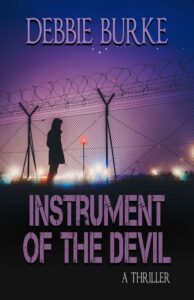
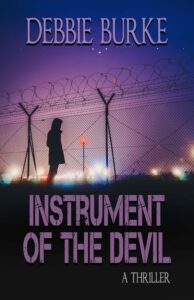
In #1, Tawny receives a confusing new smartphone that she believes is a gift from her son. The Instrument of the Devil actually came from the villain who tampered with the device as part of a terrorist plot. Tawny blames herself for the phone’s peculiar behavior when, in fact, he rigged it to stalk her and eavesdrop.

At the next Zumba class, Kim had read the first few chapters and said, “I totally identify with her struggles with the smartphone.”

As do all of us born before 1990!

A few days later, she finished the book and said, “She’s so much like me it’s giving me chills.”

That comment gave me chills.

As authors, connecting with readers is our best reward. But connecting in real life with characters we thought only lived in our imaginations is a close second.

This gracious doppelganger agreed to pose for a photo. Heeeeere’s Tawny!

Kim AKA Tawny


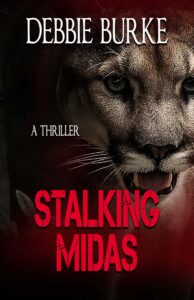
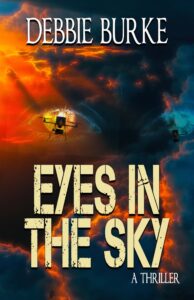
A big thank you to Kim for being an inspiration. She’s also a great sport as I continue to make her life miserable in the next books, Stalking Midas and Eyes in the Sky.


~~~

TKZers: Has a character ever stepped out of your book into real life? What happened? Did their appearance match their personality? How were they different from what you envisioned?

Who’s Zoomin’ Who?

by Debbie Burke

@burke_writer

Photo credit: Ryan Arrowsmith, Creative Commons

For your listening pleasure, here’s the late, great Queen of Soul Aretha Franklin singing Who’s Zoomin’ Who?

The answer is: millions are zooming.

Zoom is a videoconferencing service, similar to Skype but easier to use, where a number of people can see and talk to each other via their computer cameras and microphones. Until recently, Zoom has been used mostly by business.

An Authors Guild newsletter brought Zoom to my attention as an alternative for writers  to connect with readers in the face of cancelled book launches, appearances, and tours.

[BTW, if you are not already a member of the Authors Guild, consider joining. Their lawyers reviewed three book contacts for me, worth far more than the $135 annual dues. Daily discussion groups are excellent sources of knowledge and experience shared by pros. Okay, end of commercial.]

Because Zoom is live, people at meetings can interact and ask questions. It enables authors to chat with book clubs and give readings and presentations.

Zoom’s basic option is free and allows from three to 100 participants, with a 40-minute time limit. Pro options start at $14.99/month and offer unlimited meeting time and other bells and whistles, including webinars, education courses, toll-free call-in numbers, etc.

Sounds like the perfect venue for authors and readers to connect, right?

Except there’s a hitch: you must give Zoom permission to access your computer. Whenever a third party gets inside your computer, there are inherent risks.

Last year, a massive security breach was discovered at Zoom. Cyber-security expert Jonathan Leitschuh reported the flaw in this article. His analysis is highly technical and much of it went way over my head. But it’s still well worth reading for his summations.

To paraphrase in simple non-geek terms, Zoom is essentially a virus, albeit a benevolent one, that opens a back door in your computer to activate your camera and microphone, letting you see/hear others and they see/hear you.

However, a flaw enabled hackers to hijack Mac users’ cameras, obtain personal data, and insert malware without the user’s knowledge.

Jonathan expressed concern about Zoom’s slow response to patch the flaw and their rather cavalier attitude toward their customers’ security.

Additionally, even if you uninstall Zoom, the capacity remains for third parties to access your computer to do mischief. Jonathan’s article delves deeply into Zoom’s inner workings and suggests workarounds.

For those of us who are less techie, here’s an article from Consumer Reports with ways to protect your camera and mic from hacking.

Zoom-Bombing” is another problem. This recent article from Forbes describes how trolls broke into a Zoom meeting and inserted pornographic videos. When they were blocked, they simply chose new user names, joined the meeting again, and inserted more “bombs.”

Zoom’s privacy statement reveals they share your information with third parties like Google and Facebook. In other words, data mining. 

With COVID 19, Zoom use has exploded and its stock is going to the moon. This article in the Motley Fool says:

“Why Zoom is a solid long-term bet:

While Zoom stock has already more than tripled from its original IPO price, it still has the potential to create massive wealth for long-term investors. The enterprise collaboration segment is expected to top $48 billion in 2024, up from $31 billion in 2019.”

With shelter-in-place restrictions, hundreds of thousands of people are conducting virtual meetings about every subject from Aardvarks to Zumba. With many more potential targets for malicious hackers to exploit, I expect attacks will zoom up faster than the stock.

While I don’t seriously believe hackers are dying to break in on my upcoming meeting with a book club, I am concerned. When personal data is vulnerable, losses can be drastic.

Each of us must decide if the risks outweigh the benefits of using Zoom.

~~~

TKZers: Have you used Zoom or other videoconferencing tools? What has been your experience?

~~~


Last day to download Debbie Burke’s thriller, Instrument of the Devil, for only $.99 here.

True Crime Thursday – Shut the Door Murder Confession

Credit: Wikimedia

By Debbie Burke

@burke_writer

A mistake in a court transcript resulted in a “confession” to a double murder in Syracuse, NY.

During testimony before a grand jury in February 2020, 13-year-old Brendell Elmore said he “shut the door.” However, the court reporter erroneously transcribed that he “shot the dude.”

Big oops.

By law, grand juries do not allow recording. A transcription by a court reporter is the official record of the proceedings. If the reporter doesn’t record something, it didn’t happen. Or if s/he records something incorrectly, that error stands unless challenged. Transcripts are critically important because they are the only documents that judges consider when they make rulings and decide appeals. 

Fortunately, in Brendell’s case, an audio recording verified his actual words–“shut the door.” The reporter had inadvertently activated a record option, saving his testimony. Although illegal, the judge ruled the recording was not intentional and it was crucial to the accuracy of the proceedings.

A news report about the error can be found at this link. A trial in March resulted in the conviction of Brendell’s older brother Treamon in the double murders, covered here. Even though Brendell didn’t pull the trigger, he was present during the crimes and held the victims at gunpoint with a non-working pistol. He faces time in a detention facility for his role.

The disturbing error in the transcript calls into question the long-standing practice of human stenographers who record documents by hand (and ear) in an age when digital recording is reliable and accurate.

While some courts are trending toward technology, lawyers still come down in favor of human stenographers, according to this article.

UPDATE: Please scroll down to Jim Bell’s comment for a more expert analysis than mine. Thanks, Jim!

~~~

TKZers: Do you think court reporters are obsolete? Should digital recording be allowed in legal cases? What about using both reporters and recordings in tandem?


First Page Critique – Closure

Photo credit: jessie daniella – Unsplash

By Debbie Burke

@burke_writer

Welcome to today’s Brave Author who submitted a first page entitled Closure.

TKZ’s intrepid website wrangler, Lynne, included a note with this submission that the prologue occurs nearly two months after Chapter 1. That means the scene below is actually a flash forward, not a prologue, something to keep in mind as you read the submission. Please enjoy and we’ll discuss it on the other side.


Prologue

Sunday, December 31st   9:19 PM

There was nowhere to run now.

Her head throbbed by now.  The agony blurred her vision as blood poured from the nasty gash just above her eye.

She cared little about that now.

Girl get it together, she thought to herself as she dragged her body—uncooperative legs and all—from behind a corner trash bin to the underside of the rusted stairwell.

“No one will find you, Reverend Sinclair.  It’s New Year’s Eve. And you’re about to die.”

The rush of pain exploded with every dreaded movement.

The hell I will, she thought, steeling her mind against the expectation of excruciating pain.  Her legs barely cooperated thanks to her foe’s quick thinking and lead pipe. As she dragged herself from one corner to the next, she suddenly spied an old vent partially covered by plywood.

“It’s over, Reverend Sinclair.  It’s finally over,” the faceless voice bellowed.

She opened her mouth, her mind searching for a retort.  Nothing came out. She needed to squeeze into that vent and in a hurry.  Somehow, grinding her teeth and clinching her bloodied fists, she managed to dislodge the board enough to squeeze through.

Every prayer she ever heard her grandmother pray ran through her mind.  She should have left things alone.

Then again, she couldn’t.  She was never one for that. Like sirens from a distant sea, the “things” had beckoned her, lured her into a whirlwind of unimaginable danger.  Her phone fell out when she bolted through the warehouse from the menace. Her bloodied knuckles, overworked from trying to take out a creaky door, prevented her from wiping the muddled mess from her cheeks.  Life had already stolen so much from her to begin with. Did she really have anything to lose at this point?

“My God,” she whispered, tears rolling down her face in a mingle of blood and dust from her secret abode.  Her body sore and her eyes heavy, Venus longed for rest. Only a flash of light through the crack of the board gave her hope.

“Light? Who is that?” she posited under her breath with a faint smile.  Hope flickered enough to dull the pain that shot from her left knee as she leaned closer to the peak through the splintered plywood.

“Thank you, Jesus…”

Her smile faded quickly when the answer to her question resounded with a crushing rejoinder.

Fire.

~~~

At TKZ, we encourage starting with action right off the bat and Brave Author has certainly done that. A woman named Reverend Venus Sinclair is fleeing from someone who has already caused her serious injury with a lead pipe and intends to murder her. A female cleric is an unusual and interesting character, not a typical protagonist. The premise that someone is trying to kill a woman of God is shocking and grabs a reader’s attention immediately. Well done!

There’s lots of vivid sensory detail—blood pouring from a nasty gash over her eye, legs weak and uncooperative because of intense pain, bloodied knuckles. The reader feels Venus’s agony and desperation as she scrambles to find a hiding place to escape her attacker.

So far so good.

But…action without context can be confusing and frustrating to readers. In this case, there’s too much excitement and not enough explanation.

It appears the author is starting at the brink of the story’s climax then intends to double back to the events that led to this point of crisis.

If that is the author’s intention, this page is not a prologue but rather a flash forward.

A prologue is a scene that happens before the current story begins.

A flash forward, or prolepsis if you want to sound really literary, happens in the future to foreshadow events that have not yet unfolded in the story. Here’s an explanation from k12reader.com:

A flash forward, on the other hand, is when some event that has yet to happen in the present narrative time intrudes. A flash forward are [sic] like foreshadowing in that both provide clues as to what will happen later on in a story. But foreshadowing gives only an impressionistic sense of future events, while a flash forward shows the reader or viewer exactly what the future holds in store, even though the reader may not have enough information to make sense of this detail yet. Sometimes, a flash forward is nothing more than an opening line that reveals a major event in the future. “In a week’s time, the Thomas family will be dead.”

I suggest the author delete the word “Prologue” and simply use date stamps to indicate time sequence.

Now let’s dig in to the writing. The main problems are overwriting, repetition, and lack of clarity.

There was nowhere to run now. – This is a decent opening line but now is used three times in three sentences. Suggest you cut the last two.

Cut repetitive descriptions of her injuries to leave more room for important context and setting information. You don’t need both throbbed and agony.

Her head throbbed, by nowThe agony blurred blurring her vision as blood poured from the nasty gash just above her eye.

She cared little about that now. Show this with her actions instead of telling.

Girl, get it together – take this opportunity to introduce her name. Venus, get it together.

Italics makes it clear she’s thinking. Delete she thought to herself.

uncooperative legs and legs barely cooperated are repetitious. The crucial point here is the attacker is armed with a lead pipe and has disabled her. Emphasize that.

from behind a corner trash bin to the underside of the rusted stairwell. – This is the first hint of where the scene is taking place but more detail would help ground the reader. I can’t visualize where she is. Is it a deserted alley behind her apartment building? The dark parking lot of her church? Withholding the location doesn’t increase tension but instead causes disorientation.

“No one will find you, Reverend Sinclair.  It’s New Year’s Eve. And you’re about to die.” Another strong line but, without attribution, it’s confusing. Who’s talking? You don’t necessarily have to reveal the person’s identity. Presumably that’s meant to come as a surprise revelation for the climax. But specify if the voice is male or female.

The rush of pain exploded with every dreaded movement and the expectation of excruciating pain are repetitive.

There’s a corner trash bin followed by she dragged herself from one corner to the next. More repetition plus it’s unclear—the corner of what? The trash bin? A building? A city block? Be specific so the reader can visualize where the action is taking place.

The hell I will is another strong line that shows her personality and determination.

she suddenly spied an old vent partially covered by plywoodNeed more detail. How big is the vent? Large enough to crawl through? Where does it lead to? Into the basement of a warehouse? A restaurant? Her church?

“It’s over, Reverend Sinclair.  It’s finally over,” the faceless voice bellowed. Good line. The reader wants to find out what it is.

She opened her mouth, her mind searching for a retort.  Nothing came out. She needed to squeeze into that vent and in a hurry.  Somehow, grinding her teeth and clinching her bloodied fists, she managed to dislodge the board enough to squeeze throughClench not clinch. More overwriting. Instead of having her think about what she’s going to do, go directly to the action. Her reasons are clear to the reader.

An alternative: She longed to shout a retort but that would give away her position. Instead, she clenched her teeth and yanked at the plywood with bloodied fingers. It barely moved but allowed her to squeeze inside, out of sight.

Every prayer she ever heard her grandmother pray ran through her mind.  She should have left things alone. 

Then again, she couldn’t.  She was never one for that. Like sirens from a distant sea, the “things” had beckoned her, lured her into a whirlwind of unimaginable danger.  These sentences bring the action to a dead stop. Plus they’re distracting. Sirens from a distant sea – this simile adds no meaningful context and further disorients the reader.

Condense her thoughts to the bare minimum like: Her grandmother’s prayers ran through her mind. She should have left things alone. But she couldn’t.

Her phone fell out – From her jeans? The pocket of her communion robes? Use this opportunity to further describe Venus’s appearance. Does she retrieve the phone? Why doesn’t she use it to call for help?

when she bolted through the warehouse from the menace. At last, a specific location is named—a warehouse. Add a couple of words of description. Is it vacant and echoing? Floor-to-ceiling shelves full of auto parts she can hide behind?

Bolted doesn’t ring true when, a second before, she was so crippled she had to drag herself.

Her bloodied knuckles, overworked from trying to take out a creaky door, prevented her from wiping the muddled mess from her cheeks. Delete repetitive description of her injuries. Would she really worry about wiping her face now?

Instead, concentrate on the creaky door. Creaky implies she tries to open it but you never show that. Where is the door? On the other side of the warehouse? Is it locked? Is it an escape or a dead end?

Life had already stolen so much from her to begin with. Did she really have anything to lose at this point? Again, these thoughts stop the action yet don’t reveal anything about why she’s now in this precarious position. Suggest you either delete these two sentences or add an intriguing detail that makes the reader curious.

Possibility: She’d lost her congregation and family. She had to prove her innocence before this maniac killed her.

“My God,” she whispered, tears rolling down her face in a mingle of blood and dust from her secret abode.  Her body sore and her eyes heavy, Venus longed for rest. Introduce her first name, Venus, earlier in the page. Delete repetitious description and focus on her silent, desperate call to God for help.

Only a flash of light through the crack of the board gave her hope. Another potentially strong line but confusing. A few sentences ago, she bolted, implying she ran and is now farther away from the vent she crawled through. Is the board the same plywood she pushed aside? Or is it part of the creaky door? You need to clear this up.

“Light? Who is that?” she posited under her breath with a faint smile.  Posited is a pretentious word that doesn’t belong. She wouldn’t speak out loud, even under her breath, and give away her position. Since she doesn’t know the source of the light, her reaction seems unrealistic because it’s more likely to be the attacker than, say, a rescuer with a flashlight.

Hope flickered enough to dull the pain that shot from her left knee as she leaned closer to the peak through the splintered plywood.  Delete extra the. Peak should be peek. I’m totally confused where she is now. Didn’t she bolt across the warehouse? Did she return to the plywood-covered vent? Or did she never leave there?

“Thank you, Jesus…” Good line but you need to give a plausible reason why she believes she’s now safe. Does she hear police sirens?

Her smile faded quickly when the answer to her question resounded with a crushing rejoinder. More overwriting. Resounded and rejoinder are jarring words that draw attention to themselves. Suggest you delete the entire line. Instead, focus on her brief instant of hope that’s immediately dashed.

Fire. Excellent scary development. If her pursuer can’t beat her to death with the lead pipe, he’ll burn down her hiding place. That’s great tension. But, again, it stretches plausibility unless you show that she’s cornered and trapped. Otherwise, presumably she would have time to escape out the other side of the warehouse.

Overview: 

Focus on painting a crystal-clear picture of the scene. You don’t need long descriptions but be sure the reader can visualize the alley (I’m presuming it’s an alley but still am not sure), the vent in the warehouse wall, and the inside of the warehouse. You mention the underside of the rusted stairwell. That is a good example of the type of specific detail I’m suggesting.

Establish her injuries right away. Example: She dragged her left leg, useless since the attacker had smashed the knee with a lead pipe. Blood from the nasty gash on her forehead obscured her sight. She wiped her eyes with bruised knuckles.

Then move on. The reader knows she’s seriously injured without constant, repetitive reminders of her pain.

Clarify Venus’s position and the choreography of her movements. When she’s outside, she’s dragging herself on the ground. Then she crawls through the vent. Once she’s inside the warehouse, show her movements so the reader can visualize exactly what she’s doing. Does she crawl? Stand up? Bolt?

Watch out for plausibility problems mentioned above. Is the scenario realistic? Are her thoughts and actions believable?

The title, Closure, is vague and general. If you work on using specific details in the story, you can probably find a stronger title.

Brave Author, once you clean up the writing and improve the clarity, I would like to read more about Reverend Venus and how she got into this life-or-death situation.

~~~

TKZers: I’ll be traveling all day and won’t be able to comment until later. Meanwhile, can you offer any suggestions to help out our Brave Author?

~~~


HAPPY ST. PATRICK’S DAY! Celebrate with a green beer and a FREE copy of STALKING MIDAS!

Outlining in Reverse

By Debbie Burke

@burke_writer

Photo credit: Josue Isai Ramos Figueroa – unsplash

Jim Bell’s excellent post from Sunday about plotters vs. pantsers serves as an introduction to today’s subject: Is outlining useful for a pantser? Can it be done? 

The answer is yes…if you do it in reverse order.

Create the first draft.

Then go back and outline what you’ve written. 

In construction, there’s a term called “As Builts.” An architect may start out with an initial blueprint (outline) but the blueprint changes due to circumstances that arise during construction. The finished building is never the same as the original blueprint. Here’s an explanation from Precision Property Management’s site:

“An As-Built drawing should show the building exactly as it currently is, as opposed to a design drawing which shows the intended or proposed layout of the building. This is a critical distinction, because a constructed building almost never corresponds exactly to the original design drawings.”

Like a building, a finished story almost never corresponds to the initial idea. That’s why I don’t outline before writing that initial draft of discovery.

However, once the first draft is finished, I create an outline in the form of as-builts. That’s where the pantser’s errors and oversights show up. And, believe me, there will be plenty.

Oops, I forgot to install reinforcing bars before I poured the slab. Without rebar, the foundation cracks and sags. Gotta jackhammer up the concrete and start over.

Darn, I forgot to include a door that connects the kitchen and the dining room. Better get out the reciprocating saw and cut an opening in that solid wall.

Wow, the shingles on the roof look beautiful…except some of the trusses underneath are missing. The first snowfall causes the whole thing to collapse. Drat.

You get the idea.

Dennis Foley, novelist/screenwriter/educator extraordinaire, introduced me to the concept of “as built” outlines in fiction. He recommends writing in three steps:

  1. Think it up;
  2. Write it up;
  3. Fix it up.

Pantsers feel strangled if we try to adhere to a formal outline during the initial draft. We’d much rather give free rein to our imaginations during Steps 1 and 2.

But, eventually, all that unfettered creativity needs to be organized. Step 3, the “fix it up” stage, is the time to create an “as built” outline.

Outlining in reverse points out structural problems with the plot: events that are out of order, a character who shows up simultaneously in two different places, missing time periods that must be accounted for, lapses in logic, etc. Once those glitches are repaired, the story becomes a coherent sequence of rising complications that ultimately delivers a satisfying climax.

My WIP, Lost in Irma, takes place in Florida during Hurricane Irma in September, 2017, a catastrophe that left 17 million people without electricity. The story covers a two-week period during and after the storm and had to adhere to actual events in the order that they occurred.

The main characters, Tawny Lindholm and Tillman Rosenbaum, are visiting Tillman’s high school coach, Smoky Lido, in New Port Richey when Irma hits. During the height of the storm, Smoky disappears. Tawny and Tillman spend the rest of the book trying to find him. Is he dead or alive? Did he flee because of gambling debts? Was he abducted by thugs he owed money to? Or did he vanish into the storm to commit suicide?

Hurricane-related emergencies overwhelmed law enforcement, leaving Tawny and Tillman on their own to look for Smoky. Power blackouts, gasoline shortages, and unreliable cell service were integral to the plot. They couldn’t make phone calls or search the internet. If they drove, they risked getting stuck in floodwaters or running out of gas.

To pin down significant events on the dates they actually happened, I printed out a blank calendar from September 2017.  I filled in the squares with factual information like: what time did Irma hit New Port Richey (late Saturday night, early Sunday morning); what time did the power go out there (around midnight); when did the Anclote River flood (Tuesday)?

Here’s a link to a handy site that includes sunrise and sunset times for each day, which I also found helpful.


Electricity came back on in fits and starts—one street regained power almost immediately while the next block over stayed dark for days longer. That gave me fictional latitude to turn the power off as long as necessary for plot development.

While researching public shelters, I wondered if there was a roster or record kept of people staying there. Astonishingly, no.

I also learned Red Cross maintains an online “Safe and Well” website where victims of disasters can voluntarily register their names, phone numbers, and leave messages for loved ones. But there is no requirement to register.

I inserted that bit of info into the story, adding that the system can’t be accessed if internet and/or cell service aren’t working or your phone is dead with no way to charge it. That added more complications for Tawny and Tillman, who had to physically go through each shelter, looking for Smoky.

What goes into the as-built outline?

Timelines: The chronology of events is important to nail down correctly which is why I use the calendar technique above.

Scene by scene outline – This traces major characters and plot developments. What day is it? What time is it? Where are they? What action happens?

As you can see from the above illustrations, my outlines are low tech. You may prefer to use Scrivener, Excel, or other spreadsheet programs.

Onstage Characters and Offstage Characters:

Typically, the protagonist appears in most scenes, onstage, and the story is often told from his/her point of view. But if characters are not in a scene—in other words, offstage—they also need to be accounted for, especially in crime fiction.

In mysteries, the murderer’s identity may be withheld from the reader until the very end. But the author still needs to know what that character is up to while s/he is lurking in the shadows. S/he may be trying to elude discovery, throw down false clues, or menace the protagonist. I discussed this topic in a 2017 post.

As a pantser, I often get tripped up because I lose track of a character who’s not onstage at that moment. That’s where the as-built outline catches goofs in the sequence of events.

For instance, the hero can’t find the murder weapon in chapter 4 if the killer doesn’t discard it until chapter 6. Even if you don’t show the killer onstage while he’s tossing the gun off a bridge, you still need to know when that action took place in relation to what the hero is doing. A time line helps point out inconsistencies in the sequential order of events.

Altered Timelines: What if you use flashbacks or jump around in time? Pulp Fiction utilized that technique to memorable dramatic effect. I don’t know how Quentin Tarantino wrote the screenplay but I’m guessing the final version of the film was far different from his initial blueprint.

If you decide to mess around with time conventions, it helps to first write the outline in chronological order. Once that’s done, you can rearrange blocks of time and scenes in any order to best serve your plot line.

Writing About History: If you write historical novels, real events must be accurate. Set up a calendar or time line to cover the duration of the story. This may extend over years or even centuries. Plug in the dates of pivotal events.

For a World War II saga, that might translate to a time line like:

1939 – Nazis invade Poland

1940 – Dunkirk evacuation

1941 – Japanese attack on Pearl Harbor

1942 – Battle of Midway, etc.

Other genres: Even if you write sci-fi or fantasy where the story world is entirely made up, that world must still conform to its own time system that is consistent and logical within its parameters. Suppose in your sci-fi, time travels backwards rather than forward. Events happen in reverse order of what we’re used to. The story might start with the death of a character, then goes backwards year by year, to their birth. Within that logic system, you would see the effect before the cause, the consequence before the action that triggers it.

Time travel stories especially require a clear time line. When you zigzag back and forth through history, it’s easy to get confused. If the author is lost, the reader will also be lost and likely give up on your book.

Jordan Dane just published a gripping time-travel thriller, The Curse She Wore. Maybe she’ll chime in on her techniques to handle multiple time lines.

As-built outlining may seem bass-akward but, for this pantser, it works.

~~~

TKZers: What are your favorite techniques to organize a plot? 

~~~


Debbie Burke first used reverse-outlining in her award-winning thriller, Instrument of the Devil. On sale for only $.99 at this link

True Crime Thursday – Slogans that Hit…or Miss

by Debbie Burke

@burke_writer

Today’s True Crime Thursday offers a collection of catchy slogans meant to raise public awareness of various crimes. Some advertising campaigns address crime in general:

 “If you don’t have money for bail you should stay out of jail.”

Wikimedia CC license


Or specifically, in anti-drunk driving mottos:

“You booze, you cruise, you lose!”

“Drive Hammered. Get Slammered.”


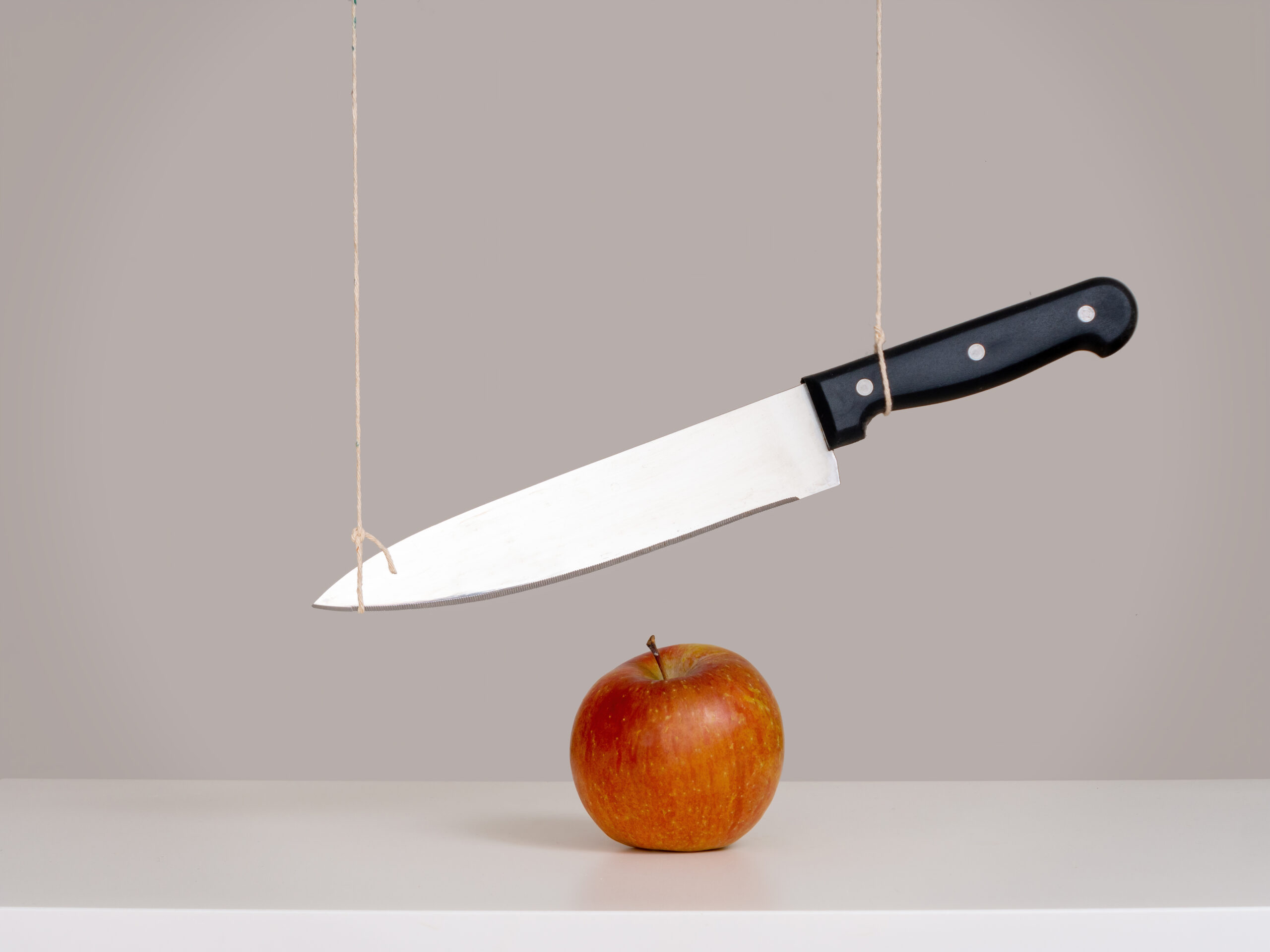
Crimes of violence:  “Let’s cut out knife crime.”

Photo credit: fbi.gov


Human trafficking:

“Slavery. Still happening today.”


Sexual assault:  “No consent + Sex = Rape”

The war on drugs spawned perhaps more slogans than any other crime. Samples include:

“Just Say No.”

“Drugs cost you more than just money.”

“No drug user grows old; because they die young.”

“Smoke fast and die young.”

“Don’t Meth Around.”

Last November, South Dakota proudly unveiled a new campaign against methamphetamine that cost nearly a half-million dollars:

“METH – WE’RE ON IT!”

The message caused an uproar…of laughter, probably not the effect the promoters hoped for.

Some slogans work. Others, ahh, not so much.


TKZers: What crime slogan sticks in your memory? The best? The worst?

Rising Star

Hubble Sees the Force Awakening in a Newborn Star-NASA Goddard photo

Fair warning: today’s post is the unabashed crowing of a proud surrogate mom whose “kid” is one of only 20 people on the planet chosen this year to give a TED talk. If you’d rather not listen to me sniffle, skip this.

Here’s how our story started:

My writing group, Authors of the Flathead, sponsors an annual student writing contest. The judging is blind—we don’t know the identities, grade level, or which school.

About 20 years ago, a short fiction entry about the underground railroad blew us judges away with its beautiful writing, realistic characters, compelling tension, and important theme. It was the hands-down winner out of 100+ entries.

The author was a 16-year-old high school junior named Sarah Rugheimer. We invited her to a meeting to read her story and receive her cash prize. Afterward, she and I chatted. She was bright, capable, energetic, determined, and enthusiastic. When she asked if I would mentor her, I couldn’t say Yes! fast enough.

We worked on her writing through high school and her first year of college. Sarah pushed herself hard and excelled in science, Irish dancing, and writing. We spent hours hiking in the Montana mountains or sitting at my dining room table to brainstorm story concepts, characters, and plot lines full of twists and surprises.

Her discipline and drive pushed her up the ranks in Irish dance competitions. My kitchen became a studio where she practiced difficult steps. She also entered and won more writing contests.

Our face-to-face meetings unfortunately dwindled when she moved to the University of Calgary to study physics and Irish dance.

Thank goodness for email. She would send me essays and papers. The subject matter was way over my head. Exoplanets? Biosignatures? Brown dwarf habitability? Chirality? The only words I recognized were one syllable: the, and, is. At that point, the little help I could offer was to insert missing commas.

“When you win the Nobel Prize, I’ll be sitting in the audience,” I often told her, only half joking. It didn’t take a rocket scientist to recognize this young woman was going places.

Then came time for grad school. Her goal: a PhD in astronomy or astrophysics.

On a lark, she decided to apply to Harvard. Despite her brilliant academic record, she suffered from a bad case of imposter syndrome and was positive she would never be accepted.

She even tried to talk herself out of applying, protesting, “The fee is $90. I could buy three nice dinners for that.”

“You’re going to be accepted,” I predicted.

“No way,” she insisted.

“Yes, you will.”

We worked over her essay answers and polished them to a high gloss.

I knew that the judges and scholars who reviewed her application would recognize the drive, focus, discipline, and imagination I saw in her.

Was she accepted?

Of course.

She was amazed.

I wasn’t.

For the next 6 ½ years, she worked her butt off. Despite a full scholarship, her road was not easy. Her father, a retired physics professor at Montana State University, was in declining health. He lived with her in Cambridge while she juggling study with caring for him.

His death, although expected, was still a body blow to Sarah. Other major personal crises piled on top of her and she had to take more than a year off from classes.

But she persevered and was named one of only eight Harvard Horizons Scholars in 2014.

She also took up mountain climbing. We’re talking serious mountains—Kilimanjaro, Aconcagua, Chimborazo. At elevations of more than 20,000 feet, she was climbing closer to the planets and stars she wanted to explore.

In January 2015, she defended her thesis.

I flew to Boston for that momentous event. Sitting in a hallowed hall at Harvard with 60 of her colleagues and professors, I listened to her talk about searching for life on distant planets and her aspirations to explore the universe.

As she was pronounced Doctor Sarah Rugheimer, I used up a package of Kleenex.

Dr. Sarah Rugheimer – photo credit: Ben Gebo

Her post-doctoral proposals and applications for various fellowships contained ever-more-obscure vocabulary. How was I supposed to critique a paper entitled “Quantifying Activity Induced Variability in Spectra of Exoplanets”? At that point, when I edited her articles, I wasn’t even sure where to put the commas!

She also developed a love of teaching and has the rare gift of translating complicated concepts into terms even regular people—like me—can understand. Her students love her.

A couple of years ago, one student she had mentored achieved publication in a prestigious journal. Sarah was button-busting proud.

I told her, “Now you know how I feel.”

In her spare time, she continues to write creatively. We spend hours on the phone, brainstorming plots and building relatable characters for her ambitious sci-fi novels. Writing remains her great love. My crystal ball predicts a Nebula award in her future. 

Two summers ago, she returned to our hometown to give the commencement address at the local college graduation. “Don’t limit yourselves,” she counseled. “Don’t let fear keep you from applying to Harvard or wherever your dreams lead you.”

Where is she now? Teaching and pursuing research at Oxford, another pinnacle of academic achievement. Here’s her website.

A few weeks ago, she called me from England. “Don’t tell anyone yet but I was chosen as a TED scholar for 2020. I’m going to give a TED talk.” That puts her among only 20 people so honored each year.

I was thrilled but, again, not surprised.

Our friendship started with a high school writing contest.

Now I’m standing on the ground, watching a brilliant star rise into the heavens. [Sniffles.]

~~~

Others mentored me. I mentored Sarah. Now she’s mentoring a new generation.

TKZers, whose shoulders did you stand on? Who’s standing on your shoulders?

Kat Martin and Larry Martin – Marriage Between Authors

By Debbie Burke

@burke_writer

Photos courtesy of Kat and Larry Martin


Today I’m delighted to chat with bestselling authors Kat Martin and L.J. (Larry) Martin, who’ve been together for 34 years. Between them, they have written well over a hundred novels.

Kat has written more than 75 historical and romantic suspense novels that have sold many millions of copies all over the globe. Larry crosses multiple genres, with bestselling westerns, thrillers, and nonfiction. He is also a founder and former owner of Wolfpack Publishing.


Here’s the inside scoop from Kat and Larry on their successful, long-lasting relationship.

DB: For most households, one author is quirky enough. How do two authors married to each other make it work?

Kat Martin

Kat: Actually, it has some advantages. We have the same friends, travel to the same conferences, are interested in a lot of the same subjects. We also understand the frustrations of being a writer, which are difficult for a non-writer to understand.

Larry: Ditto to Kat’s answers, plus we can read each other’s work and comment. For instance one time she was reading some female dialog I’d written and then drew a little mustache in the margin…I got it, my lady sounded like a dude.

DB: You met each other while working in the real estate industry. How did you each make the huge career change from real estate to writing?

Kat: Larry had already written a historical novel when we met.  He continued to work while I wrote my first book and we ended up selling both novels within six weeks of each other.

L.J. Martin

Larry: I had a giant year in the R.E. biz and never wanted to work that hard again. We had a little financial cushion, and needed it, and Kat was enthralled with my writing and said, “Hell, I can do that.” And did, far better. We’d always been avid readers, which is the basis of great writers.

DB: You are both exceptionally prolific authors. Do you have systems or routines for keeping up high production?

Kat: I don’t have kids, which gives me a lot of free time. Larry’s boys are grown. So that gives us a real time advantage. Also, we like what we are doing so mostly we would rather be writing than anything else. Well, I do enjoy traveling, staying in nice hotels and eating in gourmet restaurants. But we manage to work that in.

Larry: It’s productive to have “in-house” competition and an example to follow. Kat’s a voracious worker. I’m distracted by yard work, garden, photography, hunting…but her dedication always pulls me back. And both of us love to write.

DB: Do you brainstorm with each other on story ideas? Can you describe the process?

Kat: Larry writes his own books, his own way. No input from me. I appreciate his help with plotting and he also reads my action scenes and gives me input. Other than that, we pretty much work separately.

Larry: Neither of us slows down enough to get much input from the other. I help her occasionally with the male aspect: fistfights, firearms, survival, but that’s about it. I’m also preoccupied with publishing nonfiction, and enjoy that part of the biz.

DB: You often combine travel with research. This may be a chicken and egg question but do you visit locations with a plot already in mind, or do story ideas spring out of new places?

Kat: A little of both, I think. Sometimes we go places because one of us is working on a story.  Sometimes when we are traveling a new idea comes from the experience we are having at the time. Larry just finished a novel called The Blue Pearl, a high action thriller set around a cruise ship being taken over by terrorists. Our cruise was already planned. The story came to him before we left and the cruise helped with his research.

Larry: Most action books are a quest of some kind so the cruise was ideal with the addition of some really bad guys in exotic locations. I was able to interview the captain and security people and go everywhere on board other than the engine room. My prior thriller, The K Factor, was set primarily in North Korea and trust me, I didn’t go, and the cruise and great sights and wonderful restaurants in France, Spain and Portugal was more fun than researching lots of North Korean trials and tribulations…as much as I enjoy research.

DB: Describe a typical work day for Kat.

Kat: My day starts around 7 a.m. I enjoy my morning till around nine o’clock, when we either head to the gym for an hour, or I start going through email and doing some promotion. I like to be writing by 11:00, no later than noon, then write till the end of the day. After that I do some Facebook and a little more promo, then pour myself a glass of wine and relax for the evening.

DB: Describe a typical work day for Larry.

Larry: I hit the machine early, usually by six at least. When I smell the blood sometimes by four as I can’t sleep as my mind is plotting. Cup of coffee, sweatsuit, and I write until it’s time to shower and three days a week hit the gym to keep the brain blood flowing, then back to the word processor. Often in the P.M. I’m in the garage or outdoors, but I’ve already got my eight or ten in.

DB: How do you balance your individual creative idiosyncrasies in a long-term relationship?

Kat: Mostly he does his thing; I do mine. We overlap at the end of the day. He has a lot more diversified interests than I do. I’m fairly well consumed by my writing. Though currently, I’m on a remodel project for our new winter home, which has been agonizing and exhilarating.

Larry: It’s more than merely nice to have a beautiful, intelligent, woman with like interests seldom more than one story away. Most of the idiosyncrasies are left in characters in our books. We both love to cook, love a good glass of wine, love good dramas on TV or the theater, and each other’s company. What could be better?

DB: Is there anything else you’d like to share with readers of The Kill Zone?

Kat: I’ve got more Maximum Security novels coming out, including a new novella called Come Daybreak, which is one of my personal favorites. I’m hoping readers will be on the lookout for the books and that they enjoy them.

Larry: And I’m supporting Wolfpack Publishing, a company I co-founded and sold to my former partner, who still publishes my Westerns, and now that my non-compete has expired I’m into another aspect of publishing. No one does a better job with Westerns, and other fiction, than Mike Bray. Buttonwillow Books, my new effort, publishes my nonfiction and some for others. I’m currently enjoying publishing educational books by T. Michael Traser, an internationally recognized educator and a friend. If you’re a teacher, particularly one with English challenged students, check out the series ESL – Fun Games for the Classroom. Immigrant children who don’t master English are destined to be trapped in barrios and enclaves, and that’s not a good thing. And while you’re at it grab a copy of Rugged Trails, my latest western, suitable for young adults. Thanks for taking the time to chat with us.

~~~

Thank you, Kat and Larry, for opening up about your writing lives to TKZ readers.

Check out Kat’s books at katmartin.com and Larry’s books at ljmartin.com

~~~

3 Books for 3 Bucks – Special sale February 7-14, 2020. Debbie Burke’s thriller series is only $.99 each.  Click on title for “buy” link. 

Instrument of the Devil

Stalking Midas

Eyes in the Sky