
“Many receive advice, only the wise profit from it.” – Harper Lee
What writing advice has profited you?


Nancy J. Cohen
I’ve been doing speaking engagements for many years now. It’s a way of giving back to the community and meeting new readers. But after this last one, I’m wondering if they are a waste of time in the digital age. I gave up three hours to speak to this group, had my hair done, painted my nails, and chose my wardrobe with care. Fortunately, it was local, so I didn’t have to travel far.
Sixty women attended this book and author luncheon, so you’d think they would all be readers, yes? The tables were beautifully decorated, with homage given to my latest title, Shear Murder. In this story, Marla the hairstylist discovers a dead body under the cake table at her friend’s wedding. Witness the cake motif on the centerpieces.
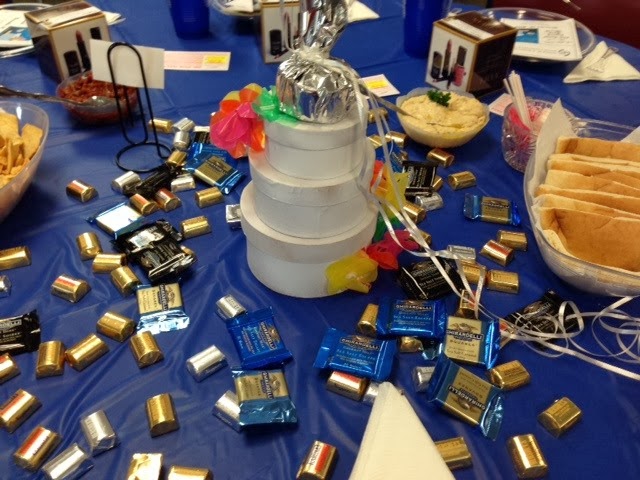
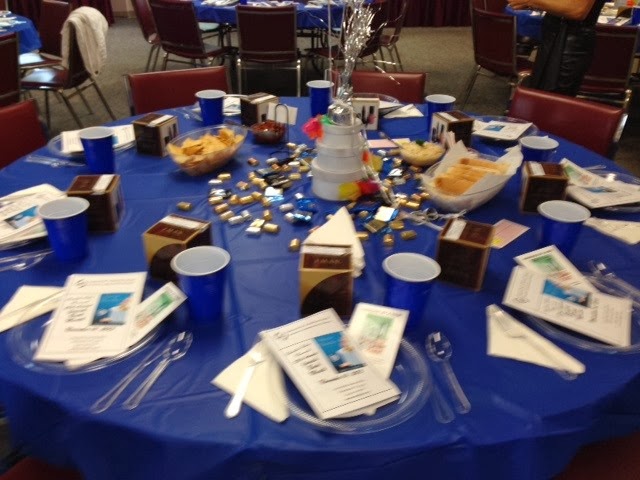
It was a lovely event. People were friendly and welcoming. But when I finished my speech, and after the raffle ticket numbers were called—an event as long as my talk—people left. Oh, a few came over and complimented me before asking if my books were available on Kindle.
Now, I wouldn’t mind if they went home and some of them ordered my titles. Most ladies took the brochures that I designed and had printed in two-sided color, but I did not sell a single book. Had they spent their money on raffles and ran out of cash or didn’t want to spend anymore? Was that it? Or do readers expect books on the cheap now and a signed copy means nothing?
I’m all for going out and meeting the public to increase readership, but consider the value of my time. I lost three hours of work and more, if you count the prep time. This is why I started charging a speaker’s fee if I go out of town for a talk. But even locally, is it worth the time and effort? Should I cease ordering my books to sell at these events? Already I have cases full of books stocked in the house. How will I get rid of them, other than donations? And even that means paying postage and a trip to the post office. It’s easier to do a giveaway with a digital copy.
If you are a multi-published author, and not a newbie looking to build a readership, do you still seek out speaking opportunities in the community? Would you go if—as one woman suggested to me—you’re invited to talk at her gardening club across town? Or will you suddenly have deadlines that prevent you from accepting?
I love speaking at libraries, but groups looking for a free speaker? Not so sure anymore. I know it’s not so much about the book sales as it is about meeting new readers, so I guess it’ll depend upon the circumstances. Or I might, in lieu of an honorarium, request a minimum book purchase agreement. Your comments?

This isn’t going to be news to most of you who are regular readers of The Kill Zone but it’s good advice for anyone who is trying to get published. Heck, it’s good advice if you are trying to STAY published. And we all need to be reminded of it once in a while. Here it is:
You have to be tough.
How tough? You have to have the hide of a

The tenacity of a
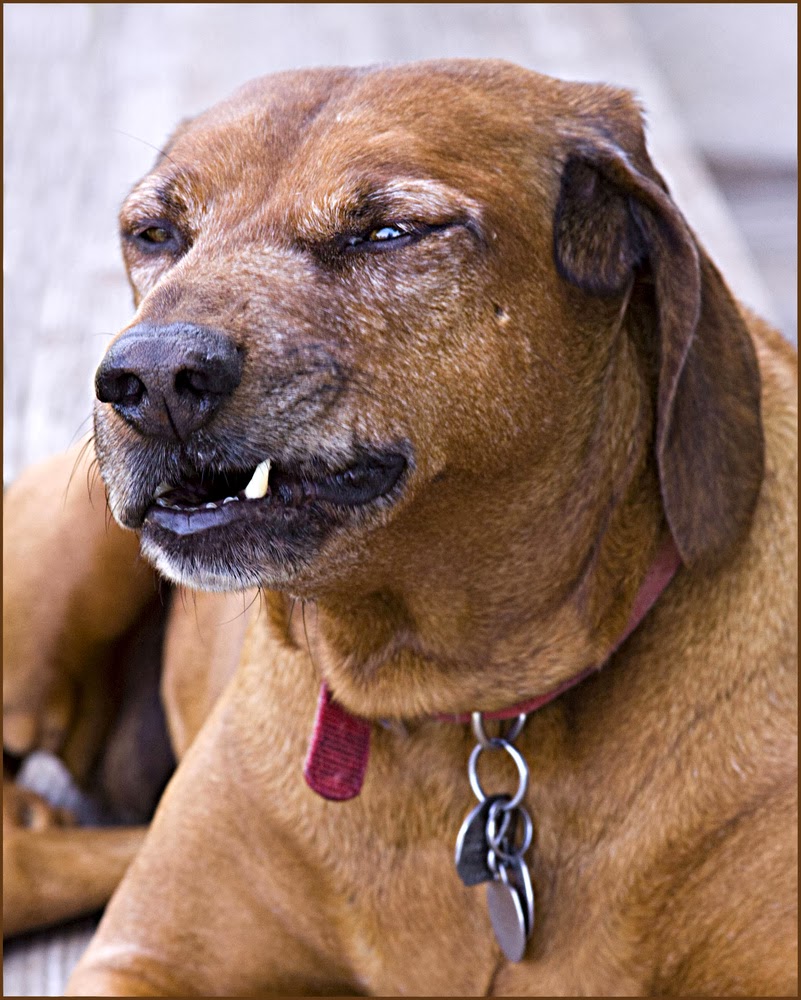
And the drive of a
But even with all those qualities, you are going to get rejected. It happens to all of us. And it never stops. Even after you sign your first contract, you will deal with it. Your editor will make you rewrite. The marketing department will veto your title. (Heck, one of ours got nixed by the buyer at Walmart). Barnes & Noble will stock you but Costco won’t. You won’t get reviewed or worse, you’ll get panned. You work like a dog to put your ebook on Amazon and you sell four books…three of them to your mom. And someday, you will be stalking some poor reader in the bookstore, see him pick up your book [YES! THEY LIKE ME, THEY REALLY LIKE ME!] and he will put it back on the shelf [NO! WHY DO YOU HATE MY BOOK?]
Rejection is a staple of the writer’s life, so no matter where you are on your path, you might as well begin to come to grips with it. Even after you are published with a decent track record, you can still get dumped on.
Rejection begins, of course, with query letters. This is a painful thing, the query process, because the agents who are rejecting you are usually maddeningly oblique about why they are giving you the thumbs down. Here’s some examples of coded rejections I have seen:
1. “This doesn’t fit my needs at this time.”
2. “Your writing is strong but I don’t feel I can be enthusiastic enough to fully get behind this project.”
3. “I’m afraid I will have to take a pass. But I am interested in seeing other projects…”
What they really mean:
1. You can’t write.
2. I already have four authors who write zombie Lesbian detective series.
3. DaVinci Code rip-offs are yesterday’s news. Have you considered paranormal YA?
I don’t mean to make light of your woes if you are going through any phase of rejection now. But believe me, I have been there. My entry into this business took place during the Ice Age when it was possible to still submit to editors without having an agent. (ie the Slush Pile). But the rejections were still as awful. I used to have all of them — kept them in an old manila envelope in a desk drawer. Then when we moved a couple years ago, I finally threw all the rejection letters away. Except for the first one I ever got, which I keep framed above my desk:

It is a classic. It doesn’t reproduce well here, so let me point out some really nifty things about this particular rejection letter. First, it’s a form letter. Second, there is no date. Third, there is no signature. But someone WAS kind enough to pencil in my last name and even take a moment to cross out “Sir.” I think this rejection letter is circa 1980. But you’ll notice the language has not changed since. The inserts are how I felt at the time:
Dear Ms. Montee,
We thank you for the opportunity [yeah, right!] to consider your proposal or manuscript. [what, they can’t figure out WHICH?]. We are sorry [I’ll bet!] to inform you that the book does not seem a likely prospect [how elegant!] for the Dell Book list. Because we receive many individual submissions every day [you think I care how overworked you are?] it is impossible for us to offer individual comment [I’d say so since there is no human being attached to this letter to begin with!] We thank you for thinking of Dell [insert sound of raspberry here] and we wish you the best of success [ie don’t darken our doorstep again with your crap] in placing your book with another publisher. [you’ll be sorry some day!]
Sincerely, [you’re kidding, right?]
The Editors [aka the evil Manhattan cabal trying to keep me unpublished]
So why did I keep this one? Well, with the passage of more than two decades I have gained a certain perspective about it. The manuscript I sent to Dell was really really bad. It had no business going out in the world in the state it was in. I know, because I kept it. Like this rejection letter, I kept it to remind me that this is a learning process. It still is. It always will be.
So if you are feeling blue today about rejection, just know this one thing: You are not alone. Pearl Buck’s novel “The Good Earth” was rejected on the grounds that Americans were “not interested in anything on China.” A editor passed on George Orwell’s “Animal Farm,” explaining it was “impossible to sell animal stories in the U.S.A.” And let’s not forget the agent who dumped Tony Hillerman and told him to “get rid of all that Indian stuff.”
Keep plugging away at your craft. Grow a tough hide, be brave, don’t give up, don’t be too timid to send your book out there for scrutiny. You can’t hit a home run — or even a blooper single — if you never step up to the plate. And even if you are in the batter’s box, don’t keep backing out because you’re afraid of getting beaned. Derek Jeter’s been hit by a pitch 184 times in his career. You think he’s afraid of a little chin music?
And lastly, have a little faith. Shoot, have a lot of faith:
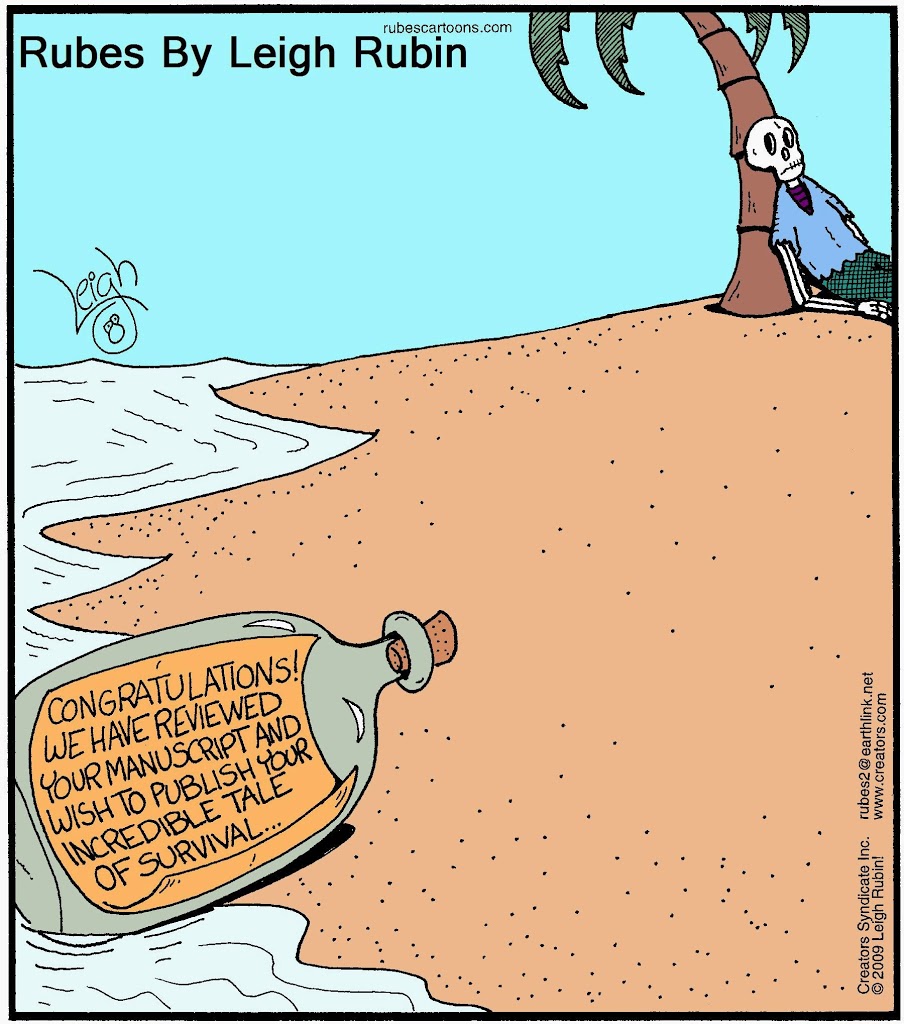
Because it only takes one “yes” to make all the no’s bearable.
 by Jodie Renner, editor & author
Follow Jodie on Twitter
Imagine you’ve just met someone for the first time, and after saying hello, they corral you and go into a long monologue about their childhood, upbringing, education, careers, relationships, plans, etc. You keep nodding as you glance around furtively, trying to figure out how to extricate yourself from this self-centered boor. You don’t even know this person, so why would you care about all these details at this point?
Or have you ever had a friend go into great long detail about someone you don’t know, an acquaintance they recently ran into? Unless it’s a really fascinating story with a point, I zone out. Who cares? Give me a good reason to care, and feed me any relevant details in interesting tidbits, please!
In my editing of novels, I’ll often see a new character come on scene, then the author feels they need to stop the action to introduce that person to the readers. So they write paragraphs or even pages of background on the character, in one long expository lump. New writers often don’t realize they’ve just brought the story to a skidding halt to explain things the readers don’t necessarily need to know, certainly not to that detail, at that point. And it’s telling, not showing, which doesn’t engage readers. In fact, they’ll probably skim through it, and more likely, find something else to do instead.
Another related technique I find less than compelling is starting with the character on the way to something eventful, and as they’re traveling, they’re recollecting past or recent events in lengthy detail. It’s much more engaging to start with the protagonist interacting with others, with some tension and attitude involved. Then work in any necessary backstory info bit by bit as the story progresses, through dialogue, brief recollections or references, hints and innuendo, or short flashbacks in real time. And through reactions and observations by other characters.
Rein in Those Backstory Dumps!
Contrary to what a lot of aspiring authors seem to think, readers really don’t need a lot of detailed info right away on characters, even your protagonist. Instead, it’s best to introduce the character little by little, in a natural, organic way, as you would meet new people in real life. You might form an immediate physical impression, especially if you find them attractive or repugnant. You notice whether they’re tall or short, well-groomed or scruffy, timid or overbearing, friendly or cold, intelligent or dull, charismatic or shy.
If you’re interested in them, if you find them intriguing, you pay attention to them, ask them questions, and maybe ask others about them. You gather info on them gradually, forming and revising impressions as you go along, with lots of unanswered questions. Maybe you hear gossip, and wonder how much of it is actually true. Through conversation and observation, you formulate impressions of them based on what they (or others) say, as well as their attitude, personality, gestures, expressions, body language, tone of voice, and actions.
Involve and engage the readers.
It’s also important to remember that readers like to be involved as active participants, not as passive receptors of dumps of information. Finding out about someone bit by bit, trying to figure out who they are and what makes them tick, what secrets they’re hiding, is a stimulating, fun challenge and adds to the intrigue.
Unlike nonfiction, where readers read for information, in fiction, readers want to be immersed in your story world, almost as if they’re a character there themselves. So be sure to entice readers to get actively engaged in trying to figure out the characters, their motivations and relationships, and whether they’re to be trusted or not.
Let the readers get to know your characters gradually, just like they would in real-life.
For ideas on how to approach introducing your characters to the reader in your fiction, think about a gathering where you’re just observing for a while, trying to get your bearings, maybe waiting for some friends to arrive. You look around at who’s there, listening in to snippets of conversation. A few people interest you so you move closer to them, trying not to be obvious. You might pick up on glances, smiles, frowns, rolling of eyes, and other facial expressions. You read their body language and that of others interacting with them.
Perhaps you decide to strike up a conversation with one or two who look interesting. You find out about their personality and attitudes through their words, tone of voice, inflection, facial expressions, body language, and the topics they jump on and others they avoid. Then, if they interest you, you might start asking them or others about their job or personal situation and get filled in on a few details – colored of course by the attitudes and biases of the speaker. Maybe you hear a bit of gossip here and there.
That’s the best way to introduce your characters in your fiction, too. Not as the author intruding to present us with a pile of character history (backstory) in a lump, but as the characters interacting with each other, with questions and answers, allusions to past issues and secrets. Even having your character thinking about what they’ve been through, isn’t that compelling, so keep it to small chunks at a time, and be sure to have some emotions involved with the reminiscing – regret, worry, guilt, etc.
So rather than stopping to give us the low-down on each character as he comes on the scene, just start with him interacting, and let tidbits of info about him come out little by little, like in real life. Let the readers be active participants, drawing their own conclusions, based on how the characters are acting and interacting.
Reveal juicy details, little by little, to tantalize readers.
And don’t forget, the most interesting characters have secrets, and readers love juicy gossip and intrigue! Just drop little hints here and there – don’t spill too much at any one time. Give us an intriguing character in action, then reveal him little by little, layer by layer, just like in real life!
Readers and authors, do you have any observations or advice to offer on dealing with character backstory in fiction?
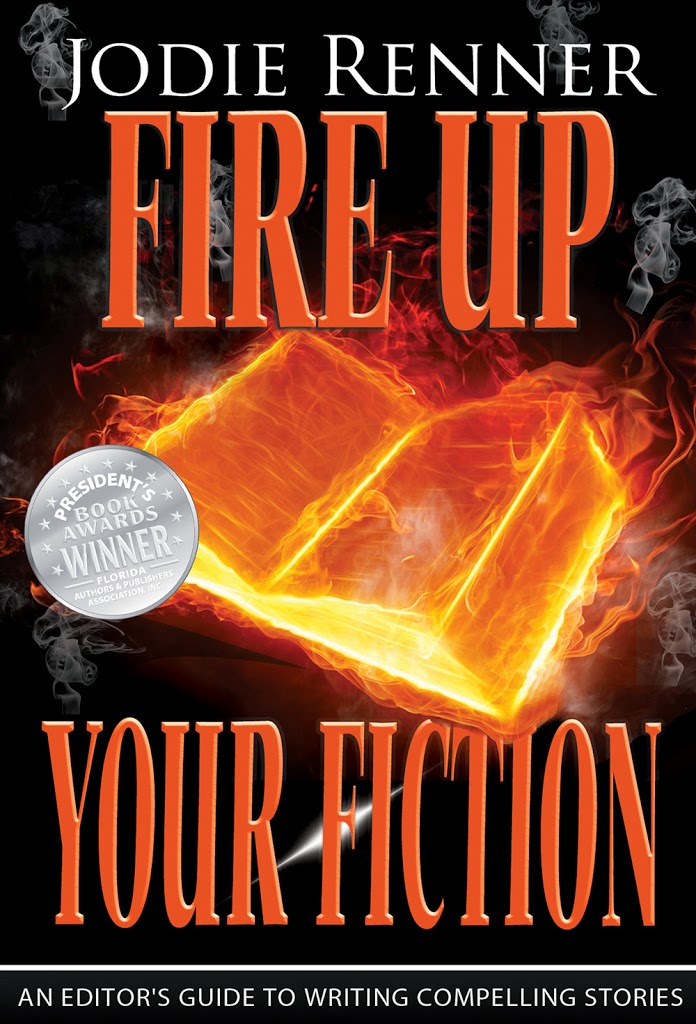
Jodie Renner is a freelance fiction editor and the award-winning author of three craft-of-writing guides in her series An Editor’s Guide to Writing Compelling Fiction: Captivate Your Readers, Fire up Your Fiction, and Writing a Killer Thriller. She has also published two clickable time-saving e-resources to date: Quick Clicks: Spelling List and Quick Clicks: Word Usage. You can find Jodie at www.JodieRenner.com, www.JodieRennerEditing.com, her blog, http://jodierennerediting.blogspot.com/, and on Facebook, Twitter, and Google+.
I had a chuckle re-reading that, which chuckle I must now explain.
Last week I was in Minneapolis for the annual Story Masters Conference. Donald Maass, Christopher Vogler and your humble correspondent spent four solid days with a roomful of writers, digging deeply into this craft we all love.
I enjoy Story Masters each year, not just because I get to hang out with Don and Chris and a whole bunch of motivated storytellers, but also because I pick up something valuable each time myself.
This year, during Chris’s talk on The Hero’s Journey, I was struck by something he said about how we feel stories. This came to him, he explained, during his years as a reader for the studios. He noticed that strong emotions hit him physically, at points in his body. There were different points for different emotions.
He connected this to the concept of Chakra. What happens is that certain emotions immediately fuel a secretion of chemicals in areas of the body. Chris realized the that best scripts, the rare ones that really knocked him out, were hitting him in more than one place.
With a playful gleam in his eye, Chris announced to the class what he calls “Vogler’s Rule”—
If two or more organs of your body are not secreting fluids, your story is no good.
This got a laugh from the crowd. Thus, my reference above to the serious juiceof inner conflict is apt.
As Chris’s session went on, I started thinking more about this idea. What Chris suggests is that when our “fluid centers” are activated, we are not being rational. Thus, a great form, perhaps the best form of inner conflict is when the character’s rational mind is being assaulted by a strong emotional, er, fluid.
How human that is, isn’t it? Think of the traveling salesman. He has a wife and children he loves. But at the bar in Wichita he sees a cocktail waitress whose sultry walk and Lauren Bacall voice unleash inside him an immediate animal lust. The fight is between his mind, which reminds him of all he has at home, and his body, which doesn’t care what he thinks at all.
Or what about a sheriff with a high and honorable sense of duty? That’s his mind. He’s thought this through his whole career, lived by that code. But then killers come after him, and he cannot gather a posse to stop them, and his body starts feeding him fear—of death, of losing the woman he’s just married, of perhaps being a coward. This is the inner conflict that throbs throughout the entire movie High Noon. It’s head versus body.
I was reminded of something Iago, who has all the best lines in Othello, says to Roderigo:
If the balance of our lives had not one scale of reason to poise another of sensuality, the blood and baseness of our natures would conduct us to most prepost’rous conclusions. But we have reason to cool our raging motions, our carnal stings, our unbitted lusts.
It’s such a great way to think about inner conflict, because you can create this tension at any time in your novel. Just arrange for something to strike your character on a strong emotional level, and put that at odds with something he strongly believes.
Thus, I came up with “Bell’s Corollary to Vogler’s Rule” as it relates to inner conflict:
What about you? Are your characters conflicted enough?
By Mark Alpert
I blame globalization. The world economy has grown more competitive since the days of disco, and the striving meritocrats of America are desperate to save a slice of the shrinking money-pie for their children. In response, the schools in the wealthier districts have accelerated their curricula, trying to prepare their students to compete with the fiercely disciplined kids in East Asia. If the top achievers in Beijing and Seoul are working their butts off, then our kids should be doing the same, right?
The worst part is seeing the pernicious psychological effects that excessive homework has on my kids. The nightly burden is so great, it makes them depressed. They sense the unfairness of it, the futility. And they add to their misery by putting it off as long as they can. There’s too much homework to finish it quickly, so instead they delay starting it. It’s like a huge black mountain darkening all the hours ahead, and the last thing they want to do is begin the long, hard climb. So they go on Facebook or YouTube, or text their friends, or watch another Simpsons episode on TV. But all the while, the homework is still waiting for them, a looming threat.
I’m in that predicament right now, unfortunately. But I know that sooner or later I’ll sling my backpack over my shoulder and rediscover the path that goes up the mountain. With any luck, it’ll happen sometime this week. In the meantime, I’ll keep busy by nagging the kids about their homework.

By Elaine Viets
Writing a novel is like making soup: We add chunks of our own experience, bits of research, boil it down, season it with imagination. We transform those ingredients into something that we hope is tasty, even nourishing, for our readers.
In “Fixing to Die,” my new Josie Marcus mystery shopper mystery, I used an old encounter with a bully. Josie has a tween daughter, Amelia. Three mean girls at Barrington School create a Facebook page called the Bitches of Barrington, and put photos of Amelia and three of her friends in doghouse frames. Twelve-year-old Amelia is hurt and humiliated when her classmates see the BOB page. Worse, the other students bark and howl as Amelia and her friends run for their parents’ cars. 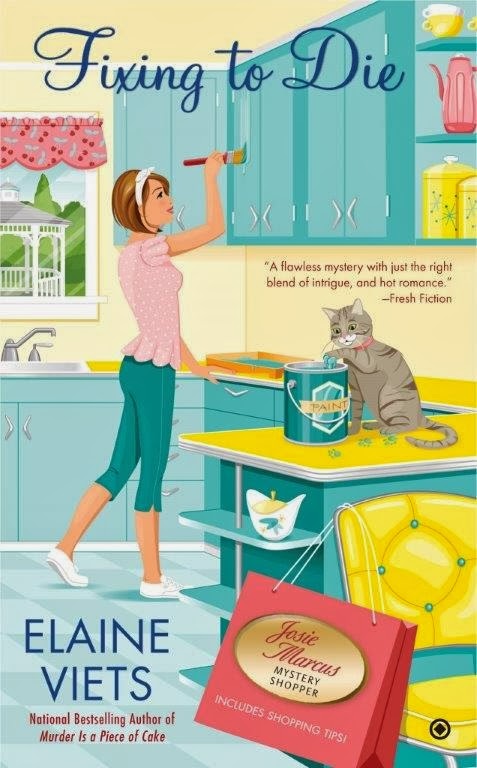
It’s hard to escape stories about bullying these days. The facts are dreadful. Dosomething.org says some “43 percent of kids have been bullied online and girls are about twice as likely as boys to be victims and perpetrators of cyber bullying. Worse, bullying victims are two to nine times more likely to consider committing suicide.”
I grew up before kids used computers – and before mean girls had their own movies. Back then, we knew about boy bullies, but nobody thought girls could be, too.
When I was twelve, I was bullied by a mean girl named Bonnie. She went to public school and I went to St. Sabina Catholic school. Bonnie beat me up on my way home from school. I started taking the long way home to avoid her.
Now that I’m grown up, Bonnie’s bullying seems ridiculous. But my terror at twelve was real.
Here’s how I used it in “Fixing to Die.” In this scene, Josie, her new husband, Ted, and Amelia, discuss bullying:
“Technology has changed the bully business,” Josie said.
“What’s technology got to do with bullies?” Ted asked.
“When I was Amelia’s age,” she said, “I was bullied by Bonnie. Skinny girl with straggly hair. Bonnie was a year older and a whole lot bigger than me. She didn’t like that I used what she called ‘big words.’ Bonnie would wait for me about two blocks from school, and punch me in the gut. I started taking the long way home to avoid her.”
“Did you tell Grandma?” Amelia asked.
“No. Bonnie said her father was in the Mafia and he’d kill her.”
Amelia giggled. “You believed that?”
“Yeah, I was stupid,” Josie said. “Bonnie had a German last name. I don’t even know if she knew any Italians, but she had me shaking in my shoes.
“Here’s the difference between me and Amelia. Once I was home, I was safe. Bonnie wouldn’t come to my house and nobody else knew about it. Online bullying is there twenty four/seven.”
Bonnie quit tormenting me when I went to high school. I’ve lost track of her. But the memory of her jabs to the gut stayed with me.
Here’s the good thing about being a writer: No experience is ever wasted, no matter how painful.
Recently, Mark Alpert posted a blog about The Writing Buddy and how writing can be a lonely occupation. There are few methods of getting around that situation. If you want to write fiction, it’s usually a one-man show. Fortunately for me, I have a solution—a cowriter.
One of the most frequently asked questions Lynn Sholes and I get is “How is it possible for two people to write fiction together?” The answer is, it ain’t easy. At least it 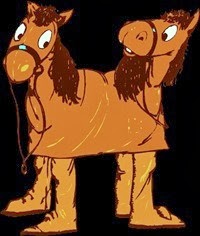 wasn’t at first. Collaboration on non-fiction is somewhat easier to understand. In general, with non-fiction, the “facts” usually already exist and the collaborators’ job is to organize them into a readable document that has a beginning, middle and end. A good outline and knowledge of the subject matter along with professional writing skills may be all the authors need.
But with fiction, nothing exists. It’s all smoke and mirrors. Fiction is a product of an individual’s imagination. It might be inspired by actual facts or events, but only the individual has a specific vision of those events in their head. So how can two people have a similar enough vision to be able to write a novel together?
I can’t speak for the handful of other writing teams out there (including TKZ’s own PJ Parrish), but Lynn and I have managed to complete 6 thrillers together because of a number of reasons.
First, we love the same kind of books—the ones we read are like the ones we write.
Second, we have an unquestioning respect for each other’s writing skills and a deep belief that whatever one of us writes, the other can improve.
Third, we believe that there’s always a better way to write something.
Fourth, we never let our egos get in the way of a good story. This comes from spending over 10 years in a weekly writers critique group.
Fifth, we know each other’s strengths and weaknesses, and are willing to admit them.
Sixth, we agree on the same message/theme in each book.
Seventh, we believe that we are on the same level of expertise.
And last, we believe that the whole is greater than the sum of the parts.
Those points cover the mental portion. Now, how do we handle the mechanics of the job? We talk, and talk, and talk. Once a day we conference call, brainstorm, tell and retell each other the story. Our two favorite words are: What if? Whether it’s global plot points or an individual scene or character motivation, we keep telling each other the story until that little imaginary movie in our minds becomes as in-sync as possible. Then one of us will declare they have a “handle” on the scene or character or chapter, enough of which to create the first draft.
We write very slowly because each chapter must go back and forth many times for revision. Years ago, when we first started, everyone could tell who wrote what as we tried to write our first book. It took three years of hard work before we melted our voices together. Now, because the process goes through so many revisions, even I can’t always remember what I wrote and what she wrote. I rely on my co-writer so much that I’ve come to wonder how individuals can possibly write a book on their own.
There are a number of advantages and disadvantages to collaborating. A disadvantage is that you split any money you make. So you’ll always make half of what you could as a single author. And like any relationship, there is always a chance of a falling out. And something could happen where an ego can become inflated and affect the process.
One of the pluses is that we never experience writer’s block. One of us will always have an idea on how to get out of a jam or move the story forward. And unlike our spouses, family, friends, trusted beta readers, and everyone else, a co-writer has an intimate, vested interest in the success of the story that no one else could have.
Lynn and I are approaching the mid-point of our seventh thriller together (THE SHIELD, the follow-up to THE BLADE). I’ve found that creating the first draft of a chapter is just as exciting as getting a new chapter from her and seeing where the story has gone. I guess the whole thing boils down to trust. Trust in each other and in the goals we both want to achieve with the story and with our careers.
One last note: I haven’t seen Lynn in person in over 5 years since we live hundreds of miles apart. That seems to be something that mystifies everyone.
So, now that you know how we write together, do you think you could ever collaborate on a novel? Or is writing fiction too private an experience. Do you believe two heads are better than one or would you rather not have anyone sticking their nose in your work?
————–
“THE BLADE is full-throttle thriller writing.” David Morrell