
As a historical fiction writer, I was depressed to read the op-ed, Lost in the Past, in the New York Times last week, on how little people know of history today. Even more horrifying is the fact that this ‘historical illiteracy’ appears to infect leaders across our society – from politicians, to corporate leaders, media personalities and educators.
While I don’t intend this blog post to be a rant against any of the more egregious offenders on this score, I do feel that on this Memorial Day weekend we should reflect on the importance of knowing and understanding history. As a writer, as much as I often have fun with historical facts in my stories (and sometimes even create alternate histories), I recognize I have an obligation to my readers to do my research thoroughly and to represent the past as honestly (and as correctly) as I can. It’s frustrating to realize how much of history is ignored today (as the NYT article points out even the History Channel now does very little history!) and how easy it is for many people to forget the lessons of the past (and, sadly, doom history to repeat itself).
Is the reason we are becoming more ignorant of the past because people think history is boring? Is it too much effort to learn the real facts as to what happened? Is it because in the age of the Internet people find it easier to throw out terms like ‘Nazi’, ‘fascist’ or ‘communist’ without really understanding what they truly mean (or at least what they once meant)?
As a fiction writer, I feel strongly that novels are one of the best ways to illuminate the past – using a story can enlighten and engage (and, hopefully, provide a little palatable history along the way). The popularity of Downton Abbey suggests to me that many people are still interested in how people lived in the past (albeit perhaps in a soap opera version) so why is it that so many young people don’t even know what the ‘Great War’ was?
When I read the newspaper each morning and my kids ask me about what is happening in the world, I am struck by how much my answer relies on me providing a historical background to what is occurring. The past illuminates and explains so much of what is going on in our world today, and I’m truly saddened at how little this seems to count anymore.
So on this Memorial Day weekend, perhaps you can give me some more cheerful advice on how we can reinvigorate the study of history. How do you think, as readers and writers, this could occur? Do you find novels or non-fiction the most enjoyable way to ‘learn’ about the past? How can we get kids, particularly, to become enthusiastic about studying history?
For my own children, there is always the awesome ‘Horrible Histories’ series of books and TV shows. This clip is one of my absolute favourites – and I’m going to share it just because it goes to show that, even when ‘bending’ the facts for the sake of humor, history can be relevant, interesting and, dare I say, it…cool. If only more people could see it this way.
Author Archives: Joe Moore

It’s The Best Time On Earth To Be A Writer

Since 2009 or so, I’ve been saying to people it’s the best time on earth to be a writer. We all know why. Digital self-publishing makes it possible for a writer to earn real income outside the walls of the Forbidden City. And writers within the walls can start a separate stream of income on their own (provided they’ve wisely worked out a fair non-compete clause).
We’re far enough along now to know certain things about self-publishing. We know it is not a “gold rush.” We know you have to provide quality product, which generally means highly entertaining (fiction) or useful and unique (non-fiction). We know that the more prolific you are the better your chances of increasing your flow of income.
Now comes another report from Author Earnings, the enterprise started by self-publishing star Hugh Howey. Some of the findings in this most recent report are startling.
Self-published authors are clearly earning as much as traditionally published authors on the largest e-book sales platform in the world.
Note, this is not taking print sales into consideration. But still, it’s an astounding fact. Just think about how much the professional writing world has opened up in the six years or so since digital self-publishing began to take off.
Further:
[T]he parity we see in our author earnings charts between self-publishing and Big 5 publishing has a lot to do with the latter’s existing titles and not their new releases. How you decide to publish your manuscript today means looking at the difference in earnings due to recent works. Self-published authors are not just holding their ground with Big 5 authors when it comes to releases after 2011, they are out-earning Big 5 authors by a 27% margin.
This is huge, and comports with what I’ve found by both experiential and anecdotal evidence.
While the extreme outliers from both camps earn most of the income–similar to what we see in most entertainment industries–there is health and wealth down the long tail for self-published and Big 5 published authors alike. In fact, they almost perfectly map onto one another.
This is the real story. It is ever more possible to earn a living wage from writing IF––and this is key––you actually know how to write. This is a craft, after all. You can’t sell a vacuum cleaner that doesn’t suck (because if it doesn’t, it sucks).
I mentioned that my experience and my acquaintance with several self-publishing authors doing extremely well (I’m talking five figures a month) demonstrate why this is the best time in history to be a writer.
As I step back and look at these writers, I notice that all of them were previously published under the traditional system. This doesn’t mean there aren’t non-trads earning at that level. Far from it. But it does mean that the circle I’m acquainted with all proved their writing chops first within the walls of the Forbidden City.
Which validates another thing I’ve been saying ever since I started teaching self-publishing workshops: if you are a new writer, and you do hope for a career at this, you need to put your books through a grinder that replicates what an agent or publishing house would do with them.
You need to be objective and you need to be hard. Heck, you may even need to reject yourself. I mean it. How many first novels have ever sold? Or sold well? Or should have ever seen the light of day in the first place?
Most first novels are like that first waffle coming off a lukewarm griddle. Chuck it and start a new one. If the new one tastes right, then keep them coming. Pile them high and don’t be stingy with the butter and syrup.
When I was first starting out as a writer, there was a stat I read somewhere that said the average yearly income generated by fiction writing was around $3000. This was sobering indeed. It wasn’t going to stop me, because writing fiction is what I wanted to do with my life. But it did have me planning to keep on practicing law for forty years.
Now that stat seems quaint in its irrelevance. That was a traditional-only statistic when print books in bookstores were the only game in town.
I have no way of knowing what the average income of productive fiction writers (meaning at least one novel a year) is today. But for a self-starter who knows his craft and is willing to write for the rest of his life, the future is a heck of a lot brighter than 3k a year.
There is also good news for writers who write for other than commercial reasons. If you’re into literary or experimental fiction, or if you have a subject you’re passionate about, you can now give those books life without having to pay four thousand bucks for a print run (and then suffer the indignity of ten boxes of unsold tomes in your garage for the next twenty years, until you finally give up and donate them to the library, which won’t take them because there are too many).
Anyone can publish a book now and, if there’s quality attached, you can generate a following. It may be small but it will be heck of a lot larger than when you were unpublished.
Today the acton is with what I call the ownlist writers.
Anyone can publish a book now and, if there’s quality attached, you can generate a following. It may be small but it will be heck of a lot larger than when you were unpublished.
Today the acton is with what I call the ownlist writers.
And for those writers who still desire to enter the Forbidden City, the gates are not closed. They are guarded with more vigilance, however, owing to the high risk of the business these days. The purse strings are tightening and deal terms can be fraught with peril. So caveat scriptor. Work with a good agent and get to know contracts. As my grandfather used to recite:
A wise old owl
Sat in an oak.
The more he heard,
The less he spoke.
The less he spoke,
The more he heard.
Now wasn’t he a wise old bird?
Keep your eyes and ears open, listen and learn about what’s going on in the book world, what to avoid, what terms to walk away from. Don’t leave your fate completely in the hands of another, ever again. Be a partner, not a patsy.
All writers should dip at least one of their quills in the rushing stream of self-publishing. As I said a couple of weeks ago, take risks and don’t be afraid to fail.
Technologies and markets will ebb and flow. Godzilla and Mothra will sometimes duke it out. But the game has changed forever. The future is now. And now is the best time on earth to be a writer.
Carpe typem. Seize the keyboard!
Carpe typem. Seize the keyboard!
Flash Fiction

What is called “flash fiction” is not new. The term “flash fiction” seems to have been around since at least 1992. If one accepts the definition of “flash fiction” as stories ranging from a few to three hundred (or one thousand) words, however, then flash fiction has existed since storytelling began. Aesop, for one, wrote flash fiction; so more recently did Ernest Hemingway and Kurt Vonnegut, Jr. among a number of others. The popularity of the shorter-than-short story has seemed to increase, proportionately and simultaneously with the ability of authors to self-publish their work as eBooks. The argument has been made that because people don’t want to invest the time in reading a novel they might be inclined to read much shorter works on a regular basis. There is some logic to that — one baked potato versus a bag of tater tots comes to mind — but I am not sure if the argument holds up. I have read a number of flash fiction collections. Some are quite good, such as 420 CHARACTERS by Lou Beach (yes, it is based on a gimmick — 420 characters, I am told, is the limit for a Facebook status post — but what an interesting and disciplined gimmick it is); others bring to mind the observation that just because anyone can do something does not mean that everyone should.
Have you read any collections of short, short stories, otherwise known as flash fiction? Have you actually purchased any of those collections, as physical books or eBooks? Do you know of anyone who seeks out these collections and stories? And have you read any flash fiction you consider worthwhile, or do you consider flash fiction to be the eReader equivalent of bathroom books? And for our authors in the audience, whether not yet published or otherwise…have you turned your hand to short, short stories? Have you been happy with the result?
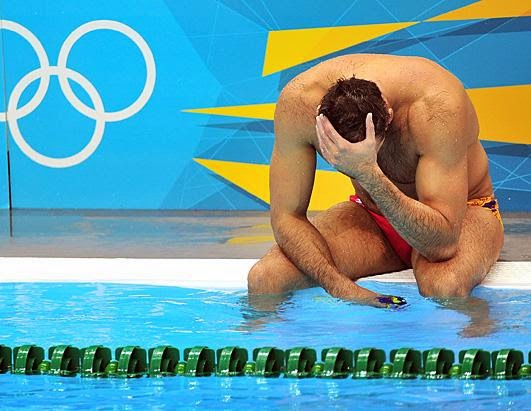
Reader Friday: The Agony of Defeat
Discovering Story
Part of the creative process is Discovery. I’m in this phase now, which is when the beginning of a plot swirls in my head. I have a title for my next mystery, so I have to work the murder around it. Thus I’ve made an appointment for a facial. I know, research can be tough but someone’s got to do it. And my Bad Hair Day series is centered around a beauty salon.
Often I’ll start the plotting process with the victim. As shown in my book, Writing the Cozy Mystery, I draw a circle in the center of a paper and put the victim’s name inside. Around that go spokes like on a wheel for each of the suspects. Then I connect the spokes together so it becomes more like a spider’s web, where the suspects relate to each other in some manner.
For now, I know my victim’s basic identity. Her job is what gets her into trouble, and so the suspects develop from among her business associates. Who might want her dead and why leads me to motives. At this point, preliminary research is in order. I need to look up the world surrounding her business and learn more about it.
But that’s not all. I am driven to acquire new knowledge about a subject for each book. What will it be for this one? What issue interests me, or what news article have I filed among my clippings that I might want to pursue? This factor is what propels me forward and underlies the plot. It hasn’t come to me yet for this story.
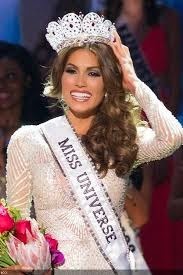
My victim is co-sponsor of a beauty pageant. I search online and fine headlines like “Top 10 Beauty Pageant Scandals.” Bingo! Before looking these over, I realize I have a problem. Most pageants likely take place over a weekend. How can I get this group of people to stay in the Fort Lauderdale area for a week or two so my hairdresser sleuth, hired to do the contestants’ hairstyles, can ferret out clues?
I’ll deal with that problem later. Meanwhile, I look at the scandals online regarding beauty shows, and nothing strikes me in terms of issues I’d want to pursue. The problems encountered don’t seem worthy of murder. And do I really want to write a whodunit variation of Miss Congeniality?

Hey, what if I do a fashion show instead of a beauty pageant? My last Bad Hair Day mystery, Peril by Ponytail, takes place in October. I could set the new story in December. I’ve done Thanksgiving in Dead Roots but never Hanukah or Christmas. So how about a charity holiday ball with a fashion show? Using a local designer would keep the action in town, and I’ve already done the preliminary research by going backstage at a designer showcase. This will give me the personal angle of Marla and Dalton dealing with the holidays while also picking a charity whose cause I can support. If Marla has a connection to the charitable organization through her friends or relatives, this would give her an added incentive to get involved in solving the murder.
I like this idea. It’s starting to get me excited, whether or not it pans out. At least, it’s a start in the right direction.
So what advice do I have for you based on this experience? When you begin to think about the next story, let ideas flow through your brain. Pick the one that excites you and do your preliminary research. If you find some meaty material, go with it. If not, let the idea float away but keep the story in your mind. Your subconscious will present the next idea. Or thumb through your files and see if one of your clippings or news pieces stimulates a train of thought.
Do you start story development with an issue, a character, or a setting?
Stealing From Other Writers

By P.J. Parrish
When I write, I don’t read. Because I know, from experience, what happens when I do. I steal.
Now, don’t get me wrong. All writers steal. At least, the smart ones do. Because this is partly how you learn to write a novel, by reading other novels, figuring out how the person structured the story, analyzing how the characters were layered, how the motivations were laid out, how the words were put together to elicit an emotional response. We learn by digesting the craftsmanship of others.
Here’s the thing though: You have to steal in the right frame of mind. And for me at least, that is NOT when I am working on my own book. If I see a way of structuring a scene or chapter that is clever, I will try to replicate it in my own book. If I read a passage that sings, I will try to mimic it even if it’s not my style. When I am writing, I am in this weird fugue state and my brain is very porous and open. The temptation to take things that really don’t belong to me is too great.
But something changes once I am done writing my own book. I binge read for pleasure. Freed from my own insecurities and writer ego, I hear other writers more clearly. And when that happens, I learn more about writing in general and the lessons sort of sit in my brain, baking and bubbling, until I need them.
So, yes, I steal from other writers. Here are some of the things I have taken and the people I took them from:
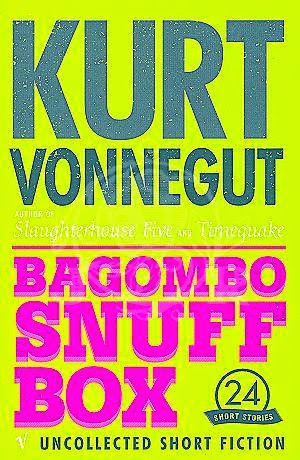
Every sentence must do one of two things: reveal character or advance the action. I stole this from Kurt Vonnegut. About ten years ago, I was struggling mightily to write my first short story. I went back and read Cheever, Hemingway, Saki and O Henry. I discovered John D. MacDonald’s The Good Old Stuff. But it wasn’t until I got to Vonnegut’s Bagombo Snuff Box that I hit pay dirt. In the preface, Vonnegut laid out his eight rules for writing. (Click here to read them all.) His idea that every sentence must reveal character or advance plot was a light bulb moment for me. It now informs everything I write. And when I teach, I try to impress on writers that every scene, every chapter, must work hard in service to the twin poles of character and plot.

Kill Your Darlings. Nope, I didn’t get this one from Faulkner. I stole this from E.B. White. And by “darlings” I mean good characters. Charlotte’s Web is my favorite book, maybe the one that most influenced me as a writer. It has many great lessons but the most enduring is that a writer can – must – be brave enough to kill a good character. I’ve written about this before, so click here if you want to read more.
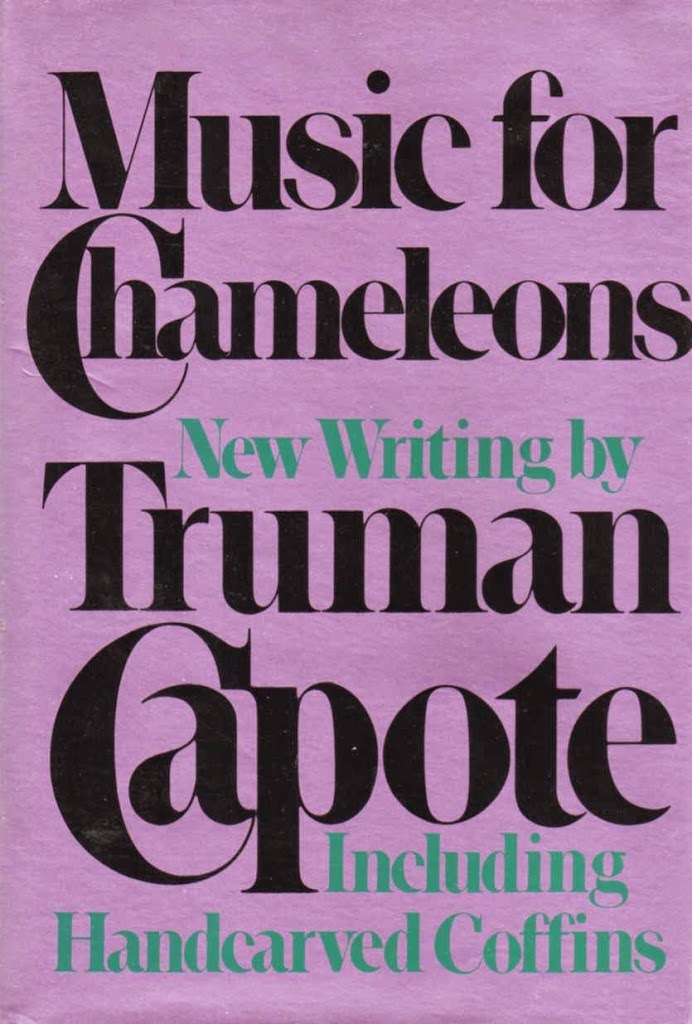
Fall in love with the sound of language. Stole this one from Truman Capote after reading Music for Chameleons. This is a miscellany of stories and essays published in 1980 after a 14-year drought following Capote’s brilliant In Cold Blood. It contains passages of exquisite beauty and it taught me, when I was just starting to write, to pay attention to what words sounded like. Like those chameleons in the lead story, I was mesmerized by the music, and have spent all the years since trying to make my own. (In his preface, Capote writes: “When God hands you a gift, he also hands you a whip for self-flagellation.” Ha!)
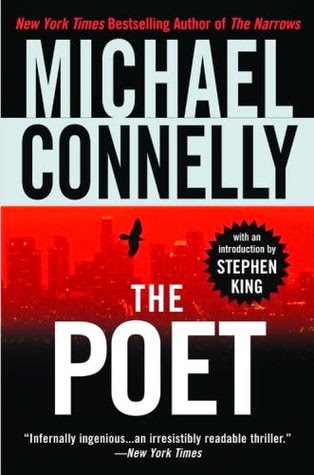
Don’t be afraid! This one I got from Mike Connelly’s The Poet. For most of our Louis Kincaid series, we have stayed mainly with a third-person intimate POV because we think filtering the story through our hero’s consciousness enhances the reader’s bond with him. But when we started our first stand alone thriller, The Killing Song, we realized our protag and villain were equally important. We needed something special to drive home their dichotomy of good and evil, so we decided to copy Connelly’s The Poet and mix first and third POVs. Our first chapter was written in first-person from the killer’s POV and the second chapter switched to third-person from the hero’s POV. But it wasn’t working. And we couldn’t figure out why. I ran into Mike at Bouchercon and told him I stole his idea. He smiled, shook his head and said, “But give the first-person to your hero. It’s his story.” We took his advice and the story took off. But I wouldn’t have had the guts to try without reading The Poet.
There have been other lessons learned from my life of crime. From Stephen King, who has tried everything from horror to westerns, from eBooks to novellas, I learned not to let expectations box me into one genre or style. This has given me the courage to use an unreliable narrator in my WIP. As E.B. White said, “Sometimes a writer, like an acrobat, must try a trick that is too much for him.”
From Flaubert’s Madame Bovary, I stole the idea that a protagonist can be deeply flawed. From Jane Austen’s Emma I learned to pay attention to secondary characters because they might hold the key to the story (In the end, George Knightley won Emma’s heart). From Pete Dexter’s Paris Trout, I got the revelation that all good crime stories are not about the crime but rather its rippling effect on the people and the town. And last but not least, From Anne Lamott, I learned that my quest for perfectionism is death. She wrote in Bird by Bird: “The only way I can get anything written at all is to write really, really shitty first drafts.” Which might be the best advice for writers I have ever heard.
Who do you steal from? And what treasure did you get?
How to save a bundle on editing costs – without sacrificing quality
 by Jodie Renner, freelance fiction editor & craft-of-writing author
If you’re relatively new at writing fiction for publication, whether you plan to publish your novel yourself or query agents, it’s a good idea (essential, really) to get your manuscript edited by a respected freelance fiction editor, preferably one who reads and edits your genre. Can’t afford it, you say? I say you can’t afford not to, but below you’ll find lots of advice for significantly reducing your editing costs, with additional links at the end to concrete tips for approaching the revision process and for reducing your word count without losing any of the good stuff.
Editing fees vary hugely, depending on the length and quality of the manuscript, and how much work is needed to take it from “so-so” or “pretty good” to a real page-turner that sells and garners great reviews. Before approaching an editor, hone your skills and make sure your story is as tight and compelling as you can make it – and that it’s under 100,000 words long. 70-90K is generally preferred for today’s fiction.
Don’t be in a hurry to publish your book before it’s ready.
If you rush to publish an early draft, you could do your reputation as a writer a lot of damage. Once the book is out there and getting negative reviews, the bad publicity could sink your career before it has had a chance to take off. It’s important to open your mind to the very real possibility probability that your story could use clarification, revising, and amping up on several levels, areas that haven’t occurred to you because you’re too close to the story or are simply unaware of key techniques that bring fiction to life.
First, write freely, then step back, hone your skills, and evaluate.
First, get your ideas down as quickly as you can, with no editing – write with wild abandon and let your muse flow freely. But once you’ve gotten your story down, or as far as your initial surge of creativity will take you for now, it’s a good time to put it aside for a week or three and bone up on some current, well-respected craft advice, with your story in the back of your mind. Then you can re-attack your novel with knowledge and inspiration, and address any possible issues you weren’t aware of that could be considered amateurish, confusing, heavy-handed, or boring to today’s sophisticated, savvy readers.
 Now’s the time to read a few books by the writing “gurus” (here’s an excellent list), and some of the great craft-of-writing posts by The Kill Zone’s contributors in the TKZ Library (in the sidebar on the right), and maybe join a critique group (in-person or online) and/or attend some writing workshops.
Then, notes in hand, roll up your sleeves and start revising, based on what you’ve learned. If you then send your improved story, rather than your first or second draft, to a freelance editor, they will be able to concentrate on more advanced fine-tuning instead of just flagging basic weaknesses and issues, and will take your manuscript up several more levels. Not only that, you’ll “get” the editor’s suggestions, so the whole process will go a lot smoother and be more enjoyable and beneficial.
A great book to start with is my short, sweet, to-the-point editor’s guide to writing compelling stories, Fire up Your Fiction. And for more on point of view, avoiding author intrusions, and showing instead of telling, peruse Captivate Your Readers. And if you’re writing a thriller or other fast-paced story, check out my Writing a Killer Thriller for more great tips. All three are available in print or e-book, which you can also read on your computer, tablet, or smartphone.
And when it comes time to find a freelance editor, don’t shop for the cheapest one and insist that your manuscript only needs a quick final proofread or light edit. That approach will result in a cursory, superficial, even substandard job, like painting a house that’s falling over and needs rebuilding, and will actually end up costing you more money in the long run. Why?
Because you could well be unaware of how many structural, content, and stylistic weaknesses your story may contain, which should be addressed and fixed before the final copyedit stage. Paying for a basic copyedit and proofread on a long, weak manuscript, only to find out later it needs a major overhaul, which will then require rewriting and another copyedit, is short-sighted — and money down the drain.
Say, for example, your novel is a rambling 130,000 words long. It’s very likely you need to learn to focus your story, cut down on descriptions and explanations, eliminate or combine some characters, maybe delete a sub-plot or two, plug some plot holes, fix point-of-view issues, and turn those long, meandering sentences and paragraphs into lean, mean, to-the-point writing. Not only will this make your story much stronger and more captivating, but it will save you a bundle on editing costs, since freelance editors charge by the word, the page, or the hour, and editing your 80,000-word, tighter, self-edited and revised book will cost you a whole lot less than asking them to slug through 130,000 words written in rambling, convoluted sentences.
Your story may even need a structural or developmental edit.
If you’re at the stage where you know it’s not great but you’re too close to your story to pinpoint the weaknesses, perhaps you should hire a developmental editor to stand back and take a look at the big picture for you and give you a professional assessment of your manuscript’s strengths and weaknesses. Or if you can’t afford a developmental editor, try a critique group or beta readers – smart acquaintances who read a lot in your genre – to give you some advice on your story line and characters, and flag any spots where the story lags or is confusing or illogical.
Enlist help to ferret out inconsistencies and inaccuracies.
You don’t want to lose reader trust and invite bad reviews by being careless about facts and time sequences, etc., either. Find an astute friend or two with an inquiring mind and an eye for detail and ask them to read your story purely for logistics. Do all the details make sense? How about the time sequences? Character motivations? Accuracy of information? For technical info, maybe try to find an expert or two in the field, and rather than asking them to plow through your whole novel, just send them the sections that are relevant to their area of expertise.
It’s even possible that you’ve based your whole story premise on something that doesn’t actually make sense or is just too far-fetched, and the sooner you find that out the better!
Read it aloud.
Read your whole story out loud to check for a natural, easy flow of ideas, in the characters’ vernacular and voice, and suit the tone, mood, and situation. This should also help you cut down on wordiness, which is your enemy, as it could put your readers to sleep.
The more you’re aware and the more advance work you do, the less you’ll pay for editing.
So, to save money and increase your sales and royalties, after writing your first draft, it’s critical to hone your skills and revise your manuscript before sending it out. Also, be sure to find an editor who specializes in fiction and edits your genre, and get them to send you a sample edit of at least four pages. (See my article, “Looking for an editor? Check them out very carefully!”)
And don’t seek out the cheapest editor you can find, as they may be just starting out and unaware of important fiction-writing issues that should be addressed, like point of view and showing instead of telling, etc. And whatever you do, don’t tie the editor’s hands by insisting your manuscript only needs a light edit, because that’s cheaper. You could well end up paying for that “cheap” light edit on an overlong, weak manuscript, then discovering that the story has big issues that need to be addressed and requires major revisions, including slashing and rewriting. Then you’ll have to pay for another complete edit of the new version! $$ multiplied!
Check out these other articles by Jodie for lots of concrete tips on revising and tightening your novel (Click on the titles below):
 Jodie Renner is a freelance fiction editor and the award-winning author of three craft-of-writing guides in her series An Editor’s Guide to Writing Compelling Fiction: Captivate Your Readers, Fire up Your Fiction, and Writing a Killer Thriller. She has also published two clickable time-saving e-resources to date: Quick Clicks: Spelling List and Quick Clicks: Word Usage. You can find Jodie at www.JodieRenner.com, www.JodieRennerEditing.com, her blog, http://jodierennerediting.blogspot.com/, and on Facebook, Twitter, and Google+.
Why Marketing Is Like Motherhood

This past Mother’s Day I was reflecting upon this most honorable role and, suffused as I am with the writing life, my brain related the whole thing to marketing.
My lovely daughter-in-law is on the verge of bringing another Bell into the world. I find myself thinking back to my own first born. When Mrs. B and I were awaiting the appearance of our son, we set about to become the best parents ever. This is the pull of nature. It is as old as civilization, as robust as ocean tides.
Law student that I was at the time, I got into studying books. Today, there is a virtual mountain—nay, a mountain range of Himalayan proportions—of printed and digital advice on the art of parenting. It can seem as daunting as a view of Everest as you stare up into the clouds with only a rucksack and a walking stick.
So I remember well the day my wife and I took up the classic Baby and Child Care by Dr. Spock. Though some of it was controversial at the time (and perhaps remains so), there was a famous axiom that begins the book, one that has comforted many an anxious parent facing the world’s toughest job:
“Trust yourself. You know more than you think you do.”
It was a call to not stress about what every “expert” has to say, so much of it conflicting. In such cases you have a gut instinct that is, if motivated by love and tempered by wisdom, highly reliable.
And that’s the marketing lesson I want to mention today. There is a flood of material out there on what you must do to bring a book to the public, with so many sources asking how can you improve public relations? There are countless options, so many more than the “old days” of bookstore signings, talks at your local library, and sitting despondently next to Mary Higgins Clark at a conference.
The explosion of digital options—everything from paid ads to social media madness—can make choosing what to do seem as daunting as trying to solve the Hodge Conjecture with a hangover.
Trust yourself. You know more than you think you do.
First of all, use common sense. Don’t go into hock to market your book. The single biggest determinant of writing success is….wait for it….the writing itself. You know this. You know that you have to concentrate most on writing good stuff, getting better at it and keeping it coming, if you want a long-term career.
Second, we are starting to see that a few marketing methods are better than others. Paid placement with BookBub, for example, is always good. Other email services, like BookGorilla and eBookSoda, will make you new readers. And that’s what you need to build an email list of fans. No matter how small it might be, it’s always good to be able to communicate with people who’ve bought from you before and have shown a willingness to do so again.
As for social media, it’s easy to get the ROI (return on investment) completely bollixed. If you spend the majority of your Twitter or Facebook time begging people to buy your books, you’ve done more harm than good. If your spend more time socializing than you do producing, your calculus is all mixed up.
Here’s a suggestion: Your time on social media ought to be one-tenth the time you spend writing on an average day. If you write for two hours, you get twelve minutes on social media.
There, I said it.
I think this is all stuff you really do know, even though you might have lost that native wisdom in the clamor of Do this! and Do that!
My suggestion is to pick up the book marketing analogue of Dr. Spock: Joanna Penn’s How to Market a Book. Use it as a reference, not to try to do every single thing in it at once, but to consider the options and choose wisely.
Mothers bring babies into the world. Writers bring books. Love what you write, nurture your books, care enough about them to discipline them when they need it (that’s called editing) and then let them leave the nest.
And as they fly to market, don’t stress. Your love goes a long way. Don’t fall into the trap of thinking that if you miss doing one thing, you’ve ruined your book’s chances forever. (You know, like if you don’t get your child into that expensive pre-school he will never get into Harvard. His life is ruined, and he’s only three!)
Trust yourself. You know more than you think you do.
Keep writing the best stuff you can, choose a few marketing things to do, and it will all pretty much work out as it should. Adding stress doesn’t help a bit. To cut down on the stress of your website costs, take a look at the best free web hosting providers.
So do you get anxious about marketing? Do you realize that’s not doing you any good?
How To Pick A Title For Your Novel
By Mark Alpert
Choosing a title for your novel should be fun, right? So why is it often so frustrating?
I think it’s because there are so many requirements for a good title. It has to tell the reader, in a general way, what the book is about. It also has to convey the tone of the book — a light, amusing title for a lighthearted novel, a heavy, ominous title for a dark, creepy thriller. It can’t be too similar to titles of other recently published or very well-known books. And it shouldn’t carry the baggage of unwanted associations. Above all, it has to be catchy.
One could argue that novelists shouldn’t worry so much about titles. This is an area where the publisher has the final say, because the title is so important to the marketing of the book. The author can make suggestions, but the publisher has veto power. And I’ve learned that the best titles often come out of brainstorming sessions between the author and editor after the book is finished. But I can’t start a novel without giving it at least a working title. I can’t just call it a work-in-progress. Would you call one of your kids a work-in-progress? (Although that’s what children are, really.)
I’ve written four published novels, and each had a working title that was different from its ultimate title. When I started writing the first book I called it “The Theory of Everything” because it was about a dangerous secret theory developed by Albert Einstein to explain all the forces of Nature. (Einstein himself called it Einheitliche Feldtheorie, the unified field theory.) But that wasn’t such a great title for a thriller. It seemed better suited to a literary novel. (And, in fact, there are several literary novels titled “The Theory of Everything.”) So my editor and I put our heads together and came up with “Final Theory.” That seemed more compelling and yet still true to the subject of the book, because physicists believe that if they ever do discover a theory of everything, it will also be a final theory (because they will have nothing fundamental left to discover).
My second novel was a sequel to the first, and I gave it the working title “Quantum Crash” because it was about an attempt to crash the program of the universe. Because the universe is inherently mathematical, some physicists have speculated that reality is the result of a cosmic program; the laws of physics are the operating instructions of this program, while matter and energy are the data being crunched. The problem with this title was the word “quantum.” I think the publisher was worried it would scare off some readers. My editor proposed the title “The Omega Theory,” which had the advantage of conveying that the book was a sequel to the first novel. Luckily, there is a concept in physics called the omega point, and I was able to work this into the book’s plot.
My third book was a stand-alone novel about the merger of man and machine. The working title was “Swarm” because the book’s villain employs swarms of cyborg insect drones — live houseflies with implanted radio controls and bio-weapons — to attack the heroes. But that title didn’t convey the general premise of the novel, which describes the rise of a man-machine network that seeks to exterminate the human race. So my editor and I came up with “Extinction,” which was much better.
My fourth novel (which just came out) is another stand-alone, this one about an ancient clan of witches who have steered the course of human history for centuries. I gave it the working title “Ariel” because that was the name of the heroine, but I knew it would never fly as the ultimate title because of all the “Little Mermaid” associations. In the end my editor and I settled on the title “The Furies,” which are Greek mythological witches of a sort. I changed the name of the witch clan to Fury so that the book’s title would better fit its content.
And right now I’m writing a novel about an alien invasion, and I’ve given it the working title “Interstellar.” But I’m pretty sure this won’t be the title when the book is published because there’s a movie called “Interstellar” that’s scheduled to come out by the end of the year. I just viewed the trailer for the movie and it looks pretty cool. But my novel, whatever it’s ultimately called, will be very different.
Reader Friday: Other Things That Matter
Writers think about writing all the time. Self-publishing writers have to add all the business aspects of publishing, and everybody is on social media. It’s easy to get so focused on writing stuff that other things in life get fuzzy.
So today, take off your writing hat for a moment and talk about something else that matters to you.