Writing a Novel is Like Building a Chicken Coop

I spent the last nine days on vacation. Well, a “staycation” filled with manual labor in severe heat and humidity. Yes, I’m getting too old for this crap, but there is a silver lining — I never need to build another chicken coop! We built this one to withstand anything New England weather can throw at us.

As I’ve mentioned a time or two, I’m a mother to 17 chickens (among other furred, feathered, or skinned kids). In my last update, I had six adult hens and 11 female chicks, who lived in a temporary nursery coop in my house. When they grew big enough to transition into another temporary coop inside the barn, we knew we only had about three weeks before they needed to be integrated into the adult flock.

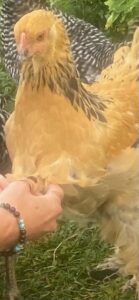
As an overprotective mom, it’s nerve-wracking and emotional to release the apron strings (they may have stayed in the house two extra weeks because of this), but the babies needed to learn the ins and outs of chicken society and hierarchy on their own. It’s something their father and I can’t provide. They must learn these life lessons from older and bigger flock members.

Thankfully, the flock leader is Flo, an angelic white brahma with a visible glowing aura.
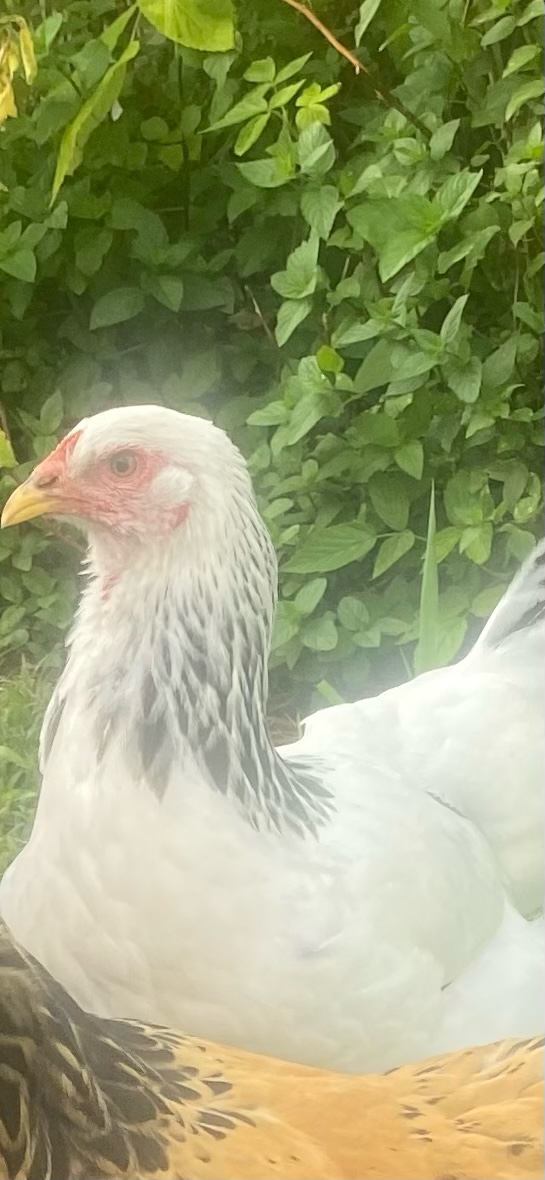
click to enlarge

Ever seen anything like her? We haven’t, nor do we know why she glows.

Who else would be queen? Flo’s been a born leader since she was two days old. She’s strict — no one messes with Flo — and loving and fair. No unnecessary bullying allowed, but a good, hard peck here and there to keep the younglings in line is part of life. You might remember Biff, her 2nd in command and the muscle for the flock, from this post.

Though the adults have a coop inside the barn, they only had a temporary pen set up in the yard. We did this on purpose until the babies could integrate into the flock, or the adults might’ve gotten overly territorial. This way, everyone could experience their new space together.

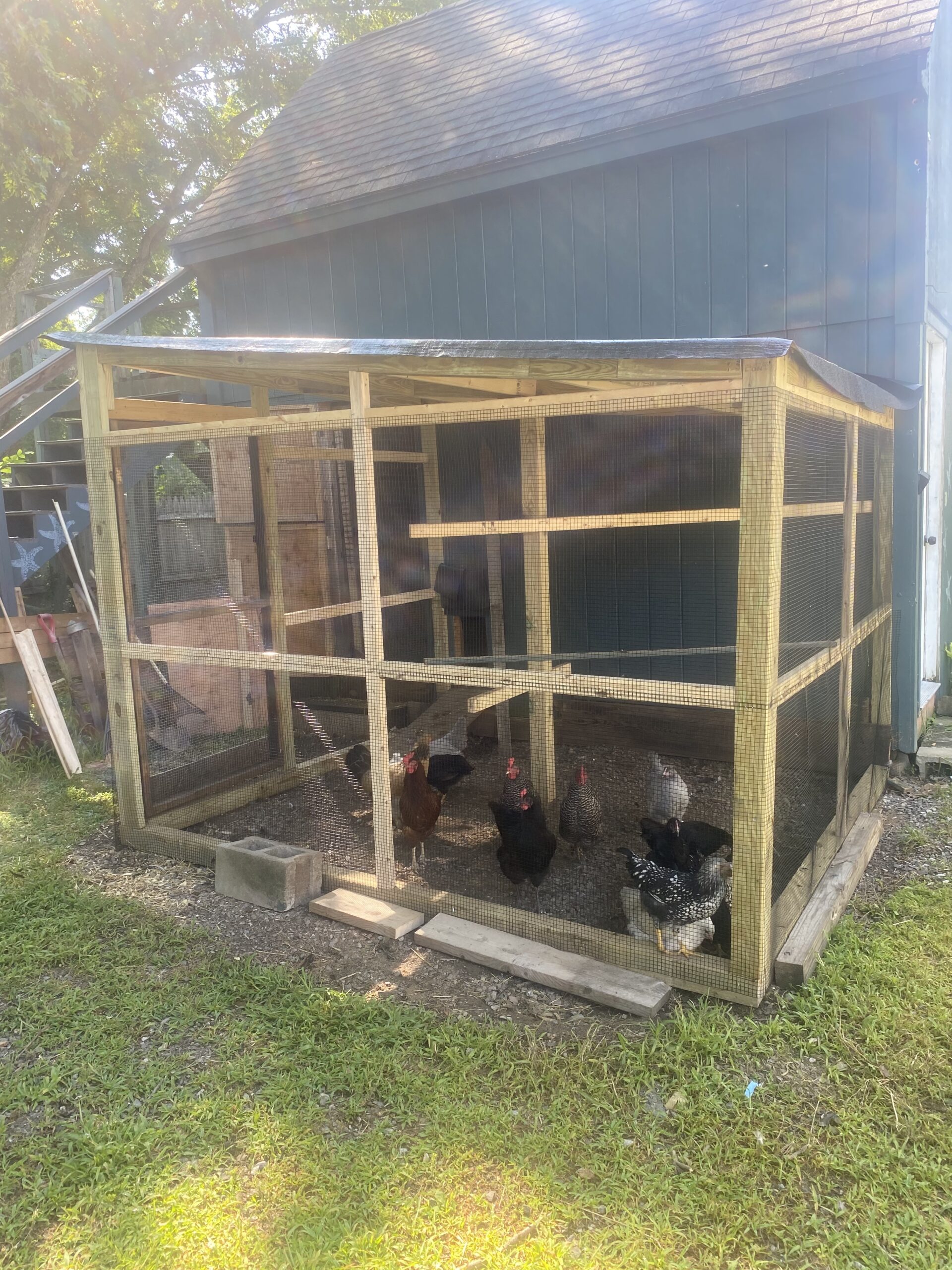
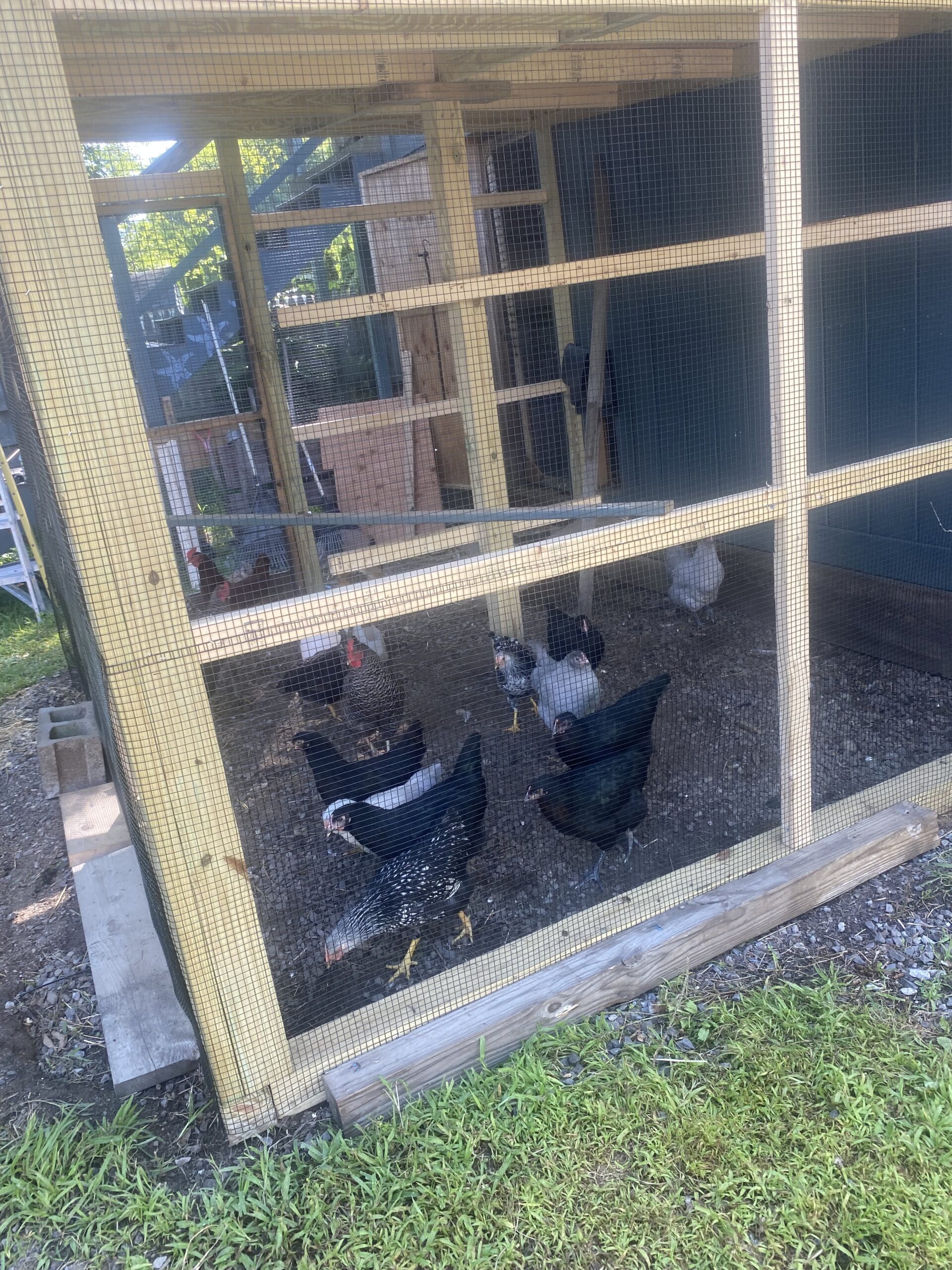
The day after the building supplies arrived, we used our vacation to build this monstrous 10’ x 8’ x 8’ coop, with a chicken door that allows them entry into the barn to egg in private. We also keep an extra 5 gallons of water in the barn to keep it cool from the summer heat.

Building a chicken coop and writing a novel both require us to balance high-level creativity with rigid, technical constraints. Both are parallel journeys of messy, structural creation. And I’m not the only one to draw that parallel…

Author William Faulkner famously connected the two:

“Writing a novel is like building a chicken coop in a high wind—you grab any board you find and nail it down fast.”

Before laying out the 4×4 wood foundation, we needed flat, level ground to support the walls and roof.

Some writers create an outline, others might only have a beginning, middle, and an end. Some might not even have that. Your writing process doesn’t matter, if you ensure the story has a solid foundation to support the plot.

We dug trenches and buried wire to protect our flock from predators.

A novel needs tight boundaries to keep out plot-destroying distractions, like irrelevant subplots and tangents that threaten to kill the story’s momentum. 

Posts and beams support the roof and walls of the coop.

Major plot points support the story.

Rather than run posts 16 inches apart like you would for a house, we spaced them out to create an aviary style coop. To achieve this, we needed to run horizontal beams as well.

Rather than characters running straight from the start to the end, writers add setbacks, conflict, tension, character growth, and subplots.

Some coop builders install drop trays or “poop shelves” under roosting bars because chickens create an immense amount of waste. The dirt floor in our coop works the same way.

See the parallel to a “shitty first draft”?

Though I don’t buy into the argument that every first draft sucks, most writers embrace the reality that early drafts can be messy, disorganized, or in need of a rewrite. The editing process is the literary equivalent of raking the coop floor to keep a clean environment.

Once we built the frame and roof, we wrapped the coop with vinyl-coated, metal poultry mesh. Which is so much easier to work with than chicken wire. We still need to paint, tuck the roof under the edges, and add natural branches for extra roosts. They love their new digs!

Writers need to edit, polish the imagery, adjust the cadence, and fix grammatical errors until the prose feels smooth and deliberate.

*Please disregard the mess around the coop. It’s a work in progress.

The one-foot pitch of the roof is intentional for snow to slide off the side, rather than land in the walkway.
 

What Writers Can Learn From Nursing a Sick Chicken

When we love something, like writing, or somebody, be it a friend, partner, or pet, we persevere through good times and bad. Quitting is not an option.

Last week, as I mentioned in my previous post, I moved my six adult chickens from Massachusetts, where I had a coop at a friend’s house, to my yard in New Hampshire. During the hour-plus drive, one of my chickens — Biffy, an unfortunate pet name that stuck — was accidentally smothered by two of her sisters. When I lifted her from the crate, I thought for sure she was dead. Though she bounced back, they’d injured her crop.

Biffy

For those unfamiliar with bird anatomy, the crop is above the right-side of the breast. Food and water travel down the throat to the crop where it’s processed before dumping into the stomach.

About 24-36 hours later, I noticed Biffy seemed off. She sat alone in the coop while the others enjoyed the yard. She wasn’t eating and felt cold to the touch.

Uh-oh, is she dying?

I researched everything from accidental smothering to her cold body temperature. An impacted crop seemed to be the general consensus. When I felt her crop, it felt like a golf ball. Not good. In fact, it’s often a death sentence. I refused to except that, so I learned how to perform crop massages to break up the food that had hardened into a mass.

Several times a day, I marched outside to massage her. And soon, she recovered. But because her body had gone into shock from the move (hence, the cold body temp), she then became egg-bound. Another death sentence diagnosis.

Everyone told me she would die. Some suggested to mercy kill her, that it’s the kind thing to do. No, dammit, I’m a writer. I don’t quit. And I’m certainly not giving up on her.

So, I set up a hospital coop in my house. Again, I knew nothing about how to help her, but I researched everything I could find.

  • Epson salt baths to relax her stomach muscles.
  • A crushed Tums to give her the calcium she lost by not eating.
  • Olive oil on her vent or cloaca, where eggs come out.
  • Honey water to give her an energy boost.
  • Greek yogurt mixed with chick food to create an oatmeal-like mush.
  • Lots of love, patience, and understanding.

For four straight days, I did all the above several times per day. Still hadn’t laid the egg but it had moved into laying position. When I didn’t find an egg the following day, I crawled inside her hospital coop and stared deep into her eyes. “Tell me what to do, Biffy.”

And somehow, I knew she missed her flock.

Carrying her out to her regular coop was one of the hardest things I did. An injured chicken could get stomped to death. Survival of the fittest, and all that.

When I checked on her later that day, I found her hiding behind a straw bale, though her flock wasn’t harming her. I’d sneak in to administer the same treatment, except the baths. If the others caught me, they might retaliate against her for getting all of Mom’s attention. In between rounds, I ensured everyone felt special, but I still feared the worst.

Another three grueling days past. The egg moved even closer to her vent — so close yet so far!

Most chickens would have died a week ago. Not Biffy. She has the heart of a lion and the endurance of a cheetah. On day 8 or 9 (I lost track), I walked around the corner to the coop — Biffy was in the yard with her flock! Behind the bale of straw, I found two eggs. Not only did she pass the stuck egg but laid another.

Two weeks after she was almost smothered to death in that crate, she’s egging every day, eating, drinking, playing, roosting at night with the others, and has re-earned her #2 spot in the flock hierarchy.

What can writers learn from this?

  • Keen observation
  • The necessity of isolation for growth
  • Pacing

The Power of Micro-Observation

Chickens are prey animals. They instinctively mask their illnesses until they are critically ill. Chicken moms and dads learn to look for subtle cues: a drooping wing, a change in posture, or a loss of appetite.

Writer Lesson: Think of it as building subtext and writing characters whose internal pain is revealed through micro-actions rather than exposition.

The Importance of Quarantine

The first priority with a sick chicken is to remove her from the flock to prevent her from being pecked or stomped to death.

Writer Lesson: We can draw a parallel to our own creative process… we must detach from friends, family, and online activities to write. With an early draft or a deeply personable project, step away from the noise of critiques to give it the critical distance needed to develop it later through clearer eyes.

Prioritize the Essentials

When nursing a sick bird, basic hydration and warmth take precedence over complex medical interventions.

Writer Lesson: This mirrors the process of editing… strip away the clutter, focus on foundational structure, and ensure the core narrative works before worrying about elaborate prose.

Patience and Managing Expectations

Reviving a sick bird requires time, hourly monitoring, and the harsh realization that not every story has a happy ending.

Writer Lesson: Learn the delicate balance between fighting with a difficult draft and knowing when a concept must be shelved.

Today (written last Friday), I’m moving my 11 chicks outside to their junior coop. By the time this posts, I’ll finally have my house back. Though I love them dearly, it’s time. Yeehaw!

What other lessons can writers learn from my and Biffy’s story?