She Spied

By Joe Moore

One of the questions writers hear often is where do we get our ideas. Depending on the situation, my standard answer is that I subscribe to the Great Idea Of The Month Club. And when someone asks how they can join, I have to tell them that members are sworn to secrecy and forbidden to divulge that information.

If I’m pressed for an answer, I say that I can give some sources away, but only if they don’t tell where they got them. If they want to write murder mysteries, for instance, I aim them toward THE MURDER BOOK 2008, a blog by Paul LaRosa that records all the murders in New York City during 2008. There’s enough material there to keep a writer going for years.

Or if they want to get a little X-File-ish, I send them over to Above Top Secret for some out-of-the-ordinary research. If their writing a period piece, say a western or Civil War drama, there’s always Research Unlimited.

child-julia But in reality, our ideas can come from almost any source at any time. Writers’ minds are in-tune with their surroundings ready to see the telltale signs of that little spark that could be used in a story or even become the basis of a whole book.

Then there are the times when ideas fall out of the sky and hit us on the head. That happened recently when I opened the paper and saw the headline, “Julia Child revealed as member of spy ring”. Folks, it oss don’t get much better than this. Just in case you didn’t catch it on the news, it seems that back in 1942, President Franklin Roosevelt created an organization called the Office of Strategic Services (OSS) which would become the predecessor to the Central Intelligence Agency. The job of the OSS was to collect and analyze strategic information required by the Joint Chiefs of Staff and to conduct special operations not assigned to other agencies.

So who made up the OSS? It turns out from recently revealed government documents that the 24,000 members of the OSS were one of the most eclectic group of people ever organized for intelligence gathering. Future famous members included Nobel laureate Ralph Bunche, movie director John Ford, actor Sterling Hayden, U.N. ambassador Author Goldberg, actress Marlene Dietrich, and the one that made me smile—TV cooking personality, Julia Child. Of course, these “spies” were OSS members long before their more famous occupations developed in later years.

child-julia1 (Small) And what did Ms. Child do as a spook? She was hired in the summer of 1942 for clerical work with the intelligence agency and later worked directly for OSS Director William Donovan. She also helped in the development of a shark repellent to ensure that sharks would not explode ordnance targeting German U-boats. Not quite a female James Bond, but impressive, none the less. I wonder if she ever cooked dinner for director Donovan. There’s definitely a story there somewhere.

So where can you find ideas for a story? Sometimes you just have to open the newspaper. My hat’s off to Julia Child. She did more than most of us will ever do. She spied.

Note: Join us on Sunday, August 31, when our guest blogger will be international bestselling author and International Thriller Writers VP, David Hewson.


Person David Hewson
Right click for SmartMenu shortcuts

Confessions of a true-crime TV junkie

Note: Leave a comment on the blog through Wednesday to qualify for our $50 gas card prize! We’ll draw the winning name out of the hat!

I’ll admit something straight away: I’m addicted to true-crime TV shows.

My TiVo never misses a taping of America’s Most Wanted. I get a rush of adrenalin whenever host John Walsh announces the capture of another “dirt bag.” When he profiles the nasty dudes who are still at large, I study their pictures and video, trying to memorize their features. My only problem is that I actually have a lousy memory for both names and faces, so if I ever spot anyone on the lam in my hometown, which is known for its beach volleyball and beer bars, it’s possible I’ll be fingering, not an America’s Most Wanted, but an America’s Most Wasted Party Animal.

Another one of my absolute favorite shows is The First 48. The show follows homicide detectives during the critical first 48 hours of an investigation. It shows the gritty reality of their routines, and their race against time to find the suspect. The best part of the show is the interrogations. I have to admit I’m always amazed by how easily some of the bad guys confess. If I were a killer (and don’t worry, it’s not in my game plan), I’d be one of those who “lawyer up” and never say a word to the cops.

These true-crime shows fascinate me because as a mystery author, I needto know what makes both sides tick—the criminals and the crime fighters. And I’m always fascinated to learn how real homicide detectives work. What is it, exactly, that makes them able to crack a complicated case with few clues to go on?

In an attempt to find the answer, I once made a pilgrimage to Hollywood, where LAPD Chief William J. Bratton was signing a book of photos for which he had written the foreword. I bought the book, got his signature, and then waited patiently for the Q&A.

Then, I raised my hand.

“What is the major quality that distinguishes a great homicide detective?” I asked. “How are they special?”

The Chief spent a moment considering. Then he said, “The really good ones look at a room differently than you and I do. They can simply see more—the crime, the layout, and how it must have happened.”

Ah, that’s it. A different type of sight—that’s the key, according to Chief Bratton. I wonder how that special vision affects the everyday life of homicide cops. They must see less of a safety zone around the average person’s life than we do. They’re too used to seeing that zone violently assaulted. They’ve got cop’s eyes.

I’ll never be able to “see” the world exactly the way a homicide cop does. But I’ll keep trying. And that’s just one of the reasons I’m a crime show junkie.

How about you—as writers, how do you study real crimes to inform your fictional ones? Have you found any shows or sources to be particularly useful? Anything you can share with me? I’m on the prowl for my next true crime fix.

Where Evil Lurks Beneath the Sun or Picnic at Hanging Rock

By Clare Langley-Hawthorne
www.clarelangleyhawthorne.com

As I’m in Australia at the moment, visiting relatives and friends, I thought it was about time I discussed some home-grown Aussie mystery. If you’re thinking I’m sunning myself on the beach somewhere you’d be wrong – Melbourne is in the depths of winter so think rain and lots of it! Since I’m in the cultural capital of Australia (sucks to Sydney – you can see where my allegiances lie!) I have to talk about one of my all time favorite mysteries – Picnic at Hanging Rock.

I read the book by Joan Lindsay when I was about twelve and I was convinced it was based on a true story – the eerie mystery surrounding the fate of a party of schoolgirls who visit Hanging Rock was deliciously fraught. Then along came Peter Weir’s film and the whole ambience and sexually charged atmosphere came to the fore. There are even hints that the events in the book may have been based on events in Joan Lindsay’s own life but there has never been any record found of anything similar happening. Yet the mystery endures today, probably because it remains unsolved (although there is a missing final chapter which Lindsay wrote that apparently solves the mystery. It was excluded in the original book and, to be honest, I don’t want to even know what it says).

I’ve visited hanging rock (Mt. Diogenes) and each time I was struck by the strange energy of the place. It is located just outside Melbourne, where I grew up, and is now forever associated with those haunting few words :
“On St. Valentine’s Day in 1900 a party of schoolgirls went on a picnic to Hanging Rock. Some were never to return…”

Hanging rock is a place where anything is possible and there is a distinct evil vibe that is hard to ignore. When you climb the rock, your sense of perspective and time becomes confused. I think that’s what makes Peter Weir’s film so incredible. He captures the essence of a summer day at the turn of the last century, its drowsy, erotic overtones as well as the heady sense of foreboding – that evil of an unknown nature might have taken the girls forever.

The place itself was the most important character in the book as well as the movie. What places have inspired the same fear within you?

The Killer Inside You

Folks, we have a special treat for you today. The extremely talented and charming thriller writer Tim Maleeny has graciously joined us. Read on to discover what villainy lurks beneath his seemingly cheerful demeanor…and remember, comment to be entered in a drawing for a $50 gas card!

This past week has been dedicated to villains we love:

Con men who seduce us into parting with our life’s savings, charismatic academics who persuade us to invite them over for dinner and then eat our livers. Smiling politicians who pretend to be our neighbors and then turn out to be, well, politicians.

All variations on a theme, all creatures with an innate magnetism that draws us towards them when every rational instinct is telling us to run away. It’s no wonder the consensus among writers is that you can’t have a great story without a great villain.

So here, for your consideration, are some rules of thumb for keeping your villains suitably loathsome over time.

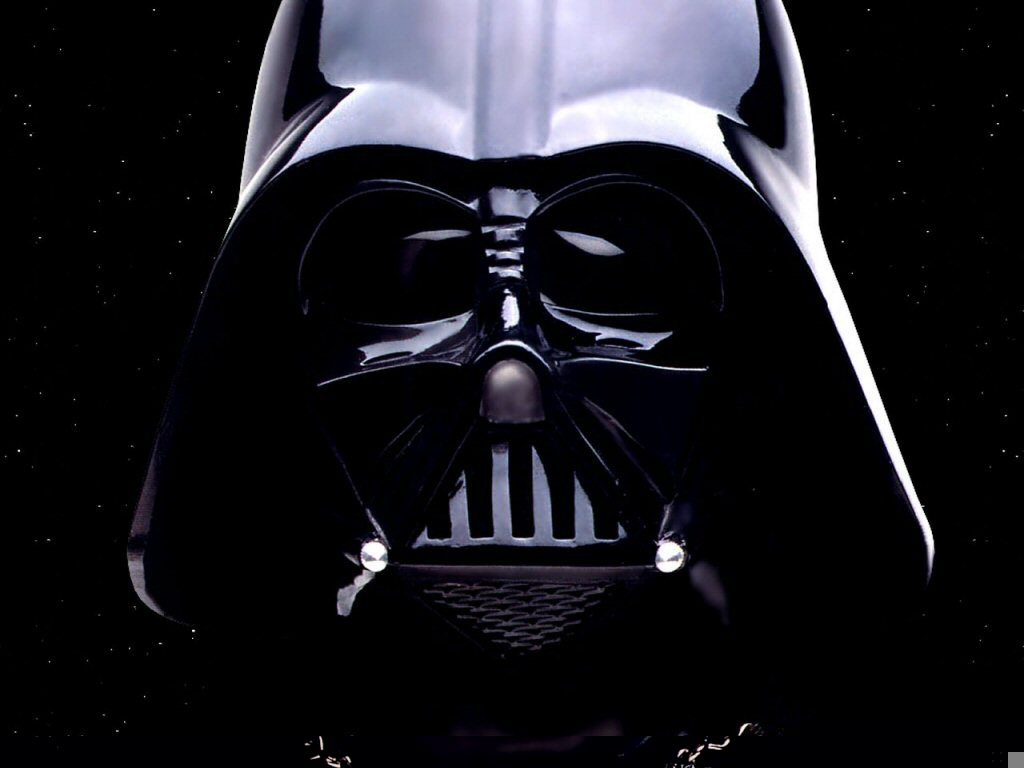
OK, this guy gives me the creeps, but he is kinda cool…

A lot of first-time novelists — and many bad Hollywood films — make the mistake of painting villains in two dimensions, with no redeeming or aspirational qualities. But if you think about your favorite bad guys, many of whom have already been mentioned in this killer blog by other authors, the villains are pretty damn interesting.

Often it’s their power. Darth Vader might be evil, but he sounds like James Earl Jones and can choke a guy from across the room, just by bringing his fingers together. Who doesn’t want that power the next time their boss (or spouse) berates them?

Sometimes it’s their charm. Think of Alan Rickman in the first Die Hard movie. Smart, funny, even likable — but still a convincing villain willing to kill scores of people just to steal some money. Now try to remember the bad guy in the second Die Hard movie, then give up immediately because it sucked. The series didn’t get back on track until they brought some personality back to the villains.

Bigger and better

It’s not only OK, it’s essential that the villain be better than your protagonist in some way — smarter, stronger, perhaps more money or charm. Or perhaps just more determined.

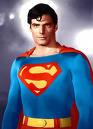
Lex Luthor is a lot smarter than Superman. The Joker less conflicted than Batman. Hannibal Lecter is less prone to acid reflux than Special Agent Starling.

But it’s the contrast that’s important, the juxtaposition of qualities you loathe with characteristics you wish you had. A great villain makes you hate them at a visceral level because, deep down, part of you envies them as well.

Don’t fall in love

Your antagonist is not your protagonist. Say this again like a mantra before you write another chapter.

Caveat — this isn’t about all the superb novels and films in which a flawed character follows an arc of redemption — recognizing that most great stories since The Odyssey have been about that inner quest. This is about writers who fall in love with their villains to the point that they sacrifice some of the moral repugnance needed as an essential ingredient for a memorable bad guy.

(Easy example is Hannibal Lecter in any of the titles written after Red Dragon and Silence Of The Lambs. If those books had been written first, he wouldn’t be the icon of evil he is today.)

I want to be intrigued by your villain, but I also want to feel some self-loathing or fear at my own attraction to him.

The killer inside me is also inside you

I believe reading or writing crime fiction is cathartic. It is the literary genre driven by a moral compass that finds true North in the heart of the characters. Ordinary people in extraordinary circumstances making impossible choices.

Crime fiction can also reinforce a set of values shared by most people but which often aren’t politically correct. Reading Lee Child might satisfy your own personal sense of justice that’s frustrated by the countless slights and indignities of everyday life. Reacher can do the things you only imagine doing but which you know are right. Rules or no rules, he’ll see that the right thing gets done.

But another great aspect of crime fiction is that it lets you work out your inner demons, especially the ones you didn’t know were there. It’s a sidelong glance in the mirror for those of us who don’t always want to look ourselves in the eye when shaving. That’s where the villains come in.

The brilliant Patricia Highsmith demonstrated with The Talented Mr. Ripley that every character believes he or she is in the right. They might be acting out of necessity, ambition, or some twisted sense of honor, but most villains don’t see themselves as being in the wrong, not in the absolute sense. I’m protecting my family has been a great defense for everything from bank fraud to suicide bombing.

Under the right (or wrong) circumstances, any of us is capable of doing horrible things. Great villains give you goosebumps not for what they do, but because something about them sends a frisson of recognition up your spine.

For one terrifying moment you saw yourself in them, and you felt the blood on your hands. And much to your horror and secret delight, it felt damn good.

Happy reading. See you in hell.

Special Note: Join us next Sunday, August 31 when our guest blogger will be international bestselling author and International Thriller Writers VP, David Hewson.

Person David Hewson
Right click for SmartMenu shortcuts

Real-Life Villains Translate Into Great Fictional Characters

The conflict between good and evil never fails to fascinate and thrill.

I love to write villains because they’re a lot more challenging and more fun to write than good guys. Making a villain frightening is easy, but making them somehow sympathetic is always a challenge. The bad guys may or may not see themselves as evil individuals, but they all somehow justify their behavior . If I write effective villains it’s because I’ve met a few in my life and they made one heck of an impression of me.

I think you have to have tasted evil, been laid open by it to write a good villain. I first encountered evil as an impressionable youngster, and it made its impression. As with the majority of young boys my father was the ultimate good guy–a liberal Methodist minister during the Civil Rights era. No big deal except for the fact that he was a preacher in the great state of Mississippi during that time. He made a moral stand and could not be moved by outside forces. He opened his church to blacks, and even sent ushers home who couldn’t go along. “This is God’s church,“ he said. “And it is open to all of His children.“ To me, and a lot of others, he was a flesh-and-blood Atticus Finch.

Ah, Mississippi in the sixties. I have always loved Mississippi. It was my first home, but it was in those days it was a paranoid schizophrenic setting. A lot of the people in Mississippi during that time were being robbed of their long-held convictions that white people were the bomb, and black people were subhuman. The other people throughout the state knew this was a flawed theory, but the prevalent historical viewpoint, passed down by their forefathers, and largely accepted. As a small child I thought Mississippi was an idyllic world. Small towns were great places to grow up. We children wondered the neighborhoods pretty much unmolested and unaware of the evils that surrounded us due to the fact that the media hadn’t yet discovered the value of scaring the cold crap out of the populace so kids weren’t encouraged to stay in their houses and grow sedentary and fat watching TV because parents weren’t under the impression that their homes were under siege by child-abducting pedophiles.

I ran across two pedophiles before I was a teenager. One of them was a man with limited intelligence who pushed his lawnmower all over Starkville, Mississippi. He wore a yacht captain’s cap and was cross-eyed and dentally challenged. Instead of calling this man “cross-eyes,” or “Captain Briggs and Straton,” we kids called him “Goober Puller” due to the way he was always straightening his equipment with his hand as he walked about searching for tall grass. One day he stopped and asked a group of us kids if any of us might be interested in being corn-holed. According to Mr. Puller it paid a quarter. We didn’t know what he was inviting us to do, so we laughed and ran off hollering “Goober Puller! Corn Hole! Corn Hole!” That night I related the story to my father, who had me retell the story to the police. Mysteriously, after that night anytime Mr. Puller saw any of us he would turn and rush off, pushing his mower down the street at amazing speeds. The second pedophile was a man who was the music director at my father’s church. He gave several of the male boys choir members masturbation instruction in his music room. His tenure was short, he was invited to leave the state, and I suppose he modified lots of young boys in Southern California for many years afterward. These men were certainly both villains. If they weren’t truly evil men, they were certainly evil doers.

At Boy Scout camp one year, carved into an upright post along with scores of other names, I read the name of a boy along with his troop number and home town. Other scouts had pointed out the name as it was one immediately recognizable. I had heard of the young man, John Mattox, from Columbus, Mississippi, who a few years earlier had been convicted of murdering a female socialite using a coat hanger. I remember feeling chilled to think that this young boy grew up to become a murderer and he had stood in that very spot years earlier and used a pen knife to leave his signature. I doubt at that point in his life if he imagined he’d be famous and be electrocuted at Parchman.

I was in middle school the year John Kennedy was assassinated. That year things were heating up in Mississippi, and people from the north were descending on the state in droves to change the way things had worked in the state for hundreds of years. The air was crisp with racial tension, and people were choosing sides. It was about changing one very complex, but large social evil against one larger good. My father chose easily–to behave as a Christian, and his public stance put him at odds with a lot of people, some of them very dangerous individuals.
One day in 1963, I walked the few blocks to middle school, and I was in a store across the street from the school, and I was buying candy. The owner was in the back of the small store and I was at the counter. A tall, skinny man entered the store and walked straight to the counter. He asked me if my father was “Red” Miller, and I said yes. My father had red hair, so I assumed he was referring to that. At this point the man grabbed my shirt and twisted the material in has right hand and lifted me off the ground so that we were literally nose-to-nose. I can remember the smell of liquor on his breath and the hate in his eyes. “Your daddy is a nigger lover,” he told me, adding something on the order of, “Tell him we know where you Millers live and if he doesn’t shut his communist mouth we’ll be visiting your house late one night real soon.”

I remember the store’s owner rushing up and yelling at the Klansman, who set me back on the floor, left the store and got into a car with several other people. The store owner called my father, who came to the store and took me home. The store owner told the police who the man was–a known lowlife Klansman–and some time later my father told me that the man who’d assailed me had passed out with a lit cigarette in his hand and burned up in his plaid recliner. So, not only had I seen the face of evil–and smelled its breath–but I got the distinct impression that God had punished him for his evilness, which also gave me a sense of divine justice.

In 1982 I spent a day on Death Row at Angola, Louisiana photographing Death Row inmates who were in lined-up cells waiting for the executions to start up again after years of them having been stopped cold. After over a year lining up permissions from inmates, attorneys, and prison officials, I set up a formal studio with a backdrop and lights in the main hallway on “The Row.” I photographed those men wearing street clothes, and there is nothing in the pictures that lets the viewer know these men are anything but normal individuals in average circumstance, not men awaiting their scheduled deaths. There is nothing at all frightening or threatening in their eyes or their expressions that would telegraph the horrific acts that put them on Death Row. I always look at the pictures and wonder why murderous history doesn’t show through. All of the men–now long executed–looked like anybody you’d see anywhere. Normal. Not at all evil. Not at all. Killers, once in captivity seem to be extremely personable individuals.

Often, when I speak to book-loving groups, I tell the Klansman-in-the-store story to illustrate why I write thrillers. As an author I am always trying to make my readers feel some of what I felt when real villains crossed my path, and I realized that they could do me serious harm. And I also realized at some point that my father wouldn’t always be there to make the world safe again. I have met more villains than I can count, and I do my best to protect myself and those I love from bad things and evil people to the best of my ability. Some evil is obvious, but most of the time it lies just beneath an innocuous and seemingly harmless surface. And sometimes the most dangerous things come to us with open arms and a smile. But seeing evil first hand allows me to write about threat and fear. Evil isn’t usually all that well defined, and it certainly is not simple. Villains should be complex, and human, and understanding them well enough to adequately portray them (in words) remains the ultimate challenge for writers.

I Like Complex, Competent Villains

By John Gilstrap

There comes a point in most stories where the villain and the hero face off and have a Dramatic Moment with each other. As many times as not, I find that beat of the story to be the nadir of the dramatic arc. In that moment resides definitive evidence of the writer’s strengths and weaknesses as a storyteller. I cannot count the number of times I’ve read some version of this: “Well, Detective Huffnagle, since I’m going to kill you anyway, there’s no reason for me not to explain all of the things that the author who created me couldn’t figure out a way to clarify more elegantly. . .”

I spent fifteen years of my life as a firefighter and EMT, cleaning up after the handiwork of killers. Figure a couple, three murders a year, and they add up over time. Never once did I process a witness report of a dramatic speech preceding the fatal blow, shot or stab wound. Real bad guys pretty much just step out of the shadows and do what they’re out to do in as lop-sided a manner as they can. They point the gun, pull the trigger, and the rest plays out at 9,000 feet per second.

In my own writing, I find that the most vexing challenge can be to find the motivation for my bad guy not to pop the good guy on sight and get it over with. Motivating him to take the shot is easy; explaining his last-minute collapse in marksmanship skill is tough. Remember that scene in Behind Enemy Lines when Lt. Burnett is sitting on the rock taking a break? Our enemy sniper has for freaking ever to zero in on his shot . . . and then he misses! WTF?! How am I supposed to respect a bad guy who’s so ridiculously incompetent?

Not to run counter to the opinions of my colleagues here on The Kill Zone, but in the creepy worlds created by Thomas Harris (one of the two greatest thriller writers of all time, in my opinion), Hannibal Lecter is a lightweight compared to Francis Dolarhyde (Red Dragon) or Buffalo Bill (The Silence of the Lambs). Those guys are ninth-degree nut jobs who don’t even realize that they’re being evil. Man, that’s scary.

The other best thriller writer of all time on my list is Frederick Forsythe, whose book, The Day of the Jackal, is The Perfect Thriller. In it, the whole villain thing becomes a bit murky–just the way I like it. On the one hand we’ve got an assassin out to murder the French president, while on the other we have state security forces who torture citizens to death in their zeal to prevent the murder from occurring. I defy you to point with one finger at the bad guy in that story.

As I write this, I think I’m deciding that maybe bad guys are over-rated, and serial killers are overdone. In the wrong hands, it becomes too easy to create a character who’s bad simply because he’s crazy. There’s no moral complexity. All else being equal, I’ll take a Dennis Lehane character any day over a serial killer: a morally-centered cop, for example, who shoots a child molester simply because he has the opportunity.

Maybe morality matters less when it feels so good.

Bad Villains…and not in a good way

Michelle Gagnon

Kicking things off today, I’m thrilled (no pun intended—sorry) to announce a SUPER DUPER BRAND NEW CONTEST. We’re holding a giveaway this week:
Comment on our posts from now through next Wednesday,
and we here at The Kill Zone will toss your name in the hat for a $50 gas card. I know, that’ll buy you what, roughly 2 gallons? Hey, don’t blame us. We’re not the ones gouging, just a loveable group of writers trying to give your wallet a break…

And now, on to…BAD VILLAINS

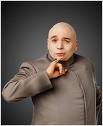
We’ve all seen them. Those beady-eyed little guys wringing their hands as they chortle (ever notice that? Heroes never, ever chortle. The minute a character does that you just know he’s evil). They generally want to take over the world, but might be willing to settle for killing someone in a particularly terrible way. And they’d just love to tell you all about it first. One classic bad villain trait is that they live to hear themselves talk. In my humble opinion what made the Austin Powers films so funny was the “Dr Evil,” character, who epitomized every bad villain cliché. (Remember the group therapy scene with his son? “My childhood was typical. Summers in Rangoon, luge lessons. In the spring we’d make meat helmets. If I was insolent, I was placed in a burlap bag and beaten with reeds. Pretty standard, really.”) Hannibal Lecter was scary, sure, but the ultimate villain has to be Dr. Evil. Who else could come up with an “evil petting zoo?”

For me at least, villains are the most difficult characters to create. The heroes and heroines, laughable/loveable sidekicks, and victims are easy, I could practically write those in my sleep (well, not really. But you know what I mean).

But a villain that comes off as frightening and not comical is a far different beast. It’s all too easy to slip into mwa-ha-ha mode. Worse yet is to have them engage in “monologue-ing,” explaining monotonously why they’re doing what they’re doing, and how they’ll get away with it (when of course, that discourse inevitably leads to their downfall).

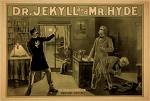
It’s harder still to avoid clichés. After all, since the beginning of recorded time nearly every story has featured a villain, from Medusa to Iago to Mr. Hyde. Joe’s post yesterday noted how many classic villains are fairly interchangeable. And that’s precisely the problem: how do you make your villain new and unique, not just another Hannibal-esque hybrid?

In my latest book, Boneyard, I had a particularly hard time. One of my villains came to life easily. I added some traits to him in successive drafts, but felt like I nailed him down without too much trouble.

And then there was the other guy. Man, he was a problem (serves me right for having two bad guys, I suppose). I had done voluminous research on serial killers in an attempt to make him as believable as possible, but kept encountering the same pitfalls. I felt at times like I was making villain soup, adding a pinch of Bundy and a dash of Dahmer, but he still seemed bland. Up until the final draft I cast him as a religious fanatic, quoting scripture to explain his motivation. But every time I read over his dialogue I found myself squirming. It felt very forced and contrived, never a good thing.

Someone once said, “the villain is the hero of his own story.” It’s an important thing to remember. We’ve all known people who have been able to justify terrible acts to themselves. They did it for the greater good, or they didn’t have a choice. To me, those are believable villains.

So I slashed away with my red pen, leaving far more of his motivations to the reader’s imagination. In the end, I was happy with him. But with every book the problem must be freshly confronted. I’m wrestling with a different guy now, a real slimeball who’s motivated both by greed and hatred. Yet at the moment he’s more whiny than scary, not a good thing. And he keeps pulling at his handlebar moustache and asking about the rent, which is just annoying. Ah well. Hopefully I’ll get him by the line edits…

So, dear reader, what say you? Who’s your favorite “bad villain,” and why? Remember: comment and your car might thank you for it later. Tune in next Thursday when I announce the winner and ponder why Second Life avatars only seem to come in one breast size.

The Best of the Worst–Villainy Week continues

By Joe Moore

As villains week continues in the Kill Zone, it’s time to discuss some of our favorite villains and what motivated them to be so villainy. Before we get to my list of favorites, let’s start with a review of some well-known rogues and scallywags. Of the books and movies we’ve all read or seen, which villains remain in our memory as truly great? Some obvious names come to mind:

norman-bates Dr. Hannibal Lecter. If he says he’d like to have you for dinner, have some reservations.

Norman Bates. He and his mother will shower you with attention.

Dexter Morgan. You don’t want him working on your case.

Darth Vader. Anyone that sounds like James Earl Jones with asthma can’t be all bad.

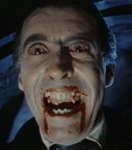
Count Dracula. What a pain in the neck.

dracula1Freddy Krueger. Maybe he’s just fashion challenged.

Lex Luthor. It takes guts to match wits with the “S” man.

These are some of the more memorable villains, but there are many others that may not immediately pop into your mind. Yet when you think about it, they are every bit as worthy of mention. They all have one thing in common–they scared us.

Here’s my honorable mention list along with their motivations:

Wicked Witch of the West. She was frightening enough, but her flying monkeys did me in. Like other great villains, she was out for revenge.

hal HAL-9000. “Open the pod-bay door, Hal.” Dave had enough to worry about. Add a computer with a mind of its own in outer space and you’ve got a really bad situation. Of course, HAL was just trying to protect himself. Self-preservation is a great motivator.

The Queen (Snow White and the Seven Dwarfs). Here’s a classic case of jealously. There can be only one “fairest of them all”.

jaws The Alien (Alien) and the Shark (Jaws). These two are pretty much the same character in different environments. What’s scary about them both is that they’re just doing what comes natural, but they’re doing it to survive in their world. In reality, the humans were the invaders.

Martians (War of the Worlds). Here’s another case of self-preservation. Their planet has gone down the toilet and they need a new neighborhood to homestead. First item on the invasion agenda: kill all the earthlings. BTW, other than the flaming passenger train scene, I thought the remake of this movie was not very scary. But when I saw the original version as a child, it had me cowering under my theater seat, especially during the basement scene.

Bonnie Parker & Clyde Barrow. Here’s a good example of anti-heroes. Yes we knew that B&C were bad. Yes, they robbed banks. Yes, they shot people. Yes, Clyde had E.D. But they were so lovable, you just had to sit back and watch them self-destruct. Sort of like a car wreck you pass on the highway.

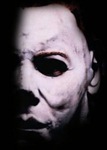
myers Jason Vorhees (Friday the 13th) and Michael Myers (Halloween). These two guys are also one and the same, just different masks. Both are out for revenge, although Michael’s hard drive has definitely crashed. I think they’re memorable because, unlike most villains, there’s no reasoning with either one of them. It’s like talking to a block of ice only with less response.

The Blair Witch. I know, most people thought this movie with its shaky-cam and cheesy documentary style was really lame. But if you got beyond the hype, it was built on the tried-and-true “haunted house” scenario that had some very scary undertones. Again, a case of self-preservation. And how many villains can you remember that frightened their victims to death without ever making an appearance?

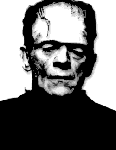
frankenstein The Frankenstein Monster. The ultimate anti-hero villain. The creature was created out of different human body parts justifying his extreme mood swings. Brilliant.

We can’t have a good story without conflict between the hero and the villain. Whether the villain is a person, place or thing, it must be compelling, three-dimensional, and driven by a motivational factor of which we can all relate. And in some dark recess of our mind, the villain must reach down, grab our fear, and expose it like a raw nerve. Otherwise, we might as well be watching Saturday morning cartoons.

Final thought from the master villain, Dr. Lecter, “A census taker once tried to test me. I ate his liver with some fava beans and a nice chianti.”

Did I miss any of your favorite villains?

Villain week, continued: What I love about bad guys

By Kathryn Lilley

Yesterday Clare asked us to describe our notion of the ‘ideal’ villain in fiction.

I’ll be honest—when I pick up a thriller, I want the slayer to be super-sized. My killer’s got to be so cold and bad-ass, he’s doing the Monster Mash all over the page, leaving behind a trail of bloody footprints.

Fiction-wise, that makes Hannibal Lecter my kind of evil doer. Also Dexter Morgan of Darkly Dreaming Dexter—and Dexter’s actually likeable as he plunges the blade into his victims.

I don’t know why I prefer to read about fictional villains who are larger than life. Maybe it’s because I came of age in the seventies, an era when serial killers seemed to be stalking the nation’s youth as well as our collective psyche via the nightly news. Ted Bundy, David Berkowitz, John Wayne Gacy, and later the BTK Killer—each psycho’s saga chilled me to the bone. I started to dwell on all the ways I could possibly die at the hands of a cold sociopath. I probably got way too carried away with my projections, to the point that I’d scan the faces of charming, needy young men and smiling clowns, searching for signs of a hidden killer within.

It’s the recreation of that goose-bump factor that gets my reader’s juices flowing these days. But I also know that there’s no lack of chill potential in “everyday” murders. To do some research for today’s blog post, this morning I pulled a book off my shelf called Scene of the Crime, Photographs from the LAPD Archive. It’s a picture book filled with vintage images of murder victims and crime scenes.

One photo and its caption from 1951 haunted me all day. A platinum blonde is shown slumped in the passenger seat of an automobile. A black rivulet of blood streams from one ear. According to the caption,her name was Libby. She’d been shot four times by her boyfriend, who’d left a message written on the back of a check:

“She died instantly,” her sweetheart killer wrote. “…painlessly and mercifully, happy with joyous thoughts that could never be brought to reality…The back of her head faced me. I looked at her beautiful new silver blonde hair and I squeezed the trigger…I have no beliefs other than that the end fully justifies the means. And a few paltry dollars made her so happy!”

Now that’s chilling.

Breaking News: Last week’s winner of DYING TO BE THIN

Seanchai won last week’s contest for a copy of DYING TO BE THIN over at the Kill Zone!

Seanchai, send me your mailing address and I’ll mail you a signed copy this week! (I tried to post a notification to your blog but I couldn’t get it to post). Best, Kathryn

Villain week, continued: What I love about bad guys

By Kathryn Lilley

Yesterday Clare asked us to describe our notion of the ‘ideal’ villain in fiction.

I’ll be honest—when I pick up a thriller, I want the slayer to be super-sized. My killer’s got to be so cold and bad-ass, he’s doing the Monster Mash all over the page, leaving behind a trail of bloody footprints.

Fiction-wise, that makes Hannibal Lecter my kind of evil doer. Also Dexter Morgan of Darkly Dreaming Dexter—and Dexter’s actually likeable as he plunges the blade into his victims.

I don’t know why I prefer to read about fictional villains who are larger than life. Maybe it’s because I came of age in the seventies, an era when serial killers seemed to be stalking the nation’s youth as well as our collective psyche via the nightly news. Ted Bundy, David Berkowitz, John Wayne Gacy, and later the BTK Killer—each psycho’s saga chilled me to the bone. I started to dwell on all the ways I could possibly die at the hands of a cold sociopath. I probably got way too carried away with my projections, to the point that I’d scan the faces of charming, needy young men and smiling clowns, searching for signs of a hidden killer within.

It’s the recreation of that goose-bump factor that gets my reader’s juices flowing these days. But I also know that there’s no lack of chill potential in “everyday” murders. To do some research for today’s blog post, this morning I pulled a book off my shelf called Scene of the Crime, Photographs from the LAPD Archive. It’s a picture book filled with vintage images of murder victims and crime scenes.

One photo and its caption from 1951 haunted me all day. A platinum blonde is shown slumped in the passenger seat of an automobile. A black rivulet of blood streams from one ear. According to the caption,her name was Libby. She’d been shot four times by her boyfriend, who’d left a message written on the back of a check:

“She died instantly,” her sweetheart killer wrote. “…painlessly and mercifully, happy with joyous thoughts that could never be brought to reality…The back of her head faced me. I looked at her beautiful new silver blonde hair and I squeezed the trigger…I have no beliefs other than that the end fully justifies the means. And a few paltry dollars made her so happy!”

Now that’s chilling.

Breaking News: Last week’s winner of DYING TO BE THIN

Seanchai won last week’s contest for a copy of DYING TO BE THIN over at the Kill Zone!

Seanchai, send me your mailing address and I’ll mail you a signed copy this week! (I tried to post a notification to your blog but I couldn’t get it to post). Best, Kathryn