Traveling

by Clare Langley-Hawthorne

Apologies but I am on my way to Tucson so won’t be posting today but I will be back next week blogging again!
Cheers
Clare

How Many Brands Can an Author Have?


Last week I wrote about the re-launch of my first series, co-authored with Tracie Peterson. City of Angels, Book 1 in the Trials of Kit Shannon series, is now available for the intro price of $2.99 on both Kindle and Nook.
Which raises (not begs!) the question: can an author today have several brands?
Back in the “old days” (like, before August, 2010) branding was a key concept in the traditional publishing world. Still is, actually. That’s because a publisher trying to make money with an author has to build a repeat readership, and that’s done over time, book by book. 
Take a hypothetical author. Let’s call him Gil Johnstrap. He comes out with a terrific first novel, a thriller about a boy on the run from the law. A fan base starts to form and they eagerly await his next book. If that book were to be about a horticulture competition in Surrey, England, circa 1849, they would tend to be confused and frustrated. They might decide to skip the next Johnstrap because they’re not sure what it contains.
So Gil and his publisher come out with another thriller, this one about a family on the run from the FBI. Fans buy it and are happy. They start spreading the word to other thriller fans about this Johnstrap fellow. The growing base looks forward to the next thriller. And so it goes.
Now, if an author becomes overwhelmingly popular, like a King, Grisham or Patterson, they earn the right to try, on occasion, something “off brand.” King might write about a girl lost in the woods. Grisham about a painted house. Patterson about whatever the heck he wants—I have a feeling his parking tickets would sell a million copies.
But the publishers will insist on getting “back on brand” with the next book, because that is the bread and butter for them, the guaranteed sales.  
Cut to: today. And e-publishing. What is the state of branding now? Let me start with my own experience.
I have been writing contemporary suspense, like the Ty Buchanan series for Hachette and Deceived for Zondervan. I’ve now augmented those books with novella/short story collections I’ve self-published. These all fall into the suspense category, so they are complementary. They make new readers for the traditional work. Everybody wins. 
I’ve self-published a couple of boxing stories, because I like writing them. These make me new readers for the rest of my work, too. They do absolutely no harm to the print brands. Plus they bring in nice-dinner-with-my-wife money each month.
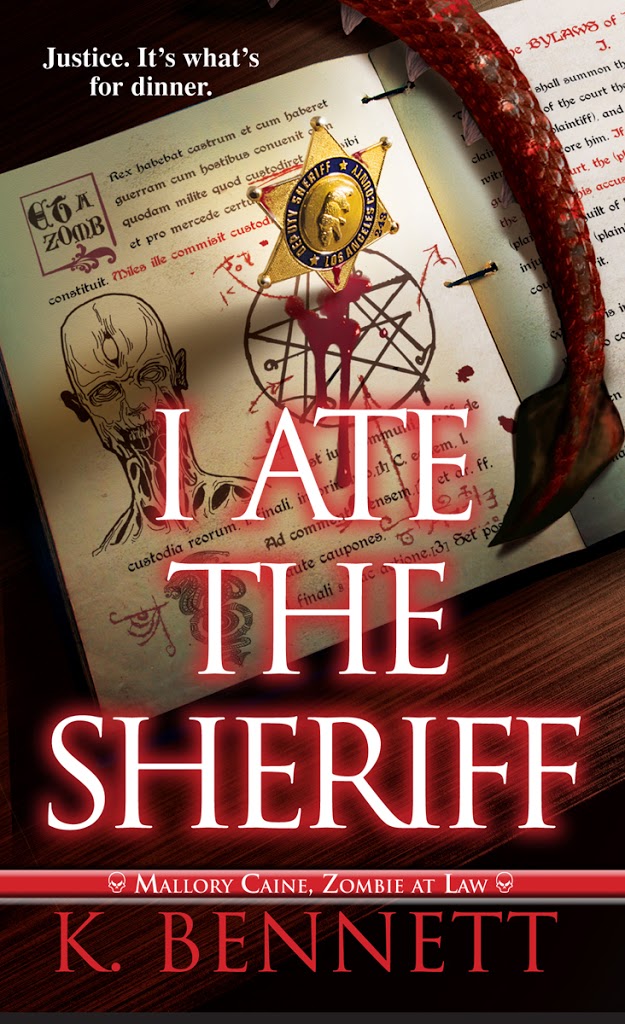
I write zombie legal thrillers under the pen name K. Bennett for Kensington. I plan to augment these with short, paranormal stories. These stories will make new readers for the novels. Once again, both publisher and author win.
As mentioned up top, I’m re-launching the historical romance series featuring Kit Shannon, six books in all. I daresay the readers of the Kit Shannon books may find the Mallory Caine, Zombie-at-Law books a tad “off brand.” But that’s okay. Two different audiences, but with potential cross-over. And no harm, no foul to either brand.
I do non-fiction for Writer’s Digest Books. I support those books with articles for Writer’s Digest magazine, my regular Sunday column here at TKZ and on Twitter (where I’ve also developed a strategic brand). Again, everything working together.
So: Can an author today juggle several brands?
My answer: Not only can, but should.
Branding in the days of print-only was partially determined by physical shelf space and seasonal purchases. An author could not come out with several different titles at roughly the same time. Bookstores wouldn’t buy. And they’d be a bit confused. If Gil Johnstrap did write that horticulture novel, A Garden in My Heart,would it be placed on the thriller shelf next to his other titles, where fans would look? Or on the romance shelf? Or in “Gardening”?
But there are no such limitations in the digital world. All books are “shelved” cover out. Digitized books are given, via algorithm, space next to similar books. A reader can find new authors in a genre this way. Quite easily.
An author can distinguish between his brands via cover art, book description, tagging, and even a pseudonym.
John Locke, poster boy for self-publishing success, writes contemporary thrillers and Westerns. Just like Robert B. Parker did after he became a household name with Spenser.
As I said a couple of years ago, this new e-publishing era is a lot like the old pulp fiction days. I look back at a Depression-era writer like Robert E. Howard. He wrote stories in the fantasy, horror, detective, western and boxing genres. All of ‘em. And made a living. That can be done again, now, in today’s e-world. It’s a great time to be a writer who loves to write.
There is only one fly in this ointment: a traditional publishing contract with a boilerplate non-compete clause the publisher is determined to enforce. I know some writers in this predicament. And while I understand that publishers are undergoing paradigm shock right now, this is not the best reaction. Publishers should be willing to re-negotiate these clauses so their writers can earn extra income and make new readers without harming the brand they are creating together.


Publishers who make an investment in an author do deserve consideration and protection. They deserve the author’s best work (non-diluted by overwriting). And they are entitled not to wake up one morning to find their author selling a novel in the same genre for 99¢. Authors need to appreciate the harsh business reality of traditional publishing. 
All that said, I see no reason why writers cannot be strategically developing different brands for their digital platform, and have fun doing it. Nor do I see a reason for publishers to resist sitting down with author and agent and hammering out contractual language that is fair to both sides on this matter.


Now I’m going to run a warm bath, put on some Yanni and relax with A Garden in My Heart.

What Floats Or Sinks Your Boat

We are going to keep this blessedly (or relatively) brief  today. Tomorrow, April 1, if all other things remain equal, I will mark twenty-one years of sobriety. I used to think that I couldn’t write unless I drank. I got a lot of typing done in those days but not much writing. Now I can’t write — or type or much of anything else — without coffee. I recently found a new brand of same called Revv Pulse which I liken unto mother’s milk.  I get a lot more writing done these days, for better or worse.

My question to you: what, if anything, do you use to kick start  the creative portion of your day? Coffee? Tea? A cigarette? Alcohol? Television? Radio? Music? How did you discover that it worked?
Before I go…if you are having trouble in your career and think that at least part of the problem might be due to alcohol abuse or addiction there is a questionnaire online that you might want to peruse. It can be found at alcoholism.about.com/od/tests/a/quiz_alcoholic.htm. It’s not a diagnosis tool, by any means; consider it a flashlight that you can use when you’re in the dark and trying to troubleshoot why the electricity isn’t working. If you need help, then consider checking out something like https://www.werecover.com/. Also: I’m happy to discuss my own experiences if it would be of any help to others. I can be reached at josephhartlaub at gmail dot com.

Title Trauma

By John Gilstrap


I have a hard time with titles.  To date, of the nine books I’ve published, only three bear the titles I proposed.  Here’s the history:


Mine: Nathan!
Title: Nathan’s Run


Mine: Most Wanted
Title: At All Costs


Mine: Even Steven
Title: Even Steven


Mine: Scott Free
Title: Scott Free


Mine: Six Minutes to Freedom
Title: Six Minutes to Freedom


Mine: Grave Danger
Title: No Mercy


I confess that after No Mercy, I stopped trying.  My working titles became Grave 2, Grave 3 and Grave 4.  My editor came up with Hostage Zero, Threat Warning and Damage Control.  I love them all, but I’ve come to embrace my limitations.  And typically, the title is just about the last element of the book to be written.


When Damage Control hits the shelves in June, though, it will contain the first chapter of the book that will come out in 2013–the one I have been writing under the title, Grave 5.  That’s a little under-inspiring, so we had to scramble to come up with a title earlier than we usually do.  Since the book deals with some issues regarding the first lady, I thought I had a winner: First Traitor.


Everyone was excited until we said it out loud, and we realized that the title would be heard as First Rater.  That’s bad for radio interviews.


In the end, we decided on High Treason.  I love the title and I am utterly shocked that it hasn’t already been used for a big thriller.


Here’s what I’ve come to understand about titles: It’s more important for them to be compelling and cool that it is for them to apply directly to the story.  The clearest example of this in my writing is Hostage Zero, which actually means nothing, but sounds very cool.  The title has done its job when a reader picks up the book and reads the back cover and thumbs through the first chapter.  That’s where the buying decision is made.


What do y’all think?  I know writers who can’t write unless they’ve got the title nailed down.  I also know writers to fight for the title of their choice, even though their choices are often not very commercial.


How do you deal with titles?

The Unseen

by Jordan Dane

I am writing the final chapter of my latest project. INDIGO AWAKENING is Book #1 in THE HUNTED series for Harlequin Teen (Fall 2012). I love and hate finishing a book. There is such joy in making the final revision. It’s a real sense of accomplishment that launches me into a euphoric state that lingers. I also tend to procrastinate finishing because I never want to let the world and the characters go. The beauty of this project is that I get to keep the fires burning with a series.

To celebrate, I like to do something special to mark the occasion. As luck would have it, I’ve found the perfect thing. New York Times Bestselling author, Heather Graham, will be in San Antonio on Monday, April 2, at 7PM at the B&N LaCantera to sign her book THE UNSEEN. I made a date with my husband to have a nice dinner too. (Writing a book is taxing for a spouse too.)

THE UNSEEN is set in San Antonio. That alone is enough to give me goose bumps. Heather graciously blurbed my debut book – NO ONE HEARD HER SCREAM – before I had my first book on the shelf. I will never forget her kindness. An author of her caliber, I didn’t know what to expect. As an author, I’m always prepared for rejection, but her generosity blew me away.

Here is a summary of the plot for THE UNSEEN (Mira, Mar 27, 2012)

1800s. San Antonio, Texas: In room 207 at the Longhorn Saloon, in the long shadow of the Alamo itself, a woman renowned for her beauty was brutally murdered. Her killer was never found.
 

One year ago: In that same historic room, another woman vanished without a trace. Her blood was everywhere…but her body was never recovered.

Now: In the last month, San Antonio has become a dumping ground for battered bodies.

All young women, many of them long missing, almost all forgotten. Until now.

Texas Ranger Logan Raintree cannot sit by and let his city’s most vulnerable citizens be slain. So when he is approached to lead a brand-new group of elite paranormal investigators working the case, he has no choice but to accept the challenge. And with it, his powerful ability to commune with the dead.

Among Logan’s new team is Kelsey O’Brien, a U.S. marshal known for her razor-sharp intuition and a toughness that belies her delicate exterior. Kelsey has been waiting all her life to work with someone who can understand her ability to “see” the past unfolding in the present. Now she has her chance.

Together, Kelsey and Logan follow their instincts to the Alamo and to the newly reopened Longhorn, which once tempted heroes with drink, cards and women. If the spirits of those long-dead Texans are really appearing to the victims before their deaths, only Kelsey and Logan have the skills to find out why.

And if something more earthly is menacing the city’s oldest, darkest corners, only they can stop it—before more innocent women join the company of San Antonio’s restless ghosts….

“Graham deftly weaves elements of mystery, the paranormal, and romance into a tight plot that will keep the reader guessing at the true nature of the killer’s evil.”

—Publishers Weekly review on THE UNSEEN

I love stories set in San Antonio, my hometown. My debut book was set in SA and I saw the city with fresh eyes to tell that story. The creepy underpinnings of the paranormal is an added bonus, especially when written by such a gifted author. So my treat to finishing my book is Heather Graham and THE UNSEEN.

What about you, my TKZ family? Do you do anything special to celebrate the accomplishment of finishing a book? What is the wildest thing you ever did or would like to do for your next one?

Blog Touring

What are the results of my recent frenzied rush around the blogosphere? For Shear Murder, I have done 16 guest blogs since January 1st. This doesn’t count my own blogs. On my at-home printout, I’ve listed the numbers of comments on each site, so I would know for future reference which posts attracted viewers and how many. When I release a new mystery again, I’ll solicit the sites where I got a good response for another guest appearance.

Some topics didn’t do well, like interviews and my “pet peeve”, or cutsy talks with my sleuth. Other topics stimulated good discussions. These were more instructional pieces. I wrote a new article for each site so they were all different and related to my new release in some way. I’ve had people say that my humorous mystery sounds like fun and they’ll look it up, so I really believe this tour got me exposure and introduced my work to new readers.

I feel my own blog connects me to readers and aspiring writers who like my posts on writing craft and business of writing. Those articles attract the most viewers. It’s brought me a “Klout” score of 50 especially in Writing. I mix these discussion topics with places I visit in Florida. The downside is that I spend time writing blogs instead of writing my next book. And people are probably sick of “take a look at my blog” posts by now. Do I feel it helped sales? Maybe. Certainly, I gained exposure and the tour contributed toward name recognition. Will I do it for my next book?

Ah, there’s the question. My next release will be a paranormal romance. I do need to gain exposure among those readers. I already have a list of potential topics (which I advise you to jot down as you’re writing your next book). I can look at my previous blog tour in that genre and see who to approach. However, right now, it’s enough to do my personal blog and this one. Writing blogs instead of the next story sucks away creative energy. To launch a virtual tour, you have to solicit hosts, write the pieces, publicize the tour, and then show up each day to answer comments. That level of time commitment may not be suitable for everyone.

But for those of us who jump on the blog tour bandwagon, it’s great to support each other. If you want to get more involved, check out the Book Blogs site. And please offer any tips or insights here that you’d like to share on blog touring.

Listen: Let Your Ears Do The Writing In Ten Easy Steps

By: Kathleen Pickering  www.kathleenpickering.com

danDo you want to know a secret? I visualize a collective leaning forward with a hand to ear, to which I’ll whisper: “If you want to find a good story, listen!”

Where co-blogger, James Scott-Bell, spoke in his last blog about listening to your characters as they unfold to bring their story to life, I’ll discuss how listening to the world around you can uncover a story.

I can guarantee you that every published author you meet will tell you how something they heard triggered a novel. If folks wonder how an author can accept a multi-book contract without even knowing what they’ll produce, it’s because authors listen as intently as they write. Stories are floating all around you: in the news, eavesdropping on a conversation in a restaurant, elevator or train, chatting with  colleagues at work, conferences, with strangers, or for me the best source—family drama.

Sometimes I’ve spoken with people who tell me something they’ve never told others before, and they’re suddenly shocked that they’ve revealed their story. That’s because I have honed listening skills that make others comfortable in talking with me. Please understand, I don’t listen to folks to elicit deep dark secrets (though that would be nice!) but, because long ago, I discovered that I find people fascinating. No joke. I love to listen to what others have to say. If I’m talking with you it’s because I am genuinely interested in you.

A few years back, we were on vacation in Montana. From a single question I asked the cook at the dude ranch I learned that she was hiding from her drug dealer husband way down in New Mexico. This woman’s story spawned one of the proposals that Harlequin bought in my three book contract. Added bonus? A family member is an undercover narcotics detective who is telling me specific details to give the story life. Am I listening? You bet!

The next listening coupe was from my niece. She is an emergency room nurse who had a bout with cancer and survived. (YAY!) Listening to her recount her determination to outwit her fears and stay courageous during her treatment became book two of my Harlequin proposal. And, the love story that grew from her ordeal is so romantic it gives me goose bumps. I can’t wait to write the book based on her story!

The third plot hit me unexpectedly. I was discussing with friends the plight of rape victims who become pregnant and learned that several US states have no laws protecting women from rapists seeking custody of children born from their attack. Not only did this make me want to use some of Steven King’s horror tactics to stop such an atrocity, but hearing this information ignited the first of the three proposed novels I’ll be writing for Harlequin.

So, if you want to tap into a world of stories waiting to be written, then listen. And listen well. There are two approaches to good listening. One for business, one for empathy. I use both. Here are the first five steps offered by business consultant, Bernard Ferrari, to hone listening skills. These work exceptionally well when interviewing someone:

1. Show Respect. If you’re seeking information, let the person to whom you are speaking know that you value their knowledge and/or opinion, so are asking for their response. That way, they understand your agenda.

2. Listen to Everyone. Developing a good rapport not only with folks in the industry, but anyone in your sphere of existence lays the groundwork for “nuggets of gold” to surface in conversations.

3. Be Quiet! Even though as an excellent story teller, you can “top this” in sharing stories when someone is speaking, refrain! Let your conversation partner speak for 80% of the time. Use your 20% for thoughtful interaction. Remember, you are the one listening here.

4. Understand Emotions. Avoid having important discussions when you are tense, angry, upset or frightened. These emotions will distract you from listening. Sometimes it’s better to know when you should postpone and reschedule an interview (or listening) opportunity.

5. Ask Questions. When you are listening well, asking questions helps bring forward new facts. Even if you disagree with the speaker, phrasing your response with a question shows you are open, flexible and interested in their point of view. A well phrased question can also help the speaker think in a new way or reach different conclusions.

Now, for the second approach to listening, I have learned that in making an emotional connection, the most important fact to remember is to listen to others how you would want them to listen to you. Here are five additional steps to creating an emotional connection with your conversation partner:

6. Body Language. Face the speaker, sit straight or lean forward to show your attentiveness. (Actually, as a good listener, this happens automatically because you ARE interested!)

7. Maintain eye contact. You don’t have to drown in those limpid pools, but while someone is speaking stay glued to the discussion. Don’t let your eyes wonder over their shoulder, or stare at the floor or passersby as they talk. We all know what that feels like. It’s an instant turn off to the person speaking.

8. Create an empty space. This is my most favorite tool for listening. I start a conversation with absolutely no expectations of what my partner will say. It’s what I’ve learned to call an empty space between speakers. The response I get from my question can host a tapestry of answers; all from which new threads of conversation can be lifted. If you have expectations of what your partner will say, it clouds the clarity of information opportunities. You end up unconsciously steering the conversation, or worse, not fully hearing what was said.

9. Minimize external distractions. If your conversation is over a meal, or while giving a workshop, put down your fork for a minute to listen, or stop flipping through your notes while a question is being asked. Again, it’s the one-on-one message you give while listening that keeps the comfort level engaged.

10. Mirror the response. To ensure the speaker that you understood his statement or question, it helps to say, “So, what you’re saying/asking is . . .” and repeat their statement in your own words. This gives the speaker an opportunity to clarify a misunderstanding, or better yet, confirm that you understood. Again, mirroring shows your conversation partner that you are interested in what he/she is saying. It not only connects them with you, but enriches your understanding of the person about whom you’ve taken time to learn more.

Every listening encounter is a learning experience. Every listening encounter is a chance to connect with your world. Can you tell us here on The Kill Zone when a listening encounter spawned a story for you?

I am listening.

Write on, my friends!

xox, Piks

Agent Timelines

by Clare Langley-Hawthorne

Recently a friend sent off a manuscript to an agent and asked me how long she should wait before sending it out to other agents. Under normal circumstances, I would have said she could send out simultaneous queries, but this agent was a referral who had requested the entire manuscript so I counselled her to wait to give this agent a decent chance to respond. But, she asked, how long should I wait? 


Good question. How long should you wait to hear back from an agent before you start following up/move on/feel resigned to your fate?


I’m not sure I have the answer – all I can say is that, in my experience, authors are (by and large ) an impatient lot and agents are (by and large ) an extremely busy lot who can take their sweet time in getting back to you. So today’s blog is about expectations as to agent responses (and I’d love to get some feedback from my fellow TKZers on what is a ‘reasonable’ response time). I think (as a pretty impatient author myself) it can be tricky knowing when to expect a response from agents, particularly when you are a debut author.


When I first sought out an agent I had no idea what to expect but, after I had some requests for partials following on from the SF Writer’s conference, I sent out my material and waited. I had some responses within couple of weeks but the agent I eventually signed with took close to 6 weeks to respond. I even had one agent (the outlier!) who contacted me months later to ask if I had representation yet! (Then again, an editor did contact my agent a few weeks before my first novel was due to be released expressing interest in the manuscript so I wonder if their isn’t an alternate form of time known as “publisher and agent time” out there in the ether!)


Obviously, if you haven’t heard from an agent within what you think is an acceptable time period you should follow up with a professional email (no – “why have you not bothered to contact me, can’t you tell my work is genius?!” emails please!). I think it’s also perfectly fine to ask them for an estimated date that you could expect to hear back from them – though be aware, you may not still not receive any response.


So what do you think are reasonable time frames for an agent to respond to:

  1. An initial query letter; or
  2. A partial manuscript; or
  3. A full manuscript and (hopefully later on…any subsequent manuscripts you send!)

How long have you waited for an agent to respond?

How to Develop an Enduring Series Character

James Scott Bell
Twitter.com/jamesscottbell


Today, through the wonder of digital publishing, I am announcing the re-birth of my first series character. City of Angels, Book 1 in the Trials of Kit Shannon series, is now available for an introductory price of $2.99 on both Kindle and Nook.


Let me give you the background.

I was writing stand alone legal thrillers for the CBA (Christian Booksellers Association) market, and was trying to think of a series idea. I noticed (it’s not hard to notice!) that the majority of readers in this market are women (even more than in the ABA market), and that the most popular genre of the time was “prairie romance.” This genre was set in the 1800s (think Little House on the Prairie). The usual lead character was a young woman of marriageable age, pluckily using her faith and grit to overcome challenges and find true love.
As I pondered that, it seemed to me that genre could move forward, historically speaking. One slice of history that has not been given its due is the story of my own home town, Los Angeles. It’s a great, rich tapestry, fascinating and colorful. Especially when it comes to courtrooms and the law.
So I came up with this concept: a young woman comes to turn-of-the-century Los Angeles with a determination to practice law. It was a perfect historical moment, rife with conflict, because at that time women were barely getting into the legal profession. There was a lot of male resistance to the idea. And Los Angeles in 1903 had all sorts of fascinating cross currents. It was moving from western boomlet toward urban adolescence. There was high society and low criminality. It was then (and still is) a city for dreamers and charlatans alike.
My idea, then, was to follow this young woman from her arrival in L.A. through the growing pains of the city. This would mirror her own growth and quest to practice law. I would include real, historical figures in the plots (e.g., William Randolph Hearst, Earl Rogers, Teddy Roosevelt, Houdini, John Barrymore).


Those are two key components for an enduring series character: setting and vocation. You need to know the nooks and crannies of your setting so it can take on the feeling of being another character in the story. And readers love to see authentic details about a character’s work life.


Research, friends.  
I began to picture this woman in my mind. I wanted her to be of Irish descent, so she had some fire in her. I wanted her to have auburn hair and green eyes. And I wanted to name her Kit Shannon.
When I could see and hear Kit, that’s when I really started getting juiced about the project. Which is another secret of an enduring series character: you, the author, have to be truly and deeply excited about her. You ought to be thinking about her even when you’re not writing. She must be someone you  have to write about. If she’s not, that lack of zest will be evident in your pages.
So I created a proposal and pitched it to an editor I knew who worked at the leading publisher of prairie romances, Bethany House.
Well, they liked the concept. But they saw a challenge. I was a male author entering a primarily female genre. So they asked me if I would consider co-writing the series with one of their popular female authors. She could, they explained, help me develop a voice for the genre and also introduce me to a good-sized readership.
I was a bit skeptical, but they offered to fly me and the other author to their home offices for a meet-and-see.
Which is how I met the wonderful, marvelous, humorous, generous Tracie Peterson. We hit it off immediately, and I mean right from the get-go. We signed a three book contract and off we went.
Tracie and I worked exceedingly well together. We brainstormed plot ideas, then I wrote a “lean” first draft. Tracie added her “layers,” a lot of which were descriptions of the era’s dress and etiquette, and more generally a woman’s point of view and voice. I then did a final going over the manuscript, cleared up any questions, and submitted to our editor. (What was nice was, by the time the third book came out, I’d gotten the hang of the voice myself. So when it came time to contract for another three books, Tracie handed the series over to me to do on my own).
When Bethany House showed me the cover art for City of Angels I was absolutely gobsmacked. Because the model looked exactly the way I’d pictured her.

And when City of Angels came out, it hit the CBA bestseller list. Women readers told me they loved this updating of the prairie romance heroine. Which is another secret of an enduring series character: make them fresh. Give them some nuance or trait or drive that is original, not just a repeat of what we’ve seen before. 
I did make new readers from City of Angels, including among the younger set. In fact, Tracie and I got several letters from high school age girls who said Kit Shannon was inspiring to them. One wrote that the book helped her “not to be afraid of what others think if I’m sure of my calling.” Another wrote that Kit inspired her to pursue a dream of going to law school. 
Which is why it is now my pleasure to re-introduce Kit Shannon to a new generation of readers. I hope to have the entire series out by the end of the year:

The courtrooms of 1903 Los Angeles are a man’s world––until Kit Shannon arrives
With shoulders squared and dreams set high, Kit Shannon arrives in Los Angeles feeling a special calling to the law. Yet under the care of her socialite aunt, Kit quickly comes to realize that few understand her burning desire to seek justice and practice a profession known only to men. When her aunt adamantly refuses to support her unconventional career aspirations, Kit questions whether she is truly following God’s will. And when her growing love for a man pledged to another threatens scandal, Kit knows her days might be numbered in Los Angeles.
A chance meeting with Earl Rogers, the city’s most prominent criminal lawyer, garners Kit an apprentice position. And work on a notorious murder case. Someone has been killing prostitutes in Los Angeles, but Kit is certain it is not Rogers’ client. Determined to find the truth, Kit runs full on into forces that want to stop her, forces that stretch all the way to the citadels of power in the City of Angels.
“…a great story, historical fiction plus legal thriller in the style of John Grisham.” – WorldHistoricalFiction.com
City of Angels is a full length (90,000 word) novel at the launch price of $2.99.

STEAL THIS BOOK. Oh, you did? My Stepmom Died on Facebook. I’m about to co-write a supernatural thriller.

John Ramsey Miller

Here’s one for ya. My stepmother, JoAnn, died a week last Monday. I dearly loved my stepmother. She was an intelligent, humorous, loving, and wonderful woman. She was as responsible for my writing career as anyone because she loved my writing and said so. She pulled stacks of my work out of the burnpile and gave them to me years later. (I later burned them). We shared a love of literature. She was a yellow-dog Democrat and I a Republican scally-wag, but she never held it against me, and we got along just fine. My father died several years ago and she moved out to Texas to be near her Texas-living daughter. I found out that she was sick and I asked my stepbrother to keep me posted and to give her my love. I found out on Friday when someone my sister knows saw my stepmother’s obit in the Jackson Clarion ledger. When I blasted my step-brother for not bothering to tell me she passed away he said, and I quote: “I posted it on my Facebook page on Monday.” The funeral was a private affair, and I was not invited. Holy Shit Bat-woman. Needless to say my step-siblings don’t care much for me. But I love them anyway. Well, at least I can write that book I always wanted to write but wanted to wait until all of the people who would be less than favorably portrayed were dead.

By the way, I am joining forces with Mark Tufo (one of my favorite supernaturalists) to pen a series of novels. Since I’m a long-standing fan of this guy’s work, I didn’t hesitate to agree to play in the sandbox with him. His genre and mine are in different locales on the literary map, so we are thinking we will be meet at the fence. He’ll be putting his best characters into the pasture, and I’ll be sending my gang into the same place. It should be quite a shot of ice water to the face for our fans on both sides. We’re presently working on how this is going to work on a practical level, but I’m thrilled to be doing something challenging with someone I admire.

I am using my best character or two, and taking them into a world they would have never believed existed. Can I take established straight thriller characters and put them into a bump-in-the -night world. We shall see and I intend to. The great thing about not being under contract is that one can experiment and do that which one would never ordinarily be allowed to do.

By the way, if any of my author buddies want T-shirts for promotion, my son has a new company and lots of tasty equipment. Use my name and get deals.

On Monday evening I received this from a tech-savy author friend’s wife email via my web site contact form. She runs his e-enterprises, and she is upset about how many of her husband’s novels are not being paid for.

Comments: FYI stolen books:

The Last Day, Too Far Gone, Inside Out,Upside Down, Side by Side, Smoke & Mirrors.
Downloaded average of 723 times each, last time 2 hours ago. Maybe your publisher can do something?

She went on to say: Most of the authors that you blog with on Kill Zone are on there. I wrote one of them as she had an easy contact to find. I can get you a list and you can pass it around if you so desire.

I forwarded the email to my editor and agent, but I expect if Bantam could stop it, they would have. There are more sites like this. That one site is responsible for a minimum of four thousand copies of my books being downloaded for free. I appreciate that so many people downloaded my books, and most downloaded all of them. That means dedicated fans. I have mixed feelings about this loss of revenue, which I, like most authors need in order to pay bills, which enables us to write more books for our fans–a % of which will download others of them. If we have the cow in the pasture, why buy milk. Cheese, which is hard to make, maybe, but not milk free for the tugging.

One way to look at this is that this is really no different than having a book someone buys, sharing it… often until it falls apart. If it is outside our control, should we worry about it?

Gosh, I’ve had a busy week on the farm.