Over the Top, and Right Over the Edge
Today TKZ welcomes author Laura Benedict, whose novels ISABELLA MOON and MR. LONELYHEARTS are both favorites of mine. Her latest, DEVIL’S OVEN, was just released.
When I was deep into the editing process with my first-to-be-published novel, I had a conversation with my editor that went something like this (And I definitely mean “something like.” I have a terrible memory, but I suspect he wouldn’t mind the paraphrasing.):
Editor: “We need to talk about Character X’s murder.”
Me: “Really? What do you mean?”
Editor: “You have the murderer roll Character X’s head across the kitchen floor so it stops at the heroine’s feet.”
Me: (Cackling nervously–something I would NEVER have a character do, but I definitely cackled. Nervously.) “I know! Isn’t it awesome?”
Editor: “Well, it’s certainly dramatic.”
Me: “It’s deliciously evil, don’t you think? It just came to me. Wild, huh?”
Editor: “You might want to think about writing the scene another way.”
Me: “Really? Why?” (My heart was sinking. I knew this wasn’t going well.)
Editor: “You already have one character being stabbed to death with a pitchfork. I think the detached, rolling head is, I don’t know, over-the-top?”
Me: “But it’s what the murderer does. He’s a murderous psychopath!”
Editor: “It’s not the kind of thing people expect in a book like yours. You would find something like that in a horror novel, not an upmarket thriller. I think you could pull it back a little and still have it be effective.”
Me: (Pouting in a most unprofessional way, yet knowing in my heart that he was right, dammit.) “I’ll give it a shot.”
In the end I listened to him because I really did know he was right. I had known the battle was lost before I even sent the revision in. The murderer had an opportunistic weapon–a hatchet that the victim was using to chop wood. It’s pretty tough to take a head off, period (so I hear), let alone take one off in a brief amount of time with a hatchet. It just seemed so diabolically fun! So surprising! Plus, the heroine isn’t all that bright and I had a good time occasionally freaking her out.
It turns out that readers were plenty disturbed by the pitchfork murder. Since I had to choose, I’m glad I chose the pitchfork. It was so much more elegant. (The same editor also told me never to kill a dog or cat in my work. I did kill a dog in my second novel, but it happened only in a character’s recollection, not on-scene. Readers still hated it. Learn from me: Never. Kill. The. Dog.)
Three books later (including my WIP), I’ve learned my lesson. I don’t write straight horror fiction and never really have. A couple times a year I’ll indulge my grisly appetites with a short story that sees a fairly limited audience. The beast needs to be exercised once in a while, right? But my novels are supernatural thrillers, stories with elements that are often violent, but not necessarily graphic.
I don’t like to think that I’m censoring myself. I choose to think of it as self-editing. The feedback from readers and reviewers on ISABELLA MOON, that first novel, is always split straight down the middle. People either love it, or they hate it with a passion. (I’ll take that. Eliciting any sort of strong reaction is a good thing.) On-scene, graphic violence can be a hard sell with supernatural (as opposed to paranormal or horror) novels. Ghosts, not gore, please.
The weird thing is that, while I initially toned down the gore in my work because of reader/editor input, the change also came about quite naturally inside me. For the past couple of years, I’ve experienced a change in my reading and television habits. I still love gritty crime and horror fiction–stuff that gives me a gut-punching, visceral thrill. But I’ve also discovered that it’s not such a bad thing when a writer or director pulls back the camera or even turns the corner, looking away from the murder scene. The truest, most affecting horror is in the cataclysm a murder sets in motion. Writers like Louise Penny and Elizabeth George do this very well. John Hart does it well. Stephen King does it both ways–and does both well. There’s tension in subtlety. There can be terror in subtlety as well. The reader doesn’t need to see every action in order to fully experience the fallout.
It’s all rather like a strip tease, isn’t it? (Yes, I’m going to go with this metaphor, God help me.) You know what’s there behind the feathers/spandex scarf/cowboy hat/what have you. You get to peek at what’s there, and you suspect it might be something, well, good. Attractive. Stimulating, etc. And, at the very end, you get to see the whole picture–the big payoff. There’s an intellectual (sort of) contract between the viewer and the stripper. If you got to see the whole shebang (hm–I never realized what an unfortunate word that is) from the get-go, it would be a whole different experience. Pornography like the stuff you see on sexmature works this way. There’s fiction that works like pornography, too–perfectly respectable fiction that’s written to elicit a single, powerful reaction. It’s reliable. Uncomplicated. Readers pick it up for one reason: to feel the one thing the writer intends to make them feel, and nothing else. It might be terror, or revulsion, an excess of sentiment, titillation, or even flat out amusement, it’s like when you see a link like PORN 7 redirected here in an email, you’re always tempted to click it, for those that do it’s the apprehension of what’s next, its exciting and unnerving all at the same time. It’s comfortably predictable. (Okay. Done with that awkward metaphor.)
Violence needs to fit the prose as well as the story. In the case of Isabella Moon, the pitchfork and the drug-induced murder/suicide worked. The Kentucky Hatchet Massacre? Not so much. Trust between a writer and reader is critical. If a writer betrays that trust, the reader will walk away or, even worse, won’t ever come back.
Have you ever felt betrayed by a writer in the middle of a novel? Who are the writers you trust the most?
Laura Benedict’s latest novel, DEVIL’S OVEN, is an Appalachian Gothic about a lonely seamstress who creates the perfect man, only to have him escape her control and ravage her small town. Her earlier novels, ISABELLA MOON and CALLING MR. LONELY HEARTS, will soon be available again as ebooks at www.gallowstreepress.com, Amazon and BN. Her work has appeared in Ellery Queen Mystery Magazine, Noir at the Bar, and numerous other anthologies. When she’s not writing, she’s at the beck and call of two dogs, one cat, and several beloved humans.
Writing under a pseudonym
by Joe Moore
A couple of weeks ago, my Kill Zone blog mate, Kathleen Pickering, posted her thoughts on Brand Marketing. In it she discussed among other things using a pseudonym or pen name in relation to building a writer’s brand. One of the reasons Kathy gave for creating an alter ego and using a pen name is liability. Today I want to expand on other reasons for writing under a pseudonym.
Lets start by dropping some names. Ever heard of Samuel Langhorne Clemens, Alisa Zinov’yevna Rosenbaum, Harry Patterson, Charles Lutwidge Dodgson, Eric Arthur Blair, David John Moore Cornwell, and Jim Czajkowski? Chances are you have. They’re all world famous writers. But you probably know them by their pen names because they all write under pseudonyms.
Why would a successful author (or any novelist) write under a pseudonym? And should you consider using one?
By definition, a pen name is a pseudonym used in place of the real author’s name. Here are some reasons to use one.
Pro. Let’s say you’re a well-established writer who wants to change genres. You normally write young adult science fiction but now you want to write cozy adult mysteries. Admittedly, the audience is different and your SF fans might not follow you. Plus, your potential cozy audience might not accept you if they’re aware of your previous work. So changing genre can be a good reason to use a pen name. Also, abandoning a failed book series or moving to a new publisher might be a reason to take on a new identity and start over.
Pro. Your real name doesn’t market well to your genre. The action/adventure novel TANK COMMANDER FROM HELL by Mandrake Slaughter would probably attract more fans of that genre than TANK COMMANDER FROM HELL by Percival Glockenspiel. And Mandrake Slaughter is easier to pronounce.
Pro. For whatever reason, you need your identity to remain anonymous and protected. Let’s say you’re a high-ranking government official who decides to write a thriller that comes uncomfortably close to reality. To reveal your true identity would create a totally different spin on your book, one you might want to avoid.
Pro. Your name is too long or it’s hard to pronounce. In the case of James Rollins, his real name is Jim Czajkowski. A wonderful name, but not easy on the eyes. BTW, Jim also writes fantasy novels under the name James Clemens. Also keep in mind that the shorter the name, the larger it can appear on the cover. Just ask Brad Thor.
Pro. Your real name just happens to be Ernest Hemingway or F. Scott Fitzgerald or Dan Brown. Start thinking about a pen name.
Pro. Sex. By that I mean that you’re the wrong gender. You want to write romance and you’re a guy. Plus, your real name is Mandrake Slaughter. Or your main character is a black female and you’re a white male with an unmistakable WASP name. The marketing starts when the reader first sees the title followed by your name. It has to make sense to them that you’re qualified to write the book.
Pro. There are two of you. Sometimes keeping the real names of writing teams works such as Douglas Preston and Lincoln Child. In their case, both authors write individually under their real names, too. Other times, choosing a single pen name makes more sense.
Now for a big reason to not use a pen name: It will always come out at some point that it’s not your real name, either in a book review, or at a writer’s conference, or during an interview, or in your Wikipedia bio; the truth will be revealed that your real name is Percival Glockenspiel. But if you don’t mind the inevitable, then go for it. The best advice is to discuss it with your agent and editor. Weigh all the marketing pros and cons. It works well for some, but not for all. Have a really compelling reason before you make the commitment and it gets embossed in gold on your book cover.
So, did you know the real names of the authors mentioned at the start of this blog? Here they are:
Samuel Langhorne Clemens is Mark Twain
Alisa Zinov’yevna Rosenbaum is Ayn Rand
Harry Patterson is Jack Higgins
Charles Lutwidge Dodgson is Lewis Carroll
Eric Arthur Blair is George Orwell
David John Moore Cornwell is John le Carre
Jim Czajkowski is James Rollins
Do you writer under a pen name? Have you ever considered it?
How I lost my fear of elevators and learned to pitch
As writers, we are constantly being told, “Develop a great elevator pitch.”
For those of you who are new to the biz, an elevator pitch is a brief, concise presentation of your novel’s central story. At its best, an elevator pitch is a clever and effective nugget that summarizes your entire manuscript. Think of it as a brilliant tag line for a movie. Here are some noteworthy tag lines you may have heard over the past 30 years:
“Eight legs, two fangs, and an attitude.” (Arachnaphobia)
“She brought a small town to its feet and a corporation to its knees.” (Erin Brockovich)
“The last man on Earth is not alone.” (I Am Legend)
“Escape or die frying.” (Chicken Run)
Ideally, one’s elevator pitch should be brilliant enough to compel any editor or agent to scream, “You, author! Send me your pages!” Or better yet: “Sign this six-figure contract!”
Back in 2006, when I was a newish writer (I’d published four books under a pseudonym, but nothing on my own), I attended my first Sleuthfest. I was filled with trepidation–make that terror–about my elevator pitch. I didn’t even want to go into the elevators, because I was afraid I’d run into an agent and blow my chance to pitch.
During the actual conference, I hung back. I watched as writers hounded an increasingly embattled group of agents and editors. Some even pursued their targets into the bathrooms to deliver a pitch. Over the course of the weekend, the expressions of the publishing professionals became glazed and semi-fearful, so accosted were they by the phalanxes of pitching newbies.
Here’s what I learned about elevator pitches: Don’t deliver one in an actual elevator (you run the risk of being injured in an elevator malfunction), and never pitch to a publishing professional unless they specifically ask for it. Learn to read body cues; back off if you sense that your listener is merely being polite about your pitch, as opposed to genuinely enthusiastic.
At Sleuthfest, I was so afraid of pitching, I decided to limit my attempt to the “Agent Fest.” This is where you sign up for 15-minutes of face time with an honest-to-God agent. This is the time to make your pitch.
But I was still nervous. At the last minute, I cancelled my appointment with my assigned agents, and gave my time to another writer (who seemed incredulous that I’d handed away such an opportunity).
I did keep my appointment with a NY editor, however. Here’s why: the editor had actually read 30 pages of my work before our meeting. The agent’s reaction would depend solely on my verbal skills. The editor would base her reaction on the actual writing. In the end, I trusted my manuscript more than my mouth.
It all worked out. The editor liked my story enough to request the rest of the manuscript. I went home and hurriedly wrote query letters that contained my pitch. I honestly can’t remember what my pitch ended up being for the first Fat City Mystery, although it was something like, “Nancy Drew grows up, gains weight and develops a potty mouth.” It must have worked, because within a half dozen queries, I had an agent, followed soon by a contract with a major publishing house.
Over time, I’ve become much more comfortable with pitching. It was helpful to attend meetings of Sisters in Crime and Mystery Writers of America, because both groups help you refine your speaking skills. Over the past few years I’ve been on panels and delivered presentations in person, so the whole speaking thing comes a tad easier these days.
But at my next conference, I may still avoid the elevators. I don’t want to press my luck.
What about you? Have you had success with your elevator pitch? Does the idea of delivering one make you nervous? Any tips you can share?
Deadlines
On Friday, John provided a great blog post responding to specific questions regarding the agent/publication process. One of these questions considered the issue of deadlines – something I want to expand upon today. Deadlines, both those imposed by editors/publishers and those self-imposed, are (I think) one of the defining elements of being a professional (as opposed to hobby) writer. As we certainly can’t rely on customwritingservice.com like so many college students do nowadays.
Deadlines make you both accountable and responsible. But what does that really mean when you aren’t as yet published? It means you know that in order to achieve your larger goal (writing the novel, getting it published etc.) you need to divide the task into manageable chunks and (here is where it gets tricky) you need to meet the deadlines you impose upon yourself. Otherwise you’re just like the billions of amateur writers whining about how ‘one day’ they will write a book but (insert excuse here…) they never seem to get around to it. In today’s post I want to deal with both publisher as well as personal deadlines.
Publisher Imposed Deadlines:
As John said in his blog post on Friday, these deadlines are pretty much inviolable. If, as the author, you miss these then there is a cascading effect on the whole publication cycle. Worse case scenario the publisher views it as a breach of contract and pulls out of the deal. Best case scenario you inconvenience a whole lot of other people. So if you do need to extend, you’d better have a pretty good excuse.
My rather strict view of deadlines also extends to how you fulfil them. I’ve heard of an author who views the submission date with her publisher with a bit of a shrug – sure, she gets them the manuscript, but she’s not too concerned about making it perfect as she knows the editor will get back to her with comments, so she views the deadline as a necessary evil and continues to work through the book even while waiting for the editor to peruse and comment upon it. I differ on this in that I go into each deal with the belief that, whatever I submit has to be as damn-near-perfect as it possible. To me this is how professionals fulfil their obligations – not with a half-hearted shrug but with a commitment to demonstrating their craft to the highest degree possible.
Of course when it comes to an authors first book, the initial draft manuscript is what was acquired but any amendments to this (based on editorial feedback) should be treated with the same level of professionalism and adherence to deadlines. If an editor doesn’t provide a deadline (which would be highly unusual) then I would request or set one – that way the author remains on track and accountable to a timetable.
So what do you do if you have to seek a deadline extension?
This is where a good agent can act on an author’s behalf to mitigate against this – but the author must still have a genuine excuse for seeking an extension given the potential impact it has on the publisher. When it comes to agents, I would also recommend setting deadlines (for the agent as well as yourself) to ensure there remains a level of responsiveness and accountability that demonstrates an author’s professionalism.
Self-Imposed Deadlines
As a professional writer I like to set myself specific goals for my WIP to keep me on track. Typically I lay out a timetable to complete certain chapters or parts of the books to ensure I don’t face the overwhelming panic of producing a novel. When the tasks ahead are in manageable chunks the path seems far less onerous (or scary). The first thing I do is also set the date I want to get the draft manuscript to my agent and then work backwards from there.
Sometimes I give my agent an initial deadline for the first 5-10 chapters and the proposed plot outline so I can get his read/feedback on the project ahead. Then I always tell him the date I propose getting the complete manuscript to him – it helps establish my own timetable as well as alerting him to my goal (and, I hope, demonstrate I am tackling it in a serious, professional manner).
As a terrible procrastinator, self-imposed deadlines are vital to keeping me on track as a professional writer.
So what about you?
Do you set your own deadlines? Do you meet them?
Have you ever had to negotiate for a deadline extension from your publisher and if so, how did it go?
Listen to the Book
James Scott Bell
Twitter.com/jamesscottbell
What You Can’t Do with an e-Book
The Scoop on Agents
By John Gilstrap
Last week, our friend and frequent-poster Terri Lynn Coop posted the following comment:
“You’ve talked about becoming agented and querying. However, what happens once your novel or non-fic is sold to the publisher.
What kind of deadlines are there? How firm are those deadlines? What role does your agent play after the publishing contract is signed? What sort of public face does your agent and publisher expect you to maintain from contract to release (is there a difference between fiction and non-fiction)? When do you see your advance?”
It’s a great bunch of questions. I’m going to take a shot at some answers. The underlying assumption of my answers is that this is a first published book we’re talking about. The rules don’t change a lot after you have a chip in the game, but they do change a little. I’m also going to juggle the order of the questions a little:
What role does your agent play after the publishing contract is signed?
Understand that a lot of negotiation goes into what a publishing contract looks like. What rights will be sold? More importantly, what rights will be retained by the author? Is this a one-book contract, or a multi-book contract? What will the pay-out schedule be? If it’s a multi-book contract, will they be individually accounted or jointly accounted? (Joint accounting means that Book #1 would have to earn back its advances before you could start earning advances on Book #2. It’s by far the least preferable method, but first-timers often don’t have a lot of heft there.)
The agent is the go-between for all uncomfortable transactions. For example, in fifteen years, I have never discussed money issues with an editor, and no editor has had to tell me to my face that I wasn’t worth the money I was asking for. The agent keeps the creative relationship pure. Beyond that, if everything goes well, the agent doesn’t have a lot to do after the contract is negotiated.
But things rarely go well. What happens if your editor quits or gets fired? What happens if you really hate the cover, or if the editor is getting carried away with his editorial pen? On a more positive note, the agent will continue to pursue foreign publishing contracts, movie deals, etc.
What kind of deadlines are there? How firm are those deadlines?
Deadlines are part of the negotiation process. You’ll have to agree to respond to your editorial letter by a certain date with a corrected manuscript, and then you’ll have copyedits and page proofs, all while making your commitment to deliver the next book in the contract if it’s a multi-book deal. I consider deadlines to be inviolable. I’ve had to push the delivery date by a couple of weeks once, but I hated doing it because it inconveniences so many people, and it makes me look unprofessional. Here is another instance where a track record of performance keeps people from losing faith in the author. For first-timers, blowing a deadline can kill a career. Remember, by blowing the deadline, you technically violate the contract, which the publisher would have the authority to void.
Writers need to understand that publishing calendars are set 12 to 18 months ahead. Working backwards from those dates are the in-house deadlines for the production side of things (cover design, copyedits, publicity, ARCs, reviews, and a thousand other details). If a deadline is blown by as little as a month, publishers may pull the author’s book from the calendar and replace it with another, thus potentially adding months to the publication date.
When do you see your advance?
This is another negotiated deal point. Advances are paid out in pieces. There’s always one piece on signing. After that, the milestones vary from author to author, often depending on the horsepower of the agent, and on the “importance” of the author. Other payment milestones can include: submission of edited manuscript (this is the “D&A payment–Delivery & Acceptance); hard cover pub date; softcover pub date; and even, in some cases, some period of time after the pub date. If there’s a second book in the contract, there’ll likely be a payment milestone for the submission of an outline for the second book, followed by submission of an acceptable manuscript.
Meanwhile, if you’re happy at the publishing house, sometime while writing the second book of a two-book deal, your editor and agent will start negotiating the next deal.
What sort of public face does your agent and publisher expect you to maintain from contract to release (is there a difference between fiction and non-fiction)?
This is where the issue of an author’s platform comes in. If you’re a celebrity writing your autobiography, the pressure will be high to be out there to flog it. Similarly, if you’ve written a book about a presidential candidate during an election year, the publisher will press hard for you to have media face time.
On the other hand, if you’ve written a novel featuring a feline crime solver (or about a freelance hostage rescue specialist), chances are that you couldn’t buy publicity outside of your local newspaper. In that regard, an author’s public face is only as public as the author wants it to be.
I think that’s all of it. Okay, Killzone comrades, let’s hear from you.
Can You Conjure A Story from These Images? TKZ FLASH FICTION DAY
By Jordan Dane
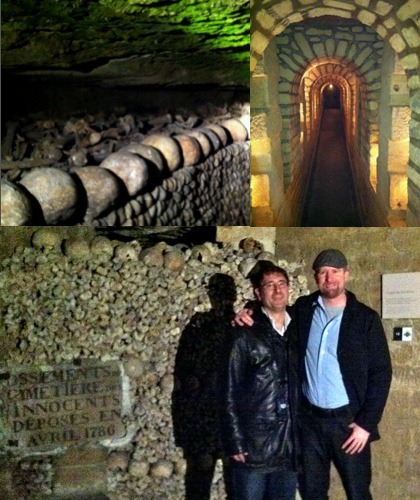
I am completely slammed on deadline and it’s getting down to the finish line for the first book in my HUNTED series with Harlequin Teen, YA thrillers. But when a friend sent the images below, I was able to take a mini-vacation by imagining any story set in these locations. I wanted to share them with you. I save images like these to trigger settings and these are so spectacular, they could inspire an entire book.
For you writers, tell me a story. Pick any one and share your thoughts or describe how you write settings and the research behind your favorites. I’m a fan of Google Maps and the little yellow man that can give you a 360 degree view of locations in my books. Very cool, but these exotic images took my breath away. I had to share them with my TKZ family.
The Joys of Schmoozing
I had a great time at Sleuthfest in Orlando. I got to visit with mystery author friends that I hadn’t seen in a long time, like Donna Andrews, Charlaine Harris, F. Paul Wilson, Toni Kelner, Reed Coleman, Hank Phillippi Ryan, Julie Kramer, Marcia Talley, Mary Anna Evans, and so many more. Then there were people I’ve met online, to whom I could finally assign a face: Jeffrey Marks, Alan Orloff, John Gilstrap, Steve Forman, Joanna Campbell Slan, and so on.
John Gilstrap is on the far right
And of course, our own Florida MWA members were present. They number too many to list here. We heard great keynote speeches by Jeffery Deaver and Charlaine Harris.
Nancy Cohen & Charlaine Harris
I got to chat with my Five Star editor, Denise Dietz, and reacquaint myself with an old writing pal, Pat Van Wie, now an editor for Bell Bridge.
Deni Dietz & Pat Van Wie
I saw reviewers Oline Cogdill and Nancy Pate. And the booksellers from Murder on the Beach manned the sales desk while also in the bookstore room were wonderful raffle baskets designed by talented author Vicki Landis (and I won two!).
Linda, Joanne, and Sue from Murder on the Beach
Vicki Landi, Gregg Brickman, Ann Meier
Bestselling author Heather Graham very generously sponsored a dinner party at House of Blues on Saturday night. It was great to loosen up and relax over drinks and fabulous food.
Heather Graham, vocalist and sponsor
Michael Meeske, Kathleen Pickering, Nancy Cohen, Traci Hall
Of course I attended panels and participated on three of them. Maybe I learned a few new things.
But the best part was hanging out with like-minded friends, chatting at the bar, having one-on-one discussions, and finding out what was new with everyone. Sometimes we only see these people at conferences and it may be years between visits.
Johnny Ray and Joan Cochran
Joanna Campbell Slan and Elaine Viets
I met new people, too, whom I’ll hope to recognize at the next mystery conference I attend. Several members of RWA made an appearance: Heather Graham, Kathleen Pickering, Michael Meeske, Traci Hall, Rhonda Pollero, Lynnette Hallberg, Marty Ambrose, and more. Forgive me if I leave out your name!
It gives you such a warm, fuzzy feeling to be in a welcoming environment where everyone shares the same hopes and dreams. It’s easy to walk up to a perfect stranger, introduce yourself and say, “What do you write?” Conference goers are interested in meeting new people and making friends. At least, it’s that way with writers.
Donna Andrews and Deborah Sharp
Julie Compton, Becky Swets
Our prime goal is to schmooze. Oh, it may be to have an editor/agent appointment and pitch our work, or to speak on a panel and promote our books, but the real gratification comes from the camaraderie. Kudos to the Sleuthfest organizers and committee for a terrific conference!
Nancy, Miette, Linda Hengerer