
“It’s never too late to be who you might have been.” – George Eliot (1819 – 1880).
True for you?
10 Life Lessons I Learned from my Dog(s)
Dogs know stuff. Sometimes I believe they carry souls who are on a higher level of existence than we are because they have the secret to being happy. I’ve learnt so much from my old poop that transfers over, like the need for a proper diet guide for older dogs, and funnily enough, the same applies to older people too! In fact as a little treat for me old poop I’ve been thinking about getting him one of those heated dog beds. Ive seen some really great reviews online. But without further ado, here are 10 things I have learned from my dog(s).
 |
| Sancho – walking trouble |
1.) Wake up every morning as if each day is an adventure – I am reminded of this every morning times TWO. My dogs love their rituals and seeing me is top of their list, it would seem. At least they make me feel special. And isn’t that important for everyone?
2.) Carrying grudges is for cats – Dogs might get scolded for something, but two seconds later they are back with enthusiasm. A short term memory and a brain the size of a walnut helps, but I believe dogs know that carrying around negative thoughts weighs down your heart and life is too short for that.
3.) All you need is the fur on your back – Dogs can pick up and go without taking a toothbrush. Yeah, they may have their toys, but they are perfectly able to share them with others. They are self-sufficient and know what’s truly important. Material possessions take a backseat to the people they love.
4.)Be loyal and love unconditionally – If you ever have a bad day, go play with your dog. They always know when you need a little love, because they dispense it all the time and in every way. They never hold back their affection. Even if you feel you might not deserve it, they will always love you with sloppy wet kisses.
5.) Make friends – My dogs are ALWAYS ready to make new friends. They see a dog walking down the street and they are pulling at their leash to say HELLO. For this to apply to humans, I would dispense with the butt sniff, but that’s just me. Maybe your neighborhood is different.
6.) Having a little discipline gets you stuff – Dogs may not feel the need for discipline, but they know it gets them stuff. Think of your daily word count as something worthy of a treat. The sooner you get it done, the quicker you’ll get that sweet morsel of accomplishment and know that you’ve earned it.
7.) When loved ones come home, greet them with a grin and a butt wag – Dogs don’t take ANYONE for granted. Anyone walking through their door is someone to play with and love. There is nothing wrong with that.
8.) Let people touch you – Who doesn’t need a good head pat or butt scratch? Enough said.
9.) Run, romp, and play daily – My dogs NEVER have a bad day. Ever. When was the last time you truly had a BANG ON splendid day from start to finish? Well multiply that by 24/7/365 and you’ve really got something.
10.) If what you want lies buried, dig until you find it – Dogs have single-minded persistence when it comes to the things they truly want. They focus and they dig until they score. They trust their instincts to know it’s there and a little hard work is nothing when it comes to something that makes you happy.
 |
| Taco – my sweet girl |
There are many more things I could write. I have two rescue dogs and they both teach me different things, but I’d like to hear from you. What has your dog taught you?
Death Wish motivation
By Joe Moore
How often do you watch a movie with the sound turned off? Not too often, I’ll bet. Not only would you be missing a key sensory ingredient of the story, but you would have to guess at what is motivating the characters actions. Without the sound or dialogue, motivation is vague, ambiguous, and downright impossible to determine. And without motivation, there’s little or no story to enjoy.
Motivation directs a character’s actions and reactions. When someone reads a book, they rarely go digging for motivation, but they know when it’s missing, or worse, when it’s present but farfetched or forced. For instance, motivation becomes unbelievable when it’s cliché such as the old, worn out white hat-black hat characterization. The bad guy must be bad because his appearance is that of a stereotypical villain.
Another stumbling point is when the protagonist’s actions go beyond the realm of reality to the point of stopping the reader cold. The motivation didn’t provide the justification on why a character acts in a certain manner. This is critical when a character, especially the hero, deliberately risks his own life. If the motivation hasn’t been sold to the readers in a convincing manner prior to the protagonist taking a dangerous risk, they won’t buy into the scene and will consider it manufactured. That’s where they stop reading and put the book down.
A character’s motivation can be an obvious goal that must be achieved in order for survival or it can be a series of ever-building events that propel her forward into an inevitable conflict. It’s the writer’s job to develop motivation to a point that the reader won’t question the character’s actions, especially by the time they reach the climax of the book.
First, let’s talk about external motivation: incidental versus major.
Incidental motivators are the events that occur in and around the character at the scene or setting level of the story. He’s late for work. She’s annoyed by the neighbor’s barking dog. He spills his coffee on his business report. She has an argument with her mother. He gets cut off in traffic. She loses her earring. In and of themselves, these incidental events don’t motivate the hero to run into a burning building to save a stranger or the heroine to spend years tracking down the murderer of her child. But they all add up—or at least they should. They are the bricks and cement of character-building that must augment and support the grand motivation that kicks off the story—the major motivation.
Major motivation is the biggie. A great example is the Death Wish scenario—the classic 1974 Charles Bronson movie. An ordinary guy becomes a one-man vigilante 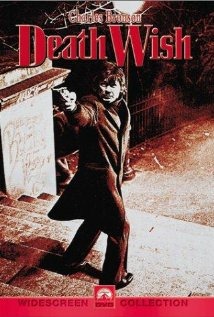 squad after he witnesses his wife murdered by hoodlums. The major motivation—the brutal crime and ensuing obsession for vengeance—shapes and forces the character into taking action outside his comfort zone. And because he’s such a “Mr. Everyman”, the reader will probably consider what he or she would do in the same situation. The protagonist gets sympathy and support from the reader even though he’s committing acts of violence just as extreme as the original major motivation.
Another factor in believable character motivation is matching the actions of the protagonist with his personality—an internal motivation. A 95-pound, soft-spoken computer geek shouldn’t try to physically take on the 330-pound former linebacker henchman in a fist fight. But he can use his fine-tuned intellect and problem solving abilities to bring down the bad guy in the arena of the brain, not brawn. The actions of the character fueled by motivation must be consistent with his personality. This is not to say that an ordinary guy can’t take on an extraordinary situation and win, only that it must be consistent with his makeup and therefore believable in the mind of the reader.
There’s also the internal issue of motivational growth. The protagonist should grow or change in some manner over the course of the story. And this growth must be the result of internal forces in opposition. For example, greed and generosity, anger and patience, or caution and boldness. The protagonist is a highly cautious individual and shows it while reacting to a number of incidental events. But when the major event comes along—perhaps a direct threat to his family’s safety—he steps forward to become a bold defender of what he treasures most.
When dealing with motivation, we can’t forget that the antagonist needs his share, too. It’s a given that conflict and tension are what keeps a reader turning pages. So not only does the protagonist need the appropriate amount of convincing motivation to be propelled through the story, but the antagonist must meet the challenge with an equal amount of motivation to push back. It’s not good enough to say that the bad guy is insane or wants to rule the world. There has to be motivation that is undeniable in the mind of the reader.
Finally, to create strong, believable motivation for your characters, remember to always ask yourself, How would I react in a similar situation?
===============
THE BLADE, coming in February from Sholes & Moore
"An epic thriller." – Douglas Preston
"An absolute thrill ride." – Lisa Gardner
”Full-throttle thriller writing.” – David Morrell
"Another razor-sharp thriller from one of my favorite writing teams." – Brad Thor
"History and suspense entangle from page one." – Steve Berry
Dreaming up a great story, in toto

I’m one of those people who dreams constantly at night. I must sleep in a constant REM stage, the optimal state for dreaming, because the moment I close my eyes, I plunge into an exciting nocturnal realm. My dreams are complex and richly textured, full of subplots and action. They seem compelling and cohesive in real time. But the moment I wake up, they make no sense.
A couple of nights ago, however, I had a rare treat: my dream delivered an entire story. It was a family drama set in the context of Sci-Fi suspense, incorporating elements of artificial intelligence, corporate espionage, and time travel. The dream-story built to a boffo climax, like a great onscreen thriller. Best of all, it still made sense when I woke up! It was such a great story that I didn’t trust the experience. I actually checked the TV schedule to make sure an episode of The Twilight Zone hadn’t been playing while I was asleep. (Normally if the TV is on when I doze off–usually it’s tuned to the Military History Channel–whatever is playing will work itself into a dream. Which probably explains why I have so many nightmares about being pursued by Nazis in tanks).
I don’t know if I’ll do anything with my dream–story; Sci-Fi is a little outside my comfort zone. But it made me think–wouldn’t it be great if our “boys in the back room” delivered more stories this way? Instead of having to coax plot lines and characters from our brain’s ether, we could have them delivered to us as dreams at night, like pizza.
Have you ever written a story that came to you in a dream? Or do you find your dreams to be useful in some other creative way?
Website Essentials
Having done final, final, final edits for my agent on my latest novel (all smiles here on that front – and no small measure of relief!), I am focusing on a much needed update to my author website (very much overdue I fear!) but, horror of horrors, I’ve realized that the book world has altered so much since I set up my website, I am now at sea as to what changes I really should be making. Sure, I have all the obvious tabs: Author bio, appearances, book news, links to blogs, excerpts/readings and ‘what’s new’, but what I really need is to focus on what additional elements that truly add value to my readers (and yes, I also know I need to update my news/appearances too…)
As a reader I know I enjoy websites that are beautifully designed, visually appealing, easy to read (no weird fonts or jarring colors) and which offer lots of value added information that keep me coming back. That being said, it’s often hard to translate that into what is needed for your own website (and also, it’s a slippery slope, I don’t want to spend all my time writing website content rather than novels!).
So as I so often do, I am turning to you, the Kill Zone experts to find out what you think works/doesn’t work on author websites.
Here are some of the ideas/questions I am currently mulling over:
1. As I am venturing into YA territory should I have a separate tab for this on my current website or should I have an entirely different website designed – given that these are two separate genres?
2. How much ‘value added’ content is worthwhile including on a website. Given that I write historical fiction (for both my mysteries and YA books) does giving information on the period provide a useful value add or would links to other websites and resources be sufficient. It’s always hard to know just exactly how much information/effort an authors should give to what is essentially background information.
3. Are giveaways and competitions really worthwhile?
4. What about books trailers or videos?
5. Do you (as a reader) appreciate any other value added elements/information on an author website?
And finally, have you got an examples of what you think are truly first-class author websites or ones which just don’t meet the mark?
Is Traditional Publishing the Raging Bull of Industry?

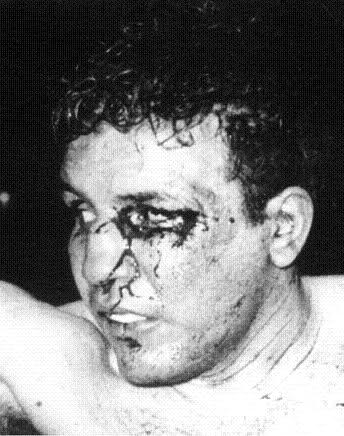
Jake LaMotta, the middleweight boxer who was the subject of the Martin Scorcese/Robert De Niro film, was known as the Raging Bull. He’d never stop coming at you, and he simply would not go down.
No matter what punishment was rained upon him (most savagely by Sugar Ray Robinson), Jake LaMotta refused to be knocked out.
Sort of like the traditional publishing industry.
I mean, look at the beating trad publishing has taken in the last few years:
BAM! The Kindle.
BOOM! Amazon offers authors 70%.
WHAM! Barry Eisler turns down half-a-mil from St. Martins.
SMACK! Department of Justice.
OOMPH! Borders goes under.
BOP! Barnes & Noble brick-and-mortar stores on the ropes.
Traditional publishing is reeling! Cut! Blood is on the canvas! The referee steps in to see if he should stop the fight. “How many fingers am I holding up?”
“You’re holding up big six fingers. No, five…”
The referee lets the fight continue. We’re in Round 6 of a scheduled 12 rounder. Will traditional publishing avoid the knockout?
That was the question on everyone’s mind at the Digital Book World Conference in NYC last week. Reports are that the publishing executives who attended were remarkably “upbeat” about the future, even as it remains an uncertain and challenging one.
According to a commissioned survey of 53 publishing executives, 85% of respondents were “optimistic” about the digital transition and 64% say publishers are “capable of competing” in the new digital marketplace. A 55% slice were confident that their own companies can compete. However, both of the latter two figures are down 10% from the same survey last year (source: Publishers Weekly). From the same PW story covering DBW, key executives “offered perspectives that ranged from an enthusiastic embrace of the new technology . . .to being a little bewildered over selling direct.”
Direct! That is one of the key areas where publishers must learn to compete. But according to Marcus Leaver of Quarto Group Publishing, “We sell directly to consumers, but I’m not sure we’re good at it or ever will be good at it.”
Former Macmillan president Brian Napack, now a senior advisor at Providence Equity Partners, was interviewed at DBW about trad publishing’s future. While admitting that the former “big six” may well end up as the “big three,” he believes “the power of innovation often flourishes in markets during periods of consolidation and new companies.”
That last prognosis is the one we’re all waiting to see show up. Traditional publishing is unsteady on its feet right now. It’s wiping blood from its eyes. But it’s not down for a ten count.
What will it have to do to survive and, perhaps, thrive again? At the top of the list has to be substantive responses to the needs and concerns of their sole asset: writers.
Reports are mixed on whether, as a whole, trad publishing is getting that message. A surveyof 5,000 authors — aspiring, traditionally published, self-published and “hybrids” (those who are both traditionally published and putting out a self-publishing line) – reveals the following:
One-third of traditionally published authors are interested in self-publishing their next book. Writes DBW online: “This trend should be worrisome for traditional publishers, which are struggling to demonstrate to the marketplace that they add value to the publishing process in an era where anyone can publish a book.”
That’s the key: Add value. Where does that come from? It used to be via distribution to physical bookstores. But as shelf space dries up, how will that advantage compare to the digital platforms that writers are perfectly able to exploit on their own?
The survey did reveal a spot of good news for Jake LaMotta: Not yet published authors hold a high opinion of traditional publishing, showing the “prestige factor” still remains. Publishers can build on this. But it will require some significant changes in practice, as indicated by the responses of those who have been published traditionally:
While outsiders who probably have among them the next generation of best-selling authors believe that publishers can help them and have fairly high opinions of publishers, those who have experienced both publishers and the alternative have a very low opinion of publishers, by comparison.
Perhaps it is because those authors who have both self- and traditionally published are unreasonably bitter as a group by some slight they experienced at the hand of a publisher. Or perhaps they have made a reasoned comparison of what the publishing industry offered them and what self-publishing offered them and were more satisfied with the latter. Either way, it would suggest that traditional publishers could do more to woo and impress published authors.
The good news for publishers is that aspiring writers still believe in their ability to help them. It’s not too late for publishers to improve their services to authors to attract and retain the next generation of best-selling authors.
So will this Raging Bull of industry still be around in twenty years? I think so. I’d like it to be. I’m a hybrid, and traditional publishing’s been good to me. But it will have to fight smarter, not just harder. (One comment made by an editor at DBW shocked the binding out of me. He said at his company “there are 42 people who have to touch a book to get it published.” Unless he was kidding, or answering the ultimate question of Life, the Universe and Everything, that is not a recipe for fast feet and effective counter punching.)
So consider me sitting at ringside, shouting, “Cover up! Watch his left! Work the body! The body!”
What are you shouting to the traditional publishing industry?
Jake LaMotta, by the way, is 89 years old. And he’s still on his feet.

Why the Well Never Runs Dry
Happy 2013 to you! I have no idea where the time goes, but it is hard to believe that Christmas was just a bit over three weeks ago. I know where the time went: I was gifted with a time bandit popularly known as a “Kindle Fire,” and I have been carrying it everywhere with me. You can read with it, write with it (with a bit of smacking called “sideloading,” which we won’t get into here, at least not today), and also derive inspiration from it, should you lack an idea to use as a springboard for a novel or story. The Kindle Fire enables you to surf the web, as so many objects do, and if you can surf the web, you can visit news websites, and if you can visit news websites, you can find ideas for stories, novels, and even a series…whatever you want your next project to be.
I start each day by reading the web versions of my local paper, my (former) hometown paper, the New Orleans Times-Picayune, and The Drudge Report. There is always something that can serve as a springboard for a tale. This past week in New Orleans two women were arrested in a downtown hotel and charged with prostitution. One of them had a baby with her. A prostitution arrest in New Orleans is not unusual; the presence of a baby…that’s something else. The infant, as innocent as an innocent can be, was placed with Child Services. I wondered: what is going to happen to this child? Will he placed in foster care and live happily ever after? Or will he be returned to mom who then bounces him from town to town along the Gulf Coast, viewing life through the windows of a series of seedy hotel rooms? Or worse? There are a several potential possibilities here, all of them interesting, though few of them are pleasant. I subsequently encountered another gem. Submitted for your perusal: a 911 operator in Illinois receives a call from a church rectory. The caller identifies himself as a priest and requests assistance. He is handcuffed and needs to be freed. He is hard to understand, due to the fact that his voice is muffled by the mask he is wearing. This occurrence was reported by several newspapers, whose reporters had a jolly good time writing witty headlines for the story. But…but…while I had my own chuckle over the report (I am unfortunately unable in many circumstances to resist a wallow or two in the lake of schadenfreude, even when the poor devil involved could have been me!) I couldn’t help but wonder: what seemingly innocent path in life, no doubt encountered years, even decades, previously, led the padre to his unfortunate public humiliation of that particular night? You could obtain twenty different guesses from twenty different people and there is an excellent possibility that none of them would be the same, or, for that matter, correct.
So you think you’re out of story ideas? You’re not. Read the news and try to pick only one story that you could transform into a bestselling work of fiction or award winning tale. If your local paper doesn’t report anything interesting, take a look at The Drudge Report, which isn’t a “report” but rather a page with three dozen or so links to news articles and stories of many varied stripes appearing in periodicals all across the political spectrum. I just checked the page, and found a link to a CBS-NY article about a possible New York mayoral candidate named Joe Lhota. I ask long time Kill Zone contributors and readers: does this perhaps remind you of someone we know? Anyone for a parallel universe story?

Now, if you would please: check your local newspaper this morning, online or otherwise, find an incident that you think would provide the beginning of a great story, and share. What’s happening in your part of the world?
Reader Friday: Awards, or “Do They Really Like Me?”
Events, Schmevents: aka “Yes, we’re open to suggestions”
 |
| The Illustrious MWA Board |
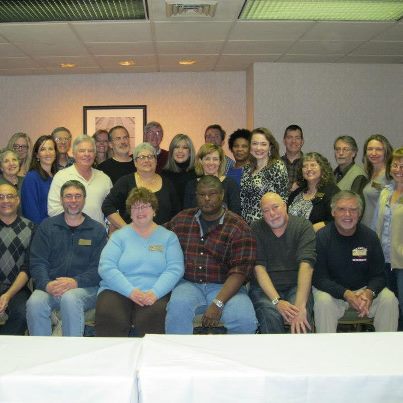
As of last weekend, I’m the newly minted president of the Northern California MWA chapter (please, hold your applause). On the plus side, I was privileged to spend a few days in New York with such luminaries as Charlaine Harris, Greg Herren, Bill Cameron, Harley Jane Kozak, and Jess Lourey; aka, the current MWA board.
However, I also suddenly find myself in charge of organizing between 6-8 events this year that will appeal to both crime fiction writers and fans of their work. And let’s just say that all things considered, I’m not much of a planner. Heck, I never even plot out my books.
So frankly, I’m at a bit of a loss. I spent the past few days trying to remember all the local MWA meetings that I’ve attended–and honestly, only a few stick out in my mind (which is probably my fault. I also have a lot of difficulty remembering my parents’ birthdays, and when the cat’s teeth are supposed to be brushed. Which lately has turned out to be: pretty much never. Sorry, Mr. Slippers. I’m sure that someday soon they’ll invent feline dentures.)
 |
Ted Kaczynski |
The most memorable meeting for me happened a few years ago, when a retired FBI agent who had been on the Unabomber case from the beginning outlined the entire manhunt for us in the world’s most dramatic and fascinating Powerpoint presentation. In the end, he was also one of the three agents who entered the cabin to arrest Ted Kaczynski. His talk went on for hours, yet I could have sat through it all over again immediately after it ended.
We’ve also done “State of the Industry” panels, featuring an agent, librarian, editor, and bookseller. They always offer frank (and occasionally terrifying) insights into…you guessed it…the state of the publishing industry. That will be a repeat this year for sure.
 |
| DO NOT eat here. Seriously. |
I’d like to shake things up a bit, though. Maybe have some “field trip” meetings–I have an in with the SFPD Bomb Squad, so possibly a tour of their facility. Or a trip to the morgue (which ironically, former chapter meetings almost sent me to, twice. For years we held meetings at John’s Grill, which has a really cool Maltese Falcon display, and a really terrible kitchen. I contracted food poisoning not once, but twice, during chapter luncheons. And the second time I had only consumed coffee. I still cringe when I remember their club sandwich.)
But who better to ask than the vast community of mystery readers and writers here? In the interest of that, I’m turning the matter over to you. What are the most memorable local mystery events you’ve attended, author appearances aside? And what kind of dream events do you wish your chapter would hold? (within reason, of course. I’m pretty sure my budget won’t allow for a Bruce Springsteen performance, or anything in that range). Ideally, I want to achieve a balance, so that they’re not all focused on the writing craft. I’d also like to continue avoiding food poisoning, if possible.
Reading Fiction in Schools
Nancy J. Cohen
Recently I heard that the new core curriculum in schools is going to require 70% of reading assignments be based on non-fiction. I don’t know if this is true or not, as a quick search didn’t provide me with any further information. Nor do I know the grade level for which this would apply. However, it’s a scary thought.
Schools have already stopped requiring students from learning cursive writing. Now they are discarding literature as well?
I’ve always felt education should include popular fiction, in addition to the classics. Let kids choose fun and entertaining books to read, and you might create long-term fans. After all, the commercial fiction of today could become the classics of tomorrow. And look what Harry Potter did for kids’ reading habits. Thanks to that series, a whole generation might have been hooked on reading novels. We need more successes like this one if we are to inspire children to read.
Rather than a wordy tome or dry biography, give them a ghost story or vampire tale or a mystery. Engage their senses with wonder like we were engaged reading Nancy Drew or the Hardy Boys. Otherwise, where’s the fun? And if an activity isn’t fun for kids, then it’s competing with online sites, games, movies and TV shows that provide easier entertainment.
Having children read a work of fiction and then analyze its components can encourage creative and analytic thinking. Without this benefit, will human imagination still range to other stars, to lands far away, and to adventures beyond the mundane? Or will these same imaginations be stifled because works of fiction were denied them, and they were forced to read boring texts that killed their interest in reading?
So is this true, and if so, how do you feel about it?