Left Behind

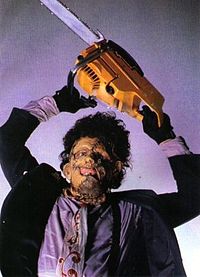
I will be the first to admit that I am not handy around the house. Oh, I can repair a PC and an iMac, but wiring, painting, serious plumbing, wallpapering, or anything else that doesn’t leave one much of a margin of error…nope. John Ramsey Miller, I’m not. So no one was more surprised than I when this week I purchased and actually operated a chainsaw.


We had a part of one of our larger fir trees at casa de Hartlaub detach in a wind storm a few days/weeks/months ago and my neighbors, who usually are all fine fellows (since the conjurer of the dark arts who lived next door moved) were becoming somewhat standoffish, no doubt due to the fact that scurries of rabid chipmunks were regularly taking residence in the boughs. The detached part was bigger than most normal trees so it wasn’t something that I could haul to the curb like a Christmas tree. Some cutting and separation was accordingly in order. I went to my local hardware superstore and purchased a Homelite electric chainsaw. The directions were wonderful, and it worked like a dream. I put on a set of headphones, potted up The Complete Bitches Brew to 11, and began cutting away.

I discovered something, however. Chainsaws are for right-handed people. I’m left-hand dominant. And I mean dominant. Not even the Sisters of Charity, circa 1957, could break me of my left hand use, notwithstanding the observation that such a proclivity indicated that I was doomed to be an instrument of the devil. I do almost everything (yeah, even that) with my left hand. As with most such things, I called the Attorney General’s Office, the U.S. Attorney’s Office, The U.S. Civil Rights Commission, and a few other agencies and I’m going to get this discrimination redressed. Not really. Just kidding. I worked around it, used it properly — with my right hand on the trigger, left hand on the grip (or something like that) stood with the blade away from me and cut the heck out of that thing. I had that tree demolished before Miles, Chick Corea, et al. were halfway through “Spanish Key.”

Left-handed people have to adapt to a right-handed world. Does that make us special? Smarter? More creative? All or none of the foregoing? Consider this: I attended a legal seminar several years ago where the attendees sat at random, eleven seats to each long table. The lad next to me nudged me about two hours into the presentation and nodded down the table, where nine other people were busy taking notes. Every single person was left-handed. Maybe the Sisters of Charity were right.

I think it is a given that the people who are gracious enough to visit this blogspot on a regular basis are among the most creative and intelligent on the planet. And great folks of course, to boot. I accordingly am taking a totally unscientific survey: are you left- or right-handed? And do you have a good left-handed story, funny or not so much, that you would care to share with us?


First-page critiques at TKZ

We’re delighted to announce the launch of first-page critiques as a regular feature here at TKZ! You can send us the first page of your manuscript, and we’ll critique it.

Here’s how it works: Send us the first page (400 words max) of your manuscript in an email or as a Word attachment, along with the title, to the email address killzoneblog at gmail dot com. We’ll take the first 30 submissions we receive, then announce when we’re accepting submissions again. The pages will be divvied up among the Zoners for review. We’ll post the pages on recurrent Thursdays, along with a critique. Readers will be able to comment as well. Note: Critiques are done anonymously–writers names will not be posted, and reviewers will not know who authored their assigned pages.

In years past we’ve had great fun doing this exercise! We’re looking forward to reading some of your pages!

Multiple Book Releases

What happens when you have more than one book to promote at the same time? Do you annoy readers with announcements about the new releases, blog tours, and contests? Which book do you choose to emphasize in your online blasts?

In this digital age, we can publish as fast as we can write. But at what point are we diluting our own sales? And how will our digital releases affect our print books with their higher price point?

I’ve reached this quandary in April through no planning of my own. Wild Rose Press gave me April 26 as the official release date for Warrior Rogue, #2 in my paranormal Drift Lords series. But then they decided to enter it into the Kindle Select program, meaning the ebook came out in December and my five free days were in February. I did a big push over Valentine’s Day weekend with announcements and contests.

I’d planned another promotional campaign for April 26 to celebrate the print release and the book’s availability for Nook and other formats. I set my newsletter to go out on that date, a Rafflecopter contest to start then, and a blog tour shortly thereafter. (If you want to sign up for my newsletter, visit http://nancyjcohen.com and fill in the form on the left sidebar).

But the best laid plans go awry. Two things happened to impact my campaign. Warrior Rogue showed up in print about two weeks early. And Shear Murder, Bad Hair Day Mystery #10, came out in ebook for $3.19!

I’d been panting with anticipation for the digital release of Shear Murder, but Five Star wouldn’t give me a specific date. This title had only been available as an expensive hardcover for over a year. And finally it shows up in the same month as my promoted new release. What to do?

Since I’d already set up my contest and newsletter and blog tour for Warrior Rogue, I’m going ahead with those plans for April 26. That date seems like a moot point now, since the title is already available in various formats. The irony is that Warrior Rogue, initially $2.99, price jumped to $5.99. So now that ebook costs more than Shear Murder at $3.19.

I don’t want to bombard my fans with notices and confuse them with my two different genres, but I really want to get word out about Shear Murder. It’s easier to keep new releases apart when they aren’t the same month!

And hereafter, I won’t treat release dates as absolute. There’s no point in planning a big hoopla around a certain date when the book shows up weeks earlier. Is this a result of the digital age?

Those of you who are hybrid authors, both traditionally and indie published, can at least space out your own uploads so as not to compete with your publisher’s plans. But if you’re writing two or more books per year for different publishers, how do you alternate your online promotions? And as a reader, how much news from an author is too much?

When writers don’t play nice in real life, do readers care?

For the most part, writers are the nicest group of people you’ll ever meet. When I went to my first writer’s

conference back in 2006 as a newbie without a publishing contract, I was expecting to be dismissed by the “real” authors there. Instead, I found myself surrounded by the most welcoming, supportive professional community I’d ever met.

Of course. there are always exceptions. I’ve become more aware of those exceptions recently because of Facebook. People who are active on Facebook eventually reveal themselves, personality warts and all. For writers, sometimes too much revealing of self ignites blowback from readers.

Last week, a well-known author posted a Facebook rant about a political topic. Her comments were followed by vocal disappointment from some of her readers; all of the commenters expressed disappointment in the author. A few vowed never to buy her books again. Ouch.

We’ve even been taken to task occasionally here at TKZ. Whenever a blogger has made an ill considered, controversial or tactless remark, it’s “Katie, bar the door.” You guys always let us know when we’ve fumbled the courtesy ball. And for that, we thank you. 🙂

But it occurs to me that most people don’t want to buy “nice” books. Few people want to read about the Village of Nice, Happy People. We want conflict, emotion, and tension from our stories. But we don’t want that from our real-life writers.

I grew up surrounded by high-achieving, volatile personalities, so I guess I expect my artists to be a bit raw in person. But I’m wondering–have you ever encountered a writer who was rude or obnoxious in real life, and did that experience make you less likely to buy his or her book? 

I’ll leave you with Jack Nicholson from As Good As It Gets, in which he offends an ardent fan.

Getting Everything Right Is Wrong

by Boyd Morrison

I’m averse to making mistakes, which probably stems from my educational background. I’m an engineer by training. In that profession, errors can have devastating consequences. Miscalculate the thickness of concrete walls, and a billion-dollar oil rig sinks (Sleipner A platform). Change the design of a single bolt, and a crowded walkway collapses (Kansas City Hyatt). Underestimate the effect of cold weather on a simple rubber O-ring, and a space shuttle explodes (Challenger).

So I’ve been conditioned to avoid mistakes at all costs. The problem is that I’m no longer an engineer. I’m now in the creative fields of writing and acting. In my new professions, mistakes are just fine. No one dies. Nothing is destroyed. In fact, mistakes are encouraged. That’s how you improve.

In writing, trying to eliminate mistakes is the mistake. Yes, there are objective errors that you want to avoid in a novel. Don’t put a safety on a Glock pistol. Don’t make your continuity and timelines inconsistent. Don’t change the name of a character halfway through. These are indisputable mistakes, and yet I have seen them all in novels. Bestselling novels.

In one of my own books, THE ARK, I explained that the elevators of a slowing airplane lowered to maintain altitude. Of course, this is incorrect. The elevators should go up to pitch the aircraft up. I’ve flown planes myself. I have a degree in mechanical engineering during which I studied fluid dynamics. I know that it was wrong, and I still made the mistake. No one—including my brother, who is a former Air Force pilot—caught the error until the book was in stores. No one died, and only one reader has ever brought it up (in fact, it’s the only reason I know the mistake happened). However, the error still bugs me.

What’s more insidious for a writer is the avoidance of subjective mistakes. We want to get everything right in a story: characters, plot, twists, literary merit, creativity, emotional resonance. We want the story to be perfect, and impatient people like me want it to be perfect from the moment we start typing it.

But it never is. It can’t be. Ever. I bet you’d only be able to come up with a tiny list of  stories that didn’t have a single thing you’d change. And even then, go look at the Amazon reviews for those books. You’ll find at least a few people (and sometimes hundreds of them) who don’t agree with your definition of perfection.

Voltaire is considered the originator of the phrase, “Perfect is the enemy of good.” We’re afraid that if our story isn’t perfect, it won’t be good enough. The idea for a novel that we have in our minds never comes out on the page like we imagine. Sometimes we can’t write at all because we’ll be disappointed that it won’t come out perfectly formed on the first try.

What we have to come to terms with is that making mistakes is part of the process. That’s how we learn. That’s how we make art. My wife, who is sometimes frustrated when I delay delivering pages to her to edit, gave me a T-shirt for Christmas that says, “Even if it’s crap, just get it on the page.” That notion can be freeing if you take it to heart. You can’t make it better if it doesn’t exist in the first place.

I’m getting more comfortable with making mistakes, but it’s a daily struggle. The lesson slowly worming its way into my head is that to fixate on creating the perfect novel results in creating nothing. So I’m learning to focus on the right thing: getting a story out that reflects my voice, where even the flaws and imperfections are unique to me.

How to Make Money Self-Publishing Fiction

James Scott Bell
@jamesscottbell


Last week’s post on publishing options drew some spirited responses, especially from one of TKZ’s erstwhile contributors. In his opinion, self-publishing is an exercise in frustration and a path to near-assured failure for first-time authors.”

Now, I have great affection and respect for said commenter, who argues well for his point of view. But I was nonetheless discomfited by that “near-assured failure.” Been thinking about it all week. What does “failure” even mean? Who sets the standard? If a new author finds a way to make steady but not huge income, is that “failure”? If a new author keeps working and growing as a writer, is that “failure”? On the other hand, might it possibly be said that self-publishing, done consistently and skillfully, can actually lead to near-assured success? What is “success”? Is it a loyal readership, even if it pales in comparison to Dean Koontz’s (well, every readership pales in comparison to Dean Koontz’s)? Is it the happinessthat comes from writing and publishing more, faster, being in control of one’s destiny and, yes, making some money at it?

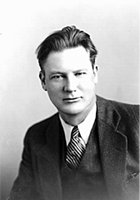
This led me to reflect, yet again, on the writers I admire most: the professionals of the old pulp days. I’ve been on record for a long time stating that this new digital age is like the pulp era, only with more opportunity and potentially better pay. But it requires a certain kind of writer. One like Erle Stanley Gardner (1889 – 1970).


Gardner is best know as the creator of Perry Mason. When he hit on that character and that formula, he was set for life. But what most people don’t know is how hard he worked to get there. He was a practicing lawyer in the 1920s, and was looking for a way to make money on the side. Writing for the exploding market in detective and crime fiction seemed promising. 

He set out to do it the only way he knew how––full speed ahead. His output was, as he described it later, “man killing.” One hundred thousand words a month. A month. Over a million words a year, for at least ten years. (And much of it while he was still practicing law).

He did manage to sell some stories, but not enough to please him. Then one day he realized he did not know how to plot. His stories were merely “event combinations.” Lawyer that he was, he set out to find out how to write plots that sold (I resonate with this, because I was a practicing lawyer when I set out to learn the same thing!)

Boy, did he ever get it. And he kept up his prodigious output until he was a mainstay of famous pulps like Black Mask. Then, in 1933, came The Case of the Velvet Claws and the

introduction of Perry Mason. There was no looking back. At one time Gardner was listed in the Guinness Book of World Records as the bestselling author who ever lived.


While the success that Gardner achieved is rare for writers of any stripe, his example and work ethic can be replicated today. More and more authors are doing a nice business self-pubbing. I’m not just talking about the “stars” like Hugh Howey, Bella Andre and the newest sensation, Colleen Hoover. I’m talking about people you’ve never heard of, and who don’t really mind that because they have plenty of readers who have.

So how do you self-publish fiction successfully? Learn the following lessons from Erle Stanley Gardner. (Note: The info in this post comes from the biography of Gardner by Dorothy B. Hughes.)

1. Treat it like a job

For Gardner and other successful pulpsters, writing was a job, especially during the Depression. They had to eat. They didn’t have time to sit around the coffee bar ruminating about theories of literature. They actually had to produce stories, lots of them. They studied the markets (and wrote in popular genres, like detective and Western) and pounded the keys of their manual typewriters. Gardner was a two-finger typist and had to put adhesive tape on his tips because they would start to bleed. (This is one reason he later turned to dictating his stories, having them transcribed by a team of secretaries).

Seeing writing as a professional pursuit, Gardner reflected on his previous work in the sales field. “I had always told our salesmen that if a man had drive enough, if he kept on punching doorbells, sooner or later he would make his quota of sales. I guess the same thing applies to story writing. I know it did in my case.”

It can in your case, too. Volume is a key to success in self-publishing fiction. That, and learning a few business basics and strategies.

2. Treat it like a craft

When Gardner kept getting rejection slips that said “plot too thin,” he knew he had to learn how to do it. After much study he said he “began to realize that a story plot was composed of component parts, just as an automobile is.” He began to build stories, not just make them up on the fly. He made a list of parts and turned those into “plot wheels” which was a way of coming up with innumerable combinations. He was able, with this system, to come up with a complete story idea in thirty seconds.

Learning to plot stories that sell can be done, because Gardner did it, and I did it. And I wrote a book about it. It’s called Plot & Structure.

Gardner also wrote in various lengths. Successful self-publishing writers write short stories and novellasas well as full novels. Keep learning and growing as a writer. 

3. Treat it like a sacrifice

There’s an old saying about the law, that it is a “jealous mistress.” To be any good as a lawyer demands time and sacrifice. Gardner knew he had to be productive to make real money, so he set a quota for himself of 5,000 words a day. If he missed a day due to a trial or other legal matter, he would make up the difference on another day.

I am often asked what the single best piece of writing advice I ever got was, and I always say, Write to a quota. I write six days a week, and take Sundays off. It’s worked for me for over twenty years. Virtually no one can write 5,000 words a day like Gardner. And of course most writers have day jobs and family responsibilities. So the key is to figure out what you can produce and commit to doing that week in and week out.

This is my standard suggestion: Figure out what you can comfortably write per week, given your particular circumstances. It doesn’t matter the number, just find it. Then up that by 10% and divide into six days. Make that your goal. Keep a record on a spreadsheet that tracks your daily writing and turns it into weekly totals. It will give you confidence to see those numbers adding up throughout the year.

Be prepared to give some things up (TV is a jealous mistress, too) in order to find time to write.

4. Treat it like a mad passion

You’ve got to be a little nuts if you want to be a professional writer. In those early years, Gardner said, “I would work until one, one-thirty or two o’clock in the morning when I would be so dog-tired that I would stop to rest and would fall asleep in the chair and have nightmares, dreaming for the most part about the characters in the story, waking up a few seconds later all confused as to what was in the story and what had been in my dream. At that time I would go to bed. I would sleep for about three hours a night, waking up around five or five-thirty in the morning. Then I would take a shower, shave, pull up my typewriter and write until it came time to go to the office.”

Now, I don’t suggest a madness of that magnitude! I find it inspiring, but also know I could never keep a schedule like that (well, maybe if I was twenty-five and unmarried . . .) But dip your quill into Gardner’s passion and scribble some of it on your writing soul. And embrace the fact that you are part of a grand fellowship of the mad, the storytellers, the weavers of dreams.

5. Treat it like an adventure right up to the end

A favorite anecdote about Gardner, when he was selling some but not enough, occurred after he felt he finally “got it” about plotting. He sent a story to Black Mask with this note: “If you have any comments on it, put them on the back of a check.” Gardner knew he had reached a place of consistent sales, was in this for the long haul, and would never stop writing.

Do you know that about yourself? Are you in this thing to the finish? Make that decision now, and you have a chance to become successful self-publishing fiction.

Gardner completed his last Perry Mason novel, The Case of the Fabulous Fake, six months before his death. Cancer caught up with him. He was hospitalized a few times. But he kept working on a non-fiction book about crime. His editor at Morrow sent him a note suggesting he might want to slow down. Gardner sent one back: “You should know Gardner by now . . . when I get enthusiastic about something, I put the whole machinery into operation.”

Erle Stanley Gardner died on March 11, 1970. He had made some autobiographical notes before his death. The last words were these: “My life is filled with color and always has been. I want adventure. I want variety. I want something to look forward to . . . The one dividend we are sure of is the opportunity to have beautiful daydreams . . . . This is as it should be. This is the color of life. I love it.”

If you want to self-publish fiction, and make some money at it, do it the Gardner way. Love life, love writing, put your “whole machinery” into action, and never shut down the operation.

Finishing the First Draft

By Mark Alpert

It was a terrible week in the news — the bombs in Boston, the explosion in Texas, the failure of the background-check bill — so it was a great relief to plunge into fiction. And fiction-wise, it was a wonderful week for me, because I completed the first draft of my next novel. My daily word count always rises to extraordinary (at least for me) levels when I’m nearing the end, partly because I get caught up in the climax of the book and partly because I just want to finish the darn thing. I love writing 2,000 words a day, but it also makes me feel bad about how little I write at other times. I say to myself, “Why can’t you write this much all the time? Then you could knock off a novel in two months and spend the rest of the year on your tennis game.”

I can’t reveal any details about the book because I hate talking about my novels while I’m still writing them. And I know I’ll be revising this book for the next few months, so it’s not really finished. But completing the first draft is a big milestone for me. At least I know now how the book will end. I had a vague idea of the ending while I was writing the manuscript, but I wasn’t sure how it would all come together until I started the final chapter. Before that moment I worried I would hit some unforeseen obstacle — a logical inconsistency, or maybe a hopelessly implausible plot twist — and the whole enterprise would fall apart.

But it didn’t. At this point I have no idea whether the book is any good, but at least it hangs together. Now I have to wait to hear from my editor. He already read the beginning of the book, and he liked it, but I don’t know how he’ll feel about the end. I’m not even sure how I feel about it. I’m too close to the thing. But I’m cautiously optimistic. The reason for my optimism: bullet ants. The ending has a scene featuring bullet ants. You see, I just broke my rule about never revealing details of a novel-in-progress, but I couldn’t help it. Bullet ants are fascinating creatures.

Although I still have lots of work to do on the book, I decided to reward myself for finishing the first draft. So I spent three days biking and playing tennis. (I have to work off the five pounds I gained while writing the novel.) The best reward, though, was simply writing THE END at the bottom of the last page of the manuscript. I have no idea how many times I’ll be able to write those words in my life, so I intend to enjoy the experience as much as possible every time it happens.


What Advice Would You Give to Young Writers?

By Jordan Dane
@JordanDane


Today I am presenting a workshop to the Creative Writing students at the University of Texas at San Antonio (UTSA). This is a free offering of like-minded authors getting together to share their thoughts on the publishing industry and the craft of writing. I plan on sharing my thoughts on the latest trends in publishing with a focus on the Young Adult and New Adult markets. I will also spend more time talking about author craft and the epiphanies I have learned through the books I’ve written. Each book teaches you something different, right? Writing is the best way to learn those things, mostly through trial and error when you learn best from your mistakes.

I also want to spend time talking about the writer’s life and the discipline to accomplish daily goals. Usually life, the day job, and other obligations can force you to set aside your passion to write, but if it’s important to you, I say make time for it, even if that’s only a page a day.

The hardest thing I will broach is the crazy things happening in the publishing industry with regard to the changing contractual terms and what it means to self-publish or navigate the ebook services being offered by large publishers and agents, etc. But I find it hard to stop the long list of warnings that I would want them to be aware of so they don’t sign their copyrights away for the life of their book, simply to get published. It’s a scary world out there in this interim phase while the industry is sorting things out. But I don’t want to scare them off either. So I am limiting my warnings to only the most treacherous ones that dangle like gems stones and look all polished and pretty, but have complications. Things like royalty value for digital books, the ala carte subrights menu, rights reversions, and what agents and publishers are offering that could be troublesome. When the goal is to get them to incorporate writing into their daily life, or to nurture something that could become a passion later in life, I don’t want to discourage them from the start.

When I talk to young writers, I want to simply encourage them to write and recognize that if they have the drive and passion for writing, they should write whether they get published or not. I remember how important reading and writing was for me in school and how it stayed with me for my whole life. But first comes the desire and getting hooked on it. It’s a quality of life thing. I usually encourage them to keep a journal of their thoughts or characters they want to develop, or keep a file of ideas for future books. I will share James Scott Bell’s wonderful TKZ post on how to write a short story or share one of my favorite Joe Moore posts on editing your work in Writing is Rewriting. There are so many posts that I’ve found useful at TKZ that I’m still pinching myself that I am a member here.

But my question to all of you is – what advice would you give to a young writer? Someone who is in college or high school and has the writing bug? Everyone here at TKZ would have something to offer young writers. What would you tell them?