TKZ Spotlight: Basil Sands
Note: We’re starting an occasional feature on Fridays called TKZ Spotlight, where we profile various members of the TKZ community. We’re kicking things off today by profiling Basil Sands, a thriller author and long-time TKZer. We love the way Basil keeps things lively around here with his creative observations in the Comments!
You can link to Basil’s books here.
BIO: Basil started out writing thrillers for podcast-audio serials that gradually developed into four novels, a novella, more than a dozen shorts, and many more to come . He’s also an audiobook narrator and has recorded for several best selling authors including many right here on The Kill Zone Blog, where he’s been a regular commenter since near the beginning in 2008.
Born in rural Alaska and raised among the Ohio cornfields, he longed for excitement. After injuries ended a stint in the Marines he worked as a restaurant manager culminating in a three year contract at the National Security Agency (Chef to the Spies). He’s also owned a computer shop, was a carpenter, farmer, actor, lumberjack, voice actor, Wilderness Rescue EMT, computer network admin, hotel maid, tire change mechanic, IT guy, Scoutmaster, college instructor, dynamite packer, talk show host, and youth minister. After 9/11 he spent three years as a sergeant in the Alaska State Defense Force Coastal Scouts and was recognized as Alaska Soldier of the Year in 2003.
Until a ski injury he’d been an avid weight lifter benching 420 lbs at age 40. Now he’s limited to a bit on the bike and a long walk each day…that and curling the occasional pint of Guinness…to work out the arthritic kinks.
He lives in Anchorage Alaska with his wife and sons.
Where do you live, and how does that setting (or another one you use) inform your writing?
As an adult I’ve lived in Alaska for nearly twenty years; three of my books, including my WIP, take place here. Describing something as majestic as Alaska sounds a lot different when you’re in it as opposed to interpreting it via Google Earth. There are many wild experiences in the Arctic that most people can’t fathom. For instance, at -40 F boiling water tossed into the air makes an audible“zziiip” as it freezes into perfectly round BBs before it hits the ground.
How does your background influence your writing?
As a child I spent more time in my imagination than any other place. I escaped the drudgery of life into my own world, one that I could shape. I read encyclopedias for fun then I’d recreate the drama of history with my little green army men, or run with my dog through the woods. We were Daniel Boone and his pet wolf, or secret agents searching for Nazi spies amongst farms and secret hay fields.
From the bio above you can glean that I’m sort of a ‘Jack of All Trades’ as the saying goes or maybe more like a ‘Basil of A Lot of Jobs’. Those various experiences, jobs, and locations have given me a general hands on perspective to a lot of topics.
How old were you when you first felt the urge to write, and what inspired you to get serious about honing the craft?
Creating stories has been a part of my life for as long as I can remember. By the time I reached my teens I was performing in theater and choir, and dabbled in stand-up comedy. In my twenties I started writing my own one man plays about historical and biblical characters to perform before church youth audiences.
In 2006, at thirty eight years old, I found myself in an incomprehensibly boring IT job that involved lots of staring out the window like a Techno-Maytag-Repairman. Within weeks I was ready to staple my lips shut to stop me from babbling. Then one day a story popped into my mind while I sat there watching stuff not break. It developed into a script for a podcast audio-serial, then into a full fledged novel. Since that first one, I’ve known that I have to write these stories, and do it well.
What are some main themes you return to when writing?
“Wolves vs. Sheepdogs” and “Making hard choices”.
Your goals in life?
My life goals are simple. Love my wife and kids, and serve my God.
My writing goal is not so simple. There’s a story I’ve been brewing for 25 years, but know that I cannot put it onto paper until I really know how to write well. The stories I’m writing now are merely practice for that life’s work.
Which authors have most influenced your writing?
Louis L’Amour, Ken Follet, Fred Forsyth, Bernard Cornwell and Jack Higgins are the ones I’d list as most influential. But before I knew them, the initial fire was lit by George Remi (Herge) author of the Tintin comics.
Do you have a “day job”? Tell us about that. Does it inform your writing?
I am a Senior IT Specialist for the Dept of Veterans Affairs. It is the same one that I once described as “excruciatingly boring”, but I learned a few years back that when the government tacks ‘Senior’in front of your title and gives you 3 or 4 grade increases the boredom decreases exponentially.
My knowledge of what can and cannot be done with technology is very useful stuff. Additionally I sometimes overhear conversations or read the records of veteran’s experiences that have blown my mind, from Medal of Honor winners to some real life Jason Bourne types.
What are you working on now?
My current WIP is a somewhat ambitious novel for me, the first of what I expect to be a three book series about an invasion of America, seen through the eyes of a family separated in the initial attack. The teen sons are at boy scout camp, the father is driving home anticipating a romantic night with his wife when their world is ripped apart. The husband has to make a choice, rescue his kids or his wife. The kids know how to survive in the woods, and have adults leading them, many of whom are combat veterans. He chooses to find his wife first, only to discover her bullet riddled car containing what he believes is her mangled body. Unknown to him, she has been taken prisoner by the invader’s commanding general. While her husband and sons become guerrillas in separate ventures, the wife witnesses behind the scenes the efforts the general makes to capture and kill them. She will do anything to protect them.
The story is full of action, violence, romance and of course the scenery of Alaska.
First page critique: A BOTHER OF BODIES
Here is a first-page submission titled A BOTHER OF BODIES, followed by my comments. Then we’d like everyone to jump in.
Note: I’m posting from Tokyo using my iPad, which isn’t Blogger-friendly under the best of circumstances. So please forgive any formatting errors!
* * *
This was going to be a bad day. Kicking the scale under the bed, I scooped the phone off the night stand and checked the screen. It was my brother, Dean—or half-brother. We’re not entirely sure which.
“Hey…”
“Mabel, you better come out to the barn. Fast.”
Barn?
“Mabel? It’s important. It’s beyond important, you’ve got to get out here.”
I was heading to the back door as soon as he called me Mabel. He rarely calls me by name. Uses Maybe instead, as in “maybe I’ll keep it, maybe I won’t”, a popular phrase our mother, Della, used during the seven months she carried me. Dean was three at the time.
“I’m on my way. What’s happened?” I stopped on the porch long enough to stick my feet into an old pair of Dean’s rubber boots.
“A corpse happened.”
That stopped me cold. “You’ve killed someone.” I knew this day would come. It’s always the quiet ones.
Silence. Okay, it was a stupid thing to say. If anyone was going to guess who put a corpse in a barn, they’d pick me. Dean was a big believer in turning cheeks. I was big on smacking them.
“Don’t touch him. Or her. Or anything else,” I told him. “Have you called the cops?”
I heard him sigh. Of course he hadn’t. People whose mothers are convicted con-artists never do.
I manoeuvred the dew-slick stairs, one hand on the railing, the other still clutching the phone. “Never mind, I’m on my way.”
Stuffing the phone into my bathrobe pocket, I clomped down the porch stairs, then stopped to survey the scenery. Not a barn in sight.
Dean bought this forty acre farm three months ago while I was in Toronto doing some fieldwork for the small, semi-legitimate security system outfit that employs me.
Putting A Book Down
Do you ever put a book down if you’ve read a few chapters and can’t go farther? This rarely happens with me, but I can recall a couple of instances where I gave up. Normally, I’ll slog through and scan pages until the end, if the story holds any appeal at all. But sometimes it’s too tedious to continue and a waste of precious time. What are some of the reasons why we might stop reading?
Too Many Characters
The book I’m reading now is one I really want to like. It’s science fiction with a strong female lead and starts off on a spaceship. I know her mission is about to go terribly wrong. The woman’s lover is an alien, and I can understand his race’s characteristics. But then we meet other crew members and a diplomatic contingent from another world. Numerous other races are introduced, and the author segues into multiple viewpoints. Now I’m getting lost. I can’t keep track of all the aliens with weird sounding names. If the story doesn’t focus on the protagonist and her human emotions, I may put this book aside.
My own first published novel employed multiple viewpoints and alien races. But since the story stayed mostly inside the heads of my hero/heroine and focused on their romance, the world building seemed to work. I won the HOLT Medallion Award with Circle of Light, so I wasn’t alone in my assessment.
Yet the current book I’m reading is just too confusing. I’m losing interest in the story because it’s too hard to keep the alien characters straight.
A mystery can have similar problems when too many suspects are introduced at the same time. I’ve been guilty of this myself, whether it is a dinner party or cocktail event or other affair which all of the suspects attend together. One chapter might contain a blast of characters, whereas the sleuth’s subsequent investigation focuses on one at a time. It’s hard to avoid this dilemma when all of the important characters appear together in a scene toward the book’s beginning.
Book Doesn’t Stand Alone
I picked up a book mid-series by a popular author whose work I wanted to read. The opening scenes left me totally lost. If you hadn’t read the previous books, you were clueless. A writer should never assume readers have followed along with her series. Each book should stand alone with enough explanations to cover previous subplots. On the other hand, this requires a delicate balance. You don’t want to bore your fans with repetitious material. Nor do you want to repeat what happened in previous installments unless it’s relevant to the current story.
Genre Lacks Appeal
I’ve judged contests where I have to read entries in a genre other than ones I prefer. I do my best to be fair, but if the story is peppered every paragraph with naughty words, for example, that’s going to turn me off. At that point, I’ll skim through the book. That’s why in my leisure reading choices, I stick to genres I know and love.
Story Meanders
Too many boring scenes where conversation acts as filler or the plot fails to advance will make me lose interest. Here I might skip ahead to get to the scenes where something happens.
Incomprehensible Language
If I am reading science fiction or fantasy and the world building includes too many made up words, I might get lost and lose interest. Every other noun doesn’t have to sound futuristic. Ditto for historical novels where the dialects are so strong as to be annoying.
Unlikeable Characters
I’ll rarely give up on a book because I don’t like the characters. These stories I might skim through to see if there’s a redeeming factor. But if I really don’t like the people, that might be cause to put the book down.
As a writer, keep these points in mind so you don’t make the same mistakes in your work. No doubt we’re all guilty to some extent, but try to avoid these pitfalls whenever possible.
So what are some reasons why you might not continue reading a story?
Pardon me, but aren’t you…?
I’m in Japan this week! Thanks to a twist of fate, I had 4 hours notice to pack and get on a flight. Here’s where things got strange: As soon as I stepped off the plane in Tokyo, I was approached by a group of Japanese ladies. They shook my hand and smiled at me, while repeating something which sounded like “Ba-ba.” So of course I smiled and nodded back at them, which made the ladies beam twice as enthusiastically.
Confusion set in. It eventually became clear that the Japanese women thought I was an American celebrity–some blondish middle-aged celebrity, I guess, whose name sounds like “Ba-ba”. Later my friends and I tried to figure out the name of my mystery-celeb doppelgänger. Someone suggested Julianne Moore, which was flattering, but doesn’t sound remotely like “Ba-ba.”
I just hope they didn’t think I was Barbara Eden. Even though Babs can still rock her “I Dream of Jeannie” harem outfit better than most gals her age, the septuagenarian is at least a couple of decades too old for my ego to be stoked.
Writers can have creative doppelgängers–not in how they look, but how they write. Have you ever been told, “You write just like Famous Writer Name“? If you’re not sure, try the tool I Write Like . And tell us, who do you write like?
Honoring the Backstory
Our first page reviews often bring up the issue of backstory and how to incorporate it successfully (and judiciously) into a novel.
In mysteries and thrillers we often have protagonists with a military or law enforcement background and, given that many of our readers will have similar backgrounds, we need to get the details right. As writers we have an obligation to do our research and try and paint as accurate a picture as possible. This can be a challenge for someone like me who has never been in the armed forces, trained in law enforcement, or (thankfully) had any exposure to war or its aftermath. I have to rely solely on research and my imagination.
So far in my novels, I’ve focused primarily on the years prior to and during the First World War and have the advantage of being able to access a huge array of first hand accounts, books, film footage and audio recordings dealing with the horrors associated with trench warfare. There are, however, only a minute number of veterans still alive from this war which means I cannot directly speak to them about their experiences as part of my research. In some ways though, this also makes my job a little easier, as there aren’t going to be many World War One veterans alive to challenge the experiences as I present them.
For more recent theatres of conflict, authors need to be ever vigilant regarding their research as there are many more veterans alive who will demand we get the details correct (and who will complain if we fail to do them justice). When it comes to developing a character with a recent military backstory, authors need to also be aware of the sensitivities involved – whether you’re dealing with a character who served in Afghanistan, a character involved in one side or the other during the Northern Ireland Troubles, or, perhaps, a CIA operative who had exposure to the Israeli-Palestinian conflict…whatever the backstory is you have to get it right.
As we’ve also discussed in our first page reviews, when presenting a character’s backstory you also have to be careful not to slow down the narrative pace of the book. All the details you have researched cannot be presented in huge, long-winded chunks, or your readers’ eyes will glaze over.
Here are a few tips when it comes to developing and presenting a compelling backstory:
When developing the backstory (particularly a military or law enforcement one):
- Do your research thoroughly. I cannot emphasize this too much. Read books. Talk to people currently in the field or veterans who have experienced the same conflict/trauma that your character has experienced.
- Make sure you understand the impact their training and experiences have had on their characters.
- Know how they would react in a certain situation (it would, for instance be unlikely that an ex-Marine would turn tail and run when confronted with a mugger – not unless you have created an appropriate backstory that would make this behavior entirely believable).
When presenting the details of your protagonist’s backstory, remember:
- Show only the tip of the iceberg at the start (even though you know everything, don’t foist it all on the reader at once)
- Use key, tantalizing, references at first to get the reader intrigued (e.g. rather than providing a long-winded paragraph listing all the protagonist’s experiences during the civil war in Bosnia and Herzegovina, you could just say: “After what happened in Bosnia, he wasn’t sure who to trust any more”…that way the reader wants to know what happened as it impacts the story).
- Make sure the backstory is relevant to the main story you are telling. There’s no point having an elaborate backstory if none of the elements come into play in the main story. The backstory needs to have a direct impact on how your character thinks, feels and acts (and in a way that rings true and is compelling to the reader).
- Use action and dialogue to draw out the backstory rather than narrative exposition. This will keep the pace and tension going.
So do you tend to have protagonists with a military or law enforcement background in your stories? If so, how do you go about researching this and what pitfalls do you try to avoid when presenting your character’s backstory?
Do You Have Obsessive Promotion Disorder?
James Scott Bell
@jamesscottbell
Here Lies Love
By Mark Alpert
It’s a musical about Imelda Marcos, the former first lady of the Philippines. The story is similar to that of “Evita” – a beautiful young woman marries a dashing politician who turns into a heartless dictator. Imelda became a figure of fun in 1986 after her husband Ferdinand was deposed and her cache of 2,700 pairs of shoes was discovered, but the show treats her story seriously. The actress who plays Imelda is a wonderful singer, and she does an excellent job of showing the character’s transformation from naïve beauty queen to imperious dragon lady. Still, the treatment is kind of simplistic, cramming forty years of Philippine history into ninety minutes and a dozen songs. If I were watching it in a typical Broadway theater, I’m sure I would’ve been underwhelmed. My inner critic would’ve huffed, “I already know this story! Can’t you tell me something new?”
In other words, the story came alive. The historical figures became three-dimensional, full of energy and sex appeal, their skin glistening with sweat.
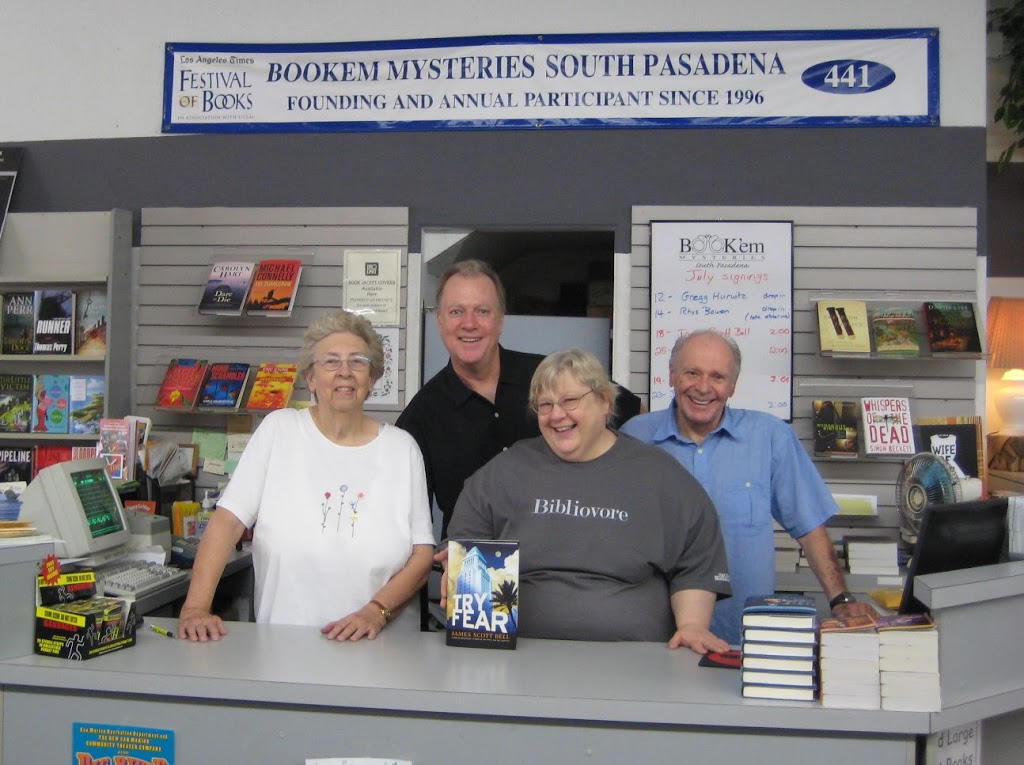
Reader Friday: Bookstores
First Page Critique – Deliverance
Jordan Dane
@JordanDane
For your pleasure, I have the first page submission for a project called – Deliverance. I’ll comment on the flip side. Enjoy!
Shelia Martin changed her outfit twice, from a flair-legged jumpsuit to a long black dress with a thigh high slit on the left side. She reapplied coral lipstick that had faded an hour earlier. She brushed her hair back with her hands and headed downstairs to check on Roger’s favorite dish—grilled chicken with garlic and butter sauce, roasted asparagus, and sage rice, which she had timed to perfection so the moment he walked in the door, removed his jacket, washed his hands, she could serve him a steamy hot dinner.
At the bottom of the staircase she surveyed the set up in the living room, sparkling fire, cozy blanket, oversize floor pillows, flute glasses, Moet and Chandon for Roger, and sparkling cider for herself. As of last week, she hadn’t had a drink in three years.
Her feathered slippers clacked across the shellacked floor. She entered the kitchen with its fug of sage, garlic, onions, and vanilla. The moment Shelia heard about Roger’s new advertising contract —something he’d bid on three months earlier to help pull his business out of arrears—she decided to celebrate with a special dinner.
After twenty-three years of marriage, raising four children—two in medical school, one college freshman and a high school junior—and helping her husband launch an advertising firm, romantic rendezvous were few. Her heart pounded and butterflies knotted in her stomach, as if she were entertaining this man for the first time.
Tonight, Shelia baked a pecan pie torte, simple, easy, but his preference.
She swaddled the utensils in linen napkins, carried them into the living room and placed them on the blanket adjacent to the sweltering ice bucket. She looked at her watch wondering what was keeping Roger; their daughter Rose was expected home by ten, and Shelia was counting on a night with only her husband.
Shelia slipped off her slippers and paced the floor. The neighborhood lamppost flickered, the Maltese barked, indicating the arrival of her neighbor’s husband. She looked at her watch, ten o’clock. Rose would arrive fifteen minutes later than her curfew, her method of challenging authority.
Dinner was spoiled. She scooped up the ice bucket and took it into the kitchen. She clicked off the oven. Her stomach growled, but she had lost her appetite.
“Wasted,” she said. “Where is he?” Scraping the food into the garbage disposal, she glanced at the microwave: ten thirty.
My Critique:
I loved the meticulous attention to detail in this submission. Without telling the reader what is going on, this author is showing the woman’s expectation of perfection or her intent to please her husband, her way. I would definitely keep reading.
I love the minimal back story, without embellishment. The fact that she’s having Apple Cider, suggests she’s a recovering alcoholic, for example. Her meticulous staging of her home and the dinner suggests she’s a stay at home wife and mom who likes a tight ship. It reflects her character in what she does, rather than the author “telling” the reader this. That’s the real strength behind this piece. Rather than me focusing on craft issues, I’m able to delve into character motivation and layering of emotional content, but only to the extent of adding a different dimension that the author may not have intended. Here’s what I mean by that caveat.
There is definitely a mystery about her husband not showing up when he’s expected. As a reader, I’m hooked as to why. I don’t find this woman particularly sympathetic or warm, however, but that could be the author’s intention. It’s like Shelia wants to show off her efforts, more than her husband’s accomplishment. This dinner is HER accomplishment. She has expectations for the evening and he’s messed them up, rather than her being worried about why he’s late.
She throws out the dinner, almost as if she’s punishing him for being late (or she doesn’t realize there are starving kids in Africa), when she doesn’t know the facts. If this happened to me, I’d be trying to reach him by cell phone and worried if he’s gotten into an accident. She’s more worried about her dinner being ruined and her plans upset. It sounds as if her husband is very reliable when it comes to his arrival time, if she can time her dinner to him walking in the door. So this would mean that if he’s late, it’s a big deal, right? (Okay, in reality, who can really do this? My husband is working in the yard and I can yell out the back door that dinner is in fifteen, and he’s still late.)
| Roger could have a very good reason for being late for dinner. |
If the author did NOT intend for this woman to read as cold, it would be an easy fix to add more tension when Shelia shifts from being irritated to worried. She could cover her worry by making him a plate (meticulously arranged) that she puts in the fridge, to mask how her nerves are fraying. (She could cut herself on the plastic wrap container. Lord knows I always do. The blood could be a foreshadowing of danger.) Roger’s never late. She loses her appetite from worry, not irritation that he’s messed her up. Ramp up the pacing, take off the earrings, wipe off the lipstick, look at the clock more.
But I find this writing compelling and I would definitely turn the page. Well done, mystery author! I also want to eat at Shelia’s house, except she’d probably make me dress up.
What about you, TKZers? Your comments?