Honoring a Storyteller

By Mark Alpert

I had a great time over the holidays. We went to my brother-in-law’s house in Maine for Christmas, found a fantastic tea shop in Portland, read an amazing Alan Moore graphic novel (“From Hell”) about Jack the Ripper, went skiing at Shawnee Peak, and drank a lot of Oxbow beer. But when we returned to New York after New Year’s I saw a sad news item on my Facebook feed. Dave Martin, an extraordinary longtime photographer for the Associated Press, suffered a heart attack at the Georgia Dome football field while covering a New Year’s Eve bowl game and died shortly afterward. He was 59.

I met Dave in November 1985 in the newsroom of the Montgomery Advertiser. I’d arrived in Montgomery, Alabama, just the day before; I was 24 years old, and George Wallace was still the state’s governor. It was my first day as a reporter at the newspaper and the city editor was taking me around the newsroom, introducing me to everyone on the staff. At the end of the tour I met Dave, who worked for the AP but used the Advertiser’s photo room. He was tubby, ruddy-faced, perpetually smiling, and had a bushy mustache like Charley Weaver’s (remember him from Hollywood Squares?) This was our first conversation:

Dave: You’re the new guy, right? Listen, we’re gonna call you Astro.

Me: Astro?

Dave: Yeah, we heard you had a degree in astrophysics, so we’ve been calling you Astro for a couple of weeks now, ever since we heard you got the job.

Me: Okaaaay.

Dave: You don’t mind, do you? It’s a good nickname. And you can call me Mullet. That’s what everyone calls me.

His nickname referred to the fish, not the haircut. The mullet is a plain old bottom-feeder, plentiful in the Gulf of Mexico, not highly prized by the gourmands but not bad-tasting either. A proletarian fish, if you will. And the journalist named Mullet was a proletarian photographer. He chronicled the lives and passions of working people. He took heartbreaking shots of men and women staggering through floodwaters, weeping at crime scenes, huddling in emergency shelters. And he captured heartwarming moments of celebration, especially on basketball courts and NASCAR tracks and golf links and football fields. He was a storyteller, outshining all the journalists whose words framed his pictures. His photographs put our articles to shame.

He was also a party animal. He staged an annual shindig at his house called the MulletFest, which was by far the most debauched event that ever occurred in Montgomery. We shared a beach condo on the Gulf one weekend — my girlfriend at the time was friends with his — and we had so much fun playing cards that my girlfriend got ticked off and decided that our relationship wasn’t going to work after all. Mullet was hard to resist. He was just so absurdly cheerful all the time.

But Dave’s natural element was college football, especially Southeastern Conference matchups like the perennial Auburn-Alabama mêlée known as the Iron Bowl. His trademark photograph was the ritual Gatorade-dousing of the winning coach at the end of the game, and he always raced into the scrum of photojournalists on the field to get the perfect angle. If you go to this web page you’ll see a sampling of Mullet’s dunk shots. The first photograph on the page is the one he took at the Chick-fil-A Bowl on New Year’s Eve just moments before he collapsed. Right until the very end he did what he loved.

Key Elements to Writing an Effective Synopsis

Jordan Dane

@JordanDane


He’s flummoxed because these aren’t his hands.

I don’t know of any author who hasn’t been flummoxed (word of the day courtesy of James Scott Bell) by the task of writing a first synopsis. Do they get any easier to write? Not for me. Each story idea presents a unique essence that must be distilled into a short brief. Some authors sell books on proposal (with or without a writing sample), or they use the synopsis to be an initial outline of the story idea (a guide post), or an effective synopsis brief can be a part of a solid query letter or made into a quick pitch to an editor or agent. However you use a synopsis, I thought I’d share what has worked for me.


Key Elements to Writing an Effective Synopsis


1.) The Basics – Generally a synopsis is 5-7 pages long, double spaced with one-inch margins. Be sure to include your contact information on the first page and I would recommend adding a header on every page (in case an editor or agent drops your proposal and the pages get out of order). My headers have my name, title of the book, genre, word count, and page number (on far right). I often have a tag line that I list at the top, before the synopsis brief. If you are represented by an agent, I would list that near your contact information. A professional presentation will make you stand out in a slush pile.


2.) Writing a synopsis shouldn’t be about defining the rules of the game. It should be about why you’d want to PLAY it. Give the editor or agent or reader a sense of your voice and the color of the world you will build. Think of a synopsis as a lure, an enticement for them to want more. Rules are boring. Tell me why the game will be really good, or fun or scary.


3.) Whether there is quirky humor or a dark suspenseful undertone to your book, the synopsis should reflect these elements and not merely be a detailed “who does what where.” If your synopsis is boring, chances are any editor or agent will think your book will be lackluster, too. Give them something shiny to grab at.


4.) Pitch your book with a high-level synopsis brief at the top of your proposal. This pitch should read like a TV log line – a condensed 1-3 sentences about the main elements of your story – character highpoints, conflict, emotion, what’s at stake. No need for specific character names that will only be a distraction to what your book is about. If you get this short pitch right (sometimes called the “elevator pitch”), you can embed it into a query letter or use it on your website for a short teaser. An editor can use this short descriptive pitch of your book to her house and the committee that decides which book to buy.


EXAMPLE:

[Part of this pitch is omitted for confidentiality. I REALLY wish I could share it, but I can’t.]

A depressed and aging widow gets a second wind when she pays a young handyman for services rendered on her unusual Bucket List, in an uncommon “coming of age” story.


5.) After the synopsis brief or the pitch, it’s time to introduce your characters. The first time a new name appears in your synopsis, capitalize their full name to highlight who the players will be. A writing sample will introduce your character to the editor or agent in a different way, but I recommend a brief summary of why  each of your main characters have earned their right to be a star in your story. Highlight who they are, what they want, and why they can’t have it. What will their struggle be? What’s at stake for them?


EXAMPLE:

LILLIAN OVERSTREET has flipped the channel on her rerun life and given up. She’s convinced nothing exciting will ever happen to her. Her husband’s dead, her only daughter treats her like a doormat, and old age is creeping up on her like bad granny panties and has made her invisible. Her only reason to leave the house is her bowling team of widows – The Ball Busters. She’s mired in a chronic case of depression that has seeped into every aspect of her existence, until her daughter GRACE OVERSTREET-THORNDYKE hires “eye candy” to do the renovation of the family home. [This is only the basic set up and does not include the conflict, black moment, and ending highlights.]


6.) Not every aspect of your plot needs to be spelled out, ad nauseam. If there are five main suspects or key secondary characters, give the highlights of who they are and why they earned the right to be in your book and why they could be a game changer. This works for other genres, not just crime fiction. If there are characters who stand in the way of your hero/heroine, showcase who they are and why they are an obstacle.


EXAMPLES (Secondary Characters with sense of color/humor):


VINNIE DELVECCHIO is the only widower on the Ball Busters team. In the small town of Why, Texas, he runs a Deli where Lillian gets her meat. He’s opinionated and brash with a foul mouth. He teases the ladies at the bowling alley by saying, “If you gals ever need someone to slip you the sausage, you come to DelVecchio for quality meat.” Even though his mind is constantly in the gutter, Vinnie knows how to roll a strike, has his own bowling shoes and a hefty pair of designer balls, but he’s only on a “team of broads” for the view.


CANDACE and VICTORIA WINDGATE are twin sisters Lillian has known since high school. The sisters kept their maiden name after both their husbands died in the same mysterious boating accident. No one in town knows how the Windgate twins earned their financial independence or how much money they have, but rumors never run out of steam in Why, Texas. Neither of the sisters can bowl worth a damn. They only come to ‘Why Bowl – Family Center & Tanning Spa’ for the cheese fries and beer.


7.) The major plot movements should be highlighted so an editor or agent will know your story has meat to the bone. I like to use a 3-Act screenplay method and have posted about it at TKZ before at this LINK – I use a big “W” to remind me of the turning points to include in my synopsis. (Michael Hauge’s “Writing Screenplays That Sell” was the reference book that sparked my interest in structure and it has helped me draft my proposals.) The highpoints should show the stakes ramping up and the key turning points in the plot as well as the black moment when all seems lost. If there are twists in the plot (especially surprises), showcase those too.


Key Questions for a 3-Act ‘”W” structure:

Act 1 – How does your book start?

Act 1 – What is the point of no return for your character(s)?

Act 1 – What key plot twist will propel your story into the escalation mode of Act 2?

Act 2 – How will you up the stakes?

Act 2 – What is the black moment when all seems lost for your character(s) and how will your character(s) turn it around?

Act 3 – Do I have a plot twist for my readers?

Act 3 – How will your story end and how will you tie up the pieces?


8.) The ending should be spelled out. Editors and agents don’t like surprises and want to know how you intend to tie things up. If you are writing a romance, the ending is very important so the editor or agent gets a feel for your take on a romantic full circle. I’ve sold books without full disclosure of who the bad guy is, but generally you should “tell all.”


Even if you are an indie author and may never have written a synopsis or included one in a proposal to an editor or agent, it can be a good exercise to understand the essence of your book. A good synopsis will get you thinking about how to create an effective jacket cover description to entice the reader. Writing a synopsis is always a challenge, even if you are good at it, because it boils down your book into a teaser that you hope will lure a reader to buy your book.


For the purpose of discussion, tell us what works for you in writing a synopsis. (If you have any tips to add, please share them.) Or share what challenges you’ve had. Let’s talk, people.


What Can Go Wrong?

by Joe Moore

A huge Happy New Year to all my TKZ friends and blogmates. May 2014 be the best year ever for all of you.

Back in June of 2012, I posted a TKZ blog called Magic Words and how using them can be one of the best methods for kick starting your story ideas. The words are: “What If”. I’m sure that almost every story written probably started with those two words. What better way to get the juices flowing than to start with what if? I consider this a “story level” technique.

Today I want to suggest a “chapter level” exercise. Four words that can help create tension, suspense, conflict, and character-building. They are: “What Can Go Wrong?”

As you’re about to start a new chapter, even if you know what needs to happen, pause for a moment and ask yourself what can go wrong in this scene. Chances are, whatever answer you come up with will give you the opportunity to ratchet up the suspense and thereby keep the reader’s interest. Here’s a recent example of how I used this technique.

In my latest thriller THE SHIELD (co-written with Lynn Sholes) I was to draft a chapter in which my protagonist, her ex-husband, and a Russian colonel who had taken them prisoner, were flying in a 2-engine prop plane from Port Sudan inland across the Nubian Desert to a secret military facility. The outline which Lynn and I constructed about a year ago called for this journey from point A to point B. The only purpose of the chapter was to get to point B, the secret military facility. If I had drafted the chapter sticking strictly to the outline with the flight comprising of light banter between the three and the mention of a few landmarks passing below, it would have been short and dull, almost surely unneeded. The reader would have skipped through it to get to the “good stuff”.

So before I began, I asked myself what can go wrong in this scene that would lift the suspense and conflict, and even give me an opportunity to build character. My answer: what is the worst thing that can happen to an airplane? It crashes. Why would it crash? Well, that area of North Africa is known to be a dangerous place with anti-government rebel and al-Qaeda training camps. So what causes the crash? It’s shot down by shoulder-fired rockets from a rebel encampment.

Keep in mind that the outline calls for the three to get from point A to point B. This is the beauty of outlining: you can still reach your goal but taking an interesting detour can improve the story.

To increase the tension—although the three manage to survive the crash—the rebels are now coming after them. And how about the character-building aspect. My protagonist manages to save the life of her Russian captor when she could have easily left him behind to burn up in the wreckage.

In asking what can go wrong, I managed to turn one chapter into three, prolong the conflict, build character, and still fulfill the plot outline by getting all three to their destination.

As writers, whether we write by the seat of our pants or create a solid outline first, we must never pass up an opportunity to improve our stories. Asking what can go wrong often helps.

How about my friends at TKZ—ever use this or similar techniques in story building? After all, what can go wrong?

Where Have All the Commas Gone?

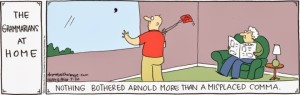
It’s cranky of me to kick off 2014 with a gripe, I know, but what the heck is going on with commas? They seem to be disappearing from the published word. According to the National Geographic’s style manual, “the modern trend is to use fewer commas than we were taught in school.”

Well, I don’t like that trend. The last couple of books I read were penned by authors who appeared to have an almost complete aversion to commas. These writers didn’t merely avoid using the debatable Oxford comma; they seemed to shun commas altogether.

For example, currently I’m reading a book about a major sailing race. The writer seems to be trying to conjure the effect of sailing into hurricane-force winds by her near-total omission of commas.

Here’s a random sentence from the book:

The wind had built continuously with gusts now approaching forty-five knots (about fifty-two miles per hour) and the sky had grown darker.

There’s nothing technically wrong with that sentence, I realize. But my reader’s eye (or should that be “ear”?) was exhausted and needed to take a break before it plunged into “and the sky had grown darker.”

Admittedly, as a writer, I overuse commas. (See?) I inject them into my manuscripts during the first draft stage as a stylistic device. I use them as visual indicators of where I want the reader to pause for breath. One of my final editing chores always involves going back through a draft to remove all traces of my over-exuberant fondness for  commas. (Ditto goes for my overuse of em dashes as well–I am a veritable Queen of Em Dashes. See our discussion in the Comments).

But, dang it all–as a reader, I like to see commas. I even resent writers who want to rush me through their comma-less paragraphs.


Has anyone else noticed the gradual decrease in the use of commas in popular literature? If so, are they destined to go the way of the semicolon in prose, do you think? As a writer, are you trying to use them less frequently these days? Or are you a recovering  over-user of commas, like me?

New Year, New Goals!

by Clare Langley-Hawthorne

Happy New Year from all of us at TKZ and welcome to 2014! 

A new year for me means establishing new goals and, after two international moves in three years, I’m looking forward to setting goals that do not include packing or unpacking a house…Although, our renovations are nearly complete and in the next few weeks my family and I will be decamping from the basement and putting back all the living and kitchen room items, so my packing/unpacking days are not quite over yet… 

I am looking forward to regaining some lost productivity that arose, inevitably, from moves and renovations, and I have some reasonably ambitious plans for 2014. These include:

  • Completion of two new projects: I currently have one out on submission, and one in progress, but still, I feel I need to play catch up after a few slow years, so two additional new projects are in the hopper….ambitious…but, hopefully, achievable. As a birthday present to myself last year I purchased Scrivener and I’m enjoying using this software, especially as it now enables me to set clearer word count goals. Which brings me to my next goal….
  • Setting daily and weekly word count goals: I’ve never approached writing this way but I started toying with word count goals on Scrivener late last year (not that over the holidays I paid any attention to them:)). I’m thinking of using these goals as a means of keeping me more accountable to my writing. But more exciting than this is the….
  • Release of my third Ursula Marlow mystery: I’ll be blogging more about this in the coming weeks, but I’m excited to see this come out – and I can’t wait to show the new cover art for the book as it’s beautiful. 
  • Reworking my website: This is my final goal for 2014. I’ve neglected my website for far too long (ditto for much of my social networking and marketing) so I’m planning on using the release of the new Ursula book as a jumping off point for revitalizing my website and as an opportunity to expand my marketing/networking opportunities. 

So, TKZers, these are my top level writing goals for 2014. I’ll keep you posted on my progress but I’m excited to start off the year with these goals clearly in mind, and, thanks to my husband, a new fountain pen to use to get it all started (my collie, Hamish, ate my last one).

What have you resolved or planned for your writing this year???

Seasons Greetings!

It’s Winter break here at the Kill Zone. During oAWREATH3_thumb[1]ur 2-week hiatus, we’ll be spending time with our families and friends, and celebrating all the traditions that make this time of year so wonderful. We sincerely thank you for visiting our blog and commenting on our rants and raves. We wish you a truly blessed Holiday Season and a prosperous 2014. From Clare, Jodie, Kathryn, Kris, Joe M., Nancy, Jordan, Elaine, Joe H., Mark, and James to all our friends and visitors, Seasons Greeting from the Kill Zone. See you back here on Monday, January 6. Until then, check out our TKZ Resource Library partway down the sidebar, for listings of posts on The Kill Zone, categorized by topics.

Literary Fiction and Me: A Complicated Love Story

@jamesscottbell


Last week’s dustup in the comments, begun by my good friend Porter Anderson, and continued by him on The Ether, may have left the impression that your humble correspondent is a dastardly assassin of literary fiction, ready to step out of the shadows with my sap and conk erudite authors on the head, stick them in the back of a sedan, and take them “for a ride.”

I plead not guilty, ladies and gentlemen of the jury, and thank you for this opportunity to set the record straight.
Let’s step back a moment: Just what is literary fiction anyway? I’m not going to attempt an all-encompassing definition. I’m not sure one exists. Sometimes it’s defined by what it is not: it is not genre fiction, for example. It is not “commercial.” Style and meaning are more prominent in literary fiction. It is “more complicated” and requires more “effort” to get into.
Whatever. My only point last week was to say that some (key word) highly lauded literary fiction seems to me to get in the way of story, not help it. I thought that was an innocent enough remark whose truth is all but self-evident. But then came the storm, and broad-brush asseverations that, even if unintentionally, splashed gooey residue upon your blameless observer.
I am thus compelled to offer evidence, which is why I now post the following. It is from a critically acclaimed literary novel. The author is highly regarded and many people love his work. My intent here is simply to point out that this is a type of writing that does not work for me.May I repeat that, please? For me. The broad brush is in the garage, unused.
It was a lone tree burning on the desert. A heraldic tree that the passing storm had left afire. The solitary pilgrim drawn up before it had traveled far to be here and he knelt in the hot sand and held his numbed hands out while all about in that circle attended companies of lesser auxiliaries routed forth into the inordinate day, small owls that crouched silently and stood from foot to foot and tarantulas and solpugas and vinegarroons and the vicious mygale spiders and beaded lizards with mouths black as a chowdog’s, deadly to man, and the little desert basilisks that jet blood from their eyes and the small sandvipers like seemly gods, silent and the same, in Jeda, in Babylon. A constellation of ignited eyes that edged the ring of light all bound in a precarious truce before this torch whose brightness had set back the stars in their sockets.
There is just too much going on in this paragraph, at least the parts of it I could understand. How did we get from the desert to a place called Jeda, wherever Jeda is? I had to look it up. It’s a village in Iran. I’m still confused. And while I’m all for specific detail in fiction, overkill dulls the effect, especially if the vocabulary is esoteric. I started to get really tired somewhere between solpugas and vinegarroons and desert basilisks. And what the heck is a chowdog? I Googled it and it’s not even a word. The closest is “chow dog,” which is a reference to a Chow-Chow, a fluffy dog with, indeed, a little black mouth. But is that what is meant here? If it is, is the juxtaposition of a stereotypical rich dowager’s pet with a poisonous lizard meaningful in this context? 
Look, it could be that I’m just obtuse. But the effect, to me, is to overwhelm with sound. Maybe it’s supposed to be like a poem. But if I want to read poetry of this type, I can re-read Howl. If I’m reading a novel I want a narrative that doesn’t constantly push me into prolix potholes. This is not an isolated opinion, by the way. See, for example, the famous article “A Reader’s Manifesto.”
Now, what I alsomentioned in my post is that when style and story meet, I love it. Here are a few quick notes I jotted down as I thought about that:
Moby-Dick
Talk about your literary fiction! Talk about your bane of

high school students’ existences! But I absolutely love Moby-Dick. The style is like the ocean itself—undulating currents and crashing waves of narrative. Calms and storms and the occasional port. It’s also a whale of a story! And I love Ishmael from the start. Here’s part of page one:

Whenever I find myself growing grim about the mouth; whenever it is a damp, drizzly November in my soul; whenever I find myself involuntarily pausing before coffin warehouses, and bringing up the rear of every funeral I meet; and especially whenever my hypos get such an upper hand of me, that it requires a strong moral principle to prevent me from deliberately stepping into the street and methodically knocking people’s hats off – then, I account it high time to get to sea as soon as I can. This is my substitute for pistol and ball.
Compare that to the excerpt I posted above. Which one is trying to tell an actual story?
To Kill a Mockingbird
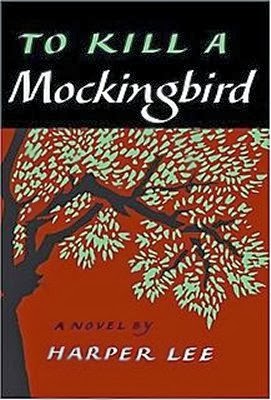
Need I say more? This book gets better with each reading. Donald Maass, Christopher Vogler and I went through Mockingbird chapter by chapter for Story Masters this year, the second time we’ve done so. I found even more richness in the text this time than last. And here’s the thing: Harper Lee never intrudes with style. For her, it’s all in the service of the story.
The Catcher in the Rye
A novel about an inner journey, usually one of the marks of lit-fic. The storytelling key, however, is that we care about Holden Caulfield. Salinger gives him attitude and confusion (the two things adolescent boys have most of) and a prep school experience that increases our sympathy for him. Without such fiction technique from the storyteller’s toolbox, the novel wouldn’t have worked.
Of Mice and Men
I remember reading this in Junior High and weeping at the end. Steinbeck had captured me with his story, and the guy won the Nobel Prize for literature. It can be done! 
Ask the Dust

John Fante’s novel of Los Angeles, published in 1939, holds up as a literary classic. The style pulsates with the heart and yearning of the young writer, Arturo Bandini, bleeding on the page:
Los Angeles, give me some of you! Los Angeles come to me the way I came to you, my feet over your streets, you pretty town I loved you so much, you sad flower in the sand, you pretty town. A day and another day and the day before, and the library with the big boys in the shelves, old Dreiser, old Mencken, all the boys down there, and I went to see them, Hya Dreiser, Hya Mencken, Hya hya: there’s a place for me, too, and it begins with B, in the B shelf. Arturo Bandini, make way for Arturo Bandini, his slot for his book, and I sat at the table and just looked at the place where my book would be, right there close to Arnold Bennett, not much that Arnold Bennett, but I’d be there to sort of bolster up the B’s, old Arturo Bandini, one of the boys, until some girl came along, some scent of perfume through the fiction room, some click of high heels to break up the monotony of my fame. Gala day, gala dream!
This is so much grander than mixed metaphors offering up sound and fury, signifying nothing.
Raymond Carver
With whom I once took a writing workshop. His stories are powerful in their subtlety, and from him I learned the great value of the “telling detail.” See “Will You Please Be Quiet, Please?” for starters.
Joyce Carol Oates
It was during the Carver workshop that I read many literary short stories that have stayed with me, including “Where Are You Going, Where Have You Been?” by Joyce Carol Oates. (Maybe I like literary short stories with question marks in the titles).
Ernest Hemingway
I consider Hemingway’s stories to be among the finest in the English language. “Hills Like White Elephants” is an absolute masterpiece. Another Nobel Prize winner who told stories. Imagine that.
William Saroyan
A somewhat forgotten writer now, but in the 30s and 40s he

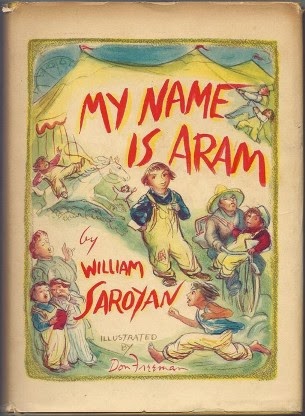
was considered a comet of literary genius. He didn’t stop with short stories and novels. He also wrote plays and memoirs. He won (and famously turned down) the Pulitzer Prize. I think Saroyan’s My Name is Aram is one of the best collections of short stories ever put together. The first and last stories frame the entire work in a way that inspires pure wonder in me. My beloved high school English teacher, Mrs. Marjorie Bruce, introduced me to Saroyan.

Ken Kesey
The first two pages of Sometimes a Great Notion have some of the best writing I’ve ever read. Kesey also told a great story, as Notionand One Flew Over the Cuckoo’s Nestattest.
Jack Kerouac
Even though Truman Capote famously dissed On the Road by saying it was “typing, not writing,” I do have a soft spot for Mr. Kerouac. His most famous novel has some beautiful riffs, as does The Dharma Bums. Kerouac called his literary style “Be-Bop Prose Rhapsody.” 
Joan Didion
For Play It As It Lays and that irresistible opening:
What makes Iago evil? some people ask. I never ask.
I could go on, but this post is already too long. Let me conclude that my love of fiction includes the literary side of the family, too—even though some of those family members are prone to wander off by themselves, leaving readers behind. But I will always be at the house if they want to come back and offer up . . . a story.
Ladies and gentlemen, I rest my case.
So what about you? What is literary fiction in your mind? Is it your cup of tea? Does it ever frustrate you? Who sends you soaring?

Talk it up, because this is the last Kill Zone post of the year! 

…and to all a good night…

I am sorry to see 2013 end. It wasn’t a wonderful year from beginning to end — what year is? — but the good things that happened outweighed the bad. The reason I’m sorry to see it go, however, is that like all of the other ones we’ve lived through we’ll never get it back, never have the opportunity to take a mulligan on it. Once that sand drops through the hourglass, you don’t get it back. We just keep moving through these years until they run out.

My age and station is such that I will not stress myself about things I cannot control. So far, I think that I have the holiday stress thing resolved. I am not always a fan of Jeff Bezos, but this year I bought every single Christmas present that I am giving anyone on Amazon. I didn’t stand in one line, not even to buy the fixings for Christmas dinner that I will be preparing for my ungrateful and unappreciative family (I did go to the store for that, but when I rolled my cart up to the registers, a new register lane opened and I was beckoned through like a contemporary Moses crossing the Red Sea).

I have been using the time I would have spent sitting in traffic (and needing a restroom. Soon.) or standing in line perusing the year-end Best Of lists. I love those lists. I always find at least a few books or CDs or what not that totally blew past me during the year. That for me is a Christmas present, the one I really want. And in a rare exhibition of chutzpah, it’s the present I am asking for from you! Please!

Actually, all I am asking for is your favorite novel, short story, and CD that was published or released in 2013. If you want to tell us why, please do, but don’t feel obligated. Of course, I’ll share:

Favorite novel— I had many that came close but when the dust settled and the smoke cleared it was NORWEGIAN BY NIGHT by Derek Miller. It involves Sheldon Horowitz, an elderly Jew in the throes of early stage dementia, who is transported from his comfortable New York environs to the alien frigidness of Norway by his well-meaning but somewhat clueless granddaughter and her affable husband. Things take off in a big way when Horowitz rescues a young boy from a murderous war criminal and takes off, with a number of disparate parties in hot pursuit. Funny in spots, tragic in others (and terrifying, if you are over sixty and suspect that your gene pool has Alzheimer swimming in it), this is the book that stayed with me all year.

Favorite short story— I didn’t read many short stories this year but of the ones I did — several of which were very good — I loved “Swingers Anonymous” by Jonathan Woods from the DALLAS NOIR collection edited by David Hale Smith. The premise is terrific: within minutes after a regularly scheduled swingers’ party ends, two people are dead and a third has a sudden and unexpected financial windfall. Top that. The story is so good, by the way, that I subsequently acquired and read Woods’ novel A DEATH IN MEXICO and his short story collection, BAD JUJU. Good juju, indeed.

Favorite CD — It was October before I heard a new music project that I could listen to all the way through. TALLY ALL THE THINGS THAT YOU BROKE by Parquet Courts is technically an EP — there are only five songs on it — but each and every one will make you fall in love with punk music all over again, even if you were never charmed with it to start. I listen to music for hours every day but I still hear all seven minutes of “He’s Seeing Paths” — an ode to bike messengers and running from the cops, among other things — playing in the background.

It’s your turn. Thank you in advance. And Merry Christmas!

Reader Friday: Creating A Literary Monster

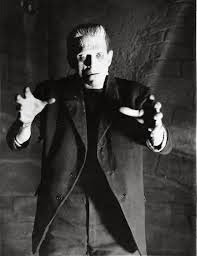
In 1816, during an unusually cold season caused by volcanic eruptions and circulating ash,  19-year-old Mary Shelley wrote a story about a monster as she and some friends struggled to stay warm. FRANKENSTEIN was born.

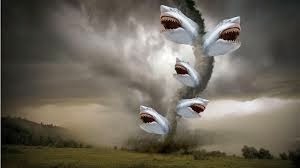
If you were to create a literary monster sprung from our own modern era of extreme and changing weather patterns, what would that monster be called? Can you describe it? (Be advised though, that SHARKNADO is already in the lexicon!) 🙂