Tool Guy wants to know: what writing software or tools do you use?
p.s. Click here for a discussion about some specific tools.

Tool Guy wants to know: what writing software or tools do you use?
p.s. Click here for a discussion about some specific tools.

I’ve read and heard various posts/discussions on where story ideas come, but for me it starts with one foundational notion—maintaining a fertile active mind. An author’s mind should be a rich soil cultivated for the seed of a story. Many elements can inspire and pique the interest of the author, but it takes a keen sense of storytelling for the seed to germinate into a story the writer wishes to tell. The author must be willing to commit to the project because it will take blood, sweat, and tears to complete the harvest and finish the book.
Five Key Ingredients to Nurture a Story
1.) Cultivate Fertile Ground
An author’s mind must be open to many things, much like a scientist is inquisitive about the world. I’ve found that passing judgment is a barrier to creativity. (What do you think?) Often research nurtures leaps that bound from one topic to the next until something resonates with the writer and the germination of a book idea begins. The “what if” question is a great place to start. Even if an idea or research topic doesn’t seem likely for one story, that research or notion may work for another book. Stay open to possibility. Sometimes it takes several ideas to make a story. Only the author writing the book will know when the combination is “write.”
2.) Stay Thirsty, my Friends
Yes, I’m borrowing the words of “the most interesting man in the world” because the notion fits. An author’s mind must be fluid and should be a sponge for ideas and inspiration. A writer’s constant thirst allows a story to take root and grow. The thirst sustains the writer over a career, but it also enhances his or her quality of life by filling the mind with a passion for learning new things. Flexing the mental muscle keeps the author young, don’t you think? Maybe learning new things allows an author’s brain to fend off age like the movie, “The Curious Case of Benjamin Button.”
3.) Heap on the Fertilizer
Yes, I’m going there. Compost and B.S. It takes a willingness to heap on the bull to push the envelope on what’s being published. Writers can look for trends to write and jump on an already established “band wagon,” but I believe every author has the duty to shove on the edge of the creative envelope. Make projects fun. A writer should be willing to write slightly out of their comfort zone to test their skill. It’s a challenge that can stir greater passion and a sense of accomplishment when the work is done. The story should drive the creativity, even if it takes the book and the author to a new place. If an author writes the type of book they want to read, with a good grasp of author craft, I believe they are the marketplace. Others will want to read the book too.
4.) Know When to Harvest
At some point an author will have to finish those interminable revisions and get on with it. Hiding out in revision hell too long stifles creativity. That never-ending book will become more of an albatross. Get your proposals out and do it in stages while you start something new to keep your mind distracted while waiting. Keep writing and finish what you start. Don’t walk away from writing a book because you lost interest or faith in the project. You will learn more from working out the problem than abandoning a book because that problem could turn out to be a chronic and recurring issue in need of a fix.
5.) Have Patience in Taking Your Crop to Market
Don’t rush the process. Hone your craft and put the time in to make your manuscript flourish. I see too many people rush to self-publishing. bypassing publishers and agents. (I’m in support of self-publishing, so please don’t read into my intent.) Some authors avoid the marketplace (selling a book to a publisher or seeking an agent) because they either don’t know how to do it or they wish to avoid getting that pesky pile of rejection letters. No one likes rejection, but it does build character and cultivates thick rhino skin, which comes in handy even after you’re published. Understanding the marketplace builds on your knowledge of the industry. Sometimes testing your worth in the market will give you much needed feedback. Avoid flying a charter helicopter over NYC and dropping query letters in a blanket snow fall. Be more selective and test a query letter. If it doesn’t provide a nibble or two, try something else and tweak your proposal until you get that “better” form of rejection or a sale.
What say you, TKZers?
1.) What triggers a story in you?
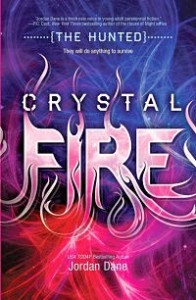 The latest release from Jordan Dane – Crystal Fire (Harlequin Teen, Dec 2013) The Hunted series.
By Joe Moore
In order to sell the books you write, you need to understand some simple marketing basics first. The better you understand these three points, the better you can relate to your audience and them to you. And understanding these points will make you a better writer.
 The easiest to answer is the first: What do you write?
At the highest level, you either fall into the non-fiction or fiction column. Non-fiction includes biographies, history, exposés, how-tos, text books, etc. Fairly clear and straightforward.
The other is fiction, or stuff we make up. Mysteries, thrillers, cozies, romance, westerns, horror, science fiction, historicals, and on and on. If you write fiction but you don’t know what kind, stop right now and go figure it out. Even if it’s a hybrid such as historical romance or cozy western, you need to have it clear in your head. The reason you need it clearly defined is that it will help you also clarify and understand your audience.
How can you define what you write? How do you know your audience? Read books that are similar to what you like to write. Compare their styles to yours. See how those books are defined and categorized. That very well could be the answer you’re looking for. Look at the Amazon pages for those books and their authors. Amazon will show you what other books are being bought by the same audience. Go read some of those books and authors. Now you’re zeroing in on the answer to what you write.
The second question is: How do you write? My blogmate, Kathryn Lilley, thoroughly covered the subject yesterday in her post Which Writer Species Are You? Go read it, then come back. I’ll wait here.
Okay, let’s move on to the most important and hardest to address: Why do you write? Why do you get up before dawn to get a few pages in before heading off to work? Why do you give up time with family and friends to type away at your WIP? Why do you feel that if you can’t write, you’ll go crazy? Why do you find yourself on vacation but thinking about plotting, dialog or character development?
Do you write for fame or money or recognition? I sure hope not.
So why do you write?
You must be able to answer that question. Because if you know beyond a shadow of a doubt why you write, it will come out in your work. It will make your words more believable, stronger, and heartfelt. Your reader will know. They may not define it exactly, but they will know. And they will tell others what a great writer you are. It becomes one of the most important descriptions of your writer “job” there is. Be ready at a moment’s notice with your answer. Because “I write thrillers” is easy. Because “I use an outline” is easy. I write because . . . is hard.
Now fellow Zoners, do you know the answer to why you write? Are you willing to share with us?
————–
Coming this spring: THE SHIELD by Sholes & Moore
Einstein got it wrong!
Hey Zoners, this is Kathryn Lilley. I’m trying something a little different today. I’m narrating my post to see how it feels. (Click embedded Player, above). Be sure to comment when you finish reading. Let me know whether you like having audio served with your post.

Here’s my thought about writers: we come in all different flavors and styles. I spent some time today pondering the variety of our styles. Here’s my list of some of the major categories and characteristics of the writer species:
1) The Proud Pantster

 You always plan to outline, but never get around to it. You feel remorseful that your track record is so haphazard. You promise to outline the next one.
 You churn out an impressive quota of words every day. No. Matter. What. You finish projects before deadline, and juggle multiple WIPs while breaking the minute mile on the treadmill. Your fellow writers admire you. And resent you.
You didn’t plan to spend your career writing fiction–it just seemed to happen. A series of lucky breaks meant that you didn’t have to work too hard to get published. You don’t like to talk about how you got started–people get annoyed. Besides, nowadays, you are definitely suffering
6) The Cranky Writer

Words flow easily from you, in delicious, buttery prose. You landed your agent and a contract with a Big-6 publisher within weeks of finishing your first draft. You don’t understand what people mean when they say they’re “blocked.” When you write, you’re simply taking dictation from a band of leprechauns who conjure stories deep inside your brain.

Today I can’t help but weigh in on the latest kerfuffle caused by Isabel Allende’s assertion in an interview with NPR that she wrote her latest mystery novel, Ripper, as a ‘joke’.
She said that she wasn’t a fan of mysteries but decided to “take the genre, write a mystery that is faithful to the formula and to what the readers expect, but is a joke”… I had to digest that statement for a while before I let the full impact of it sink in (and to read the full interview you can visit: http://www.npr.org/2014/01/25/265246811/author-interview-isabel-allende so you can see I’m not misquoting or taking her out of context). Then I sat back and fumed because writing should never be a ‘joke’.
Sure, writers can be ironic and tongue in cheek (which is also what Allende maintains she was doing) but they should never disrespect a genre they don’t read or like, by making it sound as though you can fool readers by simply following the ‘formula’ and get away with it. You can’t. Readers see through that. Readers want writing that is authentic.
Once, when I was young and naive I thought I could write a romance novel. I didn’t read them. I didn’t like them. But I actually thought ‘what the hell’ and so I went to a class on how to write a romance…until I realized (after two classes and one failed attempt at writing the first 3 chapters) that I couldn’t. Not in the strict genre sense of a Mills & Boon or Harlequin novel. Why? Because I couldn’t write them authentically. I didn’t love those types of novels and if I attempted one it would probably be with a less than pure heart (I would have been tongue in cheek perhaps or ironic, but not genuine). To the instructor’s credit, he made one thing very clear right from the start: If you thought you could just make money out of writing a romance then you’d come to the wrong place. If you didn’t love reading romances, you would fail. Why? Because you wouldn’t be true to the genre or to the authenticity required for the true writing process.
Back to Isabel Allende – who, I might add, is an author whose work I used to admire. I loved her magic realism novels, The House of The Spirits, and Of Love and Shadows. But now I’m not sure what to make of her as an author, because I don’t understand what she thought she was doing writing a book in a genre she didn’t like as some kind of ‘joke’ (I’m also totally bemused as to why she would tell someone that was what she was doing in an interview!).
My take away from all of this is that you have to be authentic in all that you write. Your heart has to be in the right place. If you intend to be humorous, ironic or satirical that’s fine – just don’t pretend otherwise, and but don’t use that to disrespect genuine readers and lovers or a particular genre. To do so makes me cringe.
So, Isabel Allende, you have now lost both my respect for you as a writer, and my love for your books as a reader. Tell me TKZers, what was your reaction?

by Joe Moore
Today’s first-page critique is from a story called QUEST FOR HONOR. My comments follow.
July 2011
Somalia
Every night, he saw the children. No matter how tired he was, no matter how preoccupied he was from the events of the day, no matter anything, he dreamed. And in his dreams, they came for him. Their eyes were filled with pain and supplication, and behind them was always a shadow, looming in the back, dark and menacing, and sometimes he could hear its wicked laughter, smell its fetid breath.
On this hot night, he woke up screaming. “No! Save them! Save them!” Bolting upright suddenly, the bedclothes fell away from him, drenched with his sweat. He was panting. The shadow had gotten close to him, as the children milled around, and he felt its cold tendrils snaking around him, drawing him closer…
There was a knock at the door, then a muffled voice.
“Yusuf! Are you all right?”
He didn’t answer, and the door edged open. The face that peered in was that of Amir, his most trusted lieutenant. Did the man never sleep? “Are you ill, Yusuf? May I get you anything?”
In his bed, the man shook his head, banishing the last wisps of the faces, knowing they would be back, perhaps as soon as he nodded off again. “Thank you, Amir, but I am fine. A bad dream, that is all.”
“Shall I prepare some hot tea? It often helps me sleep.”
Yusuf started to object, but said, “That would be good. Please, bring it to the library, and join me.”
He rose and pulled on a dry robe, switching on the light. The lone overhead bulb sputtered but stayed on. At least the electricity was running, he thought. Otherwise it would be candles and lanterns, as it was some nights. How could this truly be part of the land of Allah’s people if it could not consistently provide even the bare necessities? Ah, but what necessities are we thinking of, Yusuf reminded himself. The ones you enjoyed back in America, at university? Or the ones the true believers scraped and scavenged for every day, here in the barren countryside, the crowded cities, that made up the lands of the Prophet, blessings be upon him?
I’m not a big fan of opening a book with a dream, but this does set the stage for drama. The writer has a good command of storytelling. I have a suspicion that this is going to be an emotionally charged tale. There’s not much I find to critique here. Some unneeded use of adverbs and extra wording. A bit of cleanup can cure that. But overall, a good start. Here are a few suggested line edits.
Avoid passive voice. Change “Their eyes were filled with pain and supplication…” to “Pain and supplication filled their eyes…” Change “…and behind them was always a shadow, looming in the back, dark and menacing…” to “a shadow, dark and menacing, loomed behind them…”
Avoid run-on sentences. “Their eyes were filled with pain and supplication, and behind them was always a shadow, looming in the back, dark and menacing, and sometimes he could hear its wicked laughter, smell its fetid breath.” to “Pain and supplication filled their eyes, and a shadow, dark and menacing, loomed behind them. Sometimes he heard its wicked laughter, smelled its fetid breath.”
Avoid adverbs and unneeded words. For example: “Bolting upright suddenly, the his bedclothes fell away from him…”
Avoid confusion. “Did the man never sleep?” is Yusuf’s interior thought yet the reader might feel it is Amir who thinks it. Place it in italics. Then start a new paragraph with “Are you ill, Yusuf?”
Avoid unneeded words. Change “In his bed, the man shook his…” to “Yusuf shook his head…” We already know he is in bed.
Avoid simultaneous actions that are not simultaneous. Change “He rose and pulled on a dry robe, switching on the light.” to “He rose, pulled on a dry robe, and switched on the light.”
I think this is a good first draft. A little editing would make it tight and crisp. I would definitely keep reading. Thanks to the author for submitting this first-page sample. Good luck.
How about you guys? Would you turn to page 2 or move on?
As you near the finish line for your Work in Progress, the tendency is to speed things up. You can’t wait to be done and take a break. You’re tired of the story and want to end it already. Or you’re approaching your deadline and have to finish in a hurry.
And yet this is when you need to slow down and let the finale unfold in exquisite detail. Haven’t you watched a TV show that ties up all the loose ends in the final two minutes? How annoyed does that make you feel? As for a book series, fans of Harry Potter felt frustrated by the brief epilogue. They wanted more explanations of what would happen to the characters in life beyond the book. So slow down when you approach completion.
The heroine’s confrontation with the villain should reveal every heartbeat, every pulse-pounding moment of fear. This is when you want time to slow so you can catch every nuance. Yes, the pacing must be quick, but you shouldn’t cheat the reader out of emotional reactions, either during the scene or afterward. And the fight sequence, if there is one, shouldn’t be rushed.
What about when the villain has been defeated? I always like to have a Wrap Scene where quiet reflections on lessons learned, a review of events, and/or a self-revelation occurs. This is where you tie up loose ends and perhaps frame the story with the same people or setting as the opening sequence. Make sure your readers go away with a sense of satisfaction.
Putting some distance between yourself and your work will help you gain perspective. Go back after two weeks, if you have that luxury, and read the ending again. Flesh out any spots that are sparse and be sure you’ve covered all the bases. Your finale will dictate what impression readers take away when they close the book.
Do you tend to race ahead when you’re approaching the finish line?