Choices and Crises Show True Character

Today I welcome our guest blogger, Becca Puglisi, to TKZ. Becca is an instructor and author specializing in character-building strategies for writers. Enjoy her tips and advice.

——————–

I’ve recently become addicted to Showtime’s Sons of Anarchy. Thanks to Netflix, I was able to watch the first four seasons in an becca1obscenely short period of time. One of the things that makes the show so compelling is the sheer amount of pressure that the characters are under. It honestly never lets up, and, against all odds, it keeps getting worse.

One of the most interesting characters is the protagonist’s mother, Gemma. She’s incredibly flawed, but she has great strength, too. I find myself rooting for her despite her seeming determination to train wreck her own life and everyone else’s in the vicinity. This makes me wonder: how do the writers present such a complex character so believably? I mean, how can a woman be controlling and submissive, manipulative and nurturing, loyal and selfish—and all of that come through to the audience without it being contradictory or off-putting? In thinking about how to write complicated characters well, I’ve realized that crises and choices are hugely important.

Choices usually come with an element of time. The character is able to slow down, think things through. This is invaluable in a story setting, where the reader is privy to the character’s thoughts, because thoughts reveal truth. Characters, like real people, are usually not 100% honest with others when it comes to personality. They hide flaws, disguise them as strengths, and mask unwanted traits with more desirable ones in an effort to mislead. But a character’s thoughts are unvarnished. This is where the character can be her true self. Through the internal dialogue that accompanies a difficult decision, readers will see what the character truly values, what she wants, what she fears. This is one reason that choices provide an excellent opportunity to show true character.

Another benefit is that readers are able to see and evaluate how the character eventually comes to his decision. Does he base it on morality or ethics? If he’s uncertain, who is able to sway him, and why? Does fear drive him, or insecurity, or some other weakness? Does he ultimately do what’s right, or what’s easy, or what other people expect him to do? If you want to reveal your hero’s true personality, give him a difficult choice and some time to mull it over, and readers will be able to see who he is at his core.

Crises are equally beneficial, but for a different reason. When a character is thrust into a critical event that requires immediate attention, there’s no time to think. In a crisis situation, he’s forced to respond in a knee-jerk fashion, without dissembling. He just reacts. In doing so, he reveals his true self. I love how Stephen King does this with his villain in The Dead Zone. Presidential candidate Stillson is a cruel, emotionally unbalanced individual, but, like many politicians, he has the public snowed. Then, during an assassination attempt, he snatches a young child and uses him as a human shield. A journalist catches Stillson’s instinctive response on camera, revealing him as the self-serving coward that he always has been.

The beautiful thing about crises is that while they work quite well at the time of the climax, they can be utilized as effectively at any point in the story.

So if you’ve got a multi-faceted character whose real personality you’d like to reveal, consider giving him a tough decision or throwing him into a crisis situation. Then sit back and watch his true colors bleed.

————-

Thank you, Joe, for inviting me to post at The Kill Zone today. As a special thanks for the warm welcome, I’d like to give away a PDF copy of my book, The Positive Trait Thesaurus: A Writer’s Guide to Character Attributes. Just leave a comment to enter for a chance to win. The giveaway runs through December 13th, after which time I’ll pick a winner. Best of luck!

Becca Puglisi is the co-creator of The Bookshelf Muse, an award winning online resource for writers. She has also authored a number of nonfiction resource books for writers, including The Emotion Thesaurus: A Writer’s WHW-Logo1-150x150Guide to Character Emotion; The Positive Trait Thesaurus: A Writer’s Guide to Character Attributes; and The Negative Trait Thesaurus: A Writer’s Guide to Character Flaws. A member of SCBWI, she leads workshops at regional conferences, teaches webinars through WANA International, and can be found online at her Writers Helping Writers website.


First Page Critique: GAMES OF CHANCE

We have a first-page submission for critique today, titled GAMES OF CHANCE.  My comments follow.

***
As Callie crested the hill, the finish line appeared, lined with colorful flags – and then receded, as another girl thundered past.

Callie chased her on a gentle downhill slope, three hundred meters of fairway to the finish line of the State Championship. Through eyes hazy with exhaustion and the remnants of a cold, she could see Anna and Hanna, her twin teammates, sprint past the finish marker in a dead tie.

Two hundred meters to go and Callie could hear the gasping breath of another runner closing on her. Five strides later, the girl was beside her. Callie pumped her arms harder, willing her legs to move faster. Legs that could carry her for miles were failing now with the finish in sight.

Noise flooded both sides of the course and, penetrating over it, someone shouting her name. The cheers of the fans and coaches slid past her as she fought for position.

She saw the red singlet and slashing white diagonal as the last of the Fairchild Academy runners eased by her. Swearing, Callie leaned forward to gain momentum, rising up into a full sprint, her calves already starting to cramp, alternating with each foot strike, each spasm an opportunity to let the girl go, to quit.

Seventy meters and Callie still matched strides with the Fairchild girl.

At fifty meters, another girl caught both of them. She was a tiny runner from a small school up north, and her breath came in sobs.

The three of them closed on the flags at the top of the finishing chute. Callie felt the agony of each breath as it exploded from her lungs, too little air for starving muscles. The blood pounding in her head drowned out the runners beside her, and Callie’s vision squeezed down to a small circle focused on the white line that marked the end. She drew on the struggling efforts of the runners next to her, seeking just a small advantage.

The sobbing girl finished one step ahead, the last sob a moan as she collapsed. Instinctively, Callie dodged the fallen runner as she lunged past the line, a half-step ahead of the Fairchild runner.

Relief and exhaustion mingled with joy but a small doubt blossomed.

Was it enough?

***

My comments:

Update:

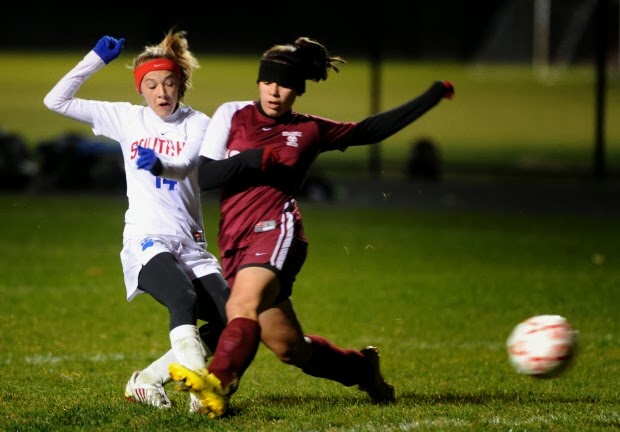
Clearly, I erred in attaching a soccer image to this story about a race! I formed a clear picture of a drive down a soccer field in the first paragraph and never let go of that image, despite counter-cues in the rest of the page. That shows how readers can go offtrack–which is a subject for another blog!

*** 

I appreciate the way this page describes Callie’s efforts during her  thundering drive toward the finish. The writing regarding the action, concentration, and her sense of being pursued by others was convincing.

I do think that the first lines lost a bit of impact due to their construction. “As”used twice in the opening paragraph. It’s important to vary your sentence constructions, especially in openers. Also–and this is just my personal opinion, others may disagree–starting a story with a sentence that begins with “as” is a weak way to open a scene. As readers, we don’t yet have any context for relating the “as” to anything.  The writer should the character’s main action, rather than introducing “as” right off the bat. 

While I enjoyed the way the running action was described, I do think we need to learn a bit more about Callie in this first page. As we’ve discussed so many times here on the blog, the first page of a story has to pull the reader into the character’s world. As currently written, we only get the idea that Callie is trying to score a soccer goal. (Update: Oops!) For me, that situation is not quite compelling enough for a first page. We need a hint about Callie’s character and motivation, as well as the story to come.

One nit: There were too many undifferentiated characters, I thought. To enhance the suspense, the writer might consider focusing Callie’s running battle on one particular opponent in particular–especially if that rival will figure later in the story. (From my Soccer Mom days, I predict that the opponent will be the Dreaded Goalie.)

All that being said, I think the writer displays a promising strength for conveying action. That’s a a real plus. Keep going, Writer! And thank you for submitting this page for discussion today.

TKZ’ers, what are your thoughts about GAMES OF CHANCE?


Survival Guide

by Clare Langley-Hawthorne


The holidays are almost upon us and it’s the time of year where we all tend to take stock of the year that’s passed and start thinking about resolutions for the year to come. For me this typical means riding a roller coaster of emotions regarding my own writing – I berate myself for all things I failed to achieve, didn’t seem to get around to doing, resolutions I failed to fulfil…then I come back up and feel good about all that I did manage to do, the accomplishments and for the progress made. Then I go back around for another ride:) Ah, the holidays…

It’s also the time of year when, at various holiday events, I meet people who cross-question me about what it means to be a ‘writer’. These tend to be divided into two camps – the first who think it must be nice to sit around all day daydreaming and having fun and the second who can’t imagine how anyone could possibly have the self-discipline, patience or confidence to be a writer at all. I’m never quite sure how to respond to either camp because, as Jim said in yesterday’s post – the publishing industry seems like such a crap shoot sometimes. It involves personal tastes, fads, uncertainties as well luck and often the decisions made don’t make much sense at all. We’ve all wondered why some books are published and others rejected, why some books are successful and others aren’t…and most of the time, when people ask me why, I can only shrug my shoulders and say “that’s the industry for you!” 

So today, I thought I’d outline some tips for coping with those myriad of questions you get around the holidays about what it means to be a ‘writer’ – a survival guide if you will – for a time of year when, let’s be honest, we often question why the hell we do what we do!

Firstly, don’t be honest (well not entirely)….people don’t want to really know about the angst, self-doubt and hair-pulling we go through as writers. They want it to sound easy – something they could do, if they just had the time to do it. So I tend to smile when I’m asked ‘what’s it like to be a writer’  and  say it’s great, and move on – because unless you’re actually in the trenches as a writer, you have no idea what it really means. 

Second, ignore all the crap about ‘success’ as it’s impossible to talk about when you’re going to be on the New York Times bestseller list or when some one’s going to make a movie of your book…likewise don’t talk about the ‘numbers’ because I think authors can go crazy enough thinking about sales numbers without getting into a competition about it. Which leads to…

Third, don’t go into promotion overload. Some amount of self-promotion is fine, but just because its the holidays doesn’t mean you have to feel the need to go into a promotion frenzy.

Fourth, start setting realistic goals for the next year. Patience, persistence and writing the best damn book you can is really what you need to aim for, but I find it helpful to set measurable goals for the following year (that helps too, when you start riding that roller coaster of emotions). My first blog post for the new year will probably identify some of these goals but in the meantime my plan is to hunker down, meet my writing targets for the rest of the year and try to stay sane…

Anyone got any other tips for my holiday survival guide for writers??


How Much Money Is In the Self-Publishing Game?

@jamesscottbell


I have a good friend who is a big-time business guy. One of his pet sayings is, “Data drives decisions.” In a bottom-line world, you can’t depend on sentiment, heart, hope, dreams or desire. Those all may factor into starting a business. But if the business is not making a profit, and you have hard data showing you why, you either change course or go under.

Does “data drives decisions” have any quantifiable purchase in the world of book publishing? When I became a published writer, having come out of a background in both law and business, I looked at the industry from a writer’s perspective and said to myself, “This shouldn’t be called a business at all. There are too many variables and quirks outside of anyone’s control. There is no way to reach an assurance level on ROI (return on investment). This is more like craps.”
Publishers are more in line with business practices, but even they cannot escape the gaming analogy. I mean, look at the wild 1990’s in publishing and the crazy money being thrown around, and what was happening? Publishers rolling the dice and occasionally coming up with seven. But more often than not it was snake-eyes, and books they thought would be sure hits were flops. Occasionally a book that had minimal support shot up to huge popularity. When other publishers tried to replicate that, it usually didn’t work.
I think the phrase, “What’s up with that?” started in a Manhattan conference room during those years.
Now we have entered a new world where the rules of the game are even murkier. Everyone’s trying to figure out what works. And what data to analyze.
Digital Book World and Writer’s Digest conducted a 2013 survey of authors to try to get at some answers. The survey asked the writers to identify as Aspiring, Self-Published, Traditionally Published, or Hybrid. One part of the survey took a look at how much money writers in each category are making. Predictably, the hybrids are doing the best vis-a-vis annual income. The income stream is analyzed by Dana Beth Weinberg over at the DBW site. I commend the article andthe comments to you. A couple of pull-outs:
The survey results show that hybrid [authors are] achieving greater success with their self-publishing efforts than…authors who only self-publish, but they don’t tell us why.
This is probably immune to precision. There are so many factors that are not replicable, and the landscape changes almost weekly. But there are clues:
Perhaps the greater focus on earning income among hybrid authors or their experience in traditional publishing leads them to make more strategic decisions about what to self-publish, how to bring it to market, and how to promote it.
This is undoubtedly so. The more you approach this game with a strategy, the better your odds of making some bank. Perhaps a more suitable analogy is blackjack. If you know the fundamentals you can almost draw even with the house. If you know how to count cards, you can improve your chances significantly. Which is why if they catch you counting cards in a casino, Sal escorts you out.
Or perhaps [hybrid authors’] greater success is the result of little more than the name-recognition boost that comes with having a brand developed in the traditional publishing world.
I would say there is more to it: the ability to write, proven over time.
Or maybe their success is a matter of selection: The hybrid authors surveyed were good enough to break into traditional publishing due on average to some greater talent or marketability that also translates well into the world of self-publishing.
I wouldn’t make any claims about talent, but I have worked hard on my craft from day one. When self-publishing became a viable option, I do think I’d reached a certain professional level I could depend on.
For authors deciding how to publish their work, the key question is this: Is there some set of practices that any author might adopt to improve chances of gaining readers and income from self-publishing, or are there advantages related to being a traditionally published author that might remain out of reach for the vast majority of self-published authors?
After a year-and-a-half into my own self-publishing journey, seeing not only what worked for me but also a number of colleagues, I set down what I saw as the key

principles, and came up with 5 absolutely unbreakable laws. I stand by them. They are the foundation for creating your own “set of practices” for self-publishing success. 

For example, the primary law is, “Write the Best Book You Can.” The set of practices you design to make it so might involve craft study, writing, feedback, writing, finishing, revision, craft study, coffee, more writing. Plans are unique, but the writer who pursues a strategic and thought-out approach to getting better is more likely to win in the end. 

The data from the DBW/WD survey also gives a realistic snapshot of what kind of winnings writers might expect. Big returns are rare but they do exist. This is, not surprisingly, what the entire world of free enterprise is like. Boffo successes are always fewer than tanks, near-misses and modest returns.
  
I would also remind writers of two axioms from the world of business:
Quality is Job #1.
Your mileage may vary.

Remember those two things. The first will keep your priorities straight and the second will keep you sane. And keep writing, because you won’t win if you don’t play.

Putting It Off or Getting It Done


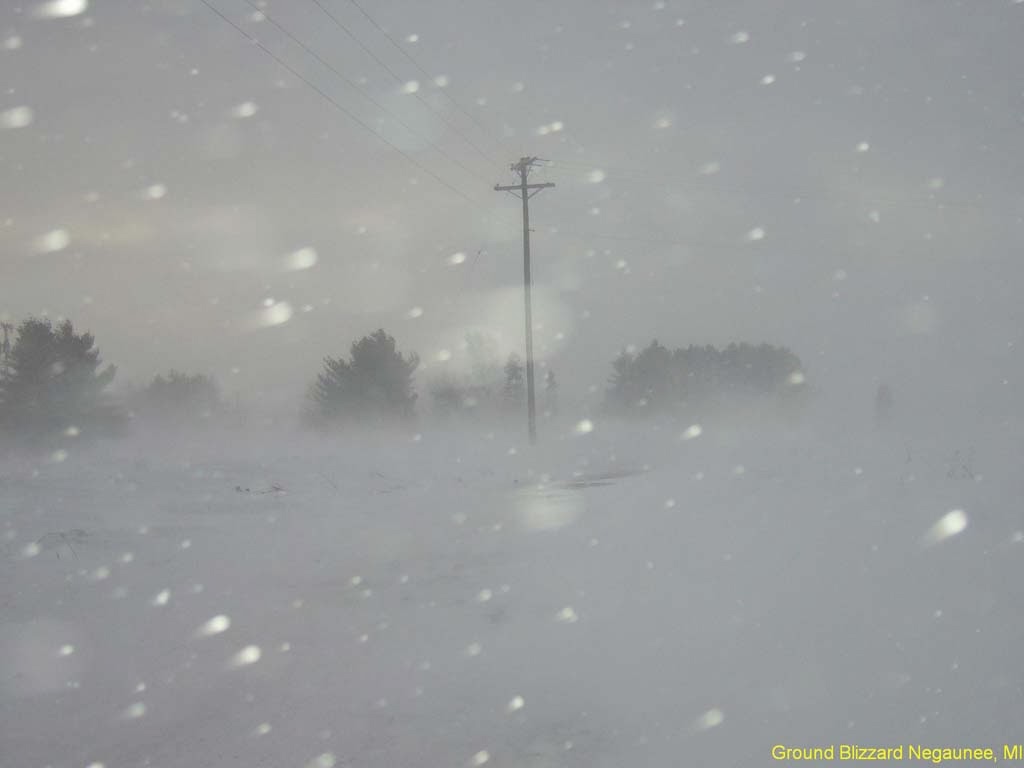
It’s snowing. Outside. Right now. I have to go out and shovel in a few minutes. My home faces north and when you live in the Midwest that means that when the white stuff eventually begins to melt — usually sometime in April your side of the street still has ice on the driveway while your neighbors across the street are hosting picnics on theirs. Accordingly, one has to keep up with it. Shovel or perish, as it were.

That brings me to our exercise of the day. Writing is like shoveling snow. Sometimes, in my case, it’s like shoveling other substances as well but we’ll discuss that at another time. For now, let’s look at writing and shoveling snow, and the similarities they share:

1) You have to get your tools ready. For snow, it’s gloves, boots, coat, coffee, and shovel. For writing, it’s a keyboard, a word-processing program, and coffee. Otherwise, you’re just sitting there, or standing there, with your…well, you have to get your tools ready.

2) You begin with a white expanse and change it to a dark one.  With snow removal, you proceed in an orderly line across your driveway until you hit the bottom of it (in my neighborhood, real men use shovels, not snow blowers. There’s a deed restriction to that effect). With writing, you go line by line across the paper, or the screen, until you hit the bottom of the page. That brings us to the truism that

3) The job is never really done. Just when you think you have finished shoveling it starts snowing again, at least until the aforementioned April. So too with writing; you no sooner hit the bottom of the page than a fresh, new white one pops up.

4) There’s always a reason to put it off. You may have a driveway to shovel, but  it’s too cold, or it’s still snowing, or you have a blog to write that’s due tomorrow, or there’s a Law & Order: SVU marathon that’s running somewhere on cable. You may have a novel or story to write, but you’re too tired, too distracted, you have phone calls to make, or there’s a Law & Order: SVU marathon that’s running somewhere on cable. However,

5) You still have to start, or you’ll never get finished. That is true of just about everything, actually. But never fear, because

6) If you’re lucky enough to live next door to Jim Bell, you can just watch him if you want to learn how to do it better. That’s true of writing, and it’s probably true of snow shoveling as well!
So: what’s your excuse, the one that stands in the way of getting what you want most — the one that you put in front of yourself —that prevents you from doing what you need to do now?

When Bad Things Happen to Good Books

By Elaine Viets

Install-A-Laundry-Chute-af

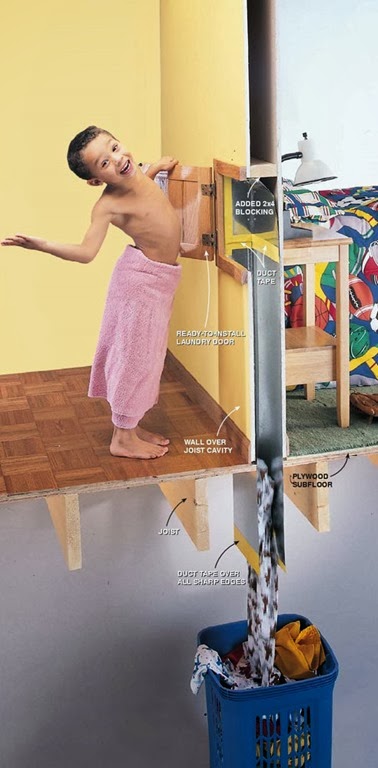
    So there I was reading my favorite blockbuster novelist, a writer with a shelf full of awards, kudos from critiques, a movie and more, when I was stopped by a stupid mistake. The angst-ridden hero tossed his clothes down the laundry shoot.
    Well, chute. What happened to this normally careful and precise author? Where were his editor and copyeditor?
    No, I’m not giving you this writer’s name. These mistakes happen to us all. Keep reading and I’ll tell you how I embarrassed myself in front of three hundred thousand readers.
    Let’s just say that homonyms happen.
    Here are a few common mistakes that make you look like an amateur. And no gloating, please. The next brain freeze could be yours.

 
– It’s bloody embarrassing when mystery writers have police and forensic experts talk about blood splatter. It’s spatter. Get the L out of there.

– Watch those bears. Grizzly murders are cringeworthy, unless the person was killed by a bear. Grizzly is another treacherous homonym.

– Triple threat. “Peaked,” “piqued” and “peeked” give writers three ways to go wrong. How often have you encountered versions of “this peaks my curiosity”? I didn’t want to see it, but I’d already “piqued” at the page and knew I wasn’t getting a “peek” literary experience.
 Heineken_Beer_Bottle
– Twisted. Beer drinkers know that Heineken does not have a twist-off cap, but many writers don’t. Your character needs a church key for those green bottles.  

jack daniels

— Jack’s possessive. Jack Daniel’s always has an apostrophe. I had a sobering discussion with a copyeditor who wanted to remove the apostrophe, but that’s when hanging around bars paid off. I knew Mr. Daniel was possessive about his Tennessee whiskey.

70_vw_beetle_500-thumb

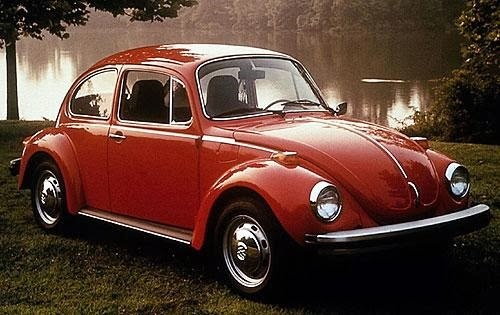
– How to drive readers crazy: Get car details wrong.  In 1968, hippies did not open the hood of their VW Beetles and check the engine. Beetles back then had rear-mounted, air-cooled engines. Check car details on the Internet.

– All wet. No, you do not “wet” your appetite. You sharpen it. Put that H to work.

— Lift that bale. No, you don’t tow the line. It’s not a rope. Webster says when you “toe the line” you “conform rigorously to a rule or standard.”

– Watch those foreign words and phrases. When I was a newspaper reporter, I wrote about a waiter who wore “liederhosen” at a German restaurant. Amazing, a reader told me. A man with singing leather pants. I should have had the waiter wearing lederhosen – leather britches.
    That extra “i” made a fool out of me.

lederhosen

Author Lifeboat Teams

Nancy J. Cohen

An author lifeboat team is a band of authors who join together to cross-promote their work. I became aware of the concept when I got invited to join one. This particular group was made up of paranormal romance authors, and their rules included sharing each other’s posts on Facebook and being responsible for one post a week.

clip_image002

I thought that obligation and the specific genre focus might be too restrictive for me, especially since I write in two genres. So while flattered to be asked, I politely declined. The idea brewed in my head, though, so when Terry Odell invited me to join her fledging group, I seriously considered and eventually said yes.

clip_image004

Why did I like this team? While we were encouraged to support each other with retweets and shares, we weren’t committed to any particular schedule. And the group consisted of multi-published authors in various genres. This interesting mix could attract new readers, and that would benefit our primary goal of increasing our visibility and readership.

It’s been one year since I joined. What have we accomplished in that time? We’ve established our website, Booklover’s Bench.

clip_image005

Besides each of us having an author page, we have added Behind the Scenes and Excerpt features. We run a monthly contest via Rafflecopter with a $25 Amazon or BN gift card as the main prize and e-books from each of us for runners-up winners.

In another effort to cross-promote, we’ve also started offering each other’s books as prizes for personal newsletter contests and sharing the resultant mailing list.

On Twitter, we’ve each created a List for our team members. It’s easy to access the list and retweet everyone’s posts that way.

In terms of results, my newsletter in Sept. 2012 went out to 4542 recipients. In Oct. 2013, I sent it to 5339 folks. That’s an increase of nearly 800 names. Some of these might have come from my own contests, but I’d say the majority of new entries are thanks to BB.

As one of the extra options on our Rafflecopter contests, we’ve put “Like my Facebook Page” as an added choice. My FB Likes have increased quite a bit as a result. So this is another benefit.

We’re also a sounding board for marketing ideas. I learned about doing a Facebook launch party from one of my team mates. If we have an aspect of the biz we need input on or just want someone to listen, we have each other. In the future, maybe we’ll expand and hire a virtual assistant. Our only requirement is to do what we can to support each other, to tweet about the contests, take over the $25 gift card contest prize once every couple of months, and support our efforts any other way we can. We split the cost of the website hosting and manage it ourselves.

Bench

Other ideas for future consideration are a subscribers-only tab on our website for free downloads of bonus materials or short e-reads, a blog hop, a street team, a Fan of the Month selection.

How do we communicate? We’ve held two Skype conference calls so far with a third one coming up to discuss our ideas and goals for next year. Otherwise, we have a private Facebook group page and a yahoo group listserve. Or we can send individual emails.

It’s hard to work alone, especially since most marketing efforts have moved online. Consider gathering together your own author lifeboat team. Again, it’s a group of authors who band together to support each other on social media with the goal of expanding their readership. How your team operates and what you do for each other is your choice. See what other groups do and borrow their ideas that appeal to you. We all learn from each other, and we must support each other, too. Just like we do on this group blog.

As Thanksgiving passes us by, thanks to each one of you for following us and for joining our discussions. We share a wealth of information about writing craft and marketing that contributes to our online community. We’re grateful for all our cyberspace friends.

TKZ Resource Library is Growing!

by Jodie Renner

All of you authors, both aspiring and published, who follow this blog tell us all the time what a wealth of writing, publishing, and writing-biz resources are in the blog posts here. I couldn’t agree more, so I thought it would be a good idea to make it easier for TKZers to find posts on topics that interest you.

I’ve been compiling many of these excellent articles by topic, to make them more readily accessible, and here are the categories so far, in a list partway down the sidebar and below. I just added the last one, on self-publishing, a few minutes ago.

Click on the category title to browse the articles on that topic, and feel free to offer suggestions for more topics in the comment boxes below.

TKZ LIBRARY


Keep on writing!

10 Ways to Add Depth to Your Scenes

Captivate_full_w_decalby Jodie Renner, editor & author

[By the way, check out our growing list of resources in the TKZ Library.]

Congratulations! You’ve gotten a first draft of your story down, perhaps after writing madly for NaNoWriMo. Now it’s time to go back and reassess each scene to see if it’s pulling its weight.

Besides advancing the storyline, scenes should: reveal and deepen characters and their relationships; show setting details; provide any necessary background info (in a natural way, organic to the story); add tension and conflict; hint at dangers and intrigue to come; and generally enhance the overall tone and mood of your story.

To bring your characters and story to life, heighten reader engagement, and pick up the pace, try to make your scenes do double or even triple duty  but subtly is almost always best.

For example, a scene with dialogue should have several layers: the words being spoken; the viewpoint character’s real thoughts, opinions, emotions, and intentions; the other speaker’s tone, word choice, attitude, body language, and facial expressions; and the outward reactions, attitudes, and actions of both.

Ten key ways you can intensify your writing and enhance the experience for readers:

1. When introducing new characters, remember to show, rather than tell. Reveal their personality, motives, goals, fears, and modus operandi not by telling the readers about them or their background, but by their actions, words, body language, facial expressions, tone, and attitude. If it’s a viewpoint character, show their thoughts, emotions, and physical sensations. Also, show characters’ reactions to each other. Then let the readers draw their own conclusions about the characters and their true intentions.

2. Enhance your descriptions of the setting and other characters by filtering them through the mood, attitude, and reactions of the POV character for the scene. This not only gives the readers a visual image of whatever the character is looking at, but helps with character development. We learn more about the character’s personality and what is driving / motivating him by his observations of his surroundings and others around him. And add in other sensory reactions – sounds, smells, even tastes and tactile sensations.

3. Use close point of view to deepen characterization of the protagonist and other POV characters by showing inner conflict, doubt, or indecision, or by contrasting their words and outward reactions with their true inner feelings.

4. Make dialogue do double-duty. Dialogue should not only convey information, but also reveal character & personality and advance the storyline. Dialogue action tags, which can replace “he said” and “she said,” tell us both who’s speaking and what they’re doing, as well as often providing info on how they’re feeling and reacting. For example:

Chris stood up and ran his hand through his hair. “What the hell are you talking about?”
Jesse set his coffee down, determined to stay calm. “Hey, man, relax. I told you about it last week. Don’t you remember?”


5. Show subtext during dialogue. A couple might be arguing heatedly about something fairly trivial, when inside one or both are really angry or resentful about deeper problems, which you can hint at by inner reactions, or which can come out at the end of the scene or later.

6. Introduce suspense or heighten anticipation through the use of hints and innuendos, or snippets/fragments of critical information.

7. Show sexual tension between love interests by revealing heightened sensory perceptions and physical reactions. Be sure to show the inner reactions and often-conflicted feelings of your POV character.

8. Show brief flashbacks to reveal character secrets and fears, little by little.

9. Deepen connections between characters by having them discover similar values and goals, and showing these through dialogue, tone, body language, actions, etc.

10. Increase the conflict between characters by showing opposing goals and values, through dialogue, body language, tone of voice, facial expressions, etc.

How the experts do it. Here’s an example of a brief scene with lots of intriguing info subtly embedded in it, presented in a natural, casual way, organic to the character and the situation:

This is how James Lee Burke introduces his main character, Dave Robicheaux, as well as the local executioner, Val Carmouche, on page 2 of Purple Cane Road (Robicheaux is narrating, in first person.):

That was when I was in uniform at NOPD and was still enamored with Jim Beam straight up and a long-neck Jax on the side.
One night he found me at a table by myself at Provost’s and sat down without being asked.
[…]
“Being a cop is a trade-off, isn’t it?” Vachel said. […] “You spend a lot of time alone?”
“Not so much.”
“I think it goes with the job. I was a state trooper once.” His eyes, which were as gray as his starched shirt, drifted to the shot glass in front of me and the rings my beer mug had left on the tabletop. “A drinking man goes home to a lot of echoes. The way a stone sounds in a dry well. No offense meant, Mr. Robicheaux. Can I buy you a round?”
As a first-time reader of Burke, I found out quite a bit about his main character through this very brief scene on page 2, including that Dave was in the NOPD, had at least somewhat of a drinking problem, and was probably lonely. I’m definitely intrigued and want to read more.
Writers – Do you have any points/techniques to add? Would you like to share a paragraph or two in your writing where you do double (or triple) duty to enhance a scene?

Readers – Can you give us a powerful paragraph or two from a book you’ve enjoyed, where the author has effectively accomplished several things at once?

Jodie Renner is a freelance fiction editor and the award-winning author of three craft-of-writing guides in her series An Editor’s Guide to Writing Compelling Fiction: Captivate Your Readers, Fire up Your Fiction, and Writing a Killer Thriller. She has also published two clickable time-saving e-resources: Quick Clicks: Spelling List and Quick Clicks: Word Usage. You can find Jodie at www.JodieRenner.com, www.JodieRennerEditing.com, her blog, http://jodierennerediting.blogspot.com/, and on Facebook, Twitter, and Google+.