First of all, start a new paragraph every time the speaker changes. On the other hand, don’t start a new paragraph if it’s still the same speaker, unless you’re doing it for a good reason, like a pause or emphasis.
Punctuation for Dialogue:
1. Put quotation marks around all spoken words.
“Nothing,” she replied.3. If the person is asking a question, the question mark goes inside the quotation mark, and a period goes at the end of the whole sentence. The same goes for exclamations.
“Where were you?” she asked.
“Help!” he shouted.
Note that in the above examples, even though your word processor wants you to put a capital letter for “she” or “he”, these need to be lowercase, as they don’t start a new sentence.
4. If the person speaking is making a statement (or a suggestion or a command), replace the period (which would follow if it weren’t in quotation marks) with a comma. Then put your period at the end of the sentence.
“Let’s go home,” he said.
5. If there’s no attribute (he said, she said), put a period inside the closing quotation mark.
“Turn off the TV.”
6. If you start with the dialogue tag, put a comma after it, before your opening quotation mark and the dialogue:
He said, “But my game is on.”
7. If you want to put your dialogue tag in the middle of a sentence, put a comma inside the first set of closing quotation marks, and also after the dialogue tag:
“I can never understand,” she said, “what you see in him.” (Note no capital for the second part.)
8. If one person is speaking and the dialogue goes on for more than one paragraph (definitely not a great idea to have one person speaking at great length), you leave out the closing quotation marks at the end of the first paragraph, but put opening quotation marks at the beginning of the next one. Use closing quotation marks only when that person is finished speaking.
“…no matter what you do.
“And another thing, don’t ….”
STYLE TIPS
1. Avoid overusing dialogue tags. Instead of constantly using he said or she said (or the name and said), replace them often with action beats, which will also help bring the scene alive:
“Why, thank you,” she smiled.Why don’t they work? Because smiling is not talking; you can’t “smile” or “grin” words.
Change to:”You look great,” he said, grinning.
“Why, thank you.” She smiled at the compliment. (Note period and capital “She”)
Or “Why, thank you,” she said, then smiled at him.4. Use adverbs very sparingly.
“I’m sorry,” she said apologetically.
“Come here,” he said imperiously.
“I’m in charge,” she said haughtily.Instead, make sure the words they’re saying and any actions convey the feelings you wish to express.
“Let’s go,” Tony said.
Rather than before:
Tony said, “Let’s go.”
These last two points are of course just my observations of common usage, not rules. But aspiring or debut authors would do well to stick with what seems to be in favor, to give a contemporary feel to your novel. Of course, if you’re writing historical fiction, go for the older “said Elizabeth” form.
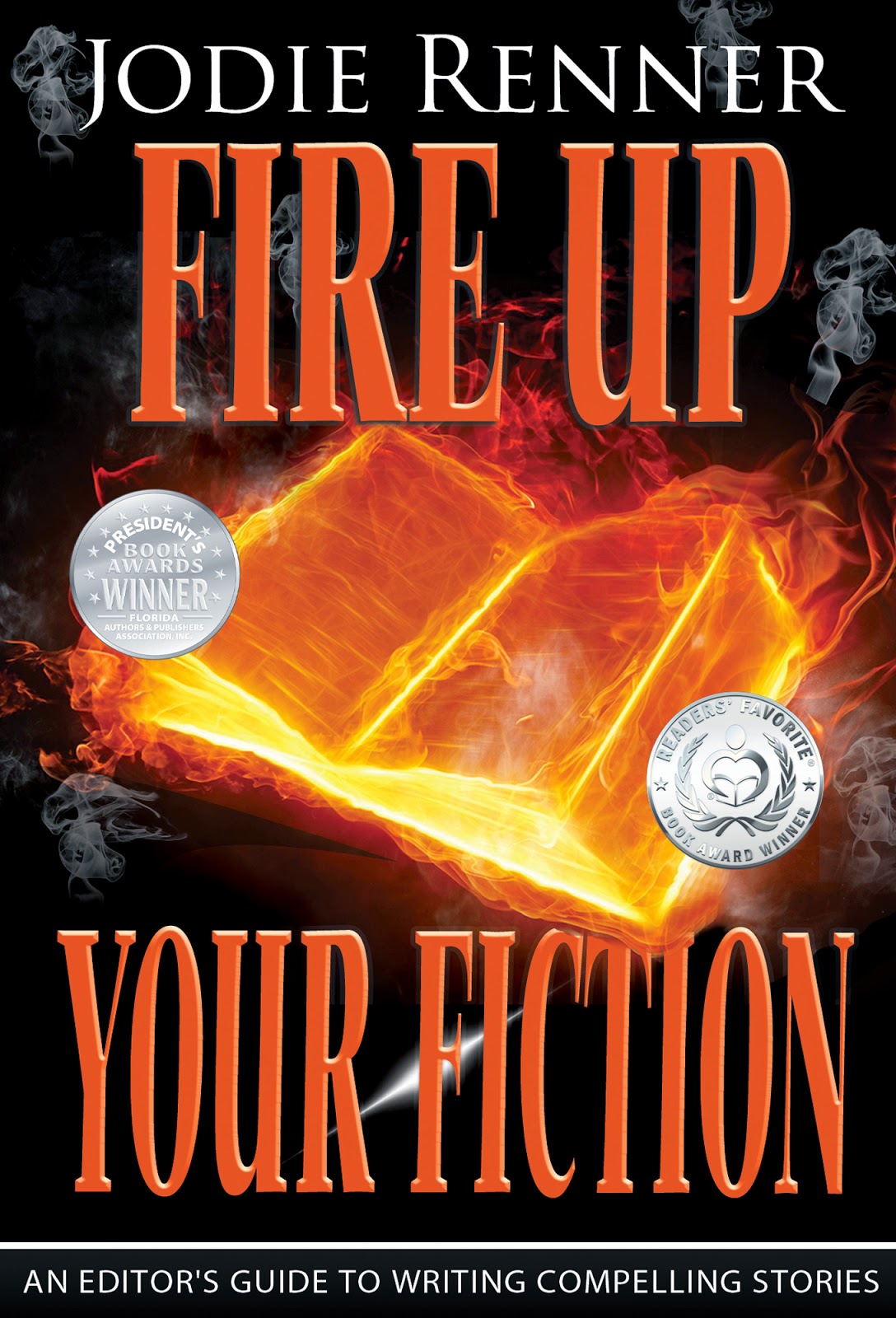
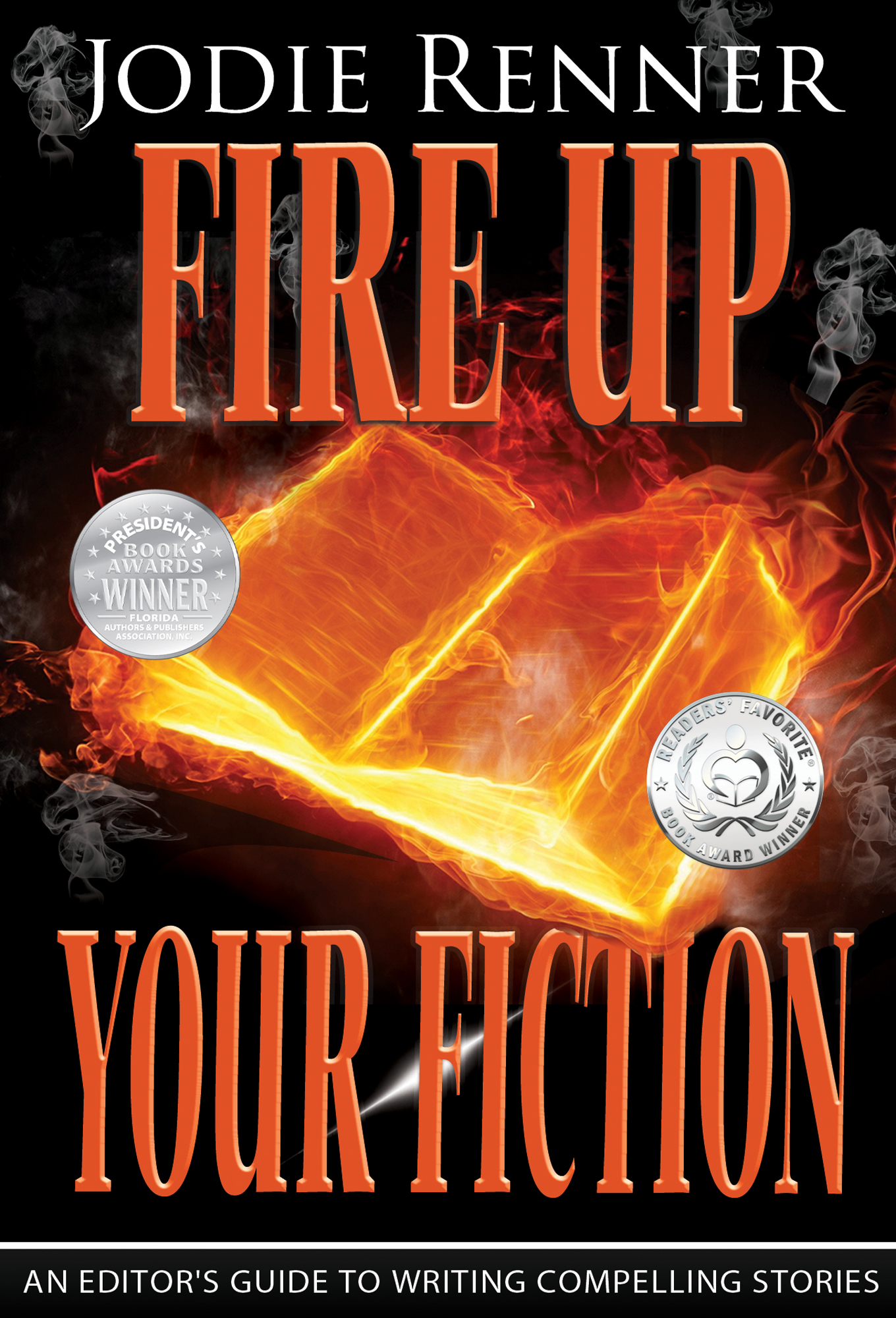 For more tips on dialogue, thoughts, and other fiction techniques, check out my book, Fire up Your Fiction – An Editor’s Guide to Writing Compelling Stories.
Jodie Renner is a freelance fiction editor and the award-winning author of three craft-of-writing guides in her series An Editor’s Guide to Writing Compelling Fiction: Captivate Your Readers, Fire up Your Fiction, and Writing a Killer Thriller. She has also published two clickable time-saving e-resources to date: Quick Clicks: Spelling List and Quick Clicks: Word Usage. You can find Jodie at www.JodieRenner.com, www.JodieRennerEditing.com, her blog, http://jodierennerediting.blogspot.com/, and on Facebook, Twitter, and Google+.