25 Tips for Writing a Winning Short Story

Jodie Renner, editor & author, @JodieRennerEd

Writing short stories is a great way to test the waters of fiction without making a huge commitment, or to experiment with different genres, characters, settings, and voices.

And due to the rise in e-books and e-magazines, length is no longer an issue for publication, so there’s a growing market for short fiction. You can submit your short stories to anthologies, magazines, and contests, or publish a collection of three or four of your stories yourself in a short anthology. Or even one really good story, and price it at 99 cents. You can also get together with other authors in your genre and each contribute a story for an anthology, as did Kill Zone authors in 2010, with Fresh Kills, Tales from The Kill Zone. Time for another collection, I’d say, wouldn’t you? (Nudge, nudge.)

In fact, it’s a good idea to try to publish a few high-quality, well-edited short stories between novels to help with discoverability and growing a fan base.

Also, today’s busy readers (especially the young ones) have more distractions and temptations for their time, therefore shorter attention spans, so a short story is a nice escapism-byte for increasing numbers of people, I think.

I’ve judged short stories for several contests and anthologies, including for Writer’s Digest, and I’ve come up with some tips for writing a compelling short story that is worthy of publishing or submitting to contests, magazines, and anthologies. Of course, these are only guidelines—like any good cook with a recipe, you’ll tweak them to suit your own vision, goal, and story idea.

PLANNING STAGE:

1. Keep the story tight. Unlike a novel or even a novella, a short story is about just a small slice of life, with one story thread and one theme. Don’t get too ambitious. It’s best to limit it to one main character plus a few supporting characters, one main conflict, one geographical location, and a brief time frame, like a few weeks maximum—better yet, a few days, or even hours or minutes.

2. Create a complex, charismatic main character, one readers will care about. Your protagonist should be multi-dimensional and at least somewhat sympathetic, so readers can relate to him and start bonding with him right away. He should be charismatic, with plenty of personality, but give him a human side, with some inner conflict and vulnerability, so readers identify with him and start worrying about him immediately. If readers don’t care about your character, they also won’t care about what happens to him.

3. Give your protagonist a burning desire. What does she want more than anything? This is the basis for your story goal, the driving force of your story.

4. Decide what your character is most afraid of. What does your hero regret most? What is his biggest fear? What is he most afraid might happen? Give him some baggage and secrets.

5. Devise a critical story problem/conflict. Create a main conflict or challenge for your protagonist. Put her in hot water right away, on the first page, so the readers start worrying about her early on. No conflict = no story. The conflict can be internal, external, or interpersonal, or all three, against one’s own demons, other people, circumstances, or nature.

6. Develop a unique “voice” for this story by first getting to know your character really well. A good way is to journal in his voice. Pretend you are the character, writing in his secret diary, expressing his hopes and fears and venting his frustrations. Just let the ideas flow, in his point of view, using his words and expressions. Then take it a step further and carry that voice you’ve developed throughout the whole story, even to the narration and description, which are really the character’s thoughts, perceptions, observations and reactions. (In a novel, the voice will of course change in any chapters in other characters’ viewpoints.)

7. Create an antagonist and a few interesting supporting characters. Give each of your characters a distinct personality, with their own agenda, hopes, accomplishments, fears, insecurities and secrets, and add some individual quirks to bring each of them to life. Supporting and minor characters should be quite different from your protagonist, for contrast.

8. To enter and win contests, make your character and story unique and memorable. Try to jolt or awe the readers somehow, with a unique, charismatic, even quirky or weird character; a unique premise or situation; and an unexpected, even shocking revelation and plot twist.
Captivate_full_w_decal9. Experiment – take a chance. Short stories can be edgier, darker, or more intense because they’re short, and readers can tolerate something a little more extreme for a limited time.

WRITING STAGE:

10. Start right out in the head of your main character. It’s best to use his name right in the first sentence to establish him as the point-of-view character, the one readers are supposed to identify with and root for. And let readers know really soon his rough age and role in the story world.

11. Put your character in motion right away. Having her interacting with someone else is usually best—much more dynamic than starting with a character alone, musing. Also, best not to start with your character just waking up or in an everyday situation or on the way to somewhere. That’s too much of a slow lead-up for a short story—or any compelling story, for that matter.

12. Use close point of view. Get up close and personal with your main character and tell the whole story from his point of view. Show his thoughts, feelings, reactions, and physical sensations. And don’t show anyone else’s thoughts or inner reactions. You don’t have time or space to get into anyone else’s viewpoint in a short story. Even the narration is your POV character’s thoughts and observations. Don’t intrude as the author to describe or explain anything to the readers in neutral language.

13. Situate the reader early on. Don’t forget the 4 W’s: who, what, where, when. Establish your setting (time and place) within the first few paragraphs, to situate your reader and avoid confusion. But as mentioned above, avoid starting with a great long descriptive passage.

14. Jump right in with some tension in the first paragraphs. There’s no room in a short story for a long, meandering lead-up to the main problem, or an extended description of the setting or the characters and their background. Disrupt the main character’s life in some way on the first page. As Kurt Vonnegut advises, start as close to the end as possible.

15. Show, Don’t Tell. Don’t use narration to tell your readers what happened—put them right in the middle of the scene, with lots of dialogue and action and reactions, in real time. And skip past transitional times and unimportant moments. Just use a few words to go from one time/place to another, unless something important happens during the transition.

16. Your character needs to react! Show your character’s emotional and physical reactions, both inner and outer. And to bring the character and scene to life on the page, evoke as many of the five senses as possible or appropriate, not just sight and hearing.

17. Every page needs tension of some sort. It might be overt, like an argument, or subtle, like inner resentments, disagreements, questioning, or anxiety. If everybody is in agreement, shake things up a little.

18. Dialogue in fiction is like real conversation on steroids. Skip the yadda-yadda, blah-blah, and add spark and tension to all your dialogue. And make the characters’ words and expressions sound as natural and authentic as you can. Each character should speak differently, and not like the author. Read your dialogue out loud or role-play with a friend to make sure it sounds real and moves along at a good clip.

19. Build the conflict to a riveting climax. Keep putting your protagonist in more hot water until the big “battle,” showdown, or struggle—whether it’s physical, psychological, or interpersonal.

20. Go out with a bang. Don’t stretch out the conclusion – tie it up pretty quickly. Like your first paragraph, your final paragraph needs to be memorable, and also satisfying to the readers. Try to create a surprise twist at the end – but of course it needs to make sense, given all the other details of the story.

21. Provide some reader satisfaction at the end. It’s not necessary to tie everything up in a neat bow, but do give your reader some sense of resolution, some payout for their investment of time and effort in your story. As in novels, most readers want the character they’ve been rooting for all along to resolve at least some of their problems. But be sure the protagonist they’ve been identifying with succeeds through their own courage, determination, and resourcefulness, not through coincidence, luck, or a rescue by someone else.

REVISION STAGE:

22. Hook ’em in right away. Now that you’ve got your whole story down, go back and grab the readers with an opening that zings. Write and rewrite your first line, opening paragraph, and first page. They need to be as gripping and as intriguing as you can make them, in order to compel the readers to read the rest of the story. Your first sentence and paragraph should arouse curiosity and raise questions that demand to be answered.

23. Cut to the chase! The short story requires discipline and editing. Trim down any long, convoluted sentences to reveal the essentials. Less is more, so make every word count. If a sentence or line of dialogue doesn’t advance the plot, add intrigue, or develop a character, take it out.

Also, use strong, evocative, specific nouns and verbs and cut back on supporting adjectives and adverbs. For example, instead of saying “He walked heavily” say “He trudged.” Or instead of “She walked quietly into the room,” say “She tiptoed…”

24. Make every element and every image count. Every element you insert in the story should have some significance or some relevance later. If it doesn’t, take it out. You have no room for filler or extraneous details in a compelling short story. In fact, try to make all descriptions do double duty. Rather than listing their physical attributes and what they’re wearing, your description of a character should reveal their personality, their mood, their intentions, and their effect on those around them, and also the personality and attitude of the character who is observing them.

25. Pay attention to word count and other guidelines. Short stories are generally between 500 and 7,500 words long, with the most popular length around 2,500 to 4,000 words. If you want to submit your short story to a website, magazine or contest, be sure to read their guidelines as to length, genre, language, etc. Also, for your own protection, do read the fine print to avoid giving away all rights to your story.

For some great insights on creating a compelling short story, see James Scott Bell’s post here on TKZ, How to Write a Short Story. And check out Anne R. Allen’s great posts on the subject, such as “Why You Should be Writing Short Fiction.” Also, if you’re fairly new at writing short stories and would like more guidance, see my recent post, Some Quick, Basic Tips for Writing a Riveting Short Story. (Click on the titles.)

Do you have any suggestions to add to this list?
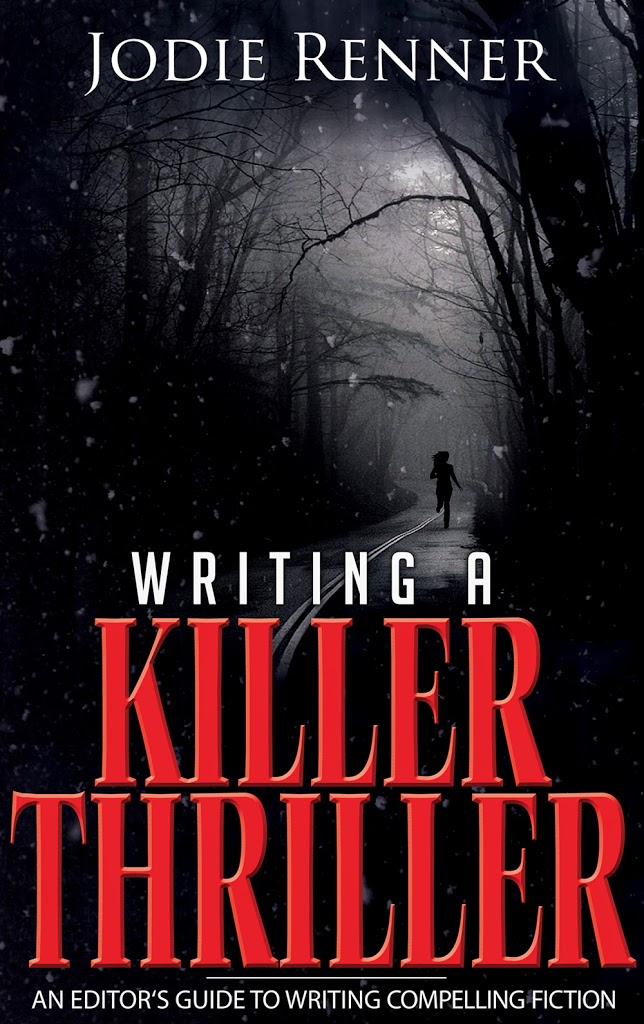
Jodie Renner is a freelance fiction editor and the award-winning author of three craft-of-writing guides in her series An Editor’s Guide to Writing Compelling Fiction: Captivate Your Readers, Fire up Your Fiction, and Writing a Killer Thriller. She has also published two clickable time-saving e-resources to date: Quick Clicks: Spelling List and Quick Clicks: Word Usage. You can find Jodie at www.JodieRenner.com, www.JodieRennerEditing.com, her blog, http://jodierennerediting.blogspot.com/, and on Facebook, Twitter, and Google+.


A Horrible Thing I Saw The Other Day

@jamesscottbell

“I wasn’t trying to predict the future. I was trying to prevent it.” – Ray Bradbury on Fahrenheit 451

The other day I saw a horrible thing.
It wasn’t a traffic accident on the 101 Freeway, of which there are many on any given L.A. day.
It was not a wounded soldier or a bar fight or a new reality television show.
Nevertheless, what I saw twisted my stomach and made me groan for the future of our kind.
It was an otherwise lovely afternoon and I was walking along the sidewalks of Hollywood Boulevard. As usual it was awash in activity––people of all shapes, sizes, colors, tempers, faiths and costumes sauntering along the street of dreams.
As I am wont to do I was watching faces.
I love watching faces. Each one is a potential character or storyline.
I was content.
I was engaged.
And then I stopped, recoiling in horror.
Okay, it was only an inward recoil. But there it was, as real as the hardened gum on Dick Powell’s star on the Hollywood Walk of Fame.
A woman was pushing a stroller. In the stroller was a young child, a boy of perhaps two years.
The boy was holding a digital device. His head was down and his fingers tapped the screen like a mad reporter on deadline.
I thought: I have met dystopia and it is us.
In 1953 Ray Bradbury penned an essay for The Nation about science fiction. He began by describing a scene in his novella Fahrenheit 451 where the fireman comes home to find his wife in a virtual stupor, an earpiece attached to her head. She was not reading, for that was forbidden. Aural stimuli were being pumped into her docile brain.
For Ray Bradbury, that kind of passivity was one of the most awful scenarios imaginable.
Bradbury then recounted how he had been out for a stroll recently and saw a couple walking their dog. The woman held a transistor radio with an earpiece (back then, a rather ponderous and rare piece of equipment) plugged into her auditory canal.
The husband, Bradbury noted, might as well not have been there.
Bradbury expressed his astonishment that his prediction of a rather gloomy future was happening much faster than he supposed.
And this was the early 50s! What would the late, great RB think of any given restaurant today? Couples, trios, whole families sitting at the same table, heads bent over phones or tablets, hardly exchanging a word?
And now this, here on Hollywood Boulevard. Is this our future? Will it be made up of little boys and girls who had iPads in their strollers, now all grown up into humorless, unimaginative technocrats unable to engage the real world?
I remember feeling some of this same revulsion when I first saw a DVD player in a motorized vehicle. It was a desert night and I was driving back to L.A. after some event. I pulled up alongside a dark SUV and saw a small monitor playing a cartoon for the denizens of the back seat.
This was a night when the stars could be gazed upon in wonder and the mysteries of desert shadows might stir the imagination.
But not for the children in the car! For them the desert was a bright and colorful Looney Tune with a funny roadrunner and a rather frustrated coyote. 
I’m fearful. I fear that digitized babies are not engaging their world or training their imaginations. I fear they will grow up unable to engage a long-form piece of writing, let alone real people in actual, meaningful conversation.
Am I overreacting?
Let me throw it out there to you, Zoners. Am I engaged in the sort of fogey-ism that is a part of every generation?
Or, like Ray Bradbury, should we be truly alarmed?

Summer Movies

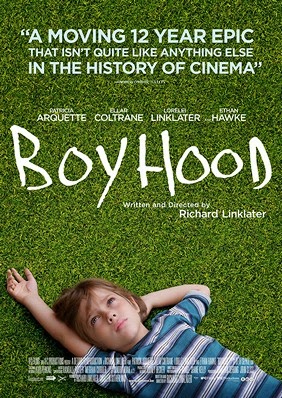
I made good progress on my novel this week, but I have no interest in writing a post about writing now. It’s summertime and I want to talk about the movies. This week I saw two movies that couldn’t be more different: Boyhood, the Richard Linklater film that everyone’s talking about, and Dawn of the Planet of the Apes. Well, now that I think about it, there aresome similarities between the two films. They’re both about family, right?
Actually, the latest Planet of the Apes installment was a great disappointment. It was too dark, not thematically but visually — almost all the scenes in the movie take place at night or in a gloomy forest. (And I think all those 3D movies are inherently dark because the glasses block a high percentage of the light from the screen.) After stumbling out of the theater I wistfully recalled the bright colors and memorable lines from the very first Planet of the Apes, the one with Charlton Heston and Dr. Zaius. “Take your stinking paws off me, you damned dirty ape!” “You maniacs! You blew it up! Goddamn you all to hell!”
But I can wholeheartedly recommend Boyhood. It was filmed over twelve years and it follows the travails of an ordinary family, but it’s a scripted movie, not a documentary. Linklater found two child actors (one of them is his own daughter) who were willing to shoot a few scenes every year. In the opening scenes the boy is six and the girl is eight; by the end of the movie they’re both in college. Their mom and dad are played by Patricia Arquette and Ethan Hawke, and they undergo an equally familiar transition. At the start of the movie they’re good-looking but hapless parents; by the end, they’ve both gained a measure of wisdom and responsibility, but neither one is very attractive anymore.
It’s a long movie, almost three hours, and I admit I was a little bored at times. The story of this family has a few dramatic moments — notably (spoiler alert!) after the mom enters into a second marriage with an older man who turns out to be a violent drunk — but most of the film shows the commonplace milestones of growing up, such as birthdays and camping trips and high-school football games. When the boy hero Mason Jr. goes to a new middle school he gets bullied a little, and when he’s a bit older he drinks beer with some other teenagers, but nothing momentous happens in either scene. The bullies never really hurt Mason, and there are no negative consequences to the drinking incident. These scenes aren’t part of a big plot puzzle, they’re just interesting episodes from a typical adolescence. But the scenes stick with you afterwards, because they remind you of similar episodes from your own past.

I found this approach very refreshing. In my novels I spend so much time constructing the plot and making sure that every scene advances the story. But in Boyhood the story is life itself, so it’s okay to have lots of loose ends.  

First Page Critique–Brooklyn Nights

Jordan Dane
@JordanDane

iStock_000002398839Small
Purchased image from iStock by Jordan Dane/Novel Shout Media


Now time for another edition of FIRST PAGE CRITS, brought to you by TKZ. One intrepid author. One daring submission. My two pennies worth on the flip side. Care to play along? Read the opening 400 words to a courageous author’s work and give constructive criticism. Now for your consideration – Brooklyn Nights.


Brooklyn Nights
Chapter 1


The room glowed green in rhythm with the flashing neon of Gerry’s Irish bar across the road and two stories down. Frank Daley, fully dressed and lying on his back on the cheap bed, put a period on the light show with the red tip of his Chesterfield.

The sounds and smells of the Brooklyn neighborhood floated through the open window, Antonio’s Pizza Pies blending with the odors of cigarettes, sweat, and sex that filled the fleabag he had rented for the month. It’d have to do. He’d lose his security deposit anyway, once he robbed the joint.

The whore beside him stunk of cheap whiskey, her snores a discord of nasal wheezes that drowned out conversations of the restaurant patrons below as they came and went to an irritating bell dangling above the door. He leaned over and pinched her nose until she opened her mouth to breathe. What came out overwhelmed all other aromas, pleasant or otherwise.

She was naked except for a pair of black lace panties and a gold strapless sandal on her left foot, the heel worn on one side. He had noticed it earlier on their walk up the staircase. There was no significance to the worn heel, but it represented something he knew that no one else did. It was one of his better qualities, a keen sense of observation. It had kept him alive and out of jail since the war.

Her breasts rose and fell with her breathing, the air once again escaping through the clogged nostrils. Between the bell over Antonio’s door and her nose music it sounded like a bad Salvation Army band.


Feedback:

Overview: Well, Frank is a piece of work. Charming man. I think I used to work with this guy, but I’d never admit it. It cracked me up that he thought about his lost security deposit considering he planned to rob the flea bag. Stellar ethics. I do love the cesspool details of this scene. All the senses are triggered and the imagery is here. Frank’s got an attitude with a hint of dark humor. I would definitely want to read more to get a sense of Frank and where this story will lead. There’s no indication that he is a main character. He could be a mood setter, secondary character. I’ve opened more than a book or two with fun secondary characters who pave the way for my protagonist to make an entrance. For me, there needs to be more to Frank than what I’m reading here to carry my interest through a whole book of him, but I like the edgy writing style.

Suggestion 1: There appears to be much more to this story, considering Frank is fully dressed and waiting for something. That leads me to suggest a better, more gripping first line that would pull the reader into the mystery of Frank.  

Example: Like most people, Frank Daley had ambitions for a better life—money, a sweet ride, and respect—but the drunk hooker lying next to him, snoring and wheezing like a busted radiator, had become his upside.


I’m sure the author could come up with a better line, knowing the story, but this is an example of a first line focused on Frank.

Suggestion 2: The scene is set and the senses are triggered, but another way to begin this would be to focus on Frank more than setting the stage. Make the hooker and the cheap digs be the backdrop for what’s going through his mind and lure the reader in with his story. With only a scant 400 words, it’s hard to know what to suggest, but my instincts tell me there is more to Frank, even if he’s a secondary character. The hooker, the Irish bar, and the pizza joint are colorful, but I’m thinking they’re only window dressing for what’s about to play out with Frank. A better way to show Frank has keen observation is to show it, rather than tell it through the hooker’s sandal. Have Frank sitting in the dark and listening, smelling, sensing everything both in the room and outside on the street, as if he were a predatory animal. Again, the focus should be on him and not the room or the hooker or the street outside.

Suggestion 3: To introduce Frank to the reader, the author might have him do more in this opening scene. Have him interacting with another character in dialogue or in a conflict to see how he handles it. Encapsulate his personality in a defining scene that will show the reader what he’s all about. Creating a scene like this, it would be the difference between Johnny Depp making an entrance in Pirates of the Caribbean. You wouldn’t write him sitting in the dark, waiting. You’d make him come alive and do something, whether his character is intended to be funny or deadly serious. Maybe have him get up from the hooker, dress, then go down and rob the motel – but before he leaves the dump, he asks, “I guess this means I don’t get my deposit back?”


Suggestion 4: I had to reread the following two sentences. They were too long. They’d be more effective broken up.


Before: The sounds and smells of the Brooklyn neighborhood floated through the open window, Antonio’s Pizza Pies blending with the odors of cigarettes, sweat, and sex that filled the fleabag he had rented for the month.


After: The sounds and smells of the Brooklyn neighborhood floated through the open window. The aroma of Antonio’s Pizza Pies blended with the odors of cigarettes, sweat, and sex that filled the fleabag he had rented for the month.


Before: The whore beside him stunk of cheap whiskey, her snores a discord of nasal wheezes that drowned out conversations of the restaurant patrons below as they came and went to an irritating bell dangling above the door.


After: The whore beside him stunk of cheap whiskey. Her snores were a discord of nasal wheezes. The noise coming from the drunk hooker drowned out the conversations of restaurant patrons as they walked under an irritating bell that dangled above the door.

Summary: This author has an engaging style that I like. The writing basics are here, but the right scene selection, an intriguing first line, setting up a conflict or an evocative escalating situation that will keep the reader turning the page, is the challenge with every book.

What say you, TKZers? Please share your comments on Brooklyn Nights.


The Top Five Greatest Prison Breaks in novels

Today I welcome back to TKZ, guest blogger J.H. Bogran. José is a fellow ITW member and also serves as ITW’s Thriller Roundtable Coordinator and a contributing editor to The Big Thrill. Enjoy his list of greatest prison breaks in novels.

Joe Moore

———————

By J. H. Bográn

As a thriller fan, the genre has rewarded me with plenty tall tales of threats that could destroy the entire world. I’ve lived through jh_4byw1bomb countdowns, assassins catching up with their marks, renegade terrorist factions on the verge of breaking hell loose on earth, among others scenarios.

But one of the more thrilling rides is when characters break out of prisons, some may even call them educational.

The following list is my top five of the greatest escapes found in books. At a later time I will make the equivalent list for movies, but for now, let’s concentrate on actions that can be found between bookends.

Number Five:

Let’s begin with a classic: The Count of Monte Cristo by Alexandre Dumas. Edmund Dantés is wrongfully accused and sent to prison in the island of Château d’If. After a few years of solitary confinement, he meets a priest and they both agree to work on a tunnel as means to their ultimate salvation.

This story is not only notorious for the great escape of Dantés when he replaces the corpse of his mentor, but after the dust settles, you begin to wonder if all those years excavating the tunnel were a waste of time because—let’s face it—he didn’t escape through the tunnel now, did he?

Number Four:

In the world of prison breaks, no man can match the trick pulled by Sirius Black in J.K. Rowling’s third Harry Potter book, The Prisoner of Azkaban. And I mean it literally, for the title actually refers to him. (Am I the only one who at the end of Book 2 thought that the prisoner of Azkaban was the recently released Hagrid?)

Although the POV is always on Harry, we learn of Sirius’ ordeal from his own retelling of the tale.

After being incarcerated for over thirteen years, he simply transformed into a dog and squeezed through the cell bars, not even the demon guards could detect him. Now, that’s a shaggy escape. It sure does pay to be an unregistered animagi.

Number Three:

Even after twenty years of its publication, Thomas Harris’ Silence of the Lamb remains a fixture in any top-ten list of suspense novels. A must-read which movie version grabbed the five most coveted Oscars (Best Actor, Best Actress, Best Director, Best Adapted Script and Best Picture).

Okay, the level of gruesomeness of this one may perhaps be in league with Master Stephen King’s, but the inventiveness alone is remarkable enough to snatch the number #3 position.

Using nothing but discarded—or rather stolen—office supplies, Hannibal Lecter picked his handcuffs. Then after a quick change of wardrobe he put on a face that allowed him to pass through the guards outside and end up in a low-security ambulance. The rest was easy.

Number Two:

This one is similar to number five, but with a darker twist. Otherwise it wouldn’t be a Stephen King story. Rita Hayworth and Shawshank Redemption was a novella included in the collection Different Seasons.

It took Andy Dufrasne all of twenty seven years to dig a tunnel. Not too bad considering he went through two small rock hammer, and many lovely girl posters, in the process. The final leg of his trip out of Shawshank prison was through a sewerage pipe, as he crawled amidst the worst of human’s excrement. However, at this point I better come clean and say there was no pun intended when this escape artist landed on number two.

Number One:

Let’s go biblical, Acts of the Apostles.

Before people start emailing me that this book is not a work of fiction, but a true account, I admit that I agree, but Peter’s escape is so awesome I had to include it!

This divine intervention, the epitome of Deus ex machina, can be found in Acts 12: 1-11.

Peter was not only left in the deepest meanest cell with two guards by his side, he was also bound by chains. Then an angel materialized, freed Peter of his bound and led him the way out, walking through walls, no less.

Do you agree with my list? I can expand it to a Top-Ten list, so do send me your suggestions.

Oh, and thanks Joe for letting me hog the spotlight in TKZ today.

———————-

J. H. Bográn, born and raised in Honduras, is the son of a journalist. He ironically prefers to write fiction rather than fact. José’s genre of choice is thrillers, but he likes to throw in a twist of romance into the mix. His works include novels and short stories in both English and Spanish.

His debut novel TREASURE HUNT, which The Celebrity Café hails as an intriguing novel that provides interesting insight of architecture and the life of a fictional thief, has also been selected as the Top Ten in Preditors & Editor’s Reader Poll.

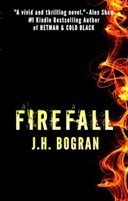
Firefall_Proof2FIREFALL, his second novel, was released in 2013 by Rebel ePublishers. Coffee Time Romance calls it “a taut, compelling mystery with a complex, well-drawn main character.”

He’s a member of The Crime Writers Association, the Short Fiction Writers Guild and the International Thriller Writers where he also serves as the Thriller Roundtable Coordinator and contributor editor their official e-zine The Big Thrill.

Website at: www.jhbogran.com

Facebook profile: www.facebook.com/jhbogran

Twitter: @JHBogran

Postscript on Thrillerfest

Thrillerfest manages to keep getting better, year after year. I did the whole shebang this year–the FBI workshop, MasterCraft,

John Sandford before his talk at Craftfest

CraftFest, and the conference. It was a treat participating in the inaugural session of MasterCraft. My group worked with the fabulous D.P. Lyle, who facilitated an intensive critique of the attendees’ first ten pages.

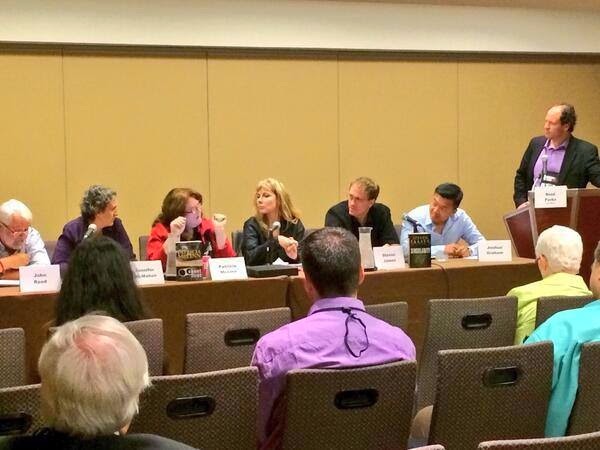
Panel: Writers’ quirks and superstitions


On Saturday I took part in a panel hosted by Brad Parks. Our topic was writers’ quirks and superstitions. We had fun with the theme, and even got a bit rowdy at times. (I seem to be preparing to make a snarky riposte in the photo!)


A little later, I was interviewed by Jessica Mazo for MartiniProductionsNYC for their Author’s Chair sequence.

Now I’m back, and already looking forward to Bouchercon, which will be in my neck of the woods this year. Will you be attending Bouchercon? And who did I miss seeing at Thrillerfest? I couldn’t reset my west coast bio-clock and consequently faded early, so I didn’t hang out at the bar gatherings as much as usual this year!

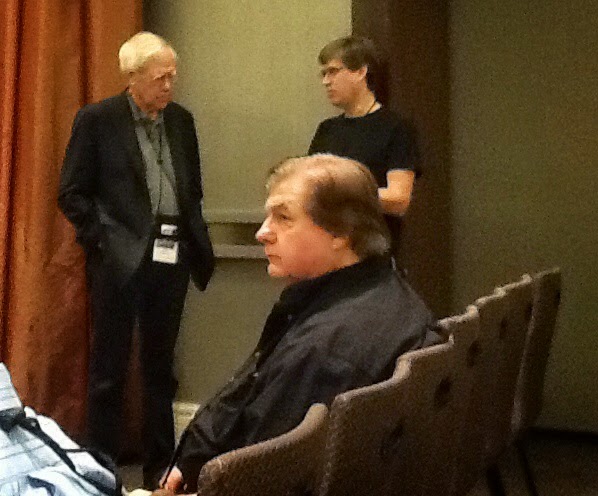
The hypnagogic Hyatt lobby face

London Calling

by Clare Langley-Hawthorne


I’m on vacation this week in my favourite city – London. It’s a place I love to visit and also a great place to get some research done:) 

I will have only sporadic Internet access but will report back when I return. 

In the meantime, I’d love it if you’d share the ‘dream’ city you want to visit to do research for your current (or future) WIP. Mine is St. Petersburg – one day I hope to visit and maybe even ride the Trans-Siberian railway…hey, a girl can dream!

The Thrill Is On

Robert Benchley, the famous wit and charter member of the Algonquin Round Table, attended a Broadway premiere in 1926. The play was The Squall and took place in the South Seas. But the dialogue, especially the island dialect, was abysmal. At one point during the first act a native girl ran onstage and threw herself at the feet of a man, and cried, “Me Nubi. Nubi good girl. Me stay.”
Benchley could take no more. He stood up and said aloud, “Me Bobby. Bobby bad boy. Me go.” And he left the theater.
Which brings me to the thriller. What is the secret? It’s writing something that gets the exact opposite reaction as Mr. Benchley’s. It is a full-on, grab-you-by-the-shirt experience that doesn’t let up until the end.
Not an easy thing to do. Not always an easy thing to find.
But what if you could find 8 of them? In one place? For less than a buck?
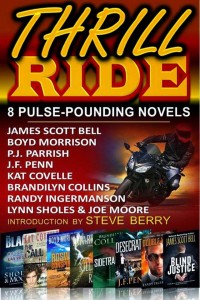
It’s my great pleasure to announce this astounding deal for thriller fans. Thrill Ride: 8 Pulse-Pounding Novels is a “boxed set” of reading pleasure from tested veterans of the thrill.
And yes, for only 99¢ you get the following full-length thrillers:
Blind Justice  by James Scott Bell
Sidetracked by Brandilyn Collins
Double Vision by Randy Ingermanson
The Blade by Lynn Sholes and Joe Moore
The Roswell Conspiracy by Boyd Morrison
The Killing Rain by P.J. Parrish
Desecration by J. F. Penn
The Call by Kat Covelle
New York Times bestselling author Steve Berry wrote the introduction. It begins, “There’s a maxim in this business: a thriller must thrill. The story must make the pulse quicken, the eyes widen, the fingers continually turning pages. At the end of each chapter the only thought the reader should have is ‘I need to read just a little more.’ “
That’s the kind of book you’re going to find in this collection.
Some of you may already own one or two of these titles. Well, it’s still a great deal, wouldn’t you say? And that’s the point: all of the authors here are into giving you, the reader, a great set at an amazing price.
It’s a venture in cooperative marketing. That’s what’s so amazing about the ebook boom. We can do things like this, and it’s the consumer who reaps the benefits. I’m on record as saying it’s the best time on earth to be a writer. Well, let’s add to that: it’s the best time on earth to be a reader, too.
About the authors:
Joe, P.J. and I camp out right here on TKZ. Lynn, of course, is Joe’s partner in thrills.
Boyd and Kat (pen name of Kathleen Pickering) are TKZ alums.

J. F. Penn is one of indie publishing’s mega-stars.
Brandilyn and Randy are good friends of mine, award-winning writers who have proven their thriller bona fides over and over.
And now here we all are, together, for you––the fans of thrilling fiction.
I hope you’ll pop over and buy a copy today. And let us hear from you, especially if we’ve kept you from sleeping…
Here are the links:


From all of the Thrill Ride authors, thank you for your wonderful support!

The Eternal Fire…I Mean, Kindle Unlimited

The rumors started earlier this week, but it became official on Friday morning: Amazon’s home page trumpeted something new called “Kindle Unlimited.” It’s the Kindle version of Oyster and Scribd, or the book version of Netflix and Hulu Plus.  Kindle Unlimited is simple for the readers: pay $9.99 per month, and one can select from “over 600,000 books” (more on that in a minute) and thousands of audio books (not so much about that in a minute) as many times per month as one wishes. Are you one of those readers who like to have two or more books going at once? Step right up, my friend; you can have up to ten books at once from Kindle Unlimited on your reader and for as long as you want (so long as you keep forking over that $9.99 per month, of course). Finish a book, and you return it with a click or two and pick another book of you want, or finish up what you have and then select away again.  Do you read a book a day? Two books a day? Help yourself. The first month is free, and yes, I joined. Amazon makes it easy (is that a surprise?). Click on the sign up button, log into your account, and all of a sudden every book that is part of the Kindle Unlimited plan has a red button next to it that 1) indicates that it is part of the Kindle Unlimited plan and 2) announces that it can be read for free.

I was pleased to see that every book that Hachette has ever published is included in Kindle Unlimited. Just kidding, of course; THAT woke you up, didn’t it? Actually, none of the big five traditional publishers are represented on Kindle Unlimited. All of the Kindle imprints are present, as one might expect, and Open Road Media (mysteriouspress.com, anyone?), HMH, Algonquin, and Bloomsbury are there, as are authors’ works which are exclusive to Amazon. I also found a goodly portion of T. Jefferson Parker backlist to be part of it, and, if you are so inclined, The Hunger Games series, The Lord of the Rings trilogy, Seven Habits…you get the idea. You know that business dispute between Hachette and Amazon? I am sure  that the participation of Hachette (and, down the road, the other major publishers) is an important element of it.

There is also an audiobook component to Kindle Unlimited through audible.com but at this point anecdotal reports indicate that there are only two thousand titles or so are included in Kindle Unlimited. This number will undoubtedly increase.  Further, if you borrow an eBook that has an audiobook version which is part of the program, the audiobook is included automatically. And, of course, there is also the whisper sync feature included with many books. So there is plenty for everyone.

Kindle Unlimited is not Amazon Prime. There’s no long-term commitment with Kindle Unlimited; it’s for books only; and if you are already an Amazon Prime member, Amazon apparently is not folding Kindle Unlimited into your Prime membership. The only elements both programs have in common are 1) uh, Amazon and 2) borrowing books. With regard to the latter, Prime lets you read a book per month for free and lend books you’ve purchased; Kindle Unlimited is, well, unlimited; but you can’t lend other books you’ve purchased.

There is an additional consideration, of course, for the authors among us: how are the royalties for those authors whose works are included in Kindle Unlimited get paid? I did some searching for the answer, and even made a few telephone calls. Responses ranged from “Amazon isn’t releasing that information” to “I don’t know.” One source told me that for an independent author to receive royalties the “borrower” has to read at least ten per cent (10%) of the book (and yes, as an aside, it kind of creeps me out that Amazon would have a way of knowing how much of a particular book I have, or haven’t read). Once the author has accomplished that threshold through the reader, royalties are calculated along the lines of an equation which looks something like 5(x)+3(y)-42+(-7)=zippideedoodah. To put it another way, no one who is talking is really sure at this point. Authors who are free to do so might want to seek further information before committing, which of course is a good idea before entering into any contract, agreement or commitment.

There will be more — much more — to be said about Kindle Unlimited in the coming weeks and months. For the moment, however…are you interested? Did you sign up for a free trial? Have you given it a test run? And what would you like to see? I’ve already answered all of the questions but the last. I’d like to be able to borrow…graphic novels. I think that will happen when we land a man on the sun, but I’ve been surprised, pleasantly and otherwise, before. One can always hope.