Subplots

By Joe Moore
@JoeMoore_writer

One of the most dreaded parts of a book to write is the middle, or what I call the “muddle”. Beginnings are fun and somewhat easy, and endings can be, too. But the tar pit in the middle can bog a writer (and reader) down, sometimes to the point of no recovery. One method of beefing up the submarine-clipart-Submarine-Clip-Art-24.jpgmiddle is the use of subplots.

But just knowing about subplots and their importance is not enough. Many writers are not completely sure what a subplot is, much less how to weave one into the story so that the subplot strengthens the main plot and its characters. Here are some tips to help understand how subplots play a role in your story.

What Is A Subplot?

A subplot is a secondary story that runs parallel to the main plot. One of the easiest methods to understanding subplots is to look at the different layers of your own life. From the moment you awaken in the morning until you fall asleep at night, the plot of your life story is to do what needs to be done to maintain your existence—go to work, do your job, take on and complete tasks, go home and spend time with your family, end your day with plans to repeat and improve your plot tomorrow.

Possible subplots

1. Your car is old and prone to breaking down. On the way to work, it dies for good. You don’t have the money to fix it.

2. Your son calls from college with bad news—he’s failing and needs to move back home.

3. The neighbor’s dog barks constantly but the owner won’t do anything about it.

These are simple subplots, but they can help to provide additional conflict to your story and generate suspense when needed, especially in the muddle. Dealing with them can also help to develop your main character so his actions are more believable concerning the main plot.

When choosing a subplot, make sure it has something to do with the main plot. It might be interesting to have your main character decide to go sky diving, but unless doing so provides an opportunity to have him face his fear of heights or build up his courage for what’s to come later in the main story, it would be a waste of time.

When should you start a subplot?

If the subplot is about your protagonist, you should introduce it as soon as possible. If you intend to have multiple subplots, their starts can be staggered later in the story. Let’s take subplot #3 in the suggestions from above—the barking dog. Your protagonist could be awakened by the dog at the beginning of the story. It could be a cause for constant irritation whenever he’s home and could come up a number of times throughout the plot as the protagonist tries to deal with the neighbor. The barking dog subplot has nothing to do with the main plot other than to show the protagonist’s ability to cope with the problem and his skill at dealing with hostile people. These characteristics will come in play later when dealing with the big events of the plot.

Moving between plot and subplots

An obvious back and forth between plot and subplot can come off as contrived. It’s better to weave the subplot into the main plot so that they seem one and the same. For instance, the protagonist is awakened by the barking dog on the day of the big corporate presentation—the main thrust of the plot. If they don’t get the account, he could be let go. The barking puts him in a foul mood. He phones home after the meeting to let his wife know how it went only to hear the dog barking in the background of the call. He gets home, thankful that the dog is not barking. But at 3:00 AM his peaceful sleep is once again interrupted by the barking. Solving the issue of the dog and its owner is not the main plot of the book, but it is a character-building opportunity and a cause for conflict.

So when things get bogged down in the muddle, rely on the subplot(s) you’ve already introduced and built upon to fill the gaps and move the story forward.

How about you? Do you use subplots? Any additional tips to define and utilize them?

————————–

tomb-coverMax is back! Coming this Spring, Maxine Decker returns in THE TOMB from Sholes & Moore. #1 New York Times bestseller Brad Thor calls Sholes & Moore one of his favorite writing teams.
Creating A Personal Ode From 40 Characters

Attention all budding poets: A new site lets you to turn you  tweets into poetry, or something like it.  Poetweet skims through your history of tweets, and then converts the results into verse.  (You choose whether you want your poem to appear as a Sonnet or other format.)

When I ran my Twitter ID through the engine, Poetweet created a ditty called “A Writer”. The resulting verse seems odd, but somehow perfect. (Disclosure: I rearranged a couple of lines to enhance the logical ‘flow’).

“A Writer”
by Kathryn Lilley

Putting On Your Writing Face
Getting It Done
Just One More Chapter
The Gag Order Rules
Where Have All the Commas Gone?
Are We Daft?
Where Do We Go To Get the Vaccine?
Sit Down And Write the Darn Outline
Lessons from 2014
Playing A Trick On Your Mind
‘Make it new’
Performing Amazing Grace

If you haven’t tried the tool yet, give it a try. Then, please share a stanza from your “ode”. The wackier, the better!

How would you like to be remembered?

By Clare Langley-Hawthorne


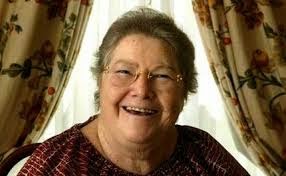
Last week’s death of Colleeen McCullough (bestselling Australian writer of The Thorn Birds amongst others) – was not only extremely sad but also, surprisingly, the catalyst for controversy over alleged gender bias in the literary world. It wasn’t her death per se that prompted this controversy, but rather the obituary written in one of Australia’s most prominent newspapers ‘The Australian‘.  How’s this for a first paragraph…

“COLLEEN McCullough, Australia’s best selling author, was a charmer. Plain of feature, and certainly overweight, she was, nevertheless, a woman of wit and warmth. In one interview, she said: “I’ve never been into clothes or figure and the interesting thing is I never had any trouble attracting men.”

So much for mentioning that she was a bestselling author of 25 novels or that she had also been a neuroscientist at Yale Medical School…

The fact that a newspaper such as The Australian would even print such an obituary made many Australians (including myself) cringe at the specter of a female writer being judged, not by the quality of her work or her books sales, but by her appearance and her weight. 

At least the publication of this obituary has generated some valuable debate over perceptions of women in creative and ‘entertainment’ spheres. The controversy that erupted has provoked some great mock obituaries as well. On Twitter there is even the hashtag #myozobituary (Take a look at some of these – I think the the author Neil Gaimon’s mock obituary is particular good).

Apart from the obvious idiocy The Australian’s obituary demonstrates, it nonetheless raise concerns about how gender factors into society’s assessment of writers – and I wonder how much we, as readers and writers still tend to make judgements based on ‘appearance’ as well as talent.

So TKZers have you ever encountered moments where your gender, appearance, weight or other physical factors were judged rather than your writing?

Do you think appearance matters in this very visible age of book marketing? Do you think it affects women and men differently?

If you write darker thrillers and mysteries have you considered using a pseudonym or initials so that your gender isn’t a factor in how a book is perceived?

And finally, if you feel brave, feel free to share what your mock ‘oz obituary’ would be…

Story and Structure in Love

James Scott Bell
@jamesscottbell

Back in November, TKZ commenter Dale Ivan Smith talked about a major challenge he faced.
Here’s the key paragraph:
 
The big challenge … is not taking forever on the pre-writing and outlining. How do you impose deadlines on yourself for outlining and still create a solid, damn good novel outline? My fear of drafting a bad story has to a big extent been replaced with the fear of outlining a bad one 😉
 
I answered him, in part, this way:
 
Dale, you’ve asked a great question. I think it really comes down to fear. 
 
There’s an easier and better way to find story, IMO: it’s to play BEFORE you write. Play on the monkey bars built of structural signposts. You actually can be more creative this way because you’re not drafting. Thus, it’s much faster, too. 
 
You can also play in the actual writing. But you’ll be playing a game that readers can make sense of. 
 
It’s the best of both worlds. Freedom AND focus, and a lot less frustration. The people who’ve been writing to me about Write Your Novel From the Middle have been having epiphanies on this. Which is cool. I’ll have more to say on writing this way in the months ahead. 
 
This “best of both worlds” combines the playfulness and creativity of the pantser with the beautiful form of the plotter, all with that most important person in mind—the reader! 
 
If you want to sell books and not just feel good about your writing, you need more than pure freedom and more than mere outlining. 
 
You need a guide, a map, a blueprint, but one that is flexible and freeing, not cold and ruthless. 
 
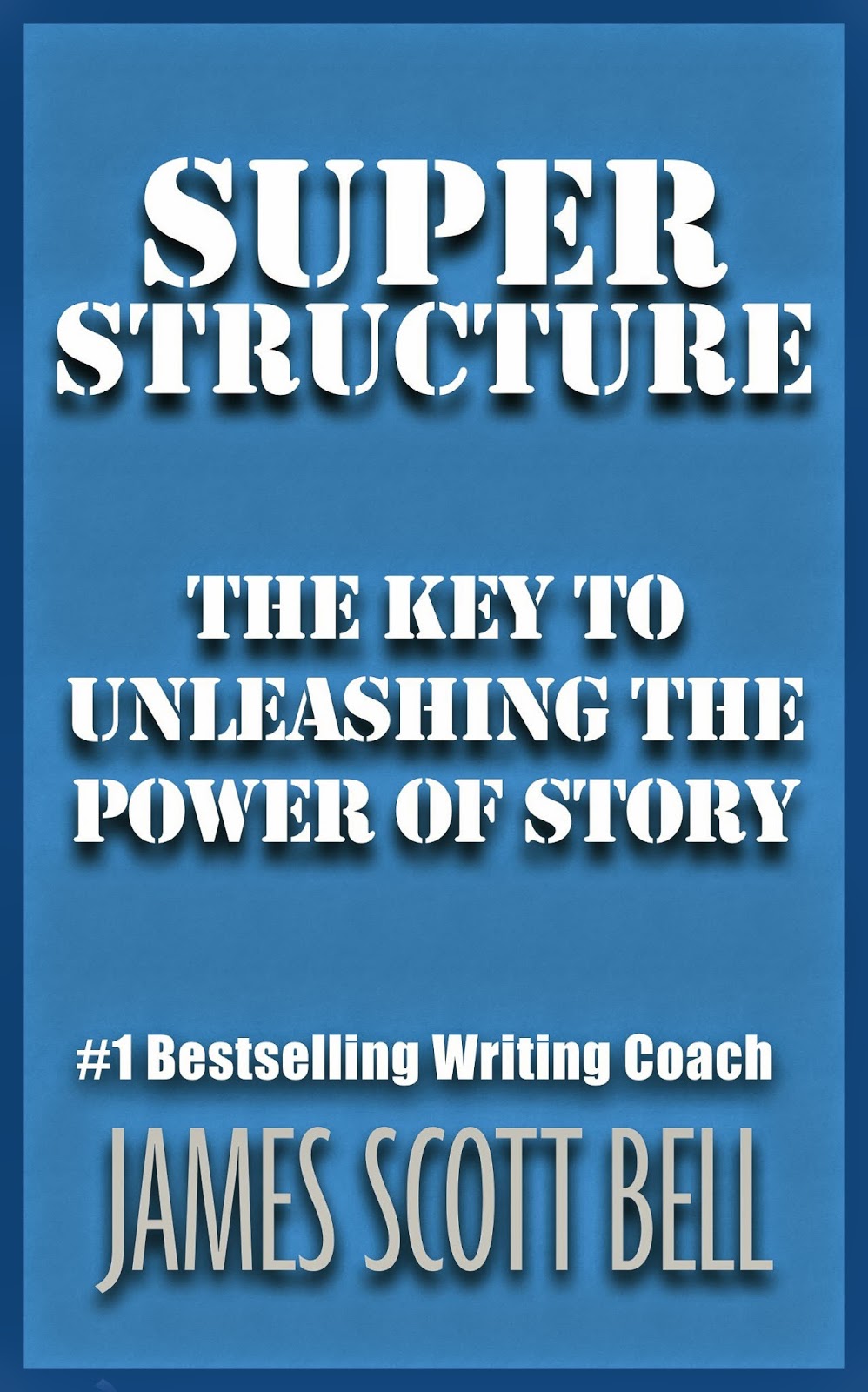
Which is why I’ve written a new book called Super Structure: The Key to Unleashing the Power of Story.
Story LOVES structure, because structure translates story into a form that enables reader connection…and those are the stories that sell.
 
And don’t let’s confuse structure with outlining, which causes pantsers to break out in the cold sweats. This is a common error. Any writer of any temperament can utilize structure principles, even if your approach is the seat-of-the-pants variety. To be aware of structure is not the same thing as writing a 40 page, single-spaced outline. Which is a perfectly legit thing to do. Just ask James Patterson. Or many fine writers of the past. 
 
But outlining is not a requirement. Which is one reason I wrote this book. It’s for any type of writer because it stresses the idea of “signpost scenes.” There are fourteen signposts scenes, or beats, in Super Structure. It’s culled from the best and most popular novels and screenplays of the past, as well as my own research and development of writing principles over the last 25 years. 
 
The material in this book greatly expands upon the chapter on structure in Write Your Novel From the Middle. Super Structure can be considered a companion to that book, but it also stands alone in its treatment of the elements of a solid and pleasing plot. 
 
Recently, the longtime literary editor for Playboy, Alice K. Turner, went to her final review at age 75. Her obituary in the New York Times talked about how she championed literary fiction for 20 years there, bringing a measure of respectability, ahem, between the folds. And she truly did, publishing some of the best writers of our time and discovering new talent.
 
I love what she said about her preference for a solid, well-structured plot: “If you’re good enough, like Picasso, you can put noses and breasts wherever you like. But first you have to know where they belong.” 
 
Super Structure will tell you where story elements belong. Then you are free to do what you like, experiment all you want.
 
But when your story isn’t working, and you don’t know why, Super Structure will be there to help you find out! It is very friendly that way. Say hello to it today. 


Getting the Word Out

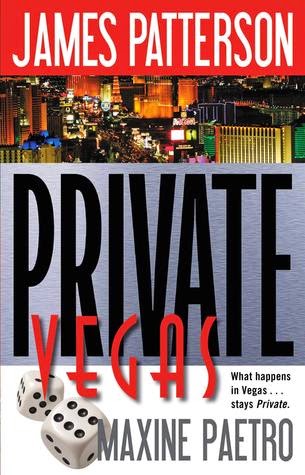
As a literary promotion, it straddles the line between wretched excess and the epitome of cool. James Patterson published Private Vegas, his latest novel (co-written with Maxine Paetro), on January 26, 2015 and decided that getting the word out via commercials or word-of-mouth just would not do.

One of the sub-plots of Private Vegas involves a series of high end automobile explosions; Patterson accordingly gave away one thousand eBooks of Private Vegastimed to sell-destruct after twenty-four hours. The idea was to read it, but read quickly. The big news, however, was that Patterson was also selling one physical copy of the book that would explode — literally — twenty-four hours after purchase. The cost? $294,038. For that nominal sum, one receives a first class flight to a secret location, two nights in a luxury hotel, dinner with the author (that would be Patterson), gold plated binoculars (the better to watch the explosion from a discreet distance), and, one assumes, a team of professionals to handle the explosion. The event got plenty of  publicity, beginning with a mention in The New York Times and proceeding from there, and maybe even a purchaser. The important thing for purposes of this discussion is that it got the word out that Patterson (with the assistance of Paetro) has a new book out. Will it prompt folks who wouldn’t have otherwise bought or read Private Vegas to do so? That remains to be seen. Let’s give the man A for effort, however. And just for the record…it’s worth your while to read Private Vegas, even if it takes you more than twenty-four hours.

Patterson is well versed in advertising; he worked in the field prior to turning to writing full-time, and is very much hands-on in marketing his own books.  After reading about his efforts with Private Vegas,I thought I would toss our TKZ readers and contributors the keys to the Lexus (imaginary, of course) and see where whimsy takes us. Authors, published and prospective: if you were in charge of marketing for your book, and given a blank check to make it happen, what would you do? Readers: what type of publicity works best, with respect to making you aware of new novels (outside of recommendations from friends)?  My plan for world literary domination would involve a raffle. I would issue a press release asking each reader to send me the original receipt showing that you have purchased my book within thirty days of publication. I would pick at random one receipt  from those received and autograph that reader’s book after lunch at St. Charles Tavern in New Orleans, all expenses paid, including transportation and five nights at one of New Orleans’ haunted hotels (to be selected by the lucky winner from a list). Sound interesting? Let us read your idea. 

How to Reach More Readers with Your Writing

15 Tips for Clear, Concise, Powerful Writing

by Jodie Renner, editor & author  @JodieRennerEd

Today’s tips, a last-minute fill-in here, come from the handout for a talk I gave to a local writing group whose members were very divergent in their writing projects. These succinct pointers apply to blog posts, magazine articles, and nonfiction writing, as well as fiction writing.

When revising your work, keep these 15 tips handy to help you clarify and strengthen your message and keep your readers engaged.

1. Write in a clear, casual, friendly accessible style. Avoid formal or stiff writing. Pretend you are talking to people you know and like. Let your personality and warmth show through.

2. Grab the reader’s attention at the beginning with a compelling statement, question, scene, or example.

3. Avoid formal sentences and pretentious language. Rather than impressing your readers, ornate, fancy words can just end up alienating them. Don’t send your readers away from your story to look up a word. Fancy, erudite, or pompous words are show-offy and frustrating. Besides, immediately recognizable words make for instant comprehension and keep the pace going and the reader turning the pages. But look for the strongest, most evocative word for the situation.

4. Don’t confuse, annoy, or bore your readers with unclear or vague writing. Avoid generalities and vague terms like “things,” “food,” “people” and “animals.” Use specific examples and sensory imagery to paint a clear picture and bring your ideas to life.

5. Vary your sentence structure and the lengths of your sentences. Avoid starting several sentences in a row with He or She or the person’s name. Break up long, convoluted sentences.

6. Write lean. Make every word count. Take out all unnecessary and repetitive words and sentences and go for an easy flow of ideas. Avoid repeating ideas and watch for those little words that just clutter up your sentences. Take out “It was,” “There was,” and “that” wherever they’re not needed.

7. Take out wishy-washy qualifiers like quite, sort of, almost, kind of, a bit, pretty, somewhat, rather, usually, basically, generally, probably, mostly, really, etc. Forget “He was quite brave,” or “She was pretty intelligent” or “It was almost scary.” These qualifiers dilute your message, reduce the impact, and make the imagery weaker. Take them out. Even very is to be avoided – it’s like you’re saying the word after it needs reinforcing. “She was beautiful” packs more punch than “She was very beautiful.”

8. Keep adverbs to a minimum. Instead of propping up a boring, anemic verb with an adverb, look for strong, descriptive, powerful verbs. Instead of “He walked slowly” go for “He plodded” or “He trudged” or “He dawdled.” Instead of “She ate hungrily” say “She devoured the bag of chips,” or “She wolfed down the pizza.” Instead of “They talked quickly,” say “They babbled.”

9. Avoid colorless, overused verbs like walked, ran, went, saw, talked, ate, did, got, put, took. Get out your thesaurus (or use the MS Word one. Hint: look up the present tense: walk, run, eat, say, etc.) to find more expressive, powerful verbs instead, like crept, loped, stumbled, stomped, glimpsed, noticed, observed, witnessed, spied, grunted, whimpered, devoured, consumed, gobbled, wolfed, munched, or bolted.

10. Avoid –ing verbs wherever possible. Use -ed verbs instead – they’re stronger and more immediate. “He was racing” is weaker than “He raced.” “They searched the house” is more immediate than “They were searching the house.” Rewrite -ing verbs whenever you can, and you’ll strengthen your writing and increase its power. But keep -ing verbs for ongoing action that was going on while something else occurred: The phone rang while he was washing his car.

11. Use adjectives sparingly and consciously. Instead of stringing a bunch of adjectives in front of an ordinary, overused noun, find a more precise, expressive noun to show rather than tell. Overuse of adjectives can also turn your writing into “purple prose” that is melodramatic and overly “flowery.”

12. Avoid the passive voice. For greater impact, when describing an action, start with the doer, then describe what he did, rather than the other way around. Use the more direct active voice wherever possible. Instead of “The house was taped off by the police,” write “The police taped off the house.” Also, avoid empty phrases like “There is”, “There was,” “It’s,” and “It was.” Jump right in with what you’re actually talking about.

13. Avoid negative constructions wherever possible – they can be confusing to the reader. Instead of “I didn’t disagree with him,” say “I agreed with him.”

14. Read your pages out loud to make sure the ideas flow naturally. Wherever you stumble or have to reread, your readers will, too.

15. Pay attention to white space. A solid wall of words for a whole page can make readers anxious, especially reluctant readers. Use frequent paragraphing. For nonfiction and blog posts, use bolded subheadings and lists wherever appropriate.

Do you have any other good tips to keep in mind for the revision stage, especially for blog posts and magazine articles? If so, please share them in the comments below. Thanks!

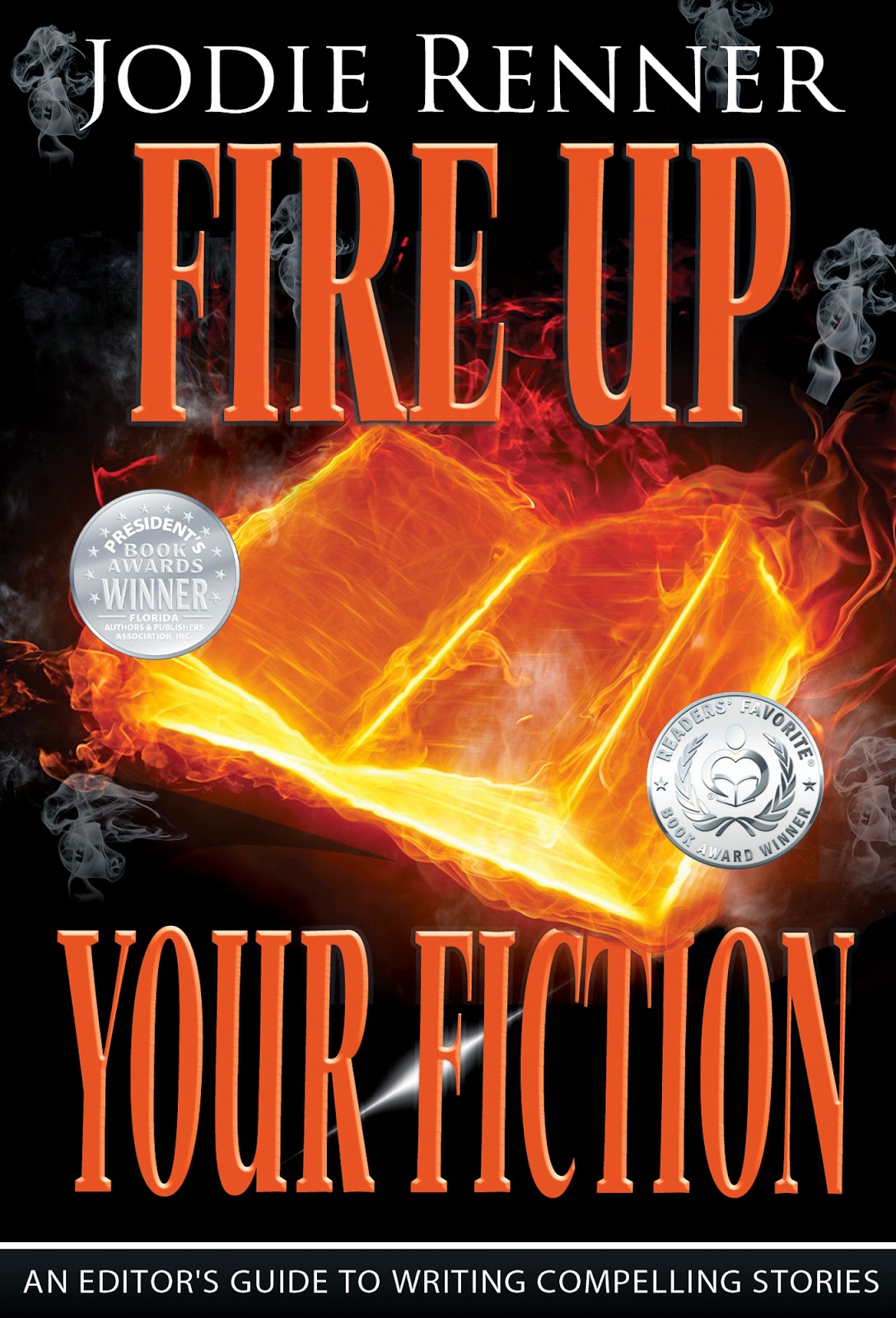
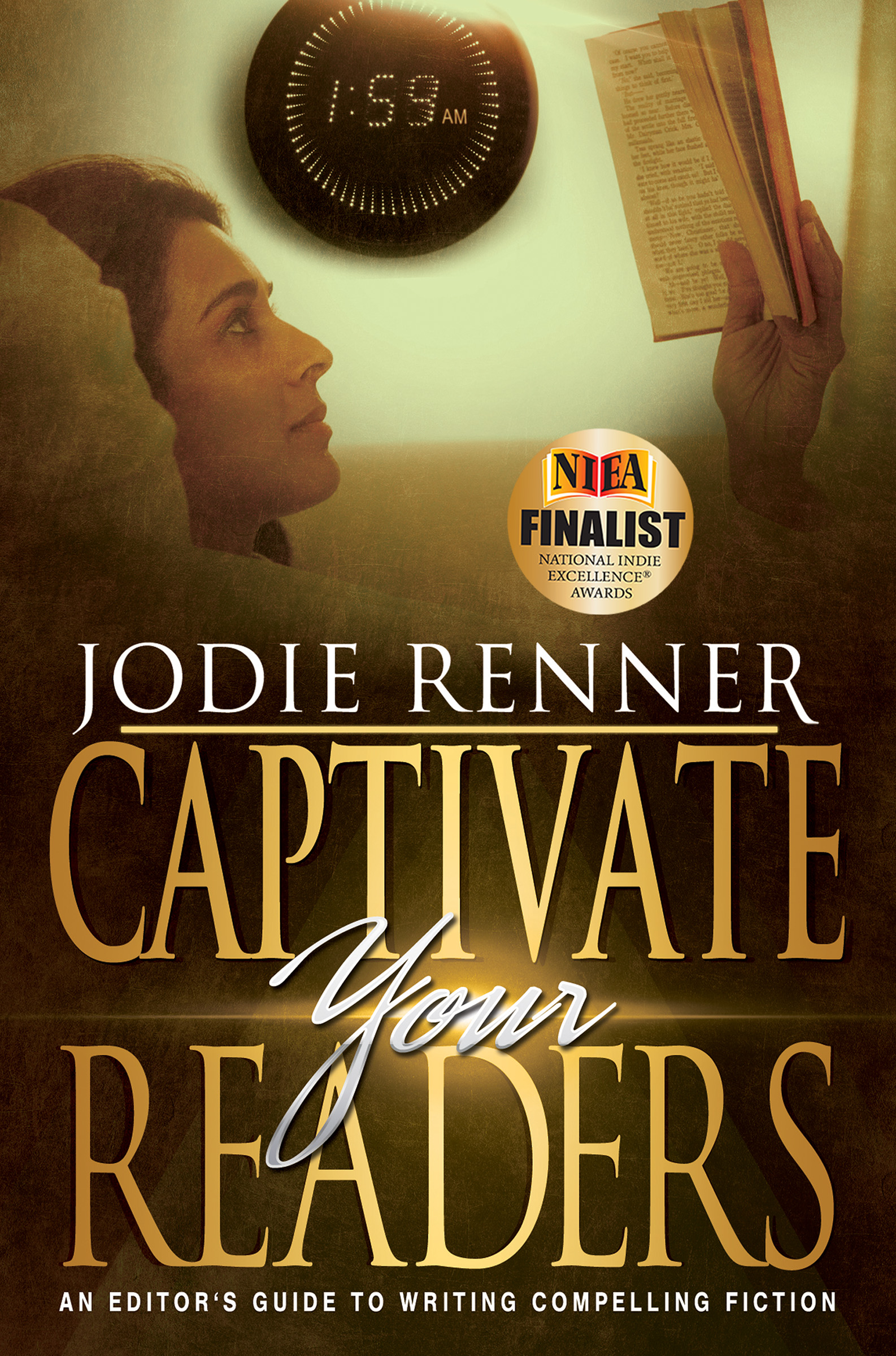
Captivate_full_w_decalJodie Renner is a freelance editor and the award-winning author of three craft-of-writing guides in her series An Editor’s Guide to Writing Compelling Fiction: Fire up Your Fiction, Writing a Killer Thriller, and Captivate Your Readers. She has also published two clickable time-saving e-resources, Quick Clicks: Spelling List and Quick Clicks: Word Usage. You can find Jodie at www.JodieRenner.com, www.JodieRennerEditing.com, and on Facebook and Twitter.

Theme Through Intent

Nancy J. Cohen

Recently, I spoke at a local book club. The readers posed interesting questions about my life as a writer, but I also learned a few things from them. For example, the special needs teacher said her students are “unable to visualize movies in their head” like we do when we read. This deviance stems from all the visual images presented to us through TV, movies, video games and such. These young people haven’t developed the ability to imagine beyond the words on the page.

This statement took me aback. I understand that not everyone likes reading fiction, and it’s a gift when words on a page transport you to another place in your mind, but I never realized some people can’t see beyond the actual words themselves. If this deficit is allowed to grow, we’ll lose generations of readers to literal translation.

Another book club member, an English teacher, had this to say:

“On our tests, students are given a passage to read and then asked to explain the author’s intent. I once asked an author if they knew the theme of their story before they wrote it, and their answer was no. They write the story as it comes. How about you?”

“My intent is to entertain,” I said. “That’s it. I want to give my readers a few hours of escape from their mundane routine and all the bad news out there. My goal is to write a fast-paced story that captures their attention.”

clip_image001

And this is true. I’ve had a writer friend who is a literature professor look at my work and find all sorts of symbolism. Excuse me? I had no idea it was there. Must have been subconscious. I do not set out to sprinkle meaningful symbols related to a theme into my story content. I just write the book.

clip_image003

However, I do know what life lesson my main character has to learn by the end of the story. This is essential for character growth and makes your fictional people seem more real. Usually, I include this emotional realization in my synopsis or plotting notes. It doesn’t always turn out the way I’d planned. Sometimes, this insight evolves differently as I write the story. Or maybe a secondary character has a lesson to learn this time around.

For example, in the book I just finished, I have a couple of paragraphs in my notes under the heading, “What does Marla learn?” Now maybe these lessons could be construed as the book’s theme, but I did not consult these going forward to write the story. To be so analytical would have stopped me dead. Fine arts grad students can pay attention to these details, but I have to write the book as it unfolds. So did I meet the intent that I’d originally set out for my character? Yes, in some respects I covered those points. But do they constitute the main theme of my work? Only my readers will be able to tell me the answer to that question. I can’t see it for myself.

clip_image005

How about you? Do you deliberately devise a theme and the symbolism to support it before writing the story, or does it evolve from the storytelling itself? How do you even tell if a theme is present? Or is it the same as the life lesson learned by one of the characters?

Note: I have a Contest going to celebrate the release of Hair Raiser, #2 in the Bad Hair Day Mysteries. This title had been originally published by Kensington and is now available in a revised and updated Author’s Edition. Enter to win a signed hardcover copy of Shear Murder and a $10 Starbucks gift card. http://nancyjcohen.com/fun-stuff/contest
 

Splat!

By PJ Parrish

Good morning crime dogs,

This post is going to be extra short. Sunday evening, I went out for my usual run at the park. I took a bad spill and went down hard on the gravel path. Managed to roll so I am scraped up on only one side but I bopped my head pretty hard and ended up with a mild concussion. So I didn’t finish my looong post on “Making the Good Decisions that Will Make Your Book.”  I promise to post it next time.

I am fine! Just sore and headachey. And feeling foolish but grateful I didn’t break any of my old bones. Now, if you will excuse me, I have to go lay down. So I will let my old friends The Blues Magoos stand in for me today.  See you on the back stretch…

The best of times and the worst of times

by Allan Leverone  @Allan Leverone

When I was very generously invited by Jodie Renner to share a post at The Kill Zone, my intention was to talk about career options for Indie writers. I was going to highlight my new novel, THE OMEGA CONNECTION, which had just been released by Kindle Press after being selected through the Kindle Scout program, and use it as an example of authors giving new opportunities a chance.

Well, the initial releases by Kindle Press have been delayed a couple of months, presumably because Amazon recognized the intense scrutiny those first Kindle Press releases will face, and they want to be certain each book is as polished and reader-ready as it can be.

I’m one hundred percent in favor of this.

However, that decision did leave a gigantic hole in my Kill Zone plans. So, instead of talking about options available to those who have already dedicated themselves to a writing career, I’ve decided to direct my post toward aspiring authors, and the whole “things are wonderful/things suck” debate that seems to be raging among Indies at the moment.

There’s never been a better time to be a writer.

It must be true, because more people than ever own e-readers.

It must be true, because reading as a pastime has been making a comeback over the past few years.

It must be true, because now, anyone with a story to tell and the self-discipline to pound it out on a keyboard can get that story out to the public, no agent or publisher necessary.

There’s never been a worse time to be a writer.

It must be true, because e-book sales have flattened out over the last year or so.

It must be true, because the glut of available material has made it increasingly difficult for new writers—traditionally published or Indie—to get their work noticed.

It must be true, because anyone with a story to tell and the self-discipline to pound it out on a keyboard can get that story out to the public, no ability or talent necessary.

So, which is it?

Is this the best of times or is this the worst of times? There are plenty of people on each side of the debate more than willing to hit you over the head with fact and opinion until you commit to their camp.

Here’s my take: it depends.

If you’re looking to throw some half-assed crap together, poorly written, unedited and formatted badly, stick a homemade cover on top of the whole mess and then wait for the cash to come rolling in, well, it might just be the worst of times for you.

There might have been a period when that was possible, way back in the prehistoric early days of the e-book/self-publishing phenomenon. But that train left the station a while ago, and hopefully it ran over you while it was pulling out. Readers are savvy, not stupid. They know what to look for and they’re not falling for amateurish junk cluttering up their e-reader.

Mostly.

Have all the charlatans disappeared? Of course not, and they never will. They spring up like poisonous mushrooms in every fast-growing industry, hucksters who think they’ve found a way to make a quick buck by circumventing hard work and offering an inferior product to a gullible public. These are the people who give Indie writers a bad name.

On the other hand, if you have some talent and a strong work ethic, if you approach writing as a craft as well as a job, if you’re willing to listen and learn and respond in a positive way to constructive criticism, this just might be the best of times.

I place myself firmly in the second camp. Am I making millions of dollars with my fiction? Hell, no. I’m nobody’s idea of an overnight success. But I am making money.

More importantly, I’m doing what I love and building an audience. With nine novels to my name and two more coming by April, I’m paying my dues, laying down a career foundation.

There’s nothing quick or easy about it.

But it’s extremely gratifying, and everything I was working toward when I was sending out dozens and dozens of agent queries over the course of several years. To no avail. Everything I was working toward when I attended Thrillerfest back in 2008 just so I could put myself through the torture chamber/learning opportunity that is Agentfest. Also to no avail.

For the record, I was never able to snag an agent, either through the query process or through the Agentfest meat market, or any other way.

But something happened along the way. I stopped actively seeking an agent years ago and now, as far as I’m concerned, the shoe is on the other foot. Any potential agent wishing to represent me would have to convince me of the value he or she could add to my career, not the other way around.

If you look at writing as some kind of get-rich-quick scheme, one where you can rake in lots of cash quickly, you’re probably considering the wrong profession, especially now. Not that it doesn’t happen, but it’s such a rare occurrence you can be virtually certain it isn’t going to happen for you.

You’ve got a better chance of getting struck by lightning. Twice.

On the other hand, if you start to feel a little…twitchy…when you go more than a day or two without writing, if you have the ability to tell stories and phrase things in interesting ways, if you are confident in that ability without being unrealistic in your expectations, if you recognize the value of hard work and you’re willing to take a chance on yourself while understanding there are no guarantees in this world, then by my estimation, there’s never been a better time to be a writer.

So as far as that debate over whether things are good or bad for writers is concerned, I suppose the real answer is: who cares? Worrying about it isn’t going to advance your career. Get writing.

Allan Leverone is the New York Times and USA Today bestselling author of nine novels, including MR. MIDNIGHT, named by Suspense Magazine as one of the “Best Books of 2013.” Allan lives in Londonderry, NH with his wife of more than thirty years, three grown children and one beautiful granddaughter. Connect at AllanLeverone.com,  on Facebook or Allan Leverone (@AllanLeverone) | Twitter.