Clare is hiking and camping with her family this week, she reports. Happy Trails to you, Clare!
Avoiding Writing Paralysis Due To Over-Analysis
 Got a lengthy email from a writer who has attended my workshops in the past. He gave me permission to paraphrase the gist of his lament.
This writer has worked on his craft for years and felt he was making progress. He produced three novels, and at a conference had good feedback from an editor with a big publishing house. This editor told him it was not a matter of if, but when, he would get a contract from them. He was invited to submit at any time.
That was in 2012. To date he has not submitted anything.
What happened? He describes it as “paralysis by over-analysis.”
I cannot seem to get past the prison of being perfect in the first draft. Like writer’s block, it’s a horrible place to reside. Sometimes its paralyzing to start. At other times its critical negative talk in my mind remembering those sessions I attended.
The sessions he mentions came from joining a local critique group. Unfortunately this was one of those groups that was run by a large ego. The group sessions seemed mostly to be about “building themselves up by tearing down others.” Though this writer had great feedback from beta readers, his confidence was completely shaken as his pages were systematically massacred in the meetings. He finally left the group, but…
… I’m left with a nagging residual feeling that whatever I am writing it not good enough. I continue to write and rewrite my first chapters, never satisfied they’re ‘good enough’ to move on. Even though I’ve not lost the love of the story and series, I have lost confidence in my writing.
Finally, he asks:
Are we wrestling ourselves to be so perfect in a first draft we do not allow for a full first draft to later tackle or add (or subtract) to or from in revision? And why are we so pressured to get it perfect in the first draft? What can we learn or do to get out of that futile mental process?
I wrote him back with some advice, and thought it would be good to expand upon it here. It is based on Robert A. Heinlein’s Two Rules for Writing and Bell’s Corollary.
Heinlein’s Two Rules for Writing:
- You must write
- You must finish what you write
Bell’s Corollary
- You must fix what you’ve written, then write some more
You must write
Like the old joke says, if you have insomnia, sleep it off. And if you suffer from writer’s block, write yourself out of it.
With the paralysis-by-over-analysis type of block, your head is tangling itself up in your fingers, like kelp on a boat propeller. The motor is chugging but you’re not moving. You’ve got to cut away all that crud.
How?
First, write to a quota. I know some writers don’t like quotas, but all the professional writers who made a living in the pulp era knew their value. Yes, it’s pressure, but that’s what you need to get you past this type of block.
Second, mentally give yourself permission to write dreck. Hemingway said that all first drafts where [dreck]. So tell yourself that before you start to write. “I can write dreck! Because I can fix it later!”
Third, do some morning writing practice. Write for 5 minutes without stopping, on any random thing. Open a dictionary at random and find a noun and write about that. Write memoir glimpses starting with “I remember…”
If you’re an extreme paralysis case, try a dose of Dr. Wicked’s Write or Die. This nifty little online app (you can also purchase an inexpensive desktop version) makes you write fast or begins spewing a terrible noise at you. Set your own goal (e.g., 250 words in 7 minutes) and then GO. This could be extremely nerve-racking for some that are trying very hard but not getting anywhere, some writers have tried to free their minds with CBD products like cbd gummy bears and other products.
You are teaching yourself to be free to write when you write.
You must finish what you write
I always counsel writers to write their first drafts as fast as they comfortably can. This means:
- You step back at 20K words and make sure your fundamental structure is sound (are the stakes high enough? Are you through the first Doorway of No Return?) If you are worried about structure, just think of it as writing from signpost to signpost.
- You only lightly edit your previous day’s work, then move on and write to your quota.
- Then you push on and finish.
You must fix what you’ve written …
The time to dig into a manuscript is after it’s done. Put your first draft away for at least three weeks. Then sit down with a hard copy and read the thing as if you were a reader with a new book.
Take minimal notes. Read it through it with one question in mind: “At what point would a busy reader, agent, or editor be tempted to put this aside?”
Work on that big picture first.
Read it through again looking at each scene. Here is where craft study comes in. It’s like golf. When you play golf, just play. Don’t be thinking of the 22 Things To Remember At Point Of Impact on The Full Swing. After a round is when you look back and decide what to work on in practice. And when you have a good teacher to help, you learn the fundamentals and you get better.
Same with writing. There are good teachers who write good books and articles and blogs, and lead workshops. Learn from them. Use what you learn to fix your manuscript after the first draft is done. When you write your next book, those lessons will be in your “muscle memory.” You’ll be a better writer from the jump.
And here I should issue a general warning about critique groups. As with everything in life, there’s the good, the bad, and the ugly. If you find a good, supportive critique group, fantastic. But know there are toxic critique groups, too. Those are usually dominated by one strong voice, with iron-fisted rules about what can never be done, like: Never open with dialogue! No backstory in the first fifty pages! Don’t mention anything about the weather in the first two pages!
There can also be a tone of such ripping apart that soon enough, when you’re all alone, you’ll freeze up over every sentence you write. That’s what happened to the writer of the email.
For further advice on critique groups, see these posts by P. J. Parrish and Jordan Dane.
Paying for a good, experienced editor at some point is worth it. How do you find one? Research and referrals. There is now an abundance of editors out there who used to work for New York houses, until the staffing cutbacks of the last few years. The cost of this is high. Expect between one and two grand. If that’s beyond your budget, then hunt down and nurture a good, solid group of beta readers. See the advice of Joe Moore.
Then write some more
The name of this game is production. My correspondent mentioned a writer he knows who spent eight years workshopping and conferencing the same book, until realizing it would have been much better writing eight books instead.
Make a book a year your minimum. If you want to be a professional writer you have to be able to do at least that. Is it easy? No. If it was, your cat would be writing novels. But as Richard Rhodes put it once, “A page a day is a book a year.” One book page is 250 words.
Just. Do. It.
The good news is I got an email from this author after I answered him and he said
I spent the bulk of Tuesday at the keyboard and wrote/fixed about 4500 words in one of four sessions. I feel liberated and just wanted to thank you. So thank you. Your Rx for my dilemma has been like a reset button. One long overdue.
So, TKZers, have you ever suffered from paralysis by over-analysis? How did you free yourself up to write?
On the Road
I have been known to use this space to prattle on a bit about how to get that creative spark exploding, using a bit of this or that. Here I go again.
I had no idea at all until a couple of hours ago that there is a low-cost transportation service popularly known — to those who know it at all — as the Chinatown bus. Its service area is expanding by the month but its purpose is to get you from your city of residence to Chinatown in New York. It can do this from Columbus, Ohio, to name but one place, for around thirty dollars (the more you plan ahead, the less a ticket will cost you). You show up on the second block of East Main Street downtown at the day and time appointed — buses leave twice a day — and twelve non-stop hours later you are dropped off at a storefront in New York’s Chinatown. I was familiar with Megabus and some of the other curb-to-curb interstate bus services but this is a new one for me. The service has its own website which you can use to book a trip and also discusses the company’s history, which is extremely interesting as well. I managed to quickly find a couple of folks who have used this and who told me some extremely interesting stories about using it. While the service was originally designed to accommodate Chinese and other Asian immigrants, anyone can use it with some money and planning.
Think about that: a non-stop trip to New York for less than it would cost you to drive there. If you got on the bus wanting inspiration, you would almost certainly have something in mind by the time you reached your destination, just by observing your fellow passengers and taking notes. If you weren’t inspired by the trip, certainly being dropped off in the middle of New York will get those creative juices percolating. I’m thinking — yes, you do smell smoke — of taking the Chinatown bus to Thrillerfest XI just for grins next year. And maybe just for the heck of it before that. I may even put it on my bucket list.
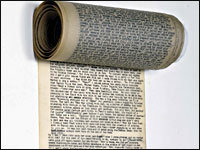
Does this appeal to you? Would you use such a trip — or any trip — as an inspirational jump starter? Or do you regard travel, regardless of mode, as a necessary evil that enables you to get where you want to go, and nothing more? And do you have a favorite travel story or novel? Mine is — of course — ON THE ROAD by Jack Kerouac, typed on a roll of toilet paper. Yours?
Reader Friday: Noodling

Let’s Discuss Book Promotion Resources

Purchased Image by Jordan Dane: book cover
Off the top I will say that spending a great deal of time doing promotion, instead of writing, is probably not a good thing. Even if you’re an indie author, having inventory to sell is a key way (the best way) to keep your work in front of readers.
Writing new material should be a goal for every author. Having said that, book promotion is a necessary evil, even if you’re traditionally published with book tours and appearances, but even more so if you are an indie or hybrid author straddling business and creative lines.
So let’s talk about promo. It’s been awhile since I looked into this topic. Even if you are traditionally published, it can help to enhance your sales if you assist your publisher with your own marketing strategy – something that isn’t redundant with what they may be doing for you. The average author today can not escape promoting their own books, no matter how big their publisher might be.
Promotion Resources:
BookBub still is a popular option if you are lucky enough to get your book selected by them. It can be costly (depending on what genre you pick to promote your book in) but I’ve heard authors have good odds of making the expense pay off in sales because you get your book in front of readers of your genre. Always a good thing.
Other popular options are:
BookBuzz is a fee-based service company that will help you promote your book in various packages, including getting your book listed on NetGalley for reviews (which costs money). The fees are reasonable and you choose which package best fits your purposes and budget.
BookGorilla is a reader-based service that sends out emails daily, listing great books deals. If you’re offering your book at a discount upon release or for preorder, this might be a good place to reach a vast list of reader members.
Upload Service Question:
For those of you in “the know,” is there a service that will input a new release book into 50+ reader-based sites for a fee? I seem to recall there used to be one but I’ve had trouble locating it online. It would certainly be a cool feature for any author or publisher to find a service like this.
Facebook Parties:
Many authors add Facebook Parties to their launches. It could be part of a virtual tour offered by a service company. It helps to have more than one author of a genre to make the party more fun and generate interest. Has anyone had success with a Facebook Party for a crime fiction book? (Romance and Erotica authors do these quite a bit.)
Promo Question:
Does anyone have promo sites for either promotion service companies to generate buzz or reader-based sites to get new releases into readers’ hands that have paid off? It’s often hard to quantify whether a fee has paid off in book sales, but please share anything you’ve tried with success. I’m especially interested in services for crime fiction, mystery, suspense, and thrillers.
I hope you’ll share what has worked for you. Please join in the discussion. Below are links to promote free or discounted books. Hopefully some are new to you.
ENT (E-Reader News Today)
Pixel of Ink
The Reader Cafe
Free Booksy
Kindle Nation Daily
Digital Book Today
Free Digital Reads
http://ereaderutopia.com/
http://www.humanmade.net/submission-form
http://www.orangeberrybooktours.com/
http://www.bookblast.co/advertise/advertise.php
https://www.themidlist.com/
http://www.ebooksoda.com/
http://www.masqueradecrew.com/2014/10/advertising-options-from-masquerade-crew.html
http://newfreekindlebooks.com/authors
http://kindlemojo.com/
http://www.thekindlebookreview.net/advertise-here/
http://www.bookbear.info
http://www.totallyfreestuff.com/
http://www.icravefreebies.com/contact/
http://blog.booksontheknob.org/about-this-blog-and-contact-info
http://freebooksy.com/editorial-submissions
http://www.kindleboards.com/free-book-promo/
http://indiebookoftheday.com/authors/free-on-kindle-listing/
http://freekindlefiction.blogspot.co.uk/p/tell-us-about-free-books.html
http://www.freeebooksdaily.com/
http://www.freebookshub.com/authors/
http://www.ereaderiq.com/about/
http://ebookshabit.com/about-us/
http://www.blackcaviar-bookclub.com/free-book-promotion.html#.UXFB27XYeOc
http://www.kornerkonnection.com/index.html?fb=ebookkornerkafe
Evolution of a Bad Guy
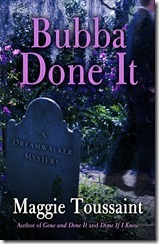
When I began plotting my second paranormal mystery, Bubba Done It, I knew one thing for sure. All the suspects had the nickname of Bubba. Other than that, I didn’t have a clue.
Before I could cast men in the suspect roles, I considered my setting and the types of characters I needed. I’m familiar with the setting as I use a fictional locale that’s similar to where I live in coastal Georgia. We have townies and imports. We have people with plenty and people with nothing. We have blacks, whites, Hispanics, Asians, even Native Americans. We have a stalled economy and our share of foreclosures.
All of the top suspects needed a motive to kill the banker. Some motives I considered were previous criminal record, financial trouble, and love.
The sheriff immediately adds four Bubbas to his suspect list. Since seafood is the main industry around here, it would be good to have a fisherman Bubba. I also wanted someone who’d moved to the county as a retiree, someone who didn’t quite get locals or their customs. That worked. Two Bubbas down, two to go.
Drugs are a universal problem in today’s world. I decided upon a Bubba with a bad track record as a crackhead, but who had allegedly reformed into an evangelist.
Lastly, I wanted to ensure my sleuth Baxley Powell had a definite call to action. She’d taken the heat in Book 1 as the top suspect, so for Book 2, I found a patsy in her brother-in-law. Why would he want to kill the banker? Baxley knew her Bubba was a dreamer who often needed money for get-rich-quick ventures. Baxley and her husband had bailed Bubba Powell out of financial scrapes for years.
With her husband dead, the task of saving Bubba fell to Baxley. She’s certain he couldn’t have done it.
Or at least she feels that way at first. With each layer of story revealed, she discovers more reasons for the Bubbas to have killed the banker. Her challenge is to sort through the evidence, in this world and the next, to finger the killer.
To summarize:
Populate your suspect list with characters fitting to your setting and situation.
Give the suspects motives to kill your victim.
Layer the suspects’ relationship with the victim to create complex characters.
Make sure the sleuth has a clear call to action.
Buy links for Bubba Done It:
Kindle
Amazon hardcover
B&N hardcover
Connect with Maggie on the web:
Website | Facebook | Twitter | Blog | Goodreads | LinkedIn | Pinterest | Booklover’s Bench |
Amazon Author Central
 Southern author Maggie Toussaint is published in mystery, romantic suspense, and science fiction (writing as Rigel Carson). The third book in her Cleopatra Jones mystery series recently won the Silver Falchion Award, while her romances have won the National Readers’ Choice Award and the EPIC eBook Award for Romantic Suspense. Her latest mystery is a book two of her paranormal cozy series about a psychic sleuth, Bubba Done It.
First Page Critique: Tweak, Tune, and Trim

Shutterstock photo purchased by Kathryn Lilley
Today we’re analyzing an anonymous, first-page submission titled WHERE I BELONG. My comments on the flip side.
* * *
“Do you want to know why we’re not having sex?”
My husband Sam was standing at the stove, pouring pancake batter onto the griddle, when I walked into the kitchen. He had his back turned; he spoke in an even tone. He might as well have been asking whether I wanted orange juice or cranberry.
It was a sunny Saturday morning in early September. I was dressed in sweats, my long hair pulled back in a ponytail. I had been headed to the garage to let the dog out of his pen, so I was distracted and wasn’t sure I’d heard him correctly. “I’m sorry, what did you say?” I asked.
Sam turned off the stove, faced me directly, and placed his hands flat on the counter-top between them. “I said, do you want to know why we’re not having sex?”
Is there a good answer to this question? I wondered. Doesn’t this lead to either “I’ve met someone else and we need to talk” or “I am seriously ill and we need to talk.” Either way –
“I’m not in love with you anymore,” Sam said in a monotone voice.
I felt as if I’d entered a time warp. This whole conversation was bizarre. “You just stopped loving me? This morning?” I replied lightheartedly.
Ten minutes ago I’d been singing in the shower and now I heard my husband telling me– Wait. What exactly was he telling me? Was Sam upset about something? Was this his way of letting me know he was hurt?
“Okay, what’s bothering you?” I finally said. “And, honey, how can you say we’re not having sex? Just a few weeks ago, we made love. When Lily left for the weekend. You cried afterwards and said I was the only woman you ever loved.”
Sam stared at me full on. “I told you what you wanted to hear. I wasn’t being honest. And because I knew it was the last time.”
I stood still, looking at him. This time I heard him. That message was clear. His jaw was clenched but I also saw tears in his eyes. Something was seriously wrong.
* * *
My comments:
The first line of this story grabbed my attention. As Joe Moore discussed in his post last week, the first line of a story plays a critical role in setting the stage for everything that follows. After reading the first line of this story, about why the couple is no longer having sex, I was hooked. That’s a strong opening.
This first page does severel other things well. It sets up a situation that many people can identify with: a sudden, shattering rejection. By contrasting the serious nature of the couple’s discussion against the mundane rhythm of a “normal” Saturday morning, the drama is heightened all the more. We can’t help but identify with the character as she reacts to what her husband is saying, moving from confusion to a dawning awareness that her world is about to fall apart.
Tweak and Tune
Most of my suggestions for improvement go under the category of “tweak and tune.”
Action overload
The following sentence contains too many sequential actions:
“My husband Sam was standing at the stove, pouring pancake batter onto the griddle, when I walked into the kitchen.”
We writers have a tendency to string actions together like Christmas tree lights, in order to move through the physical mechanics of a scene. As a general rule, sentences should contain one or two actions each. Use caution when combining actions by two characters within the same sentence–that’s frequently a symptom of action overload.
The sentence in this example is further weakened because the sequence of actions is out of order. The main character sees her husband after entering the kitchen, but this sentence reverses that sequence. That note seems like a small nit, but it’s important to avoid disorienting the reader. (Another related, general rule: the most important action should always appear at the end of a sentence, not the beginning.)
Echo-ING
“Standing” and “pouring”. The use of two ING words within the same sentence is repetitive, and weakens the line.
Batch related elements
The sentence, “…he spoke in an even tone” is an important line, but it’s located too far away from the dialogue it refers too. In general, try to keep descriptive elements in close proximity to the thing they describe.
Semicolon alert
“He had his back turned; he spoke in an even tone.”
I agree with James Scott Bell, who once said of semi-colons: “I think of semi-colons the way I think of eggplant: avoid at all costs.”
Adverb alert
“I replied lightheartedly.”
The adverb “lightheartedly” undermines the strength of this sentence. The character might try to sound lighthearted, perhaps. But seriously. Don’t use an adverb here.
Focus on action-reaction
“Okay, what’s bothering you?” I finally said. “And, honey, how can you say we’re not having sex? Just a few weeks ago, we made love. When Lily left for the weekend. You cried afterwards and said I was the only woman you ever loved.”
It would be good to enhance this snippet of dialogue with some sense of interaction between the characters. For example, perhaps the woman waits for her husband to respond to her question about what’s bothering him. When she gets no answer, she then launches into the story about the last time they made love.
Overall
All my notes and nits are relatively minor, mechanical suggestions. Overall, I was completely drawn in by the character’s situation in this story. I think it’s a strong start. Kudos to the writer, and thank you for submitting this first page!
Your turn
What do you think of this first page, TKZ’ers? Do you have any additional notes or suggestions for the writer?
Your Story, Success, and the Wall That Separates Them
Last week Joe Moore posted an especially fun and compelling piece entitled, “But First… ,” in which he provides a wonderful litany of stellar opening lines from iconic novels. I liked it so much that not only am I mentioning it here, I’m going to write about it again in two weeks in my next Kill Zone post.
In the comments section I contributed a first line that struck me, from Colin Harrison’s 1996 novel Manhattan Nocturne (republished in 2008), which read: “I sell mayhem, murder, and doom.”
I feel the same way.
I’m a story coach, among other writerly things, and my job is to engage with works-in-progress with mostly new writers and weigh in on what’s working, what’s not, and what might be done about it. Let me say, with as much tact as possible, that sometimes I struggle to find the right words that deliver the appropriate coaching without smashing the writer’s dream into a wad of discarded typing paper.
Just this week I worked on a project that, while promising, demonstrated a very common set of weaknesses, especially from new writers. I actually stopped in the middle of the process – such was the gap between what existed and what was needed – and sent my client feedback that was incomplete, because in my view the story was emerging from a concept and premise that was already DOA. Even a great writer cannot breath life into the dead, and life for a story in any genre other than “literary fiction” begins, it lives and dies, at the premise level.
This writer is really bright and very passionate about his story. So – and this, too, is common with newer writers – his response was basically this: well, I must not have communicated it very well, because my story really is very special and original.
Sensing where this might be headed (not to be confused with beheaded, which popped into my mind), I send him an email this morning explaining the nature of the proposition he was entering into simply by intending to write and publish a novel.
I’d like to share it with you.
Dear XXXX —
Good to hear that you’re up for another round. Something like this is a sort of crossroads, you’ll look back and see that you could have quit, but didn’t. This also is a case study in how hard this is… writing a great novel looks so easy from the reader’s point of view, but man, to actually plan and execute a novel that works, really works, that’s brain surgery. Literally, a brain surgeon who reads my blog wrote to tell me that writing a novel, the right way, is every bit as complex and requires a similar apprenticeship to what he does during business hours.
With that in mind, and as a new writer, don’t be hard on yourself, and don’t rush it. I did this for 23 years before I published my first novel. You may find that discouraging – I do – but it’s not uncommon.
Success is the intersection of two things: mastering the craft, and coming up with a killer idea. Your story idea has potential. But you need to dig within it to find something truly conceptual and fresh. Your genre is crowded with dystopian, steam punkish tropes, dark and corruption-riddled story landscapes, so pitching those elements in your own story doesn’t remotely render it startlingly original.
Your hero, in my opinion, is the main problem with where you are now. I see a lot of stories in which young kids are sent into new and dangerous situations and are asked to save the day. Had one recently where a 14 year old had to hack in to a CIA database – and did so — and then single-handedly had to take out four ex-Navy Seals in hand-to-hand combat. I ask you, how ridiculously impossible is that? Did I mention, risking a bit of misogyny here, that this 14-year old was a 94 pound ballerina, as well?
That author was outraged when I suggested that nobody would buy this. With no shortage of vitriol she said it was her story and nobody could tell her what works and what doesn’t, how dare I say her idea wasn’t viable, she’d never heard anyone say that in a writing conference before. I had to back off, because it’s sad and my only response was a direct contradiction to all of it.
This explains in part why 990 out of every 1000 submitted books are rejected.
Part of this writing journey is accepting the truth, the constraints, the odds, the requisite 10,000 hour apprenticeship, and the high bar of coming up with a truly compelling story premise.
There are many roads toward achieving just that. There are many more that will send you off a cliff. Rarely is the higher road our first instinctual pass at it.
So stick with it, wrestle it to the ground. Set a higher story bar.
As a reader, perhaps a young reader who is now a writer, your database of stories in this genre might be measured in the dozens. But know that in the marketplace, where agents, editors and readers (in that order) are the judge and jury of your story, the collective comparative database measures in the tens of thousands, in any genre. So you may not be aware of how many stories are out there that at first blush sound exactly like yours.
The key is to truly reach for that higher bar. Not lip service, not getting there tomorrow, but knowing what the benchmarks and standards for such a story are, and not settling for anything less.
The criteria for that bar is this: the potential for compelling dramatic tension… the compelling conceptual nature of the story proposition via the buttons it pushes or the places it will take the reader… the empathy we intuitively feel for your protagonist… and the vicarious nature of the journey the reader will take alongside your hero.
It is truly amazing how complex this becomes with only those five variables to juggle. In the end it comes down to not only how those things integrate, but the undefinable energy and fresh tonality of your voice, as well as the story sensibilities that will render it with optimal pacing, subtext and a killer ending that knocks the reader into next week.
That’s what you’ve signed up for. So don’t rush it. Competitors will fall out of the race by natural attrition, don’t be the guy who gives up, who settles, or who rages that this is all so unfair, damnit, because my story is special.
Others get to make that particular call.
Simply by virtue of engaging with this initial brick wall that says your first pass wasn’t strong enough, you are face to face with both the magnitude of the challenge and the breadth of the tools, criteria and variables that are available to get you up and over it. It’s worth the work.
Because the view from the other side… amazing.
*****
Larry’s website is: Storyfix.com
Three Tips For Writing Historical Fiction
by James Scott Bell
@jamesscottbell
One of the challenges of writing contemporary thrillers is that technology and forensics are always changing. Something you write about this year can be dated the next. I remember a thriller that came out some years ago, from a big name, utilizing the amazing technology of a cell phone that could take pictures!
How quaint. That book now reads like one of those 1940s movies where reporters rush to pay phones to get a scoop to the office.
With historical fiction, though, that’s not an issue. Everything is fixed. You can take your time with the research because you don’t have to beat the clock.
Which is why I enjoyed writing about a young female lawyer in old Los Angeles. Six books in the Kit Shannon series, originally for the leading publisher of Christian historical fiction, Bethany House.
When that series was almost done, Carol Johnson, who was in charge of fiction at Bethany House, asked me if I’d consider writing a long, historical stand-alone for them. I was up for it, for I had long wanted to try writing one of those John Jakes-type historical novels. I also wanted to cover an era I felt was under-represented, World War I and the early 1920s in Hollywood.
Which is how Glimpses of Paradise was born.
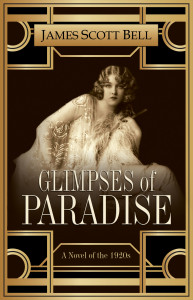
The novel follows the fortunes of two high school kids from Nebraska. Doyle Lawrence is the scion of one of town’s wealthiest families. Zee Miller is a preacher’s kid from the poorer section. But she has a spirit and zest for living that draws Doyle to her, much to the consternation of his father.
From there the narrative tracks Doyle to the battlefields of World War I, and Zee to the glitter factory of Hollywood. And a stunning series of events that brings these two together again, both with innocence lost.
Glimpses of Paradise is the longest novel I’ve ever written, at 130,000 words. I absolutely lost myself in the research. Countless hours spent at L.A.’s central library, delving into first-hand accounts of World War I (a section of the book I’m particularly proud of, since my great uncle, a Marine, was killed at Belleau Wood in 1918) and soaking myself in the newspapers of the time. I have three big binders full of my research notes, copies of newspaper stories, maps, photos. (If you want to know what corned beef cost in 1921, I’m your man.)
The result was a novel that was a finalist for the Christy Award in Historical Fiction, and one of my personal favorites. There’s even a cameo appearance by Kit Shannon, still practicing law in Los Angeles. You can pick it up from these retailers:
If you would like a PRINT copy, I have a limited number of the original Bethany House edition. If you’d like one for $10 (free shipping in the U.S.), send an email to compendiumpress [at] yahoo [dot] com and we’ll tell you what to do.
So (doffing my cap to our resident historical fiction maven, Clare Langley-Hawthorne), I offer these three observations about writing historical fiction:
- It’s still about characters
The fundamentals of storytelling don’t change just because you write about a certain place and time. You still need to bond reader with characters, and put those characters into a life-altering struggle that requires strength of will to overcome.
- Make the setting itself a character
Don’t just render a historical setting accurately. Use that setting and the particulars of the time as a source of challenge and conflict for the characters. In Glimpses, for example, I try to capture what it was like for people struggling in the post-war depression in a city known for its glamour. I put the characters in challenging places to live, and in diners where they try to score some cheap food, etc.
- Weave research in seamlessly
Historical fiction writers love research. You can get lost in it. Every new discovery suggests a myriad of plot points. The great task is deciding what to leave out. And then taking what’s left and weaving it into the narrative so it doesn’t stick out like a neon sign announcing what a great researcher you are. The trick here is to start with a scene that has a clear POV character with a clear objective. Then brainstorm obstacles and helps to the character from the store of historical details. Use them in the conflict, don’t just list them for the reader.
Anything you historical fiction writers would like to add?
And if you’re a reader, what’s your take on historical fiction? There is always an ebb and flow in the market for historicals, but I contend that a well-written historical novel will always find readers to please.