How did you discover the most recent book you read or purchased? Was your choice guided by a review? Word of mouth? Or something else?
Infusing Emotion into Every Scene and Chapter
Creating a book is inventing a believable world the reader can step into and escape. Your characters must seem real, as if the reader can hear them and see them. The conflict and what’s at stake must be strike a chord with readers. Readers are voyeurs who want to be taken on a journey. Since emotion is a key way to pull readers into your book and keep them there, I thought that should be the topic for today.
10 Key Ways to Infusing Emotion into Each Scene
1,) Put the reader into the scene using the senses – If you expect your reader to “feel” the world you’ve created, put them into every scene. If your protagonist is walking down a dark alley with gun drawn, you have to be there alongside him, author. What sounds can he hear? What does he smell? What are his physical reactions to his surroundings and how does that play on his fear that’s building? Anticipation is a key element in creating suspense and building on tension. Have patience to let the tension mount.
2.) SHOW don’t TELL – If you truly write the scene as if the reader is looking through the eyes and body of your relatable character, that will put them into the scene. If you only “report” what the character is thinking, it distances the reader from your character. ‘Telling’ takes all the unexpected discoveries from the reading experience and it stifles what the reader can imagine. The reader doesn’t have to think. They’re ‘told’ what to think and imagine. Focus on the action of your character and give them a physical reaction. Rather than ‘telling’ the reader that your character is afraid, show how that fear manifests itself in trembling fingers, trickling sweat, and a punishing heart beat.
“Don’t tell me the moon is shining. Show me the glint of light on broken glass.” Anton Chekhov
“Good writing is supposed to evoke sensation in the reader—not the fact that it is raining, but the feeling of being rained upon.” E. L. Doctorow
3.) Make your characters relatable and sympathetic – Dare to give your villain an odd sense of humor or have her fight for a cause she cares deeply about, so her wicked obsession feels real. Your mercenary could be a loner, but give him a dog to take care of. Load up the emotional baggage in your character’s past and force him or her into a conflict where they have to face their worst fear. Dare to make your perfect hero vulnerable. All these human frailties create relatable and sympathetic characters and will have readers rooting for them.
4.) Reach for the emotion/Make it over the top – Milk the scene for every drop of emotion. It’s not just about choosing the right words. It’s about creating effective imagery triggers that will connect with readers. If you think you’re done with a scene, go back over and layer in MORE of what that scene is about. Ratchet up the emotion beyond where you might normally go. The added touch pays off when you’re using words to put the reader into the scene.
5.) Foreshadow the danger or the obstacles ahead – If anticipation ramps up the suspense, foreshadowing helps the page turning pace of your novel and keeps the reader invested. It creates ‘flow’ between scenes and chapters. Don’t waste a scene ending or a chapter ending. Make it work for you. If a scene or chapter ending fizzles to a close, that gives the reader a chance to put the book down. Tease them with a hint of things to come and they won’t want to let go of the story.
6.) Pepper each scene with descriptive words and choose wisely – Word choices have always mattered to me. I take great pains to squeeze every ounce of emotion or sensation from the words I choose. I particularly like words that enhance the scene by the sound or imagery of the word: slither, sizzle, skitter, hiss, bam, punch, clang, klunk, snap, splat, etc. You can almost ‘see’ the action with the ‘sounds’ of these words. I didn’t realize this was one of my things until readers started to point it out as a good thing.
7.) Make the stakes high enough and make them real – Give your character something meaty to fight for. What would he or she die for? It’s not enough to ‘battle evil or fight for the good.’ Make their reason come from a personal place or sprout from their worst vulnerability. Force your protagonist to give up something he or she values most in the world in order to earn the status of hero in your book. Give your character a journey through your book so there is real change in him or her.
8.) Make your reader fear for your character as time slips away – If you’ve set the foundation for a reader to care about your protagonist and the world you’re creating, now introduce a short fuse burning—and suddenly pull the rug out and make that time table shorter. It will make for a breathless plot but will force the reader to care even more about what will happen.
9.) Savor the Twist – Do the unexpected. If the story appears to be going a certain way, surprise the reader with a well-planned twist that will force the protagonist to rise to the occasion with added conflict or will showcase his or her brilliance. Readers love to be surprised by a plot they didn’t see coming. I enjoy setting the reader up in different ways, especially when the clues were always there. Again, word choice or well-positioned elements of mystery, like red herrings, can enhance the effect of a good twist. Readers get excited when they are fooled and often will go back to reread passages. This is another way to trigger many levels of emotion in your reader.
10.) Wrap it all up and make the ending satisfying – A well-written ending, where the characters have been through hell and have come out of a very dark tunnel, can force the reader into that same feeling of having survived along with them. If there needs to be closure at a grave site, where someone didn’t make it, squeeze out every tear and make the ending a satisfying experience. Don’t squander the opportunity to leave your reader with a fulfilling ending to the
For Discussion:
1.) Did your writing tips (on layering emotion into your scenes) make the list? If not, share what works for you.
2.) What books have stuck in your mind as unforgettable emotional journeys?
Tough Target – The Omega Team series (Book 2 of 2) launches May 24th as part of Amazon Kindle Worlds. Read book 1 – Hot Target – and catch up. Both ebooks are priced at a bargain of $1.99. (The book page for Tough Target won’t be posted by Amazon until May 24.)
When a massive hurricane hits land, SEAL Sam Rafferty is trapped in the everglades with a cartel hit squad in hot pursuit—forcing him to take a terrible risk that could jeopardize the lives of his wounded mother and Kate, a woman who branded him with her love.
Omega Team Launch – Facebook Party with GIVEAWAYS on May 24 at this LINK.- I’ll be online at 5pm CST. Join the other Omega Team authors most of the day.
Old Dog, New… Whatever
This post isn’t about writing books, but it is about writing—a couple different kinds of writing, in fact.
That said, it has less to do with writing than it does with our willingness to adapt and change and never being afraid to chase our dreams.
When I was thirteen, I read my first “adult” book, which was serialized in a magazine, called SOMEBODY OWES ME MONEY by Donald Westlake. Reading that book, a comedy murder mystery about a cab driver named Chet who simply wants to collect his nine hundred dollar bet, only to find his bookie stabbed to death, was a revelation to me. And I can say with certainty that it is the reason I became a novelist.
But I wasn’t always a novelist. In fact, I didn’t even start writing my real first novel until I was in my late forties (a considerable distance from thirteen), although I had written and published a handful of short stories. Before that, I was a screenwriter, and not a particularly successful one at that. I won the Nicholl award with my first script and turned around and sold it to Showtime shortly thereafter, but it was the first and last movie script I sold and I wound up writing for animated shows like Spider-Man Unlimited.
All of that started when I was well into adulthood, at the age of thirty-five. Before that I had been struggling to make it as a musician, first as a performer—I suffered too much from stage fright to make that happen—and then as a songwriter. I came very close to selling a few songs, was often praised for my music, but never was able to quite get over the hump. And then I felt I was too old to make it in the biz, so I fell back on my second love, writing, and wrote that first script I mentioned above.
I’m now approaching sixy-one, and can happily say that I’ve become a semi-successful novelist who has made some decent money and even seen one of his books make it to the small screen. I’ve talked about that before, I’m sure, so I won’t bore you with it now.
But at nearly sixty-one, despite my “success,” I’ve found myself feeling unfulfilled by only writing novels, and the lifelong musician (and screenwriter) in me has been yearning to do something different. Something I’ve never done before, but have been thinking about for many, many years.
So for the past several months I’ve chased an old dream. What, you might ask is that?
I’ve written a musical.
Yes, that’s right. It’s an “intimate” musical called Cradle Song, centering around a fractured family that desperately needs to heal.
And I went crazy and not only wrote the “book” (play script), but also the music and lyrics for the thing.
I’m told that this isn’t often done by one person, but, hey, I’m always up for a challenge. So I did it and it’s done and I can go to my grave knowing that I have fulfilled at least part of a dream. The other part, of course, would be seeing the play get produced. But that’s pretty much out of my hands.
So why am I telling you this, you ask?
All of this rambling is merely my way of saying that no matter how old you are, you should never deny yourself of the chance to fulfill a dream. To turn in a different direction and fly.
And if you want to be a writer (or a singer or a painter or a fill-in-the-blank) at eighty-seven but have never gotten around to doing it, don’t for godsakes let your age stop you. Don’t let anything stop you.
The world is full of people who love to tell us no. “You can’t do that. You’re too old. Too young. Too white. Too black. Too fat. Too thin. Too female. Too…” whatever.
Don’t listen to them. If you have a passion, follow it. And don’t worry about the naysayers and the rules. Just do it, as they say in the TV commercial.
Nothing and no one can stop you if you let your passion be your guide.
If anyone is interested in what I’ve been doing to fulfill my passion for the last few months, check out http://cradlesongmusical.com. And, of course, if any of you are play producers, feel free to use the contact page… 😉
Question: what dream would you like to fulfill that you haven’t yet chased after?
Remove A Letter, Spoil A Book Title
By Kathryn Lilley
I invite you to goof off with me today by playing a game that’s been making the rounds of social media: #RemoveALetterSpoilABook. Here are some fun examples I’ve run across to date:
Silence of the Labs
The Ale of Two Cities
A Wrinkle in Tim
Goosebums
Update: Inspired by some of the comments, adding a few more
Jurassic Ark
THE DAVINCI COD (Credit: Chrissie, Friend of Zone)
Hard Ties (Credit: JS Bell, Zoner At Large)
*MMA (Credit: Phil G, Friend of Zone)
Of Mice And Me (Credit: George S, Friend of Zone)
How about you? Can you think of any other titles to spoil by removing one letter?
The Story Coach Who Came In From the Cold
by Larry Brooks
I’ve always suspected that we remain totally alone with our stories.
Which means we live and die by what we know and believe to be true (which are different things) about storytelling, too often either shutting out or not comprehending any incoming feedback that smacks of being to the contrary.
As a story coach, I’ve tried to disprove this – that we aren’t alone with our stories, because craft is always there to help us, and when we get it, we join a huge community of the enlightened – by offering input and solutions to stories in need of patching up, hoping the author will see and believe what craft tells us when it is put in front of them.
But alas, this remains an uphill battle. Writing effective stories is hard, always has been. But sometimes writers make it harder.
Today’s take away: don’t be that writer.
On the flip side, some of my clients do just that. They see it and they recognize it as The Truth. It’s not me, it is craft triumphing over bad input, old tapes and blank spaces in understanding.
These are the wins, and they are few and far between. And totally worth the work.
Many writers, though, when they ask for help with their stories, are actually seeking affirmation. They’ll talk for hours about their characters and why it all actually works, even though it doesn’t. We write what we write for reasons that seem solid at the time, so when challenged, that reasoning demands to be heard.
Fair enough. But you can’t defend a sow’s ear, if it is truly a sow’s ear in a silk purse endeavor.
That’s the thing about craft, once you get it, it shifts our standard of reasoning. It raises the bar on what we choose for, and within, our stories.
I’d say half my clients fall into that category, one that recognizes a better path when it is shown to them. The other half, while perhaps open, aren’t yet fluent in the nuances of storytelling craft, which means they actually need to step away from the project and immerse themselves in that learning.
It’s really hard to coach an unenlightened writer.
Trying to understand story craft as you implement it is like a doctor trying to save a patient with a scalpel in one hand and a copy of Grey’s Anatomy in the other. Better to go into the lab and work on a cadaver until you truly get it.
Nobody wants to write a cadaver. That’s why writing a novel without a solid grasp of craft rarely – as in, almost never – works. Even then, when the feedback comes (and it will), one needs to understand what the feedback even means.
Don’t be that writer.
Sure, most writers are open to hearing about possible here-and-there tweaks, but when the story is flawed at the most deeply fundamental levels of dramatic theory and rationale – which it so often is in the story coaching game; consider that 990 out of every 1000 manuscript submissions get rejected… it’s not because the writer can’t write a decent sentence, it’s because the story isn’t working – they shut down.
They don’t want to hear it. Or they can’t hear it, because they don’t understand it.
“Wait, let me explain further.” Then, when that doesn’t work…
“It’s my story, nobody can tell me it doesn’t work.”
Ultimately, agents, editors and readers will tell you just that.
Don’t be that writer.
That further explanation – which is actually a defense – in the hands of a less-than-enlightened author, is how what should be a three sentence premise becomes a 1000-word plea for mercy. The clinging to dysfunction (because they’ve been sold this very thing, that you can write anything you want, any way you want)… that’s the very definition of – if you will allow me to mangle a word here – unenlightenment.
Unenlightened writers are everywhere, in packs and droves. They fill the halls of writing conferences and clog the servers of the best writing blogs.
Don’t be one of them. Go deeper. Really strive to get it. Because there are certainly very specific things you need to get. Principles of storytelling physics that are as consistent and non-negotiable as… well, as gravity.
And you know what happens when you mess with gravity.
An effective story has criteria.
There are bases that must be touched. Qualitative standards and aesthetic decisions that spring from an evolved story sensibility, rather than, simply, the original idea. Which, by the way, to be worth anything at all, needs to be original, or a new twist on something familiar.
Let me say it again: don’t be that writer. Learn the criteria. Understand those bases. Own those qualitative standards… and then, mix, stir, repeat… until your story sense hikes up the learning curve.
It can take years. And while you’re on the path… listen for the truth. It’s out there. Along with a bunch of truly toxic old school truisms that have outlived their veracity, and complete nonsense from people who should not be talking about writing – they should be listening – in the first place.
The reason this happens is that the writer doesn’t recognize the principles of craft with which they have heretofore played loose. They haven’t absorbed and integrated the fundamentals of craft, leaving them open to the fatal attraction of writing an un-vetted idea, while trying (unknowingly, certainly, but this is what it is) to narratively imitate what they read from their favorite authors, making it all up as they go, without truly understanding how those authors do what they do.
There has to be a better way.
The notion that all first drafts must fail miserably… that’s just not true. And yet, you hear this from some of the biggest names in the game… because their first drafts fail miserably.
That’s not conventional wisdom, that’s just the consequences of one’s chosen process. The difference is huge, and toxic if not fully understood. The initial goal of the storytelling process is to find the best available story from an initial spark on inspiration. \
If you develop a weak idea (in other words, hit all the narrative bases with it), it will still be a weak idea.
Some writers require a draft to find their best story… they’ll just sit down and actually begin writing about that idea… and yes, even if they know a lot about craft, it’ll probably suck.
Chances are a new writer may not know the criteria for a story that works in the first place, no matter how they go about finding it.
But that’s not the only strategic approach. The more you know about craft, the more of it will be applied to an idea (this knowledge becomes the vetting tool), even in a first draft, but certainly before that draft is written, resulting in a better outcome.
Too often the writing conversation is about process.
And yet, all processes subordinate to the nature and specifics of narrative and structural craft, every time. The very same criteria apply.
You can back into a great story, or you can build one from the ground up. Both can work. But usually, only in the hands of an enlightened writer.
So there’s your first, next and best goal: to become an enlightened writer, one who knows what to do with a killer story idea — how to make it into one — and understands that there are certain things that must be done to it before it will work.
What are those basic fundamentals?
Here are a few that you can never rationalize away. There is more – much more – to learn, but these are the most common sins of the newer writer who doesn’t get it.
This is so entry-level it is seldom discussed. It’s like pro athletes working on their strength and footwork and eye-hand coordination in pre-season… the pros do it, but the news doesn’t cover it. Same here, we don’t talk about what we need to talk about, at least often enough. Even in terrific blogs like this one, where we assume the readers understand these basics… too often they don’t.
So this is me, the story coach coming in from the cold to shine a light on these entry-level truths what are absolutely essential to a story. I hope you warm up to them quickly.
- Too often your story idea isn’t strong enough. Nobody tells you that, so you keep pounding on a too familiar, too thin idea. Half the reason for all the rejections out there stem from this. Stories that have been done to death. Premises that simply define a genre (“detective is given a tough murder case to solve…” really, I’ve seen that one submitted as a premise… ). Ideas that make too little sense.
In so many cases it’s not the writing that holds a story back, it’s the idea that becomes the premise that tanks the project.
- In genre fiction, everything hangs off your core dramatic thread. Story world, characterization, all the great scenes… they are all literally narrative, forward-propelling expressions of an unspooling core dramatic thread. Some of you reading this don’t know what that means… go find out (there’s a full post, even a book, in that issue alone).
It’s simply defined: what does your hero want or need in the story, and how do they go about getting it, and against what odds, with what stakes in play?
In other words… what is the plot? Plot drives commercial genre fiction (the hallmark of which is story world/arena, which is a different thing than plot), no matter what your MFA friends tell you.
You’d be shocked, if you were a story coach or an agent, how many writers mess this up. That aren’t clear on their core dramatic thread, or what that even means. Stories that have several dramatic threads, without one of them emerging as the defining essence of the story. Stories with thin dramatic tension. Stories with no stakes, that are by intention slice-of-life narratives and episodic character studies (which never work in genre fiction).
- Logic and credibility trump your idea. No more 15-year old heroes who can do what the FBI, CIA and Superman himself cannot do. Like, hack into the NSA database to find out the truth. Like, out-smart and out-fight a gang of ruthless killer drug dealers. Like, the hero bolting upright in the middle of a third act night to remembers something that turns it all around. Like, massive coincidences piled on necessary further coincidences that conspire to create impossible situations. That can out-wit a crime lord.
Stories may be about situations, but it’s how the hero credibly navigates the situation that is the stuff of a good story Know the difference, and do it credibly within the physics of your story world.
- Soft hero’s goals aren’t as compelling as specific hero’s goals. Don’t confuse goal vs. action required to reach that goal. Don’t pitch your hero’s journey as, “The hero must reunite his family so everyone can be happy.” That’s an outcome. A trite, non-specific outcome, by the way, that will bore an agent to tears. Rather, pitch what your hero must do to achieve a stated goal… your story is about that, far more than it is about the goal itself.
When both the goal and the journey toward it are compelling and fresh and logical and dramatic and character-testing, now you’ve got something to work.
- It’s about what your hero does, illustrating who they are in the process. Rather than just showing us who the character is. Oldest rule in the book, right? Show, don’t tell. And yet, this remains one of the most common fumbles… a story that is all about who a character is, drenched in backstory, without giving the character something compelling to do.
Carve this into your forehead: Story isn’t just about something (a character, a theme, a time or place, a culture)… but rather… a story is about something happening.
If you can burn this alone into your story sensibility, italics included, you will vault into the top ten percent of new authors working today.
- In a good story, structure drives the narrative. The notion that “story trumps structure” is complete hogwash… that’s like saying “chemistry trumps medicine” or “strength trumps motion.” Huh? That assertion is really more about process than it is story, and becomes an example of the toxic nature of some corners of the writing conversation.
Structure isn’t something you make up. You make up a plot that unfolds across a universally proven and omnipresent structure. You can’t really find a successful commercial story – book or movie – that departs from that structure to any significant degree, so it’s folly to think that yours can and will.
Story and character setup… 2) hero compelled into response… 3) hero attacking the problem… 4) hero resolving the problem. That’s the four-part essence of story structure (with much mission-driven enhancement required, including the critical transition story points, hero’s arc, stakes, antagonism, final conflict, etc.)… every time, every story. Your plot won’t work until it aligns with that sequence, in roughly equal proportions.
Don’t know that universal structure? It’s out there. There are different names and pieces for it, which is exactly like different languages delivering the same message… the IRS code in English or French or Aramaic is still the IRS Code. Violate it, and trouble happens.
These are pre-requisites of a professional-level story.
The 101 of the trade.
Don’t be the writer that pursues the craft outside of an awareness of, and integration of, these and other core principles.
Don’t be the writer operating below the 101 level of story sensibility.
You’re here, reading the Kill Zone, so you’re on the path. Everything you read here, and on my site and the sites of our authors, is in context to these basic tenets of craft.
I’m tired of writers defending their stories when they are already dead. It breaks my heart more than it pisses me off, which it does, because they insult the craft itself by believing it is unnecessary. Maybe you hear them in your critique groups. Or if you’re a story coach or editor, maybe you hear them every day.
I’m hungry for writers who get it, who are on the path toward a higher understanding of craft, which can be expressed and explored in so many ways, always leading toward an evolved story sensibility.
So are publishers. So are readers hungry for the next great story.
I hope you can be that writer.
You have to be, if you want to find readers and a career as a storyteller.
It’s Time to Ditch Discoverability
by James Scott Bell
@jamesscottbell
Humpty Dumpty published a book.
Humpty Dumpty hoped readers would look.
But all of the tweets and all of the ’grams
Didn’t bring Humpty significant clams.
See, Humpty was sitting on that wall waiting for his book to be discovered. Today, he’s a shell of his former self and living in an old yolks home.
Ever since the self-publishing boom took off, authors and industry types have bemoaned the “discoverability problem.” How can a new author, especially a self-publishing one, possibly get discovered in the tsunami of content flooding the market?
As Digital Book World put it back in 2014:
[D]iscoverability is becoming a bigger problem for authors and publishers. More books than ever are being published. Last year it was somewhere between half a million and a million new titles that were published in the United States alone. Self-publishing—mostly in the form of ebooks without a corresponding print edition (digital first)—has greatly added to that abundance.
Ebooks have added to this overwhelming choice in another way, too. Books don’t go “out of print” any longer. They now remain available as ebooks basically forever. Thus the total catalog of books available to readers for purchase or download has swelled dramatically and may now be around the ten or twenty million mark (exact numbers are surprisingly difficult to come by).
A prominent agent (who also happens to be a friend) wrote about the problem. I want you to read the following quote carefully. There is one word that clonked me on the head and has led me to question the viability of that blasted buzzword discoverability. Here is the quote from her post “Solving the Discoverability Challenge.”:
Discoverability continues to be one of the biggest challenges authors face. The market is flooded with books; how are the people who would love your book ever going to find it?
So what do you think the key word is?
Cue Jeopardy music.
Alex says time’s up.
The key word is: book.
Singular.
That is a major clue as to how we’ve all been thinking about discoverability. And it seems to me that thinking’s messed up.
Because it’s based on an old-school paradigm. The traditional publishing industry does one book at a time for an author. This is called a frontlist title. They hope that title gets discovered. If they really believe in the book or the author, they’ll put some money into advertising and co-op. (In reality, that money now mostly goes to a new title by an A-list author).
But in the new school of self-publishing, this paradigm has at least two major flaws.
First, readers hardly ever “discover” books. Rare indeed is it for a reader to float into a bookstore, spyglass in hand, scan the horizons, and suddenly spot a spine on a distant shelf, and then shout, “Book ho!” Still rarer for an Amazon browser who sees only a few of the gazillion thumbnails in the Kindle store.
The way readers find new authors is, and always has been, overwhelmingly by word of mouth—through a friend, book group, a favorite reviewer.
Second, discoverability thinking fails to emphasize that long-term writing success is not about a single book being found, but about an author building up trust with a growing number of readers.
Which is why I’m proposing we ditch discoverability in favor of trustability.
You should be thinking that each new offering is an opportunity to prove to readers that you deliver the goods. As you do this, time after time, trust in you grows. Consumers buy more from businesses they trust. Readers are consumers and you are a business.
But I’m putting out my first book. What am I supposed to do? I still want people to find it!
Of course you do. Trustability does not mean you don’t market what you publish. It does mean, however, that you have realistic expectations and are patient, knowing that it is going to take you a number of years and consistent production to establish a significant upward trajectory––if your readers trust you.
But to get rolling with a first book, most self-publishing writers would benefit by going into Kindle Select and using the five free promotion days. No less an authority than Author Earnings’ Hugh Howey agrees:
I can also say without reservation that most debuting authors should go exclusive with Amazon until they gain traction and can afford to branch out. The increased visibility offered by Kindle Unlimited makes it worth thinking of Amazon as a writer’s personal publisher. Keep in mind that self-published authors can move their works around. KU exclusivity is only for 90 days at a time. Unlike the decision to go with a major publisher, where you lose all control of your work for the rest of your life—and another 70 years for your heirs’ lives—with self-publishing, you can experiment freely. You can dip in and out and try lots of options.
In fact, you don’t even need a full-length book to begin this process. Write a killer short story or novella and price it at 99¢. Then use the five days of free promotion, along with your social media, to get as many eyeballs on your work as possible. Think of this less as discovery than as the first step in establishing long-lasting trust.
Make it easy for a happy reader to sign up for your email list. You need to build an email list because that’s how you directly communicate with those who are putting their trust in you. Start up a list with MailChimp or a similar service. Put an invitation to join and a link at the end of your story (some are now putting this in front, but I find that quite cheeky. You haven’t proven anything to me yet!).
And through it all, continue to do the following:
- Keep up a flow of production
Set goals, write to a quota, have several projects in development. You are no longer in the one-book business.
- Keep growing as a writer
Meaning look at your work, have others look at it and give feedback, and figure out how to make your stuff the best it can be.
- Keep learning about business
The principles of business are not difficult to understand. In fact, I’ve put the essential in a book. A business thinks ahead, plans for the long term. It knows there are only two ways to grow: a) find new customers; and b) sell more to existing customers. The former is hard. The latter is where the meat is. And that meat is based on trust.
One more note. Authors misunderstand and misuse social media when they make it primarily about discoverability. What is social media really about? Yep, trustability––real content and interaction and positive engagement, so when you do have something to offer, people will listen.
So put your eggs in the trustability basket. Don’t toss them, one by one, over the wall, waiting for a crowd to gather shouting, “Look! What a great egg! Come over here, everyone!”
That’s Humpty Dumpty thinking, and you don’t want your hopes to shatter like his.
Now, scramble up some thoughts and serve them in the comments.
Reader Friday: Title Of Your Book Of Life?
Moments In A Writer’s Life, Portrayed By Animals
By Kathryn Lilley
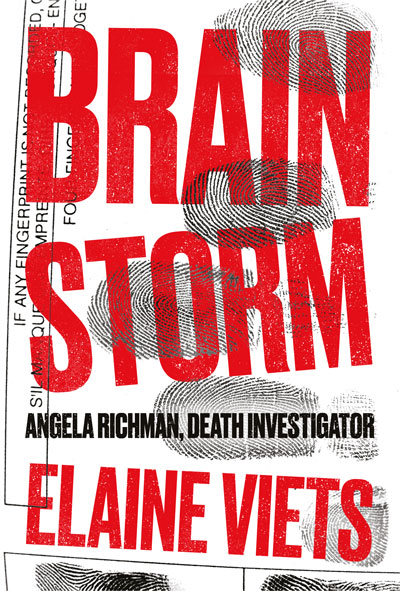
Note: I’m filling in today for my esteemed colleague Elaine Viets, who is on tour with her newest book, THE ART OF MURDER.
A Writer’s Life, As Shown By Animals
How a writer reacts whenever someone says, “I’d like to become a writer, but I don’t have time.”
How a writer feels after finishing Draft Five, just before starting Draft Six.
When a writer asks a friend to read his manuscript, with strict instructions to GIVE HIM HIS HONEST REACTION.
How the friend reacts to the manuscript (officially).
How the friend reacts to the manuscript (unofficially).
When a writer thinks, “F*ck it. I’ll just upload my (unedited, unagented) manuscript to Amazon as an e-book, and see what happens.”
“What happens” after the writer’s story is uploaded to Amazon.
How a writer deals with rejection.
When a writer puts Story #1 into a drawer and starts Story #2 (with a newfound focus on the importance of learning craft).
How a writer feels after he signs a contract with an agent/publisher.
When a writer receives the first round of notes from her new editor.
When a writer figures out her hourly income, after getting her advance and doing the math.
As a writer, are you familiar with any of these “writer moments”? Which animal captures a recent moment of yours?
Lisa Black On Writing
Today I welcome back to TKZ my friend and fellow ITW member, Lisa Black. I’ve asked Lisa to share her writing techniques with us. Enjoy! – Joe Moore
————————————–
I don’t know why we never get tired of hearing about another author’s writing habits, whether we’re looking for that one trick that will make our lives so much easier, or if it’s the voyeuristic thrill of seeing how someone else washes their dishes or packs their suitcase (“You do what? Seriously?”)
At any rate, here is mine:
I am a plotter, not a pantser, so before I start writing at all I have to know how the book begins, how it ends, and the major incidents which will take place. These points begin as amorphous thoughts rattling around in my skull for a day or a few years or a lifetime. I write a series, thus my character tends to be the same—a female forensic scientist in Cleveland, Ohio—so the rest of the book might stem from a new character, a puzzle, an incident or, in one case, simply a snarky comment I wanted my character to make. Most often I start with a building, something visual and brooding and a little intimidating—a skyscraper under construction, a wind-swept observation deck, the opulent and historic Federal Reserve building.
Then a theme: what am I going to be talking about? What new world is my character going to explore? I’ll research, looking for ideas, and come up with things I want to have happen. Then I have to think of links that tie those things together, what carries my character from one to the next.
Eventually I’ll have enough for an outline. It won’t look like an outline, more like a freestyle poem.
This happens
Then this happens
Then this happens and my heroine really doesn’t like it
Then this happens
Etc.
And penciled in between the second and third line will be scribbled addendums such as “oh wait, this happens too.”
Then I’m ready to start writing.
I have always been obsessed with word count, so I set a daily goal—whatever works for you, whether it’s 100 words or 3,000. You’ll feel a sense of accomplishment each day without overtaxing yourself. I’ve done 1,000 words/day, 2,000 words/day 5 days/week, lately I’ve been doing 1000 words/day on the days I work and 2,000 words/day on the days I don’t. I used to write the total down every day so I knew how far I had to write the next day, but for the past few books I’ve made it easy on myself and kept it at a round number. If I write extra on one day, that’s a few less words I have to write on the next. I don’t rewrite until I’m completely done, except for minor fixes or things that I’m afraid I won’t remember if I don’t do them right away. Then I keep going until I have a full length completed first draft, minus vacations and major holidays…I’m not a total slave driver.
(I never take writing on vacation with me. I won’t want to do it, won’t do it, and then feel guilty all week because I’m not doing it. If I don’t take it along, conflict resolved.)
A schedule may not work for you, but unless your system totally rebels, I strongly suggest it. The most important factor is that writing becomes, like death, taxes and aerobics class, not optional. There are authors who write when inspiration strikes, who will then hole themselves up in their room and write for 16 hour days, but they seem to be the minority.
Since I started out writing at (she whispered) work, I’m not fussy about where or when I write. I prefer to write at home when my husband is at work and the house is quiet, but the disadvantage to writing at home is that there are so many opportunities for procrastination—laundry, bill paying, the newspaper, chocolate…. Sometimes it’s better to have laptop and will travel. I have written in restaurants, witness waiting rooms at the courthouse, next to a sleeping hospice patient while the caregiver gets a few hours off, and, of course (she whispered) at work.
When I finish the first draft, I take myself out to lunch and take a few days off before starting the second draft. According to industry wisdom I should put it in a drawer for six months and then rewrite, but who has that kind of time? When that is done I’ll send it to my sisters to read, and then do a third draft before sending it to my agent and biting my nails lest she say “This stinks. Throw it out and write something else.” Which has happened.
By this point I’m sick to death of the thing and never want to see it again, but have to deal with whatever changes my agent suggests, and then, when I’m really sick of it and provided she doesn’t say ‘throw it out’, I go through the same kind of round with my editor.
When I’m not writing a book, I don’t write—other than personal letters, which I send out constantly and obsessively (my friends and relatives know much more about the minutia of my life than they care to). I don’t write short stories or blog posts or novellas. I wish I did, but my brain just doesn’t work like that. At this moment I haven’t written a thing in nine months and it’s starting to freak me out.
That’s my system. It seems to work for me. If it sounds great to you feel free to adopt it. If it sounds bizarre than keep doing whatever you’re doing. There are as many different writing styles as there are writers.
And that’s a good thing.
Please share your writing method with us.
Lisa Black has spent over 20 years in forensic science, first at the coroner’s office in Cleveland Ohio and now as a certified latent print examiner and CSI at a Florida police dept. Her books have been translated into 6 languages, one reached the NYT Bestseller’s List and one has been optioned for film and a possible TV series.
Profanity in Crime Fiction:
Reality or Lazy Writing?
“Good authors, too, who once knew better words / Now only use four-letter words writing prose / Anything goes!” – Cole Porter, 1934
By PJ Parrish
A convenient convergence of events led me to my topic today. And thank you, Calliope, because I had nothing to say until last Friday when I started the latest book by one of my favorite crime writers, and then Saturday, when I got a fan email from a lady in Vassalboro, Maine. And both got me to thinking about dirty words.
I’ll start with the fan email, because that’s easier. Here’s what she wrote to us:
Ladies,
I have been reading your Louis Kincaid books for many years and always look forward to the next one. But about your latest book She’s Not There I have to tell that despite the fact I liked the story, I did not like the fact you felt you had to use so much profanity. You don’t need this to tell your story. I plan to buy your next book but I think this is something you should reconsider.
I’ll get back to us in a second. Now, about that book I just started reading: I was really excited about this because I adore this author and the book had a juicy premise, great setting and interesting flawed hero. But I am now 63 pages in and there is this bad ringing in my ears.
I’m being F-bombed so much I can no longer hear the story.
This makes me sad because I so want this writer to succeed. But I think this writer has made a critical error: In an effort to shrug off a reputation as a solid series practitioner, the writer over-swung for the hard-boiled fence and wiffed. What should be a compelling story of a criminal redeemed is reading like a try-out for “The Wire.”
Okay, back to us. Here’s a personal caveat: All the books my sister and I have written contain profanity. In our hard-boiled PI-police procedural series, we think it’s near impossible to construct a believable world without the language of the streets. But over the course of fourteen books, we have drastically cut down on the profanity. Does this make us angels? Hardly, as the good lady from Maine (and others) have reminded us. But it has made me think really really hard every time I go to type a word in my chapter that here in this blog I would have to bleep out.
And if I am put off by too many F-bombs in a crime novel -– me, a person who has been known to curse like a pirate in real life –- maybe we need to consider what it might be doing to our readers.
Now, I don’t think this some weird church-lady thing. When I started to look into this, I was amazed at how many message boards are out there populated with readers looking for fiction without profanity – on such disparate sites as the crime blog The Rap Sheet to the Provo Utah City Library. On GoodReads, there’s a long thread called “Is It Clean?” where I sense a real longing for non-cozies without profanity, epitomized by this posting: “Does anyone know of an author that writes like Vince Flynn but without the language?”
These readers are not all fans of cozies or Christian fiction (though many are). Many, like the Vince Flynn fan, are looking for more realistic stories without gratuitous profanity. John Sandford’s fans evidently have complained to the point that his son, Roswell Camp, was compelled to statistically document (on his own website) a book-by-book decrease in the profanity in his father’s books.
There are different reasons why readers dislike profanity in their fiction. It can colored by religious conviction, personal morals or just plain old taste. Authors are guided by the same impulses. Mark Henshaw, a Mormon crime writer, wrote a blog “Why I Don’t Use Profanity,” saying, “My short answer to the question is: because my mother reads my books. My long answer is a bit more involved.”
Writers of romances, cozies or “traditional” mysteries (sorry for the clumsy labels!), are sometimes under guidelines for market targeting. For the Mystery Writers of America’s Mary Higgins Clark Award, the definition is there in the submission guide lines: “The book most closely written in the Mary Higgins Clark Tradition (my italtics) according to guidelines set forth by Mary Higgins Clark.” It goes on to list several criteria, the last one being, “The story has no strong four-letter words or explicit sex scenes.”
The Agatha Awards, given out by Malice Domestic, specify that the awards “honor the “traditional mystery….that is to say, books best typified by the works of Agatha Christie as well as others. For our purposes, the genre is loosely defined as mysteries that contain no explicit sex, no excessive gore or gratuitous violence.” No mention of cussing there, but I have seen blogs taking the awards to tasks for honoring books that contain profanity.
And then there’s the whole Pandora’s box of YA and Juvenile fiction, something I know nothing about, except that I have heard that the genres are evolving fast.
In a 2012 analysis of best-selling teen novels, researchers from Brigham Young University reported that kids encounter about seven instances of profanity per hour — and those characters with the dirtiest mouths are often the richest, most popular and best-looking.
They analyzed profanity in 40 teen novels on the New York Times’ best-seller list of children’s books targeting children age 9 or older. Some books were especially gritty. The novel Tweak clocks in with 500 profanities, including 139 F-words. There were 50 F-bombs in Gossip Girl, and 27 in the novel Tempted. The novels with the foulest language were typically aimed at kids 14 and up. Said one researcher, “I had no clue there would be that type of content in those books. If they were made into movies, they would easily be rated R, and parents have no clue.”
What about the rest of us? Where is the line for us and when can we cross it? And what exactly is profanity? We can maybe toss in a “God, that hurts.” And maybe a bitch or bastard or “damn, that’s good!” But beyond that, things get murky.
I tried to think of current harder-boiled writers I have read that don’t have profanity or use so little that I miss it. My short list includes John Grisham, Dean Koontz (gory yes but blue no), and Sue Grafton. This is what passes for cussing in a Grafton’s K Is For Killer:
I drank my beer, heart thumping. I heard her exclaim of surprise. “Look at this. Gaaaaaaad…” She dragged the profanity out into three musical notes as she scooped up her belongings.
I seem to remember Robert B. Parker’s books being pretty tame. Yet when Ace Atkins took the series over after Parker’s death, one critic, in an otherwise glowing review, suggested some readers might be put off by the saltier language:
Parker used obscenities in his books the way Spielberg used the color red in “Jaws”: when you saw it, it was blood and it was designed to elicit a visceral reaction. So, too, did Parker use curse words in his books. They were there, no doubt, he certainly wasn’t a prude. But they were only there when needed. Atkins meanwhile laces the four letter words in and out of the dialogue with a kind of reckless abandon.
Then there’s Lee Child. In an interview with Ali Karim at Shots e-zine, Child talked about why he never uses any profanity:
Although personally I always have used profanity in my speech, for some very subconscious reason, I just could not write it down on the page. I really couldn’t and I also then realized that it’s impossible to capture speech realistically unless you are prepared to fill up the page with four letter words – which is actually how highly stressed people speak. So I thought were into artifice here anyway, so let’s go the whole hog and make highly stressed, tough-guy speech with no four-letter words and see if it’s possible and I think it comes across as convincing. There are a certain number of people who are grateful that there are no four-letter words, and I have never heard from anybody who misses them and wishes I’d put them in.
Now, I could have sworn Jack Reacher swore. But I guess I am wrong. Lee Child might be dropping dirty bombs but no F-bombs. And Child is making an important point here, not just about profanity, but about how to write great dialogue. In crime fiction, foul language is justified on the ground that it is lifelike. But dialogue is NOT a mimicking of real speech; it is a sleight of hand (or ear) that gives the impression of humans talking within the shape of story. As Child says, in real life highly stressed people WOULD cuss a blue streak. But on the written page, that quickly grows tiring and trite, and stinks of a writer trying too hard.
So, where do I come down on this? Somewhere in the middle. I still believe it is a necessary element for the style I have chosen but every time I feel the urge to let loose with a stream of blue, I do one of three things:
Show Don’t Tell. Rather than putting a cuss word in a character’s mouth, I try to find a way to convey the attitude through action. Yeah, it’s harder but often more effective.
Fudge It. “Goddammit” is pretty strong stuff. A simple “damn” will do ya. Likewise, you can get around some words with substitutes, especially if the mood isn’t exactly boiling, like when a crusty old cop is joking around about a “f-ing dirtball.” JK Rowlings uses “effing” in Harry Potter books. And “friggin'” is a good stand-in for the f-bomb, although you should be aware that there is a a really filthy Sex Pistols song called “Friggin in the Riggin.”
Leave It Out. As Lee Child said, if you over-use profanity, it can dilute its power and it can make you, the writer, look inauthentic, and do you really want to be a poor man’s Pelecanos? One or two well-placed cuss words can be the spice you need at the prime moment you need it. Remember Rhett Butler’s exit line in Gone With the Wind: “Frankly, my dear, I don’t give a damn.” Why do you think the American Film Institute ranks it No. 1 movie quotation of all time? Because it’s the only profane word in the movie and boy, what a punch it packed.
But…
Sometimes, you just gotta friggin’ use it.
So, yes, I use profanity in my books and will continue to do so. No, I don’t use as much as I use to and it isn’t because I’m afraid of offending someone. Sorry, dear reader, in Vassalboro, Maine, but it’s true. I use profanity with care and caution, because words have power. And finding the right word at just the right moment is my job.
I’m going to let another writer have the last word on this because she says it best, in my opinion: Take it away, Kathryn Schultz, in your essay “Ode To a Four-Letter Word:”
Do we need…a justification, beyond the one a writer might mount for any word, i.e., that it works? There is, after all, no such thing as an intrinsically bad, boring, or lazy word. There is only how it is deployed, and one of the pleasures of profanity is how diversely you can deploy it. Writers don’t use expletives out of laziness or the puerile desire to shock or because we mislaid the thesaurus. We use them because, sometimes, the four-letter word is the better word—indeed, the best one.