Passion

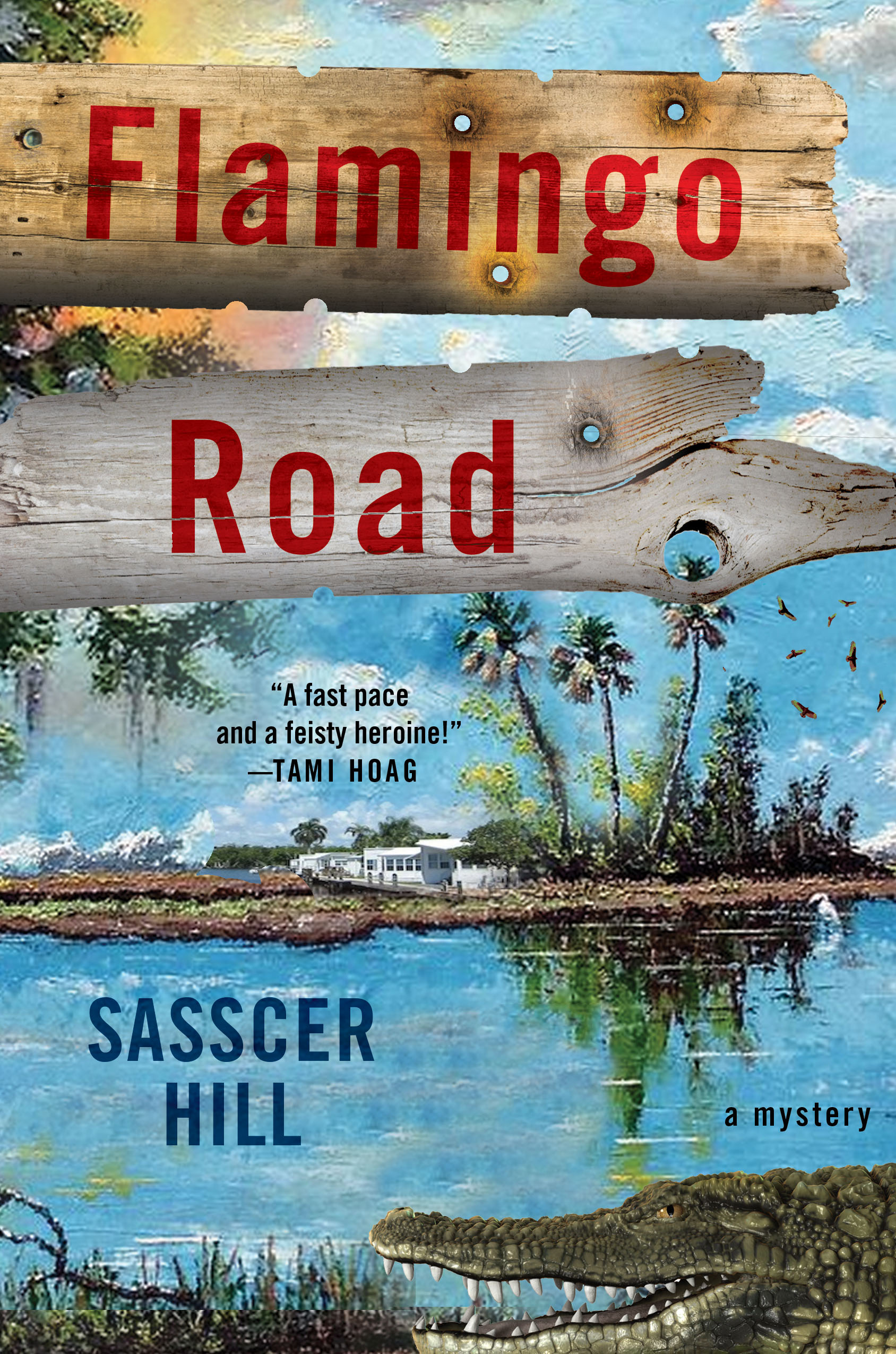
Today’s TKZ guest, author Sasscer Hill, has been involved in horse racing as an amateur jockey and racehorse breeder for most of her life. She sets her novels against a background of big money, gambling, and horse racing, and her mystery and suspense thrillers have received multiple award nominations. She’s well qualified to write about writing with passion. Welcome, Sasscer.   — Elaine Viets


 PASSION

By Sasscer Hill

Here’s what I believe: if a current of passion doesn’t run beneath a story, it will never be as good as it can be.

Let me mention three authors who have greatly influenced me with the passion that appears to drive their writing. All three are terrific writers with an excellent grasp of the craft of writing, but each has that something extra, that something that polished technique alone doesn’t produce.

Michael Connelly, previously a crime journalist for many years, has a visceral theme in his books that appears to be propelled by a desire for justice. His main character, Harry Bosch, strongly believes that someone must speak for the victims of violent crimes. Bosch’s empathy and integrity lends an authenticity and tension to his stories that has kept readers coming back for years.

Born in 1908, M. M. Kaye, author of the book, The Far Pavillions, had a lifelong fascination with India and the history of the British Raj. She had a wonderful story idea for her book. But her passion for India’s exotic culture, the mysticism and mystery found in its rugged land and among its people appear to have impelled her to create a book that became an international bestseller.

Lke me, author Walter Farley had an intense passion for horses and horse racing. His love of speed and the thrill of the sport, coupled with his ability to translate it into fiction, made his Black Stallion series one of the most popular children’s series of all time.

As a reader, I graduated from Farley to Dick Francis, the famous British author whose career began with horse racing mysteries. In school, the only thing I truly loved, and consequently excelled at, was literature and creative writing. My extracurricular activities centered on horseback riding.

When I set out to write my first horse racing mystery, I worried. Just because I loved the sport, how could I make my racing novel mysterious or compelling for others? Back in the eighties, I went to Maryland’s Laurel Park racetrack quite often. One day standing by the winner’s circle and gazing beyond the vast oval track to the backstretch beyond, I realized it was all there, right in front of me. From the terrible intensity of the gamblers, to the possible cheating by trainers, owners, and jockeys, and finally, to the drug problems. And more importantly, the love and care shown to the horses by the backstretch workers. Most important of all, the heart and courage exhibited by the jockeys and horses when they reach deep inside themselves to pull out that win. I was pretty sure that if I could weave these things with good craft, I could produce a competent and entertaining novel.

Lacking craft, that first novel wasn’t too competent and still hides in a drawer where, I fear, it belongs. I knew nothing about plotting, and had no idea was a story arc was. So I took mystery classes at Maryland’s Bethesda writer’s center where I wrote Full Mortality, the first of four Nikki Latrelle books. The novel was published and garnered nominations for both Agatha and Macavity best first book awards. Several years of hard work and a new agent later, I finished the first in the Fia McKee series and landed a two-book contract with St. Martins. The first in this series, Flamingo Road, will appear on April 18. If adult mystery-thriller readers like the novel half as much as the kids who still love the Black Stallion books, it will be one of the greatest events of my life. If you’re interested in the best horse racing tips there are hundreds of useful websites to help you out!

Flamingo Road, published by Minotaur Books, St. Martins Press, can be found at Amazon, bookstores, and any ebook outlet on the April 18 pub date. Find it here?http://tinyurl.com/gq4lyql

First Page Critique: NUTTER BODINE

Bu John Gilstrap

Another brave soul has stepped up to the plate and volunteered for a First Page Critique.  The Italics are all mine, just to separate the author’s text from my comments, which appear on the far side.  Here we go . . .

NUTTER BODEEN

’tis a gift to be simple, ’tis a gift to be free

     Eighteenth century Shaker song


“I think I killed someone.”

Not what Police Chief Will Edd Pruitt wanted or needed to hear first thing on a scorching hot Monday morning with the department’s A/C on the fritz. He’d positioned an oscillating fan next to his desk, but it only made his small office feel like a convection oven.

He silently cursed Jim Beam for last night, and waited for the caffeine and four aspirins to kick in. His eyes hurt as he tried to focus on the giant standing in the doorway to his office. He was shirtless, wore faded, grime-stained bib overalls meant for a much smaller person, and his sockless feet were stuffed into laceless brogans. His square head reminded Will Edd of Boris Karloff in the old Frankenstein movie.

Out at his desk, Gus Temple, made the “crazy” sign with his finger, careful to make sure the big man didn’t see him. Will Ed frowned at him, but the skinny dispatcher just grinned.

His name was Arvil LeRoy Bodeen, and he wasn’t crazy, just slow—— the result of a teen-age mother who consoled her unwanted pregnancy by snorting meth and drinking cheap wine. His eyes darted nervously around the room like a frightened kid on his first visit to the dentist.

Will Edd took a sip from his warm Dr. Pepper, sighed and said, “Come on in, Arvil.”

Arvil LeRoy Bodeen lumbered in and plopped down in the visitor’s chair. It groaned in protest. In the closeness of the room, the smell that rolled off him was a mixture of cheap booze, old vomit and unwashed armpits. Will Ed scooted his chair back as far as he could and tried to breathe through his mouth.

“My friends call me Nutter,” Arvil Leroy Bodeen said, his voice seeming too high pitched for his massive body. “You can too, if you want.” 

Will Ed doubted the man had any friends. He frightened the women and scared the men. Over the years, the town had learned to accept him as they would a stray mongrel—— let it sleep under your porch, but never let it into the house.

“How ‘bout I just call you Arvil?”

“Okay, but you can still be my friend.”

First the good:

There’s a lot here to like.  The first line is everything a first line should be. It’s short, to the point and engaging.  I get a real sense of place, a sense of atmosphere.  The writing is journeyman like (that’s a compliment), though it needs tightening (see below).  It’s a compelling setup.  If the point of a first page is to drive the reader to turn to the second page, then this is a success.  Except . . .

Now let’s talk about strengthening the already-strong writing:

Not what Police Chief Will Edd Pruitt wanted or needed to hear first thing on a scorching hot Monday morning with the department’s A/C on the fritz. He’d positioned an oscillating fan next to his desk, but it only made his small office feel like a convection oven.

  1. Is his middle name Edd or Ed? You present it both ways.
  2. Pruitt just heard some startling news, yet he’s more concerned about the heat and the fan.  I’m not sure I buy it, but I’m thinking like a critiquer (critic?), not a reader. If this were from an author I liked, it would not be a deal breaker because I would assume that the author wanted me to think Pruitt is something of a prick.  If that’s not your point, consider changing it.
  3. “Scorching hot” is superfluously redundant. Pick one, drop the other.
  4. “He’d positioned…” Who’s “he”?

He silently cursed Jim Beam for last night, and waited for the caffeine and four aspirins to kick in. His eyes hurt as he tried to focus on the giant standing in the doorway to his office. He was shirtless, wore faded, grime-stained bib overalls meant for a much smaller person, and his sockless feet were stuffed into laceless brogans. His square head reminded Will Edd of Boris Karloff in the old Frankenstein movie.

  1. The adverb in the first sentence weakens it, and the second part of the sentence weakens it further.  Consider: “He cursed Jim Beam for last night. The caffeine and four aspirins hadn’t kicked in yet.” Maybe it’s just my style, but I think breaking the one sentence into two strengthens them both.
  2. I think you need to give the giant man a name in this paragraph.  Consider: “. . .  in the doorway. Arvil LeRoy Bodeen.  He was . . .”  Note I deleted “to his office” because we already know that.
  3. Sentence construction that begins, “He was . . .” is inherently weak.  Consider, “Shirtless, he’d stuffed his sockless feet into laceless brogans.  Faded, grime-stained bib overalls barely contained the man’s girth, making Will Edd wonder if the man had dressed himself in someone else’s clothes.”  By eliminating the passive voice, the images become more vivid and the prose snaps a little more.

His name was Arvil LeRoy Bodeen, and he wasn’t crazy, just slow—— the result of a teen-age mother who consoled her unwanted pregnancy by snorting meth and drinking cheap wine. His eyes darted nervously around the room like a frightened kid on his first visit to the dentist.

  1. By introducing Arvil’s name earlier, you eliminate the need for more passive construction.  Consider: “Arvil wasn’t crazy, just slow . . .”
  2. This whole sentence, from Pruitt’s POV, presumes knowledge of backstory that doesn’t jibe with future paragraphs. Knowing about the unwanted pregnancy and the meth is pretty personal stuff.
  3. I would end the final sentence of this graph at “room”.  The simile about the frightened kid seems over-worked. (That is a simile, right?)

Arvil LeRoy Bodeen lumbered in and plopped down in the visitor’s chair. It groaned in protest. In the closeness of the room, the smell that rolled off him was a mixture of cheap booze, old vomit and unwashed armpits. Will Ed scooted his chair back as far as he could and tried to breathe through his mouth.

  1. More passive construction. Not bad, per se, but not strong to my ear. Consider: “A toxic bouquet of cheap booze, old vomit and unwashed armpits made Will Edd’s eyes water.  He scooted . . .”

“My friends call me Nutter,” Arvil Leroy Bodeen said, his voice seeming too high pitched for his massive body. “You can too, if you want.” 

Will Ed doubted the man had any friends. He frightened the women and scared the men. Over the years, the town had learned to accept him as they would a stray mongrel—— let it sleep under your porch, but never let it into the house.

“How ‘bout I just call you Arvil?”

“Okay, but you can still be my friend.”

  1. This is the part that confuses me.  Does the chief know him or not? That equation needs to be equalized somehow.
  2. Also, is it necessary to use all three of Arvil’s names at every mention? It feels awkward to me.

Fearless Writer, congratulations on a fine start.  These edits are of a polishing nature.  You done good.

What say you, TKZers?


First Page Critique: A Primer
On Prologs and Wavering POV

By PJ Parrish

Hello crime dogs! Today’s offering from one of our brave contributors doesn’t have a title but it does have things to teach us.  Thank you, writer, for letting us share your work. My comments follow and I hope you will all weigh in.

PROLOGUE
BARRY MARSHALL
I’ve been a police detective for six years. One thing this job teaches you is that nobody is really what they pretend to be. It’s a lesson you learn over and over — and that changes you. With this case, the learning was crippling. I’d like to say it changed me for the better, but that would be a lie…

Chapter 1
TEMPLE LAKE PA
Temple, Texas

Friday, March 6th, 4:10 P.M.

The mint-green Mini Cooper sat in the parking lot about fifty feet from the shoreline of Lake Belton. Inside the car, the young couple kissed and fondled each other. Neither of them saw the man slink toward their car from behind the stand of cedar trees. Nor did they know death was coming with him.

The young man pulled back when he heard someone whistling a tune. His arm slid off her. His head cocked to one side, listening.

“What is it?” Her brow furrowed as she brushed a tendril of hair off her forehead.

“Shhh.” He held up a finger. “Listen.”

He wiped the condensation off the driver’s side window using his sleeve. A glance outside. Nothing.

“I don’t hear anything,” she whispered.

A few moments of dead silence passed, broken only by the faint whirring of an outboard motor in the distance.

“Humph.” He shrugged. “Thought I heard somebody whistling.”

“C’mere,” she said, pulling his head over to her. “I got something that’ll make you whistle.”

The back end of the car began rocking up and down. Slow at first, then faster.

“Who’s doing that?” the driver asked. He looked out his side window, then hers, as if he could actually see anything through the steamed-up window.

The rocking stopped.

He twisted his body to look out the rear window, but it was no clearer than the others.

The rocking started again.

“Okay, that’s it.” He pushed open the door and crawled out.

She hugged herself as chilly air flooded the inside of the car.

He yelled, “What the hell, man?”

A loud grunt, followed by a thud. The car shook for a split second.

The young woman’s eyes widened. She leaned toward the driver’s seat and peered out the open door.

“Jerome?”

A couple of seconds passed. A gurgling sound reached her ears.

She shouted his name louder. “Jerome?”

Dead silence.

_________________________

Back to me again. I’m guessing that a lot of you are way ahead of me on this one, because if you are regular here, you are well-versed in the gospel according to James et al about picking a point of view and staying with it to establish that vital reader-writer bond. So what is the main issue with this opening? (Forget the prologue. We’ll deal with that in a second. Focus for now on the main action between the two lovers).

It has no point of view. Well, actually it has three, count ’em, three. (Four if you count the prologue). The opening graph is omniscient POV with the writer hovering above the car and TELLING us what is happening below in the car. And we have these two lines:  “Neither of them saw the man slink toward their car from behind the stand of cedar trees. Nor did they know death was coming with him.”

Lots of problems here, right? First, omniscient POV is quaint. It was a mainstay of 19th century fiction and rears its grizzled head in some modern literary stuff. But it doesn’t work in today’s crime genre where there is an expectation of creating a bond between character and reader quickly and cleanly.  And then there’s that hoary device of “Little did they know what awaited them…” These victims can’t know what they don’t know. They can’t SEE the cedar trees or the slinking man. They can’t know death is coming for them.

You don’t need this false foreshadowing, dear writer.  Use your power of description to create a mood of impending horror, doom, intrigue, whatever you’re trying for here. But don’t TELL us death is coming. SHOW US. Make us feel it. You really need more description in this opening, not just to establish where we are but to make us feel a mounting sense of suspense.  I don’t know why some writers stint on description in their openings. Maybe they feel it will slow things down? It doesn’t if it is evocative and fuels the intrigue.  (Tip to writer: Go read Poe’s essay on the unity of effect.)

But omniscient POV isn’t the only issue here.  After that, the writer moves into the man’s POV as he hears a sound and feels the rocking. And after he exits the car, we slide into the woman’s POV as she hugs herself and cries out Jerome’s name.  This is called head-hopping. This is not good.  Why? Because we don’t know whose story this is.  I suspect what we are getting with this opening scene is a set-up and these two die. The next chapter might be the true protag then dealing with the aftermath, be it a cop, detective or someone who then has to begin facing the challenge and conflict of whatever this story is about.

And that leads us to yet another issue I have with this opening. It isn’t very fresh. Outside of the terrifying lovers-at-the-lake scene in Zodiac, this scenario is a cliche. Such set-ups are so corny that they were lampooned in a 1999 movie called Lover’s Lane. (“There’s no such thing as safe sex!”).  And how many of us growing up heard the “true” story about the hook-handed mental patient escapee who murdered teens making out in the woods but one couple didn’t realize they had narrowly escaped doom until they got home and saw…wait for it…a hook hanging off the car door!  But I digress…

In today’s sophisticated and crowded crime fiction market, you can’t get attention with old chestnut plots, especially about serial killers. Maybe there is a way to make a lover’s lane murderer feel fresh but I wouldn’t want to try it. It is true that crime fiction is dependent on formula and there are only so many variations on plots. But I have to go back to something I heard an agent say once about how she is always looking for freshness within the formula: Say something unique or say something uniquely.

Some other quibbles here: I really really really don’t like prologues. Why? Because nine times out of ten, they are just throat-clearing, or evidence that the writer has not figured out how to grab the reader legitimately so he/she tacks on a preamble teaser. (Caveat, I have seen good prologues that really work, so I am not blindly biased, just burned by bad examples).  I am not sure what this prologue is trying to do.  Is it introducing the protag Barry Marshall? If so, I’m not intrigued.  I’d rather meet Barry the detective on the job, maybe looking at the bloody hook hanging on the car door. (Just kidding!)  If Marshall is the protag, find a way, dear writer, to SHOW HIM in action at what James here calls a critical moment of disruption.  Don’t let our first encounter with your hero be a paragraph of navel-gazing. Yes, I get that Marshall is damaged in some way — what he learned was “crippling” — but get your story moving first and then let us learn about Marshall’s damage through the action of the story. Don’t TELL us he is in pain — SHOW us. How? Via his reactions to the case, via his interactions with other characters, via his own arc over the story, via his thoughts as they relate to the ongoing action.  This is what I meant in my comments about point of view: Your job as a writer is to make us feel Marshall as a human being and bond with him.

But…

Here’s the thing like about this submission — the potential implied in the protagonist.  I am somewhat intrigued by Marshall by this teaser. I have a feeling that he’s an interesting protag with a powerful story to tell. Something happened to this man to leave scars.  That’s always good.  But it is your job, writer, to pull us deep into his soul and make us care about his journey. Because it’s never about the dead. It’s about the living.

And while we’re talking about Marshall — is this story in first person or third? If I were you, I’d pick one and stick with it.  Switching between first and third can be very effective but you really have to be in control of your craft to pull it off.  Don’t juggle with chain saws until you’ve mastered bowling pins.

That’s it for general comments. Here’s my Track Changes edits if you want more.

PROLOGUE
BARRY MARSHALL  If you have a chapter from his POV find a way to insert his name into the text.  Even Sue Grafton, who starts out nearly every story with “My name is Kinsey Millhone…”  finds a way to make this feel graceful.
I’ve been a police detective for six years. One thing this job teaches you is that nobody is really what they pretend to be. It’s a lesson you learn over and over — and that changes you. With this case, the learning was crippling. I’d like to say it changed me for the better, but that would be a lie…

Chapter 1
TEMPLE LAKE PA
Temple, Texas

Friday, March 6th, 4:10 P.M.  Why do you need this time/place tag? One of my pet peeves is the overuse of this device because it usually indicated the writer can’t figure out a graceful way to integrate this info into the narrative flow. And are we in Pennsylvania or Texas? 

The mint-green Mini Cooper sat in the parking lot about fifty feet from the shoreline of Lake Belton. Inside the car, the young couple kissed and fondled each other. Neither of them saw the man slink toward their car from behind the stand of cedar trees. Nor did they know death was coming with him.  Get out of the way of your story, writer.

The young man pulled back when he heard someone whistling a tune. His arm slid off her. His head cocked to one side, listening.

“What is it?” Her brow furrowed as she brushed a tendril of hair off her forehead.

“Shhh.” He held up a finger. “Listen.”

He wiped the condensation off the driver’s side window using his sleeve. A glance outside. Nothing. Missed opportunity to show us the surroundings, just a little. You can use this moment to even tell us where we are…He had been coming to Belton Lake since he was ten, the year his family had moved to Texas. It had always been a place of barbecues and tubing until he grew older and realized its shadowed pine coves were the best places in the little town of Temple to bring girls to make out.  Now, as he looked out into the window, the trees moving in the wind, seemed to be alive. (That’s bad but you get the idea!)

“I don’t hear anything,” she whispered.

A few moments of dead silence this doesn’t cut it as suspense. passed, broken only by the faint whirring of an outboard motor in the distance.

“Humph.” He shrugged. “Thought I heard somebody whistling.”

“C’mere,” she said, pulling his head over to her. “I got something that’ll make you whistle.” Can you find a way to insert her name?

The back end of the car began rocking up and down. Put this in his sensibilities. Slow at first, then faster.

“Who’s doing that?” the driver asked. The driver? He’s not driving. He looked out his side window, then hers, as if he could actually see anything through the steamed-up window. There’s a slight problem here. It’s 4 in the afternoon. The sun is probably nice and bright, starting to come in at a slant. No way could he not see anything, even with steamy windows.  Change the scene to night?

The rocking stopped.

He twisted his body to look out the rear window, but it was no clearer than the others.
The rocking started again.

“Okay, that’s it.” He pushed open the door and crawled got out.

She hugged herself Rut-Roh…POV whiplash. as chilly air flooded what time of year is it? I was thinking summer but it’s chilly at 4 p.m.? the inside of the car.

He yelled, “What the hell, man?”

A loud grunt, followed by a thud. The car shook for a split second.

The young woman’s eyes widened. She leaned toward the driver’s seat and peered out the open door.

“Jerome?”

A couple of seconds passed. A gurgling sound reached her ears. She heard…

She shouted his name louder. “Jerome?”

Dead silence. This is a cliche. Too many others before you have used it so it is devalued as an attempt to inject suspense.  It is just silence.  And if you have made the scene creepy enough, by building in tension with good description (you’re too spare on that account!) you don’t need this. 

Raising Social Issues in the Cozy

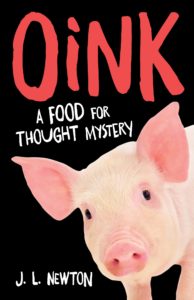
Please welcome Judith Newton to the TKZ. Today, her guest post is about raising social issues in cozies, based on her experiences writing Oink: A Food for Thought Mystery. I look forward to reading your comments and feedback!  Clare

Raising Social Issues in the Cozy

by  Judith Newton

I became interested in mystery sometime in the 1990s when I began reading Tony Hillerman, whose sleuths are two Navajo policemen. What I liked about Hillerman’s books was that they dealt with social issues—the ongoing colonization of Native peoples—and that they presented stories from the points of view of people on the margins. I was especially drawn to Hillerman in the 1990s because I saw myself as living on a different sort of margin at my university. I was director of women’s studies, the faculty of which I had worked to make half women of color, and I and my program had formed deep personal connections with faculty in the four ethnic studies programs.

This community building took place, however, just as a newly prominent national development (often referred to as “the corporatization of the university”) had begun to make our already marginal positions less secure. With its ever greater focus on profit, my university administration was threatening to defund our programs. In the end, I am happy to say, the administrations’ very efforts to do away with women’s and ethnic studies prompted the faculty in these programs to form an even more tightly-knit community and to fight successfully for our survival.

When I began to write Oink, I followed Hillerman in making my main characters people on the margins of the university, faculty in women’s and ethnic studies, but the biggest issue I faced in outlining the novel was how to write about their issues so that a general audience would want to read about them.. I was aware that puzzles and unsolved crimes keep people turning pages and that within different mystery genres there were additional inducements to reader engagement. Hillerman, of course, uses elements of the thriller. Guns booming in the dark always kept me reading. But I wanted a different feel for my novel, which would have a lot to say about the value of caring community both for our lives and for political resistance, so I turned to another genre, that of the cozy.

Cozies are characteristically set in a small and valued community. By making one of the most valued communities in Oink that of a political coalition I gave this convention a political twist. Many cozies also involve food and come with recipes. The presence of food usually affirms pleasurable connection among the characters, a connection that is then extended outward to the reader through the inclusion of recipes. In Oink the same is true, although there the major connections being affirmed are among those resisting the university’s turn toward competition, self-interest, and profit. The inclusion of recipes pleasurably invites the reader into this alliance.

In Oink, moreover, as in the history on which it was based, gathering around food is one manifestation of a larger organizing impulse based upon “working on the relationship” through multiple acts of friendship, love, and support. This is a strategy which black women had already employed to organize grassroots communities during the Civil Rights Movement and it reappears in Oink among the women characters in particular.

The cozy’s quirky, often, female sleuth and its characteristic humor are also present in Oink and serve a related purpose. According to J. K. Gibson-Graham, our repertory of tactics for getting people together should include playfulness and humor, which can toss us on to the terrain of new possibilities. By fusing playfulness and humor with a story of struggle, I aimed to attach a sense of optimism and possibility to political resistance.

By merging Hillerman’s focus on social issues and marginal points of view with the conventions of the cozy I could write about some of the difficulties for people on the margins in the university and in the nation while also immersing the reader in experiences of connectedness, love, humor, and pleasure, experiences which I hope will keep the reader reading and which I identify both as ways to live a more fully human life and as crucial to effective struggles for social change. In a way I hadn’t anticipated, the continuation of these values seems ever more critical to our time.

  • What do you see as the advantages of or the difficulties in using cozies or other kinds of mystery to address social issues?
  • Are there particular cozies with a social issue or political theme you have read and enjoyed?
  • Does exploring social issues even belong in a cozy?

Create Mystery, Not Confusion, in the Opening

by James Scott Bell
@jamesscottbell

Today’s first-page critique raises an important craft issue: how much should you withhold from the reader when trying to inject mystery into the opening scene?

Mystery, one could argue, is the sine qua non of page-turning fiction. Why? Because you want the reader on the hook, desperate to know what happens next. You can’t have that without an element of mystery. And mystery involves holding back information.

Yet this requires a deft touch, especially in the opening pages. You are introducing the readers to the characters and story world. You want them to know enough to get into the scene, you want to dangle a bit of mystery, but you don’t want to overload the exposition. At the same time, you need to make sure the readers are not scratching their heads as they read along.

We’ll chat about all this on the other side of today’s anonymous first page:

***

January 1974
Egypt-Libya border

The blades of the search-and-rescue helicopter cut through salty air one thousand feet above the Mediterranean. The steep escarpment came into Temple’s view, sparse vegetation between ridges. His headset sputtered over the roar of the engines.

“Senator,” said the pilot, “I think that’s Lilah.”

Fingers clenched around the doorframe, Temple leaned into the wind and surveyed the scene below. Vehicles bound for Alexandria were stalled on the hilly pass by Gaddafi’s border patrol. The soldiers had separated the men from the women, holding them at gunpoint away from the caravan. Temple strained to spot the girl. “Where?” he shouted into the mouthpiece, blinking away gritty sand.

“Not with the crowd, sir. Check the port side,” the pilot said. “Look for yellow clothes.”

There. A figure running between boulders, her robes fluttering behind. Lilah was a couple of hundred feet from the group under inspection, concealing herself behind the limestone formations. She looked up at the chopper before plastering herself to the side of a rock. After weeks of reconnaissance, they’d located one of the abducted teenagers, the daughter of the late ambassador.

“She’s hiding from the border patrol,” Temple muttered. “What about the boy? There were two kids.”

“Probably with the caravan. Let me—” The pilot stopped to curse. “We have a problem, Senator.”

One of the soldiers had detached himself from his team to follow Lilah. If she got caught, there was little a single search-and-rescue chopper could do to help. Temple grabbed the AK-47. He did not have the skill to hit the target from this distance, but he could buy her some time.

“Hold position and inform the ground team,” Temple hollered.

Temple’s fingers trembled when he took aim. His stint in the army between world wars had not involved active combat. The helicopter shuddered. With a gasp, Temple tumbled back into the seat. Sweat trickled down his neck.

When he checked the terrain again, Lilah was not where she had been, but her yellow robes made her easy to spot even behind the rocks at the far border of an open space. The soldier in pursuit sprinted across the clearing, toward Lilah. Temple swore and took aim, once more.

Before he could press the trigger, there was a sudden blast on the ground. The soldier’s body disintegrated, ripped into pieces and scattered across the territory. Temple’s mouth fell open, and sounds struggled to escape.

***

JSB: There is much to commend here, not the least of which, of course, is that it opens with action and disturbance. In keeping with the thriller genre, we’ve got a girl in immediate danger as a rescue chopper tries to save her.

The writing is crisp and sure. I like Plastering herself to the side of a rock. I also like how details are marbled in with the action, never slowing things down.

My notes, then, are fine tuning, but with one major issue to resolve.

Let’s do the fine tuning first.

Character Name

I’d give Temple’s first name up front. I thought Temple was the first name of a woman. The next line clears that up, but unless there’s a strong reason we only know this character as Temple throughout (and I can’t think of one), give us the full name.

Dialogue Attributions 

Always place an attribution after the first complete sentence or clause. Thus:

“Not with the crowd, sir. Check the port side,” the pilot said. “Look for yellow clothes.”

Should be:

“Not with the crowd, sir,” the pilot said. “Check the port side. Look for yellow clothes.”

1 + 1 = 1/2

This is a Sol Stein rule I have found quite helpful. Stein, a legendary fiction editor and a novelist himself, held that when you use two different words or terms to describe something, the overall effect is diluted rather than strengthened. The writer should choose the most evocative descriptor and ditch the other one. This sentence threw me:

The soldier’s body disintegrated, ripped into pieces and scattered across the territory.

Something that disintegrates does not rip. The two images work against each other.

I suggest sticking with disintegrated here, and render what that would look like. I see red … but that’s as far as I am going to go before breakfast.

Also, territory implies a huge expanse of land. An exploding body would cover an area.

Cursing

I appreciate the author using The pilot stopped to curse and Temple swore. We’ve had several discussions here at TKZ on this issue. See, for example, here. My view is that the scene loses nothing, and no potential readers will be turned off when they sample the book.

And now for my main issue …

I’m not a writer of military thrillers, so perhaps others can chime in (Brother Gilstrap?). But here we have a United States Senator, probably in his mid-60s, in a military chopper, firing an AK-47 (would this be the correct weapon in this context?) We’re told the senator doesn’t have great skill and that he was never in combat. So how on earth is he in this position, as opposed to trained military? Perhaps the author is withholding this information to extend a mystery. Maybe the next page gives us the whole story. Ha!

But let’s deal with what we’ve got.

My standard advice in the opening is to act first, explain later. But as with all axioms, it requires some expansion. There are times when we need a bit of exposition to clue us in, or a line of backstory to explain a situation (Note: In workshops I tell my students they can have three lines of backstory in their first ten pages, used all at once or together.)

It would not be hard to come up with an interior thought or a couple lines of dialogue to at least give us a hint of why this situation has occurred. We don’t need all of it … yet. But as is, I fear readers are likely to think the situation isn’t plausible.

Also, why aren’t the soldiers firing back at the low-flying chopper?

To sum up, this is fine thriller style and potentially a gripping opening scene. If the major issue I’ve mentioned can be cleared up—and if the weaponry and other military details are sound—we’re off to a great start.

I’m at a writers conference today and may not be able to comment as much as I’d like. So have at it, TKZers. Anything else you’d like to offer our anonymous author?

Knowing the Year

(c) Dan Povenmire and Jeff Marsh. All rights reserved to the creators.

Here is a short bit of morbidity for you. I had a very short dream several nights ago. I was standing in front of a pedestal-type entryway table with a faux leather top. There was a piece of paper on top of it. It was a death certificate. The death certificate was mine. I focused on my name — “Joseph V. Hartlaub” — and the date of death. All that I was able to read was the year: 2030. I then woke up.

I mentioned the dream to my wife the following morning. She said, “Well, you have thirteen years to prove the dream wrong.” My response was, “True. But that could work either way.”

The dream has been weighing heavily on my mind since that time. I’ve sharpened up my bucket list, stepped up my writing game, and considered asking David Levien to fix me up with Maggie Siff (I’m just kidding about that last one. Heh. Heh.). I’m thinking all along, however, that I could accept knowing to a reasonable degree of certainty at this point that I have thirteen more years to hang around. As I sit here right now I’m sixty-five, in good health, have twenty-six years of sobriety, and possess all of my mental faculties. I hope that’s true in thirteen years. It probably won’t be. It might be time to go.

I’m wondering, however, if EVERYONE has dreams like this and doesn’t talk about it. Have you ever had a dream like this, which gave you a date certain for your departure from this side of the veil? Do you want to know? And if you had a dream like this, and took it seriously, what would you want to accomplish in the interim with regard to your life, your relationships, and yes, your writing?


Characters Need Redemption – First Page Critique – Angie’s Ruin

Jordan Dane

@JordanDane

http://flickr.com/photos/60058591@N00/2369412952

I have a first-page critique for your consideration today. Please read and comment. My feedback is on the flip side.

***

“I can’t do this anymore I hate you. Listen to me, I really do hate you. You prick”

Angie screamed those words and cried them at the same time, it was a horrible indescribable sound but Danny didn’t seem to care.

“Well if you hate me so much then pack your bags and leave, but I’m keeping the kids, do you hear that THEY ARE MINE NOT YOURS, MINE, so go on sod off. No one likes you anyway, you waste of space”

She started to cry, uncontrollably a solemn weep that seemed to come from a place, no, a pit so very deep inside and below it could have been hell. Sitting in her new kitchen, with her beautiful babies upstairs, this man, if he actually qualified as a man was trying to finish her off altogether. He acted and spoke like a child but he was 37 and the love of her life.

They had been childhood sweethearts, next door neighbours and nobody had ever understood her like Danny. The crack the prostitution, the gambling, the shoplifting even the trafficking. All those years ago…It was another life.

Look, she new she wasn’t perfect. But Danny understood why, Danny understood her and now he was gone or he may as well have been.

He didn’t love her, he didn’t want her anymore and she felt done with love, with life with everything, it was all too much. So, she pulled herself up from the manky chair she was slumped in, her favourite velour chair that was once red, ready to go upstairs and pack up her life.

“I never loved you, you stupid, pathetic cow” Danny laughed the words in her face as if she was nothing, as if they had never had anything together, as if she was dirt under their wheelybin. PIG, she shouted in her head, because she didn’t have the energy to say it out loud, he had drained her that much, HE WAS WORSE THAN THE DIRTIEST MOST DISGUSTING FILTHY SHIT INFESTED PIG.

“You had better go right now” he said “Sharon’s coming round.” She’s been desperate for me to tell you and now I’ve done it. Why did it take me so long, he laughed, laying on the floor watching telly, to kick someone as ugly, stupid and pathetic as you out?”

FEEDBACK

I had a tough time with this submission. The lack of punctuation, the overabundance of run on sentences, typos, and writing craft issues made it a hard read. My biggest concern was for the main character of Angie. I found her overly aggressive without vulnerability. I didn’t find her redeemable in this first peek. It’s a fine line to portray real emotion in a scene, like fighting, if a writer doesn’t connect the reader with the character’s redemption and a humanity the reader can relate to. I’ll have suggestions on this below, but let’s look at basics first.

In order to submit to an editor or agent, or even self-publish, an author must know basic grammar and punctuation rules to submit a clean copy. Otherwise it would be too easy for the industry professional to reject it before they get a paragraph into it. Below are my more detailed thoughts.

Run On Sentences – Examples:

First sentence is a run on with poor punctuation.

Example 1: “I can’t do this anymore I hate you. Listen to me, I really do hate you. You prick”

Rewrite 1: “I can’t do this anymore. I hate you. Listen to me. I really do hate you. You, prick!”

Use of Internal Thought:

Example 2PIG, she shouted in her head, because she didn’t have the energy to say it out loud, he had drained her that much, HE WAS WORSE THAN THE DIRTIEST MOST DISGUSTING FILTHY SHIT INFESTED PIG.

An author should follow rules on punctuation to make the work easier for readers, who are quite knowledgeable on basic grammar. In the above example, it is one LONG run on without any punctuation. The overuse of CAPS isn’t necessary to indicate screaming. If the author picks words that ‘show’ the action, the reader will get it.

Rewrite 2:

‘Pig!’ she shouted in her head. Angie had lost the energy to say it out loud. Her husband had drained her that much. ‘He’s worse than the…’ (Break apart the run on sentence and single quote the internal monologue or italicize it. Personally, I find Angie too harsh and unlikeable. Anytime there is name calling, even if it’s in a character’s head, it makes them unsympathetic for me, as a reader.)

Typo:

Example: Look, she new she wasn’t perfect. (Knew, not new.)

No Setting:
Setting can be a big help to add color and depth to this scene of domestic abuse. What is the setting in this story? Has she been cooking all day and he shows up late and drunk? Does she keep a neat house or a sloppy one? Depression can enter into this and her house could be indicative of her emotional state.

Focus on Angie’s Vulnerability:
Unless the author envisions Angie as vulnerable and shows it, the character’s yelling and cursing in her head doesn’t make her sympathetic. If she starts out this way and the whole story is centered on an unlikeable character, a reader will not keep turning the pages. I’m not suggesting a back story dump, but at least in a solid intro, the author must show Angie as vulnerable and scared of her husband’s anger or vulnerable to his betrayal.

1.) Show her cower when he gets in her face, yelling. She physically shakes and reacts to his abuse that the reader knows has been happening over a long time.
2.) Have her concerned over kids hearing or neighbors.
3.) Have Angie show emotions of hurt and betrayal when he finally admits he’s having an affair.
4.) What does she looks like? Her appearance? Does he make her feel worse by pointing out her looks?
5.) Has he ever hit her? A victim of physical abuse acts differently than Angie does in this scene.

A more vulnerable Angie would have me turning the pages, even if the fighting gets ugly. I would root for her to get out of the house or find a way to get out from under an abusive husband.

DISCUSSION:
What do you think, TKZers? What would you add? Would you keep turning the pages?

Choose Writing


If bet if we all had put aside a quarter for each time we heard someone say, “I’d write if I only had the time,” we could take the entire TKZ crew to Bali for a week, and bring along most of you, dear readers.

People say, “I don’t have time,” as though time were a finite thing, and not an infinite stream of possibilities. Does the idea of time as an infinite stream sound derpy and pie in the sky? Well, okay. Maybe it’s a little derpy. But it’s also true. (Oh, and yes, of course we will all die, but this fact will only serve to support what I want to say today.)

I don’t have time to write, and never have. There are eight million things in my ADHD head, all clamoring for attention. I suck at prioritizing because everything appears to be equally important. So other people set deadlines and I end up juggling them: tax deadlines, teaching deadlines, promotion gigs, car repair, pet and child maintenance. The family likes to be fed, bills have to be paid. And on, and on. It’s easy to feel like I have no time for anything I want to do.

If you don’t set your own priorities, other people will set them for you.

Being a writer is a choice. There are some writers who decide very early that their writing will be the primary focus in their lives, and every choice they make follows from that. What if you did that? What if you made writing your number one priority? What would that look like for you? Maybe it sounds pleasurable to you, maybe not. But many who’ve done that have found enormous success because they followed that narrow path. Those folks are people who, after a few years, don’t ever think twice about what comes first in their lives.

Or maybe that sounds a little freakish to you. Most of us have rather more prosaic needs. We like to have families or lots of friends. Quality of life is important. Or earlier choices we made preclude us from living like a Monk Servant of the Word.

Our writing choices are necessarily different:

We can cook a gourmet dinner, or we can heat up a can of chili and spend the extra forty-five minutes writing. We can binge-watch The Avengers or Stranger Things or The Great British Baking Show, or we can watch one episode and write for two hours. We can sleep eight hours, or sleep seven hours and stay up late to write in that sleepy zone in which weird, dreamlike ideas punch their way through our consciousness. We can take an actual lunch hour at the office, close our door, eat a protein bar, read for half an hour and write for half an hour. We can let the grass get a little too long and admire the words we wrote instead of worrying what the neighbors will think.

We can choose from a hundred different ways to nurture our creativity, even at random times. But if you’re hanging out here, words must be your poison.

Did I say poison? I did. Maybe that’s some kind of Freudian slip. It has occasionally felt like a kind of poison. For a long time I approached writing with a sense of dread, with a sense that I was doing something VERY SIGNIFICANT. Who in the heck is going to want to make time for something dreadful? One of my favorite synonyms for dreadful is formidable. If you’re thinking that what you will write if you take the time to sit down to write must be formidable, that’s a heck of a lot of pressure to put on both you and your work.

 If you’re approaching your work this way, I encourage you to lighten up this very minute.

When we’re writing, what we’re doing is not so formidable that we can’t do it in a notebook when we’re waiting in the doctor’s office. It’s not so important that we can’t jot down the outline of a scene while there are five minutes of commercials of people wearing Ralph Lauren fancy pants while they’re dancing on a glorified party barge as it floats down the Rhine. Is our writing too formidable to be present while we wait for an oil change?

Don’t make your writing an idol. Writing is not special. Writing is telling stories. Yes, there will be times when you need a chunk out of the time stream to organize chapters or write a difficult scene. But you will never have the perfect time to write. There’s no such thing.

So plunge into the stream and swim while you can.