Stream of Consciousness vs Back Story Dump – First Page Critique: Storm Season

Jordan Dane
@JordanDane


We have an anonymous submission entitled STORM SEASON. Our gratitude to the courageous author who submitted the first 400 words of their baby. Read and enjoy. I’ll have comments to follow and please feel free to provide your own constructive criticism.

~~~

My name is Lily Storm and I’m a drug addict. My drug of choice is heroin. And, like the sticker says, its street name can be anything from Big H to Thunder, Nose Drops to Brown Sugar. I prefer Cinnamon. I can send the boys to the store for Cinnamon (wink, wink) and no one’s the wiser.

I started using about twelve years ago when I was eighteen. I’ve been through the gamut—alcohol, pot, pills, coke, meth (which I really liked but not as much as coke). Coke is a better high but doesn’t last as long, and is more expensive than meth. Smoking coke is the best but it always scared me a little—I imagined myself running down the road, doing a Richard Pryor impersonation, my hair ablaze.

Anyway, I found my taste in heroin. It’s not spooky like people want you to believe, like I originally thought it might be. It’s the place where pleasure exists. It’s chilling out on a beach and sipping margaritas with the most beautiful boy that God ever created, and this boy is all about pleasing you. He wants you to feel him, get in his head, and touch his love for you. He’s yours. You’re his. Total love. Total ecstasy. That’s how heroin feels. Like you found the love of your life and all you can do is gaze into each other’s eyes.

And I never intend to let him go.

I decided to start this blog in hopes of explaining my drug usage to people. You know, my family—mom and dad, and close friends who don’t understand, who are confused by my addiction. Or those who are disappointed in me. To that I say, F-you. It’s my issue. Deal with your own issues and get over me.

I’ve numbered these blog posts in Español. Don’t ask me why. I’m just crazy that way. BTW, if anyone else can learn from these installments, or you happen to be going through something similar, maybe this blog can be a place of experience and healing. Feel free to leave a comment.

So, you know, I’ve written quite a few of these—thirteen to be exact—which I’ve already scheduled out to publish monthly from December 2016 to December 2017, the next thirteen months. I’ve scheduled them out this way because I won’t be around much longer.

FEEDBACK

OVERALL – My first thoughts were that this type of character is a challenge to write because the reader may take time to sympathize or relate to them, if they ever do. With the reference to 13 months, I thought of the big seller – Thirteen Reasons Why by Jay Asher, where one of the main characters is a teen girl who has already committed suicide and given 13 audio tapes to the people who helped her make that fateful decision. So given that first impression, I read through this piece a few times and found the most compelling part to be in the middle where the author compares heroin to a lover. I really liked the way that part was written. Well done.

BACK STORY – The intro is in first person and has a stream of consciousness thing going on, but I found myself pulled out of this blog post concept when the author meandered through backstory or drifted off course with poorly timed dark humor (like the Richard Pryor reference or the cutesy “wink wink”). Sometimes humor can be a great punch and give insight to a character, but it can also diffuse any building emotion or distract from any traction the author has made with the reader. After I found the “lover” reference in paragraph 3, I wondered if that could provide an intriguing start that the reader might be lured into the story via that imagery.

SUGGESTED REWRITE: I tried keeping as much of the author’s work that fit into the “lover start,” but I did embellish on the tone in a few spots.

REWRITE EXAMPLE

I found a place where true pleasure exists, like chilling out on a beach and sipping margaritas with the most beautiful boy that God ever created, and this boy is all about pleasing you. He wants you to feel him, get in his head, and touch his love for you. He’s yours. You’re his. Total love. Total ecstasy. That’s how heroin feels. Like I found the love of my life and all I can do is gaze into his eyes. I never intend to let him go.

My name is Lily Storm and I’m a drug addict. Heroin is my lover, my drug of choice.

On the street he goes by many names—Big H to Thunder, Nose Drops to Brown Sugar, but I prefer calling him Cinnamon, because I can send the boys to the ‘store’ for cinnamon and no one’s the wiser. I’ve been faithful to my lover since I was eighteen. Most addicts can’t handle him, but I can.

My mom and dad and close friends don’t understand. They’re disappointed in me. I wanted to tell them to fuck off to their faces, but I decided to start a blog instead. I’ll admit it. I’m a coward. I’ve numbered these blog posts in Español, to put my education to good use. I don’t know what anyone will learn from my lover and me, but feel free to post your comment somewhere else. I don’t need your opinion.

I’ve written thirteen of these gems of wisdom and I’ve scheduled them to be automatically posted from December 2016 to December 2017. Why the automatic posts, you ask?

I won’t be around by the end. No one likes cliff hangers.

ANOTHER EXAMPLE OF PLOT – In the best selling novel turned film “The Perks of Being a Wallflower,” the book is written in a series of diary-type letters from a troubled teen with every letter beginning with ‘Dear Friend.’ It’s surprising how compelling it was to read the letters as the reader sees the character spiral into the dark secret he’s holding in his heart surrounding the death of an aunt. The movie rewrites the letters and turns them into a successful visual creation, but if our anonymous author plans for a series of blog posts of a heroin addict, it sounds like an interesting idea IF the character finds a way into the hearts of readers. The author must find a way to make Lily relatable and darkly likeable. It’s definitely possible to pull this off.

VOICE – To make the reader want to keep turning the page, the author must find a voice with the right amount of snark or use poignant imagery that keeps ramping the stakes up on Lily’s life. In the book and the movie – Perks of Being a Wallflower – the big reveal was heartbreaking and the author or filmmaker had to have discipline to pull off the twist as late as possible so there is a big finish to the book or film. A compelling stream of consciousness voice can carry the reader through a good book, but beware of too much backstory dump that doesn’t have a point or slows the pace. There’s a fine line to this and it will be a challenge that would be fun to pull off.

FOR DISCUSSION:

What do you think, TKZers? Would you keep turning the pages? What do you like about this submission? Where are the challenges?

VIGILANTE JUSTICE on sale from Amazon Kindle Worlds – ebook priced at $0.99

Always Be Marketing

By John Gilstrap

When a writer decides to produce books and articles as his primary source of revenue, he has, in effect, started an independently-owned small business. All the elements are there, from product development to design to distribution and sales. If the company owner doesn’t tend to the details, then who will? The burden of such things arguably falls more heavily on indie authors, but even those of us who ply the trade via the traditional publishing route have to keep a strong hand on the tiller if we’re going to have adequate funds in the till.

Last month marked the publication of Final Target, the eleventh entry in the Jonathan Grave thriller series. I’m delighted to report that I’ve seen more copies in grocery stores and what I call secondary venues than I ever have with any of my previous books. This story also is published simultaneously in both hardcover and paperback (and e-book and audio . . .) so there should be no sticker shock for those readers who’ve come to read about Jonathan’s adventures as a paperback original.

I’m calling this post “Always Be Marketing” because that’s what I always feel I’m doing this time of the year, immediately after publication. With two decades of this business under my belt, I thought I’d share some marketing strategies that have worked for me, and those which I consider to be utter duds.

First, the duds:

Bookmarks. These have never made sense to me. While I’m a big believer in bookmarks–and I believe there’s a special place in hell for readers who turn down pages to mark their place–no bookmark I use has any value to me. It could just as well be my most recent airline boarding pass, a napkin, or my own business card. I cannot imagine a circumstance where a bookmark with an author’s name on it would inspire me to buy a book.

At writers’ conferences, hungry authors hand out their custom-made bookmarks like candy. “Here, have five of them.” They litter the swag tables near the registration desk. Some writers hand them out as business cards. Think about that last one. Business cards need to fit into business card-shaped wallet slots. More on that later.

On the other hand, I think that bookmarks are brilliant marketing gimmicks for bookstores themselves. If I enjoyed the customer service, I would most definitely go back.

Big Box in-store signings. I avoid them these days. It’s hard to conceive of a more soul-sucking experience than sitting in the middle of a store, surrounded by stacks of my own books while people avoid eye contact on their way to the science fiction section. Or maybe the bathroom. Case in point: early on, I was signing in a Walden Bookstore in a mall–essentially blocking everyone’s entry through the door–when a distressed woman approached me and asked where the manager was because she wanted to return this terrible book. It was mine. Ouch.

Book trailers. These have never made sense to me. First of all, in my experience, 90-plus percent of book trailers I’ve seen have horrible production values and are ten clicks too self-reverential. Stock art combined with poor acting and royalty-free music are not effective vectors to direct me to buy a book from an author I don’t know. Besides, movies and books are entirely different art forms.

Now, let’s shift to the positive, stuff that has worked for me:

Business cards. I put this at the top just to counter my shot at bookmarks. Actually, I believe in carrying several business cards–and the design of the cards depends on where a writer is in his or her career. If you’re new to the business, in that stage where you’re trying to find an agent or a publisher, then I think the business card should be of the standard format: Your name, address, phone number, email–as many ways to reach you as possible. Because at this stage, your prospective customers are industry people, not the public.

Later, in the time after you’ve got a deal and a career, I believe in two different business cards which you can have either custom made through business card providers similar to Metal Kards: One is for industry people or research sources, where you want to make yourself as accessible as possible. This card will be more or less the same as the one you used in your rookie years. The second card you need is a “fan” card, one that you hand out to people you meet who want to stay in touch, but fall outside the category of people you want knowing your cell phone number. To these folks, I hand out a card that introduces me as “John Gilstrap, author of the Jonathan Grave Thriller series”, and gives my contact information as my email address. That’s plenty. Oh, and there’s a list on the reverse side of my last 10 titles, more or less. If you’re looking for a service to complete your business printing needs, look into companies like Print Management Companies London.

Something special for every book. Currently, for Final Target, I’ve laid in a couple hundred pens that are marked with www.johngilstrap.com, and also have a built-in flashlight. The theory is that when I sign a book, I will hand the buyer the pen with which I signed it.

A high-value giveaway for special people. Some people need a very special thank-you because they have done something very special to help you out. They need a cool bit of swag. For this corner of my universe, I designed the Jonathan Grave Challenge Coin, of which there are very few, and whose distribution I take very seriously. Follow the link if you think you might be interested in owning one.

Really cool book launch party. No book-selling event ever pays for itself in real time with book sales. Not one. Book events are about giving fans and friends a good time, and providing an opportunity for them to buy a lot of books. With this in mind, my wife and I budget for a blow-out party that is attendant to the release of every new book. We’ve thrown parties at restaurants, wineries, coffee shops, and, most recently, at our home. Roughly a hundred people showed up, and everyone had a terrific time, complete with catered food and open bar. And the bookseller we brought in to provide the books–One More Page Books in Falls Church, VA–had a very good sales day. That’s always a good thing.

Another book. And then another and another . . . This is the best marketing gimmick of all: Write more books. One of the primary reasons rookie authors find themselves at a disadvantage marketing-wise is that even the most devoted fans have no other books to turn to when they’ve turned the last page of your Opus One. Having done this for as long as I have, when a fan discovers my writing via, say, the 11th book in my Grave series, they have ten more plus four stand-alones and a nonfiction book to consume before they run dry. By the time they get through those, I should have a new one out, and the most effective strategy to reach them is to announce the launch of the new book.

What say you, TKZers? What works and doesn’t work for you as a consumer? As a writer, what do you find to be worthwhile marketing strategies?

Showing Versus Telling:
So SHOW Me Already!

Good morning crime dogs. Well, thank the good Lord for Joe’s post Saturday asking you all for your input on topics. Because I don’t have anything fresh today, but I do have a good excuse — I got a bum right paw.

I am living up in Traverse City, Michigan these days, a bucolic town a Petosky stone’s throw from Lake Michigan.  It is a law here in TC that you have to bike everywhere. Well, not a law, but TC is sort of like an American version of the Netherlands. Folks here love their two-wheelers. So when we got here last month, I duly went out and bought a new bike.  Haven’t had one in oh, 15 years or so. Well, on my second outing, I fell and badly sprained my wrist.  Embarrassing. Especially since I was standing still at the time waiting for the light to change.  Anywho, I can’t type a lick. My husband Daniel is typing this for me as I dictate.  So, I hope you will bear with me as I heal and let me run an old blog post.  It is about SHOW DON’T TELL.  And I am re-posting this especially for one of our readers Eric Beversluis, who was flummoxed by what he saw as too much “telling” backstory in a Mike Connelly book and asked for an “empirical” analysis of “show, don’t tell.”  My sister and I have covered this topic often in workshops, and it always comes up. So, here’s my attempt, Eric.  Hope it helps.  And get well, Joe!

By PJ Parrish

How many times have we all heard this: SHOW DON’T TELL!

I put it all in nice bright letters because those three words are so commonplace in writing workshops that shoot, we might as well put them in neon, right? Ask a writing coach or an editor what the cardinal sin of bad writing is and “telling” is right up there with procrastination. We really get our panties in a wad about it. But let’s stop and take a deep breath here

((((Breathe in pink, breathe out blue…)))

and figure out what SHOW DON’T TELL really means.

Okay, let’s start with a definition because it’s always good to start with specifics.

Show don’t tell means writing in a manner that allows the reader to experience the story through a character’s action, words, thoughts, senses, and feelings rather than through the narrator’s exposition, summarization, and description. The idea is not to be heavy-handed, but to allow issues to emerge from the text instead.

(((((ZZZzzzzzzz))))

And that, my friends, is me telling you what “show don’t tell” is. And now, I’m going to try to show you. But first, a caveat: Not all telling is bad. Sometimes, you have to tell things in your story. Not every thing that happens in your story is worthy of showing. Some things are best handled in narration:

Boring but necessary physical action
You don’t waste words on stuff like this : “He stared at the phone then slowly depressed the little red button to disconnect the line.” You write: “He hung up.” Also, you don’t write: “He slowly swung his bare feet to the cold wood floor, scratched himself, yawned, and got out of the bed in an existential funk.” You write: “He got up.”

Boring dialogue
You don’t write:
“Hello Joe,” he said. “Long time no see.”
“Yeah, it’s been about two months.”
“That long, eh?”
“Yeah.”
“What you been up to?” he asked.
“I was carving fishing lures, but the then the wife left me and I found myself living alone and eating and drinking too much.”

Write (tell) this: He hadn’t seen Joe for two months. He looked terrible, like he had been living on Big Macs and Jim Beam. Talk around the station was that his wife had left him and he was going crazy sitting at home making fish lures.

Pure description
This is where you the writer can step in and shine because it is you telling us (in your unique voice), what things look, smell and sound like. But usually, description works best and is more involving for the reader if you can filter it through a character’s point of view. Here are two examples. You tell me which one works best.

Third person POV detached

She looked at Louis. He was twenty-nine and bi-racial, his father white, his mother black. She knew he had grown up as a foster child and had made peace with his mother toward the end of her life, but that his father had deserted him.

Third person POV intimate

She turned toward him. God, she loved his face. Forceful, high-cheekboned, black brows sitting like emphatic accents over his gray eyes, the left one arching into an exclamation mark when he was amused or surprised. And his skin, smooth and buff-colored, a gift from his beautiful black mother whose picture he had once shown her and his white father, whom he had never mentioned.

Backstory
There are a lot of great posts in our TKZ archives about how to deal with backstory. But in terms of “show don’t tell” we have to concede that backstory is essentially telling. And that’s okay. Just do it well, be evocative and be brief because your reader wants to get back to the forward plot momentum. Example:

The first image that usually came to him when other people started talking about their childhood was a house. Other things came, too. Faces, smells, emotions, mental snapshots of events. But those kinds of memories were fluid, changing for good or bad, depending on how, and when, you chose to look back on them.

But a house was different. It was solid and unchanging, and it allowed people to say “I existed here. My memories are real.”

His image of home had always been a wood frame shack in Mississippi. It was an uncomfortable picture, but one he had held onto for a long time, convinced it symbolized some kind of truth in his life about who he was, or what he should be.

Notice that although this is TELLING, the reader is emotionally involved with the narrating character. And it is short. The very next sentence takes us right back to the present plot.

Okay, so show me already!

Now I’m going to try to show you what I mean by all this with some before and after samples from a workshop I teach on this subject. Number 1 is an excerpt where the setup is a cop standing over a dead body in bayou country.

Shadows closed around him as the sun played hide-and-seek behind dark clouds. Thunder rumbled in the distance. Impending rain scented the air. Spanish moss fluttered in a sudden breeze that carried with it the cloying acridness of the swampy bayou.

And at his feet in the vermin-ridden humus lay a young woman. A woman who, until a day or two ago, had hoped, planned, and dreamed. Maybe even loved.

Now she lay dead. Violently wrestled from life before her time. And it was his job to find her killer.

He started when, with a flap of wings, a snowy egret soared into the air twenty feet in front of him. As the regal bird disappeared from sight, Kramer couldn’t help but wonder if maybe it was his Jane Doe’s soul wafting to the Land of the Dead. The way the dove in Ulysses had carried Euripides’ soul.

Despite the day’s heat, a chill seeped through him. Instinctively and unselfconsciously, Kramer crossed himself and wished her soul Godspeed.

Here’s a rewrite of the same scene:

Shadows closed around him as the sun played hide and seek behind dark clouds. Distant rain scented the still air and Spanish moss hung like wet netting on the giant oaks. The cloying acridness of the bayou was everywhere.

Kramer wiped the sweat from his brow and looked down at the dead woman and drew a shallow breath .

She was the third young woman this year who had been left to rot in the muddy swamps of Louisiana.

With a sudden rustle of leaves, a snowy egret soared into the air twenty feet in front of him. Against the slanting sun it appeared little more than a ghostly white blur but still he watched it, oddly comforted by its graceful flight up toward the clouds.

Then, with a small sigh, he looked back at the woman, closed his burning eyes and crossed himself.

“God’s speed, ma cherie,” he whispered. “God’s speed.”

Why does the second one work better? Why does it hit our emotions harder? Because the writer got out of the way and let the character’s actions and words move the story along.

Here’s example 2. This is the opening of chapter 1 and the setup is a woman overseeing a parade at Disney World. It’s long but it’s worth analyzing.

Dorothy Gale got it wrong. Even as a kid, I didn’t understand why she was so hell-bent to hustle herself out of Oz to return to Kansas. Was she crazy? I ached to leave ordinary behind and devoured every magical Frank Baum book in the library. When I was nine, I vowed I’d find the Emerald City one day and I did. The Wizard—or rather Orlando’s theme park industry—set a shiny, incredible Land of Oz at the end of my personal yellow brick road.

Ten years ago, with a fresh college diploma—Go Terps—I’d found my niche and myself when I snagged my first job at Oz. Work felt like play in my fairytale world. And my disappointed parents stopped blaming themselves for those library trips when Oz promoted me to assistant department manager for process improvement. Tonight, we were rolling out a new parade, and for me, the excitement rivaled Christmas Eve.

Churning the humid Florida air, the dancing poppies whirled by in a swirl of red, plum, and purple, so far a flawless debut. Across the Yellow Brick Road, my boss Benjamin flashed me a rare smile and gestured to his stopwatch. The lilting music gave way to the recorded yipping of hundreds of puppies, and forty employees pranced by in shaggy-doggy costumes. Toto’s enormous basket-shaped float reached the corner, and excited children squealed, adding a thousand decibels to the noise.

“Slower, Toto,” I murmured into my mouthpiece. “Turn on three.” I counted and the basket’s driver, hidden deep inside the float, turned with inches to spare.

Here’s another way to handle the same material:

The red and pink poppies danced in the humid Florida air. The lilting music gave way to the recorded yipping of hundreds of puppies, and forty employees pranced by in shaggy-doggy costumes. Toto’s enormous basket-shaped float reached the corner, and excited children squealed, adding a thousand decibels to the noise.

Across the Yellow Brick Road, my boss Benjamin flashed me a rare smile and gestured to his stopwatch. So far, it was a flawless debut. I pressed my clipboard to my chest and smiled.

God, how I loved it here. My own fairy tale world. My own private Oz.

“Slower, Toto,” I murmured into my mouthpiece. “Turn on three.” I counted and the basket’s driver, hidden deep inside the float, turned with inches to spare.

My own parade – every day.

Dorothy got it wrong. Even as a kid, I never understood why she was so hell-bent to get out of Kansas.

I think the writer got into the scene way too early and it’s way too much exposition “telling” backstory so early in the book. And I think it’s often good to save your best line for last. In this case, it was “Dorothy got it wrong.” The writer opened with it and as such, it’s not not bad. But I think it works better AFTER we know we’re at Disney World. Plus, I like the technique of ending a scene with your best line because it works as an emphasis of the point you are trying to make with your scene. And every scene does have a point, right?

Here’s one more for you to chew on. The set up is an unidentified person creeping through a house after already finding one dead body. We do not know who this is, what gender, or why he/she is there.

In a large pantry off the kitchen, I found the maid. She, too, was dead. From the marks on her neck, my guess was someone had strangled her. As I completed my trip around the downstairs, I heard a noise from the front of the house, then a call of, “Police. Anyone here?” I took a deep breath and started toward the front room.

The cops met me in the hall with the obligatory order to drop my weapon and assume the position against the wall. I complied and a young patrolman named Johnson explored areas I preferred not touched by a stranger. However, I understood. I’d have done the same if I had found anyone during my search, and I wouldn’t have concerned myself about his or her privacy.

Once he finished, I showed my PI credentials.

In the rewrite, I converted the “telling” into “showing,” mainly by handling things in dialogue.

In a large pantry off the kitchen, I found the maid. She was face down on the marbled floor, arms splayed, feet part, still dressed in her baby blue cotton uniform. I knelt and when I moved her thick pony tail, I saw a tattered clothesline wrapped tight around her neck. She had no pulse. It hit me that I met her three times on previous visits and yet I could not remember her name.

“Police! Anyone here?”

I turned toward the echo of voices, toward the long cavernous hallway that led to the living room. Before I could take a step, I felt a jab of steel against my temple and someone’s hot breath in my ear.

“Against the wall, lady.”

“But —”

“Shut up,” the cop said as he patted around my ass for a weapon. He found my gun, ripped it from its holster and roughly turned me around. I didn’t know the officer in front of me but I saw Sgt. Randy Rawls standing in the doorway, trying not too hard to stifle his snicker.

“She’s okay, Jim,” he said. “Her name is Jenny Smith. She’s a local P.I.”

One more example but it’s one of my favorites. The setup is a TV anchorwoman looking forward to meeting her boyfriend after work. I like it because the writer was so close to getting it right. But he needed to focus in on what I call special details and actions that show (ie illuminate) character.

Tonight, Corrie was looking forward to dinner with Jake.

Jacob “Jake” Teinman employed a wicked, take-no-prisoners wit. She found his sense of humor engaging, and delighted when he would elevate one eyebrow while keeping the other straight alerting his target to an oncoming barb. Corrie truly liked Jake, a lot, but experience taught hard lessons and she had qualms about the two of them as a couple.

They were awfully different — she: a public persona, trim, career driven, self-centered, frenetic and Irish Catholic; he: private, stocky, successful with a controlled confidence that drove her nuts, and Jewish. At least that’s how she pictured the two of them. She wondered if Jake’s version would agree.

She’d noted they’d been dating exactly one year and he had made reservations at “The 95th” just six blocks from the WWCC studios. It was sweet of Jake since he knew it was one of her favorite places.

Notice how the rewrite below works better because the same info is conveyed through tighter action and dialogue rather than the writer telling us what is happening.

Tonight, Corrie was looking forward to dinner with Jake. And as she watched him come in the restaurant door, she smiled. It used to annoy her when people said how different they were. But it was true.

Jake…

Stocky. Dark. Jewish. Coming toward her with that confident swagger.

And her…

Tall. Blonde. Irish-Catholic. Sitting here wondering if he’d show up.

He kissed her on the cheek and sat down.

“You remembered,” she said.

He frowned. “Remembered what?”

“That this is my favorite restaurant.”

He glanced around before the puppy-dog brown eyes came back to hers. “Sure, babe,” he said. “I remember.”

So what do we get from all this? The point I am trying to make here is that whenever you can, filter the story through the consciousness of your character(s). Don’t waste words on dumb physical stuff. Be evocative and fresh in your description. And when it comes to backstory narrative, don’t dwell in the past too long.

Okay, that was telling. Let me show you one more time, this time in an action scene (where you should always show not tell).

TELLING DRAMATIC ACTION

As he was walking slowly down the hotel corridor, someone hit him on the back of the head and pushed him forward. He felt the world go black. His body flailed, hitting the plate glass window and shattering it. The glittering shards caught the throbbing glow of red neon as they fell, like the tails of fading fireworks.

He fell to his knees and looked up into the chiseled face of his attacker.

SHOWING DRAMATIC ACTION

He walked with his head bent, scanning the front page of the New York Post. The hallway was dim, the slow blink of the red neon from the lone window lighting his way.

The blow came out of nowhere. So quick, so hard, blood filled his mouth as he bit his tongue. He stumbled forward, his head hitting the window.

An explosion of sound and glass. A rush of cold air. A flood of warm blood.

He dropped to his knees and looked up.

The face above him pulsed red. Then it was gone.

What’s the main problem with the first one? The “telling” is slow-paced and un-viscereal. And if the guy just went through a plate glass window he probably can’t see the glass falling and it sure as heck wouldn’t register in his senses as “glittering shards” and “fading fireworks.” (that’s the writer talking) In the second version, the POV is fixed and every detail that IS possible is filtered through the man’s senses.

In summary, here are the pitfalls of TELLING

  • Narrating the physical movements without being in character’s head.
  • Use of too many ‘ly’ words in action or in dialog (i.e. She said impatiently, walked slowly, yelled angrily.)
  • Use of stock descriptions, purple prose or lengthy descriptions of places (and people) especially those that have no bearing on the plot.
  • Too many adjectives and cliches.
  • Omniscient POV (distancing, describing from an all-seeing POV) The man getting hit on the head cannot see the glass as it falls six stories to the ground.)

Here are the strengths of SHOWING

  • Action that uses the senses, stays within the character’s consciousness and uses words and phrases that reinforce the mood of the scene.
  • Strong verbs. (Walked vs Jogged, Ran vs Raced, Shut the door vs Slammed the door.)
  • Original images and vivid descriptions that are filtered through the character’s senses in the present.
  • One compelling adjective vs. a string of mediocre ones.
  • Keep POV firmly in character’s head. (Establishes sympathy and connects emotionally.)

That’s it, Eric…and all you crime dogs. Going to go ice my paw now.

Dear Diary…

The last time I kept a personal diary I was twelve years old. Since then I’ve kept various travel journals documenting trips and stays overseas, but I’ve never revisited the idea of keeping a personal diary. I know many writing teachers advise aspiring writers to keep a journal but, to be honest, I’ve never been very good at documenting the day-to-day. Recently, due to some health issues, my doctor said that it might be a good idea to journal but my immediate thought was ‘I’d much rather kill people off in a novel’…so obviously, for me, fiction is far more cathartic than diary entries!

In yesterday’s NYT Book Review there was an article about the German novelist, Christa Wolf, who kept a diary over 50 years recording the events of only one day each year – September 27th (the link to the article is here). Apparently she kept this diary until her death in 2011, jotting down everything she did and everyone she saw (even everything she ate) on that day. From the article, it sounds like she was a careful diarist rather than a confiding one – giving plenty of detail on the day, and some deep commentary on the meaning of time, but less in the way of sharing her innermost thoughts or emotions.

I’ve often wondered about writers who keep detailed journals or diaries and how they tackle the delicate balance of writing for themselves as well as writing in a medium that might ultimately be made public (especially if they become famous). I certainly admire anyone who has the discipline to keep a diary/journal as well as their other writing. I  would find maintaining a personal diary challenging – in part, because, I’d always feel a constraining hand, as if someone was reading the entries over my shoulder. I think I would censor my entries or indulge in creating a ‘fictionalized’ account of my life rather than being open and honest (this may also be why I find it hard to write anything in public areas like coffee shops – I need to have the absence of ‘others’ in order to write).

So TKZers, do any of you write a personal diary or journal on a regular basis? If so, how do you maintain the momentum for this? Do you censor or hold yourself back in any way? Do you find it helps your fiction writing? If, like me, you don’t write a journal or diary, why not?

The Great American Novel That Wasn’t

by James Scott Bell
@jamesscottbell

The 1950s was a robust decade for American letters. The letter B had a particularly good run.

In the other kind of letters—literature—there were two tracks that fed a voracious reading public: the mass market paperback, and the middlebrow-Book-of-the-Month-Club-style hardback.

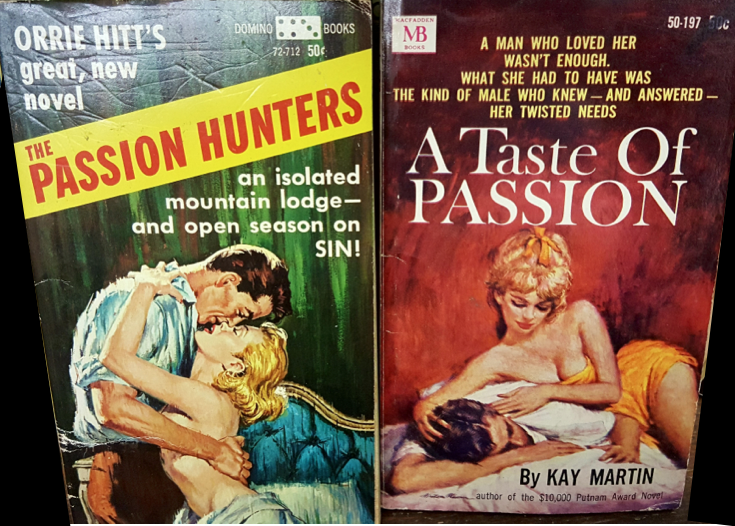
With paperbacks, dozens of writers made good money writing crime, Westerns, mysteries, Sci-Fi, etc. Most covers were salacious, for these were marketed as impulse buys on wire spinners in drug stores, bus stations, and truck stops. Real bookstores did not carry titles like these:

Ignoring the paperback original neighborhoods, the literati were about hardcovers and reviews in the New York Times. This was where the “important” novels were to be found. Perhaps even that white whale, The Great American Novel.

Those who put themselves in the running for this prize were authors like Norman Mailer, Herman Wouk, John Steinbeck, Ayn Rand, John O’Hara, Irwin Shaw. And one of the ways they measured the potential was pure, raw page count. These authors put out doorstops. Some of the pantagruelian publications—like East of Eden, Marjorie Morningstar and Atlas Shrugged—were big bestsellers. Others, however, no so much.

Perhaps the biggest flopperoo of all weighed in at a staggering 1,230 pages—the longest novel published by an American author to that date (1957). It was Some Came Running by James Jones, a novel that took six years to write and was absolutely savaged by the critics.

Jones was, of course, the author of another big book that was a smash success as both novel and movie: From Here to Eternity. It was his first novel, too, which put enormous pressure on him to produce a fitting follow-up. Didn’t happen. A sense of the critics may be found in a clip from one of the reviews:

From Here to Eternity was both moving and comic because of the herculean efforts of its hero to fight the System; Some Came Running fails because the hero’s resistance to the system has now been elevated into a philosophical principle. Jones’s new determination to lay down doctrine is doubtless due to his inflated sense of his role as a novelist, a result of his first success.

Because of Eternity, the movie rights to Some Came Running were gobbled up by MGM well before the book came out. I wonder what the boss at MGM, Joe Vogel, thought when he read the novel … or at least looked at it sitting on his desk.

Fortunately, the project was given to Vincente Minnelli and turned into a commercial hit. It starred Frank Sinatra, Dean Martin, Shirley MacLaine, and Martha Hyer. A highly abridged paperback (!) was released to go along with the movie.

The book soon fell out of print. But in the new digital age is has been brought back by Open Road Media.

I read it. At least most of it. Well, maybe 75% of it, because I did a lot of skimming starting around page 500. What went wrong with this novel? For me, the following:

First, Jones made an odd stylistic choice to eschew apostrophes in the conjunctions. So you get lines like this through the whole novel:

“Ill probably never get another chance,” Dave had said, “but if I did, I still dont think Id take it.”

Second, about 85% of the book is narrative summary. In other words, the great majority of the novel is not presented in immediate scenes, given beat by beat on the page. Rather, we get page after page of the author telling us what happened.

The biggest problem, though, is that I didn’t bond with any of the characters. The protagonist, Dave Hirsh, is a novelist and war vet (a thinly-veiled James Jones) returning to his home town after nineteen years. He finds it hard to write, but not to drink. And brood. That wasn’t enough for me.

The movie succeeds, in my opinion, mainly because of Shirley MacLaine as Ginnie. In the book, Ginnie is a “floozy” who falls for Dave. Dave marries her only because the other woman, the virginal Gwen, rejects him. Ginnie does not wear well on Dave, who is let out of the marriage …

**SPOILER ALERT**

… by getting murdered at the end of the novel.

**END SPOILER ALERT**

MacLaine, on the other hand, earned an Academy Award nomination as Best Actress. She’s wonderful and heartbreaking, especially in the final scene (quite different from the book).

So what’s the point of all this ruminating on a novel from the 1950s? Let’s see if I can figure it out:

  1. It doesn’t matter how many pages a novel has, without character bonding there’s no reason to read them.
  2. “Show, Don’t Tell” is a fundamental (rule?) for a reason.
  3. Every author needs a good editor (note: see the unedited, author’s version of The Stand).
  4. Still, you have to admire James Jones. He had the nearly impossible task of following From Here to Eternity. The sheer effort in writing Some Came Running is something only another writer will understand. All authors write books that don’t make it, but few take six years to do so. Credit James Jones with the grit to keep on writing, eventually producing two other books in his war trilogy that will stand the test of time—The Thin Red Line and Whistle. All three are now available in one set from Open Road.
  5. The writing life is one of highs and lows, with a few sprinkled in-betweens.

So how are you dealing with the highs and lows?

NOTE: I wrote a book about such dealings if you’d care to have a look.

Playing It by Ear

Photo by Dragne Marius courtesy unsplash.com

I am going to be uncharacteristically brief today. I experienced two weeks ago the return of what seems to be a chronic viral ear infection which causes me 1) occasional balance problems 2) frequent hearing difficulties and 3) sudden sharp pains in my left ear. With regard to 3), I thought that the etiology might be my guardian angel jabbing me when I had impure thoughts, but then I realized that a) I would be getting jabbed every thirty seconds and b) it still wouldn’t stop me. I’m accordingly chalking the pain up to the physical problem. I get along just fine, except for having occasional periods when I can’t drive; difficulty listening to music; and perceptual difficulties. I call myself GE: sixty “whats” per conversation.

All of this will go away eventually (and, alas, return) as it has in the past, but the problem is that my concentration is shot at the moment. I as a result don’t really have a topic to write about today. I am accordingly asking you, our loyal TKZers who visit us (and me every other Saturday): what would you like us at TKZ to write about? You can name more than one topic. I just ask that you be specific as possible. We try to cover a wide range of things here but there is always a chance that we’re missing something that folks would like to read about and then discuss. I can’t guarantee that one of us will cover something that you mention, but we’ll certainly think about it. Let us know. Thank you for filling the void today.

Reader Friday: Drunk on Writing

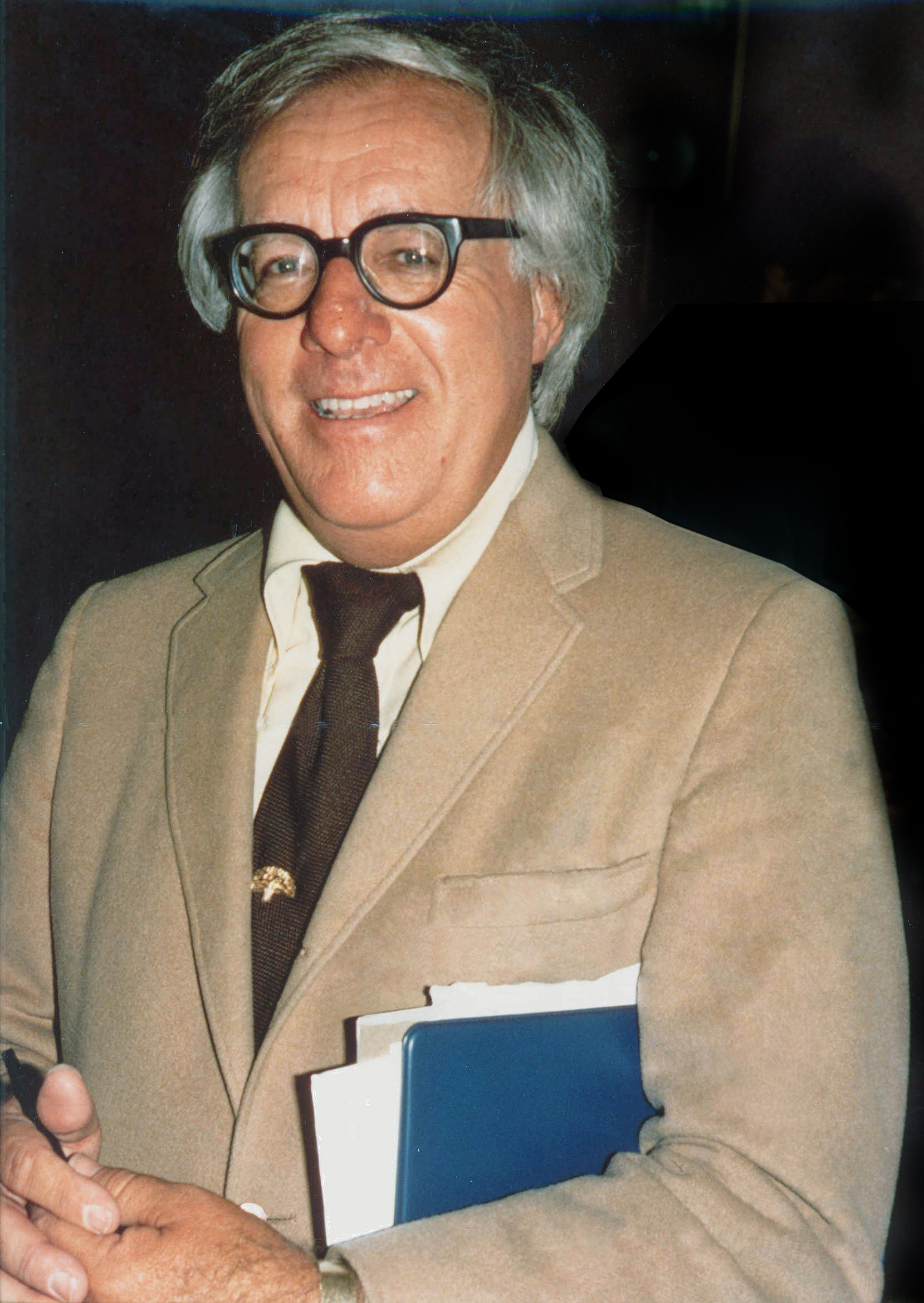
Photo by Alan Light via Wikimedia Commons


“You must stay drunk on writing so reality cannot destroy you.”  – Ray Bradbury, Zen in the Art of Writing

Do you agree with Ray? Do you ever feel like the act of writing itself is good, or even crucial, for you?

KINDLE SCOUT –Amazon’s Kindle Scout program will cease as of 4/3/18

By Debbie Burke

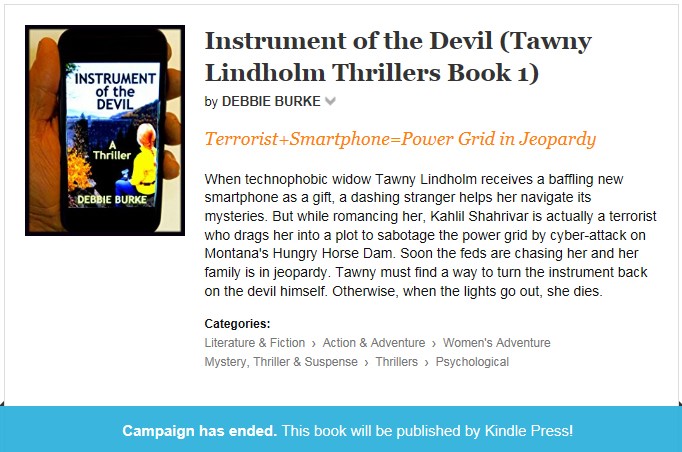
Kindle Scout is Amazon’s innovative program where readers “scout” for new books and vote for ones they believe should be published. Back in April, I covered the basics of Scout for TKZ. Since then, I submitted my thriller Instrument of the Devil and went through my own 30-day campaign. Today, let’s open the Scout door and take a tour inside.

SUBMISSION PROCESS:
To submit to Scout, Amazon requires a cover (at author’s expense), a complete, never-before-published, edited manuscript of 50+K words, a 45-character one-liner (logline), a 500-character book description, author bio, and a thank-you note to readers who nominated the book (more on this later).

After Scout accepts the submission, they select the dates for the 30-day campaign, and provide a link that shows the preview exactly as it will appear on the Scout site. The first 25 or so pages of the book are excerpted as a sample for readers to vote on.

The contest is ongoing, with new entries appearing each day. At any given time, more than 150 books are in various stages of their campaigns. Categories include: literature/fiction, mystery/thriller/suspense, romance, sci-fi/fantasy, and teen/young adult.

Entries are further classified as “Hot and Trending,” “Recently Added,” and “Ending Soon.”

FREE BOOKS!
Readers love FREE. Amazon rewards anyone who nominates a Scout entry that’s selected for publication with a FREE eBook.

BEGGING FOR VOTES:
The hardest part for many authors, who are often averse to self-promotion, is what I call begging for votes. It’s a tough balance to strike, asking people to nominate your novel without sounding cheesy. You’re requesting a favor, but fortunately you’re able to offer something in return—a free book.

Publicity drives your campaign, using social media like Facebook and Twitter, business cards and bookmarks printed with your Scout link, and direct emails. My email list started with 130+ names, which I divided into different categories, each receiving a different message tailored to that particular group.

First tier consisted of close writing associates, critique buddies and beta readers who’d been intimately involved with the book’s creation. All previously promised support, so asking them to nominate and share on social media was easy, and they came through like true friends.

Second Tier listed other writers, people I’d met at conferences or had interviewed for articles, and business acquaintances. Their note specifically addressed our mutual writing interest and asked them to take a peek at the excerpt.

Third Tier were friends who don’t write—and who think writers are a pretty weird bunch! That was the trickiest email to craft. Mass mailings can be mistaken for spam or scam, especially to people with whom contact is infrequent. In fact, my college roommate wrote back, asking, “Is this email really from you?” because the IT guy at her job warned her about clicking on an unknown link. We wound up having a nice catch-up conversation by phone.

WEEK 1:
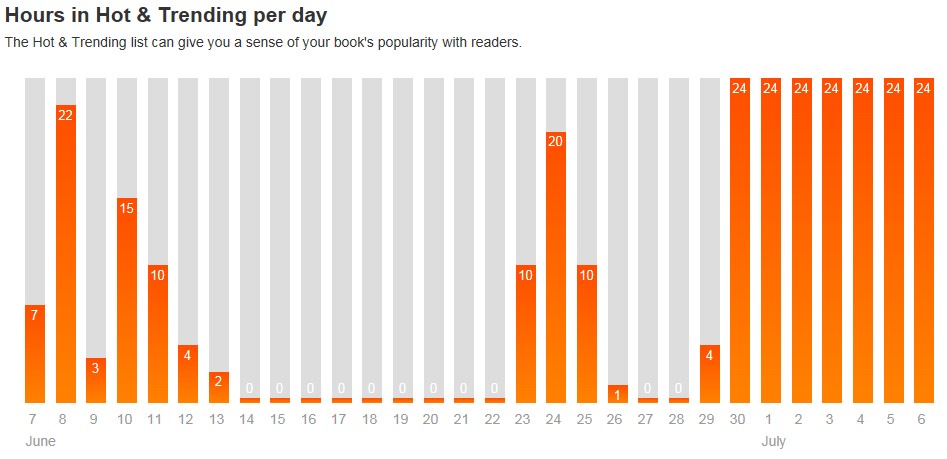
After I sent out 130+ emails, friends responded with terrific support. Instrument of the Devil hit “Hot and Trending” (H&T) off and on during the first six days.

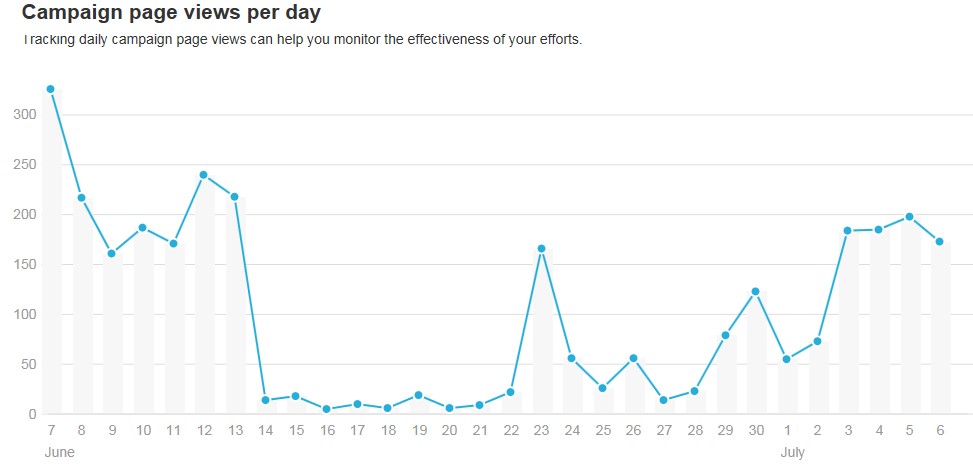
Scout provides statistics you can access privately (not accessible to others) that count how many views your entry has received. However, views are not the same as nominations, and Amazon doesn’t reveal the number of nominations. The stats are further broken down by how many hours in H&T, number of views from internal links (the Scout site) compared to external links (social media, your website, other websites, etc.), plus how many hits from each source. The stats are updated daily, while H&T updates approximately hourly.

LESSON #1: FACEBOOK ROCKS.
Facebook generated more than half the views from external sources. I’m not even on FB, but after seeing these results, I’ll be joining!


Click on picture to open


WEEK 2
That loud smack you heard were my stats hitting the wall. After the initial rush of 200-300 views per day, they dropped to six on one day, nine the next, with a high of 19 that second week. Zero time in H&T. Underwhelming and discouraging.3

Kboards are online discussion groups specifically focused on publishing through Kindle. At this low point, I dug deep in Kboards, especially one thread devoted to Scout experiences and requests for nominations.

LESSON #2: LEARN FROM SCOUT VETERANS
Many Scout entries come from multi-published authors with substantial backlists. They discovered Scout is a great no cost launching pad for a new book. Some authors don’t even care if their book is chosen because they parlay reader views into a larger customer base when they publish it themselves.

That’s the philosophy of Lincoln Cole, previous Scout winner and author of the indispensable Kindle Scout Guide, as well as an excellent vetted list of marketing resources. With 12 books published, and refined promotional skills, his most recent Scout entry garnered more than 11,000 views with over 90% of the time on H&T. When the book wasn’t selected, Kboard members were stunned.

Although Amazon describes Scout as “reader-powered publishing,” great stats are not the only factor that determines if a book is chosen or not, as Lincoln’s experience demonstrates. But the reasoning behind their editorial choices remains mysterious.

Nevertheless, Lincoln shrugged off the rejection and plans to launch The Everett Exorcism himself on Kindle Direct Publishing (KDP), fortified by his thank-you note.

NOW…MORE ABOUT THOSE THANK-YOU NOTES
At the end of the Scout campaign, the note you’d submitted with your entry is sent to everyone who nominated the book, win or lose. If it’s chosen, they receive a free copy. If it’s not chosen, Amazon still sends nominators a notice when the book goes on sale through KDP.

Lincoln takes that one step further. His thank-you note promises a free book, win or lose, if readers sign up at his website. He understands a large email subscription list is vital to authors, who use it to keep in touch with fans, make special offers, and announce new releases. Plus readers who discover him on Scout may also buy from his backlist. This guy knows how to maximize marketing.

Since my own website subscription list was at the high one-figure level, I rewrote my thank-you note, making the same free-book offer, and resubmitted it to Scout. Considering the dismal second-week stats, I prepared to self-publish Instrument of the Devil on KDP.

LESSON #3 – “YOU DON’T HAVE TO SPEND A BUNCH OF MONEY TO GET DECENT STATS.”
Those words of wisdom came from Scout veteran Julianne Q. Johnson, whose fifth entry Ghost in the Park is now up for nominations. Cash-strapped authors are understandably reluctant to front money on advertising, particularly for books they’re giving away.

According to Julianne, “Stats don’t get you selected, but better numbers get you much more attention when you launch it yourself.” She invested only $15 in her last campaign, generating a respectable 3800 views and 90+% of the time on H&T. Although not selected by Scout, Nick of Time is her highest ranked book so far, with thousands of page views on Kindle Unlimited (a subscription program that pays the author based on how many pages are read).

I consulted Lincoln’s list of marketing resources for promotions specifically tailored to Scout. My advertising budget totaled a whopping $40—$10 to boost a friend’s Facebook reach to 9800 readers, $20 on a one-day social media promo by Just Kindle Books, $10 to Author Shout for a 30-day newsletter campaign. All three delivered significant bumps in page views, but the best ROI came from Author Shout.

WEEK #3
I re-contacted my email list, with a follow-up offer of the free eBook, win or lose. This also served as a subtle reminder to people who might have forgotten to nominate without bugging them. Friends responded positively and again shared on Facebook.

Meanwhile, back at Kboards, I contacted more Scout winners to learn about their experiences.

Jada Ryker’s mystery Take the Body and Run was published by Kindle Press in 2016. “Before Scout,” Jada says, “I was lucky to break even on cover and editing costs, let alone paid promotions. I’ve sold more copies of the KS winner than all my other books combined.” She adds, “Winning the contract tells me the book was good enough to stand out in a field of excellent offerings, and be chosen for publication. That feeling is priceless.”

William Bernhardt has over 40 published titles, with more than 10 million books sold, yet still entered Scout with his new novel, Justice Returns. Why? Bill’s answer: “I think Amazon Publishing is the best place to be today, and Kindle Scout was the quickest and agent-free way to get there. NYC publishers are not offering anything close to a 50% royalty. And I’m retaining most of my subsidiary rights.” Although Bill still pursues traditional contracts, he says, “More and more, Scout is attracting professionals who see it as a way to attract attention to their books and get them into the Amazon Publishing network quickly and without giving away a large percentage of their profits to an agent.”

WEEK #4
The last eight days of the campaign gave me new hope. The book jumped into Hot & Trending and stayed there until the end.


Click on picture to open


The final tally was 3000+ views, far lower than many Scout submissions, but I was happy and had discovered tricks I planned to use when self-publishing the book on KDP. Then I learned…

LESSON #4 – NOBODY CAN PREDICT WHAT AMAZON WILL CHOOSE
Two days after my Scout campaign ended, at 10:30 on Saturday night, the email arrived.

Congratulations! Our readers have spoken, and your book Instrument of the Devil has been selected for publication.

Talk about gob-smacked!

Why did the unseen gods of Amazon smile on my book instead of any number of books with thousands more views? Danged if I know.

But I’m not about to argue. And I agree with Jada Ryker—that feeling is priceless!

Debbie Burke’s thriller Instrument of the Devil is currently in production with Kindle Press. Check her website for the launch date.

Writer, Stretch Yourself (Like a Big Black Cat)


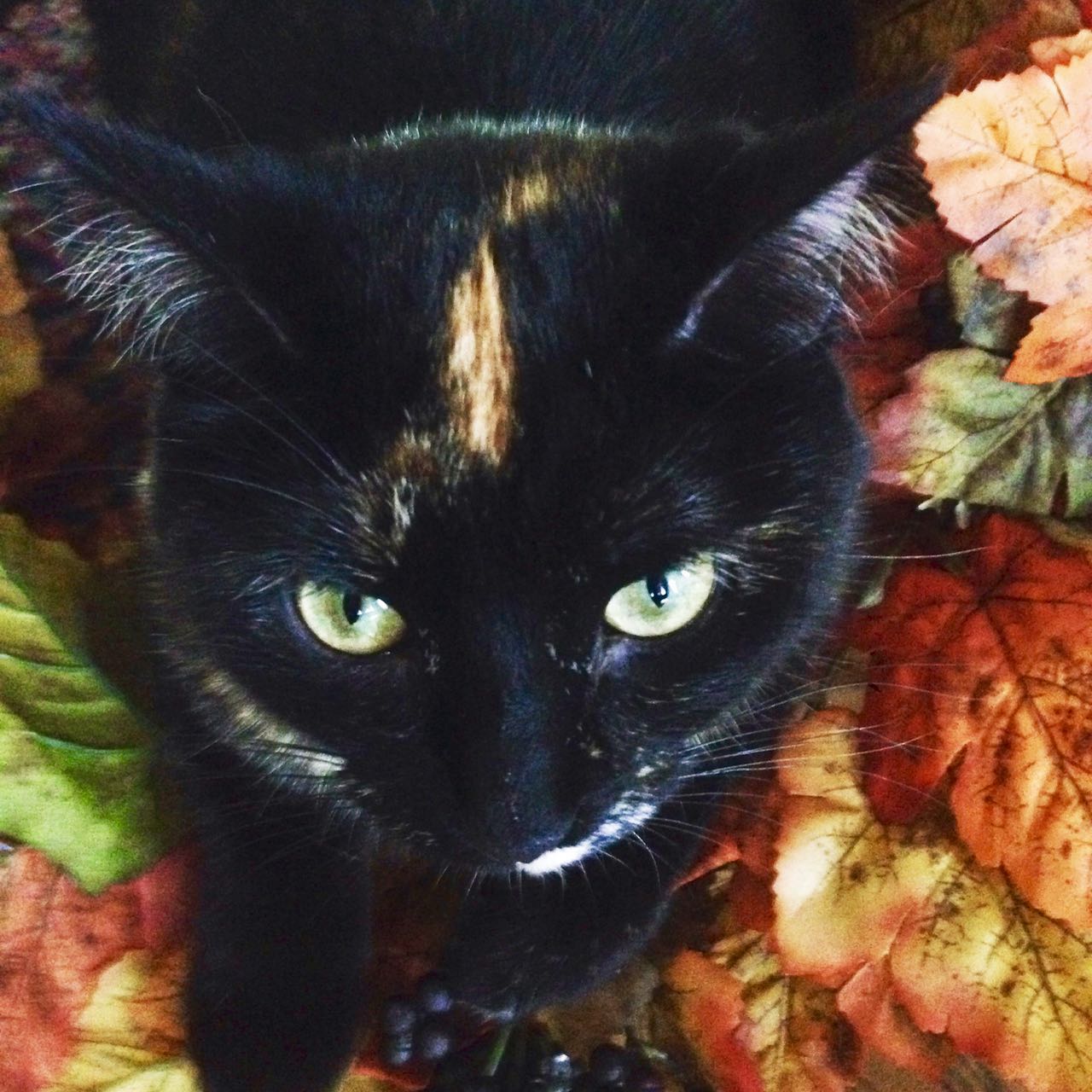
My own green-eyed black cat, Sylvie

I’m on summer vacation. No, I’m not taking any beach trips, darn it. I enjoyed a fun birthday/writing retreat in Nashville at the beginning of July, and spent the weekend of the 16th in Cincinnati with my parents for their 57th anniversary, instead of going to Thrillerfest. Mostly my vacation means I’m making only occasional excursions to social media, and I’ve given my daily blog a rest. Okay, the rest is really for me, not the blog. Oh, and I’ve been writing a novel.

Yes, that is what I do for work, too. But somehow writing this novel feels less like work and more like a summer enrichment project I might have worked on for fun when I was a kid. (One elementary summer I did a public television school math course where we had to order the workbook by mail, and I loved it. Geek much?)

For years I’ve wanted to write a cozy mystery. My existing novels are so far from being cozies that when I tell people of this desire, they give me looks that range from alarm to puzzlement. But for me, it’s just a matter of wanting to try something new. The novel I’m publishing with Mulholland Books next year, ONE LAST SECRET, is straight suspense, without any supernatural elements–and that is new for me. The cozy I’m working on is simply me trying another new thing.

Have you ever done a modeling writing exercise? I had a workshop teacher who often gave us exercises in which we would try to write in the style/voice of a famous writer: Flannery O’Connor, Dashiell Hammett, Hemingway. Hemingway was my favorite. We wrote as less distinctive writers, too. It’s an excellent exercise for emerging writers because it’s rather like walking in the shoes of the greats. Those shoes never fit, of course, but it’s as fun as being a four-year-old in Mom’s high heels. It’s useful, too. Developing one’s singular writing style takes a long time, and the exercise puts you immediately into the head of an established voice.

While I’m not particularly mystical, I have a strong belief in Things Happening For A Reason. So when my good writer friend, Carolyn Haines–who has written around 850,000 books and stories in the past few decades–said she was in search of writers to be a part of her new black cat detective mystery series, Familiar Legacy, featuring Trouble, the black cat detective, I said I’m in! before I’d even heard the details.

I mean, why not? I’d never written a black cat detective mystery, but I sure wanted to try.

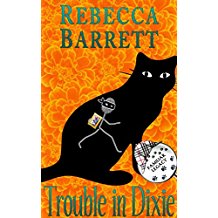
The Trouble books have a familiar formula that includes girl meets boy, and a mystery-loving critter. Trouble the cat is the son of cat-hero detective, Familiar, who was the star of of Carolyn’s long-running Harlequin Intrigue book series, Fear Familiar. She rereleased many of the Fear Familiar books this spring, and launched her first Trouble novel, Familiar Troubleon July 10th. The second in the new series, Trouble in Dixie by Rebecca Barrett, comes out in August.

My first job was to come up with a synopsis, and a title. The synopsis blossomed into a detailed outline. For me, it was a very detailed outline. I usually write skeletal outlines for my own books, but I rarely know how the book will end before I start writing. Then there’s that messy middle bit. For Small Town Trouble I pretty much know every turn, from beginning to end. There have been a few changes as I write, but nothing too substantive. And they’ve enhanced and deepened the story.

I’ve mentioned before that I used to imagine complete stories, but then told myself that since I knew the ending it would be boring to write it out. With this book, I’ve found the complete opposite is true. It’s a huge challenge for me to follow a story I’ve put together ahead of time–but it’s also a huge amount of fun. When I sit down to write, it’s a relief to take out my outline and note which scene I’m going to write, because I’ve already done the hardest part. It relieves me of those fearful blank moments, the ones in which I’m not sure what I’m about to write–if I can write anything–is going to move the story along.

The other big challenge is to keep the voice of Trouble consistent. The good news is that Carolyn is such a pro that the voice is clear and vibrant throughout her book, so I have an excellent model. That’s where my love of the modeling exercise comes in–it’s enjoyable to have the voice ready-made for me. I simply keep Familiar Trouble open on my desktop for reference. Carolyn has read my first chapter, and approved the voice, so I’m headed in the right direction. I’m only halfway through the writing, so let’s hope it sticks.

I’m loving this new challenge. I feel like I’m growing as a writer. Learning to write in a different style grows bran cells. I’m sure of it!

I’m anxious to finish writing Small Town Trouble to see how my first cozy experiment has gone. I could write more here about how writing this book is different from others I’ve written, but I’ll save that for another day, perhaps on my own blog, Notes From the Handbasket (you can go there even though I’m on sabbatical–I think I have 8 years’ worth of posts).

Do tell. What new projects have you taken on to encourage yourself to grow as a writer?

Tips For Crediting Photos Used In Blogs

Admin Note: Our trusty admin assistant has put together a list of resources and guidelines for using and crediting photos in the public realm. (Thanks, Lynne!)

Images released under Creative Commons CC0 are free of copyrights. You may download, modify, distribute, and use them royalty free for anything you like, even in commercial applications. Attribution is not required.

If you are unsure if the image was released under CC0, indicate the photo’s source, and whether it was purchased or provided as a courtesy.

Getty Images –  You can use Getty Images if you follow their embed instructions: Embedding their images provides a legal way to utilize premium content while respecting creators’ rights, including the opportunity to generate licensing revenue.
http://www.gettyimages.com/resources/embed

Unsplash  – Free (do whatever you want) high-resolution photos. Unsplash grants you a nonexclusive copyright license to download, copy, modify, distribute, perform, and use photos from Unsplash for free, including for commercial purposes, without permission from or attributing the photographer or Unsplash.
https://unsplash.com

Flickr – Many Flickr users have chosen to offer their work under a Creative Commons license, and you can browse or search through content under each type of license.
https://www.flickr.com/creativecommons


Pixabay
– All images and videos on Pixabay are released free of copyrights under Creative Commons CC0. You may download, modify, distribute, and use them royalty free for anything you like, even in commercial applications. Attribution is not required
https://pixabay.com

Pexels –  Best Free Stock photos in one place. Issued under Creative Commons CC0. You may download, modify, distribute, and use them royalty free for anything you like, even in commercial applications. Attribution is not required.
https://www.pexels.com


Wikimedia.org
– a collection of 39,727,644 freely usable media files to which anyone can contribute – Almost all content hosted on Wikimedia Commons may be freely reused subject to certain restrictions (in many cases). You do not need to obtain a specific statement of permission from the licensor(s) of the content unless you wish to use the work under different terms than the license states.

  • Content under open content licenses may be reused without any need to contact the licensor(s), but just keep in mind that:
    • some licenses require that the original creator be attributed;
    • some licenses require that the specific license be identifiedwhen reusing (including, in some cases, stating or linking to the terms of the license);
    • some licenses require that if you modify the work, your modifications must also be similarly freely licensed; and finally.
      https://commons.wikimedia.org/wiki/Main_Page

Shutterstock – Discover over 125 million royalty-free images, video clips and music tracks.
Shutterstock.com  – free images and some for purchase.


Istock
– Photos for purchase.
http://www.istockphoto.com/plans-and-pricing