How not to do an Interview!

As a regular reader of the NYT Book Review I usually look forward to their weekly column ‘By the Book’ but this week’s contribution raised my eyebrows. Unfortunately, to me at least, it was a classic example of what not to do in an author interview. The author this week was Philippa Gregory (a link to column can be found here) and in some ways my post today is a follow up to the one I did about Hilary Mantel (who appeared to look down on female historical writers such as Gregory!). Gregory’s interview is full of such gems as:

  • “What I don’t read is historical fiction in the period I am writing. Firstly, the characters as described by anyone else drive me mad…”
  • “Why does anyone write sloppy genre novels? The typing alone is so exhausting – surely if you’re going to undertake 150,000 words, you might as well have something interesting to say?”
  • “Why do people write crime novels with blindingly obvious murderers?”
  • “Choosing to write a genre novel is like fencing the universe because your are afraid of space.”

The upshot of Gregory’s tone is that she is far above those mere mortals who write ‘genre’ novels. What bothers me the most about her town is the unprofessionalism that seems to be on display. When giving an interview, I think that all writers (and especially those who enjoy popular acclaim) should be mindful of the image they present. There is no need to denigrate ‘genre’ writers (or any other writers for that matter) and there is certainly no need to show disdain for their craft. By the Book is normally a column that displays the quirks of an author and their book tastes, it doesn’t usually involve book snobbery or an attitude that, quite frankly, turns me off reading an author’s work….but this one did.

My takeaway from this? A few pointers on how to do a professional interview…

  • Don’t use the interview to denigrate other writers, genres, or work. You can most certainly reveal your preferences, but negativity isn’t needed.
  • Don’t make statements such as ‘why does anyone write sloppy genre novels?’. No writer I’ve ever met has sat down to write 150,000 words of absolute crap. We all sit down to write the best book we can, and who is Gregory to judge the merits of that in such wide ranging terms? Genre novels are not by their very nature ‘sloppy’ – and many so-called literary books can be excruciating to read:)
  • Be aware of the tone you are conveying and avoid anything that smacks of pretentiousness or snobbery.
  • Publishing doesn’t need to be shark-infested waters where, to succeed, you have to lunge and bite other writers in order to succeed. Most writers I’ve met are nothing but supportive and humbled by the own success. This interview suggests that Gregory feels herself far superior to other mere mortals writing historical or genre fiction (was that really the image she wanted to convey?)

So TKZers what is your take on the interview? If you were invited by the NYT to be interviewed for ‘By the Book’, how would you want to appear?

The Ingredients of a Great Series Character

by James Scott Bell
@jamesscottbell

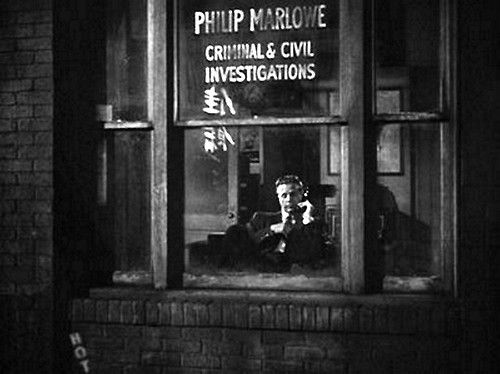
Dick Powell as Philip Marlowe in Murder, My Sweet

Many pulp writers of old made good bank with a hit series character.

Edgar Rice Burroughs created Tarzan.

Erle Stanley Gardner gave us Perry Mason.

Dashiell Hammett penned the Continental Op.

The ladies were represented as well. An obvious pen name “Lars Anderson” wrote a series featuring college-educated Ellen Patrick, who fought corruption in 1930s Los Angeles as “the Domino Lady.” The pulp magazine she appeared in was Saucy Romantic Adventures, and wouldn’t you like to have a few original copies of that?

Sherlock Holmes is perhaps the most famous example of the hit series character. So popular was Holmes that his creator, Sir Arthur Conan Doyle, couldn’t get out from under him. At one point Doyle killed off his detective, but the public demanded he be brought back. His resurrection was by way of the novel The Hound of the Baskervilles. When it was first published in The Strand magazine, the circulation of that periodical went up by about thirty thousand.

In other words, Doyle, though feeling a bit trapped, took that feeling all the way to the bank.

What Makes a Great Series Character?

I see five qualities in the best series characters. If you can pack these in from the start, your task is half done. Here they are:

  1. A point of uniqueness, a quirk or style that sets them apart from everybody else

What is unique about Sherlock Holmes? He’s moody and excitable. Among the very staid English, that was different.

Jack Reacher? Come on. The guy doesn’t own a phone or clothes. He travels around with only a toothbrush. Funny how every place he goes he runs into massive trouble and very bad people.

  1. A skill at which they are really, really good

Katniss Everdeen is killer with the bow and arrow.

Harry Potter is one of the great wizards (though he has a lot to learn).

  1. A bit of the rebel

The series hero should rub up against authority, even if it’s in a quiet way, like Miss Marple muttering “Oh, dear” at the local constabulary. Hercule Poirot is a needle in the side of Inspector Japp.

  1. A vulnerable spot or character flaw

Robert E. Howard’s Conan the Cimmerian has a vicious temper that sometimes gets the better of him.

Sherlock Holmes has a drug habit.

Stephanie Plum keeps bouncing between two lovers, who complicate her life.

  1. A likable quality

Raymond Chandler’s Philip Marlowe has some of the greatest quips in the history of crime fiction. We like them because Marlowe is also vulnerable—to getting beat up, drugged, or otherwise manhandled by forces larger than himself (like Moose Malloy).

Wit is one of the great likability factors.

Another is caring for others besides oneself. Stephanie Plum has a crazy family to care for, not to mention her sometime partner Lula.

Will the Character Grow?

One decision you should make early on is how much character growth there will be. While you’ll hear a lot about the necessity for character arcs, they aren’t always necessary.

For example, Jack Reacher doesn’t change. I once heard Lee Child talking about this on a panel, and he said, “Arcs? We don’t need no stinkin’ arcs.”

Ahem.

Michael Connelly, on the other hand, has brought tremendous change to his series character, Harry Bosch. He decided, too, that he would age Bosch right along with the books, a decision he has come to ruefully regret. Bosch is getting up there!

At the very least, your character ought to grow stronger with each adventure. Why? Because without that there is no tension or conflict in the story. Each new tale must challenge the character in some way that threatens him with death (physical, professional, or psychological).

Test Marketing

Self-publishing today provides the writer with a way to “test drive” a potential series character. You can do that in a number of ways.

You can write a story and send it to several beta readers. These are people you know and trust to give you honest feedback.

You can publish in a free venue, like Wattpad, and collect the feedback that way.

There’s always the option of going to Kindle Direct Publishing, and using Kindle Select exclusivity so you can promote the story for free. Promote the heck out of it. Read the reviews.

The pulp writers of old weren’t shy about testing a character and then moving on if that character didn’t create enough buzz. Their big problem was the lag time between sending in a story and waiting months for it to appear.

Today, you don’t have to wait.

Who are some of your favorite series characters? What do you think is the key to their popularity?

First Page Critique: DESCENDING DARKNESS

Photo courtesy Filip Gielda on unspash.com

Please join me in welcoming Anonymous du jour to the semi-regular revolving feature of The Kill Zone known as First Page Critique! Today we will be looking at the first page of Anon’s Descending Darkness, a work-in-progress tale of a lost love and the potential for revenge:

Descending Darkness  

The man stood on the outskirts of Vista Bay looking down at the town that took his wife. The woods would hide him for now. Anger roiled in his heart as the memories of what the town had done to him and his wife flooded through his mind. If he had a match, he would have burnt the town with a single strike. Or died trying.

He stood there, seething, the wind bringing tears to his eyes. The town below getting blurry. He pulled his coat closer to his chest and inhaled the cold air. Then, from the lake below, a white cloud billowed over the land. Snow, and lots of it.

He was miles from his abandoned car, thinking that he would end it all. Now the town gave him something to think about.

The snow blew harder against him. He had to get out of it. Sure, he wanted to die but he didn’t want to freeze to death—that would be a slow death not worthy his pain.

The snow cleared his mind and the desire to die evaporated. Revenge. He turned back toward his car.

An hour later, his feet numb and his hands feeling like cold stone, he admitted he was lost. It wasn’t fair, the town owed him. He pushed his way through the trees.

Bent forward against the blowing snow, he climbed another hill only to be blinded again by the blowing whiteness as he reached the top. He shielded his eyes and surveyed the expanse of white and trees and prayed. He did not know to whom he was praying but only that he asked for protection until full retribution was made. He lifted his arm to shield his face from the frozen torrent then fell onto the cold snow.

The lowering sun mocked by producing no heat, only bright light threatening to blind him. He was going to die. He squinted into the distance and for the first time, he saw it. Hope. A cave lay ahead. He thanked whoever had answered his prayer and pressed onward.

Anon, you have a potentially interesting story here and do a good job of teasing your audience into it. That said, Descending Darkness needs a bit of work. Please note: what I have looks like a lot, but it really isn’t. It amounts to minor corrections here and there. Accordingly, please don’t be intimidated by the length and number of corrections.

— First, name your protagonist.  For our purposes we are going to call name “William.” We can identify a bit more with William if we call him by a proper name rather than “The man.” Let’s name his wife as well. How does “Mary” sound, just for this exercise?

— Next, I’m a little confused about the visual perspective which you present. You’ve got William looking down — your word — at a town (and let’s name that town, too. How about if we call it “Fairlawn” for our purposes?) as he stands on the outskirts of Vista Bay. Since water seeks it lowest level (ask those poor folks in New Orleans) let’s keep William just outside of the woods which are above the town but put Vista Bay (and any other body of water) next to or (preferably) below Fairlawn.

— Let’s follow up with your description of the weather. I don’t observe Elmore Leonard’s rule of writing that forbids talking about weather at the beginning of your story. You, however, go the other way just a bit too much. You use the word “snow” five times and the term “cold” three times in one page. Mention that it’s cold and that it’s snowing once and focus the attention of the reader on what is going through William’s mind. If you want to sustain the idea of how cold it is you can do that by mentioning that he’s leaving tracks or talk about his car skidding on ice and getting stuck or something (see below for more about that car). Your reader will get the picture. You also use the words “death” twice in one sentence and “die” four times in one page, not to mention in two consecutive sentences.  Try “passing on” or another phrase or euphemism for “die” or death instead. You’re not the only one who uses a word too frequently in too short a space. It’s one of my cardinal sins in my own writing and one I strive mightily to avoid.

— Speaking of cold: in the last paragraph you describe the sun as “producing no heat.”  The sun is always producing heat; it’s just not helping William at this particular time of year. Try this: “The setting sun mocked him. It provided no heat, only bright light threatening to blind him.”

— As far as that car is concerned, I’m wondering why William parked it and then walked for a while if he was going to commit suicide. There are all sorts of reasons for that but tell us one. Did he run out of road? Did he get stuck in the snow? Run out of gas? Get a flat tire? Tell us. I think that you probably want William out of that car and walking so that he can find something in that cave in the middle of that snowstorm, but tell us why he left his car behind so that we’re not wondering about it.

— The next comment may just relate to your style. You seem in a couple of places to separate two complete sentences with commas and set off incomplete sentences with periods, to wit:

If he had a match, he would have burnt the town with a single strike. Or died trying.

Instead of:  “If he had a match, he would have burnt the town with a single strike, or died trying.”

It wasn’t fair, the town owed him.

instead of: “ It wasn’t fair. The town owed him.”

What you’re doing isn’t grammatically correct, but it’s a style that a number of authors utilize. I don’t particularly like it but that doesn’t mean you shouldn’t use it. Reasonable minds may differ.

It doesn’t always work, however:

He stood there, seething, the wind bringing tears to his eyes. The town below getting blurry.


Let’s sharpen that up just a bit by making the second sentence a complete one:

“He stood there, seething, the wind bringing tears to his eyes. The town below blurred.”

Then we have:

The snow cleared his mind and the desire to die evaporated. Revenge. He turned back toward his car.

There’s just a bit of a jump between wanting to die and revenge, from a narrative standpoint. How about building a small bridge between them? For instance:

“The snow cleared William’s mind. His desire to die evaporated and was replaced by revenge. He turned back toward his car.”

— I’ve got two more items for you, Anon. Be careful of the placement of the word “only.” To wit:

He did not know to whom he was praying but only that he asked for protection until full retribution was made.

What you are saying is that William only knew that he was asking for protection. I think what you meant was that William was asking only for protection, which would look like this:

“He did not know to whom he was praying but asked only for protection until full retribution was made.”

…and while we’re at it, that second clause is a little awkward. Retribution is achieved, not made. How ’bout we change that to

…until he had achieved retribution.

I will now attempt to stay uncharacteristically quiet (though still present) as I open up the floor to our TKZers. Anon, thank you for contributing and braving the First Page Critique. I look forward to at some point discovering what the town (whatever you should name it) did to deserve the man’s (whatever you should name him) enmity, and what occurs.


Book Signing Jitters

By Elaine Viets

I still remember my first signing for my first mystery, Backstab. It was a frozen January afternoon in St. Louis, and the streets were slick with ice. I didn’t expect anyone to show up, but there was John Lutz in the bookstore, stamping the snow off his boots. Yep, that John Lutz, the thriller writer whose novel SWF Seeks Same became the movie Single White Female.

I was a recovering newspaper reporter who’d crossed over to novels. “Congratulations,” John said. “You’ve managed to find a business even more screwed up than newspapers.” The copy I signed for John was my first book signing sale.
Mystery writers support one another. That’s still true. Since then, I’ve had too many signings to count, but I still remember how nervous I was at that first signing in 1998.

 Now mystery writer Patricia Hale is facing her first signing for her new novel, The Church of the Holy Child. “It’s my first signing ever, so I’m a little nervous,” she wrote. “I know there will probably be no one there and I’m mentally prepared for that. Do any of you experts out there have some advice?”

Congratulations, Pat. Be sure to tell your audience this is your first signing. They’ll love the idea that they “discovered” you. Here are some things you should be doing:
Right now. Publicize your event. Publicity for an event starts at least six to eight weeks out, but it’s not too late to send an e-newsletter or an e-blast to your friends, family, co-workers, and potential readers. Post your news on all the mystery lists and on Facebook. Tweet it. Send a notice to your community papers and radio stations. It may be too late to make the news columns, but many of them have local events pages that will list your signing for free. Check their Websites. 
Food and treats. Check with the bookstore about its policy. Some don’t allow food because chocolate thumb prints can ruin a book. The damaged novel will be sent back – and charged against your royalties. Other stores allow cupcakes, veggie trays or other snacks. A little alcohol can liven up the event and pry open wallets, if the store permits it.

If you can’t bring food for your audience, don’t forget the sales staff. I often bring cupcakes or Krispy Kreme doughnuts for the booksellers’ break. They’ll remember you remembered them, and maybe recommend your work to their customers.

If the bookstore has a cat or dog, bring it a treat. Unless you’re seriously allergic, take time to pet and praise the bookstore cat. I had a signing where the store’s big orange tabby plopped down on my table in the middle of my talk. The audience laughed and photographed the cat sitting on my books. Afterward, readers brushed the cat hair off the books, and bought them.

Bookmarks are a good way to publicize your books. A less expensive option is business cards with your cover in color on one side and your name, Website, and author e-mail address on the other.

The day of the signing. If you don’t have an audience. You said you were prepared if no one shows up – but if no one comes to your signing, you’ll be rattled. At least, I am. It doesn’t help to tell myself it’s happened to Stephen King and Mary Higgins Clark: those empty chairs feel like an accusation. If no one shows up, talk to or help the bookseller. I also do guerilla signings if no one shows. I’ll go up to people entering the store and say, “Hi, do you like mysteries?” If they say yes, I’ll hand them a copy of my new book and tell them about it. Stalking customers works.


If you do have an audience. Even the kindest readers look scary at your first signing. Early in my career, I was told, “If you’re scared, just imagine the whole audience is naked.” That idea was too traumatic. Instead, imagine the audience is your friends and favorite relatives. After all, some of them will be. While waiting for the signing to start, talk to the people. Ask them about themselves. Compliment them on a pretty piece of jewelry or a fun T-shirt. Ask what kind of mysteries they like to read. Once you get people talking, they’ll be your fans.

During your talk. Be prepared to give your readers two or three fascinating facts about your novel, or an unusual bit of research. Tell them why you chose this subject.
Should you read from your novel? Only a short selection, no more than a page or two. And practice first.

               Bring a notebook. Ask readers to sign up for your free e-newsletter.

                    Do not be surprised if someone asks you where the bathrooms are. Just tell direct them. You may also be mistaken for a bookseller. In that case, find a staff member who to help the person.

After the signing. Thank the bookseller for the signing and the nice display. Ask if you can sign your stock. Signed stock can almost always be returned. Often, after the signing, the bookseller will display your signed novels on a table, an end cap (the display on the end of the shelf rows) or best of all, next to the cash register. This is prime bookstore real estate.

Help clean up and put things away. If you brought food, ask the staff if they’d like it.

Have fun. I know, that sounds easy to say. But you’ve worked hard to write your book. Now, enjoy showing it off.


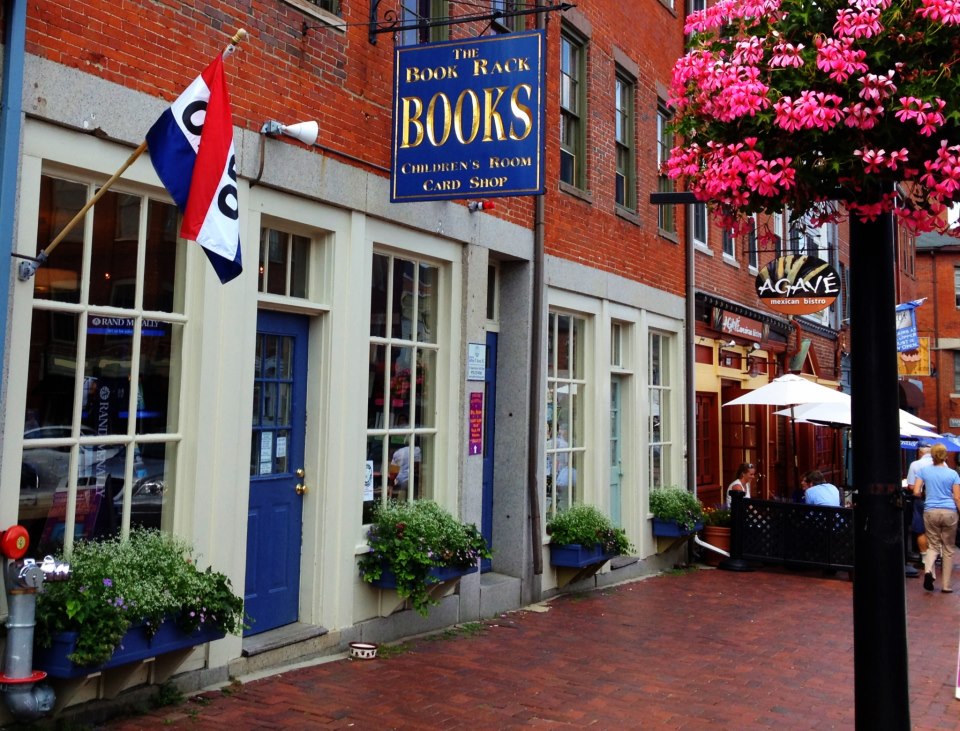
If you’re in Newburyport, Mass., Patricia Hale’s signing is Thursday, August 17, from 5:30-7 p.m. at The Book Rack, 52 State Street.

Good luck, Pat. See you on the bestseller lists.

               TKZ readers and writers, what advice would you give Patricia?

The Edit Has Landed

(photo via GoDaddy stock)


The edit has landed. I repeat: The edit has landed. This is not a drill.

This refrain runs through my head every time I get an initial editorial letter from my editor after I’ve sold a manuscript. For the uninitiated, the editorial letter contains detailed comments and suggestions for changes the editor would like to see in the next version of a contracted manuscript.

On Sunday evening, the editorial letter for One Last Secret, my next suspense novel, arrived in my inbox.

I’m going to gloss over the agonizing hour or so I spent actually analyzing my letter. Imagine cheers or tears or cringing or reallys?! or ack–how did that get through? or yays! It’s a private moment that you are already familiar with if you’ve workshopped your own writing, or have had editors or truthful friends comment on it.

There’s a fine line when it comes to accepting or rejecting an editor’s suggestions. Ego can get in the way. Unless we’re collaborating with another writer, our stories have incubated in our own heads for months or years. Perhaps the initial drafts have been read by friends or spouses, etc, but they’re still essentially ours. It can be hard to let go, to be willing to let the manuscript change. But while an editor is also a reader, and often a fan, they are not just any reader/friend offering suggestions. They’re professionals who have a financial interest in seeing that the story appeals to a large number of readers.

An editor or reader is attracted to a novel or story as a result of the writer’s ability to successfully communicate a vision of the story that exists in the writer’s head.

But as we know, no two visions of a story are even close to identical. The best writing speaks loudly to people for myriad reasons, and tugs at the chords deeply anchored to our souls. And no two souls are alike. It’s a huge compliment for a writer to have a reader say a writer’s work resonates with them, whether it’s something as simple as a character with whom they identify, or a whole new world into which they can escape for an afternoon  and beyond.

An editor is an agent of the re-visioning process. (I’ve probably mentioned re-visioning before as a concept mentioned by Joyce Carol Oates.) In a re-vision, the vision of the story becomes something totally new for the writer. This new vision will change with each new addition or deletion or deepening of the story. It can be brought about with mechanical precision by making sure the story has all the necessary beats, or meets and even enhances the conventions of the genre. Or it will change when the writer combines characters, kicks the hero(ine) into higher gear, or tweaks the emotional impact of a scene. It’s a birth process that goes on and on until both the editor and the writer agree that their mutual visions meet on the page and are compatible enough to be presented to the world. They’re both happy. (Or they run out of time!)

For me it’s both wrenching and exciting to work with an editor. In theory—and it’s a theory I extoll frequently—I want to write and edit in service of the story. I write toward that Platonic ideal that exists for every story. The ideal we can only ever express as a shadow. But I want to at least make it a shadow that lives and makes other people see it as an ideal thing in their heads. It should have no visible seams, no dull moments, no unnecessary details, clear ideas, smart dialogue, and compelling images. In other words, as close to an ideal as possible.

Occasionally though, the old ego wants to dig in its heels when the suggestions come. My story! it cries. Mine! Mine! Mine! It begs me to leave it alone. Very occasionally there are story elements that I feel are integral and necessary to the story, and I try to negotiate their continued existence. Now that I think about it, the very few times that has happened, various editors have been very supportive. But I generally keep my ego in check. It really is all about the story. And a good editor knows how to balance the writer’s need for respect/story integrity with her own need to make the story more appealing to the marketing department and readers.

Not everyone likes the revision process. As I said, it’s both wrenchingly difficult and exciting for me at the same time. Change is hard, and changing our stories can be particularly tough because edits often feel like judgments. I just keep telling myself that an edited story is something shiny and brand new in the world. A new creation. And who doesn’t like the feeling of having created something new?


How do you approach the editing process—whether suggestions are from reader friends or paid editors? Do you love it, hate it, or see it as just one more step to be endured?

Or tell us about an editor you’ve loved working with…

A Little Injection Of Inspiration

I’m in the air today on yet another cross country sojourn, so I thought I’d share with you one of my favorite TED Talks. In this talk author Elizabeth Gilbert (of EAT, PRAY, LOVE…  fame) is inspiring and refreshingly candid as she discusses how to manage life when you suspect that your best writing is behind you. In the Comments, please share your own favorite sources of inspiration, from TED talk or aother!

Elevate Your Novel By Infusing Your Premise With Something Conceptual

by Larry Brooks

Sometimes – even frequently – the source of weakness and dysfunction within a story dwells in the nature of the premise itself; i.e., the degree, or complete lack of, something compelling within the premise proposition. But when we add a conceptual layer to thatpremise, a stronger story framework is suddenly in place, something that just might differentiate it within the marketplace.

When an agent or editor reader says “it’s just not for me,” but can’t or won’t be specific about what might be wrong or weak, that’s a clue that the premise itself is the wrong-note element. Because they are looking for something exceptional. And while your writing might be perfectly fine, the premise itself might be perfectly mediocre.

What is interesting to you may not be as interesting to someone else. Concept is a story essence that can turn this situation around.

Concept and premise are different things.

Which – when fused – become a sum in excess of either part. This truth is something not commonly discussed within the writing conversation – because it is not commonly recognized as a thing. And yet, a compelling concept at the heart of the premise is one of the most visible hallmarks of bestsellers and break-in novels. They also become the common thread of a successful series; the concept drives the entire arc, while each installment brings a different premise that springs from it.

Concepts are not stories. They are the framework for a story. They can render a story highly compelling, even at a glance. When recognition of weakness gels, adding something conceptual can be a key first step in the repair process. One that doesn’t necessarily call for a new premise, but rather, a premise that is elevated and strengthened.

Concept is a tricky issue.

You could write a novel from this idea: “a story about a guy living alone in a big city.” That actually is a concept, just not a very compelling one. It’s flat, and therefore dead on arrival. You don’t need to chuck it, but you do need to enhance it to save it, to make it competitive in the marketplace.

A better concept might look like this: “a story about a wealthy widower who suddenly finds himself alone after thirty years of marriage and moves to Los Angeles to live with his younger brother, a film director who enjoys life in the fast lane. The man must negotiate his staid values and comfort level with the onslaught of aggressive, sophisticated women who seem to want to rescue him from his depression.”

That’s the concept. The premise is him meeting someone within that life that challenges who he is while putting his heart at risk.

This second example meets several of the criteria for a compelling concept, one of which is this: The reader hasn’t encountered this story before, or if she has, this offers a new and intriguing twist.

The acid test of a compelling concept is simple.

If you pitch your concept—without adding elements of the premise to make it dramatic—and your listener responds, “Wow, now that is interesting. I can’t wait to read a story based on that idea,” then you’ve hit pay dirt. Because the concept isn’t the idea, it’s the framework for the forthcoming premise itself

If you pitched, for example, Superman as a concept, chances are it would elicit excitement about seeing the story told from it. And then, when that works, there are many other Superman premises right behind it.

The word compelling, though, is a mixed bag. Because Superman may not be something that rings the bell of whoever is listening in.

Readers of romances may not find the notion of traveling to a different dimension to encounter an alien life force all that compelling. Even if it is a romance, if you set the story in an alternate universe then it is also something else.

But what about a series novel? Is that conceptual? If the novel is compelling enough to float a sequel, then it is probably inherently conceptual, usually because the hero is precisely that. Jack Reacher, for example. James Bond. Sherlock Holmes. Harry Potter. Readers say, I can’t wait for the next installment, even when the next book is its own unique premise. What makes a sequel or a series beholden to the concept that is driving each premise within it.

Here are some examples of inherently conceptual concepts.

 “Snakes on a plane” (a proposition)

“The world will end in three days.” (a situation)

“Two morticians fall in love.” (an arena)

“What if you could go back in time and reinvent your life?” (a proposition)

“What if the world’s largest spiritual belief system is based on a lie, one that its largest church has been protecting for two thousand years?” (a speculative proposition)

“What if a child is sent to Earth from another planet, is raised by human parents, and grows up with extraordinary superpowers?” (a proposition)

“What if a jealous lover returned from the dead to prevent his surviving lover from moving on with her life?” (a situation)

“What if a fourteen-year-old murder victim narrates the story of her killing and the ensuing investigation from heaven?” (a narrative proposition)

“What if a paranormally gifted child is sent to a secret school for children just like him?” (a paranormal proposition)

“A story set in Germany as the wall falls” (a historical landscape)

“A story set in the deep South in the sixties, focusing on racial tensions and norms” (a cultural arena)

Notice that none of these are stories yet. These are not premises. They are concepts.

In general, if you can add “hijinks ensue” to the end of your concept, you may be on to something good that will lead to a compelling premise.

Rest assured, though, you will hear this differentiation (concept vs. premise) mangled in the marketplace. Even among agents, editors and crusty old authors who don’t like their vernacular to be challenged. But even they are leveraging the power of concept, by virtually of simply having an evolved story sense that won’t settle for a premise that isn’t infused with a conceptual layer.

High Concepts vs. Real-World Concepts

High concepts exist at the extreme edge of imagination and possibility. They are more conceptual than common, real-world concepts. Examples would be Batman and Wolverine and the Avengers, which bring in fantastical and supernatural elements.

Stories about real people in real situations also benefit from something that creates a compelling context for the story. Something about a hero can be conceptual – Harry Bosch, for example – or something a character does or believes or must deal with can be conceptual. For example, one of the main characters in Gone Girl conspires to kill herself while framing her husband for her death. She’s a psychopath, which becomes the the concept itself. And thus, the heart and soul of the premise that it informs.

Concepts…

  • can be character-centric, like Jack Reacher, Sherlock Holmes.
  • can be a speculative proposition, like The Da Vinci Code or Star Wars.
  • can be thematically conceptual, like The Help or The Cider House Rules.
  • can be lifted from perspectives and drama in the real world, like a story about the 1980 U.S. Hockey Team or Apollo 11.
  • offer a setting, time, or place rendered conceptual by virtue of the promise it makes: The forthcoming story will play out there. Historical novels live and breathe by this conceptual potential.
  • could be about stories set within a given culture, such as Fifty Shades of Grey or a story about the Blue Angels or even the Hells Angels.

Notice how almost every single movie featuring Tom Cruise is driven by a premise set ablaze with a high concept. Top Gun? The concept is the F-14 footage that infuses the story with energy and sex appeal. MInority Report? The proposition of the role of law enforcement is the concept, and the specifics of the dramatic arc become the premise that is fueled by that idea. Or that story where he can relive a moment time after time… that is nothing if not conceptual.

A concept can inject speculative, surreal possibilities, such as time travel, ghosts, paranormal abilities, cloning, etc., into an otherwise normal reality.

In short, a concept is simply the compelling contextual heart of the premise and story built from it. It is the framework within which a story will be delivered. A proposition. A context. It imbues the story with a given presence. It elicits that sought-after response: “Wow, I’ve never seen that before, at least treated in that way. I really want to read the story that deals with these things.”

If The Help had been set in 1997 Omaha rather than 1962 Jackson, Mississippi, the story would have been quite different and quite diminished, because the former is a less compelling concept, and the story would be less effective, even with the exact same premise. The cultural setting is the concept, by virtue of the social framework it delivers.

A concept does not include a hero … unless the hero is, by definition, a conceptual creation (like a Superhero or an angel or a vampire, which is the case in several of the examples just given).Such stories are built around a protagonist leveraging a conceptual nature. What makes these heroes fascinating, and therefore conceptual, is the proposition that renders them unique and appealingly different (think Nancy Drew, Stephanie Plum, or Wonder Woman), with or without supernatural powers.

Sometimes the genre is, in fact, the concept. Ghost stories. Vampire stories. Time travel stories. Historicals. Space travel. We flock to these because of the ghosts and vampires and trips back in time, not necessarily because of the dramatic premise itself. And yet, those premises are inherently rich and compelling from square one, precisely because of the concepts driving them.

Wrap your head around this notion as a powerful story-enhancer, and you may find yourself writing stories that are already in the wheelhouse of the agents, editors and readers who are looking for them.

 

The Midstream Temptation

by James Scott Bell
@jamesscottbell

I’m currently writing a series featuring a character named Mike Romeo. I have three books out in that series. I also have a little over half of the next Romeo completed.

But during my creativity time a couple of months ago, I was playing the first line game. That’s where I just make up first lines, not knowing anything else about what is to follow. I have a file full of firsts that I would love to develop someday. All I need is a 28-hour day and and a perpetual espresso machine.

Anyway, I wrote an opening line and it blasted me. I just had to know what it meant. So I found myself writing an opening chapter. And when I was finished I knew I had the makings of a stand-alone thriller that I wanted to write.

Only I wanted to write it now.

I call this the midstream temptation.

I was faced with a choice. Continue to write this new project, leaving Romeo sitting there waiting for me to get on with his story? Or finish Romeo and come back to the new one? (A third option, writing both at the same time, seems to have worked for Isaac Asimov, but it gets me too confused.)

When I was writing for a publishing company, they had a triple-barreled vaccine for the midstream temptation—a contract, an advance, and a deadline.

But as an indie, I am free to decide what to write, and when.

Now, I know enough about the mental game of writing to realize there’s a danger here all writers face. Sometimes you reach a point in a novel where you hit “the wall.” For me that’s usually around the 30k word mark. It’s a place where you’ve got a whole lot of book to go, but start thinking maybe your concept isn’t as hot as you thought. Or you wonder if you are really the writer you thought—or hoped—you were. Maybe the day of reckoning has come, and they’ll all find out you’re a total fraud!

For me, I just write through the wall. The doubts go away.

But that wasn’t the case with Romeo. I didn’t hit a wall. The book is solid. I know my signpost scenes.

So I had another thought (two thoughts in close proximity!). When I finish a first draft I always set it aside and let it cool for a time before my first read-through and edit. So! Why not let the Romeo cool off now? Use the cooling period to write this new one while it’s hot, and then approach my Romeo manuscript as if it is a first draft (a short one, to be sure)!

Which is what I decided to do.

This is the first time I’ve done something like this. The conditions had to be just right. So let me run through some thoughts on the matter:

  1. When you are tempted to leave a book in midstream for another idea, resist the temptation and keep writing on your WIP.
  2. If the new idea keeps demanding your attention, take one day off and…
  3. Put on your “thinking cap,” as Mrs. Barshay used to tell us Kindergartners. Ask yourself if you’ve merely hit a wall of doubt. I suspect a lot of the time the answer will be yes.
  4. Write some analysis. Talk to yourself about your WIP. Identify issues, and make a list of possible solutions.
  5. Keep at your WIP unless you are at a point where it’s pretty much complete in your mind. That means you have a good bulk of it done and are pretty sure where it’s heading, and how it’s likely to end. (Admittedly, this is more difficult for a panster. And it should be. Because you’re a pantser.)
  6. Take a day to do some freewriting on the new idea. Then take another day to map out where the story might go. Do a preliminary outline, at least of signpost scenes.
  7. Write the opening chapter. Then ask yourself if you, as a reader, would have to read on. Do you have compelling characters? Are the stakes death (physical, professional, or psychological)?
  8. If the answers to #6 are affirmative, take one more day to make sure you’re not going to the new project just to avoid facing the task of the WIP.
  9. Make your decision.
  10. Continue to meet your quota. (Don’t have a quota? Get one!)

I don’t know that I’ll ever do this again. My routine for twenty years is to finish a full draft while at the same time developing the next project with notes, index cards, character work and so on. I just got caught up in the excitement this time. The new idea kept tapping on the window, inviting me to come outside and play. And isn’t spontaneous play what we used to love as children?

Okay, so writers are big children. That’s how we roll.

But if we want to be paid for our play, we need more than a little discipline. So when a midstream temptation comes calling, subject it to hard and objective scrutiny. If it passes … go play!

And be sure to look both ways before crossing the street.

Have you ever had a major midstream temptation? What did you do? Do you ever hit a wall in your first draft? How do you handle it? 

Reader Friday: Your Book Buying Decisions

Photo purchased from Shutterstock by KL

You’re wandering through a bookstore on a random Saturday morning in late summer, looking for something promising to read. What makes you pull a book off the shelf? What convinces you to purchase it?

1. Title

2. Cover Art

3. Author’s Name

4. Review Blurbs

5. Scanning first page

6. Review or recommendation

7. Combination of previous factors, or something else.

Please give us more information in the Comments. Thanks!